Tag Archives: #amwriting

#amwriting: ensuring consistency: the stylesheet

Book- onstruction-sign copyWhen a manuscript comes across their desk, editors and publishers create a list of names, places, created words, and other things that may be repeated and that pertain only to that manuscript. This is called a stylesheet. Some editors refer to this as a “bible.”

The stylesheet can take several forms, but it is only a visual guide to print out or keep minimized until it’s needed. I copy and past every new word or name onto my list,  doing this the first time they appear in the manuscript. If I am conscientious about this, I’ll be less likely to inadvertently contradict myself later on in the tale.

Some people use a program called Scrivener which is not too expensive, but which seems to have a tricky learning curve. I downloaded the free version but couldn’t make heads or tails of it and found it quite frustrating. Nevertheless, I understand that it works well for many people, and to them, I say, “Good for you.”

For myself, I don’t want a fancy word-processing program. I just use MS Office, because I have been using the programs that come with that software since 1993, and I’ve been able to adapt to each upgrade they have made. It’s affordable, so I use Word to write and edit in, and occasionally use Excel to make small charts that are my style guides for each novel or tale I write, and also for every book I edit.

You can do this in Google Docs too, and that is free.

Regardless of how you create your stylesheet, I suggest you include these elements:

  • Word/Name
  • Page it first appears
  • Meaning

Bleakbourne Style Sheet

This is especially crucial for fantasy authors because we invent entire worlds, creating names for people, places, and creatures.

Take my own work-in-progress: it has characters with names that can be spelled several ways, and when I am in the throes of writing the first draft I fling them out any old way.

Thus, a character named Claire on page one can become Clair by page six. Dominick can become Dominic. Place names become mushy, and any word that is important or invented can evolve over the course of a manuscript.

I first learned about creating a stylesheet years ago when Huw the Bard was being edited. As she was editing my manuscript, my editor made a global search for every possible variant of the words I had created. She alerted me to these discrepancies, and I replaced the incorrect instances with the version I like best.

I have kept a Stylesheet for every work in progress since then, for short stories as well as novels.

map of Waldeyn 2015 with lettering cooper black copyPlace names evolve too, so maps are essential tools when you are building the world. Places written on a map tend to be ‘engraved in stone’ so to speak. Readers will wonder where the town of Maldon is when the only town on the map at the front of the book that comes close to that name is listed as Malton.

To prevent that from happening, double check what you have written on the map, and then do a global search for every possible variant of that name in your rough draft.

Just because you invented the world doesn’t mean you know it like the back of your hand. That world is constantly evolving in your mind. I have been writing in the world of Neveyah since 2009, and I still frequently contradict myself, which is why the stylesheet is so important.

9 Comments

Filed under writing

#amwriting: learning from the masters: Kurt Vonnegut

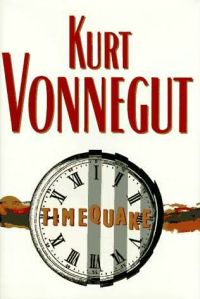
Timequake(Vonnegut)I haven’t written about Kurt Vonnegut in a while, and I believe it’s time to revisit him and his wisdom. I am dusting off a piece I wrote several years ago, as it has merit in my writing life today.

Kurt Vonnegut (November 11, 1922 – April 11, 2007) was one of my literary heroes. He was considered to be one of the most outrageously creative writers of our time, and indeed time figures prominently in much of his work – such as in his semi-autobiographical novel, Timequake. In this novel, he writes about trying to write a story. He understood writers’ block, because he had experienced it. Reading Timequake is like seeing my own struggle to write reflected in another author’s life.

His most famous work, Slaughterhouse-Five came out of his experiences in WWII as a prisoner of war. Vonnegut understood being a prisoner of war because he had experienced it.

In 1982, Vonnegut wrote a short piece for the International Paper Company, titled simply, ‘How to Write with Style.’ He began his essay by first considering the question of “why we should strive to improve our writing style”:

  1. “Do so as a mark of respect for your readers, whatever you’re writing. If you scribble your thoughts any which way, your readers will surely feel that you care nothing about them. They will mark you down as an egomaniac or a chowder-head — or worse, they will stop reading you.”

For me as both an editor and a reader, this is a critical point, because if you, as an author, become irate at hearing honest opinions from your beta readers or editors, you are doing them a disservice. We all experience this feeling of shock and dismay, but do take the medicine and try to understand what your reader saw that wasn’t up to par.

My most painful moments have been at the hands of editors who truly wanted to help me improve my work. I thank God they cared enough to tell me the truth.

If you’re doing this only for your ego, then, by all means, enjoy writing whatever falls out of your head. Do it and have fun, but don’t show it to anyone for if you do, your ego is in for a bruising.

That joy and abandonment is how a first draft should be written. But, if you have a first draft, don’t ask me what I think of it, no matter how proud you are unless you want my perspective because we all know every ms has flaws.

After Vonnegut had explained why authors must work to improve their knowledge of the craft, he went on to present 7 more concepts authors must strive to achieve:

  1. Find a subject you care about.

Let’s be real – if we don’t have a passion for our subject, it’s difficult to wax poetic about it. But when you are passionate, you can’t stop discussing it. It takes all your attention, and you find new things to say about it every day.

  1. Do not ramble, though.

What a sense of humor!  He was right – keep it brief!  Don’t spend 50 words when 10 will do.  The longer a sentence is, the more opportunity an author has to weaken it.  I am terrible at putting this concept into action.

  1. Keep it simple.

(note to self) Simplicity is the key to Not Rambling!

  1. Have the guts to cut.

Sometimes an author is in love with a particular sentence or paragraph – and it may be one which, to an editor, doesn’t really work. You must be prepared to divorce the sentences you are married to. This happens to me all the time – and now I try not to cry when my most beautiful, alliterative prose is given the boot.  Nine times out of ten tossing out the offending gibberish improves the reader’s experience. After all, this isn’t only an ego trip – it’s the reader I’m writing for, right?

  1. Sound like yourself.

You may find this to be a ‘Well, duh!’ moment, but take a moment to think about how you actually speak.  Do you say “I shall meet you anon.” …er…no… probably not.  I usually say, “I’ll meet you as soon as I can.”  Write it the way it feels most comfortable to say it. (Thank you, my many wonderful editors, for helping me to understand this concept!)

  1. Say what you mean to say.

Another ‘Well, duh!’ moment, you might say, but think about how hard it is to express your thoughts when you are trying to tell a stranger how to get from your house to the Walmart in the next town just south of you. Use the words that most clearly express your thoughts. Don’t use vague words to describe simple things – don’t say ‘red marks that started to bleed slightly’ if what you’re describing are ‘bloody scratches.’

  1. Pity the readers.

kurt-vonnegut_quoteDon’t make your readers want to put down your book at the end of the first page. Write the sort of story you want to read – put yourself in the reader’s place.  All we dedicated readers really want is the best tale we’ve ever read!

Is that too much to ask?

No, and maybe.  We’re only human after all so mixed in with our flashes of literary brilliance are the occasional things which do well for lining the bottom of the bird-cage.

As writers, we struggle to grow every day, and yes, there are times when what we put to paper isn’t our best work.  But that is where having the guts to cut is important.

I just hate it when one of my most beautiful turns of phrase during the first draft of a tale becomes not-so-pretty in the second draft and ends up on the verbiage-heap when the editing is done!

Sometimes we find ourselves writing in a desert, a place where the words won’t come. We feel that our work is dry and uninspiring, but I guarantee the most famous and well-loved authors have suffered the same dry-spells, suffered the same feelings of miserable failure we aspiring indies feel.

When I read their beautiful, harsh, and diverse work, I am inspired. I believe I can do this crazy thing. I remind myself that, for me, it’s not about numbers and sales, because it can’t be. For me, it has to be about improving the quality of my work and the telling of the tales I have locked in my brain and getting them out there in book form to the best of my ability.

Reading and understanding how the great authors write is one of the keys to unlocking our own potential. We indies have to use every tool we have available in this rough business, and we have to know what we want to achieve.

I want to achieve great sales, of course. But more than that I want to write compelling tales that move my readers. I may never achieve the first, but I think I can do the second.

6 Comments

Filed under writing

#FlashFictionFriday: Astorica

800px-Ladies_safety_bicycles1889Chance Jensen approached The Duck Walk Inn, aiming for the front door. It was classier than most of Astorica’s cocktail lounges, and was the third place she’d looked that afternoon. She entered, peering around to see if Jack was there.

He was, and ignoring the worried glances from the few men who were present in the otherwise empty bar, she walked toward him.

Stella, the bartender, chatted with Chuck Moore, Astorica’s lone hooker. Chuck’s clientele was comprised mostly of lonely, blue-collar laborers, women who worked in the shipyard. Stella nodded at Chance, as she lit Chuck’s cigarette.

Chuck exhaled a cloud of smoke, and glared at Chance. “You’ve been neglecting him, Chance Jensen. Don’t take your husband for granted. You’re a lucky woman to have a man like Jack. He shouldn’t be sitting in a place like this.”

“I know. I’ll do better, I promise.” She did have to smile, getting advice on her marriage from the local whore. But, she supposed, Chuck had seen plenty of marriages fail.

“Good. I don’t want to have this conversation again.” With a flounce, Chuck turned back to Stella.

The nervous-looking men at the corner table had moved their handbags to hide their cocktails, obviously regretting their decision to be so daring as to go into a cocktail lounge unaccompanied.

Jack looked out of place at the bar, dressed in his usual proper, suburban, house-husband style. He glanced up from his iced-tea. “What do you want? I’m not going back unless you’ve changed your mind.”

“Jack, we had a quarrel. I’m sorry I shouted. But, you can’t file for a divorce, as you don’t have grounds. I don’t beat you or cheat on you. You’re just angry because I can’t afford to buy you a bicycle like Loris did her husband.”

Jack straightened his sweater and crossed his trouser-clad legs. “You’re right, I am unhappy about that. I might not be able to get a divorce, but I don’t need one. I’m not interested in dating, so I have no desire to be single. But no law says I have to share your roof. If I got a job as a waiter or a housekeeper, I could support myself and buy my own bicycle. One with a good-sized basket for carrying things.”

Chance attempted to reason with him. “Jack, if you took a job outside our home what would people think? They’d think I can’t manage on my salary. I’m just starting out with this company. I don’t need that kind of image dogging me, holding me back, or I’ll never be promoted. They’re assigning me better routes now, so things will improve. I promise.”

He burst out, “I have needs too, you know. I want to go places, and do things. I’m tired of being cooped up, with nothing to do but slave away, making sure that when you come home, you find a clean house and a hot meal. Where’s the joy in that?” Jack wiped a tear, a sure sign he was really worked up. His voice, however, was calm. “It’s just, if we had a child, I would feel needed. I don’t have a purpose, Chance.” He met her eyes. “Give me a purpose, and I’ll stay.”

Chance sighed. It always came back to that. “I’d like a child too. I don’t know why we haven’t been blessed. We’re both healthy. There’s no reason we haven’t conceived.”

Jack looked around the room. “See? They’re the same as me. We’re bored stiff. Playing bridge on Tuesdays and going to Tupperware parties just doesn’t fill the void. It’s not just us. Fewer and fewer babies—something’s wrong with this world, and no one will admit it.” He stared down at his handbag. “It’s more than that. It’s everything. I get up at five to cook  breakfast and fix your lunch. The darkest corners in our house are so clean they glow in the dark! I do laundry. I wash windows. Every day, the same things.”

Chance started to agree, but Jack cut her off.

“At ten I get all dressed up and take the bus to the market, then I haul the groceries home and put them away. Once that’s done, I change and go out to work in the flower beds, because God forbid the neighbors should see an untidy yard! Once every bloody just-sprouting weed has been yanked, I prepare your dinner, and fifteen minutes before you get home I get all dolled up, just to look good while I serve you dinner. Then I have to clean the kitchen. The next day it starts all over again. My life revolves around cooking, cleaning, and what the damned neighbors might think of us.”

Hoping to calm him, Chance said,“I know it’s difficult for you, depending on public transportation. But I’m a truck driver. You knew that when you married me. Maybe I’m not as romantic or rich as the wives in your soap operas, but I do try. Don’t I give you a large enough allowance? I never ask how you spend it. I don’t care if you have lunch out with the boys, or have your hair done twice a week. I love you! I married you for keeps, and I respect the vows we took.”

“You could tell me you love me more often.” Jack sat  hunched in on himself.

“I know. I’m not good at saying how I feel.” Chance put her hand on his shoulder. “I’ll try to do better.”

Jack burst out, “I could learn to drive, but men aren’t allowed to. I could vote and help pass laws that would improve society, but no, men aren’t allowed to. We’re too emotional, too high strung to be allowed the same privileges as women.”

Desperate to head off the men’s emancipation argument, Chance said, “I know you’d be great at all those things, better than some women if I’m truthful. But it’s the way things are, and we have to live with it. And guess what—I got a raise, today.”

Jack’s eyes it up. “Really? That’s wonderful.”

Pressing her advantage, Chance said, “You know what that means? We can save up for your bicycle. If we’re careful, next month you can buy it.”

Picking up his handbag, Jack stood up. “Let’s go home. I’ll make a pie to celebrate your raise.”

Relief flooded Chance. Taking his elbow, she opened the door for Jack and guided him across the parking lot, reminding herself that men were the fairer sex, and required gentle handling. Chuck was right–she had been neglecting Jack’s emotional needs. She resolved to be more attentive.

She loved Jack , but he confused her. He had an overabundance of paternal instincts. It occurred to her that a puppy might take Jack’s mind off things. And, it just so happened Chance’s new boss, Carol, was trying to find homes for six dachshund puppies.

That was a brilliant idea. She’d gain favor with the boss and surprise Jack with a puppy, solving both problems in one swoop. Smiling, Chase opened the car door for her husband, helping him into the sedan.


“Astorica” © 2016 Connie J. Jasperson, All Rights Reserved

4 Comments

Filed under #FlashFictionFriday, Fantasy, writing

#amwriting: evoking a sense of place

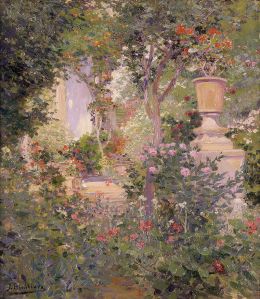
800px-El_jardí_de_l'autor,_Josep_Benlliure_Gil,_Museu_de_Belles_Arts_de_València

The Garden of the Author, by José Benlliure Gil via Wikimedia Commons

Summer has officially arrived here in the Pacific Northwest. This is a time when I can take my notepad out on the back porch, enjoying the garden and, to a certain extent, people watching. I love my back yard and my porch, feeling as if the heart of my home is there.

My work involves creating worlds and making them real to the reader. All the worlds I write about are a composite woven of my personal experiences and places that I love.

My town is a tiny place, slightly more than a village, and less than a city. Historically it is a mining town. Three things kept my town alive during hard times: the sandstone quarry, the coal mines, and timber. Now it’s a bedroom community for Olympia, the capital city of the State of Washington.

I’ve been here since 2005, and although I love my small house and garden, I don’t really fit into this community, which is probably my fault. Most of my writing groups are in Olympia, and my favorite places are in that city too. But I have a “soul-home,” which is comprised of the places that had the most profound meaning to me in my life. My soul-home is made up of three places that I have lived, which have all had a profound effect on me.

One part of that soul-home is Seattle. I lived there until I was 10, and went to West Woodland Elementary School.Our house was in Ballard, an urban community of fishermen who spent most of their time fishing in Alaska, and who were first-generation Norwegians. Everyone, including my family, was Lutheran, which was a cultural thing as well as religious. In the late 1950s to the early 1960s, Ballard was a small town within the big city, and the kids in my neighborhood were close-knit.

Seattle and the greater Puget Sound area is one component of my soul home, mainly because of the many immigrants whose cultures made it what it is today. The Pacific Northwest and Seattle, in particular, is a fusion of Asian, Norwegian, Native American, and hardy sons and daughters of the pioneers who came from all over the world seeking a better life. We are a unique mix and happy to be so.

In Seattle, music takes on a life of its own, and the world listens. Wikipedia has a page that lists all the famous musicians who came out of Seattle, and it’s pretty impressive. You can check it out here.

Music, art, and literature are celebrated in Seattle, and the influence the city has on Pacific Northwest culture is felt all up and down the Puget Sound region. I was fired to write my own books by reading the works of local area authors like Frank Herbert, Greg Bear, J.A. Jance, Terry Brooks and so many, many more Northwest authors. The Puget Sound region is a breeding ground for creativity, and Seattle is where it comes together.

Amaranthus and Savvy at the needles by haystack rock cannon beach 2012

But I am also a product of many summers spent in Cannon Beach, Oregon. I love that place so much that it is another piece of my soul-home. Terry Brooks and Ursula K. LeGuin are also fans of the North Oregon Coast, as are many famous musicians and actors. Something about it calls to the wilder side of me, and it seeps into my work.

But the primary portion of my soul-home came into my life when I was ten, and my family moved to Olympia, to a home on Black Lake. We moved from a nice, large, two-story home in a middle-class neighborhood to a tiny, rundown, ranch-style vacation house miles from civilization. It was cold and damp in the winter, and cool and pleasant in the summer. The house was barely livable, but the property was what my parents moved there for: the 350 feet of waterfront and the sandy beach, with forested land going back 5 acres to the county road. Dad was a WWII vet, and fishing was his greatest hobby.

The first thing I saw the day we moved there wasn’t the lake, although it was impressive. It was the Black Hills that dominated my view—black and forested with cedars, firs and hemlock, and rising high over the other side of the lake, they dominated the front windows. The many moods of the lake were out there for us all to see every minute of every day. You knew what going to happen by the direction the wind was coming from.

I hated it. I was torn from everything I knew, thrust into a world where I had no friends, and didn’t know my way around. Nevertheless, after the first, terribly difficult months of adjustment, I grew to love my Black Lake home, relishing the rural privacy and the deep connection to nature we formed, without our knowing it. When I left home, I carried a piece of it in my heart, and it will always be with me. My contemporary literary fiction is usually set there, with the bits and pieces I loved so much about that home forming a memory that shines, and I am able to give that place to my readers.

Just as my world, and the place I think of as my home was created by many generations of immigrants and pioneers filled with hope and the dream of a better life, so are most other cities and cultural centers.

The sense of place you instill into your work is the sure knowledge of where it is and what it represents to the protagonist. If you are crafting a world that doesn’t exist, as I have done with most of my work, you must make it real. Take some of what you love about your home, your town, and your culture, and write it into your work.

The knowledge of place is created in the reader’s mind by subtle cues, small descriptions, minor mentions over multiple scenes. A few words, little references to the background setting give the reader a framework upon which his imagination will build the rest.

Terry Brooks’ world of Shannara is real in his mind, because he lives there, just as Neveyah is real to me for the same reason. Both worlds have evolved from the reality and landscape we live in and love so much, yet they are radically different, both from each other and from the Pacific Northwest. They are composites of our imaginations, made real by our experiences.

Haystack_rock_monochromeWhen you write a novel or an essay, whether it’s fiction or non-fiction, the setting is how you create the sense of place, and must be a creation of many layers:
  • Place: where the protagonist lives, whether in the city, a village, a wandering life with no fixed address, or a farm in the countryside
  • Landscape/Terrain: mountainous, forested, high desert, seaside
  • Culture: in many stories, broad hints of what passes for political systems, the influence of religion, and the amount of respect accorded by society to music and art.

None of these layers will be overtly discussed or described at length in your work unless it is part of what creates the tension and drives the plot. But you, as the author, must know and understand these components as if they were your soul-home. That knowledge will come across in your work via small cues, and your readers will have a firm picture of the world in which your work is set.

4 Comments

Filed under writing

#amwriting: Thoughts on Italics

strange thoughts 2One of the virtues of being a part of a group of writers is that you can bounce questions and ideas off them. And, one thing the authors I hang out with all agree on is that italics are the devil.

We don’t like them because they are hard on the eyes, daunting, and difficult to read in large chunks when the main character is waxing internally poetic. Also, many readers subconsciously skip them, and so they have missed important information you may have imparted there. Having not read it, they may think your book is confusing and disjointed.

Yet the standard practice in genre fantasy is to set internal dialogue off in italics. For this reason, I no longer give my characters a lot of time to think, as such. In my more recent work, only rarely do my characters think in italics. I believe thoughts occur as an organic part of the narrative as a whole, and should be identified as if with a speech tag:

  • I wondered, why the red hat? Surely it meant something, as she was the second person I’d seen with a red hat. But perhaps I saw what I wanted, a conspiracy where none existed.
  • The flash of a purple stocking covering a shapely ankle, quickly hidden by her skirts, caught his attention. Was she a whore? He wondered. Some women working the streets wore red to advertise their profession, but she didn’t have the look of disillusionment the others wore beneath their masks of false desire. Why did she wear purple stockings?
  • His sword belt hung on the chair just as he’d left it the night before. But while the scabbard had been left behind, Caliburn was gone. His heart sank, and he cast his mind back, picturing his room before he’d gone down to breakfast. Nothing had seemed out of place, but had he seen the grip sticking out of sheath? He couldn’t recall.

Most thoughts don’t have to be italicized. My recommendation is to only voice the most important thoughts via an internal monologue, and in this way, you will retain the readers’ interest. The rest can be presented in images that build the world around the characters.

The exception to this is if the person who is thinking is also speaking with other people, and his thought could be mistaken as dialogue spoken aloud.

Many other, equally insidious reasons exist as to why authors may choose to use italics, most of which I think should be formatted in a better, easier to read style that still sets them off:

  • Mental telepathy, which is technically spoken dialogue
  • Letters, which are the written thoughts of people from far away
  • Emails, which are electronic letters
  • Text messages

Let’s consider correspondence between characters: some work is written in an epistolatory style. The entire narrative is told in the form of letters exchanged between the characters, as in the case of the brilliant steampunk Dawn of Steam series by Jeffrey Cook with Sarah Symonds. In that case, with each exchange of letters, the speaking character/author is made clear.

However, correspondences inserted into the body of a narrative should be formatted to set them apart, but not to throw the reader out of the story. For that passage, add an extra space both before and after, and inset both left and right margins by one-half inch (.5).

He looked at the missive from Father Rall, wondering how his day could get any worse.

Cayne,

I understand you are too unwell to duel lately. Your students’ health is at risk if you have a contagious disease. You must go to the infirmary today. If your illness is treatable, you should be back to dueling soon. If you are suffering from the prolonged use of magic, many treatments are now available that will help you live a long and productive life. Either way, Darlen is expecting to see you today.

Rall

Cursing, he wadded the note and threw it toward the wastebasket. 

To inset the margin in Microsoft Word: Highlight the section you want to inset. On the ribbon, go to the home tab. On the paragraph menu, click the little grey square on the lower right-hand corner to open the menu. Then on the indentation menu set both right and left to 1”. Click okay

inset_margin_how_to_printscreen_LIRF_cjj

Emails should also be represented this way, set in 1/2″ (.5), as they are the most common form of modern correspondence, but you want to show they are emails:

To: Ima.Fool@maildelivery.com

From:M.Jones@buenavuecorps.com

We regret to inform you that your manuscript “Under the Grandstand” is not what we are looking for at this time. 

Good luck in your future endeavors,

Maurice Jones

Editor, Buenavue Magazine

And what about text messages? They can be inset too.

Helen:

Hi. R U on ur way?

                 —-

Joe:

What? I only speak English. I’m on my way.

So that leaves us with mental telepathy. Mental telepathy is a commonly used trope in genre fantasy, and I have one series where it figures prominently. In writing groups you will hear of a variety of ways to deal with that.

Some authors will use italics.

  • I am always with you. Zan’s smile and supportive thought warmed her

Some authors use parentheses:

  • (I am always with you.) Zan’s smile and supportive thought warmed her.

Some authors will preface mental communication with a colon:

  • : I am always with you.: Zan’s smile and supportive thought warmed her.

When a story is mental-telepathy heavy, I personally will do anything to avoid throwing the reader out of the story.

  • Through their link, Zan said, “I am always with you.” His smile and supportive thought warmed her.

How you choose to portray thoughts and mental telepathy is purely your choice, and reflects what you see as your style. I was not always a purist—this lack of enthusiasm for italics has evolved along with other aspects of writing. But as an editor, when I am faced with large blocks of italics, I find them difficult to read. And frankly, some authors use internal monologues as a way to dump large amounts of background info.

When you have a thought-heavy narrative, I would suggest you find an alternative way to phrase your characters’ ruminations, making them an active part of the story. Avoiding italics will force you to write a stronger narrative, and your readers will thank you.

6 Comments

Filed under writing

#amwriting: so you want to be a writer

Dial-a-PlotSo, you want to be a writer. You have written several unpublished short works, and they were darned good, if you do say so yourself. Your novel is half finished, and your cousin, Phil, says he’s never read anything like it.

One of the many things I didn’t realize when I first began this crazy journey, is that your family and friends are not editors. Even if they are teachers, it’s likely they won’t notice anything but the most glaring errors in your work, and they will miss a great many of those.

Unless your cousin Phil is an author himself, he won’t mention places where you have repeated yourself ad nauseum, nor will he point out places that are phrased in a convoluted way.

Because these places are both annoying and confusing, Phil has most likely skipped over them, and didn’t mention it because he didn’t want to hurt your feelings. Large plot-holes, inadvertent use of clichés, and intriguing auto-correct mistakes get missed when your eager-to-help friends try to edit your work.

Your friends might know they don’t like what you wrote, but they don’t know why they don’t like it so they plow through it as fast as they can just to get the misery done with. They will spot a few problems, which helps, but isn’t going to make your manuscript readable.

Oh, your friends aren’t going to tell you they don’t like it, but they will think it: “This is awful. What’s up with the dog…is he an arsonist? No…it was apparently the Guinea pig but…no. God, this is the worst drivel I’ve ever read. How do I get out of this? Um…I’ll tell her it was great, I loved it.”

Consider joining an online beginners’ writing group. A lot of useful information can be found through these two free resources:

  • NaNoWriMo (National Novel Writing Month) nanowrimo.org They operate year round and have many resources available to help you get started.
  • Critters Workshop critters.org

Critter is an excellent place to get feedback on your work, in a way that doesn’t feel threatening. New authors should definitely consider joining the critters workshop.

a writer's stylePLEASE don’t publish your work without first having it edited professionally, or at the very least, read by an advanced writers group. You have no idea what your manuscript actually looks like. An advanced writing group will tell you the ugly truth, and they won’t be kind about it, but once they are done with you, you will reconsider your decision to not hire an editor.

If you plan to submit it to a large publisher, do hire an editor so that what you submit will be the best you can offer them.

If you are in the beginning stages of your writing career, invest in books on the craft of writing. Many books are available used through Amazon dot com, and many are available as affordable eBooks, also through Amazon. And you don’t need a Kindle, as you can download the free app for your PC, Mac, Android, or Apple device.

Books on the craft that are on my desk and in use today:

  • The Chicago Manual of Style
  • The Oxford American Writer’s Thesaurus
  • Rhetorical Grammar by Martha Kolln
  • Story: Substance, Structure, Style and the Principles of Screenwriting by Robert McKee
  • The Sense of Style by Stephen Pinker
  • The Sound on the Page by Ben Yagoda
  • Outlining Your Novel by K.M. Weiland

Books that help when I am stuck:

  • The Negative Trait Thesaurus by Angela Ackerman and Becca Puglisi
  • The First Five Pages by Noah Lukeman

Three websites a beginner should go to if they want instant answers in plain English:

Writing is not just a career for me—it is an obsession. Anything involving books is the proverbial shiny thing for me. All of my inspiration has come from the many excellent writers whose works moved me.

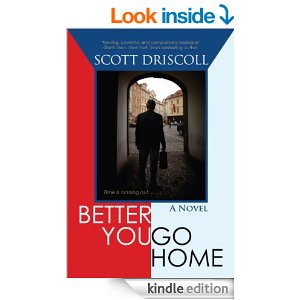
Better You Go Home, Scott DriscollI am also inspired by those authors whose workshops I have been fortunate enough to attend. Consider this high quality online option for learning the craft of writing:

Introduction to Fiction Writing at The Writer’s Workshop, instructor, Scott Driscoll.

This is admittedly not  free, but it is an exceptionally in-depth exploration of the craft. I have attended some seminars offered by Scott at several conferences and have never come away disappointed.

Remember, writing is a career path that requires dedication, and commitment to learning and growth. The money you spend going to workshops and conferences is an investment you make in your career. You not only learn about the craft of writing, but you will also learn the business aspect, and make no mistake: regardless of whether you are traditionally published or indie published, this is a business.

via buzzfeed

via buzzfeed

It’s not always easy, and sometimes it is hard to see progress. But with each completed project you gain strength and confidence. Your work evolves, growing in readability and your voice as an author becomes recognizably yours.

Writers finish their work. Many people will begin walking this path, believing they want to be writers. They like the idea of being a writer, and may claim to be a writer, but when you ask them about their work, they will tell you they don’t have time to write, and their work was only halfway begun when they had to stop.

The fact that you once sat in a Ferrari does not make you a Formula One driver.

I always urge writers to write every day, even if it is only for fifteen minutes. If you are not committed to writing regularly, your novel will never see the light of day.

Write regularly, and finish that book.

9 Comments

Filed under Literature, writer, writing

#amwriting: the truth about blogging

Who are youNothing improves your writing chops more than writing every day. Deadlines can be daunting but say what you will about not being able to write under pressure—I think that is when I do my best work.

Blogging regularly offers me that mix of self-imposed deadlines combined with the opportunity to riff on my favorite subject—the craft of writing. Much of what I have learned over the past four years has been through researching topics for this blog.

When I first began, I was only blogging under duress—my former publisher was forcing me to. This, he said, would help get my name out there, and give me a regular platform for my opinions. That blog is long gone, and those posts were pathetic attempts to write about current affairs as a journalist, something that has never interested me.

It wasn’t until I stopped trying fit into a mold someone else had designed for me and began writing about my interests that I learned to love the craft of blogging. That is also when I began to grow as a writer, because I have to work hard to proofread my own work and then publish it. If I am not vigilant, it posts with “warts and all.”

I don’t like warts in my work.

RALPH WALDO EMERSON QUOTE meme copyBlogging has made me a “thinking” author, as well as a “pantser.” I can write using the “stream of consciousness” method as I am now, or I can write it several days in advance by putting together a quick outline about whatever is interesting me at the time. I just do the research, and the post begins to write itself.

I use WordPress for this blog—and many of you know how aggravating I have found some of the changes recently implemented by WP. I am a contributor to two other blogs hosted by WordPress, and the other authors I am working with tend to find WordPress technical “support” just as exasperating as I do.

Giving me a list of canned questions and redirecting me to threads filled with complaints by other users is not “tech support.” It is, instead, clearly an effort to maintain separation from the user and any real-life problems he/she may have with using their product. (See my post of March 2, 2016: wanted: flatiron for curly quotes and other blogging twists.)

And just today they have introduced a new “less invasive” way of inserting links into the post, by which I mean with fewer options (unless you know the magic trick) and less useful. However, although it is evident the fine people at WordPress are not done messing with our heads, I am still not going to change this blog to a different platform—yet.

Instead, I will continue to work around things until they force me to switch to a platform run by people who are genuinely involved with their users and who care enough to respond to technical questions with more than circular, canned responses that go nowhere, like a snake eating its own tail.

I am a contributor to several blogs hosted on Blogger (Best In Fantasy is one), and I do like the way Blogger does NOT keep changing and fixing what isn’t broke. But I’ve been here at this little corner for several years now, and I hate moving so this will remain a WordPress blog.

I have made many friends through blogging, people all over the world who I may never meet in person, but who I am fond of, nevertheless.

This place is where I develop seminars on the craft of writing. I find that talking to you about my obsession helps me organize my thoughts. And, although I hate to say it, my first publisher (Lord Voldemort) was right about blogging. Blogging regularly does get your author name out there and showcases your work and your voice.

But only if you are passionate about what you are discussing.

I recommend blogging to anyone who has a craft they are fired up about. For novelists, I also recommend publishing short pieces—flash fiction. Little off-the-cuff pieces of less than a thousand words are fun to write and often find their way into your larger work, as they are a great way to brainstorm ideas.

If you want to know more about getting your own blog up and running, see my post of December 14, 2015, Blogging is Writing TooThis post talks about how to use the new default system here at WordPress so that you can insert pictures and make a nice looking post.

  • Keep it down to about 1000 words more or less.
  • Use the spellchecker tool to look for obvious errors.
  • Write in draft form and don’t publish it right away–come back and read it over again, and make corrections.
  • If you use information found elsewhere, quote it and credit the author
  • Use images that are either public domain, or that you have the right to use
  • Put links to other informative sites in the text

Rule number one: be consistent. I began by blogging once a week on a now defunct site—but my actual posts were more often made only once or twice a month. I dreaded it and didn’t want to do it. My blog stats were in the tank because I wasn’t applying myself to it.

One day it occurred to me that because I am a hermit and spend all day writing, my only way of communicating with my potential readers was through blogging. And it also occurred to me that communicating with other writers in the process could only benefit me.

I hated the thought of it but sucked it up. Once I realized that I could talk about whatever I wanted, Life in the Realm of Fantasy was born. My first posts stunk like last week’s garbage, but they were a beginning. With every post I wrote, I felt a sense of accomplishment, and the next post was better.

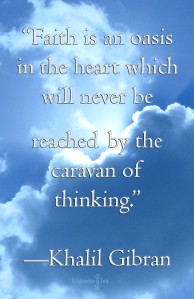
Kahlil Gibran MemeNow I am writing three posts a week on this blog, and at least one post a week for each of several other venues. I spend Sundays putting my blog posts together and look forward to the time I spend here, exploring the craft of writing.

Life in the Realm of Fantasy has evolved over the years because I have changed and matured as an author. Four years ago I would never have felt comfortable publishing my poetry. Now, I regularly post short works and poems on Fridays, some bad and some worse—but all them exercises in creative writing.

At first it took courage to lay my work out there because letting people see my work unedited by my editors made me feel like I was a teenager all over again, getting ready for the prom and hating my hair. I feared the flaws I saw in it.

Now I feel more like I am sharing it with my friends and I feel good about it.

To repeat myself ad nauseum: If you really want to grow as an author, you must write. Try to write daily, even if it is only a paragraph or two. Consider writing that paragraph as a short blog and dressing it up with a picture or two. Someone will read and enjoy it–and you may have made a fan.

2 Comments

Filed under blogging, Self Publishing, WordPress, writing

#amwriting: Verbs: when to use “if I was” and “if I were”

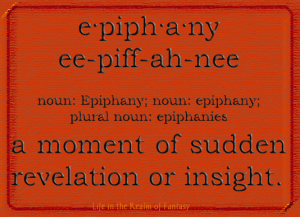
epiphanyMost of my ideas for blog posts arise during work, or in conversation with other writers. Usually, these revolve around concepts I have a basic understanding of but haven’t really given a lot of thought to. Writing about them helps to clarify and cement them in my mind.

Every now and then a grammar topic comes up that I’ve never really thought about. If it’s a subject I am not really clear on, I will research it, and then try to distill my discoveries into bite sized chunks.

We writers often operate by instinctively using the knowledge we gained in school. Often, as in my case, that knowledge is a bit tarnished and worse for the wear.  Today’s topic is one fabulous instance of that very thing.

Last Tuesday, we were standing around the virtual watercooler at the virtual offices of Myrddin Publishing. We have authors and editors on three continents, so we use a virtual office. A grammar question arose, and this is how the conversation went:

Shaun Allan (UK) said: Grammar question, please. ‘As if it were’ or ‘as if it was’ ?

Ross Kitson (UK) said: Would it depend upon the subject of it? If it were an individual then I’d say “was” whereas if ‘it’ were an event then I’d say ‘were.’ Might be best to ask a non-Northerner.

Connie Jasperson (me) (US) said: Ross Kitson is correct (in my opinion).

Stephen Swartz (US) said: were.

Gary Hoover  (US) said: A HUGE issue with most people is the subjunctive tense. Anything that is not actual but could be is subjunctive (as your phrase indicates). “If I were a carpenter.” Is correct because the singer isn’t actually a carpenter. “I was a carpenter” is correct if he actually was. (Gary inserted the link to Wikipedia’s article on “English Subjunctive”)

Alison DeLuca (US) said: I’m a subjunctive slore! ‘Were’ all the way.

It turns out this conversation revolved around the “Past Subjunctive Tense.” Gary, Stephen, and Alison had it right.

As a result of this conversation, I did a little more digging, wanting to know more about this oddly named construct. It just so happens that on Saturday morning, Stephen Swartz and I both happened (at the same time) upon an excellent blog post by the Grammar Girl, Mignon Fogarty.

When you go out to Wikipedia the whole subjunctive verb thing looks quite complicated, but it doesn’t have to be. The subjunctive (in the English language) is used to form sentences that do not describe known objective facts. For the purposes of this post, we are only looking at Past Subjunctive definitionSubjunctives: the verbs was and were.

But first, what does “subjunctive” mean?:

Dictionary.com defines “Subjunctive.” as:

adjective

1.(in English and certain other languages) noting or pertaining to a mood or mode of the verb that may be used for subjective, doubtful, hypothetical, or grammatically subordinate statements or questions, as the mood of ‘be’ in ‘if this be treason.’

Compare imperative (def 3), indicative (def 2).

noun

2.the subjunctive mood or mode.

3.a verb in the subjunctive mood or form.

First, let’s consider what Past Subjunctive Tense covers: how to use the words ‘was’ and ‘were.’

Which is correct?

  • I wish I were a penguin. I would fly through the water.
  • I wish I was a penguin. I would fly through the water.

If I am only  only wishing I were a penguin, were is correct. If I actually could be a penguin, was would be correct and I would have to rewrite my sentence, by deleting ‘I wish’ and changing ‘would’ to ‘could.’

The Grammar Girl goes farther. She says: Believe it or not, verbs have moods just like you do. Yes, before the Internet and before emoticons, somebody already thought it was important to communicate moods. So, like many other languages, English has verbs with moods ranging from commanding to questioning and beyond. The mood of the verb “to be” when you use the phrase “I were” is called the subjunctive mood, and you use it for times when you’re talking about something that isn’t true or you’re being wishful.

I love that clue—that verbs can be wishful.

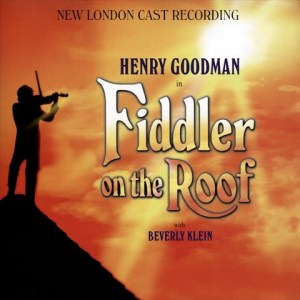
fiddler onthe roof soundtrackThe Grammar Girl gives us a great example: Think of the song “If I Were a Rich Man,” from Fiddler on the Roof. When Tevye sings “If I were a rich man,” he is fantasizing about all the things he would do if he were rich. He’s not rich, he’s just imagining, so “If I were” is the correct statement. This time you’ve got a different clue at the beginning of the line: the word “if.”

However, there are times when we use the verb ‘was’ even though the subject of the sentence has not yet happened, or may not happen at all. Grammar Girl says:  But “if” and “could” and similar words don’t always mean you need to use “I were.” For example, when you are supposing about something that might be true, you use the verb “was.”

Past subjunctive verb forms express a hypothetical condition in present, past, or future time:

  • Don’t complain about the food. What if I was a chef?
  • I wish I were reincarnated. What if I was a penguin?

If it’s only wishful thinking, we use “were.” If it might be true but we don’t know or it hasn’t happened, we use “was.”

So now, thanks to a bunch of editors hanging around the water cooler and the miracle of the internet, we know how and when to use our moody, past subjunctive verbs.

If you are a grammar junkie (as I am becoming) I highly recommend you check out Mignon Fogarty’s Grammar Girl blog, or pick up her books.

4 Comments

Filed under writing

#amwriting and #amrevising: weeding the garden of words

Free-range pansies by cjjaspersonWhen I write a novel, I always end up with a lot of back story. These are details that are important for me to know, but not meant for the actual novel. It’s more a way for me to mentally talk my way through the first draft.

I think of my manuscript as a garden of words, and by the time the novel is complete, it will have been weeded, dug up, and replanted many times.

Every author has their own style, their own way of getting the story down on paper. My style is not the usual way, but it works for me.

The way I do a first draft is this: First, I put together an outline listing all the characters and plot points.  Second, I write the ending and then write the scenes for the large events and turning points. Once those are in place, I start at the beginning and write the story in a linear form, connecting the large events and finally meeting up with the end.

Along the way, my story evolves. A lot of fluff gets added in because I need to sort the story out in my head and writing it down is the way I do that. This fluff is all written in a passive, telling voice, and is part of my road map for creating the first draft–it was put down in that fashion so I would remember it later when I came back to rewrite the scene and turn it into an action sequence or cut it entirely.

I’ll give you an example of a telling sequence from Julian Lackland’s story, which is set in Waldeyn, Huw the Bard’s world. It was written down in this way so I would have a mental picture:

“In Port Lanque, the harbor itself was accessible only by one broad cobbled street, Quay Street, snaking down the steep cliffs to the piers. This wide boulevard ran through the center of town, twisting and turning in a sharp descent down to the piers, and had been kept in good repair by the pirates as it was the only way to move carts and drays down to the ships for off-loading loot. At the very top of Quay Street, in the worst part of town, an immense, rundown palace loomed. Now less than a filthy slum, it was once the home of generations of kings.”

Little or none of that passage will make it into the final manuscript because it doesn’t advance the plot. It was originally written to set the scene in MY mind. But I didn’t throw it away–I kept it in my file of outtakes along with some useful conversations further down the page that may come in handy in a different story:

“You’re wearing a dress, madam, not a crown. How can I be sure you’re the real king?” King Harry eyed the pirate. “You could be any old thief claiming to know how to sail a ship. I happen to like this ship, and I’m not disposed to give her away to some random old man in a dress.”  

That above passage is why I say you shouldn’t be married to your prose. I love the scene and the conversation, and the action that follows, but the plot thread it is part of does not advance Julian Lackland’s story. However, I intend to turn it into a short story set in Waldeyn.

By the time I finish a manuscript, I will have written the beginning three different ways, some names will have changed, and relationships will have evolved. But the major plot points and the ending will usually be the same as I had originally envisioned.  I say ‘usually’ because that was not the case for Valley of Sorrows. I ended up completely rewriting the end of that manuscript.

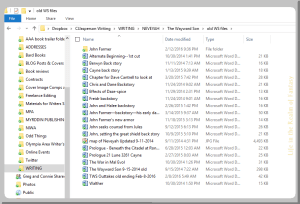
prnt screen 1 never delete cut passagesI can’t say it often enough: never delete any passage that you have cut from your manuscript. Save it in a separate file labeled ‘outtakes,’ because you may need that information later, or you may be able to turn that work into a short story.

A lot of authors use Scrivener for this, and it seems to work for them. I find it simpler to just copy and paste the work into a new file and save it in my outtakes for that particular novel. That way it’s out there in my dropbox or google drive and available no matter where I go or what happens to my computer.

Short stories are the bread-and-butter of many authors. You get paid a small sum for them, and your author name is published in one more place. The small story you toss out there could attract new fans to your other work.

Our work starts out full of passion and promise. Like a garden, it can grow wildly out of control. When you can’t see the flowers for the weeds, the garden must be cut back and pruned. The wild weed-words must be pulled in order for the reader to enjoy the real story.

Sometimes those weeds produce beautiful flowers when you get them into a different garden.

2 Comments

Filed under Self Publishing, writer, writing

#amreading: the genesis of an author

Nymphenburg, View From the Seaside painting by Joseph Wenglein 1883

Nymphenburg, View From the Seaside painting by Joseph Wenglein 1883

I find the process of creativity as experienced by others intriguing, and am always curious about how they became authors.

My own journey to this place in my life was pretty tame. But some people  become authors via more adventurous, alternative paths.

This notion is explored in Elizabeth McKenzie’s frank, autobiographical post published on January 26, 2016, for LitHub.

Max Ernst, The Elephant Celebes 1921, Tate, London via WikipediaAppropriately titled “Surrealism and Decomposition. Or How I Wrote My Novel,”  McKenzie takes us on a journey through both her personal quest for enlightenment and creativity and the authors whose works colored her writing life. The quote that hooked me into reading this piece: “I read Rimbaud and Breton and Lautreamont and started according my dreams the respect I felt towards art. I wanted to have visions, I wanted, as Rimbaud put it, to take part in the systematic disordering of the senses.”

Her honest account of her sometimes psychedelic journey through alternate forms of consciousness and literary greatness is quite intriguing and took me back to my college days when many of my friends also chose that path for enlightenment.

Psychedelics were never an option for me, although in that way I was the odd one in my circle. The notion of them frightened me. Life in the early 1970s was surreal enough in its cold reality. My form of mind-expansion came in books.

The authors whose works influenced me as a young adult might surprise those who know me.

In my twenties, sci-fi and fantasy books were expensive and hard to get. The libraries stocked a few, but not as many as I required, as fast as I read.

When I was young, my parents were prolific readers and were members of both Doubleday Book Club and Science Fiction Book Club. They also purchased two to four paperbacks a week at the drugstore and subscribed to Analog and several other magazines.

samuel pepys diaryThere was always something new and wonderful to read around our house, and most of it was speculative fiction, although we had the entire 54 volume leather-bound set of the Great Books of the Western World, and our father insisted we attempt to read and discuss what we could.

Some were mostly understandable, such as William Shakespeare and Samuel Pepys.

Plato, not so much, and yet his work did influence me.

At the age of 14 I didn’t understand Pepys, but I read him, and while we were bass fishing on a Saturday morning, Dad would talk about the differences between life and morality in Pepys’ London and our life in suburban America in 1969. His thought was that I should learn about the 17th century and the Great Fire in London from an eye witness, just as I had learned about the war in the Pacific from John F. Kennedy‘s autobiographical novel,  PT 109.

But Pepys’ London of 1666 was so different from the ‘Mod’ subculture of the London of 1966 (and the Beatles) that I was familiar with thanks to Life magazine. To me, it was almost like speculative fiction. In many ways it was more difficult  for me to believe in historical London than Tolkien’s Middle-Earth.

When I married and left home, I still read every sci-fi or fantasy novel that came out in paperback, budgeting for books the way others of my acquaintance budgeted for beer. I read the classics for my irregular college classes, and learned to love Chaucer and James Joyce. For a variety of reasons I never earned a college degree, but I’ve never stopped reading and researching great literature.

But reading for entertainment was still my “drug.” I jonesed for new books by the great ones, Anne McCaffrey, Jack Chalker, and Roger Zelazny, reading and rereading them until they were shreds held together with duct tape.

As a married student attending college in Bellingham Washington, purchasing books for pleasure became a luxury. I found a secondhand bookstore where I could get a brown paper shopping bag full of novels in too poor a condition to sell on their shelves for $2.00 a bag if you had a bag of books to trade in.

As a college drop-out I went through a bag of books every week, and within a year, I had read every book they had.

Devils Cub Georgette HeyerThus, out of desperation, I discovered a whole new (to me) genre: regency romances written by Georgette Heyer, and other romance writers of that generation. Those books, along with beat up copies of bestsellers by Jack Kerouac, James Michener, and Jacqueline Susann began to show up in the pile beside my bed.

So at least some of my literary influences can be traced back to dragons, booze, morality, and England’s romantic Regency—lived vicariously through these authors’ eyes.

Always when the budget permitted, I returned to Tolkien, Zelazny, McCaffrey, Asimov, Bradbury, and as time passed, Piers Anthony, David Eddings, Tad Williams, L.E. Modesitt Jr., and Robert Jordan to name only a few.

And there were so many, many others whose works I enjoyed. By the 1990s, the genres of fantasy and sci-fi were growing authors like a field grows weeds, and I loved it.

All of the books I read as a child and young adult have influenced my writing. They still inspire me.

Nowadays I rarely am able to read more than a chapter or two before falling asleep. My Kindle is full of books, and I haven’t got the time to read them because I have to write my own story. Having the luxury to spend a day wallowing in a book is a treat to be treasured.

Old booksBut it is because of the uncountable authors whose works I have been privileged to read that I was inspired to think that my own scribblings might be worth pursuing.

Writing has always been necessary to me, as natural as breathing. In the beginning, my writing was unformed and was a reflection of whoever I was reading at the moment. As I matured and gained confidence, I found my own ideas and stories, and they took over my life.

Once that happened, I became a keyboard-wielding writing junkie.

Some days I write well, and others not so much, but every day I write something.

And every day I find myself looking for the new book that will rock my universe, a new “drug” to satisfy my craving, even if I know I won’t have time to read it.

I’m addicted to dreams and the people who write about them. Reading is my form of mind expanding inspiration. Without the authors whose books formed my world, I would never have dared to write.

Life would be so boring.

2 Comments

Filed under Publishing, writer, writing