Tag Archives: #amwriting

Challenges in writing and selling short stories #amwriting

If you have been writing for any length of time, you have probably discovered that there is an art to both writing and selling short stories.

It is only when we begin reading widely, and in many different genres, that we discover a painful truth: great writing is not merely a matter of following rules.

As an editor and a voracious reader, I often find a special kind of life in a manuscript that has broken some of the rules.

However, poorly constructed work will be rejected by all publishers, and no reason will be given.

Grammar rules exist for a purpose, and haphazard breaking of them can destroy a reader’s enjoyment of a story. I guarantee you won’t find a publisher for that story.

If you want to sell your work, you must know the rules of grammar and have a basic understanding of mechanics. These rules exist for the comfort and convenience of the reader, so don’t think that they don’t matter.

The four fundamental laws of comma use are not open to interpretation, but are simple and easy to learn. Be consistent in their use.

1) Never insert commas “where you take a breath” because everyone breathes differently.

2) Do not insert commas where you think it should pause, because every reader sees the pauses differently.

3) Use commas to join two independent clauses when they are joined by a conjunction. The independent clause is a complete stand-alone sentence.

  • Edgar worships the ground I walk on, but his adoration bores me.

4) Don’t use a comma to join a dependent clause to an independent clause.

  • Edgar worships the ground I walk on and brings me my coffee.

If you understand those four concepts, you are probably ahead of the competition.

Unfortunately, it is easy to murder what began as a beautiful story. Consider those writers who spend years carefully combing every spark of accidental passion out of their work, creating textbook-perfect sentences that are flat, toneless.

Other authors randomly have characters swear, not consistently, but off and on, apparently for the shock value. Others might inject a little graphic violence or sex into the spots where they couldn’t think of what to do next.

When you do anything that breaks a rule, you must do it consistently and with purpose.

“Shock” for the sake of shock has no value to offer. However, a well-written manuscript may shock and challenge you.

When you understand how a story is constructed, you’re able to find creative ways to phrase things and still keep the story interesting.

When the way you write prose goes against the accepted practice, do it intentionally.

Be sure to tell your editor what rules you are choosing to ignore and why, and she will make sure you are consistent.

We all begin at the same place as writers, all of us mortals with flaws and our own way of doing things.

So now that we understand we all begin as novices, I must ask you this question:

Are you writing because you’re burning to tell a story? If you are not writing for the joy of writing, quit now. You’ll never sell a story you don’t believe in.

Otherwise, keep writing. Only by continued practice and attention to learning the craft will you develop the balance you know you need. Purchase the Chicago Guide to Grammar Usage and Punctuation, and learn how sentences and paragraphs are constructed. Then learn how to fit those sentences and paragraphs into a story arc.

That way, when you break a rule, you will be knowledgeable and do it with style.

The best way to gain a handle on all aspects of writing fiction is by writing short stories and essays.

With each short-story you write, you increase your ability to tell a story with minimal exposition and intentional prose. This is especially true if you limit yourself to writing the occasional practice story, telling the whole story in 1000 words or less. These practice shorts serve several purposes:

  • You have a finite amount of time to tell what happened, so only the most crucial of information will fit within that space.
  • You have a limited amount of space, so your characters will be restricted to just the important ones.
  • There is no room for anything that does not advance the plot or influence the outcome.
  • You will build a backlog of short stories and characters to draw on when you need a good story to submit to a contest.
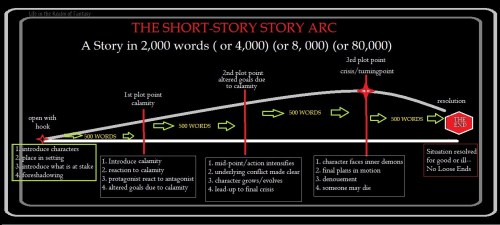
For me, the most difficult challenge is to write flash fiction, where I have less than 1,000 words to tell a story. This means we only include the most essential elements of a story. All my stories are either shorter or longer than 1,000 words and require weeks of effort to get them to fit that parameter.

As a poet, I find it far easier to tell a story in 100 words than in 1,000. That 100-word story is called a drabble and is an art form in itself.

Many people have asked how to find places that are accepting submissions. That can be a challenge, but these are links to two groups on Facebook where publishers post open calls for short stories.

Open Submission Calls for Short Story Writers (All genres, including poetry)

Open Call: Science Fiction, Fantasy & Pulp Market (speculative fiction only)

You do have to apply to be accepted into these groups and answer specific questions to prove you are legitimately seeking places to submit your work. Once you are approved, certain rules must be followed for a happy coexistence.

Some open calls are for anthologies that are not paid, others pay royalties. I would carefully check out the unpaid ones to make sure there is a good reason why it is unpaid, and that the publisher is reputable.

Be sure any contracts limit the use to that volume only, and you retain all other rights.

Also, you should retain the right to republish that story after a finite amount of time has passed, usually 90 days after the anthology publication date.

SFWA has a wonderful list of predatory publishers that you should avoid doing business with. They also have useful information on things that might be found in predatory contracts. You don’t need to be a member to access these. https://www.sfwa.org/

You can find publications with open calls at Submittable. Unfortunately, that has lately become not as useful regarding speculative fiction as it was several years ago. Still, many poetry collections, literary anthologies, and contests use Submittable, so that is an option. https://www.submittable.com/

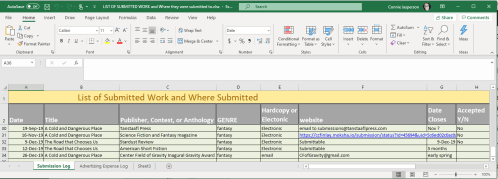
All in all, you have to kiss a lot of frogs, so to speak, before you find that prince of a publisher that is looking for your work. Don’t let one rejection stop you. Keep that submission mill running, and for the love of Isaac Asimov, keep track of who you sent what to, what day you sent it, and whether or not it was accepted.

7 Comments

Filed under writing

The Inferential Layer Revisited: Drama #amwriting

Today I am flying a kite on a beach somewhere south of here. In honor of that, we are revisiting my post on DRAMA, something I try to avoid in real life! This post originally appeared here on August 26, 2019.


Whether you are writing a screenplay, a short story, or a novel, you are writing something that you hope will resonate with the reader and move them. A lesson that screenwriters learn early on is that each scene must be viewed as a mini-story; a complete story within the larger story. They learn this early because they don’t have the luxury of space that we who write novels have. The entire story of a screenplay must be told within a finite framework of time, so the writer must wring the most emotional impact out of the least amount of words.

I’m still working on this, myself. But I’m getting there.

So, where do we start? We begin with the most fundamental reason people purchase books or go to plays and movies—drama. The inferential layer of the Word-Pond we call Story is all about the drama, and I’m not talking over-the-top hysterics here. We combine emotional highs and lows with action and reaction in each passage to create dramatic scenes that leave a mark on the reader.

Of course, we understand large, emotionally charged, outwardly noisy dramatic scenes. They impact us and leave us reeling. But the only way those events have power is if they have context. They must be balanced by quieter, more introspective moments.

Drama can happen in the mildest of scenes, places where it looks as if nothing important is happening. The follow-up/regrouping scenes are places where you have the opportunity to waylay the reader with something unexpected. This is where you show the reader what is happening beneath the surface, the inner demons and fears the characters now face.

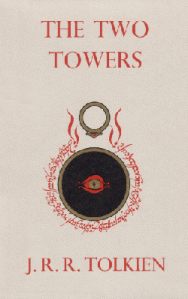
Consider  The Two Towers by J.R.R.Tolkien. Let’s look at the emotional impact of the scene that takes place in Shelob’s Lair. Frodo and Sam have survived incredible hardships and have made it to Cirith Ungol.  The passage is an excellent example of the dramatic story within a story that advances the overall plot.

Drama is the hope we feel in the moment when Frodo faces Shelob with the Phial of Light. Drama is the moment Frodo fails, the moment he is stung.

It is the shock, the horror, the moment where Sam reluctantly takes up Frodo’s sword, Sting.

It is triumph when Shelob impales herself on Sting, a weapon made of Mithril and a sword in the hands of a hobbit. But really, Sting is only a long-knife, and despite its mythic properties, it is not long enough to kill the giant arachnid, Shelob.

Still, she is wounded and scuttles away.

Drama is in the despair, the quiet moment afterward, where Samwise realizes that everything they have just endured was for nothing.

Drama is the moment of sharp introspection, the internal conversation when Sam fears his own weakness; the moment when his faith is not just shaken—it is lost. It is that moment of profound despondency in Shelob’s Lair, the dark night of the soul where Sam believes the spider has killed Frodo.

What about love? Few emotions have as much dramatic potential as that of love. It has many shades, from friendship to affection, to desire, to passion, to obsession, to jealousy, to hate.

Let’s look at the Pulitzer Prize winning short story, Brokeback Mountain, by Annie Proulx (synopsis via Wikipedia):

In 1963, two young men, Ennis del Mar and Jack Twist, are hired for the summer to look after sheep at a seasonal grazing range on the fictional Brokeback Mountain in Wyoming. Unexpectedly, they form an intense emotional and sexual attachment, but have to part ways at the end of the summer. Over the next twenty years, as their separate lives play out with marriages, children, and jobs, they continue reuniting for brief liaisons on camping trips in remote settings.

Ennis and Jack are tied to each other, but they love their wives and children. They are products of their society, and their personal reactions to the intensity of their relationship are both hurtful and understandable in the context of their time and situation. People have love affairs in books all the time, and we often find them forgettable. It is the complexity of external societal pressure and deep, confusing emotion that makes Ennis and Jack’s attachment memorable.

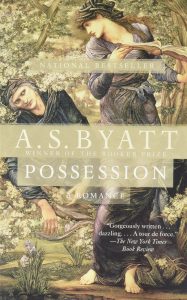
Then there is the novel, Possession, by A.S. Byatt, winner of the 1990 Booker prize. This is a complex relationship that begins in a rather boring manner – it opens in a library when Roland Michell, a scholar and professional man of high morals commits a crime: he steals the original drafts of letters he has come across in his research. This act has the potential of becoming his professional suicide. The synopsis via Wikipedia:

(Roland Mitchell) begins to investigate. The trail leads him to Christabel LaMotte, a minor poet and contemporary of Ash, and to Dr. Maud Bailey, an established modern LaMotte scholar and distant relative of LaMotte. Protective of LaMotte, Bailey is drawn into helping Michell with the unfolding mystery. The two scholars find more letters and evidence of a love affair between the poets (with evidence of a holiday together during which – they suspect – the relationship may have been consummated); they become obsessed with discovering the truth. At the same time, their own personal romantic lives – neither of which is satisfactory – develop, and they become entwined in an echo of Ash and LaMotte. The stories of the two couples are told in parallel, with Byatt providing letters and poetry by both of the fictional poets.

Love, whether unacknowledged or returned, physical or platonic, is complicated. The sections of movies, books, and short stories where the arc of the scene showcases true emotional complexity stick with me. I find myself contemplating them long after the story has ended.

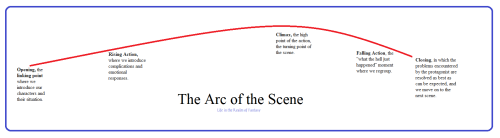
In all three literary examples, The Lord of the Rings, Brokeback Mountain, and Possession, it is the interpersonal relationships entwined with the action that illuminates the drama. Action scenes require some sort of emotion to give them context, to shape them into an arc:

  1. Opening, the linking point where we introduce our characters and their situation.
  2. Rising Action, where we introduce complications and emotional responses.
  3. Climax, the high point of the action, the turning point of the scene.
  4. Falling Action, the “what the hell just happened” moment where we regroup.
  5. Closing, in which the problems encountered by the protagonist are resolved as best as can be expected, and we move on to the next scene.

The resolution of one scene is the linking point to the next, the door that takes us further into the story. The dramatic arc of each scene ends at a higher point in the overall story arc.

The emotions surrounding the drama in our literature attracts us, captivates us, keeps us interested. In every story, drama is the moment you, the reader, realize you must take up the hero’s task; you must carry the evil One Ring to Mount Doom.

Drama done well can take the reader from joy to despair to resignation and back to hope within the arc of the scene. This is good pacing and urges the reader to keep turning the page to see what is coming next.


Credits and Attributions:

The Inferential Layer: Drama, © 2019  Connie J. Jasperson  https://conniejjasperson.com/2019/08/26/the-inferential-layer-drama-amwriting/ (accessed August 16, 2020)

Wikipedia contributors, “Brokeback Mountain (short story),” Wikipedia, The Free Encyclopedia, https://en.wikipedia.org/w/index.php?title=Brokeback_Mountain_(short_story)&oldid=902058091 (accessed August 24, 2019).

Wikipedia contributors, “Possession (Byatt novel),” Wikipedia, The Free Encyclopedia, https://en.wikipedia.org/w/index.php?title=Possession_(Byatt_novel)&oldid=909067002 (accessed August 24, 2019).

The Two Towers, by J.R.R. Tolkien, first edition cover, Publisher George Allen & Unwin, © 11 November 1954, Fair Use.

Possession by A.S. Byatt, first edition cover, Publisher Chatto and Windus, © 1990, Fair Use.

2 Comments

Filed under writing

Plotting the End #amwriting

Maybe you’re a “pantser,” not a “plotter.” Unlike me, you like to wing it when you write, just let the ideas flow freely. I have “pantsed it” on occasion, and it can be liberating.

For me there comes a point where I realize my manuscript has gone way off track and is no longer fun to write. This is when I must go back and find the point where the story stopped working.

Perhaps you are working on a manuscript you began writing during last year’s NaNoWriMo (National Novel Writing Month). Maybe you’re 80,000 words in and need to write the final 20,000 words to finish the book. You have a vague idea of how it ends but can’t figure out how to get there.

This is what I am dealing with in regard to two novels right now. One began as a serial published in 2015 – 2016 on Edgewise Words Inn, which was how I discovered that writing and publishing a chapter a week is not my forte. This book has been on hold for several years because of other writing commitments.

The other unfinished business is book one of a duology. I’ve committed to writing the second book in this set before publishing the first. This will ensure the wait time for the second book’s release will be reasonable. Even though the entire story will span two books, this first half must have a finite ending.

It’s at what would be considered the midpoint of the 2-book story arc. The problem has been deciding where in the overall story arc of the duology the ending of book 1 occurs, and how it leads into the action of the opening chapters in the second half.

I have stopped floundering and (literally) cut my losses with both unfinished books. I trimmed both back to the place where they dissolved into chaos. After a lot of writing and rewriting, I have the first three-quarters of both books in good shape. But now I’m suffering from “pandemic brain.” I don’t know what to do or how to bring either story to its intended conclusion.

This isn’t unusual. Fortunately, my years of doing NaNoWriMo have given me some tools for just such an emergency.

The first tool is a sense of balance. Every published novel has entire sections that had to be rewritten at least once before it got to the editing stage.

Much of what you cut out can be recycled, reshaped, and reused, so never just delete weeks of work.

  1. Save everything you cut to a new document, labeled, and dated: “Outtakes_Bleakbourne_rewrite1_08-08-2020.” (that stands for Outtakes, Bleakbourne on Heath, rewrite 1, Aug-08-2020)

Now, we must consider what will be the most logical way to end this mess.

What is the core conflict? For me, a good way to pull the ending out of my subconscious is to revisit the outline I made of the story arc. Fortunately, I have been on top of things in both worlds, so deviations from the original plans have been noted. I’m looking at the current blueprint of both works-in-progress to this point.

The problem I am experiencing now is that I didn’t know exactly where either of these books were going to end when I began writing them, so that part never got plotted. Now I can see how the internal growth of the characters has caused two of them to fundamentally change from what was originally planned. Their personal goals have radically deviated from what I had initially thought.

By seeing the whole picture of the story to this point, I usually find the inspiration to put together the final scenes that I know must happen. Something big and important must be achieved in the final chapters, so for me, pausing to do some more plotting and loose outlining is crucial to writing a logical sequence of events.

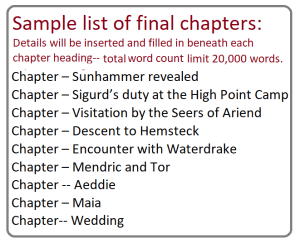
I sit down with a notebook (or in my case a spreadsheet) and make a list of what events must occur between the place where the plot was derailed and the end. This is just a list of chapters with the keywords for each scene noted.

Once I have refreshed my memory with what has gone before and made a few notes as ideas occur to me, I start a new document and save it with a name that clearly denotes that it’s a worksheet for that novel.

HA_Final_Chpts_Worksheet_08-08-2020 (Heaven’s Altar, final chapters worksheet, and the date)

At first, the page is only a list of  headings that detail the events I must write for each chapter. I know what end I have to arrive at, but the chapter headings are pulled out of the ether, accompanied by the howling of demons as I force my plot to take shape:

  • Chapter – Sunhammer revealed/swearing the vows of protection
  • (and so on until the last event)

You’ll note that while the word chapter is there, and a rudimentary title, there are no numbers. I don’t number my chapters until the third draft is complete, although I do head each section with the word “chapter” written out, so it is easy to find with a global search. The titles will disappear, or be changed, depending on which series it is.

This is because in my world, first drafts are not written linearly. For me, things change structurally with each rewrite. It’s less confusing if the numbers are only put in when the manuscript is finalized.

I begin writing details that pertain to the section beneath each chapter heading as they occur to me. Once that list is complete, those sketchy details get expanded on and grow into complete chapters, which I then copy and paste into the manuscript.

When I begin designing the ending, it’s as challenging and yet easy as plotting the opening scenes. I go back to the basics and ask the same questions I asked in the beginning.

It’s a good idea to have a separate worksheet that lists each character and contains notes detailing what they wanted at the beginning. That way you can see how that has changed by the events they have experienced.

  1. What do the characters want now that they have achieved a significant milestone?
  2. What will they have to sacrifice next?
  3. What stands in the way of their achieving the goal?
  4. Do they get what they wanted in the end, or do their desires evolve away from that goal when new information is presented?

When I’m forced to do a lot of rewriting, I never delete anything. Everything we write should be kept in a file labeled “outtakes.”

Don’t be afraid to rewrite what isn’t working. Save everything you cut, because I guarantee you will want to reuse some of that prose later, at a place where it makes more sense.

Not having to reinvent those useful sections will significantly speed things up, which is why I urge you to save them with a file name that clearly labels them as background or outtakes.

Something we all suffer from is the irrational notion that if we wrote it, we have to keep it, even though it no longer fits.

Let’s be honest. No amount of rewriting and adjusting will make a scene or chapter work if it’s no longer needed to advance the story. If the story is stronger without that great episode, cut it.

What you have written but not used in the finished novel is a form of world-building. It contributes to the established canon of that world and makes it more real in your mind.

Use it as fodder for a short story or novella set in that world. This is how prolific authors end up with so many short stories to make into compilations. It’s useful to know that every side-quest not used in the final manuscript can quickly be made into a short story.

7 Comments

Filed under writing

Plot, Politics, Religion, and the Science of Magic #worldbuilding #amwriting

It takes me about four years to take a novel from concept to completion, which is why I always have several works in progress at varying stages of development.

Much of that time is devoted to world-building, although for the first few drafts of writing, I don’t realize that is what I am doing.

The layers of plot, politics, religion, and magic/science must be interwoven with bits of history, and the images and odors of the physical environment. Together, these layers help create the setting of any world.

I began one of my current projects with an idea for a character. I knew what the ultimate end of this story is because it is a prequel and is already canon in the Tower of Bones series.

This is the plot, the core conflict: Politics and religion shape three cultures. Two of the societies are strong enough to absorb the third, and one of them will do just that.

In that regard, neither the protagonist nor the antagonist is on the high ground morally—both consider it their right to impose their rule on the weaker society.

The first hurdle arose in the area of world-building. Because it is the origin story, I had to devise a post-apocalyptic culture. Religion was the first layer I worked on.

In the time of the Tower of Bones series, the Temple of Aeos is a finely-tuned machine that serves to distribute food and medical care to the poor, provides education to everyone, provides military protection when needed, and maintains the roads that connect the communities.

The Temple’s primary function is to find mage-gifted children before their untrained gift wreaks havoc in their communities. Untrained mages have a high chance of becoming the tool of the Bull God, Tauron.

This is bad because Tauron is the Mad God, the one who demands excessive sacrifices, often human. The word sacrifice means to surrender something of value, and the Mad God’s reign over his people is twisted. His religion is a reflection of his madness.

Thus, the Goddess Aeos’s mages are sworn to serve and protect the people of Neveyah from the depredations of Tauron, no matter the personal cost.

In the current work-in-progress, the Temple, as an institution, doesn’t exist. It is born out of the struggle between the two larger-than-life characters and the events of this book.

Both characters believe their deity has the right to rule Neveyah, and both know the Barbarian Tribes are the key to winning. At times, the line between what is moral and immoral is blurred.

Just as in real life, both men and the societies they lead are fundamentally flawed.

Both the antagonist and protagonist in this novel will do whatever it takes to achieve their goals. However, of the two, only my protagonist is burdened with regrets for the choices he makes.

Every society, fantasy, sci-fi, or real-world, must have an overarching political structure—a government of some sort. Humans are tribal. We are comfortable when we have a hierarchy of decision-makers to guide the tribe.

The politics of any society are an invisible aspect of world-building that affects the story, even when not directly addressed. This is because our characters have a place within that structure.

When you know what that place is, you write their story accordingly. In writing fiction, if you know your characters’ social caste, you know if they are rich or poor, hungry or well-fed. This will shape them throughout the story.

We know that hunger drives conflict in our modern world, so a segment of society that lives on the edge of starvation will be swayed to the side of whoever offers food first. This is a key part of the plot for my work-in-progress.

Another aspect of world-building that was crucial at the start of this series was the choice to use magic rather than science as the primary technology.

First of all, let me get this out there: Science is not magic. It is logical, rooted in the realm of real theoretical physics. The writers of true science fiction know the difference between reality and fantasy.

However, magic should be believable. The science of magic is an underlying, invisible layer that is part of my world-building process. In my stories, magic is only possible if certain conditions have been met:

  • if the number of people who can use it is limited.
  • if the ways it can be used are limited.
  • if the majority of mages are limited to one or two kinds of magic and only certain mages can use every type of magic.
  • if there are strict, inviolable rules regarding what each kind of magic can do and the conditions under which it will work.
  • if there are some conditions under which the magic will not work.
  • if the damage it can do as a weapon or the healing it can perform is limited.
  • if the mage or healer pays a physical/emotional price for the use.
  • if the mage or healer pays a hefty price for abusing it.
  • if the learning curve is steep and sometimes lethal.

This layer of world-building is where writers of science and writers of magic come together.

  • Magic and the ability to wield it confers power.
  • Superior technology does the same.

This means the enemy must have access to equal or better Science/Magic. So, if the protagonist and their enemy are not from the same “school,” you now have two systems to design for that story.

Authors must create the rules of magic or the limits of science for both the protagonist and antagonist.

Take the time to write it out and be sure the logic has no hidden flaws.

In creating science technologies and magic systems, you are creating a hidden framework that will support and advance your plot. Within either science or magic, there can be an occasional exception to a rule, but there must be a good reason for it. It must be clear to the reader why that exception is acceptable.

Having said all that, the only time the reader needs to know these systems exist is at the moment it affects the characters and their actions.

The best background information comes out naturally in conversations or in other subtle ways. By not baldly dropping it on the reader in paragraph form, the knowledge becomes a normal part of the environment rather than an info dump.

Limitations are the key to a good character arc. Roadblocks to success force ordinary people to become more than they believe they are.

That is when an ordinary person becomes a hero.

7 Comments

Filed under writing

The literal layer #amwriting

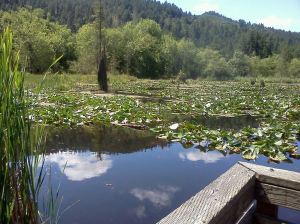
McLane Pond, taken in July 2018

Stories are created from countless layers. Today we are looking at the many outwardly visible aspects of a story. These are the surface features that define not only genre but which either attract or repel a reader at first glance.

If you’ve ever seen a pond on a calm day, you may have noticed the sky and any overhanging trees reflected on the still surface. The picture I’ve included at the top here is one my husband and I took while walking the McLane Nature Trail, not far from our home. We took it in July of 2018.

If you were there on a stormy day, things were different. The waters were gray, reflecting the color of the clouds. Ripples and waves stirred the waters.

The surface of a story is the Literal Layer, the what-you-see-is-what-you-get layer.

In a story, events and the way our characters move through them stir the surface, creating the image our reader sees.

This surface is comprised of

  • Setting
  • Action and Interaction
  • All visual/physical experiences of the characters as they go about their lives.

When we look at the surface, we immediately see something recognizable.

Setting and props – things such as:

  1. Objects the characters see in their immediate situation
  2. Ambient sounds that form the background
  3. Odors/scents of the immediate environment
  4. Objects the characters interact with
  5. Weapons (swords, guns, phasers)

The mechanical order of events forms the structure of the literal layer because they appear to be the story. This framework is the easel on which the setting and props are displayed:

  1. The opening.
  2. The inciting incident.
  3. Rising action and events that evolve from the inciting incident.
  4. The introduction of new characters.
  5. The action that occurs between the protagonist and antagonist as they jockey for position.
  6. The final showdown

How do we shape this literal layer to entice the casual reader? We can add tropes common to a particular genre. Sci-fi or fantasy elements offer an immediate clue to a prospective buyer.

Many sci-fi and some fantasy novels are set in close-to-real-world environments. The settings are familiar, akin to what we know. As readers, we could be in that world.

Good world-building creates a literal layer that is immediately accepted by the reader.

Sentinel, 05 August 2019

An obvious point I still want to make, is that the literal layer is also comprised of word combinations and word choices. This aspect distinguishes the level at which the intended reader will be able to comprehend and enjoy.

I prefer the prose in my casual reading material to be suitable for the average adult, not too pretentious, and not dumbed down. I seek that happy medium when I peruse the paperbacks or use the “Look Inside” option for eBooks at the big store in the sky.

What we put into the surface layer of our story draws the reader to look more closely at the depths. Setting, action, interaction—these most obvious components should give the reader a hint that there are profound aspects of the story, more than what-you-see-is-what-you-get.

While the surface elements of the story ruffle the surface and stir things up on the literal layer, they are only a glimpse of the deeper waters.

A memorable story has soul and hidden depths. It makes you think about larger issues you might not have considered before.

Plot charts the twists and turns of events, but depth opens our eyes, enabling us to see how other people think, feel, and experience life.

Depth changes observers into participants.

Prose and how we choose words to express emotion and ideas most powerfully is the medium by which we convey depth.

Writing to formal constraints, as I’ve discussed in several previous posts, forces us to find words that drill down and say what we really mean. By using the dictionary of synonyms and antonyms, we can find ways to write concise prose that isn’t repetitive, isn’t longwinded, but still has a cadence to it that is our voice, our style.

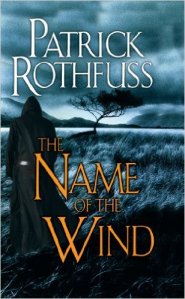
Have you read the opening page of The Name of the Wind by Patrick Rothfuss yet? That is your homework.

Go to the eBook section of the library or go to the online store of your choice and use the “look inside” option or the “download sample” option. You don’t have to do more than read the first paragraphs to complete this task.

Use one of the above cost-free methods to see how a master wordsmith uses prose to stir the surface in the opening pages of a fantasy novel.

With that ruffling of the waters in the first paragraphs, you are given a glimpse into the depths that lurk below.


Credits and Attributions:

Photograph, McLain Pond in July, © 2018 by Connie J. Jasperson, from the author’s private photos.

Sentinel, 05 August 2019 (One of the Needles, Cannon Beach) © 2019 by Connie J. Jasperson, All Rights Reserved (author’s own work).

7 Comments

Filed under writing

The Inferential Layer: Drama #amwriting (reprise)

Today’s post is a reprise of one first posted August 26, 2019. Circumstances beyond my control meant I didn’t have a post ready for today–sorry! The reason I chose this post to reprise is that it deals with drama, and how we instill it into our work. I feel it dovetails nicely with the discussions we’ve had recently regarding poetry. We want to instill emotion and impact into our work so the words we use must be powerful.


Whether you are writing a screenplay, a short story, or a novel, you are writing something that you hope will resonate with the reader and move them. A lesson that screenwriters learn early on is that each scene must be viewed as a mini-story; a complete story within the larger story. They learn this early because they don’t have the luxury of space that we who write novels have. The entire story of a screenplay must be told within a finite framework of time, so the writer must wring the most emotional impact out of the least amount of words.

I’m still working on this, myself. But I’m getting there.

So, where do we start? We begin with the most fundamental reason people purchase books or go to plays and movies—drama. The inferential layer of the Word-Pond we call Story is all about the drama, and I’m not talking over-the-top hysterics here. We combine emotional highs and lows with action and reaction in each passage to create dramatic scenes that leave a mark on the reader.

Of course, we understand large, emotionally charged, outwardly noisy dramatic scenes. They impact us and leave us reeling. But the only way those events have power is if they have context. They must be balanced by quieter, more introspective moments.

Drama can happen in the mildest of scenes, places where it looks as if nothing important is happening. The follow-up/regrouping scenes are places where you have the opportunity to waylay the reader with something unexpected. This is where you show the reader what is happening beneath the surface, the inner demons and fears the characters now face.

Consider  The Two Towers by J.R.R.Tolkien. Let’s look at the emotional impact of the scene that takes place in Shelob’s Lair. Frodo and Sam have survived incredible hardships and have made it to Cirith Ungol.  The passage is an excellent example of the dramatic story within a story that advances the overall plot.

Drama is the hope we feel in the moment when Frodo faces Shelob with the Phial of Light. Drama is the moment Frodo fails, the moment he is stung.

It is the shock, the horror, the moment where Sam reluctantly takes up Frodo’s sword, Sting.

It is triumph when Shelob impales herself on Sting, a weapon made of Mithril and a sword in the hands of a hobbit. But really, Sting is only a long-knife, and despite its mythic properties, it is not long enough to kill the giant arachnid, Shelob.

Still, she is wounded and scuttles away.

Drama is in the despair, the quiet moment afterward, where Samwise realizes that everything they have just endured was for nothing.

Drama is the moment of sharp introspection, the internal conversation when Sam fears his own weakness; the moment when his faith is not just shaken—it is lost. It is that moment of profound despondency in Shelob’s Lair, the dark night of the soul where Sam believes the spider has killed Frodo.

What about love? Few emotions have as much dramatic potential as that of love. It has many shades, from friendship to affection, to desire, to passion, to obsession, to jealousy, to hate.

Let’s look at the Pulitzer Prize winning short story, Brokeback Mountain, by Annie Proulx (synopsis via Wikipedia):

In 1963, two young men, Ennis del Mar and Jack Twist, are hired for the summer to look after sheep at a seasonal grazing range on the fictional Brokeback Mountain in Wyoming. Unexpectedly, they form an intense emotional and sexual attachment, but have to part ways at the end of the summer. Over the next twenty years, as their separate lives play out with marriages, children, and jobs, they continue reuniting for brief liaisons on camping trips in remote settings.

Ennis and Jack are tied to each other, but they love their wives and children. They are products of their society, and their personal reactions to the intensity of their relationship are both hurtful and understandable in the context of their time and situation. People have love affairs in books all the time, and we often find them forgettable. It is the complexity of external societal pressure and deep, confusing emotion that makes Ennis and Jack’s attachment memorable.

Then there is the novel, Possession, by A.S. Byatt, winner of the 1990 Booker prize. This is a complex relationship that begins in a rather boring manner – it opens in a library when Roland Michell, a scholar and professional man of high morals commits a crime: he steals the original drafts of letters he has come across in his research. This act has the potential of becoming his professional suicide. The synopsis via Wikipedia:

(Roland Mitchell) begins to investigate. The trail leads him to Christabel LaMotte, a minor poet and contemporary of Ash, and to Dr. Maud Bailey, an established modern LaMotte scholar and distant relative of LaMotte. Protective of LaMotte, Bailey is drawn into helping Michell with the unfolding mystery. The two scholars find more letters and evidence of a love affair between the poets (with evidence of a holiday together during which – they suspect – the relationship may have been consummated); they become obsessed with discovering the truth. At the same time, their own personal romantic lives – neither of which is satisfactory – develop, and they become entwined in an echo of Ash and LaMotte. The stories of the two couples are told in parallel, with Byatt providing letters and poetry by both of the fictional poets.

Love, whether unacknowledged or returned, physical or platonic, is complicated. The sections of movies, books, and short stories where the arc of the scene showcases true emotional complexity stick with me. I find myself contemplating them long after the story has ended.

In all three literary examples, The Lord of the Rings, Brokeback Mountain, and Possession, it is the interpersonal relationships entwined with the action that illuminates the drama. Action scenes require some sort of emotion to give them context, to shape them into an arc:

  1. Opening, the linking point where we introduce our characters and their situation.
  2. Rising Action, where we introduce complications and emotional responses.
  3. Climax, the high point of the action, the turning point of the scene.
  4. Falling Action, the “what the hell just happened” moment where we regroup.
  5. Closing, in which the problems encountered by the protagonist are resolved as best as can be expected, and we move on to the next scene.

The resolution of one scene is the linking point to the next, the door that takes us further into the story. The dramatic arc of each scene ends at a higher point in the overall story arc.

The emotions surrounding the drama in our literature attracts us, captivates us, keeps us interested. In every story, drama is the moment you, the reader, realize you must take up the hero’s task; you must carry the evil One Ring to Mount Doom.

Drama done well can take the reader from joy to despair to resignation and back to hope within the arc of the scene. This is good pacing and urges the reader to keep turning the page to see what is coming next.


Credits and Attributions:

Wikipedia contributors, “Brokeback Mountain (short story),” Wikipedia, The Free Encyclopedia, https://en.wikipedia.org/w/index.php?title=Brokeback_Mountain_(short_story)&oldid=902058091 (accessed August 24, 2019).

Wikipedia contributors, “Possession (Byatt novel),” Wikipedia, The Free Encyclopedia, https://en.wikipedia.org/w/index.php?title=Possession_(Byatt_novel)&oldid=909067002 (accessed August 24, 2019).

The Two Towers, by J.R.R. Tolkien, first edition cover, Publisher George Allen & Unwin, © 11 November 1954, Fair Use.

Possession by A.S. Byatt, first edition cover, Publisher Chatto and Windus, © 1990, Fair Use.

Comments Off on The Inferential Layer: Drama #amwriting (reprise)

Filed under writing

Poetry: Shape and form #amwriting

Poetry comes in many forms. In fact, Writer’s Digest University lists 100 of them: List of 100 Poetic Forms for Poets.

However enticing that rabbit trail may be, today’s post will cover only a few of the most common and well-known forms. The rhyming scheme of poetry is traditionally shown by using the first letters of the alphabet, such as: AABB

Another word to know is what we call a stanza, or how we divide our poem. Literary Devices says: In poetry, a stanza is a division of four or more lines having a fixed length, meter, or rhyming scheme.

A few of the most common poetic forms are:

Elegy  – a poem or song written to honor the life of someone deceased, such as W. H. Auden’s In Memory of W. B. Yeats, the opening lines which follow:

He disappeared in the dead of winter:

The brooks were frozen, the airports almost deserted,

And snow disfigured the public statues;

The mercury sank in the mouth of the dying day,

What instruments we have agree

The day of his death was a cold dark day.

Epitaphs – poetic writings on tombstones, such as William Butler Yeats’ epitaph, taken from his poem, Under Ben Bulben:

Cast a cold Eye

On Life, on Death.

Horseman, pass by!

Haiku – short Japanese poem, 5 syllables, then seven syllables, then 5 syllables.

I write one Haiku

Five over seven and five

Five Seven Five done.

Limericks have 5 lines, with lines 1, 2, and 5 rhyming with each other, and lines 3 and 4 rhyming with each other. The cadence ends with a stressed syllable. Limericks have strong rhymes, and a recognizable rolling verse:

The limerick packs laughs anatomical

Into space that is quite economical.

But the good ones I’ve seen

So seldom are clean

And the clean ones so seldom are comical.

Odes are poetry that praise a person or an ideal, such as this excerpt from Wordsworth’s Intimations of Immortality:

Turn wheresoe’er I may,

By night or day,

The things which I have seen I now can see no more…

Our birth is but a sleep and a forgetting:

The Soul that rises with us, our life’s Star,

Hath had elsewhere its setting,

And cometh from afar:

Not in entire forgetfulness,

And not in utter nakedness,

But trailing clouds of glory do we come

From God, who is our home…

Prose poetry is written in prose form instead of verse form without the line breaks associated with poetry. However, it contains the imagery and makes use of rhyme, repetition, fragmentation (short sentences), and most other poetic devices.

Quatrain. A complete poem consisting of four lines. There are fifteen possible rhyme patterns, but the most traditional and common are: AAAA, ABAB, and ABBA. Thomas Gray’s Elegy Written in a Country Churchyard is ABAB:

The curfew tolls the knell of parting day,

The lowing herd wind slowly o’er the lea,

The plowman homeward plods his weary way,

And leaves the world to darkness and to me.

Rondel -13 or 14 lines in 3 stanzas. Wikipedia says:

“There are several variations of the rondel, and some inconsistencies. For example, sometimes only the first line of the poem is repeated at the end, or the second refrain may return at the end of the last stanza.  Henry Austin Dobson provides the following example of a rondel:

    Love comes back to his vacant dwelling,

      The old, old Love that we knew of yore!

      We see him stand by the open door,

    With his great eyes sad, and his bosom swelling.


    He makes as though in our arms repelling

      He fain would lie as he lay before;

    Love comes back to his vacant dwelling,

      The old, old Love that we knew of yore!


    Ah! who shall help us from over-spelling

      That sweet, forgotten, forbidden lore?

      E’en as we doubt, in our hearts once more,

    With a rush of tears to our eyelids welling,

    Love comes back to his vacant dwelling.

The last form I’m going to show you is the Sonnet, which was a favorite medium for William Shakespeare.

Wikipedia says: The Petrarchan sonnet is a sonnet form not developed by Petrarch himself, but rather by a string of Renaissance poets. Because of the structure of Italian, the rhyme scheme of the Petrarchan sonnet is more easily fulfilled in that language than in English. The original Italian sonnet form divides the poem’s fourteen lines into two parts, the first part being an octave and the second being a sestet.

On His Blindness by the English poet Milton, gives a sense of the Petrarchan rhyme scheme:

When I consider how my light is spent (A)

 Ere half my days, in this dark world and wide, (B)

 And that one talent which is death to hide, (B)

 Lodged with me useless, though my soul more bent (A)

To serve therewith my Maker, and present (A)

 My true account, lest he returning chide; (B)

 “Doth God exact day-labour, light denied?” (B)

 I fondly ask; but Patience to prevent (A)

That murmur, soon replies, “God doth not need (C)

 Either man’s work or his own gifts; who best (D)

 Bear his mild yoke, they serve him best. His state (E)

Is Kingly. Thousands at his bidding speed (C)

 And post o’er land and ocean without rest; (D)

 They also serve who only stand and wait.” (E)

I have experimented with writing in all of these forms, but I tend to lean most toward a kind of free verse or prose poem. On Wednesday, I will feature an interview with my good friend, Stephen Swartz. He writes novels and short stories in a wide variety of genres and often leaves comments for me in the form of silly rhymes.

Silliness aside, Stephen has been known to produce some beautiful prose poems and is always willing to talk about the craft.


Sources and Attributions:

Wikipedia contributors, “Rondel (poem),” Wikipedia, The Free Encyclopedia, https://en.wikipedia.org/w/index.php?title=Rondel_(poem)&oldid=925869026 (accessed May 17, 2020).

Wikipedia contributors, “Sonnet,” Wikipedia, The Free Encyclopedia, https://en.wikipedia.org/w/index.php?title=Sonnet&oldid=951762201 (accessed May 17, 2020).

7 Comments

Filed under writing

The Author Community, by Mollie Hunt, Cat Writer #amwriting

This is the sixth and final post in a six-week blog tour series for the Northwest Independent Writers’ Association.  NIWA serves pacific northwest writers working to achieve professional standards in independent writing, publishing and marketing.


Many creative professions have a reputation for being competitive, hostile, and dare I say, catty, toward each other. Thankfully, this tendency for animosity, for the most part, has passed the author community by. Even as a budding writer, I was treated with respect by my fellows. I have been helped when I needed help, mentored when I needed mentoring, liberally complimented on my work, and generally accepted wherever I’ve gone within the writing circle.

This didn’t happen by chance, however. I did my part. Though I’m an introvert, I pushed myself to get out and meet people, ask questions, and make contacts. One of the most satisfactory way of doing that was to join writers’ groups. Along with NIWA, I am a member of Sisters in Crime, the Cat Writers’ Association, and Oregon Writers Colony. I have belonged to a few others as well, but these are the ones that have helped me learn, produce, and promote my books. If a group isn’t helpful to your work, then what are you getting for your yearly dues besides another name to add to your list of credits?

Each of those groups I listed offers me something different.

NIWA is a fellowship of local independent authors. Though I’m both self- and press-published, this group is extremely helpful. They put together communal bookselling events, host an impressive website and booklist, and offer a members Facebook page where I can communicate with others about anything and everything book.

My local faction of Sisters in Crime has information geared specifically for the mystery writer. They offer presentations from police, detectives, pathologists, and other professions we see a lot of in mysteries. One time, our group took the Ghost Tour of Fort Vancouver, because you never know when a ghost might come up in your novel.

Oregon Writers Colony supports members in all phases of writing, from “I want to write a book but don’t know where to start” to famous authors like Jean Auel. They have several different programs throughout the year, both to teach and inspire, as well as promote and sell members’ books.

The Cat Writers’ Association is the cat’s pajamas if your stories involve felines. They also have a stunning list of members from all branches of creativity. Bloggers, artists, photographers, as well as fiction and non-fiction authors make up this international organization.

There are many more writers’ groups, both national, international, and in your local area. I encourage you to look into them to see what they have to offer.

Besides writers’ groups, Book Faires and events are a great way to get to know other people in your author community. The more you participate, the more your circle of will grow.

Online and Facebook Groups offer another way of relating to those in your field and well and an opportunity to gather fans. Some groups allow you to advertise your work, where others are strictly for conversations about elements of craft. Try NIWA FANS AND FRIENDS to get started.

Once you begin to look for and engage with your author community, the possibilities open up exponentially. Good luck! And thanks for reading.


Thank you for following the NIWA Blog Tour. Let’s do it again soon!

Check out this week’s other participating NIWA blogsites:

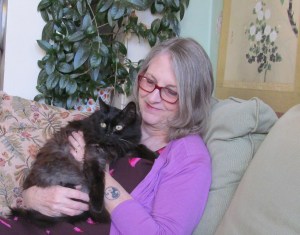
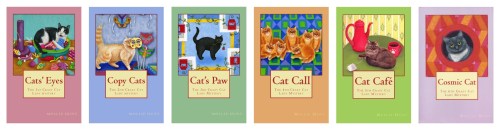
About Mollie Hunt: Native Oregonian Mollie Hunt has always had an affinity for cats, so it was a short step for her to become a cat writer. Mollie Hunt writes the Crazy Cat Lady cozy mystery series featuring Lynley Cannon, a sixty-something cat shelter volunteer who finds more trouble than a cat in catnip, and the Cat Seasons sci-fantasy tetralogy where cats save the world. She also pens a bit of cat poetry.

Mollie is a member of the Oregon Writers’ Colony, Sisters in Crime, the Cat Writers’ Association, and NIWA. She lives in Portland, Oregon with her husband and a varying number of cats. Like Lynley, she is a grateful shelter volunteer.

You can find Mollie Hunt, Cat Writer on her blogsite: www.lecatts.wordpress.com

Amazon Page: www.amazon.com/author/molliehunt

Facebook Author Page: www.facebook.com/MollieHuntCatWriter/

@MollieHuntCats

Comments Off on The Author Community, by Mollie Hunt, Cat Writer #amwriting

Filed under writing

Reading to Impact Your Writing: Writing Books, Inspirations, and Beyond by Joyce Reynolds-Ward

This is the fifth in a six-week blog tour series for the Northwest Independent Writers’ Association. You can catch up with them at https://www.niwawriters.com/.


Generally, when the discussion about reading to impact your writing begins, many people’s thoughts turn toward writing references and guides. That’s good for a beginning. But reading books about writing mechanics, process, and the like should not be the only things you read as a writer. Part of developing yourself as a writer includes expanding your reach as a reader—after all, growth arises in many ways, and reading something for the purposes of growing your awareness of style, idea usage, and the like. Picking up a challenging new book in a genre you don’t normally read can often provide insights on your own writing. Or reading a favorite author’s journal or memoir about writing process may help you past your own struggles. It all really depends on what resonates with you. Here are some of my favorites.


For myself, reading journals, letters, and memoirs/autobiographies (not biographies!) of my favorite authors has been a good source of writing inspiration and development. I was an early fan of John Steinbeck, thanks to one of my high school teachers. As a result, one of the earliest writer reads that has stuck with me over the years is John Steinbeck’s Journal of a Novel: The East of Eden Letters. While writing East of Eden, Steinbeck would start every writing day with a short letter to his editor and friend Pascal Covici. It was part of his warmup process and a means of separating from daily concerns to developing the focus needed for the day’s work. In a similar vein is Working Days: The Journals of the Grapes of Wrath and Steinbeck: A Life in Letters. Because Steinbeck often used letter writing as a tool for warming up, his letters frequently reflect not only what was going on in his life at the moment but what was happening with his writing process—a valuable insight into the struggles that all writers have.

I tend to prefer journals and letters to memoirs and autobiographies because writers can and will embellish later accounts while journals and letters reflect the writer’s state of mind at the time they were writing. May Sarton’s Journal of a Solitude is billed as “the intimate diary of a year in the life of a creative woman,” and it does not disappoint. While ostensibly a book about the process of writing, Jay Lake’s Process of Writing 2005-2010 is a collection of blog posts Jay wrote about writing organized into topics which—really—tells you as much about Jay’s daily struggles with the writing life as it does anything else. Also, given Jay’s reputation as an extremely fast writer, he gives a breakdown of exactly what that looks like and what it means for him economically as a writer. His analysis of his differing rates of writing speed is something that I recommend every writer read.

And then we get to memoir and biography. One book that I think every writer should read is Anthony Trollope’s An Autobiography. Trollope wrote over sixty books over the course of his life, in part by exercising the discipline of rising early and writing 250 words every quarter of an hour for three hours before going to his day job with the British Post Office as a surveyor. His observations of the mid-19th century writing world (hint: Trollope does not like Dickens) are priceless and, if you have read Trollope or watched productions of his novels, you gain insights into how he built his characters. Ursula K. LeGuin’s essays on writing, often found mixed in with her other essays, are definitely worth considering.

And then there are the books explicitly about the craft of writing. Oh, the many books about writing techniques. I own a lot of them, and have bought and discarded many others. For me, the problem with many craft books is that they often speak to me at a particular stage in my writing or process. But as I progress beyond what they have to offer, I end up walking away from books I once loved. The reality about many books about the writing process is that they are often limited to a particular time and market. There’s nothing wrong with that, but if you pick up an old Writer’s Digest book about writing, you need to crosscheck it to ensure that certain things about the field have not changed. Heck, that is true of any book explicitly about writing technique, because the techniques change and evolve.

Furthermore, while I know of many writers who cling to their favorite writing advice book over the course of the years, for me, the books that have resonated the most are those where the writer speaks candidly about the struggles they face in the writing life. The letters. The memoirs. The autobiographies. Those details where the struggle of the creative life is chronicled without whitewash or embellishment. The advice books often move on, except for a select few…but oh, the value of a chronicle of a writer’s struggle. At least that is what works for me.

And what about you?


Other posts in this series by Joyce Reynolds-Ward (note: each website owner will post at some point during the week listed).

March 29-April 4th—Organizing Your Plot www.joycereynoldsward.com

April 5-11—Self-editing, grammar, and beta readers https://authorwilliamcook.com/blog/

April 12-18—Genre and cross-genre https://tanstaaflpress.com/news

April 19-25—My Approach to the writing process https://varidapr.com

April 26-May 2—Reading to Impact your writing www.conniejjasperson.com

May 3-9—Advice for new writers https://lecatts.wordpress.com


Joyce Reynolds-Ward is a speculative fiction writer from Enterprise, Oregon. Her short stories include appearances in Well…It’s Your Cow, Children of a Different Sky, Allegory, River, and Fantasy Scroll Magazine. Her agripunk thriller trilogy, The Ruby Project: Origins, The Ruby Project: Ascendant, The Ruby Project: Realization, are due for release in November, 2020. Her books include Shadow Harvest, Choices of Honor, Judgment of Honor, and Klone’s Stronghold. Joyce has edited two anthologies, Pulling Up Stakes (2018), and Whimsical Beasts (2019). Besides writing, Joyce enjoys reading, quilting, horses, and hiking, and is a member of Soroptimist International of Wallowa County.

You can find Joyce’s books at her website, Peak Amygdala or on her author page at Amazon.com.


4 Comments

Filed under writing

William J. Cook, Advice for New Writers #writetip

This is the second in a six-week blog tour series for the Northwest Independent Writers Association. You can catch up with them at https://www.niwawriters.com/

Today’s guest post is by Indie author William Cook. William writes mysteries, set in my part of the world, the Pacific Northwest. I’ve enjoyed his work in the anthologies we have both been featured in and look forward to hearing what he has to say!

~~~~

Let me begin by saying I still consider myself a new writer, even though I have several books under my belt. Although I’ve “written” all my life, I only got serious about producing books when I retired in 2011. I hope I’ve continued to improve my craft since then, but only my readers can judge that. What follows are only my opinions, and I’m sure if you polled all our NIWA members, you’d find a hundred more.

Number One: Please don’t quit your day job. Truth be told, most of us are only meagerly supplementing our incomes, not debuting on the world stage of #1 Bestsellers. Although some of us have been quite successful, there are very few, if any, Andy Weirs among us. The fortune and fame that showered The Martian are akin to winning the lottery or being struck by lightning—it happens, but the odds against it can be astronomical.

So why do we write? We write because we have to—it has to come out of us. We write for the sheer joy of seeing our creations on paper and on a digital screen. If we make a few bucks, that’s frosting on the cake. Knowing we have family and friends who read our work and like it is reward enough. No, we never stop trying to be successful—taking courses in marketing, scheduling book signings at local bookstores and conferences, begging reviews from readers and local media outlets, doing whatever we can to improve our craft—but we also accept that we are very likely not the next John Grisham or Dean Koontz.

Number Two: Should you try to get an agent or should you publish independently? This is a complicated question. I have never had an agent, so I can only repeat what I have heard from others who have.

Potentially, getting an agent can give your book wider exposure. Your agent gets you a publishing company, and you have the support of that company behind you, hopefully helping you with advertising, book tours, media outlets, etc. On the down side, you may lose a lot of control over your book—content as well as cover. I spoke with one author who told me her company insisted she change one of her characters or they wouldn’t publish her novel. Another said her company just sat on her book and did no promotion at all. Of course, there are other situations where the agent is perfect for the job, establishes a trusting relationship with the writer, and both go on to be very successful together over the course of several books.

Bottom line: decide at the outset whether you want to try to get a literary agent BEFORE you go ahead and publish independently. Once you’ve published independently, it’s much harder to get an agent for that same book, or for a book that comes later in a series. It’s the proverbial Catch-22: your prospective agent will ask, “If your book is successful published independently, why do you want me? If it’s not successful, why should I take the risk?”

Anyway, an excellent resource is https://querytracker.net/ Two essential books are How Can I Find a Literary Agent and Step by Step Pitches and Proposals, both by Chip MacGregor with Holly Lorincz. Also, a better way to land an agent than sending out proposals cold, is to buy face-to-face time with an agent at a literary conference. The biggest one in Oregon, the Willamette Writers Conference, will be in Portland in August (depending, of course, on the pestilence situation at the time).

So far, I have opted to publish independently. Although there are many independent platforms out there, such as IngramSpark, Draft2Digital, Bookbaby, Smashwords, and Kobo, I’m a bit of a dinosaur and have done all mine through Kindle Direct Publishing. That means I can only sell my books on Amazon, and that most bookstores don’t want my paperbacks because Amazon has no return policy for them. Some stores will do it on consignment, and I am fortunate to have a local store that is very kind to independent writers.

What I like about being an indie author is the freedom it gives me. I control everything—content, cover, timing of release, the works. The only deadlines I have to meet are my own. Self-publishing has introduced me to a thriving community of authors who have been extraordinarily helpful. In short, it’s fun!

Number Three: Should you look to see what’s trending and write to that? My answer? Please don’t pimp your writing. Write your own story, not the one you think other people may want to read because it’s currently fashionable. If you don’t write from your heart, you probably won’t survive the dark periods when you’re afraid the Muse has abandoned you and you’re only a hack who shouldn’t have started writing in the first place. (Yes, those days will come.)

Number Four: Should you write every day on a regular schedule? Writing is not “one-size-fits-all.” If you can write every day, that’s wonderful. I know there are many writers of great discipline (and success!) who write four to six hours every day, like clock-work. Hats off and more power to them. But I have a rich life away from my computer, and I can’t. For some people, writing is like fishing. The old adage, “Any time you can get away is a good time to fish,” can be applied to writing as well. Any time you can squeeze in an hour or two is a good time to write.

But you may ask, “What if I get stuck? What if the dreaded Writer’s Block hits me like COVID-19?” Then make a covenant with yourself: you will write one sentence every day—good, bad, or indifferent, however long it takes. If more comes out of you, fine, but your commitment is for one sentence only.

Number Five: Join writing groups. Like good parenting, good writing takes a village. At the very least, join a critique group. This should be small enough (maximum 5 people?) to afford each writer plenty of time to strut their stuff and get the honest feedback he or she deserves. Some groups email their pages in advance, while others bring printed copies for everyone to the group. By all means, read your work out loud. That’s the quickest way to spot the awkward sentence, the overly stiff dialogue, the plot hole you’ve missed. Other groups are available as well. In Oregon, Willamette Writers has local branches throughout the State. In Salem, Writers Yesterday, Today, and Tomorrow (WYTT) meets weekly. NIWA is a Facebook group that has been enormously helpful to me.

Number Six: Beware the perils of self-editing! I will write more about this in a future blog, but for now, always be aware that your brain operates like the autocorrect function on your phone. It will fill in the missing word, remove the repeated word, fix the misspelling. Make sure other eyes get to look at your work before you publish it.

Number Seven: The necessity of marketing. Ah, the dreaded M-word. I have found that marketing is an entirely different skill-set from writing. And I’m not very good at it—yet. When your book gets published on Amazon, it will be the proverbial needle in a haystack, lost among the millions of volumes already there. Good advertising makes it stand out. Unless you can afford to pay someone to do it for you, you’re going to have to learn how to advertise on Amazon, Facebook, Instagram. But you can take it a little at a time. Get that book written first!

So there’s my two cents. I hope I haven’t been too negative. The truth is, holding that book in your hands, whether it’s your first or your fifth, is a thrill like no other. Go for it!


Thank you for those excellent words of wisdom, William!

If you want to read other posts in this series by this author, go to https://authorwilliamcook.com/blog/   “Reading to Impact Your Writing (And Can Watching Movies be a Business Expense?)”

Watch for the next post in the series by this author:

https://lecatts.wordpress.com/   “My Approach to the Writing Process”

About William J. Cook:

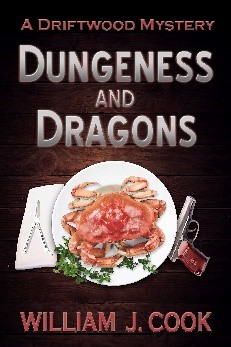
William Cook moved to the Pacific Northwest from the East Coast in 1989, and worked for a total of 37 years as a mental health therapist until his retirement in 2011. He splits his time between writing, babysitting for his 15 grandchildren, and sneaking off to mid-week matinees (when theaters are open!). The Kindle edition of his latest book, Dungeness and Dragons: A Driftwood Mystery, is available now for pre-order and will be published on April 24. Find all his books at:

https://authorwilliamcook.com/

Comments Off on William J. Cook, Advice for New Writers #writetip

Filed under writing