Tag Archives: battles

Redemption and the Wayward Pen

619px-Lord_Byron_1804-6_CropI started my day today by reading Alison DeLuca’s great blog, Fresh Pot of Tea this morning, and her topic is Redemption.  She has written an awesome post on villains and redemption, and I suggest you pay a visit to her blog and read the post.

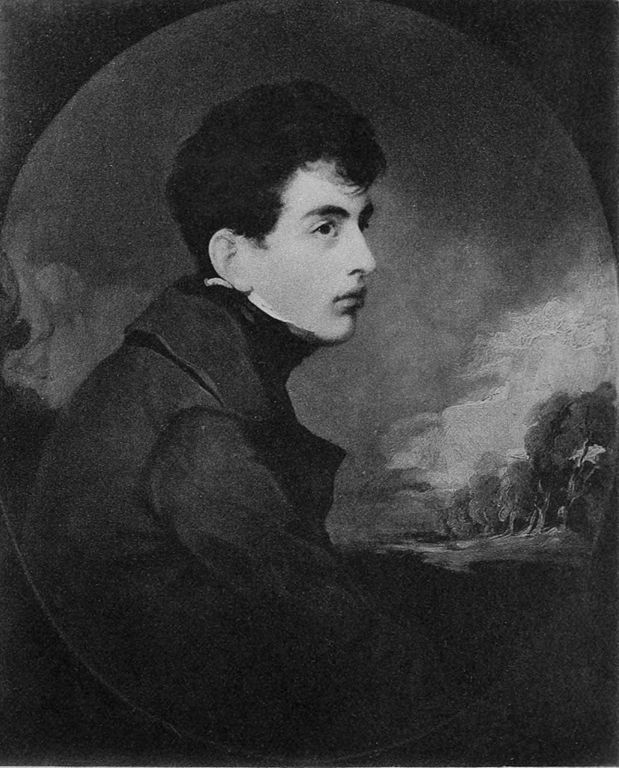
Redemption in your villains is a topic that interests me, because in the Tower of Bones series I have a nasty villain, Baron Stefyn D’Mal, who is, in many ways modeled on the original Mad, Bad and Dangerous To Know man, Lord Byron (if he were wholly devoted to the God of Darkness and was crazy on steroids.)

In the first book, Tower of Bones, we discover some of D’Mal’s history, and there is some reason to feel bad for the child he once was, but he is in no way a good guy.

In Forbidden Road, Stefyn D’Mal interacts with the protagonists somewhat less directly, but his  influence is no less profound on the outcome of the tale, and his evil God has him firmly in hand.

Why are we attracted to tales of Redemption? Is it because we are aware of our own frailties and when we are immersed in the redemption of the fictional evil genius, whom we have secretly admired, we are some how redeemed ourselves? I think for me there is a secret relief in the notion that by one selfless act of heroism a person can counter a lifetime of misdeeds.

I’ve had a novel on the back burner since 1998 that will probably never be published, because it is terribly flawed and pretty outdated now. But I love the characters. In this tale there is one character who is not really a central character but her stubbornness causes no end of trouble for her family. But in the end, she jumps between the shooter and her niece because the desire to protect those you love is sometimes stronger than common sense.

I think that having a really great villain makes a story compelling.  Great villains are why we read Harry Potter, and the Lord of the RingsThe Wheel of Time has great villains–a LOT of them– which is what drives the plot(s).  When I read a book with villains that really frighten me I return to it later and analyze what it is about that character that inspired such an emotional reaction in me.  I’ve spent a lot of time looking at what Robert Jordan did with the Forsaken. Lanfear and Asmodean were frequently pleasant, engaging people and one could feel a certain sympathy for them despite the knowledge that they were evil.  Even Demandred had a certain cachet that one could relate to.

This makes writing your villains complicated. They are bad, or they wouldn’t be villains, they’d be the heroes.  But it is a rare person who is completely consumed by evil, and so when we see the softer side of the devil we grudgingly like him.

Who knew Satan was a cat-lady?

4 Comments

Filed under Adventure, Fantasy, Humor, Literature, writing

Great Collaborations

Rainbow_-_Ritchie_Blackmore's_Rainbow_(1975)_front_coverThis album, Ritchie Blackmore’s Rainbow was a watershed moment for me, musically.  I discovered Rainbow when my first husband and I moved to Bellingham Washington to go to college. We had one child, our daughter Leah.  We were pretty broke, and couldn’t go to many concerts, but we did invest in new music as often as we could.

I was the one who was the Rainbow and Led Zeppelin freak. I liked Deep Purple, but something about Rainbow really grabbed me. Darryl was into The Who and Argent.  We were also crazy about Procol Harum,  Focus and Genesis. Heart also figured largely in the noise that erupted from our small apartment.

The thing about great bands that inspires me is the chemistry between the members that lead to great collaborations.  Some of the most powerful music of my generation was created during the 1970’s.  The collaboration that still reigns supreme in my heart is the Ronnie James Dio and Ritchie Blackmore collaboration in the band Rainbow.  Separately, they were brilliant, unmatched in their skill and talent. Together they were pure magic, creating thunderous, powerful, bone-shaking music like The Gates of Babylon and the beautiful, lyrical Catch the Rainbow. Alas, Dio passed on in 2010 but his legacy lives on.

In books, there are great collaborations that produce incredible tales that change the face of the fantasy genre.  MythAdventures by Robert Lynn Aspirin and Jody Lynn Nye were the game changers for me as far as my reading material went. They brought the fun to the party!

The Darkover Series that was begun by  Marion Zimmer Bradley and which included collaborations with various authors such as Mercedes Lackey and Deborah J. Ross was wildly popular among my friends. The Dragonlance series, which came out of TSR’s Dungeons and Dragons game empire was another series that introduced the fantasy genre to a wide audience of young people. This collaboration between Tracy Hickman and Margaret Weiss hooked my son Daniel as a teenager, and turned him into a rabid fan of speculative fiction.

Currently I’ve been reading The Adventures of Don Valiente and the Apache Canyon Kid. It  a book that is a collaboration between John A. Aragon and Mary W. Walters, and it’s one that is not only NOT a fantasy (it’s a WESTERN) it’s an actual physical book as opposed to a Kindle book.  This awesome book details the adventures of Roz, a young lesbian cowgirl and her mentor, caballero Don Valiente. I’ve never been a fan of westerns, but THIS book is a game changer for me.

I love books and music that expand my boundaries.  Every time I hear something new and powerful, like Apocalyptica, Rammstein or Evanescence or read a book in an unfamiliar genre I am inspired to create on my own and my work benefits.  Music, art and books are like yoga for my soul!

7 Comments

Filed under Adventure, Battles, Books, Heavy Metal, Humor, Music, writing

It’s Official

Final forbidden road front cover jpgIt’s official – Forbidden Road is now available as a kindle download!  I’ve even made a tweet:

FORBIDDEN ROAD-bk 2 in #TowerOfBones series http://amzn.to/ForbiddenRoad   Sorrow, Peril and Magic in the Valley of Mal Evol!

This is where it gets strange. I have this weird feeling of being disconnected from the process, even though I am in the middle of doing it.  I’ve done everything I can think of to get the word out, and now I can only hope for the best. I think people who like Tower of Bones will be curious as to where the story goes.

Writing Forbidden Road was an emotional thing in many ways.  There are some serious, dramatic moments in this book.   All I know is the book is done and has left the building!

Now I am taking my imagination backwards in time to finish the book Mountains of the Moon, which covers the events of forty years prior to Tower of Bones.  This book is a stand-alone book as Tower of Bones was and is in many ways a comedy. Wynn, Edwin’s grandfather was a bad-boy!

Once Mountains is finished I can flesh out Valley of Sorrows.  Some of the events in Valley involve John Farmer’s coming to terms with his inability to face the fate of one of Wynn’s companions, in an event he felt responsible for.

So today is the big launch, another chick has left the nest!  Now I must get busy and write, write, write!

3 Comments

Filed under Adventure, Battles, Books, Dragons, Fantasy, Humor, Literature, Uncategorized, writing

Forbidden Road

Pageflex Persona [document: PRS0000032_00050]On friday, February 1, 2013 the kindle version of Forbidden Road, Book II in the Tower of Bones series will launch, followed closely by the print version.  The print version may be delayed if there are any formatting issues, but it should be through the process by February 15th at the latest.

In print form these books are the size of good doorstops, but not quite as big as most of the Wheel of Time series by Robert Jordan and Brandon Sanderson.

Someone asked me how I could write a book a year, and that made me laugh.  I suppose it LOOKS like that’s what I have done, but in actuality I began writing Tower of Bones in March of 2009. I have two manuscripts going at all times so they do seem to roll out at the rate of one per year, but I was actually two or more years in the writing process for each book before they went to publication.

Tower of Bones began its life as the walk-through for an old-school style RPG along the lines of Final Fantasy Mystic Quest. My nephew Ryan and I thought would be fun to build something we could play and perhaps market as there is a large community of player who enjoy the old games. The game fell through but I liked the storyline and made it into a novel. But, by 2010 I realized it was never going to fly in the form I had originally created it.

In its first incarnation, Tower of Bones read in the “He is; he does; he goes” style of a Brady walk-through.  Not real 51S0EMXZRAL__SL500_AA300_easy to get into as a reader! Present tense: The events of the plot are depicted as occurring now—at the current moment—in real-time. (e.g. “They drive happily. They have found their way and are now preparing to celebrate.”) In English this tense, known as the “historical present”, is more common in spontaneous conversational narratives than in written literature. A recent example of this is the Hunger Games trilogy by Suzanne Collins.

You don’t even want to know the agony that I went through in changing the viewpoint of the entire 150,000 word ms from that awkward present tense point of view to the standard  third person point of view.  Not only that, I had begun Forbidden Road in the same style!  Oh, my goodness–2010 was the year in which Grandma could frequently be heard exclaiming things like, “Sassafras!  And Dirty Words!”

Alison DeLuca and my sister Sherrie DeGraw pored over that ms trying to help me clean it up, and finally by the end of 2011 it was done.

Now, three years after I began Forbidden Road it is in the grinder at Amazon, and the launch day approaches. It just looks like I am chugging them out  one a year.  I have already been working on Huw the Bard for 15 months, and Mountains of the Moon has been in the works for 18 months (and is still not finished.)  Valley of Sorrows (book 3 in Tower of Bones series) has been in the works since November and NaNoWriMo

2010 was also the year I began The Last Good Knight as a NaNoWriMo project. I allowed myself to rush into publishing it when it was not ready.  It is now readable, largely to the assistance of both Rachel Tsoumbakos and Carlie Cullen.  I admit that my view of my own work is skewed by my growing as an author and gaining experience as an editor.  It may be that I see my work in a worse light than the casual reader would, but in my opinion there were enough speed bumps in Billy’s Revenge 1 – TLGK to gag the dog.

One thing I have been working on is dealing with (if I may descend into technical terms) is Hinky Formatting Issues and VooDoo Readability.  Anyone who has ever read an e-book knows what I am talking about, although they may not realize what has caused the strange  appearance of  random question marks where apostrophes should be.  Strange formatting issues are also responsible for the way paragraphs will randomly lose their indentations, making a page look like a wall of words.

Unfortunately several wordprocessing programs are rife with hidden formatting, so if your ms began life in Open Office, you will need to strip all the formatting out of your work and reformat it, saving it as a .RTF.  It gets even more complicated if you switched to using Word halfway through.  As a rule, I strip all the formatting and completely reformat all my manuscripts before I upload them now, it saves time and curse words later.  Rich Text Format files (signified by the extension .rtf) can also be argued to be safer than Word documents, (or .doc and .docx.) This is also, again, because .rtf uses text-based encoding. In simple terms, it’s pretty much impossible for Word to mess up .rtf files, because they are text-based: if there is a mistake while opening the file, the worst that will happen is that Word will open it as a text file, which will look like this:

 \par A question that may often come to the mind of people who watch Mexican soap
operas is, \ldblquote Who the heck invented this ridiculous plot that consists
of the love af
fair between a rich guy and a poor girl who end up getting
married in the end despite all the adversity??\rdblquote This idea,
overexploited and completely clich\’e9

If there is a failure in .rtf you can at least read it.  BUT the optimal goal is to have NO Formatting Failures so never rush to publish.  If you are an indie you can simply move your launch date back until you have straightened out your issues.  Use the option to review it in the handy reader KDP provides when you publish with them.  B&N for Nook also has this option.  Order proofs from your print-publisher and make sure your book looks the way you want it by going over every page of the proof copies line by line before you hear back from your friends that your book is a mess.

In the end I am responsible for what my work looks like so I have to do the footwork and make sure my formatting issues are all solved before the launch date.  This requires both a calendar and the will to use it. Plan for a week of playing with your uploads to Kindle and CreateSpace before your projected launch date, and hopefully your work will go smoothly enough that you won’t need the extra time. Authors are notorious for leaving everything to the last-minute but I do suggest you don’t procrastinate in this endeavor.  Random things go sideways and need to be redone. You’ll be much happier if you do the responsible thing and leave yourself plenty of wiggle-room during the crazy week leading up to your launch.

Comments Off on Forbidden Road

Filed under Adventure, Books, Dragons, Fantasy, Final Fantasy, Humor, knights, writing

Imago Chronicles, Lorna Suzuki

Imago Chronicles Book One  Lorna Suzuki Just like every other obsessed, fanatic reader of High Fantasy, I am always on the lookout for that one special book that presages the advent of a new classic series in the genre. In my opinion, Lorna T. Suzuki has written that book in Imago Chronicles Book One: A Warrior’s Tale.

 As many of you know, I review my favorite fantasy books on a blog called Best in Fantasy, and that is where I first reviewed Suzuki’s work in 2011.  I was blown away by her ability to draw you into her world and keep you there, mesmerized.

Since I began blogging on what I consider to be the best fantasy reads that come across my Kindle, I have read, on average, 4 to 6 fairly good books for every one really good book that made the blog; but ‘fairly good’ is not good enough for me to call a book ‘Best In Fantasy’. Hence, my frequent excursions back to my library of classics. In order for a book to be featured on that blog, I have to LOVE it! In ‘A Warrior’s Tale’, Suzuki has written a book that stands beside the works of my beloved heroes of modern fantasy Jean Auel, Mercedes Lackey, and David Eddings. Imago now ranks as one of my all-time favorite epic fantasy series. And now, joy of all joys! Books 1,2 and 3 have been optioned for a major motion picture trilogy!

And now the story:

In an intriguing twist, A Warrior’s Tale begins with the end. Taking shelter from a freak blizzard, Nayla Treeborn, half elf, half human and not fully either, huddles next to the corpse of a dead soldier; using his body and the now un-needed cloaks of other dead soldiers to shelter her from the killing weather. As she shelters there, she finds herself thinking about her life to that point; going back to a day when she had been a child the mental and physical equivalent of a mortal 12 year old, but was in reality 37 years of age.

Nayla’s father, a high Elf and the Steward of Nagana, Dahlon Treeborn, despises her for reasons which are not made clear in this book. He has punished her for publicly disagreeing with him; nearly beating her to death. Joval Stonecroft discovers her, dreadfully mutilated and bloody and is horrified. Healing her as well as he can, he spirits her out of the elven city of Nagana to the human city of Anshen, home of the legendary Kagai Warriors. Taking the name of Takaro, the young girl embarks upon a lifetime of training, eventually becoming the only female Kagai Warrior ever accepted into the brotherhood. When at long last she reaches womanhood, not only is Takaro fully trained in the manly arts of the warrior, but she is also a woman fully trained in the womanly arts as a spy, a courtesan and an assassin.

In book 1 of the series the main antagonist is Eldred Firestaff, a sorcerer who combines the nicer qualities of Lord Voldemort (Harry Potter) with the personal charm of Ctuchik (The Belgariad), and who is an immortal tool of evil, resurfacing every generation or so. Each time he comes back, he uses the armies of the weak Emperor of East Orien as his power-base in his eternal quest to conquer the world of Imago. However, in this first book of the series, although the battles with this slippery and long-lived villain are colorful and intense, they are almost secondary to Nayla’s personal battle for acceptance and with her own inner demons. This book is concerned with fleshing out Nayla and really whets your appetite for the rest of the tale!

As a half-caste, Takaro/Nayla ages much more slowly than humans, and much more quickly than elves. During the course of the story she outlives three of her Kagai Masters, all of whom live to be very old men. She also outlives their grandsons and their grandson’s grandchildren, yet at the end of the book she appears to be a woman of about twenty-five years of age. Her wisdom and abilities are that of a warrior at the prime of life, and she becomes the most respected of the fierce Kagai Warriors. When her father is maneuvered into asking for the finest Kagai Warrior to train his own warriors, Nayla finds herself back in Nagana, and her father is forced to suffer her presence there; a situation that is bad at best.

The world of Imago is clearly drawn, and is every bit as compelling as that of Tolkien’s Middle Earth. Here we have two distinct cultures living side-by-side in peace and harmony for generations; coming to each other’s aid whenever the other is threatened. Loyalty, honor, hard-work, love and family are the central facets of the human society that Nayla/Takaro finds herself adopted into as an abused child, and these values are echoed in the society of the Elves. Within each society, the political and social divisions are clear and the differences between Elves and Men are well drawn and consistently portrayed throughout the drama that unfolds.

Suzuki is herself a master of the martial arts, being a practitioner and instructor of Bujinkan Budo Taijutsu; a system that incorporates 6 traditional Samurai schools and 3 schools of Ninjutsu. As one who was once a mere grasshopper in the obscure art of Shou Shu, I fully appreciate the wisdom and experience that the master crafts into the fabric of this tale. Every element of this story evokes both the martial and the spiritual aspects of the culture of Imago; every element is vivid and believable to the reader.

With each book in this series, I was drawn deeper into this amazing and very real world of Imago. In book 2 of the series, Tales From the West we discover more about the true evil that threatens Imago, and discover who or what is behind the sorcerer Eldred Firestaff.

What I’ve learned from reading the works of indie author Lorna Suzuki is that to really craft a world and build believability you must know what you are writing about. She understands the warrior culture from the point of view of a female warrior becasue she IS a female and a warrior.

Know thy craft! Write what you want to read, know what you are writing about and readers like me will flock to read it!

Comments Off on Imago Chronicles, Lorna Suzuki

Filed under Adventure, Battles, Books, Dragons, knights, mythology, ninjutsu, Uncategorized, writing

What I’ve learned from Piers Anthony

200px-PiersAnthony_ASpellForChameleonThe book, A Spell for Chameleon, first published in 1977 was my introduction to Piers Anthony. I was immediately bewitched by his fantastical vision of a truly magical world, and I loved the fact that he placed it in Florida.  His world of Xanth was a world where magic is as intrinsic to life as is oxygen, and that notion has intrigued me ever since. The concept of making magic a fundamental requirement for life is one that makes complete sense to me.  Not only that, he did it with laugh-out-loud humor using puns and hokey jokes that were transformed into hilarious prose under his pen.

At the beginning of the novel Bink is facing exile from the magical land of Xanth and separation from his fiancée Sabrina for his lack of a magic talent. All human residents of Xanth possess some unique form of magic that ranges from incredibly powerful (such as the current King Aeolus’s ability to summon and control storms) to relatively useless (such as the ability to make a spot appear on a wall). In the hopes of discovering his talent Bink sets out to see the Good Magician Humfrey, a magician whose talent has to do with the gathering of information. Of course, things don’t go the way Bink hopes–it wouldn’t be a good story if they did!

Bink meets three women: Wynne who is pretty but stupid, Dee an average girl and also the sorceress Iris, whose power is the200px-Dragon_on_a_Pedestal creation of illusions. Wynne and Dee are actually different aspects of the same woman, Chameleon, although Bink does not realize this at the time. Chameleon’s intelligence and beauty vary inversely according to the time of the month and she has been unable to find a man who is willing to be with her through all 3 phases.  He also meets the Evil Magician Trent, and discovers that he actually likes him.

This book is one of the better books I had ever read, and I began a lifelong love affair with the works of Piers Anthony. Besides the witty prose and creative plots in this series, the COVERS of his books were AWESOME.  I have been well-known as a person who will buy a book for the cover, and that is exactly how I stumbled onto this series. The Xanth series is one long running pun after another.

I bought A Spell for Chameleon for the same reason I purchase any book–I saw it on the rack in my local Albertson’s grocery store and fell in love with the cover.

I learned several things from Piers Anthony and his Xanth series, the first of which is that Great Covers Sell Books.  I also saw that a true artist can take the most common, overused puns and turn them into the framework for a really fun adventure. I admit I did lose interest at about book ten, but even so, Piers Anthony still manages to have fun with it, and he still sells books.  The Xanth series is incredibly popular, and deservedly so.

SplitInfinityThe series Anthony wrote that really captured my imagination, and which in my mind still reigns as his best works is the Apprentice Adept series, beginning with Split Infinity, Blue Adept and Juxtaposition.

This man has had one of the most prolific and highly regarded writing careers ever, with more than 150 published works to his credit. His sharp wit and amazing gift for world building are legendary, and he has won numerous awards for his work.

But what reading his incredible body of work and following his career has taught me is that even when things around you have gone to hell (as things are wont to do) the writer has the craft of writing fantasy to provide his mind with an escape from the TRUE weirdness of real life.  Anyone who has read his official Wikipedia biography knows that Piers Anthony has had a long life with many personal challenges, through all of which I am sure writing was and is his refuge.  This gives me hope and the impetus to just keep on doing what I can, trying to make silk purses from the sows’ ears of my work when I feel a bit discouraged.

Writing is a journey and you never know what lies around the corner.

If a writer is lucky, his works will eventually be beautifully covered and on sale in the racks at the local Albertson’s store, just waiting for a girl like me to pick it up for the art.

3 Comments

Filed under Adventure, Books, Dragons, Fantasy, Humor, Literature, writing

Building the Beast

Anne_Anderson05 - Beauty sat down to dinner with the Beast illustration PDArt - Wikimedia CommonsI have been suffering with a cold for the last week and so my writing output has dwindled to nearly nothing.  I have gotten some work done, but not the amount I had hoped for.

I worked on a scene requested by my editor, Irene Luvaul, for Huw the Bard, one to liven up a dull stretch just a bit.  I didn’t want to put Huw through the wringer again when he has already suffered so much, and he was so close to making his way to Billy’s Revenge, but she was right – a bit of tension would add to the interest.

So I alternately thought and slept on it for more than a week, trying to force my plague-ridden body peck out a few lines with merit to them.

I couldn’t think of anything.

But then a passing paragraph toward the end of Billy’s Revenge I – The Last Good Night (under revision again, cleaning up the manuscript, thank you Carlie Cullen for volunteering) gave me the idea for a strange creature with which I could freak out poor naive Huw. (Having the right editor in the first place solves SO many problems further down the road.)

Firesprites.

But this meant – you guessed it – Building the Beast.  The only trouble was, I didn’t really know what one looked like – after all they were only mentioned in passing as being a nuisance.

Now, I only had three passing references in BR1 that talked about these creatures, but those few sentences told me quite a bit about them, actually.

So when I thought about it I realized I did have enough to build one. I just needed to assemble the parts.

1. They are either  elemental creatures, or poisonous creatures, one or the other. I say this because they are called ‘FIREsprites’. Yet, logic tells me they can’t be made of fire, or there would be no forest. Therefore, they must be poisonous, and the poison must be an acid that burns like fire.

2. They must be small. Otherwise King Henri’s horse would not have stepped into a nest of them and thrown his rider.

3.  Something about them makes people think of fire, and it must be something bad, because Lackland and the people of Waldeyn feel compelled to kill the entire nest when they find them, sort of like fire ants only bigger and badder.  But they must be something that one lone woman (Lady Mags) could deal with, with only the aid of an amulet.

I always think it’s better when the folks who actually have to deal with them tell me what they look like, so here is what Matt St. Couer told Huw and I about firesprites.

Matt said, “Now we need to herd them to the center of the nest and get them bunched up in as tight a group as we can.  Don’t touch them, whatever you do. The slime on their skin will burn you like the hottest fire, and there’s no stopping it from eating your flesh away. That’s why they’re called firesprites. The wounds keep putrefying, and amputation is the only remedy. Water helps but only if you get the water on the affected area right away, before the poison has done too much damage. I’m talking minutes here, and you have to really sluice the wounds to get the poison off. Sadly, they never seem to nest near water.”

Ulleen said, “They like to nest along roads because there’s not so much foliage and they get more sun there.  The sun heats their nests and hatches their eggs.”

“They don’t look much like a sprite, do they,” Huw said, thinking they were interesting but not really fairy-like.  “At least, not what I always thought a sprite should look like. They look more like naked chipmunks with hairless tails. But their skin is pretty, all shiny and coppery like that.”

“I think they were named that because when they’re looking for grubs and such all you see is a little flash of copper as they disappear into the brush,” Ulleen replied. “I’ve always wondered about that too.”

Now as far as actually building the beast goes,  I have quite a lot of dragon parts lying around my office, and I can assemble a dragon in no time at all. I will even stick wings on it, if you like your dragons airborne. But dragon parts are far too large for this project, so I’ll have to look elsewhere.

Somewhere in here I have a box with everything one might need to assemble a demon.

I think this is the box.

Yes!

I’m partial to waterdemons. They’re quite fun to put into a fight-scene and some of their components will be perfect for the job. Clear, gelatinous skin is exactly what these little guys need, and I have a lot of it in this box. If I take some of that and turn it all coppery, it will actually be kind of pretty, in a hairless chipmunk sort of way. With the addition of a really strong acid to the gelatinous goo I think we’ll have a cute little firesprite!

I love arts and crafts time!

4 Comments

Filed under Adventure, Books, Dragons, Humor, knights, mythology, writing

Charles Dickens was an Indie Author, Too

achristmascarol George C ScottFew people are aware that one of the most famous and inspirational books in the English language was originally self-published, and didn’t do as well as the author intended. Charles Dickens began to write A Christmas Carol in September 1843, and completed the book in six weeks with the final pages written in the beginning of December. Unfortunately he was feuding with his publisher over the meager earnings on his previous novel, Martin Chuzzlewit. Because of that, Dickens declined a lump-sum payment for the tale and chose a percentage of the profits in hopes of making more money. He then published the work at his own expense. It was as expensive then as it is now to publish quality print books and high production costs netted him only £230 (equal to £19,128 today) rather than the £1,000 (equal to £83,164 today) he’d hoped and needed, as his wife was once again pregnant. A year later, the profits were only £744 and Dickens was deeply disappointed.

Formatting was as tough in those days as it is now and Dickens was unhappy with the first edition of the tale. It contained drab, olive colored endpapers that Dickens felt was unacceptable. The publisher, Chapman and Hall, quickly replaced them with yellow endpapers but those clashed with the title page which was then redone. The final product was bound in red cloth with gilt-edged pages and was completed only two days before the release date of 19 December 1843.

I take comfort in knowing that the man who wrote the most powerful story of redemption in my personal library was an indie author too. Self-Alastair Sims - A Christmas Carolpublishing is much easier nowadays, but nevertheless it too is fraught with costs and formatting difficulties.  I have one last little formatting issue to solve in the Tower of Bones on page 361, and then I will be able to okay the final print version of it.  Wonky formatting is the curse of my life!

This is the time of year when I watch every single version of A Christmas Carol that can be found. Alastair Sims, George C. Scott, Patrick Stewart, Mr. Magoo and now Jim Carey occupy the small screen and remind me of what is really important in life – love and family.  Even Mickey Mouse has warmed the cockles of my heart in the role of Bob Cratchitt.

And now, I must go wrap presents by the flickering light of my television, as once again the Ghost of Christmas Present leads Mr. Scrooge to see what he should have seen all along – that Christmas Spirit is a year-round emotion, and has less to do with cash flow and Black Friday Shopping and more to do with charity of spirit.

If you are feeling charitable, I would recommend these fine charities:

The Salvation Army

The Union Gospel Mission

Clean Water for the World

Patrick Stewart - A Christmas CarolThere are so many worthy charities, and any gift you make to them will benefit millions of people.  I live in the lap of luxury, and I know it. I have a good roof over my head, a reliable income and a healthy family. I am grateful for all these blessings, and if you are similarly blessed, I encourage you to make some donations to your local charities as a way of giving thanks!

3 Comments

Filed under Adventure, Books, charity, Fantasy, Humor, Literature, Uncategorized, writer, writing

Punish me no More

Paradise Lost  wikimedia commons Gustave Dore PD ArtI was reminded about the book, Finnegans Wake, in a blog I regularly read.  James Joyce wrote the classic novel, and James was a man who loved words.  He loved words the way I love Ritchie Blackmore and Reese’s Peanut Butter Cups.  He couldn’t get enough of them and when old words didn’t suffice, he invented new ones. Puns, those low class examples of verbal violence, became an art form under the pen of James Joyce.

Robert MacLean’s most recent post for his fascinating blog on morality, humor, and art, ‘The Devil’s Pleasure Garden’ is on Fellini, and Shakespeare.  He rambles though Shakespeare’s Hamlet, Fellini’s 8 ½ , and lightly touches on Luis Bunuel.  I enjoy MacLean’s morality crises – his angst has led to some of the finest blog posts on creativity out there!

MacLean also mentions James Joyce’s incredible monster-piece, Finnegan’s Wake, quoting the delicious pun “…when they were jung and easily freudened.”  I realized when I was re-reading MacLean’s blog today that the reason so many people despise puns is that for a pun to be funny one has to know what the pun is about. If a reader has never heard of Carl Jung or Sigmund Freud that pun will go right over their head. They get a sour look and say “I despise James Joyce – I don’t know what people are thinking calling him a genius.”

When people don’t understand something that makes other people laugh, they feel somehow inferior and they hate it. So my job is to not make my readers feel ignorant, and yet still write in such a way that my work is not ‘dumbed-down’.  Humor is essential, and I usually love a good pun, but since the key to enjoying a good pun is knowledge and you can’t guarantee your readers will have that knowledge, it’s best to avoid puns when writing.

But for me, humor is crucial to keeping me interested in the characters. If you are going to have your characters grimly going about their work, with nothing to brighten the mood you have immediately lost me.51EwwPIAJbL__BO2,204,203,200_PIsitb-sticker-arrow-click,TopRight,35,-76_AA278_PIkin4,BottomRight,-64,22_AA300_SH20_OU01_

Shaun Allan’s brilliant work, Dark Places, is a classic example of how an author can blend humor into the darkest events, and keep his readers’ eyes on his book.

I find myself injecting humor into my work, not in a calculated way, but because it naturally flows there.  Macabre humor is what keeps my family together at times—that ability to laugh at the worst times keeps us slogging through the strangest twists and turns of life. Oh, it’s a little embarrassing at times, but it gets you through it. And that is what happens with my characters. Lackland, Huw the Bard and indeed all the Rowdies rely on their sense of humor as the way to find logic in the worst of events.

In Tower of Bones, the sense of the ridiculous surfaces several times when the characters are under the most stress. Friedr is one of my favorite characters in the TOB series, as he is the most in touch with his sense of humor and his frequent lack thereof. Christoph was born with a joke falling out of his mouth, and humor is his armor.

Good grief!  I just said “one of my favorites” – all of my characters are my favorites! Even the evil ones!

1 Comment

Filed under Adventure, Battles, Books, Fantasy, Humor, Literature, Romance, writer, writing

The Alternative Guide to Alternate Realities

The Infinity Bridge by Ross M KitsonToday we are going on a voyage, visiting three very different realities, or as I like to think of them, Blogs.  We are on a progressive blog tour, guided by the incredible Ross M. Kitson, author of the Steampunk fantasy, The Infinity Bridge.  Part I of this tour is today, here on Life in the Realm of Fantasy

Part II will be tomorrow Dec 13, 2012 at  www.alisondeluca.com – Alison Deluca’s wonderful blog.

Day III will be at Ross’s own blog http://rossmkitson.blogspot.co.uk

I encourage you to check out these blogs and follow this post through all the realities it travels through!

>>><<<

Alternative guide to Alternate Realities 1: Literature

By

Ross M. Kitson

One of the key aspects of my latest book, The Infinity Bridge, is the existence of parallel universes or alternate realities. As the book is written for the teen market upwards (MG/YA is the latest term, to avoid the patronising ‘kid’s book’ I suppose) I spent a good while musing about whether to include a meaty information dump in the next about the ideas of alternate reality. And here’s an odd thing- the more I thought about it, the more I realised that as an idea in fiction/TV/film it is so thoroughly established that I didn’t need to bother!

I think my first exposure to the idea of alternate reality came in the form of comics (which was pretty much my first form of literature anyhow). I’m going to ramble about those in a separate post—for this one I’m going to focus on alternate reality in books.

The idea that history may have taken a different course, and the ramifications of that, have been a popular theme for centuries. The first works about the topic popped up in Victorian literature (N Hawthorne’s short story ‘P Correspondence’ and C Holford’s ‘Aristopia’) but the real boom in the topic came in the pulp science fiction of the forties and fifties. During this time some awesome writers, including Heinlein, L Sprague De Camp, Poul Anderson, Andre Norton and Larry Niven turned their hand to the topic. In many of these works we have protagonist able to cross between the alternate realities, often armed with knowledge of their own historical variant, via portals or machines. In some tales they are ‘police’ figures (the best example of this being H Beam Piper’s Para-time books, which I read recently and absolutely loved) trying to address some renegade or some disruption, whereas in others the individuals are more passive in their roles, thrown into the new reality and learning of its variance as the reader dose.

The concept of parallel worlds and alternate history progressed from the pulp SF realm and into that of more popular and conventional literature. A recurrent favourite of the genre is the course of World War 2 being changed: Philip K Dick ‘The Man in the High Castle’ describes the Axis powers winning WW2 (and has a character in it who writes a book about the Allies winning!); Robert Harris ‘Fatherland’ is a similar very popular example. I’ve yet to read one where Adolf has a better moustache, however.

In MG-YA books the theme is quite a popular one too. I recently read Time Riders by Alex Scarrow in which three teens are recruited by a futuristic agency to help ‘mend time.’ The first novel explores the idea that time travellers go back in time and assist Hitler by stopping him attempting to invade Russia. The ramifications are that an alternate timeline is created, which alters the present in which the heroes occupy. My 10 year old son took the plot in his stride, and when we talked about it had no issues about the whole concept!

Purists of the SF genre would ponder whether works of alternate histories are fantasy or SF, namely is there any science behind it (I feel like Jennifer Aniston in a shampoo advert… ‘now here comes the science’).

Semantics would argue ‘alternate histories’ are not the same as ‘parallel universes.’ The idea is that parallel universes co-exist, namely they run along at the same time, whereas only one ‘alternate history’ can exist, i.e. the history has changed and continues along its new course. For me this is pretty pedantic, but since I grew up with the ideas in Star Trek, Dr Who and comics I’m hardly a hard-core sci-fi buff…

There is a school of thought in Quantum physics that gives a degree of theoretical credence to parallel worlds and alternate histories: the Many-Worlds Interpretation, or the ‘relative state formulation.’ It’s the sort of quantum theory advanced since the 1950s and sufficient to make you reach for a large spliff and say ‘Hey, man’ as someone in a brown corduroy jacket begins to explain it. Its basic tenet is familiar though- every event even at a quantum level, can go a number of ways. As a result there are a myriad set of possibilities that extend out from each other in a never ending tree. There was a famous thought experiment to do with a cat, a radioactive isotope and a vial of poison (Schrodinger’s Cat, not to be confused with Schroder’s piano in Charlie Brown). I’ve rambled enough now, so I’ll leave you to seek that one out yourself (or follow Douglas Adam’s Dirk Gently’s Holistic Detective Agency where the cat had got bored and simply wandered off).

To me the popularity of the alternate history is that it forces us into questioning our world, querying about how things came to be how they are, and extending that idea from simple practical aspects (what if we flew around in airships not planes) to greater moral and ethical considerations (what if the philosophy of the Nazis were part of our own daily belief structure; what if the Americans lost the War of Independence and remained a colony of Europe, how would it alter their perspective of the world and their Constitution-based beliefs?).

I think that the idea of alternate reality, alternate history and parallel worlds is so ingrained now in our literature that it hardly needs explanation and I think a massive part of that is the progression of the idea from 50s sci-fi into the popular realms of TV and Film.

And in my next post on the topic, I’ll explore that some more….

>>><<<

Part II will be posted tomorrow Dec 13, 2012 at  www.alisondeluca.com – Alison Deluca’s wonderful blog. http://alisondeluca.blogspot.com/2012/12/the-inspiration-behind-adventures-of.html

Day III will be at Ross’s own blog http://rossmkitson.blogspot.co.uk and will run on December 14, 2012!

>>><<<
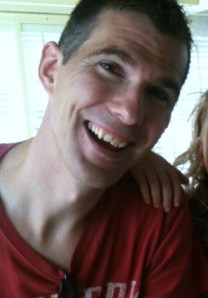
Ross M. Kitson

Author Bio

Ross M Kitson is a published author in the fantasy genre, with an ongoing series (The Prism Series), a number of short stories on Quantum Muse web-zine and several stories in Steampunk and fantasy anthologies.

His debut series for Myrddin is due for release in October 2012, and is a sci-fi series set in modern day York. It is written for ages 12+, although its combination of killer androids, steam-powered airships, kick-ass heroines and action packed chases will appeal to all ages.

Ross works as a doctor in the UK specializing in critical care and anaesthesia. He is happily married with three awesome children, who nagged him incessantly to write something that they could read. His love of speculative fiction and comics began at a young age and shows no signs of fading.

You can Follow Ross on Twitter:   @rossmkitson

You can find him on Facebook  http://www.facebook.com/TheNuKnights http://www.facebook.com/ross.kitson.9

Ross M Kitson’s Books are available at Amazon.comUS and Amazon.comUK.

4 Comments

Filed under Adventure, Battles, Books, Fantasy, Humor, knights, mythology, Steampunk, Uncategorized, writing