Tag Archives: F. Scott Fitzgerald

Learning from Gatsby: conveying emotion #amwriting

Emotions are tricky to convey, and I’ve read a few books lately where this was poorly handled (he was angry, she was enraged, etc.). So, today, I want to revisit a post from August 2021 that examined this problem.
F Scott Fitzgerald on Good Writing LIRF07252022When we write about mild reactions, wasting words on too much description is unnecessary because mild is boring. But if you want to emphasize the chemistry between two characters, good or bad, strong gut reactions on the part of your protagonist are a good way to do so.

I often use examples of how to convey simple emotions from F. Scott Fitzgerald’s The Great Gatsby. First, you haven’t gotten the real story if you haven’t read the book but have seen the various movie adaptations. Adaptations are stories that have been reworked, so it never hurts to go to the source material and discover what the author intended.

The prose has power despite the fact it was written a century ago. I don’t feel qualified to get into the debate over whether Fitzgerald stole prose from Zelda or not. Their relationship was a hot mess. I’m a casual reader, not a scholar, so I leave that can of worms to those more knowledgeable.

However, we can learn from how the prose was constructed and how Nick Carraway sees the world. There are lessons here, things we can put into action in our own work.

About The Great Gatsby, via Wikipedia:

The Great Gatsby is a 1925 novel by American writer F. Scott Fitzgerald. Set in the Jazz Age on Long Island, near New York City, the novel depicts first-person narrator Nick Carraway‘s interactions with mysterious millionaire Jay Gatsby and Gatsby’s obsession to reunite with his former lover, Daisy Buchanan.

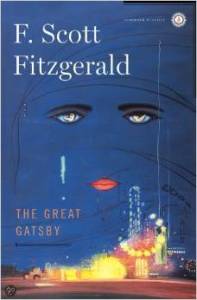
f scott fitzgerald The Great GatsbyThe novel was inspired by a youthful romance Fitzgerald had with socialite Ginevra King and the riotous parties he attended on Long Island’s North Shore in 1922. Following a move to the French Riviera, Fitzgerald completed a rough draft of the novel in 1924. He submitted it to editor Maxwell Perkins, who persuaded Fitzgerald to revise the work over the following winter. After making revisions, Fitzgerald was satisfied with the text, but remained ambivalent about the book’s title and considered several alternatives. Painter Francis Cugat‘s cover art greatly impressed Fitzgerald, and he incorporated aspects of it into the novel. [1]

If you are curious, an excellent book on Sara and Gerald Murphy, the people who inspired Fitzgerald’s novels (and a glimpse into the real world he introduces us to), is Everybody Was So Young: Gerald and Sara Murphy: A Lost Generation Love Story by Amanda Vail.

The following passages show us what is happening inside Nick Carraway, the protagonist. Every word is intentional, chosen, and placed so as to evoke the strongest reaction in the reader.

Here, Fitzgerald describes a feeling of hopefulness:

And so with the sunshine and the great bursts of leaves growing on the trees—just as things grow in fast movies—I had that familiar conviction that life was beginning over again with the summer.

Next, he describes shock:

It never occurred to me that one man could start to play with the faith of fifty million people—with the single-mindedness of a burglar blowing a safe.

Jealousy:

Her expression was curiously familiar—it was an expression I had often seen on women’s faces but on Myrtle Wilson’s face it seemed purposeless and inexplicable until I realized that her eyes, wide with jealous terror, were fixed not on Tom, but on Jordan Baker, whom she took to be his wife.

The discomfort of witnessing a marital squabble:

The prolonged and tumultuous argument that ended by herding us into that room eludes me, though I have a sharp physical memory that, in the course of it, my underwear kept climbing like a damp snake around my legs and intermittent beads of sweat raced cool across my back.
mood-emotions-1-LIRF09152020Fitzgerald shows us Nick’s emotions, AND we see his view of everyone else’s emotions. We see their physical reactions through his eyes and through visual cues and conversations.

Nick Carraway’s story is told in the first person, and Fitzgerald stays in character throughout the narrative.

I suggest playing with narrative POV until you find the best one. Sometimes, a story falls out of my head in the first person, and other times, not. Whether we are writing in the first-person or close third-person point of view, seeing the reactions of others is key to conveying the sometimes-tumultuous dynamics of any group.

Writing emotions with depth is a balancing act. The internal indicator of a particular emotion is only half the story. We see those reactions in the characters’ body language.

This is where we write from real life. When someone is happy, what do you see on the outside? When a friend looks happy, you assume you know what they feel.

I spend a great deal of time working on prose, attempting to combine the surface of the emotion (physical) with the deeper aspect of the emotion (internal). I want to write it so I’m not telling the reader what to experience.

Great authors allow the reader to decide what to feel. They make the emotion seem as if it is the reader’s feeling.
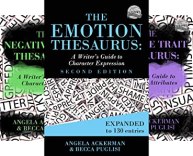
emotion-thesaurus-et-alIf you have no idea how to begin showing the basic emotions of your characters, a good handbook that offers a jumping-off point is The Emotion Thesaurus by Angela Ackerman and Becca Puglisi.

Their entire series of Writers Helping Writers books is affordable and full of hints for adding depth to your characters.

Just don’t go overboard. These books will offer nine or ten hints that are physical indications for a wide range of surface emotions. You can usually avoid dragging the reader through numerous small facial changes in a scene simply by giving their internal reactions a little thought.

I usually reread The Great Gatsby and several other classic novels in various genres every summer.

Fitzgerald’s prose is written in the literary style of the 1920s. It was a time in which we still liked words and the many ways they could be used and abused, hence the massive amount of Jazz Age slang that seems incomprehensible to us only a century later.

If you’re like me, you might need to find a bit of a translation for some of the slang: 20’s Slang | the-world-of-gatsby (15anniegraves.wixsite.com). The problem of slang falling out of fashion as quickly as it enters everyday speech is an excellent reason to avoid using it.

For example, one bit of slang confused me because of the context in which it was used: Police dog. It was a slang noun referring to a young man to whom one is engaged.

Myrtle Wilson said “I’d like to get one of those police dogs.”

When I read it the first time, I thought the speaker meant a German shepherd, and it didn’t make sense.

Ulysses cover 3Students taking college-level classes in literature and English are often required to read The Great Gatsby and other classic novels from that era, such as James Joyce’s Ulysses. Reading classic literature as a group and discussing every aspect is central to understanding it. Also, you get a glossary as part of the course, so that’s a bonus.

While these novels are too complex for most people’s casual reading, I wanted to understand how these books were constructed.

We twenty-first-century writers can learn something important from studying how Fitzgerald showed his characters’ thoughts and internal reactions. My personal goal is to improve how my first drafts read.

Who knows if I will succeed–but I’ll have fun trying.


Credits and Attributions:

[1] Wikipedia contributors, “The Great Gatsby,” Wikipedia, The Free Encyclopedia, https://en.wikipedia.org/w/index.php?title=The_Great_Gatsby&oldid=1190673325 (accessed January 10, 2024).
6 Comments

Filed under writing

#amwriting: using repetition as a literary device

fitzgerald-great gatsby memeUnconsciously using the same words too often in our descriptions is one of the pitfalls of writing. It happens to all of us, and for me it occurs most often when I am laying down the first draft. I’m hurrying and trying to get the ideas out of my head and onto the paper and my vocabulary can’t keep up.

Many common words (the, and, etc.) don’t really stand out when used more than a few times in a paragraph, and you couldn’t write well if not for those words. However, some words will always stand out more than others, and if you use them more than once in a paragraph it looks like you’re unimaginative or a lazy writer. This is especially true if the word in question has a lot of synonyms you could have used instead of repeating the same word. Having a good thesaurus at hand is a great help to the brain-stranded author.

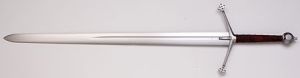
Scottish claymore replica Albion Chieftain, Søren Niedziella, CC BY 2.0

Some words don’t have a lot of obvious synonyms so you get hung up on the few you can find.  In my own work, the word sword is one of the main culprits. The type of blade my characters wield in the World of Neveyah books is a claymore, and four ensorcelled blades figure prominently in the Tower of Bones series.

Therefore, some obvious synonyms will not work as these are distinct blade types that are in no way like a broadsword.

  • Rapier
  • Epee
  • Foil

Because of this constraint, I am limited to:

  • Sword
  • Blade
  • Weapon
  • Steel (if I’m desperate, but I despise using that to reference a weapon that isn’t an epee or a rapier)

ozford american writers thesaurusHowever, sometimes we use intentional repetition:

Sometimes we want to emphasize a concept and repetition is the way to do it. Some of the best authors use the repetition of certain key words and phrases to highlight an idea or to show the scene. This technique is an accepted rhetorical device and is commonly found in mainstream fiction. It is used to evoke an emotional response in the reader, and can be exceedingly effective when done right.

Literarydevices.net says, “The beauty of using figurative language is that the pattern it arranges the words into is nothing like our ordinary speech. It is not only stylistically appealing but it also helps convey the message in much more engaging and notable way. The aura that is created by the usage of repetition cannot be achieved through any other device.”  (End quoted text)

Also according to literarydevices.net, repetition as a literary device can take these forms:

  • Repetition of the last word in a line or clause.
  • Repetition of words at the start of clauses or verses.
  • Repetition of words or phrases in opposite sense.
  • Repetition of words broken by some other words.
  • Repetition of same words at the end and start of a sentence.
  • Repetition of a phrase or question to stress a point.
  • Repetition of the same word at the end of each clause.
  • Repetition of an idea, first in negative terms and then in positive terms.
  • Repetition of words of the same root with different endings.
  • Repetition both at the end and at the beginning of a sentence, paragraph, or scene.
  • A construction in poetry where the last word of one clause becomes the first word of the next clause. (End quoted text)

Some famous examples of repetition as a literary device:

“Every book is a quotation; and every house is a quotation out of all forests, and mines, and stone quarries; and every man is a quotation from all his ancestors.”  Ralph Waldo Emerson, Prose and Poetry

f scott fitzgerald The Great Gatsby“About half way between West Egg and New York the motor-road hastily joins the railroad and runs beside it for a quarter of a mile so as to shrink away from a certain desolate area of land. This is a valley of ashes—a fantastic farm where ashes grow like wheat into ridges and hills and grotesque gardens, where ashes take the forms of houses and chimneys and rising smoke and finally, with a transcendent effort, of men who move dimly and already crumbling through the powdery air.” F. Scott Fitzgerald, The Great Gatsby

When an author writes it intentionally to drive home a point, repetition is an effective tool. It is when words are inadvertently used with a lack of creativity that repetition ruins a narrative.

Consider buying a thesaurus or make use of the many online thesauruses that are available.

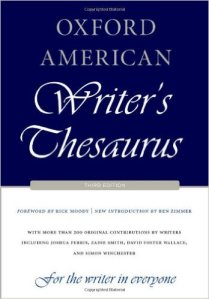
I have a well-worn copy of the Oxford American Writer’s Thesaurus. This book has become just as important to me as my copy of the Chicago Manual of Style. This large book of synonyms can be purchased used from Amazon, for as little as $9.99 in the hardcover form. I do recommend purchasing this as a paper book rather than an ebook. Once you see the amazing variety of words at your disposal, it’s one you will refer back to regularly.


4 Comments

Filed under Literature, writing

To blurb or not to blurb

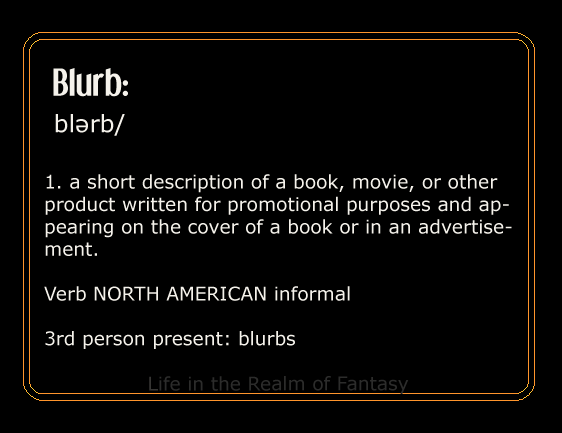
Blurb definitionOne of the things that sucks about being an indie is that you have to sell your books. I know that seems pretty obvious, but but it’s harder than it looks! In the old days, every book had a blurb on the back of it, or inside the flap on the dust jacket, and that blurb gave us just enough intriguing insight into the book that we bought it.

Here in the US, the word blurb originated in 1907. American humorist Gelett Burgess’s short 1906 book Are You a Bromide? was presented in a limited edition to an annual publishers’ trade association dinner. The custom at such events was to have a dust jacket promoting the work–they did things right in those days! His definition of “blurb” was “a flamboyant advertisement; an inspired testimonial.”

Blurbs can and do sell books.

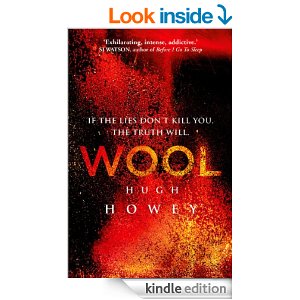
wool by hugh howeyBut what will sell books? Let’s take a look at Wool, by Hugh Howey:

This is the story of mankind clawing for survival, of mankind on the edge. The world outside has grown unkind, the view of it limited, talk of it forbidden. But there are always those who hope, who dream. These are the dangerous people, the residents who infect others with their optimism. Their punishment is simple. They are given the very thing they profess to want: They are allowed outside.

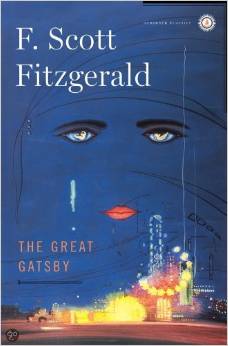
f scott fitzgerald The Great GatsbyOr F. Scott Fitzgerald‘s classic novel, The Great Gatsby:

“Whenever you feel like criticizing any one,” he told me, “just remember that all the people in this world haven’t had the advantages that you’ve had.”

He didn’t say any more, but we’ve always been unusually communicative in a reserved way, and I understood that he meant a great deal more than that. In consequence, I’m inclined to reserve all judgments, a habit that has opened up many curious natures to me and also made me the victim of not a few veteran bores. The abnormal mind is quick to detect and attach itself to this quality when it appears in a normal person, and so it came about that in college I was unjustly accused of being a politician, because I was privy to the secret griefs of wild, unknown men. Most of the confidences were unsought — frequently I have feigned sleep, preoccupation, or a hostile levity when I realized by some unmistakable sign that an intimate revelation was quivering on the horizon; for the intimate revelations of young men, or at least the terms in which they express them, are usually plagiaristic and marred by obvious suppressions. Reserving judgments is a matter of infinite hope. I am still a little afraid of missing something if I forget that, as my father snobbishly suggested, and I snobbishly repeat, a sense of the fundamental decencies is parcelled out unequally at birth.

There are huge differences in these blurbs:

Hugh Howey (an indie) tells us about the plot of his book-and it is intriguing. I bought it based on that blurb.

(Charles Scribner’s Sons) (Fitzgerald’s original publisher) used the opening lines of the book–and that was intriguing as well.

Choosing to use the opening lines for marketing is dangerous–it could be an epic failure, for those who want to know what the book is about.

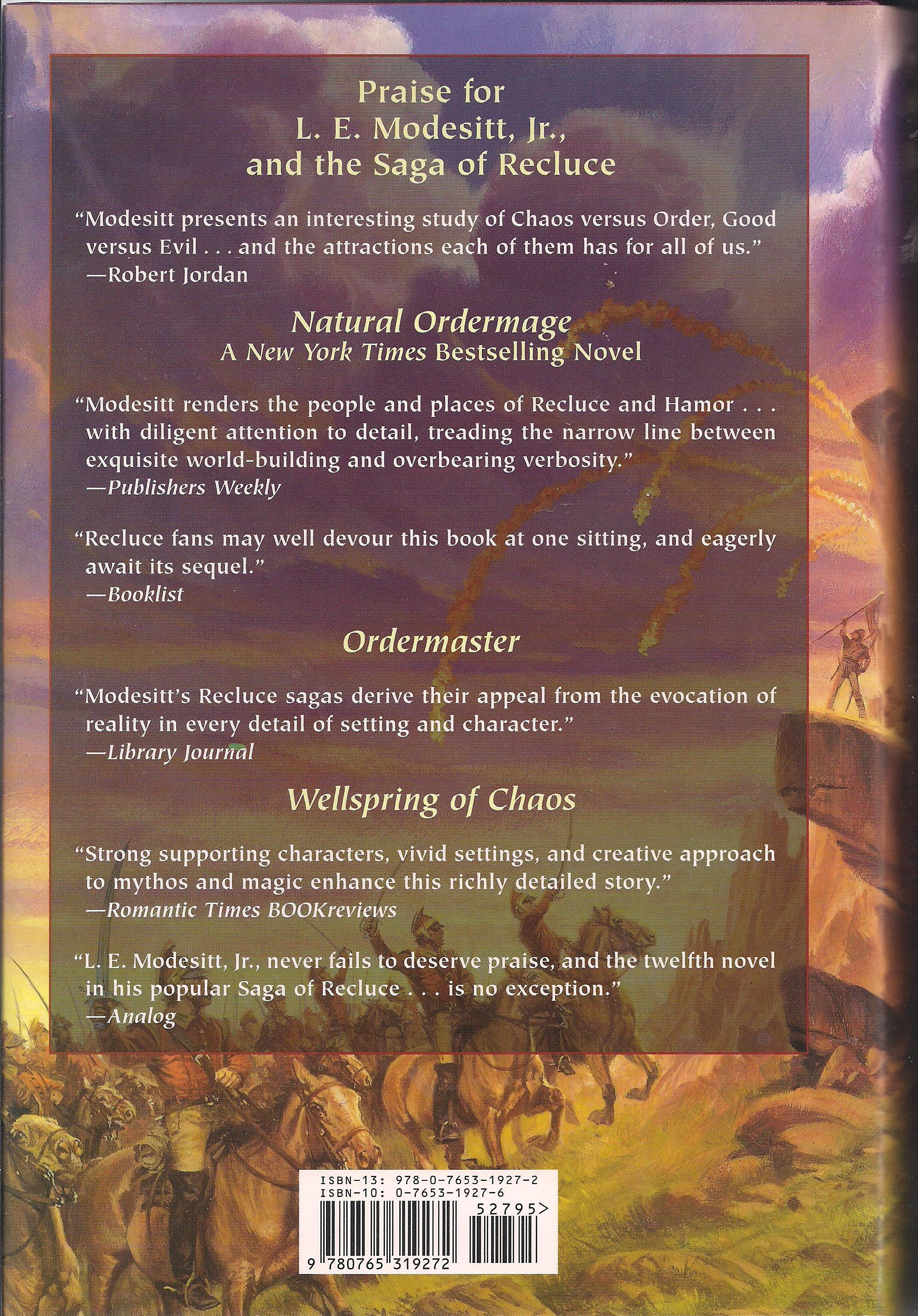
Back Cover of Mage-Guard of Hamor by L. E. Modesitt Jr.

Back Cover of Mage-Guard of Hamor by L. E. Modesitt Jr.

Even more dangerous than that is the increasing trend toward eliminating the blurb and going with nothing but recommendations mentioning other works by that author.  Let me just say now, I HATE THAT! For the love of Tolstoy–talk about the book I am going to buy, please! Any blurb, even a bad one, is better than glowing reviews by paid reviewers. 

But this trend just proves to me that the BIG PUBLISHERS are just as much as sea in the this regard as we poor indies are, small comfort though it is.

I will be writing blurbs for my own work again soon, and so I am looking at blurbs on the covers in my library, and trying to see what it was that attracted me to that particular book. I admit that many times it was the cover art, and not the blurb, but when I picked up a book by an author that was unknown to me, I read the blurb, and considered carefully whether or not to spend my dearly earned wages on that book. I was taking a risk–because what if I hated it?

It’s a conundrum.  Perhaps I can go with “One ring to rule them all…”

No… I suppose that’s been done…but it’s an awesome blurb, short and to the point….

4 Comments

Filed under Adventure, Battles, Blogger, blogging, Books, Fantasy, Humor, Literature, Publishing, Self Publishing, Uncategorized, writer, writing