Tag Archives: Flash Fiction Friday

#flashfictionfriday: The Iron Dragon

Because it’s November, and National Novel Writing Month is in full swing, I am reposting a story I posted in April of 2016. This story was actually written during NaNoWriMo 2015. If you’re curious as to my word count, feel free to click on the image to the upper right, the one that says NaNoWriMo Participant. In the meantime, enjoy  The Iron Dragon.

Leaf_Decoration 1_clip_art_small


Earl Aeddan ap Rhydderch turned his gaze from the mist to the strange iron road that emerged from it, and then to where the road entered the cave. “Tell me again what happened.”

The peasant who had guided the earl and his men said, “The mist, the iron road, and the cave appeared yesterday, sir. We saw the beast entering its lair, and a fearful thing it is, too. No one dares approach it, but the monster can be heard in there. It’s a most dreadful dragon — we found the carcass of a large wolf that had been torn to shreds, trampled until it was nigh unrecognizable.”

The man’s companion said, “Everyone knows wolves are Satan’s hounds. It must have angered its hellish master. We found it lying cast to one side of the Devil’s Road.”

Aeddan looked back to the iron road, seeing where it emerged from the mist. He walked to the low-hanging fog bank, seeing that the road vanished just after it entered the mist, leaving no marks upon the soil. He turned and strode back to the peasants. “I agree it’s the work of the Devil, but why does the Lord of Hell require an iron road that leads nowhere?”

A faint grumbling sounded beneath Aeddan’s feet. “A light! Look to the mist!” shouted one of his men.

Turning, Aeddan saw a white glow forming in the fog as if a large lamp approached from a great distance. “That’s no ordinary lantern. Mount up!” Moving quickly, he leaped into his saddle and turned his steed to face the demon. He freed his lance from its holster and settled it in the arret attached to his breastplate under his right arm. His fingers fumbled as he struggled to fasten the grapper, but at last it held firm. The peasants, knowing they were no match for whatever approached, had run for shelter up the hill.

The light deep within the fog grew and strengthened, as did the rumbling noise.  It waxed brilliant, and the earth shuddered as if beneath the pounding of a thousand hooves. Smoke filled the night air, reeking of the sulfurous Abyss, combined with a howling as cacophonous as the shrieks of all the damned in Hell.

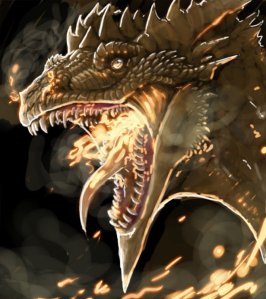
Dragon-Linda_BlackWin24_JanssonWhat emerged from the mist was impossible — an Iron Dragon of immense height and girth.

“Courage men! For God and King Gruffydd!” His bowels had turned to water, but Aeddan and his men stood firm in the face of the demon, sure that death would be their reward.

The fiery light emanating from the burning maw lit the night, and the ground shook as the beast roared and raced ever closer. As the beast sped toward him, a burning wind blowing straight out of Hell knocked Aeddan and his horse to the side of the Devils Road and using that opportunity, the Iron Dragon thundered past him, heading into its lair.

Stunned, Aeddan scrambled to his feet, staring as the length of the beast passed him by, the body taller than a house and long, like an unimaginably giant, demonic centipede. The length of the beast was incomprehensible, lit by the fire within and glowing with row upon row of openings. The faces of the damned, souls who’d been consumed by the ravening beast peered out as they flashed by. Sparks flew from its many hooves.

Terrified his men would be crushed by the immense creature he shouted for them to back off, his voice drowned by the din.

Abruptly it was gone, vanished inside its lair. In the sudden, deafening silence, Aeddan wondered how such a thing could possibly have fit into the cave. Yet it had done so, and other than the stench of its passing, there was no sign of it.

He remounted and settled his lance in the holster beside his stirrup, then turned to his men. “Rouse the village. We must seal its lair with stone and mortar. We may not be able to kill it, but at least, we can stop it from marauding and decimating the countryside.”

>>><<<

Mist shrouded the small valley just outside of the village of Pencader. Engine Driver Owen Pendergrass looked at his pocket watch and opened the logbook, noting the time and that they had just departed Pencader Station. He said to the fireman, Colin Jones, “We should be approaching the tunnel, though it’s hard to tell in this mist. We’re making good time despite the fog. We’ll be in Carmarthen on schedule.”

“Sir! Look just ahead! What…?” Colin pointed ahead.

A group of mounted men dressed as medieval knights, complete with lances lowered as if prepared to joust, appeared out of the mist, attempting to block their path. “God in heaven — what next!” Blowing the whistle to scare them off the tracks, Owen pulled the brake cord, but there was no way the train could stop soon enough. In no time at all, the train was upon the knights, scattering them and blowing past. Owen looked out the window, to see if they’d survived, but they were gone as if they’d never been.

“Vanished,” said Colin. “Like the ghosts when we passed through here yesterday.”

Hiding his trembling hands, Owen shook his head. “It was a close call, but no harm was done. We’ll not be mentioning this to the authorities, eh? Not after the way our report was received yesterday. It’s a haunted valley, but it’ll do us no good to mention it to anyone important.”

Colin agreed and turned back to fueling his fire, shoveling coal as if he could work the fear out of his mind.

The connecting door opened and Harrison, the chief steward, entered. Pendergrass told him the same thing, and the old man agreed. “We got in enough trouble at the yard yesterday for mentioning the ghosts. I’ll go soothe the passengers.”

“Tell them it was just the mist and the dark playing tricks on their eyes.” Owen shook his head and glanced out the window, seeing they had emerged from the tunnel into a clear, cold evening and would soon be at the next stop, the village of Llanpumpsaint. “Playing tricks indeed.”


“The Iron Dragon” © 2016 Connie J. Jasperson, All Rights Reserved

(first published Apr. 1, 2016 on Life in the Realm of Fantasy)

Art: Dragon By Linda BlackWin24 Jansson [Public Domain], via Wikimedia Commons

1 Comment

Filed under #FlashFictionFriday, Dragons, Fantasy, Literature

#flashfictionfriday: When You are Old, by W. B. Yeats

maude_gonne_by_sarah_purser_1898

Maude Gonne, by Sarah Purser, 1898

WHEN you are old and grey and full of sleep,

And nodding by the fire, take down this book,

And slowly read, and dream of the soft look

Your eyes had once, and of their shadows deep;


How many loved your moments of glad grace,

And loved your beauty with love false or true,

But one man loved the pilgrim soul in you,

And loved the sorrows of your changing face;


And bending down beside the glowing bars,

Murmur, a little sadly, how Love fled

And paced upon the mountains overhead

And hid his face amid a crowd of stars.


When You Are Old,  by W.B. Yeats, first appeared in The Rose, a collection of twenty-two poems published by William Butler Yeats in 1893. His works entered the public domain in 2010, 70 years after his death.

Many poems in the collection, The Rose, express Yeats’ unrequited love for Maude Gonne. Though she had resisted his courtship at the time  The Rose was published, it is understood that her rejection of him was not complete, and during those years he did have some small glimmer of hope.

1 Comment

Filed under Poetry, writing

#FlashFictionFriday:1998 Boxing up Michael

paul cornoyer rainy day in madison square

1998 Boxing up Michael

Putting his things in boxes,

Placing them on the wet grass by the street,

Rain on my face, stinging.

Tears in my eyes, also stinging.

Anger, hot in my heart because, stupidly

I believed.

Changing sheets, changing locks,

Changing passwords, changing banks.

Doubt should have prevailed.

Sanity could have prevailed.

My trust was his tool and, stupidly

I believed.

His books and tools and clothes resided

In open boxes on rain-damp grass,

And later he found them on Sylvia’s grass

Because some things never change.

He was a lesson learned because, stupidly

I believed.


1998 Boxing Up Michael by Connie J. Jasperson © 2016 All Rights Reserved

2 Comments

Filed under #FlashFictionFriday, Poetry

#amwriting: Interview with Terry Persun, poet and author

Today we are continuing a series of interviews with published authors who are also instructors. They write in a variety of fields, and each approaches the craft from a slightly different point of view. Because they come from such varied backgrounds, I have gained a great deal of knowledge of writing craft from attending their seminars.

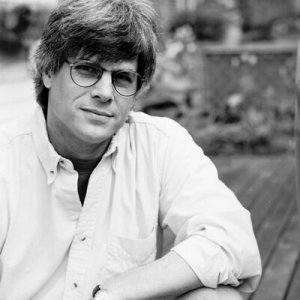
As it’s Friday and I often post poetry and flash fiction on Fridays, we are talking with Terry Persun, a poet and novelist who resides in the Northwest.

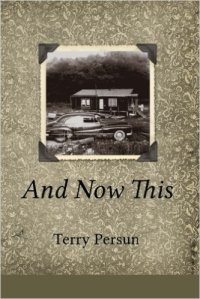
51eyfcn4pzl-_sx331_bo1204203200_CJJ: You write in three areas, poetry, nonfiction, and fiction. Your fiction work ranges through three sub-genres, Sci-fi/fantasy, mystery/thriller, and mainstream/historical. As are many poets, you’re well-known for questioning the political, spiritual, and cultural status quo.

How does your poetic bent shape your non-fiction and genre novel work?

TP: What an amazing question. I often think about how my poetry helps to shape my novels, but seldom my nonfiction. So let’s start with novels: much of the best poetry is about image, and the same goes for the novel. An image (showing not telling) can create an emotion that will stick with the reader. Poetry allows me to practice that. Even when you’re discussing cultural elements, an image is more important than abstract words like horrific or painful. A poet must know how to show those abstractions. Think about the last time you saw an image of a child in a war zone, it’s much more impactful than being told that there were several women and children killed in the attack. Even which image is important—movie directors know which angle to take. As for nonfiction: I think pacing and word choice stand out the most. In a poem, I can create a line break or a stanza break, similarly with nonfiction I might create a new paragraph or move the article from prose to bulleted copy. Again, an image might be best in nonfiction as well. For example, instead of saying, “Make sure your enclosure is leak proof.” I said, “Using the proper sealing approach will eliminate the concern of having grease oozing out of your enclosure.” Seeing the grease oozing out of something is much more impactual than telling someone to provide better sealing. There are probably many more things that poetry brings to my writing that I may not be completely aware of.

CJJ: You have published five poetry collections. I own one of them, And Now This. These poems resonated with me, as my father was also a WWII vet. These poems deal with the effects of your father’s wartime experiences on your family during the 1960s. Battle related PTSD is also a theme in my forthcoming novel. Reading your poetry made me feel less alone in that experience, and helped me develop my protagonist in the initial stages.

You seem to have an instinctive gift for meter in your free verse. One of my favorite opening passages of all time is from one of the poems in this collection, from the opening poem,

First Memory

I’m standing in the corner,

Crying.

My hands are not my own,

They’re trembling.

This passage drops the reader straight into your young reality, unapologetically showing the life you had then.  Because they are free verse, the lines don’t rhyme, yet they are poetic and speak to me on a level that the prose in a novel rarely does. I also love the opening passage from another poem in this collection, In the Story of My Father.

What advice would give budding poets in regard to meter and phrasing their free verse?

TP: Language has its own music. Even prose has music to it. It’s my assertion that the best prose can often be broken into poems. In classes I sometimes will take a Hemingway paragraph and create a poem from it. Having said that, the number of beats, the number of syllables, where you place commas or choose to create a complex sentence, all have an effect on the final work. What I advise new poets is to first of all read a lot of poetry—especially the kind you’re trying to write. Notice how much of a breath you need to take, where natural and unnatural breaks might occur (use both), and where can you end a line that leads a reader in a false direction. Poetry infused prose can only make it better.

Doublesight--Terry PersunCJJ: One of my favorite fantasy novels is Doublesight, in which you created a world populated by shapeshifters. Zimp is a wonderful character, and I like how you portrayed her growing into her responsibilities.

You have opened your Doublesight world to fans to create fanfiction in, via Kindle Worlds.

How has the work offered by others in your world affected your view of Zimp’s world, and has it changed your direction in anyway?

TP: That’s a tough question to answer, because anything written in that world changes the way I see it. Once it’s opened to other interpretations, each character becomes deeper and more mysterious. I start to see the character differently and wonder more about him or her. It also lets me see how others view the story, the time period, the characters. I become more interested in the world as others work in it. My hope is that it’s fun and expansive for the authors as well, offering them another viewpoint to explore, another idea to examine. Plus, every Doublesight story uploaded into Kindle Worlds helps to market all the other books in the world. This cross-marketing will eventually help each author gain a new audience for their own books.

CJJ: Your video course is quite extensive, and I’d like you tell the readers what the course entails, and how they can take it.

TP: I believe you’re talking about the “Make Money Writing” course. You can access it through my website or through Youtube. I have taught that class quite a bit and is often standing room only. I’ve been freelancing for 20 years and working with freelancers on the magazine side for another 20 prior to that. I know how magazine editors think, what they need, and how to reach them. I also know how to help a writer find their way into freelancing. In the course, I run through how to decide what to write, the parts of the magazine, the editorial calendar, how to touch base with editors, and the main types of articles they need for their publications. I’ve consulted with several major magazine groups about their editorial packages, as well as how to move copy through their company so that they don’t waist time and end up with the best possible pieces to publish.

CJJ: I’ve attended several of your seminars at the annual PNWA conference and enjoyed them immensely. You’re based in the Pacific Northwest and have taught many classes all over the region. Will you be offering any seminars over the next year?

TP: I will be at the PNWA Cottage in September teaching a course on working with Amazon’s 12+ platforms for writers (go to PNWA.org for the list of classes), then at Rivers of Ink in October where I’ll be one of their Keynote speakers and also teach a class called Use Your Writing as Marketing. In November, I’ll be in Kauai for their annual Writers’ Conference where I’m teaching Self and Independent Publishing, and will be working one-on-one with attendees interested in a variety of methods of publication. I was involved in three other groups/conferences earlier this year. I am always willing to come up with a program if there is enough interest. Just let me know.


Terry, thank you so much for your insights and advice, both here and at the annual PNWA conference.

I highly recommend Terry’s works. His poetry is deep and thought provoking, and his novels are fun and fantastic.  His books can be found on Amazon at:

tpersun_the_mug_shot_pic_b-w_400x400Terry Persun on Amazon Author Central

For any of you who are interested in attending his seminars, or looking into his video course, you can find him at any of these places.

Facebook page:

https://www.facebook.com/TerryPersun

Website:

http://www.terrypersun.com

Twitter: @TPersun

Pinterest:

https://www.pinterest.com/terrypersun/ 

Goodreads:

https://www.goodreads.com/author/show/1219743.Terry_Persun

LinkedIn:

https://www.linkedin.com/profile/view?id=AAIAAAAwxc8B6UnSc6LNvK9rhZHPutf5VEgswes&trk=nav_responsive_tab_profile_pic


On  Monday, Scott Driscoll has agreed to join us here.

Comments Off on #amwriting: Interview with Terry Persun, poet and author

Filed under #FlashFictionFriday, Fantasy, Poetry, writing

#flashfictionfriday: Ode (to Writer’s Block)

Quill_pen smallOnce again, I am embarking on a new project, and struggling with getting the idea down on paper. Therefore, it’s time for me to face the demon that haunts all writers–that moment when you have the brilliant idea, and know what you have to say, but can’t find the words. I will defeat this demon by embracing it into submission, as I do all who oppose me. (Did I just say that? Oh, well. It’s out there now.) I will write, no matter how hokey and lame my prose is, because revisions are my friends, and I am not afraid to write garbage. I just need to get these ideas down and on paper before I forget them.

Several years ago, while suffering in similar circumstances over Valley of Sorrows, I wrote this woefully over-the-top, somewhat lame, free-verse ode to that sad condition, and I published it here on this blog then.

Ode  

What beauty is this, that lies sleeping near my heart?

‘Tis word—and word should tumble from my pen,

Not lie locked within the chamber dark and inky.

Where hides the key to free thee from thy prison?

Oh, lovely word, spring forth from the trap that is my mind,

Set thee down upon this paper, word.

Let me hold thee, and from thee let me form the dreams,

The hopes and fantasies that fill my eyes and blind me to all but thee,

Oh word! Fill my paper with thy bounteous delight,

As you fill my head with longing, and my wastebasket with scrap.


Ode © Connie J. Jasperson 2016

7 Comments

Filed under #FlashFictionFriday, Literature, writing

#FlashFictionFriday: Edna’s Garden, Part 2

I’m packing up to move. Selling the house was more work than I thought it would be. My agent assured me the large sum of money I spent replacing the old carpets with laminate, and getting new, natural-stone counter-tops would more than pay for itself when I found the right family to sell the place to. Frank Lanier, my real estate agent, has known me for years. He accepts that I believe more is at stake than mere money and was willing to write some unusual clauses into the contract.

My daughter doesn’t know this, but I told Frank that if the right people wanted the house, I would accept any offer they made, even if it was a little low.

The problem is, I’ve buried two husbands, and now I’ve outlived my handyman, Jasper. He seemed so healthy too. But he dropped dead of a heart attack at the young age of only eighty-two. Jasper did everything I couldn’t for the last thirty years, mowing the grass, cleaning the gutters, fixing the wonky electric system, or repairing the roof. I don’t want to have to train some young know-it-all in how things should be done, such as not running the lawnmower over the sprinkler heads. I’ve accepted that I can’t care for the place anymore.

But I do have a responsibility to see to it the right family moves in here. They must be able to see past the expected, must have an imagination, and absolutely must be committed to preserving…nature.

Marjorie, my daughter, is only in her seventies and, unfortunately for her husband, she’s as healthy as a racehorse. The way she carries on about every minor ailment, you’d think she was at death’s door. Arthur, Marjorie’s husband, is the least spirited man I’ve ever met. I suppose forty-eight years of being tied to her has long since beaten anything resembling a backbone out of him. Marjorie has the notion her life will be much easier if they sell everything and move to Florida.

I know what my extraordinarily lazy daughter is up to.  By purchasing a condominium in a resort for well-heeled seniors, Marjorie will have housekeepers to order around and will never have to cook again. They could eat every meal in the community dining room. I’m sure Arthur sees that as a point in her favor since Marjorie can’t even boil water without burning it.

It sounds like a cruise ship but without the Norovirus. However, she needs me to foot the bill, because she always spent her and her husband’s salaries faster than they could earn it, and then she insisted on retiring early. So, they’re out of money now, but she has a new retirement plan–me. She’s been pretending I’m senile and petitioned the court to be given custodial power over me and my assets “for my best interests.”

That will never happen. She now hates my lawyer, because he made it clear that I am in complete possession of my wits, and the judge rather bluntly asked her what she was hoping to gain. She became quite offended, saying it was her duty to care for me in my declining years.

Of course, she came apologizing afterward, trying to convince me to move in with them, but I told her I had plans that involved having a life. Marjorie got that pouty look, the one she wears anytime she’s balked. After we had left the court, I did tell Violet that booking myself into the lowest-rated nursing home in a Bombay slum would be preferable to putting myself and my money in Marjorie’s power. Violet knows Marjorie, and had to agree.

With Jasper’s untimely death, I had to do something about the house, but I have a responsibility to the “guests” in my garden. I didn’t tell Frank why I wanted only a certain kind of family, but the truth is, whoever purchased this place had to be people with an open mind. They had to be able to see my fairies and understand they are an endangered species and that they have a sacred duty to protect them. That’s why I had Frank put the clause in the contract that the new owners must never cut the hedge.

Frank finally found the right people. Kaitlyn and Martha fell in love with it. When they looked at the garden, Kaitlyn spotted the fairies and got all excited, pointing and whispering to Martha that this was the place for them to build their life together, and she had to have it, no matter what.

Martha agreed.

So now, that perfectly sweet couple will live here, and my fairies will be safe.

As the judge advised me to, I’m spending Marjorie’s inheritance. Frank found me the perfect little condo downtown near the senior center, and I can bring my cat, Rufus. It’s only a few blocks from the farmer’s market, and it’s on the bus line so I can sell my car, which will make my insurance agent happy.

Once I get settled there, Violet and I will take a two-week trip to Italy. We have a lot of plans, and making a pilgrimage to Fabio’s birthplace is just the beginning.

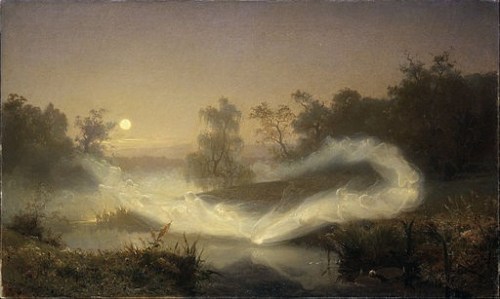
512px-August_Malmström_-_Dancing_Fairies_-_Google_Art_Project


Edna’s Garden, Part 2 © 2016 Connie J. Jasperson, All Rights Reserved

Click here to read part one of Edna’s Garden 

Comments Off on #FlashFictionFriday: Edna’s Garden, Part 2

Filed under #FlashFictionFriday, Fairies, Fantasy, writing

#flashfictionFriday: Sonnet 116, by William Shakespeare

Wm Shakespeare Amazon Author Central portraitWe haven’t waxed poetic over Shakespeare recently, and I think it’s time to consider the prose of the master, both its meaning and its construction. To that end, I give you

Sonnet 116

Let me not to the marriage of true minds

Admit impediments, love is not love

Which alters when it alteration finds,

Or bends with the remover to remove.


O no, it is an ever fixèd mark

That looks on tempests and is never shaken;

It is the star to every wand’ring bark,

Whose worth’s unknown although his height be taken.


Love’s not time’s fool, though rosy lips and cheeks

Within his bending sickle’s compass come,

Love alters not with his brief hours and weeks,

But bears it out even to the edge of doom:


If this be error and upon me proved,

I never writ, nor no man ever loved.

Sonnet 116 is typical of what we think of as a classic English sonnet. The English sonnet has three quatrains (verses), followed by a final rhyming couplet. It follows the typical rhyme scheme of iambic pentameter, which is a type of poetic meter: one short (or unstressed) syllable followed by one long (or stressed) syllable.

The interpretation of this poem is open to many speculations, the most compelling of which I found in Cliffs Notes, and which I quote here:

Despite the confessional tone in this sonnet, there is no direct reference to the youth. The general context, however, makes it clear that the poet’s temporary alienation refers to the youth’s inconstancy and betrayal, not the poet’s, although coming as it does on the heels of the previous sonnet, the poet may be trying to convince himself again that “Now” he loves the youth “best.” Sonnet 116, then, seems a meditative attempt to define love, independent of reciprocity, fidelity, and eternal beauty: “Love’s not Time’s fool, though rosy lips and cheeks / Within his bending sickle’s compass come.” After all his uncertainties and apologies, Sonnet 116 leaves little doubt that the poet is in love with love.

The experts at Shakespeare Online say:

Sonnet 116 is about love in its most ideal form. The poet praises the glories of lovers who have come to each other freely, and enter into a relationship based on trust and understanding. The first four lines reveal the poet’s pleasure in love that is constant and strong, and will not “alter when it alteration finds.” The following lines proclaim that true love is indeed an “ever-fix’d mark” which will survive any crisis. In lines 7-8, the poet claims that we may be able to measure love to some degree, but this does not mean we fully understand it. Love’s actual worth cannot be known – it remains a mystery. The remaining lines of the third quatrain (9-12), reaffirm the perfect nature of love that is unshakeable throughout time and remains so “ev’n to the edge of doom”, or death.

In the final couplet, the poet declares that, if he is mistaken about the constant, unmovable nature of perfect love, then he must take back all his writings on love, truth, and faith. Moreover, he adds that, if he has in fact judged love inappropriately, no man has ever really loved, in the ideal sense that the poet professes.

Five hundred years after his time on this earth, the Bard of Avon’s crafting of ideals and emotions into words evokes powerful feelings in the reader. He is immortal, because we hear his words and feel their impact.

The secret poet within me hopes to one day develop more poetic skill, whether it is writing free-verse, or crafting a more traditional rhyming style of prose. To that end, I practice writing poetry when I am in the mood, and read the masters, and attend local poetry-slams. It’s amazing, the talent in your local poetry groups.


References:

Cliffs Notes, Sonnet 116 © 2016 Houghton Mifflin Harcourt. All rights reserved.

Shakespeare, William. Sonnet 116. Ed. Amanda Mabillard. Shakespeare Online. 8 Dec. 2012. http://www.shakespeare-online.com/sonnets/116detail.html

Comments Off on #flashfictionFriday: Sonnet 116, by William Shakespeare

Filed under #FlashFictionFriday, Literature, Poetry, writing

#FridayFiction: The Bolthole, part 2

The next morning, Eddie, Gertie, and Billy packed what few possessions they had and made ready to leave The Powder Keg, meeting Walter and his son Willie on the way downstairs. Severely hungover, the Bastard sputtered and cursed, but finally agreed that he could make a bit more gold if more merchants were able to travel. By mid-morning, they had made their goodbyes and were on the road north to Eddie’s lodge.

A storm was blowing fiercely atop Windy Ridge, which made the narrow, muddy road treacherous, slowing them. It was late afternoon when they arrived home, although the thick forest of tall firs made it seem later.

>>><<<

Just after noon on the fifth day of Eddie’s new venture, five mercenaries he’d ridden with during his tenure with the Wolves rode in, bringing all their possessions, hoping to sign on with Eddie’s new crew. They asked him what he was naming his mercenary band, and he confessed he hadn’t picked a name yet.

To his son’s rather visible joy, one of the new recruits was Dame Bess, a noblewoman who claimed no last name. Another was Alan Le Clerk, a younger merc of Billy’s age. Lady Barbara (Babs) Gentry, Lily Rhys, and George Finch rounded out the crew.

Dame Bess was the coldest woman Eddie had ever met, hard as steel. He wasn’t sure what his son saw in her, but the lad was completely smitten, despite the fact she ignored him the way she did every man, or woman for that matter. Still, she was one of the best sword-swingers in the business, level headed when anything bad went down, and a quick thinker in an ambush. He counted himself lucky to have her on his crew.

After they picked their bunks and settled their things upstairs, they sat down to supper, pleasantly surprised at the meal Eddie’s son, Billy, set before them. Alan said, “I never knew you could cook.”

“This is good. Better than Marien’s.” Bess took a few more bites of fish-stew, then said,”There’ll be one or two more Wolves coming along in the next day or so. They’re taking their time, wanting to see how the Bastard changes things up, so they’re working without a contract until they make up their minds. They have until the day after tomorrow before they have to make a commitment.”

George Finch, the younger son of a baron, spoke up, his clipped, northern nobleman’s accent sharp with indignation. “You got your son out there just in time, Walter. Guess who turned up, right after you left? Good old Bloody Bryan. He showed up as soon as he knew Marien was safely in the ground.”

Lily nodded. Her thick Eynierish accent was hard to follow, and an angry look marred her darkly attractive features. “Sure enough, the Bastard took him back, claiming he was shorthanded because you had taken half the crew and started your own ‘band of thieves and rowdies.’”

George’s scorn could have peeled the bark from a woodwraith. “After what that degenerate did, ruining our good name—”

Eddie snorted. “The Bastard always did have the worst taste in friends, but taking Bloody Bryan back…I don’t understand it.” He shrugged. “Anyway, I hope you’re aware that I have no jobs yet. We might be doing a lot of fishing here if we can’t find work.”

Lily’s grin lit up the room. “I love to fish—I’d rather do that than anything else. Besides, I wouldn’t spend another night in the Powder Keg, now Bryan is there no matter how hard things get here.”

Bess smiled, and when she forgot to be hard, she was pretty. “Just so you know, the Bastard is already referring to us as a bunch of highwaymen and rowdies whenever anyone asks and telling folks our shack is naught but a bolthole in the woods.”

The whole group laughed, Eddie most of all. “A bolthole–I like that. Coming from him it’s a compliment. You have to admit, it’s a pretty solid shack.”

“This place is a lot sturdier than the Powder Keg,” Walter said. “I hated living upstairs there during a high-wind storm. The top floors shake so bad, it’s like the whole place will blow down.”

“You have that right, Walter.” George leaned back against the wall, taking in his surroundings. “This is a damned log palace, compared the Powder Keg. Plus, the Keg get’s flooded every year when the river rises. This place is dry, with no moldy smell. I don’t care if I do have to share quarters—I can live without the mold.”

The next morning, just after midday, a knock sounded at the door. Eddie answered it. A merchant he recognized, John Caskman, stood there. “Hello, Eddie. I was just in Somber Flats and heard the news about Marien. The Bastard tells me you’re leading a new band of mercs called the Rowdies? If so, I have a job, for you, leaving Monday next. It’s a small wagon train for you to escort to Galwye, from Dervy. Three wagons, so I’ll need six guards for six days.”

Eddie shook his hand, and a smile split his face. “Yes, I think we can fit you into our schedule.” That evening he hung a shingle over the front steps:

the bolthole sign

With that, the names were established, and the Rowdies settled into a routine.

>>><<<

Five weeks had passed since Mad Marien’s funeral. The court papers had arrived at the end of the second week, and Eddie MacNess was officially granted a patent to form a mercenary outfit, the Rowdies. Things had gone far better than Eddie had dreamed they would, and even the Bastard had been forced to admit business was better than ever with the Rowdies funneling paying customers his way. Eddie now had sixteen Rowdies, including a trained provisioner,  a runaway sailor from Lanqueshire named Romy. Business was good and the Rowdies were working all the time.

It was a clear day, with blue skies and birds singing. Eddie, George, Allan, and Billy had just arrived back at the Bolthole. Eddie dismounted, handing his horse’s reins to young Willie. He’d just realized the birds had stopped singing, when the sounds of horses galloping caught his attention, and he looked up, seeing five knights in royal colors riding as hard as they could, heading for the safety of the barn.

The knight leading the group shouted, “Dragon! Get your livestock under shelter.”

Eddie caught the bridle as the man leaped from his horse. “Where was it last?”

The knight in charge was Lord Mat St. Coeur. “Just north of Psalter Pass. We were fighting it, but the damned thing flew away. Do you have any livestock?”

“Just a few chickens, which we keep in the barn. We keep the horses in the paddock by the stable because I haven’t had a chance to repair the main stockade yet. Where was it headed? I have a crew of Rowdies who should be coming home this afternoon, and they may already be on the Galwye road.” Gertie, Lily, Bess, and Babs had guarded a small merchant caravan from Dervy to Galwye and back. Eddie looked at the sun, thinking they should have just left the quarry town. They would be about two or three hours away, depending on the weather up in the hills. A ball of lead formed in his stomach as he realized he had no way to warn them, but he stuffed down his panic. “Was it wounded?”

“Yes, but he was still able to fly. He was headed this way, then disappeared. I think he may have landed, but he could still be flying around out there.”

Both men jumped deeper into the shadows of the stable as an immense shadow crossed the stableyard, flying low. Eddie’s bowels turned to water. The roar of flames lit the clearing, and the shadow passed.

The flickering light of a fire, however, did not. Willie grabbed Eddie’s arm. “Look to the house, Captain Eddie! The thatch is alight!”

St. Coeur leaped to action. To Eddie, he said, “Fetch a ladder and rakes.” He turned to Willie. “Boy—get everyone out of the house. Tell them to bring out every bucket and container they can find.” He turned back to Eddie. “I’ll go up on the roof and rake the burning thatch down to the ground. Once I have it on the ground you lads put out the flames.”

Young Willie’s eyes were terrified, but he had himself under control and ran to the house as instructed.

Racing to the tool shed for the ladder and rakes, Eddie called over his shoulder, “St. Coeur, you’re a fool! You’ll be right up there where the dragon can get you.”

Following Eddie, St. Coeur shuddered. “If so, I’ll be his dinner. We need to save your house. It’s the only dry shelter for miles!”

Willie emptied the house of people. Billy joined St. Coeur on the roof, working as fast as they could, raking and dragging every last bit of burning thatch off the roof. Down on the ground Eddie and the others had formed a bucket brigade, passing water up to the men on the roof while Willie and Romy drizzled water  and stamped on what St. Coeur and Billy threw to the ground.

Finally, the fire was out. One whole side of the house had no thatch, bare to the split-rails laid over the rafters, but the smoke had cleared, and the house was saved.

The two men carefully examined the rest of roof, to make sure no embers were hiding, pouring buckets of water over it, just in case.

Eddie stood in the clearing, staring up at the thatchless side of his house. His heart sank at the thought of the work ahead of him in repairing the damage over the next few days, but at least he still had his home.

However, that disaster paled in comparison to his real worry. What if the dragon had passed over Gertie’s crew? There was nothing he could do about her and the other ladies, so he forced himself to keep on working.  “I guess we’d best see if we can find enough canvas to keep the rain out of the attic while we get this fixed.” His jaw was clenched to keep his teeth from chattering. Visions of his lady being snatched up or trying to fight an enraged dragon kept stopping him in his tracks.

At last, he found several good-sized tarpaulins, canvases for covering freight-laden wagons. He sent Billy up on the roof with St. Coeur to help the knight secure the sheets of canvas. The two men bound them tightly to the rafters with stout hemp cords so the wind wouldn’t blow them off during the night. Finally, they were back down on the ground.

Billy grabbed his father’s arm. “Dad—we’ve done what we can here. I want to go look for the ladies.” He was demanding, it, and wouldn’t hear “no” if Eddie said it.

Eddie wanted nothing more, but he was captain. It was his duty to make sure everything was in order before he went looking for his lover.

Billy tried again. “Please? It’s Gertie, Dad…and Bess.”

Caving in to his own fear, Eddie nodded and turned to the knights. “St. Coeur, Romy will feed you and your lads, and get you settled for the night. I have a crew on the Galwye Road I need to go meet.” He turned to the Rowdies. “Alan, Lonnie, and Walter—you’re with Billy and me. Willy, let’s get these horses saddled.”

However, the thunder of hooves announced Gertie’s crew returning. The ladies rode hard into the stableyard but pulled up when they saw all was well. Once in the barn, Gertie jumped down, and Eddie grabbed and swung her, relief making him giddy.

Laughing as he set her down, Gertie said, “We saw a dragon flying off to the north. Then we saw a column of smoke rising from here and feared the worst.”

St. Coeur said, “Which way was he headed?”

Gertie shivered. “North along the foothills, below the Western Range. He wasn’t flying too well, and he was far away, but we stayed hidden under the forest.”

“Too right, we hid,” said Babs, winking at St. Coeur. “We had no intention of dancing swords with a dragon. Hello, Mat. Remember me from court? Lady Barbara Gentry.”

“I do remember you, Babs—and how well you got along with the queen regent.” Mat covered his laugh with a cough. “The snake in her dressing table was a lovely parting gift when you left to marry the elderly Earl of Grandon. I never knew you’d taken up the sword, though.”

Babs laughed. “To my noble father’s eternal embarrassment, I’m not really cut out to be a countess, so the night before the wedding I eloped with my sword.”

St. Coeur eyed Babs appreciatively, but said to Eddie. “The dragon’s lair is likely up in those mountains, then. They’re pretty smart. Maybe he won’t come this close to civilization again—we did manage to wound him.”

“What are you lads going to do about him?” Eddie couldn’t get the size of the shadow out of his mind. “We can’t fight something like that. You have those bespelled shields and majik amulets.”

St. Coeur nodded. “And even with those to assist us, we lost two men. We were about six men short to have a proper chance at killing him. But I suppose we’ll be sent on a dragon hunt up in the wilds. We don’t just let those sorts of creatures roam freely.”

Babs linked her arm with St. Coeur’s, smiling up at him through dark lashes. “Mat darling, have you ever considered becoming a mercenary? We have so much more fun than you noble younger sons who must do all the dirty work with so little appreciation from her royal bitchiness.”

Mat replied, “Well, I did receive an offer from the Ravens last week, and I may take them up on it. Outside of the occasional dragon hunt, court life bores the hell out of me.”

“You’ll be an asset to them, and if things don’t work out there, I’m sure Eddie could keep you busy here. We’re never bored.” She drew the knight toward the lodge, their voices dwindling as they left the stable.

>>><<<

Later that night, alone in the privacy of his room Eddie held Gertie, overcome by the thought that he’d nearly lost his home. But more importantly, during the ruckus, once everyone was safely out of the burning house all Eddie had been able to think about think about was that Gertie was on the Galwye Road, and the dragon was heading her way.

“I love you, Gertie Smith,” he said, kissing her forehead.

“I love you too. But I’m not giving up the sword.”

“I know, and I don’t care.” And he didn’t. He had as much of his lover as he ever would. He had his mercenary crew, he still had the Bolthole, partially roofless though it was, and he still had his son. No one had died. He didn’t need anything more than that to make him happy.

Gertie slept in his arms, and he laid there listening to the unfamiliar sound of rain hissing on the canvas that now protected his attic. Eddie had no idea what the next day would bring but at that moment he was filled with contentment. Still smiling, Eddie fell asleep.


To read part one of The Bolthole, click here

“The Bolthole, in two parts” © 2016 Connie J. Jasperson, All Rights Reserved

Comments Off on #FridayFiction: The Bolthole, part 2

Filed under #FlashFictionFriday, Fantasy

#FlashFictionFriday: Astorica

800px-Ladies_safety_bicycles1889Chance Jensen approached The Duck Walk Inn, aiming for the front door. It was classier than most of Astorica’s cocktail lounges, and was the third place she’d looked that afternoon. She entered, peering around to see if Jack was there.

He was, and ignoring the worried glances from the few men who were present in the otherwise empty bar, she walked toward him.

Stella, the bartender, chatted with Chuck Moore, Astorica’s lone hooker. Chuck’s clientele was comprised mostly of lonely, blue-collar laborers, women who worked in the shipyard. Stella nodded at Chance, as she lit Chuck’s cigarette.

Chuck exhaled a cloud of smoke, and glared at Chance. “You’ve been neglecting him, Chance Jensen. Don’t take your husband for granted. You’re a lucky woman to have a man like Jack. He shouldn’t be sitting in a place like this.”

“I know. I’ll do better, I promise.” She did have to smile, getting advice on her marriage from the local whore. But, she supposed, Chuck had seen plenty of marriages fail.

“Good. I don’t want to have this conversation again.” With a flounce, Chuck turned back to Stella.

The nervous-looking men at the corner table had moved their handbags to hide their cocktails, obviously regretting their decision to be so daring as to go into a cocktail lounge unaccompanied.

Jack looked out of place at the bar, dressed in his usual proper, suburban, house-husband style. He glanced up from his iced-tea. “What do you want? I’m not going back unless you’ve changed your mind.”

“Jack, we had a quarrel. I’m sorry I shouted. But, you can’t file for a divorce, as you don’t have grounds. I don’t beat you or cheat on you. You’re just angry because I can’t afford to buy you a bicycle like Loris did her husband.”

Jack straightened his sweater and crossed his trouser-clad legs. “You’re right, I am unhappy about that. I might not be able to get a divorce, but I don’t need one. I’m not interested in dating, so I have no desire to be single. But no law says I have to share your roof. If I got a job as a waiter or a housekeeper, I could support myself and buy my own bicycle. One with a good-sized basket for carrying things.”

Chance attempted to reason with him. “Jack, if you took a job outside our home what would people think? They’d think I can’t manage on my salary. I’m just starting out with this company. I don’t need that kind of image dogging me, holding me back, or I’ll never be promoted. They’re assigning me better routes now, so things will improve. I promise.”

He burst out, “I have needs too, you know. I want to go places, and do things. I’m tired of being cooped up, with nothing to do but slave away, making sure that when you come home, you find a clean house and a hot meal. Where’s the joy in that?” Jack wiped a tear, a sure sign he was really worked up. His voice, however, was calm. “It’s just, if we had a child, I would feel needed. I don’t have a purpose, Chance.” He met her eyes. “Give me a purpose, and I’ll stay.”

Chance sighed. It always came back to that. “I’d like a child too. I don’t know why we haven’t been blessed. We’re both healthy. There’s no reason we haven’t conceived.”

Jack looked around the room. “See? They’re the same as me. We’re bored stiff. Playing bridge on Tuesdays and going to Tupperware parties just doesn’t fill the void. It’s not just us. Fewer and fewer babies—something’s wrong with this world, and no one will admit it.” He stared down at his handbag. “It’s more than that. It’s everything. I get up at five to cook  breakfast and fix your lunch. The darkest corners in our house are so clean they glow in the dark! I do laundry. I wash windows. Every day, the same things.”

Chance started to agree, but Jack cut her off.

“At ten I get all dressed up and take the bus to the market, then I haul the groceries home and put them away. Once that’s done, I change and go out to work in the flower beds, because God forbid the neighbors should see an untidy yard! Once every bloody just-sprouting weed has been yanked, I prepare your dinner, and fifteen minutes before you get home I get all dolled up, just to look good while I serve you dinner. Then I have to clean the kitchen. The next day it starts all over again. My life revolves around cooking, cleaning, and what the damned neighbors might think of us.”

Hoping to calm him, Chance said,“I know it’s difficult for you, depending on public transportation. But I’m a truck driver. You knew that when you married me. Maybe I’m not as romantic or rich as the wives in your soap operas, but I do try. Don’t I give you a large enough allowance? I never ask how you spend it. I don’t care if you have lunch out with the boys, or have your hair done twice a week. I love you! I married you for keeps, and I respect the vows we took.”

“You could tell me you love me more often.” Jack sat  hunched in on himself.

“I know. I’m not good at saying how I feel.” Chance put her hand on his shoulder. “I’ll try to do better.”

Jack burst out, “I could learn to drive, but men aren’t allowed to. I could vote and help pass laws that would improve society, but no, men aren’t allowed to. We’re too emotional, too high strung to be allowed the same privileges as women.”

Desperate to head off the men’s emancipation argument, Chance said, “I know you’d be great at all those things, better than some women if I’m truthful. But it’s the way things are, and we have to live with it. And guess what—I got a raise, today.”

Jack’s eyes it up. “Really? That’s wonderful.”

Pressing her advantage, Chance said, “You know what that means? We can save up for your bicycle. If we’re careful, next month you can buy it.”

Picking up his handbag, Jack stood up. “Let’s go home. I’ll make a pie to celebrate your raise.”

Relief flooded Chance. Taking his elbow, she opened the door for Jack and guided him across the parking lot, reminding herself that men were the fairer sex, and required gentle handling. Chuck was right–she had been neglecting Jack’s emotional needs. She resolved to be more attentive.

She loved Jack , but he confused her. He had an overabundance of paternal instincts. It occurred to her that a puppy might take Jack’s mind off things. And, it just so happened Chance’s new boss, Carol, was trying to find homes for six dachshund puppies.

That was a brilliant idea. She’d gain favor with the boss and surprise Jack with a puppy, solving both problems in one swoop. Smiling, Chase opened the car door for her husband, helping him into the sedan.


“Astorica” © 2016 Connie J. Jasperson, All Rights Reserved

4 Comments

Filed under #FlashFictionFriday, Fantasy, writing

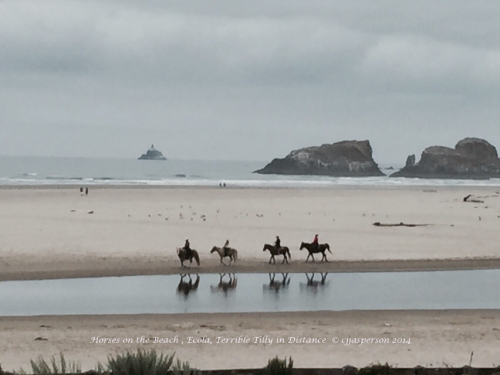
#flashfictionfriday: Beyond Ecola’s Door

Heaven lies beyond the hills, beside the Tillamook Head.

At Ecola’s door, where the river finds the sea,

Where east meets west and seabirds nest, my feet are often led.


Gray waves pound the stony cliffs, stout and standing tall

Rock is strong and water soft,  yet crumbling ‘neath the waves.

Winter’s wrath of wind and surge slowly grinds them small.


And out to sea a lighthouse stands beyond the Tillamook Head

No keepers shelter ‘neath her lamp, Tilly stands alone,

Guarded by the white-winged birds, and ashes of the dead.


Black rock rises from the waves, beyond Ecola’s door

I long to be at river’s edge, where Ecola meets the sea

And soon and soon, I’ll walk the sand, along the wild shore.

horses on the beach, Cannon Beach, Oregon by C.J. Jasperson 8-13-2014


Beyond Ecola’s Door, © Connie J. Jasperson 2016

4 Comments

Filed under #FlashFictionFriday, Politics, Uncategorized