 Writing the first draft of your novel is a lot of fun, but there are times when getting your phrasing right is confusing. Wrangling words is not for the faint of heart! Many frequently used words are what is called “homonyms” — soundalike words.
Yeah–you know that casserole contains rattlesnake surprise, but it tastes like chicken, so the kids haven’t a clue.
You as the author, do not always see the rattlesnakes among the chickens in your work.
You MUST NOT expect an editor to straighten out a mess that you can take of with a little attention on your part, so it is important to do your research, and learn your craft. Submitting a mess to an editor will result in rejection, as it is an expensive waste of time to try to teach a would-be author how to write a book.
At times, only a homonym, a word that sounds very much like another, can be used in a sentence. That similarity makes it hard to know which word is the correct word in a given circumstance, and when you are spewing the first draft of a manuscript, autocorrect may “help you” by inserting the wrong instance of those words. If their meaning is similar but not exactly the same, negotiating the chicken-yard of your manuscript in the second draft becomes quite tricky.
For instance, take this sentence from my current work in progress, where Friedr is explaining the events that led to Christoph’s sacrifice, speaking to Dane: “With Zan’s assistance, Edwin modified the parasite that will ensure no Bear Dogs can ever survive in Mal Evol ever again…”
Now I wasn’t sure that ensure was the correct word to express what I wanted to convey, because there are three words that could work and they sound alike, and have similar but different meanings. So I did my research:
Assure: promise, as in I assure you the house is clean.
Ensure: confirm, as in Ensure that you have set the burglar alarm before going on a long trip.
Insure: protect with an insurance policy, as in Insure your home for your peace of mind.
Hmmm. 2 of these words will convey an intent that would work, but I think I will stay with my original idea– Ensure as in Confirm.
Some other oft confused soundalikes are ( these are borrowed directly from the Purdue Online Writing Lab)
- advise = verb that means to recommend, suggest, or counsel:
I advise you to be cautious.
- advice = noun that means an opinion or recommendation about what could or should be done:
I’d like to ask for your advice on this matter.
- advise = verb that means to recommend, suggest, or counsel:
I advise you to be cautious.
- advice = noun that means an opinion or recommendation about what could or should be done:
I’d like to ask for your advice on this matter.
Conscious, Conscience
- conscious= adjective meaning awake, perceiving:
Despite a head injury, the patient remained conscious.
- conscience = noun meaning the sense of obligation to be good:
Chris wouldn’t cheat because his conscience wouldn’t let him.
Idea, Ideal
- idea = noun meaning a thought, belief, or conception held in the mind, or a general notion or conception formed by generalization:
Jennifer had a brilliant idea—she’d go to the Writing Lab for help with her papers!
- ideal = noun meaning something or someone who embodies perfection, or an ultimate object or endeavor:
Mickey was the ideal for tutors everywhere.
- ideal = adjective meaning embodying an ultimate standard of excellence or perfection, or the best:
Jennifer was an ideal student.
Its, It’s
- its = possessive adjective (possessive form of the
pronoun it):
The crab had an unusual growth on its shell.
- it’s = contraction for it is or it has (in a verb phrase):
It’s still raining; it’s been raining for three days.
(Pronouns have apostrophes only when two words are being shortened into one.)
Lead, Led
- lead = noun referring to a dense metallic element:
The X-ray technician wore a vest lined with lead.
- led = past-tense and past-participle form of the verb to lead, meaning to guide or direct:
The evidence led the jury to reach a unanimous decision.
Than, Then
| Than |
used in comparison statements: He is richer than I.
used in statements of preference: I would rather dance than eat.
used to suggest quantities beyond a specified amount: Read more than the first paragraph. |
| Then |
a time other than now: He was younger then. She will start her new job then.
next in time, space, or order: First we must study; then we can play.
suggesting a logical conclusion: If you’ve studied hard, then the exam should be no problem. |
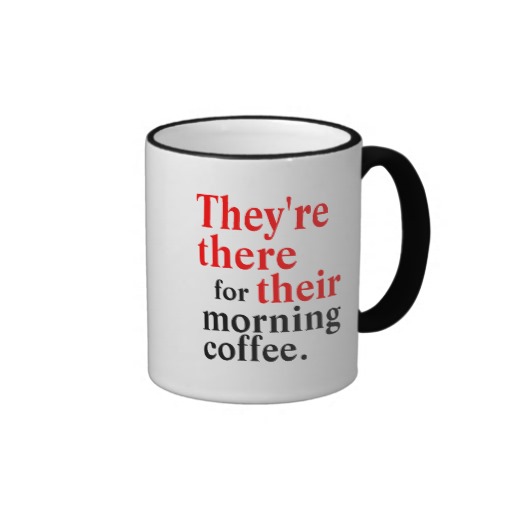
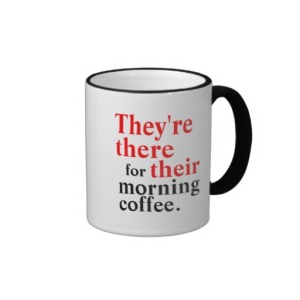 Their, There, They’re
- Their = possessive pronoun:
They got their books.
My house is over there.
(This is a place word, and so it contains the word here.)
- They’re = contraction for they are:
They’re making dinner.
(Pronouns have apostrophes only when two words are being shortened into one.)
To, Too, Two
- To = preposition, or first part of the infinitive form of a verb:
They went to the lake to swim.
I was too tired to continue. I was hungry, too.
Two students scored below passing on the exam.
Two, twelve, and between are all words related to the number 2, and all contain the letters tw.
Too can mean also or can be an intensifier, and you might say that it contains an extra o(“one too many”)
We’re, Where, Were
- We’re = contraction for we are:
We’re glad to help.
(Pronouns have apostrophes only when two words are being shortened into one.)
Where are you going?
(This is a place word, and so it contains the word here.)
- Were = a past tense form of the verb be:
They were walking side by side.
Your, You’re
- Your = possessive pronoun:
Your shoes are untied.
- You’re = contraction for you are:
You’re walking around with your shoes untied.
(REMEMBER: Pronouns have apostrophes only when two words are being shortened into one.)
Special thanks to the Purdue Online Writing Lab for posting these amazing hints, and SO much more information crucial to the craft of writing. If you go out to their website you will find it chock full of really good lessons for you to use to improve your skill at the craft of writing.
 It seems like a no brainer when you are reading it, but when you’re in the throes of a writing binge these little no-no’s will pop up and confuse you the second draft. The problem is, you will see it as you intend it to be, not as it is written, so these are words you must pay attention to. Sometimes, doing a search will locate these little inconveniences.
Some are obviously wrong and stick out like sore thumbs, like improperly used they’re, their, and there but some like accept and except are so frequently confused and misused in our modern dialect that it is best to simply look it up to make sure you are using the right word for that context. If you search for these now, you will save your editor having to do this for you, and your edit will be much more productive.
Searching for these bloopers is what I like to think of as sorting the rattlesnakes out of the chicken yard, and is part of making your manuscript submission-ready.

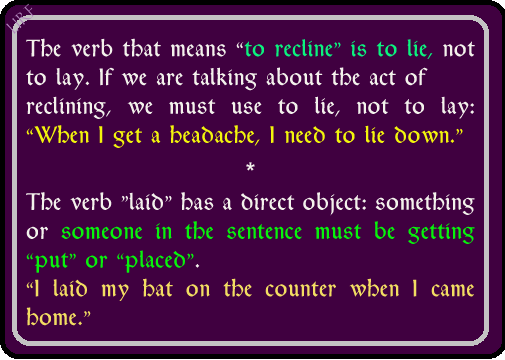
 Is it to lay, to lie, or what? I want to get this right but these words can be a complicated morass of misery. It boils down to a simple concept: is it RECLINING or was it PLACED THERE?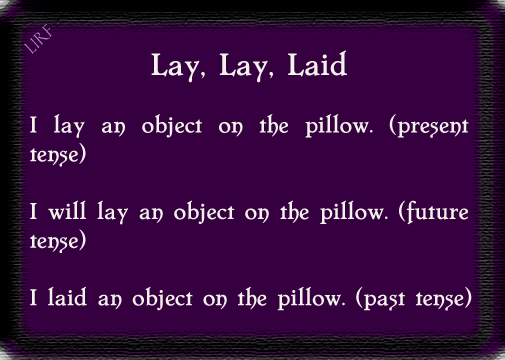







 Life in the Realm of Fantasy