Tag Archives: literature

What I’ve learned from Tad Williams and Neil Gaiman

Over the course of my vacation I read two books, besides working on my own. I love to read the works of other authors, immersing myself in the way they handle plot twists and show the mood of a tale.  Oddly enough, both tales are told from the first person point of view, something I usually don’t gravitate to.

the dirty streets of heaven, Tad WilliamsFirst up, I read Tad Williams’s  irreverent thriller, The Dirty Streets of Heaven, Book I of Bobby Dollar.  That was fun, a real trip down the sometimes mean streets of the afterlife.

Tad Williams’s style of writing in the Bobby Dollar series is a non-traditional take on the traditional in-your-face, hard-boiled detective novel. Bobby is an angel, but even angels have their problems.

With the first sentence on page one, Williams establishes the mood of the piece and the society Bobby Dollar lives in, and he remains true to that concept throughout the entire tale.

“I was just stepping out of the elevator on the 43rd floor of the Five Page Mill building when the alarms began going off–those nightmarish, clear the building kind like the screams of tortured robots–and I realized I’d pretty much lost any chance at the subtle approach.”

Tad Williams’s work encompasses an incredibly wide range of styles, from fairy tales, to epic fantasy, to this hard-boiled detective story with his own paranormal twist.  At no point in the manuscript does the author forget where he is, or whose point of view the tale is told from. He never loses control of the many threads interwoven into this plot. The atmosphere is dark and seedy, and the demons Bobby Dollar deals with are some of the nicest people he knows.  Every sentence, every paragraph remains true to the mood established in that first sentence.

The ocean at the end of the lane Neil GaimonThe second book I read this last week was a completely different kind of tale, but it too was told in the first person.  Neil Gaiman’s The Ocean at the End of the Lane.

Neil Gaiman’s prose is astonishingly beautiful. It is told in the style of an old-fashioned fairy-tale, and the protagonist is never named. Ordinarily, the fact the protagonist is never named would have irritated the heck out of me, but the tale captivated me at the first line and held me enthralled to the final page. This is a stunning, harsh tale, frightening and yet comforting in a strange way.

“It was only a duck pond, out back of the farm. It wasn’t very big.

Lettie Hempsteck said it was an ocean, but I knew that was silly. She said they’d come here across the ocean from the old country.”

I didn’t buy this book for the blurb or the cover– the blurb is nonexistent, and the cover is merely okay–I bought it for the title, and for Neil Gaiman.  I knew without a doubt his prose  would more than make up for the cover and I was not wrong. The protagonist is a man of late middle age on his way to the funeral for a loved one. He stops at his childhood home, and also visits the neighbor. While there he is transported in his memories back to a terrible time in his life.  There is magic, and there is mystery here, and he tells this tale from the point of view of a seven-year-old child viewing adult situations he has only a dim grasp of. The mood is dark, and yet magic.

MH900442497We indies must continually strive to produce this kind of variety and excellence in our own work.

Sometimes we are writing in a desert, a place where the words won’t come. We feel that our work is dry and uninspiring.

But I guarantee the most famous and well-loved authors have suffered the same dry-spells, suffered the same feelings of miserable failure we aspiring indies feel.

When I read their beautiful, harsh and diverse work I am inspired to believe I can do this crazy thing. I remind myself that, for me, it’s not about numbers and sales, because it can’t be. My sales are sort of dismal at best, as I don’t really push them through the traditional indie route of obsessively nagging people to death on Facebook and other social media. For me it has to be about improving the quality of my work and the telling of the tales I have locked in my brain, and getting them out there in book form to the best of my ability.

Reading and understanding how the great authors write is one of the keys to unlocking our own potential. We indies have to use every tool we have available in this rough business, and we have to know what we want to achieve. I want to achieve great sales, of course. But more than that I want to write compelling tales that move my readers. I may never achieve the first, but I think I can do the second.


Comments Off on What I’ve learned from Tad Williams and Neil Gaiman

Filed under Books, Fantasy, Humor, Literature, Vegan, writer, writing

The art of procrastination

MH900341616I have mad skills at the fine art of procrastination.  I can conjure the most amazing reasons to avoid doing tasks that would be so much simpler if I just got off my *** and did them.

I was gone all week last week, and still my house is  trashed. A mountain of dirty laundry lurks in the hall by the washer. Every inch of counter-top in the kitchen has some item (non-perishable)  of food waiting to be put away.  Sand from the beach made the journey home in our clothes and now the carpet needs a good vacuuming and perhaps a shampooing, but that’s another story.

We got home late Saturday night, and we did manage to unload the car.

That was about it. Oh yeah, the food that had to be refrigerated got put away, but the rest of it? Not so much.

MH900383000Everything sits where it was dropped, and gradually the detritus of our holiday is finding its way to the proper place.

And I don’t really find myself too bothered by the chaos. That is odd, for me.

Recovering from being sick for most of the summer and not being allowed to lift more than 10 lbs has put a bit of a damper on the cleaning frenzy I usually indulged in following our past years’ vacations.

I sit and write, and then get up and do a bit of putting away, then I sit and write again.  While in Cannon Beach I made serious headway on one of the new sections of Lackland’s tale, and yesterday, instead of cleaning house, I finished it.

Sort of.

Now I just have to flesh-out the chapter I just finished, and then there are two chapters left to write. The problem is, I know what I have to write for those chapters, because I’ve outlined them, and they are really good, action-packed chapters. It will be simple, and for me, it’s a tale that practically writes itself.

MH900399384But I can’t make myself do it.

Some will die.

I will be letting go of people I love, saying goodbye forever.

I will do many crazy things to avoid that, even if it means I actually finally clean my house.

In fact, I probably should make hummus.  Clean the kitchen, do the laundry and make hummus…avoid the whole end of the book problem….

2 Comments

Filed under Adventure, Battles, Fantasy, Humor, Literature, Vegan, writing

What I’ve learned from Greg Bear

Wow.  I just made me a new BFF! I’m never going to wash my ears again (insert starry eyes here.)  I am currently at the Pacific Northwest Writers Association Conference in Seattle, Washington with my real BFF, Irene Roth Luvaul. We are having the best time and even though we are only on the second day of the event, with two more days to go, this thing has already paid for itself in what we have learned about writing, editing and the publishing industry in general.

Greg Bear - portrait-mediumThe keynote speaker was none other than Greg Bear (cue the angels) and what he had to say was more than entertaining–it was inspirational.

While still in high-school, this man and his gang of sci-fi fanatic friends used to hang out with mentor Ray Bradbury! THAT connection was invaluable to his career as writer and storyteller, working in the less-than-respectable genre of speculative fiction.

Greg’s complete dedication to the craft of writing and his passion for the genre of science fiction and fantasy comes across in his talks. He is very frank and has a sense of the ridiculous that resonates with his audience. He is a humble man, who told me he worked to deadlines because he has to pay the mortgage, and publishers frequently have deadlines.

cover_foundation and chaos, Greg BearGreg spoke about working on the foundation series after Asimov’s death, and how he frequently felt he heard the man’s voice in his head, guiding him as he was writing Foundation and Chaos. 

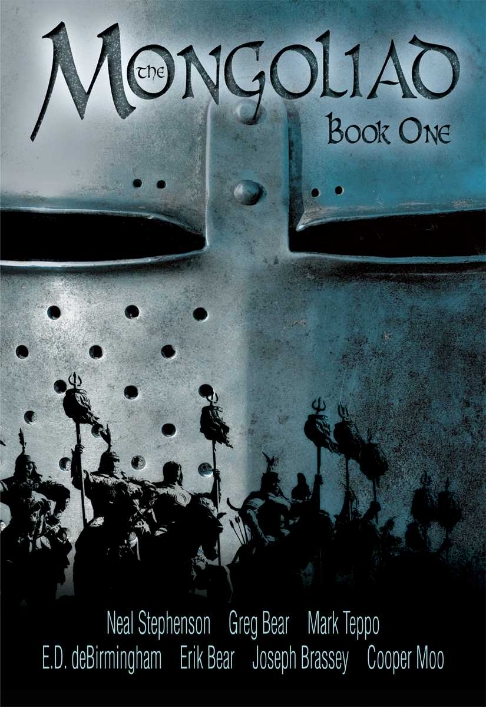
The best part of the evening for me was meeting the man and getting his signature on my copy of the Mongoliad, book 1. 

Irene is a champ at getting things done.  She got me moving so I was fourth in line to meet him and get his signature. I’m just going to say it–Nothing is more undignified than an old fat woman who has just met god.

cover_hull Greg BearYou will be so proud of me!  I made it all the way out of the room before SQUEEEEEing like a school girl with a front row ticket to see One Direction. I am fully convinced that by virtue of having exchanged pleasantries while he signed my copy of his book, Greg Bear and I are now best chums and will be forever.

Irene managed to get me peeled off the ceiling and back to earth, but it was dicey there, for a while.

What I learned from Greg Bear is this:  to be a writer, you must write. You must have passion for your story and you must be obsessed with your universe and the worlds therein. His passion and obsession for the craft of writing really come across in his speech. He lives in his worlds, he knows his characters and their lives better than he knows his own.

Another thing I have learned from Greg Bear is to attend writers conventions if you can.

mongoliad book 1These forums offer us the tools to advance our careers. With the huge boom in indie publishing, it is even more crucial than ever for those of us who intend to remain indies to have the edge that knowledge of the way the industry works gives us. We have to stand out of the crowd, and to do that we must have a professional product and a real marketing plan. If we intend to compete, we have to know and understand the competition.

For the indie author, the competition is the high quality of the finished product put out by traditional publishing houses who are blessed with talented staffs of editors and cover designers and their long established connections  with literary publicity publications.

We can compete. We have to put out the best, most professional product we are able to create. We have to hire editors, and pay for good covers. We have to write ‘blurbs’ that intrigue our readers. Our personal online presence when we are googled must be consistent and professional.  Attending conventions offers us the opportunity to meet people in the industry and make professional connections. It is so much more than just being an elderly fangirl.

I am inspired to write. More than ever I am driven to live this writing life, inventing improbable plots and eccentric people. And I am empowered to believe I can succeed because great storytellers like Greg Bear have gone before me, and paved the way.

7 Comments

Filed under Adventure, Books, Fantasy, Humor, Literature, writer

‘Like’ me

Frustrated Woman at Computer With Stack of PaperThis weekend my professional Facebook page was suddenly ‘liked’ by 6 people in the space of 5 minutes.   I was sort of wondering what was going on, as it was a little unusual. It gets a few likes each week  under normal circumstances but this was different.

A few minutes later I got a fb personal message from an author I met through Goodreads.  It read:

“This LIKE is being sent along with another like from J***, on behalf of our friend, M*******. She left for a 6 week writing vacation, so we are wanting to surprise her with hopefully 25 more page likes. If you’ll like her page, you’ll get 2 fer 1, and possibly 3 likes for your one to her page. 

**PS. Please remember to like from your personal page as likes from fan page to fan page do NOT roll the counter.

>Thank you in advance, especially if you’ve already liked her page. Best of Luck with your writing:) 
M***”

I felt like I had just been shaken down for my lunch money.  But then I thought, “This is a kind gesture on the part of her friends, but the wrong way to go about it.”

Don’t get me wrong, I like M*******, and while she writes romances, which usually don’t attract me, she writes well enough.

I just don’t like being coerced, and that is what I felt her friends did. It’s all about manners, in this business.

Office Workers Clapping at Office PartySO – how do we encourage people to ‘like’ our professional Facebook page?  After all, we are all trying to get exposure for our books.

In my opinion, people will look you up and like your page as they become fans of your work. You will gain followers, just not real rapidly.

Identify your target market.  Are you trying to sell books only to other authors?  That is what you are doing when the only place you post the link to your page is in a page-swap forum.  If the only people who are ‘liking’ your fan-page are authors, you are shooting yourself in the foot. You are limiting your visibility to a small number of people who most likely won’t buy your book, as they’ve books of their own to write, and you don’t write in their genre.

You need to make it easy for your fans to like your page by posting the link on your blog, and on your Goodreads or Smashwords profile.  Have the link on your Amazon author page too!  Those places are where people who buy your books will look, and that is how fans will find you.

Identify who your target audience is.  Make sure your Facebook link is prominently displayed and let it do its thing.

We live in a society where instant gratification is the norm, and everything wonderful has to happen right now. I wondered, “Do we get some sort of award for having a lot of likes on our fan page?” Not that I am aware of–it’s only a number. The higher your number, the more likely fb will boost your visibility in the news feeds.  You earn that visibility gradually.

But for those who are too impatient to wait, they can join a Goodreads page-swapping event, where the participants all go out and like each others’ pages.  This is voluntary and I’ve been involved with that.  I liked about 50 authors and 15 liked me back. 6 of them used their fan page despite being asked to use their personal page, and their likes didn’t raise my count.

So, that didn’t go as well as I thought it would.

Portrait of Vsevolod Mikhailovich Garshin by Ilya RepinAnd don’t even get me started about the inconsiderate authors who posted links to their books and pages smack dab in the middle of MY fan-page.

Delete.

Delete. Delete. Delete.

(Die! Die! Die!)

Most of the indie authors I know are lovely people, polite and sensitive. They have a basic understanding of manners. They are a joy to work with, and I would do anything for them because of that. They make up 98% of the authors I have met.

There are those few who are as delicate as battering-rams, and they ruin it for everyone. They are the same people professionally that they are in the real world–immature, selfish, and rude. They meet other aspiring authors in forums and then make all sorts of small requests, expecting that you will drop everything and go out of your way for them, because they are so damned important.

If you choose to be kind to them, don’t expect anything in return, because it’s just not going to happen. The next time you see them will be when they need some other small service from you. “Tweet my book.” “Interview me.” “I just need five more likes….”

The Facebook Fan-page is a thing we have to do in this modern world of self promotion, but it sucks.

I have one and I am keeping it, but I am feeling quite rebellious about it just now.

4 Comments

Filed under Adventure, Books, Fantasy, Humor, Literature, Uncategorized, writing

Thoughts on Internal Monologues

Young Woman Sitting Looking at Laptop ScreenI had a conversation with a friend in my writing group the other day. He paid for an expensive edit, but was not pleased with the results. The editor gave his ms only one fairly good look, and gave him a report with suggestions and ideas, but he was left more confused than ever. She has not worked with him to help him resolve those issues, and wants to be paid for a second look. This was more of a beta read than an edit, and that fact should have been disclosed when he hired her.

The professional editors I know do expect to be paid for their work, but they also work closely with the authors to help their clients turn out books that are finished to the best of their ability, thus giving the author their money’s worth. This involves many revisions of entire sections and lots of back and forth communication between the editor and the author.

When I looked at his ms, I could see one thing that stood out immediately.  His characters have a lot of internal dialogue. The editor told him not to set it off with italics, and technically she was correct, but she offered no insight to him on how to correctly portray his character’s thoughts. Unfortunately, with no way of distinguishing it, I found it difficult to differentiate the internal dialogue.

Now don’t get me wrong, the editor was technically correct. The  Chicago Manual of Style agrees with her, and in some ways, so do I.  As a reader, a wall of italics is daunting, and causes the eyes to get tired. If she was truly acting in his best interest, she could have shown him ways to get around the whole issue of internal dialogue, instead of just saying don’t use italics.

But I do use italics to set off certain thoughts in my own work, so how do I balance this apparent hypocrisy?  I have learned to use less internal dialogue, trying to only use it now when it is natural in the context of the scene.

As I look at my body of work, I can see it evolving toward a leaner style of writing, and less emphasis on idle thoughts is key to that style. My early work is rife with internal dialogue. In my recent work there is some internal dialogue, but not as much. The context of the story determines whether it is necessary or not.

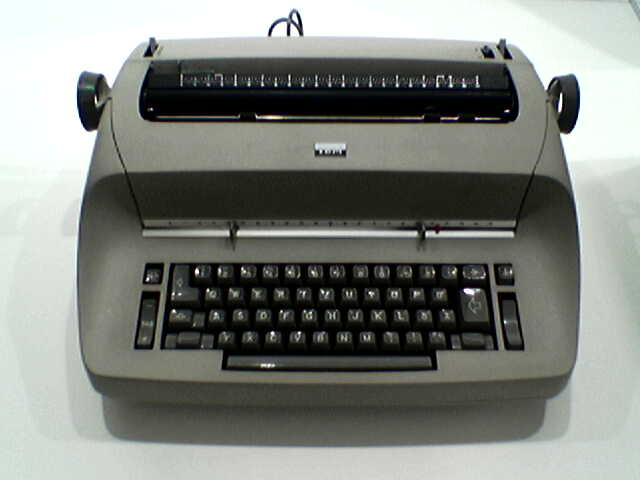
IBM_SelectricIn the days before computerized word processing and desktop publishing, the publishing process began with a manuscript and/or a typescript that was sent to a print shop where it would be prepared for publication and printed. In order to show emphasis—to highlight the title of a book, to refer to a word itself as a word, or to indicate a foreign word or phrase—the writer would use underlining in the typescript, which would signal the typesetter at the print shop to use italic font for those words.

Nowadays we have word-processors.  Authors can italicize to their hearts’ content and the ms will not be full of underlined words that distract the editor.  This has lead to some authors being a bit too free with italics, and I have been guilty of that.

The important thing to remember is that everything your  main characters think does not have to be written. When it is necessary, there are ways to get it across without resorting to italics except in the most important instances.

Indie author Karen Fox has an awesome post on common mistakes made by authors.  She says, (and I am directly quoting from http://www.karenafox.com/commonmistakes.htm,)

(Interior Monologues are) very important in writing. Reveals parts of the story not available through dialogue. A powerful way to establish character, but often overwritten. Again don’t explain if emotions or details are already shown through dialogue or action. This should be unobtrusive. Long passages of internal monologue often become ways of telling the reader information instead of showing.

One way to do this is to get rid of speaker attributions. Instead of Why had she said that? Because he drove her crazy, she thought, use Why had she said that? Because he drove her crazy.  He wondered what he’d done to make her leave can be transformed  to What had he done to make her leave?

Interior monologue helps set point of view. It is not the same thing as description, though the two can blend together.  Use impressions obtained through the POV character’s senses.  We use our sight, hearing, smell without thinking about it.   Your character will, too.

You can use italics to show a character’s thought, but use sparingly. Too many italics are irritating, but they can be a good way to set off a more important thought in the middle of a monologue.”

MP900321209Internal dialogue is necessary, but not if it is a crutch.  Authors tend to be lazy. Once we find an easy way to get a point across it becomes our go-to tool when a particularly tough scene is refusing to unravel for us. We tell ourselves it is “our voice” and therefore it is our style.

Yes, that can be true, but we must never rely on easy tricks to tell our stories.  Readers always notice, and it makes our work less enjoyable for them.

8 Comments

Filed under Adventure, Books, Humor, Uncategorized, Vegan, writing

The Curse of The Indie Author, and the Cure

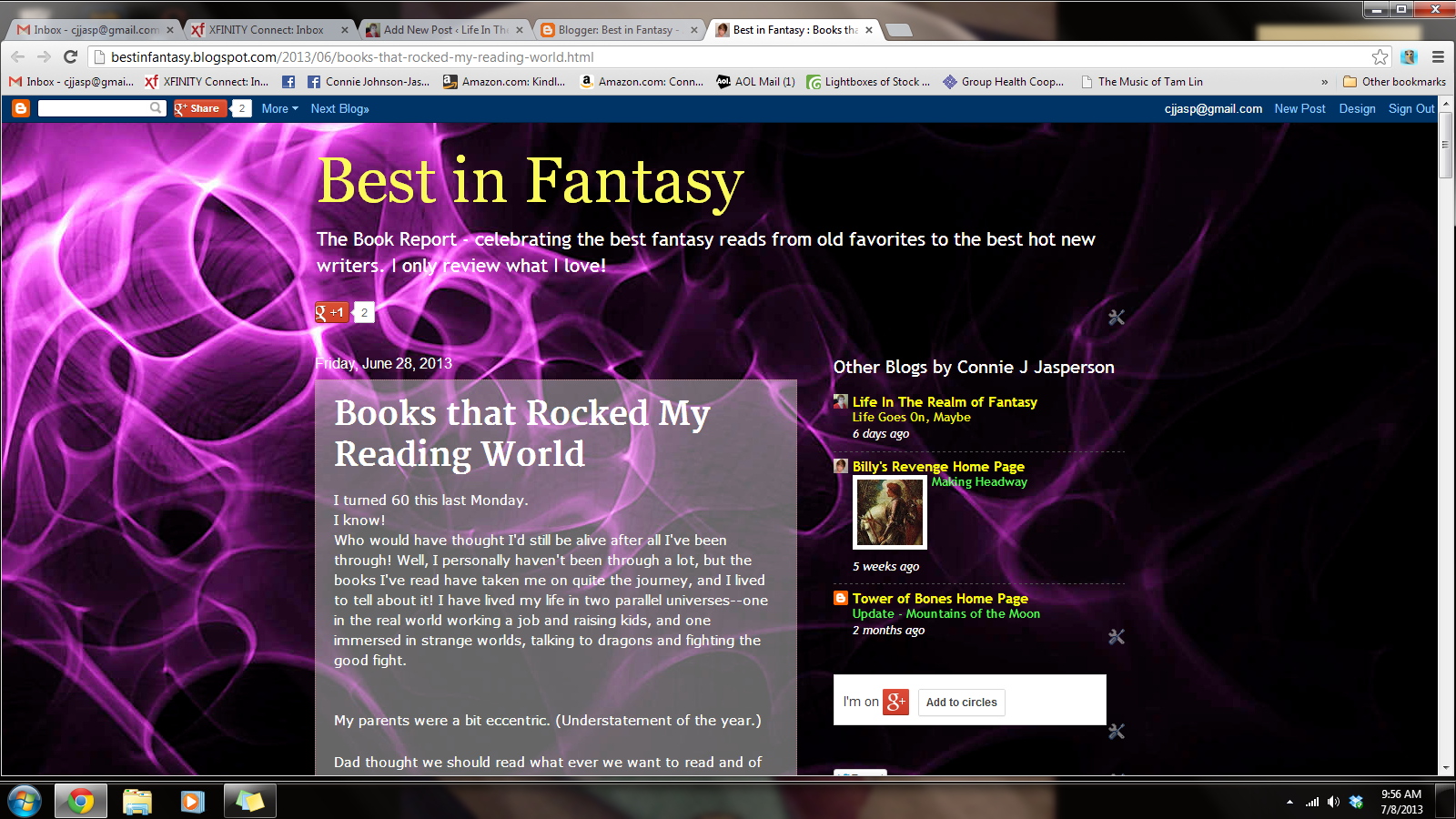
BIF Blog Print ScreenYou all know I write, and you all know I read.  You may not know that I read 2 to 6 books a week and I blog about the ones I really like on a book review blog called Best in Fantasy. I try to write a new post for every Friday.

I began that blog two years ago, with an eye to promoting the books I loved, books that moved me.  As it progressed, I began seeking out and promoting the books of indie authors. I do not accept free manuscripts, as I want to feel NO pressure to say nice things about a book. I always buy the downloads for this blog.

DR 3 Prism Ross M KitsonI have read some incredible, amazing work over the last 2 years–work I would never have been exposed to if not for the Kindle and the fact most indie downloads range in price from .99 to 4.99 and many can be found for free during promotional days.

This amazing access to great, innovative writing has created an entire sub-culture in the writing industry.  People like me, bloggers who regularly read and love to discuss what they read are springing up everywhere and they are talking about what they read. And let me tell you, I have read some truly well-crafted books that stayed with me.

Authors are also springing up everywhere.  Nearly everyone I meet is either a self-published author or a close relative of one. How humorous it is to find that we once-exalted tellers of tales are no longer special–everyone has a book in them or at least thinks they do, and they are publishing them.

This rapid expansion of the self-publishing industry has come with a price, however, and it is a huge one.

The ease with which anyone possessing the ability to read, access  a computer and use the internet can publish their work independently has sparked a revolution. If you have read your American history, revolutions are NOT easy nor are they bloodless and pain-free.

For every book by an indie (or indeed by a traditionally published author) that I can feel good about recommending on Best in Fantasy, I see on average 6 that are just plain awful. These are books that would never make past the intake editor or an agent.

Some indie books are so abysmally edited it is apparent the author is the only person who has ever seen the manuscript. Some are moderately edited but not very well or professionally, and the author (as in my case with The Last Good Knight) gives way too much back-story up front and in huge info-dumps. This loses the attention of all but the most determined reader immediately, people who would ignore most typos and slight inconsistencies for a really good tale. This is where the unbiased eye of the editor can make a great novel out of a promising tale.

There are an incredible number of people writing books who have absolutely no concept of how to tell a coherent story. Not only is the book over-the top with descriptions (which take all the fun out the book) the whole thing can sometime feel like one long ego-stroking, autobiographical trip through the personal fantasies of the author, with him as the main character.  Those books have what I think of as the ‘creepy-voyeur’ factor built into them, and I just can’t get too far into them before barfing.

the Book of Ruth - jane HamiltonOthers start with a great idea, but the author leaves you wondering what happened to that kernel of brilliance, as the story sort of dies at the end and you are left wishing you had quit reading at page fifty.   This happens with just as MANY traditionally published books as with the indies, folks! Take “The Book of Ruth” for example.  How it made the Oprah Book Club I will never know, but it is one of the most depressing and abysmal books I have ever read, and I have read quite a few bad books. It totally turned me off of The Oprah Book Club.

The big 6 traditional publishers pretend that much of the crap they publish is all sheer magic, while loudly pointing out the faults inherent in self-publishing.  And, while it makes me angry that they decry us as worthless but leap to publish us the minute we show any sign of real success, there are hard truths here we indies who are committed to the CRAFT of writing must face.

What this ability to publish any piece of garbage that falls out of your head does for us as indies is to tar us all with the same brush. THIS is the curse of the indie author.

The cure for this curse is as follows:

1. Learn how to write in your native language. Grammar and Punctuation are essential, even in modern literature.

2. Join a writing group and meet other authors, either in your local area or on-line. This will help you with steps 3 and 4. Enter writing contests such as Amazon’s Breakthrough Novel Awards and participate in the boards and threads. Ignore the trolls, they pop-up everywhere (usually with badly written ego-stroking crap to their publishing credit.)

3. Develop a thick hide, and find an unbiased eye among your trusted acquaintances to read your work as you are writing it, so you can make changes more effectively and not be overwhelmed at the prospect of rewriting an entire manuscript from scratch.

4. Lose your ego. Your ego gets in the way of your writing.  Are you writing for yourself or for others to read and enjoy your work?

5. Find a good professional editor. Check their references, and when you do engage their services, do not take their criticisms personally. This editor must be someone you can work closely with, who makes suggestions and lets YOU make the changes on your masterpiece yourself. They must understand it is your work and you have the right to disagree with any suggested changes. If you have this symbiotic relationship, you will turn out a good final product.

This blog-post today has been inspired by the fact that over the last three weeks, I cracked open a total of 19 books, both indie AND mainstream, and was only able to find one book that I enjoyed and gave four stars to because of editing issues, and one AWESOME, amazing book that will get 5 stars from me.

Traditional publishers are failing us as readers by pushing their successful authors to spew a book or even two a year,  beating dead horses and creating long-winded series that go nowhere and have no entertainment value.

Some of the worst books I read over the last two years were written by two authors who have also written books I really enjoyed, but their best books were written in the early days, when these authors were not book-producing machines.

I expect more from a traditionally published book than a boring info-dump at the beginning, and lackluster characters you don’t give a hoot about.  I hold every book I read to that standard, and I am willing to forego some editing bloopers, which with the rush to publish nowadays, they ALL have, traditional or non-traditional.

A Lesson for the Cyclops Jeffrey Getzin

I just want to read a good story!

I want to be swept away to new lands and people I want to know and meet.

I want to be challenged and entertained.

Books are my drug and my addiction, and I am compelled to talk about them, to share them and re-read them.  That is why I blog every Friday on what I enjoyed reading that week.  Stop by this coming Friday afternoon and see what I am reviewing this week on Best in Fantasy. There will be a new review posted by 7:00 a.m. PDT.

In the meantime you can checkout the review for A Lesson for the Cyclops, a wonderful novella written by indie Author Jeffrey Getzin.

12 Comments

Filed under Adventure, Books, Fantasy, Literature, Uncategorized, writer, writing

Java and Imaginary Heroes

EspressoOnce again I am preparing to get in the car and trundle up the highway. Going north to Snohomish.  Gotta love that town!  They have a great new coffee shop, Rock City Cafe, where the owner roasts the day’s coffee every morning. I like to go there and write in the evenings.

As a true northwesterner, I love the artisan coffees we have available all up and down the Puget Sound.  When I am in Olympia, I go to Batdorf and Bronson coffee roasters for the ambiance and the brew.

The hard part of all this traveling is being away from my home and my husband. But, as with everything, we are committed to helping our kids as well as we can.

We have a Blended Family, three from my previous marriages and two from his. Together we have three daughters and two sons. Daughter 1 is 39, Daughter 2 is also 39, Son 3 is 37, Son 4 is 35, and Daughter 5 is 29. All but Son 4 have provided us with lovely grandchildren, two of whom are providing us with great-grandchildren.

Spike-wavesOur kids don’t need monetary help, but, as I have written before, two of them have epilepsy. The oldest by 3 months, Daughter 1, has seizures that have only once progressed to the Tonic Clonic stage.  Hers are more a matter of her going away for 3 to 4 minutes and then picking up right where she left off.  Her new meds are working perfectly with no allergic reactions, and if her EEG continues to look good, she will be able to resume driving in August. But right now, she needs help getting around as public transit does work well for where she needs to go. I go north every other week for 3 days and babysit her 6yr old and try not to be the pain-in-the-arse mother-in-law.

Son 4 is unmarried. He has seizures that manifest themselves in the Tonic Clonic form. Since his last episode he is doing really well.  The fact is, he doesn’t have them if he simply takes his meds. He has them if he doesn’t.

He is on board with his neurologist and is taking his meds.  His EEG looks good too! He has excellent public transportation where he lives, and is well enough employed he could take a cab to work if he chose to. I only need to drive him when it is something complicated.

We are fortunate to live in a time when the medical community has achieved some progress in both understanding this array of conditions we call epilepsy. My family is fortunate that there are effective medicines they can take that don’t turn them stupid, and that they aren’t allergic to.

We know this condition that two of my children share is from their father’s side, as our other 3 children don’t show any symptoms. Their father’s side of the family was quite secretive about some things, and with good reason. As a society we are only now emerging from the Dark Ages when it comes to epilepsy, just within the last 20 years.

Even though I hate the drive, I love being needed. Daughters 2 and 5 and Son 3 don’t need help, so my participation in their lives is by invitation only. I respect that, and encourage it, as I have my own life, and know what it is like. Nevertheless, when your children are well-grown and living productive adult lives it is easy to lose that feeling of being connected to them. That can devolve into a feeling of loneliness and self-pity.

I am so NOT that mama.

In my early twenties I dealt with in-laws who couldn’t let go, and who made my life a misery, so I could never do that to my sons-in-law.

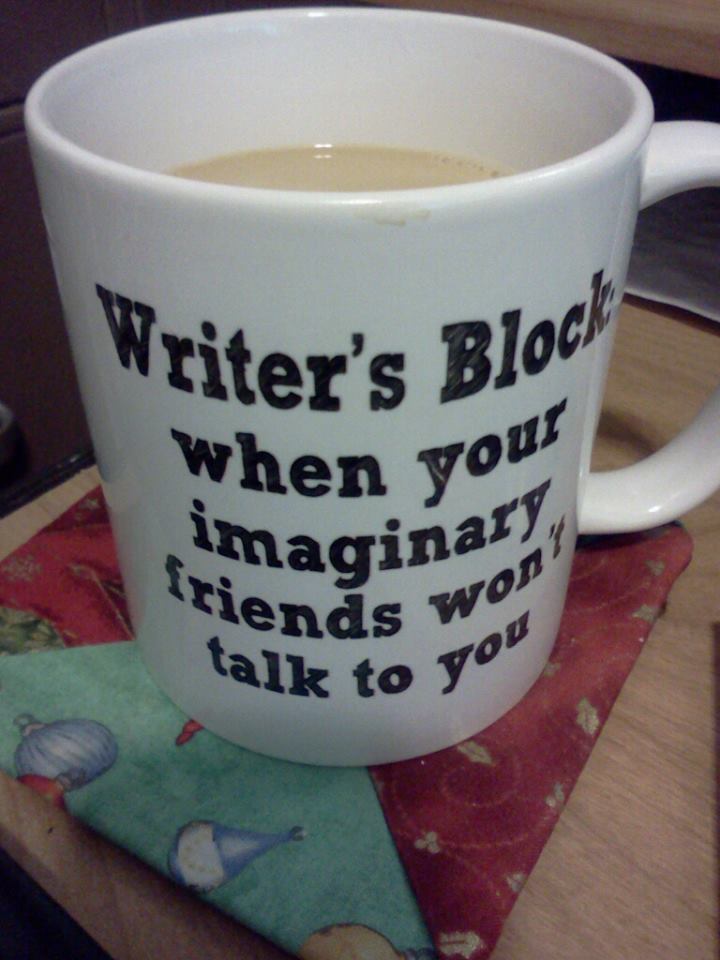
My Coffee Cup © cjjasp 2013Fortunately for them, I have my imaginary friends, and my fantasy life so I don’t really have time to hang around moping and feeling neglected.  The minute someone comes home to take The Boy off grandma’s hands, I am out the door!

Grandma has a coffee bar to go to, and four hunky, although quite imaginary, men who need to be told what to do! Leave the door unlocked, she’ll be staggering in about the time they shut the place down for the night.

Yes.

I’m THAT kind of grandma.

9 Comments

Filed under Adventure, Books, Dragon Age, Epilepsy, Fantasy, Humor, Literature, writing

Facebook–A Squirrel Ran Through It

After looking at my Facebook page today I am overwhelmed. So many random thoughts are piled up in my forehead I don’t know where to begin.

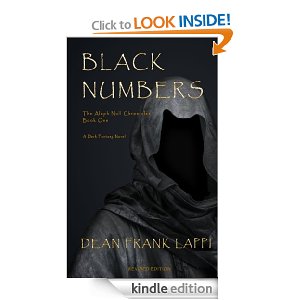
41TxMnE1AjL._BO2,204,203,200_PIsitb-sticker-arrow-click,TopRight,35,-76_AA278_PIkin4,BottomRight,-70,22_AA300_SH20_OU01_First, Dean Frank Lappi has rereleased his epic fantasy-horror, Black Numbers, along with a sequel, Blood Numbers.  The Aleph Null Chronicles has to be the most unique fantasy series ever written.  This book is not for the faint of heart, or for those who shy away from explicit and at times, violent sex. Yet the sex is not for prurient purposes–Lappi’s magic is created by melding high mathmatics (the sort that explain the universe) and that most powerful of human drives, sex. I have been waiting for more than a year for this, and I guess you know what’s on Grandma’s Kindle today!

Then, there was a hilarious post by a fellow Olympia area author, Elizabeth A.. It was a link to a blog called “Death and Taxes”, and the post is called “18 Obsolete Words Which Should Never Have Gone Out of Style.” 

They are all just so awesome, it’s hard to pick my favorite! I do think “Snoutfair: A person with a handsome countenance — “The Word Museum: The Most Remarkable English Words Ever Forgotten” by Jeffrey Kacirk” is a real winner.

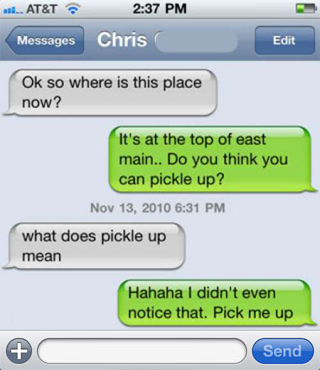
pickleupAlso there were the usual snarky, funny pictures that make the rounds.  So many posts by so many people, all intent on chatting…. If I’m Facebooking on my phone I’m in trouble. It takes me ten minutes to accurately text “On my way” so a readable post by me is out of the question. I do end up with some awesome auto-fill errors.

I love Facebook as much as I hate it.  It is a vast, time-sucking black-hole at the center of my universe, but some of the things I run across are just so hilarious.

Some things are really thought provoking. Today there was the blog post by Traci Tyne Hilton on being a writer and other people’s perceptions of you. It’s titled  “The Proof of the Writer is in the CV.”

“So the other day,when a friend called me a “new writer” my defensive nature kicked into high gear.

What did she mean by that? She just meant I hadn’t been writing long.

What did I hear when she said that? I heard: “You just picked up a pen for the first time, like, yesterday, and now look at you!” (She doesn’t talk like a Valley Girl, the voices in my head do.)”

James_Jefferys_-_Self-Portrait_-_Google_Art_Project Public DomainI think a lot of authors can relate to that feeling of “Whoa– what do you think I’ve been doing for the last 30 years?” but, just as Traci does, we realize it’s perception and semantics, and try not to feel that pang of instant outrage that we suppress and cover with a smile. Frankly, how many people actually know we’ve been holed up in a dark room with only Strunk & White and a typewriter or keyboard for companionship for all these years? Who of my coworkers knew I could wallpaper an outhouse with my letters of rejection? Failure to land a publisher for a novel you penned in your own blood and tears is a deeply personal failure, and is not something you chat about over lunch with the girls in the data-entry pool.

To be honest, before I published my first book, probably only my husband, my kids and my sister knew I had this dark secret, so it shouldn’t bother me to be called a new writer. In the eyes of the world, I am a new writer, so I’ll embrace it, and roll with it.

450px-Tamiasciurus_douglasii_37808I love all the off-the-wall, hilarious and thought provoking posts I find on my Facebook page. In fact, today I found enough to keep me from having to write for nearly 3 hours!  Woot! Now the morning is gone, I guess it’s time to sit on the back porch and read me some Dean Frank Lappi! Strange, how dark and scary he can make a summer’s day appear….

8 Comments

Filed under Adventure, Books, Fantasy, Humor, Literature, Uncategorized, writer, writing

Sustaining the Passion

MH900438728The first days of summer have arrived. I’m not sure where the winter went, it flew by so fast. I’m many months behind on a gazillion things I wanted to have ready by now. I realize that goes without saying, but I had to say it anyway.

On a positive note I’m making headway on all sorts of side projects I had no intention of working on until next year.

Of course, the sky is gray until about 10:00 or 11:00 here much of the time, as we are so close to the Pacific Ocean, so the early morning is good writing time with no gorgeous blue skies to distract my sun-starved northwest eyes.

It all balances out.

My Coffee Cup © cjjasp 2013I have this incredible urge to spend all day sitting on my back porch reading, instead of writing.

I’ve been working on several new vignettes for Lackland, for the new edition of The Last Good Knight.  The trick is to keep the feeling of being on a roller-coaster that is part and parcel of the original work, and inject that sense of wonder and newness into the expanded work.

From my point of view, one of the best tales in The Last Good Knight is“The Dragon and the Daisies.”  The  story takes place some seven or eight years after Julian joins the Rowdies. Julian Lackland and Lady Mags have hit a rough spot, and it looks like they have gone their separate ways. Somehow, they work it out, and one of the more hilarious moments in Julian Lackland’s life ensues.

In order to recapture that feeling, I’ve been rereading my original work, and seeing it through new eyes. It’s amazing how much I loved that tale, and I feel that love every time I read my old ms.

I think that is what makes good reading–when the author is able to convey the passion for the story.  That passion is apparent in Anne McCaffrey’s early works, such as Dragonflight, Dragonquest and The White Dragon. I felt that intensity of feeling also when reading Orson Scott Card’s Ender’s Game, to name a few right off the top of my head.

COTS Front CoverThe real trick is feeling that passion while you are writing so that your work is not flat, and yet keeping the story coherent so you don’t devolve into gibberish only you can relate to.

Sigh.

Rather than force it, I think I’ll clean house for a while, and then go read on my back porch.

The good news is, along with a new book in the Tower of Bones series and the two books in the Billy’s Revenge series, a book that I began writing in 1998, The Curse of the Stuarts, will be published early in 2014. This book has taken so long for two reasons. First, even though my sister Sherrie says it’s the most hilarious book I’ve ever written (and she would know,) it’s filled with every error a raw, newbie author can possibly make. I’ve been working on getting it straightened out off and on for two years. The second reason is I only work on this tale when I am between other projects, so it is inching toward publication.

Somehow when I revisit this old manuscript I once again feel that love of writing that is all-consuming, but sometimes eludes me!

Perhaps a relationship with your writing muse is like the most passionate relationship with a partner, filled with moments of absolute joy and abandon, and also with moments of intense struggle. Passion is, after all a two-sided coin–love on one side and hate on the other. Worrying about whether you’re feeling it or not it is a waste of time, because nothing ever remains the same and tomorrow will bring a different emotion.

Keeping the coin spinning is the key to keeping it interesting.

12 Comments

Filed under Adventure, Books, Fantasy, Humor, Literature, Romance, Uncategorized, writing

Manners in the World of the Ephemeral

MC900343857Manners.

Etiquette.

Just what are they and what do they mean in the world of the internet? Indeed, what do they mean in our world at all?

Wikipedia, the Fount of All Knowledge, describes etiquette as a code of behavior that delineates expectations for social behavior according to contemporary conventional norms within a society, social class, or group.

Wendell Willkie, the early twentieth century American politician and author, said, “The test of good manners is to be able to put up pleasantly with bad ones.” 

I confess that I do this with great difficulty, but I do it and try not to brag about it.

Benjamin Banneker, born November 9, 1731 – died October 9, 1806, was a free African American scientist, surveyor, almanac author and farmer. On the subject of manners he is quoted as saying, “Evil communication corrupts good manners. I hope to live to hear that good communication corrects bad manners.”

Whoa! How prophetic was that? In this era of instant communication, a carelessly worded post on a forum can lead to flaming responses and accusations of trolling.

MC900445014Flaming, also known as bashing, is hostile and insulting interaction between Internet users, often involving the use of profanity. This occurs most commonly in eMail nowadays when the people involved have an emotional attachment to the subject and is compounded by the profound miscommunication caused by the lack of social cues available in face-to-face communication.

In the early days of the internet incidents of trolling were considered to be the same as flaming, but this has changed with modern usage by the news media to refer to the creation of any content that targets another person. The Internet dictionary NetLingo suggests there are four grades of trolling: playtime trolling, tactical trolling, strategic trolling, and domination trolling.

None of those activities are nice, as they are deliberate acts of bullying, and bullying is not polite.

Just sayin’.

The great American author, Flannery O’Connor,  has been quoted as saying, “Manners are of such great consequence to the novelist that any kind will do. Bad manners are better than no manners at all, and because we are losing our customary manners, we are probably overly conscious of them; this seems to be a condition that produces writers.” 

If she had lived to see the internet and the explosion of “invisible friends” with whom the average person is in daily communication she may not have said that. This world we live in is no longer a world where snail-mail and telephone conversations are the means by which we communicate. Today we live in a world where people are isolated and insulated from each other, and communicate via the internet using forums and social media. People of all walks of life come together in this vast melting pot of anonymity and they become ‘close friends’  or ‘dire enemies’ despite never having physically met.

Manners and proper etiquette are critical to maintaining one’s credibility in a world where you are represented by the picture you have selected as your ‘icon’ or ‘avatar’ and by what you write in the comments sections of public forums.

In this world, an icon or avatar is the graphical (pictorial) representation of the user or the user’s alter ego or character. This photo or graphic is the image beside our user-name before every comment we post in any forum on the internet. We are careful of what we put up to represent us, because we want people to see us as who we think we are.

I believe common courtesy that a person would extend in a face-to-face conversation should extend into our online conversations.

And this brings me to the ongoing breech of common courtesies that brought this subject up in my mind.

If you, as an author, are invited through a forum to ‘like’ another author’s facebook page or website AND you choose to do so, it’s not appropriate for you to then post a comment on their page that you have done so and also post the links to your pages or books.  The proper way to inform the author you have ‘liked’ their page is to send them a personal message saying you have done so and include those links in that message.

Frustrated Woman at Computer With Stack of PaperTo post links to YOUR website or books on another author’s page is tantamount to pissing on their doorstep. You are saying to this author and his fans that you consider this author to be nothing more than another venue for your marketing strategy. You are marking their territory with your scent, claiming a piece of it for yourself. I am sure most of the offenders have no idea how rude such behavior is.

We denizens of the 22nd century live in a world of the ephemeral, but the ramifications of what we do and say in that world are monumental. The internet is forever, and deleting a comment won’t make it go away, because it has already shown up in the in-boxes of all the users on that forum.  We communicate instantly and frequently with no filters  between the brain and the keyboard. In this world of instant communication and myriad opportunities for damaging your own reputation it is critical to think before you do.

To that end, I offer up this list of suggested “manners” for authors in the world of the internet. I didn’t invent them; they are copied directly from the website “Common Sense Media” and made to apply to indie authors trying to make their way in the cruel world of the internet:

Rules for Online Etiquette

Context is everything. If you want to have a silly online name that conforms to the convention of a particular online community and only your friends there will see it, fine. But for more formal communication — like email addresses, posting comments, or anything to do with work or school — choose a respectable screen name (though not your real name) that they wouldn’t be embarrassed to utter out loud in front of, say, their grandmother. If it is author related, use your author-name.

Double-check before you hit “send.” Could something you wrote be misinterpreted? Is it so littered with slang that it requires a Ph.D. in Urban Dictionary to be understood? Were you upset when you wrote it? Check to see if it’s rude, mean, or sarcastic. If so, don’t send it.

Take the high road (but don’t boast about it). Chatting, texting, and status updates are all “in-the-moment” communication. But if there’s an escalating sense of rudeness, sign off. No good will come of firing off a nasty comment. Authors, who are touchy, hypersensitive creatures at best, will NEVER forget how you flamed them. You can always write out a response to get something off your chest … without sending it.

Grammar rules. Rumors of grammar’s demise have been greatly exaggerated. (I love that line!) But again, context is key. An IM to a friend can dangle as many participles as you want, but anything more formal — for example, a public online comment or a note to a colleague — should represent your best self. This applies to capital letters, too. By now, everyone knows that writing in all caps means that you’re shouting, but it bears repeating once your kid starts interacting online.

Keep a secret. In today’s world, photos, texts, and videos can be posted, copied, forwarded, downloaded, and Photoshopped in the blink of an eye. If you think something might embarrass someone, get them in trouble, compromise their privacy, or stir up drama of any kind, keep it to yourself — and maybe delete it from your timeline or the thread for good measure.

Don’t hide. For safety’s sake, you should use untraceable screen names, but using anonymity to cloak your actions can poison the atmosphere — and hurt people. If your kids want to be contributing members of the online world, encourage them to post productively, and walk the walk yourself.

Eye on Flat Panel MonitorRemember the Golden Rule. Don’t post something online that you wouldn’t say to someone’s face. If you do have something negative to say, discussing it in person is a better way to resolve your issues. Post nothing on someone else’s wall that you would not be glad to have on your own.

These suggestions translate directly to Do No Harm. Behave with dignity, and extend the common courtesies to others that you wish to have extended to you.

To that end, I leave you with this quote from the beloved tennis great, Arthur Ashe, “Clothes and manners do not make the man; but when he is made, they greatly improve his appearance.”

I think that goes doubly for indie authors, because for us eking out a living in the world of the internet, appearance is everything.

14 Comments

Filed under Books, Fantasy, Humor, Literature, Uncategorized, writing