
I once had the distinctly shocking experience of viewing a natural disaster as it occurred, albeit from a distance. In that, I was fortunate. We were not harmed, yet what we saw deeply affected us.
 On May 18th, 1980, my friends and I watched the eruption of Mt. St. Helens from atop a hill in the middle of nowhere. My children had visited their father for the weekend, so my friends and I planned a fishing trip to a beaver pond in the next county.
Successful fishing trips usually begin before dawn. My friend’s Land Rover pulled up in front of my home at about 5:00 am, and we set out with all five of us laughing and having a great time. It was a long drive on narrow, dirt logging roads, but the possibility of trout for supper was just an excuse for a day spent in the deep forest.
The radio in the Land Rover had never worked, but the cassette deck did. Led Zeppelin, Robin Trower, Genesis, and Ritchie Blackmore’s Rainbow were the soundtrack to our trek through the tall Douglas fir forests of Lewis County.
At about 09:00 am, we came up over the top of a treeless hill. The view was breathtaking, as if all the world lay before us in springtime glory. Conversations suddenly stopped, and my friend pulled off the road, turning the engine off.

We got out and stared, first at the raging column of dust, rocks, and lightning that dwarfed the mountain and then at each other. Helicopters and airplanes from news agencies and the USGS circled like so many carrion birds.
What so many people had thought was just hysteria had suddenly come true.
Mount St. Helens had erupted.
We never did make it to the beaver pond. The only fish we caught that day were the tuna sandwiches we had packed. While the food was good, the conversations were sober as we stared at that unbelievable sight.
This was before cell phones, and with the radio broken, we had no way of hearing the news. But we knew it was terrible, that some people had died and others had lost everything. We had no idea just how bad it was, that one of my father’s favorite places to fish, the Mount St. Helens Lodge at Spirit Lake, had disappeared along with its cantankerous owner. Harry R. Truman had become famous in the weeks before the eruption for refusing to evacuate.
Toward midafternoon, we returned to Olympia. We were grateful to have homes to go to, and when my friends left me off, I was still in shock, still unable to believe what I had seen. When I turned on the television and found that more than fifty people had lost their lives, I felt devastated for them.
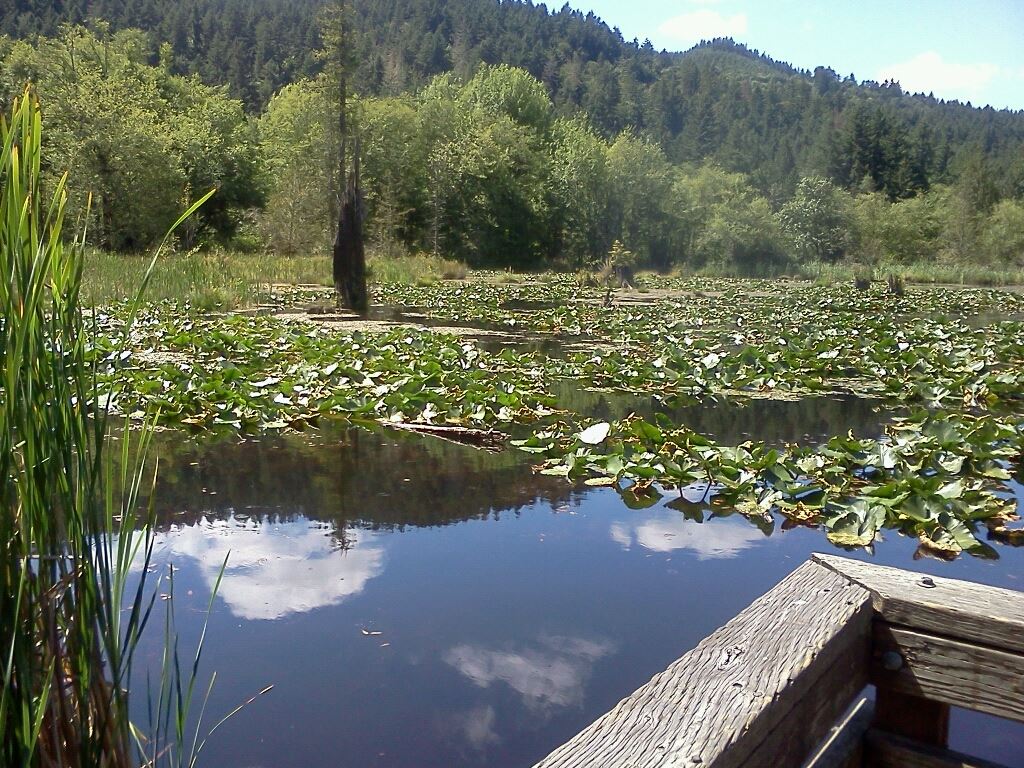 The story is in the hectic start to the morning, of five friends off on a day trip to go fishing. It is in the peace of the deep woods along those old dirt roads.
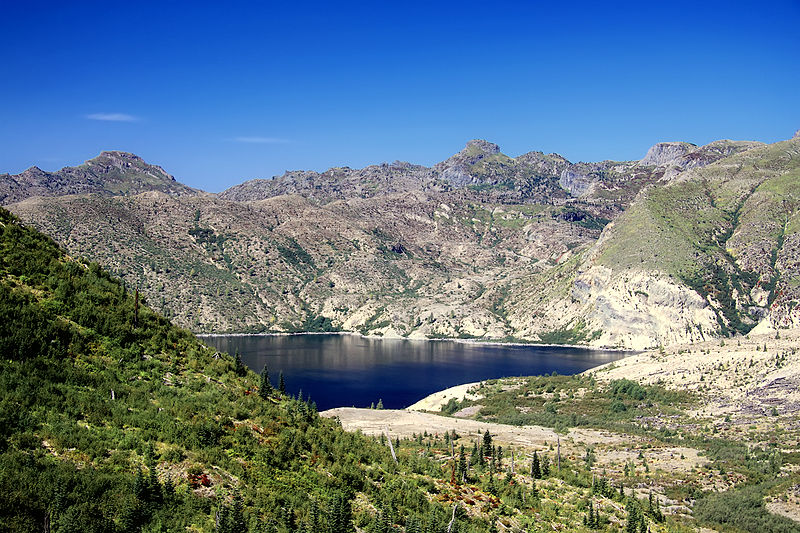
The camera zooms out and now we see the idyllic serenity of a clear sunny morning on Spirit Lake and Harry doing his morning chores.
This allows us to see what will be lost.
Then disaster strikes. The side of the mountain gives way, and the eruption is on.
Contrast that catastrophe against five people serenely picnicking on a hill, observing the apocalypse as it happens. The drama is in old Harry R. Truman’s stubborn end, and how it didn’t occur to us who watched from a distant hill that we would never rent a boat from him or fish in that lake again.
The bad juxtaposed against the good is the plot, but the experiences of those who witnessed it is the story. Contrast provides drama and texture, turning a wall of “bland” into something worth reading.
The true story of that day in my life is not the only time disaster contrasted against calm and tranquility.
At 11 o’clock on the morning of February 28, 2001, I was at work when a strong earthquake shook the Pacific Northwest, magnitude 6 point 8. I was terrified, thinking the building was going to come down on me. Fortunately, it did not.
I came home to find my dishes flung from the cupboards, the lamps tipped over, my cat hysterical, and my 17-year-old daughter at my mother’s house. A boy from her art class had driven her there when school closed early. He carefully drove down the narrow back alley behind my mother’s house as the road in front had collapsed.
(Sidenote: My daughter and that 17-year-old boy have been married for 23 years and have four boys. Not everything that happens as the result of a disaster is terrible.)
 Stories that detail apocalyptic catastrophes capture our interest and glue us to the television. We write novels detailing them because disaster drives humanity to bigger and better things. The acts of heroism and the people who survive and rise above the disasters keep us turning the page.
We want to know how it will all turn out.
Disaster isn’t always apocalyptic. Dramas regularly happen on what seems an unimportant level to people who have resources. Not everyone has money, and not everyone can surmount the odds. The story is in the battle.
Think about those small daily tragedies people face, deeply personal catastrophes, which only they are experiencing. Love and loss, safety and danger, loyalty and betrayal are the eternal themes of tragedy and resolution. These are the seeds of a good story.
The contrast of ease against hardship can add drama to worldbuilding and storytelling. Writers want their readers to think about the story and those characters long after the last paragraph has been read. Drama and resolution are the keys to a great story.
Drama and disaster can and will happen on a wide scale in our real lives. Tornadoes, hurricanes, earthquakes, volcanoes, and droughts … the path of a natural disaster is erratic.
Sometimes trouble misses us, and we are merely bystanders, witnesses to the tragedy that unfolds in another person’s life. Other times, trouble strikes nearer to home.
What struggles have you faced? How can you channel the memory of the emotions you experienced to add drama to your work-in-progress? Your memories and experience of emotion can add depth to your writing. They were already paid for in pain and joy, so use them!
Credits and Attributions:
IMAGE: Eruption of Mt. St. Helens May 18, 1980, Public Domain, via Wikimedia Commons
IMAGE: McLane Pond in July 2018, photo by Connie J. Jasperson © 2018.
IMAGE: Spirit Lake near Mount St. Helens in 2009, in Washington State. Photo by Steven Pavlo, via Wikipedia.


