
December is upon us. Family life has kicked into gear, and the season of parties has begun. I carve out my writing time in the early morning and sometimes in the evening. Sometimes, the writing flows well, and other times—
Not.
 We who write fantasy invent people and give them lives in invented worlds. Their stories involve them doing invented things. Unfortunately, there are times when we realize we have written ourselves into a corner, and there is no graceful way out.
This happened to me in 2019 and has happened to me once again. In 2019, I took one of my works in progress back from 90,000 words to 12,000. Now, I am setting the work I have to this point aside and doing something entirely different for a while. I could scrap what I’ve written but might need it later, so I never delete anything.
Once again, I am at the point where I am fighting the story, forcing it onto paper. It feels like admitting defeat to confess that my story has taken a wrong turn so early on, and I hate that feeling. Nevertheless, I knew by the 40,000-word point that this story arc had gone so far off the rails that there was no rescuing it.
But I’m no quitter. In 2019, I spent weeks writing more words and refusing to admit the story was no longer enjoyable. Fortunately, much of what I had written could be recycled into a different project.
 In 2019, I had accomplished many important things with the 3 months of work I had cut from that novel. The world was solidly built, so the first part of the rewrite went quickly. The characters were firmly in my head, so their interactions made sense in the new context.
Some sections that had been cut were recycled back into the new version.
Writing the outtakes of that novel wasn’t a waste, just a detour. And now, I’m faced with it again. This sort of thing is why it takes me so long to write a book.
So, now I need to take a month or so away from this project. When I return to it, I’ll need to spend several days visualizing the goal, the final scene, mind-wandering on paper until I have a concrete objective for my characters. Beginning this novel with only half an outline is how I lost my way.
In January, I will write a final chapter. Once I know what happened and how it all ended, I will want to write the events that led to that point.
 So, in 2019, I realized the novel I was writing is actually two books worth of story. The first half is the protagonist’s personal quest and is finished. The second half resolves the unfinished thread of what happened to the antagonist. Both halves of the story have finite endings, so the best choice is to break it into two novels.
This year, I was only halfway finished with the novel when I began hating the plot’s direction, but I made it to the 20th before that happened.
This seems to be a pattern for me, as 2019 was not the only time things went off the rails. In 2020, I was only 4 days into NaNoWriMo when things got ugly. If you are a regular visitor here, you know what happened. In trying to resolve a twist of logic, I accidentally wrote an entirely different novel with a completely different cast of characters and plot. That manuscript is in the final stages of prepublication.
For those of you who are curious—I have 4 novels in progress set in that world at different eras of the 3000-year timeline.
 And a “passel” of short stories and novellas.
(Sighing is an unbecoming habit, and I can’t seem to stop doing it.)
Writing is work. Sometimes, we must accept that we are forcing something and it’s not succeeding. It’s best to face the misery and take the storyline back to where it got out of hand.
The sections you cut might be the seeds of a short story or a novella.
I believe in the joy of writing, in the joy of creating something powerful. If you lose your fire for a story because another has captured your imagination, set the first one aside and go for it.
We who are indies have the freedom to write what we have a passion for and take as long as we need to do it. True inspiration is not an everlasting firehose of ideas. Sometimes, we experience dry spells. Perhaps when I come back to the original work, I’ll see it with fresh eyes, and the passion will be reignited.
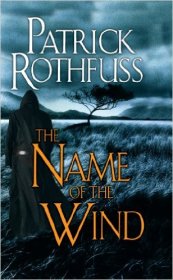
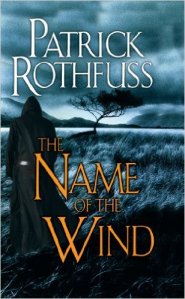
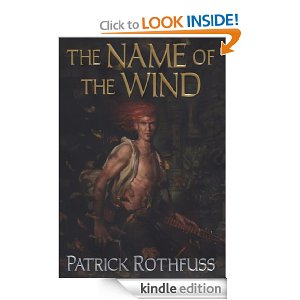
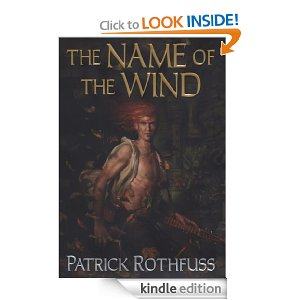
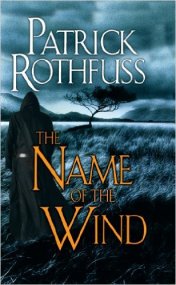 I think of Patrick Rothfuss and his struggle to write the books in his series, the Kingkiller Chronicle. The first two books, The Name of the Wind (2007) and The Wise Man’s Fear (2011), have sold over 10 million copies.
Rothfuss’ work is original and powerful, but though it is highly regarded, he struggles to put it on paper just as the rest of us do. Despite a decade having passed, the third novel titled The Doors of Stone has not yet been released, and some fans are highly critical of him for that. They don’t understand how creativity works—all they know is they want that story, and they want it now.
The first two books in that series are work I consider genius, and I am willing to wait for him to be satisfied with his work.
Patrick Rothfuss’ struggle to write the book he believes in gives me permission to keep at it, to NOT just push out a novel that is a shadow of what I wanted to write.
And Patrick, if you’re listening, write the way you write, you wonderful human being, and I’ll wait as long as I must.
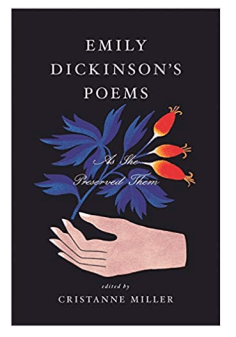
 Poets understand how central a theme is to the story. A poet takes the theme and builds the words around it. Emily Dickinson’s poems featured the themes of spirituality, love of nature, and death, which is why she appealed so strongly to me during my angsty young-adult life.
 But that would be wrong. Poets write words that range far more widely than their physical surroundings. Some poets are constrained by unrewarding jobs, others may be “on the spectrum,” as they now say, and still others are constrained by physical limitations.
 Fantasy author



 Life in the Realm of Fantasy