
I am a supporter of NaNoWriMo (National Novel Writing Month) as a way to get people writing. Some people can’t resist a challenge, and NaNoWriMo is definitely that.
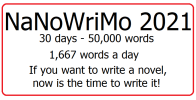 NaNoWriMo is a personal challenge, a month that is solely dedicated to the act of writing a novel. It is a speed-run with daily goals to meet.
Day 1 – write 1,667 words or more.
Days 2 through 30 – rinse and repeat.
If you write 50,000 words and have your word count validated through the national website, you ‘win.’ Reporting your word count has been an honor system for the last two years, so you never have to upload your manuscript.
If you do cross the 50,000-word line, there are no huge prizes or great amounts of acclaim waiting for you. You will, however, get a PDF winner’s certificate that you can fill out and print to hang on your wall or keep in your digital files as I do.
Starting on day one, you will collect badges, little visible rewards, for your daily achievements. One badge that is difficult to get is the “update your progress every day” badge. I usually have my “winners’ certificate” by the day they become available, but I continue writing every day through the 30th and update my word count daily.
We all know that a novel of only 50,000 words is a good length for YA or romance, but for epic fantasy or literary fiction it’s only half a novel. Still, a dedicated author can get the basic structure and story-line of a novel down in those thirty days simply by sitting down for an hour or two each day and writing a minimum of 1667 words per day.
With a simple outline and a few notes to keep you on track, that isn’t too hard. Most authors who grew up with computers (unlike me) can double or triple that.
 As always, there is a downside to this intense month of stream-of-consciousness writing. Just because you can sit in front of a computer and spew words does not mean you can write a novel that others want to read.
And unfortunately, for the first time author, the desire to publish that book without making revisions, and without professional editing is almost impossible to quell. Every year in February and March, many cheap or free eBooks will emerge testifying to that fundamental truth.
So why do I participate every year? I love working with the writers in our area, and hope to see the rare, committed novelist, the one who stays writing all year long. That person will join our region’s Discord channel and be a part of the posse.
More people write during November than you would think. In some years, about half the NaNo Writers in my regional area are journaling, writing family histories, or even writing their thesis.
Every year, my co-Municipal Liaison and I see a wave of new people who fill the vacancy left behind by the people who either lost interest in the first week or couldn’t find the time to get more than ten or twenty thousand words during previous years.
Those people sometimes feel like failures, but they aren’t.
Ten thousand words is two or three short stories. Twenty thousand is a novella. Writing a story of any length is an accomplishment, and those authors should be proud. They will write more as time goes on.
However, for a very few people, participating in NaNoWriMo will give them the confidence to admit that an author lives inside their heart, demanding to get out. In their case, NaNoWriMo is about writing and completing a novel they had wanted to write for years, something that had been in the back of their minds for all their lives.
These authors will take the time and make an effort to learn writing conventions. Grammarly’s website says writing conventions consist of four elements:
- spelling
- grammar
- punctuation
- capitalization
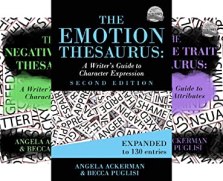 Some new authors seek out books about writing craft and attend seminars. They will join writing groups and develop the skills needed to take a story and make it a novel with a proper beginning, a great middle, and an incredible end.
They will properly polish their work and run it past critique groups before they publish it. They will have it professionally edited.
These are books I will want to read.
And one skill we must develop early on is a thick skin. Nothing hurts worse than to see your work through their unbiased eyes and discover it wasn’t perfect after all. Yes, some people will love and admire what we have created, but other times what we hear back from our readers and editors is not what we wanted to hear.
For most authors success can only be measured in the satisfaction we get out of writing and seeing it published.
If your first novel is picked up by a traditional publisher, they may not put a lot of effort into pushing it, because you are an unknown author. They will test the waters and see what sort of reaction your book gets before they really commit to backing you.
Also, whether you are traditionally published or indie, you must do all the social media footwork yourself. You must get an Instagram account, a twitter account, a website, and so on. You may even have to arrange your own book signing events, just as if you were an indie.
 This is time-consuming, and you will feel as if you need a personal assistant to handle these things. I know several authors who rely on the services of hourly personal assistants to help navigate the rough waters of being their own publicist.
Every year, participating in NaNoWriMo will inspire many discussions about becoming an author. Going full-time or keeping the day job, going indie or aiming for a traditional contract—these are conundrums many new authors will be considering after they have finished the chaotic month of NaNoWriMo.
However, if you don’t sit down and write that novel, you won’t have to worry about it.
November is a good time to do just that.
#NANOPREP SERIES TO DATE:
#NaNoPrep: part 1: What’s the Story? (the storyboard)
#NaNoPrep, Setting: Creating the Big Picture
#NaNoPrep, Building Characters
#NaNoPrep, More Character Building
#NaNoPrep, Designing Science, Magic, and the Paranormal
#NaNoPrep, Terrain and Geography
#NaNoPrep, Connections and Interconnections
#NaNoPrep, Construction and Deconstruction
#NaNoPrep, The Story Arc Part 1
#NaNoPrep, The Story Arc Part 2
#NaNoPrep, The Story Arc part 3, the End
#NaNoPrep: Signing up and Getting Started
#NaNoPrep: Guernica, Inspiration, and Finding Writing Prompts
#NaNoPrep: Countdown to November, Subject and Theme
This post: #NaNoPrep: What to Expect
 So, what do we need to have in place during the next seven days before the big event?
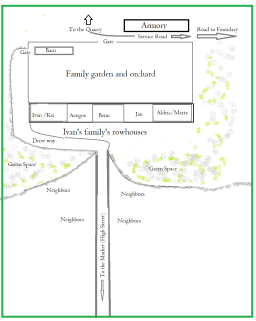 Environment: Ivan and Kai live in Weiland, Tribe Weila’s riverport and mining center. Ivan’s extended family has five rowhouses at the upper end of High Street. It’s a steep but easy walk to the market for his grandfather, who lives next door and watches the children while Ivan and Kai work. I drew a little map for my notes, so I know the layout of where everything is in regard to their home and businesses. It could change, but I have something to start with.
 A common theme in fantasy is the juxtaposition of chaos and stability (or order). This subtheme will feature strongly in my novel. Good vs. evil is a
  Writing is easier once it becomes a daily
  We have this perception that taking time for creativity is selfish, and that will be your biggest hurdle. Trust me, it is not asking too much of your family for you to have some time every day that is sacred and dedicated to writing.
 Write for five minutes here and ten minutes there all day long if that is all you can do. Every word counts toward your finished manuscript. I took my lunch to work and wrote during my lunch half-hour whenever possible. I also wrote on the bus when I didn’t own a car.
 Remember, what you are writing is a rough draft, so your story arc will be bumpy and uneven. It doesn’t have to be perfect, so don’t worry about making it so. The goal of NaNoWriMo is to get that first draft written in thirty days. So, every time you have fifteen minutes to spare, sit down and write as much as you can in that short length of time. Spew your story as fast as you can in those moments before you are pulled away. With six or seven short bursts of writing, you can really rack up the word count.
 But sometimes, when writing the first draft, we realize our manuscript has gone way off track and is no longer fun to write. That is where the storyboard and my loose outline become important.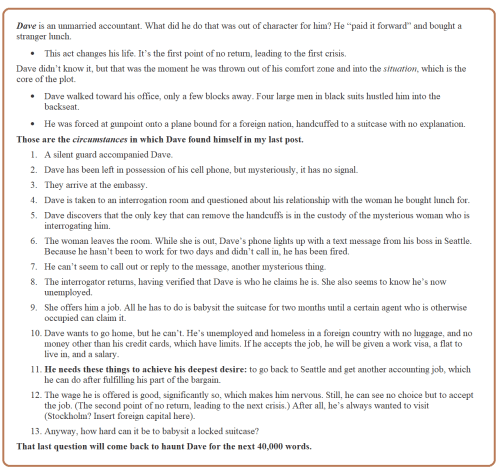
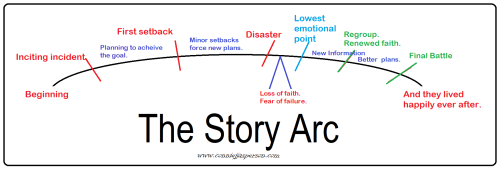
 Every novel is different, has a different genesis, and emerges from the author’s mind with its own personality.
 I usually do this with a little advance preparation. Then on November 1st, I sit in front of my computer, and using the ideas I have outlined as my prompts, I wing it for at least two hours.
 How will the next phase of Dave’s story start? That will begin the middle section of the story, and this is what we are going to give a brief outline of.
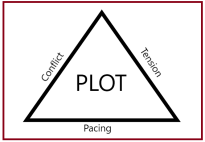 In any story, the crucial underpinnings of conflict, tension, and pacing are bound together. Go too heavily on one aspect of the triangle, and the story fails to engage the reader. By outlining a few important events now, we can add trouble and hitches during the writing process and increase the tension. Pacing will be something to worry about in the second draft—at this point, we just want to get the bones of his adventure down on paper.
 Whether you hope to be published traditionally or plan to go indie, you must know what the reading public is buying. You will probably write a book that is squarely set in your favorite genre.
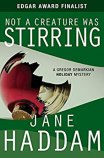
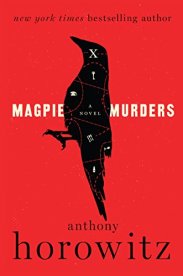 When editor Susan Ryeland is given the manuscript of Alan Conway’s latest novel, she has no reason to think it will be much different from any of his others. After working with the bestselling crime writer for years, she’s intimately familiar with his detective, Atticus Pünd, who solves mysteries disturbing sleepy English villages. An homage to queens of classic British crime such as Agatha Christie and Dorothy Sayers, Alan’s traditional formula has proved hugely successful. So successful that Susan must continue to put up with his troubling behavior if she wants to keep her job.
 Now, let’s talk MECHANICS. The author of the Magpie Murders has worked as a journalist. He has taken the time to become educated in grammar and understands common industry standards.

 I know that world because I based the plants and topography on the Pacific Northwest, where I live. Other than the Escarpment, which is the visible scar left behind by the Sundering of the Worlds, the plants and geography are directly pulled from the forested hills and farmlands of Southern Puget Sound and Western Washington State.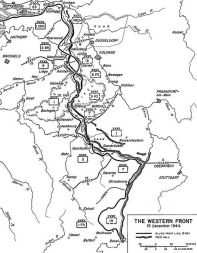
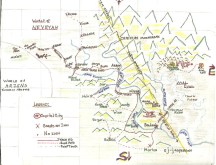
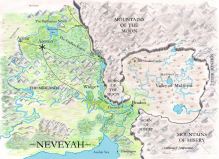
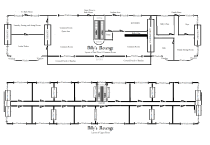 If your work is sci-fi, consider making a map of the place where the action happens. It could be a pencil-drawn floor-plan of a space station/ship or the line drawing of part of an alien world. I drew the floorplan of Billy’s Revenge for my reference, as most of the novel, Billy Ninefingers, takes place there.
 Open your
  Authors of sci-fi must research and understand the
  Satisfying these conditions sets the stage for you to create the Science of Magic. This is an underlying, invisible layer of the world. By creating and following the arbitrary rules of this “science,” your story won’t contradict itself.
 Conflict forces the characters out of their comfortable environment. The roadblocks you put up force the protagonist to be creative. Through that creativity, your characters become stronger than they believe they are.
 If you design this now, on November 1st, you will have the framework to showcase your characters ambitions, the drive to acquire more personal power, and the lengths characters will go to in their efforts to gain an edge over their opponents. Everything will be in place for a free-wheeling dive deep into the consequences of your protagonist’s struggle.
 We humans are tribal and like having an overarching power structure because someone has to be the leader, which isn’t a job most people want once they see what is involved. Being the leader means bearing the responsibility when things go wrong, usually more often than basking in the glory when it’s all good.
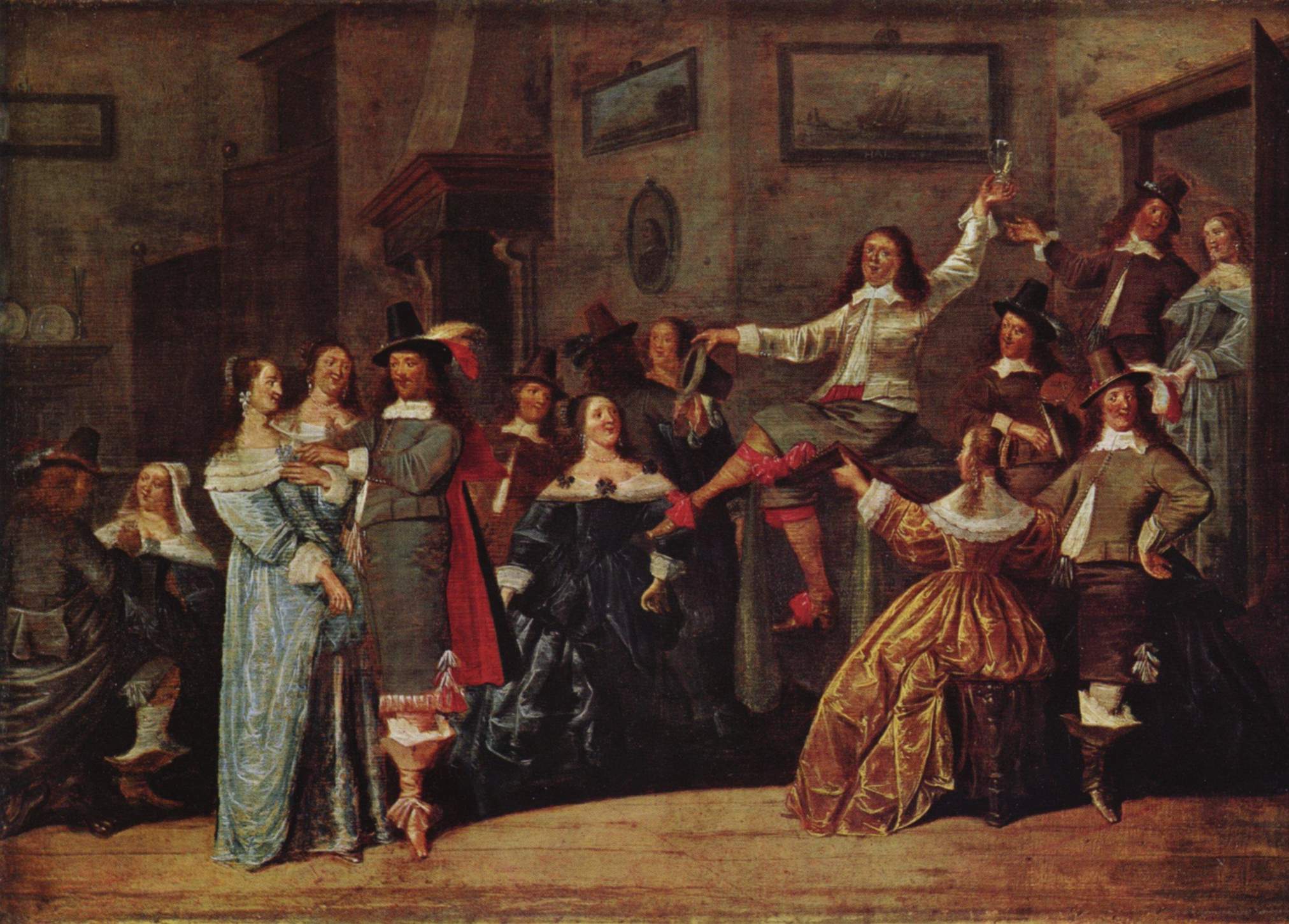 Society is always composed of many layers and classes. Below is a list of questions for you to consider when building your fantasy or sci-fi civilization. I admit it’s long, but please bear with me.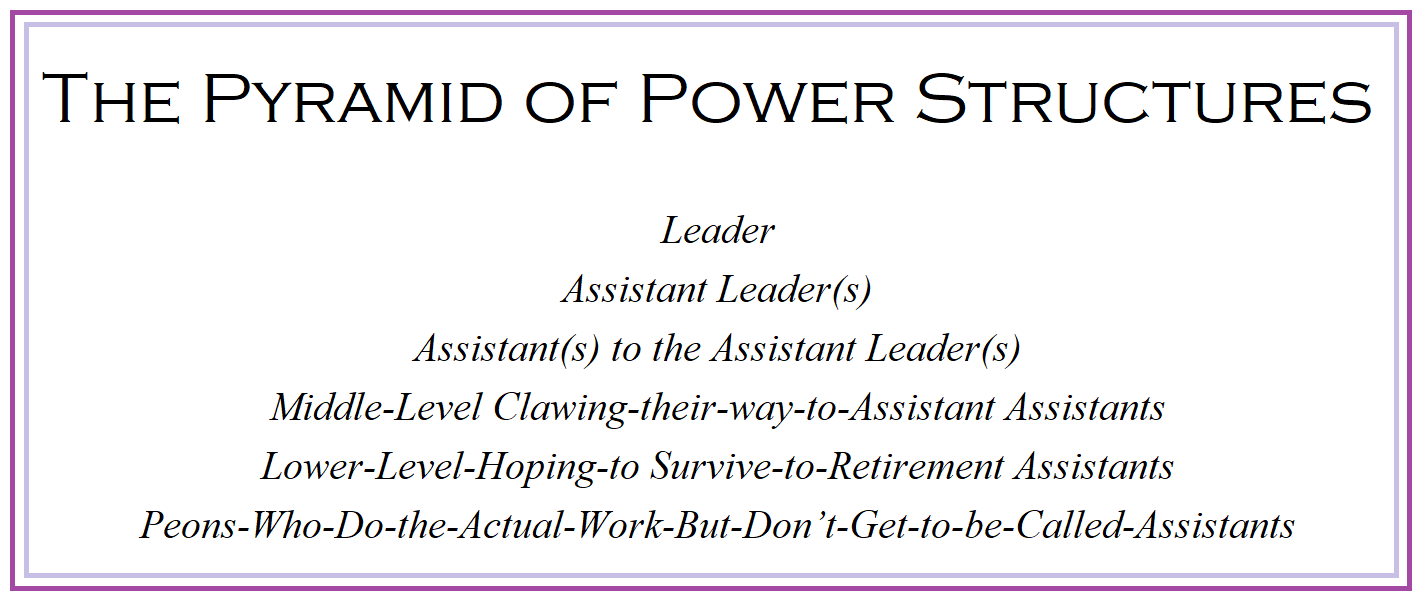
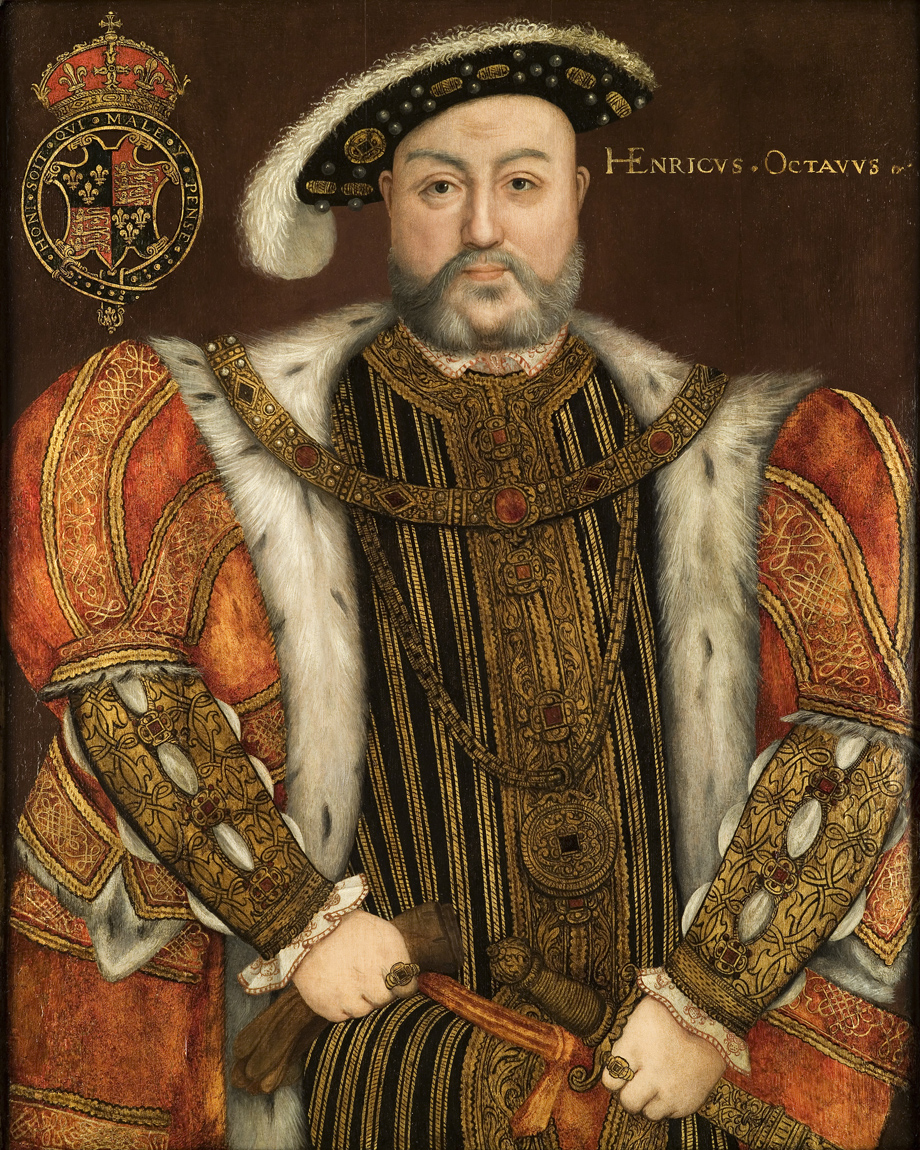 Government: There will be a government somewhere, even if it is just the local warlord. Someone is always in charge because it’s easier for the rest of us that way:
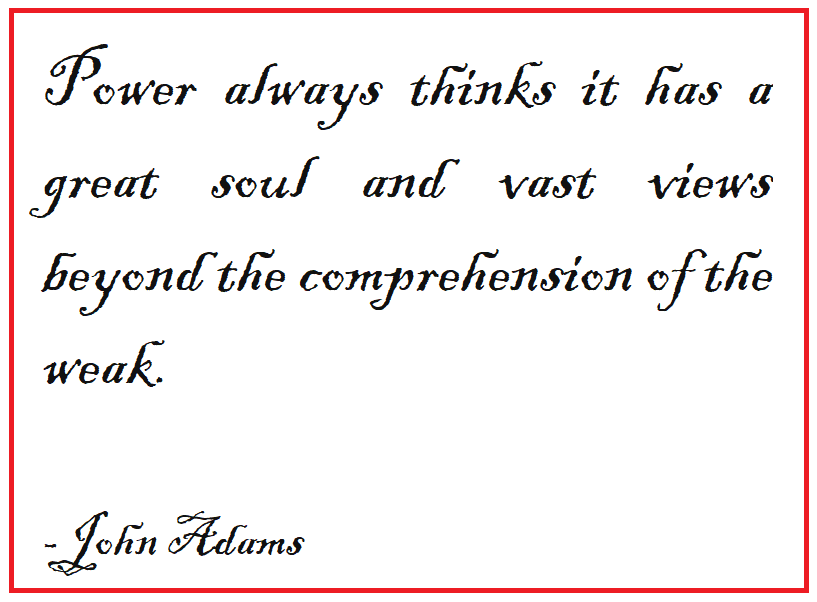 Power in the hands of only a few people offers many opportunities for mayhem—followers may inadvertently create a situation where the leader believes they are anointed by the Supreme Deity. Even better, they may become the God-Emperor/Empress.


 Life in the Realm of Fantasy
