Tag Archives: publishing industry news

Industry news, what I am reading and #amwriting

We have entered the darkest time of the year, and while the sun occasionally bursts through the dark and gloomy overcast skies, the monsoon months have arrived. The eternal rain has set in, which I don’t mind as much as some folks do. Rain in the winter means plenty of water during summer, which can be very dry here in the Puget Sound basin.
MyWritingLife2021BBut we’d prefer the snow to stay in the mountains where it belongs. Something about the slightest dusting sends the Pacific Northwest into a panic.

I write every day, no matter the season. However, December is a busy, scattered time for me, with a lot of random cooking and partying. As far as writing goes, it’s a month of inspiration racing up the steps, ringing the doorbell, and then running away.

Thus, I make notes of those random thoughts. At some point, I’ll be able to focus well enough to wrestle the Kraken that is my current manuscript, into shape. I’m still plotting the second half of this novel. Last week I managed to cut out two novellas and a short story’s worth of words out of the NaNoWriMo mess though, so that was fun. (Not.)

In the meantime, I’ve been enjoying a little downtime, reading and playing games. So, what have I been reading? Magazine articles mostly.

I’m an indie and am responsible for the success or failure of my books when it comes to marketing, which is not my strong point. But as always, the overall trends of the publishing industry interest me. What follows are the teasers and links to the more thought-provoking things I read this week.

Here is an article that is not recent, but is pertinent to our era of publishing, of writing blogs and publishing as an indie. Read the story here: Skills and Strategies | Understanding Plagiarism in a Digital Age – The New York Times (nytimes.com)
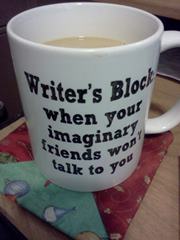
My Coffee Cup © cjjasp 2013BBC: From memoir and self-care books to comic novels, writing about our flaws and imperfections has never been so popular. But can failing ever be a success? Lindsay Baker explores this question. Read the story here: Is failure the new success? (bbc.com)

BBC: Audiobooks are having a moment. As they soar in popularity, they are becoming increasingly creative – is the book you listen to now an artform in its own right? Clare Thorp discusses this phenomenon. Read the story hereThe rise of the books you don’t read (bbc.com)

So, what else is going on in the publishing industry? Let’s have a look at the articles that caught my eye this last week:

NEW YORK, NY (AP) — Book publishing in 2023 was a story of cooling sales and rising conflict, marked by legal action, protests, censorship and the impact of forces well beyond the industry. Read the story here: 2023 in books: Protests, bannings and rise of AI helped shape the story of publishing – ABC News (go.com)

AP NEWs: The nation’s largest publisher and several bestselling authors, including novelists John Green and Jodi Picoult, are part of a lawsuit filed Thursday challenging Iowa’s new law that bans public school libraries and classrooms from having practically any book that depicts sexual activity. Read the story here: Publishing industry heavy-hitters sue Iowa over state’s new school book-banning law | AP News

NBC NEWS: Yahoo News reports that there has been a years-long surge in LGBTQ fiction sales. Read the story here: A ‘renaissance of gay literature’ marks a turning point for publishing (yahoo.com)

Publishers Weekly: This year’s Guadalajara International Book Fair (FIL), which ran November 25–December 3, drew 857,000 attendees, up from 807,000 in 2022 and 828,000 in 2019. While the fair always attracts several hundred U.S. librarians, who attend to buy Spanish-language titles, more U.S. publishers went to the fair this year than in past years—a sign that business between the U.S. and Mexican markets is growing. Read the story here: Guadalajara Book Fair Attracts More Americans (publishersweekly.com)
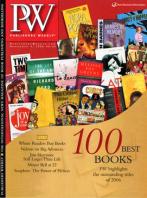
Pw06Also from Publishers Weekly: A confident mood prevailed among independent booksellers over this November holiday sales weekend. (…) Sales data from Circana BookScan showed that, in a year in which overall unit sales of print books are down 3.3%, sales were up 1.4% for the Thanksgiving week ending November 25, over the comparable week in 2022. Read the story here:  The Holiday Season Looks Promising for Indie Bookstores (publishersweekly.com)

So, there you have it, the articles that caught my eye this week when I was sitting at my computer and pretending to work. Now, I suppose I should go and release the Kraken—or at least get to work on that outline.


Credits and Attributions:

Cover of November 6, 2006 issue Publishers Weekly, © 2006 Publishers Weekly (Fair Use). Wikipedia contributors, “Publishers Weekly,” Wikipedia, The Free Encyclopedia, https://en.wikipedia.org/w/index.php?title=Publishers_Weekly&oldid=1180527918 (accessed December 10, 2023).
4 Comments

Filed under writing

Weddings, equipment failures, industry news, and awesome sunrises #amwriting

This last week has been a productive week for writing despite the irritations. Yet, those bumps were quickly ironed out, and no one died.

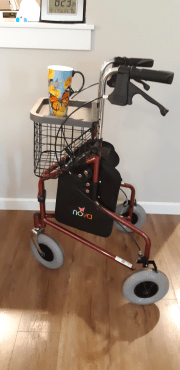
R2D2ServingTeaSomething we don’t think about when we’re young and healthy is that the equipment disabled people rely on can fail. The first thing that failed this week was his little walker for getting around in indoor spaces—I’ve named it R2D2 since it’s perfect for serving drinks on the space-yacht that is our home.

R2 is ideal for getting around inside restaurants and theaters. Unfortunately, one of the screws holding the bar that keeps it from collapsing while my husband is using it lost the washer and nut, so I spent the weekend making sure the screw stayed where it was supposed to, which was distracting. Fortunately, Amazon carries bolts, nuts, and washers and ships them overnight and it is now repaired.

Then, there was assembling the paperwork for getting our will redone, this time including a durable power of attorney and an advance healthcare directive. When we had our will made twenty years ago, it was a simple thing, merely a list of our assets, rights of survivorship, and on the survivor’s death, dividing what is left equally among our blended family of five children.

This time, we had to fill out a pre-appointment questionnaire that asked questions I felt were intrusive and had no bearing on the disposition of our not-so-vast fortune.

I became a bit testy.

My husband, ever a man of common sense, talked me into a more rational frame of mind. He explained we need to ensure no random claims arise that could hold up the disposition of any $$ and intellectual properties we might leave our children.

FileDocumentSo, we had to supply dates and names of previous marriages and divorces—which, in my case, involved getting copies of three divorce decrees from the county. (I’ve had a life, and while I could have done some things differently, I don’t regret it for a moment.)
My Gramma Ethel (born in 1909) stayed with me when I was going through some hard times, watching my kids while I worked two jobs. My grandmother, bless her, was a cleaning tornado. She threw things like Christmas cards and old legal documents out when she cleaned—without asking first. These things were over and done in her mind, so why keep junk you don’t need? She hated things that took up space and gathered dust.

It was a trivial failing. Every evening, I came home to a clean house, a hot meal, and happy children. She was the best, and I valued her wisdom and unconditional love more than I can say. She still influences me in all the best ways. (Except I don’t clean house as well as she did.)

But back to equipment failures. The next one is slightly hilarious–my husband’s “ejector chair” suddenly failed to eject. Greg is 6’3” and is not overweight. But he’s a big man. Trying to get him out of the chair stuck in the reclined position was complicated and entertaining. I could hardly breathe for laughing.

Just so you know, the chair does not move when it doesn’t have power, or if the controller fails, which is what happened.

He sleeps much of the night in that chair, and it enables him to be more mobile in his daily life. But the people at the store where we purchased it came to our home and fixed it immediately, so Grandpa is back in business.

We attended our nephew’s wedding on Friday—a happy day for the family. It was beautiful, romantic, and everything a wedding should be. It was held in a local venue, a barn converted to host large gatherings. Greg and I are especially close to this nephew, as he spent part of a summer with us when his brother was seriously injured in an off-road vehicle accident, and his parents had to make an emergency trip to Oklahoma.

(Getting R2 folded and stowed in my sister-in-law’s trunk – and out again – is where the loose screw became a bit of a pain. But as I mentioned above, the wedding wasn’t held in Midsomer County, so nobody died.)

But let’s talk about sunrises—oh my goodness. One thing I love about our apartment is the view of the morning sky. Some sunrises are spectacular, and I find a reason to see every sunrise I can. This morning, clouds were moving in, and the eastern horizon was lit with crimson fire—a sight that only lasted briefly. Still, brief though it was, remembering it makes me glad to be alive.

steampunk had holding pen smallBut enough chit-chat about me. Let’s talk about writing. This week, I made headway on a first draft I had set aside a year or so ago because I was stuck at the 30,000-word point. I changed the narrative tense from close third person omniscient to first person present tense for the protagonist and third person present tense for the side characters. That change kickstarted things and the plot is unfolding as it should.

I always have several projects in the works, so when creativity fails in one, I move on to another. I have been making the loose outline for my NaNoWriMo project to finish the second half of a duology.

And finally, Greg and I will be attending the Pacific Northwest Writers Conference in Seattle on Wednesday. I attend this conference every year. I benefit from the presentations as much as the networking. I will talk more about the two conferences of this month next week.

And now for a bit of publishing industry news:

We’re all trying to get our books noticed, and sometimes the blurb on the back of the book isn’t enough, so we turn to other authors who might be willing to give us an endorsement we can print on the cover or use on our Amazon page. For an interesting article on the usefulness (or not) of author endorsements, I recommend ‘A Plague on the Industry’: Book Publishing’s Broken Blurb System (msn.com).

An excellent article on creativity and AI is AI vs human: the publishing industry’s way through the AI revolution (msn.com).

If you haven’t watched “The Other Black Girl,” you might be interested in this article: Hulu thriller ‘The Other Black Girl’ mocks publishing industry: review (msn.com).

Finally, for an article on diversity and equal representation, I heartily recommend Latino Coalition Launched to Boost Latino Representation in the Publishing Industry – Latin Heat.

So, that’s the way the week was at Casa del Jasperson. May the week ahead be filled with all the good things, and may your words flow freely! What follows is an amazing image of sunrise, found on Wikimedia Commons just for you.

Laanemaa_järv_Orkjärve_looduskaitsealal

Sunrise at Lake Laanemaa at Orkjärve Nature Reserve, Estonia


Credits and Attributions:

IMAGE: Sunrise at Lake Laanemaa at Orkjärve Nature Reserve, Estonia.  Wikimedia Commons contributors, “File:Laanemaa järv Orkjärve looduskaitsealal.jpg,” Wikimedia Commons, https://commons.wikimedia.org/w/index.php?title=File:Laanemaa_j%C3%A4rv_Orkj%C3%A4rve_looduskaitsealal.jpg&oldid=801967887 (accessed September 17, 2023).

5 Comments

Filed under writing

The Business Side of the Business: Publishing Industry News #amwriting

Autumn is arriving as we speak, and it’s a good time to look at how the publishing industry is doing.

publishingIndustryChatLIRF03162021Let’s have a look at how the Big 5 Publishers of literature did last year. You will note that the top players have changed since my last Big 5 article. Some of the big fish have been absorbed by the even bigger fish since we last looked at them.
#1 on the list is Penguin-Random House. They’re headquartered in Germany and are still the big kid in the schoolyard. Last year they reported earnings of 3.3 billion US dollars.

#2 is Hatchett Book Group. They are headquartered in France. Their reported earnings were 2.7 billion US dollars.

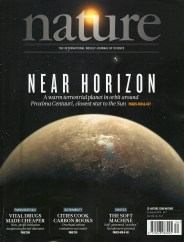
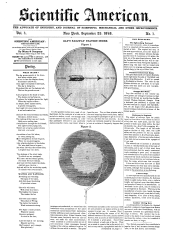
#3 of our top 5 is a corporation called Springer Nature. They publish periodicals and magazines like Nature and Scientific American. They’re headquartered in both the UK and Germany. Their reported earnings were 1.9 billion US dollars.

#4 is Wiley (John Wiley and Sons), a US company publishing academic and instructional materials. They reported revenue of 1.7 billion US dollars.

#5 is McGraw-Hill Education, with reported earnings of 1.7 billion US dollars.

So, did you notice the trend? Only two of the top five traditional publishers are focused on publishing fiction.

EPSON MFP image

EPSON MFP image

And what is affecting the profits for these companies? According to Publishers’ Weekly, supply chain issues combined with inflation and dropped earnings in the first quarter of 2022. However, strong backlist sales propped things up at Penguin-Random House, titles like Where the Crawdads Sing by Delia Owens and Atomic Habits by James Clear. They also report that the late Dr. Seuss’s titles sold more than 5.7 million copies in that period.

As always, audiobooks also performed well. Penguin-Random House’s global CEO Markus Dohle said the ever-expanding international audio business has become a strong growth pillar of their publishing efforts. He also noted a technology- and data-driven transformation of their sales, marketing, and publicity strategies.

This side note about the backlists propping up the Big 5 reminds us to be careful when we’re offered a contract. Legacy book contracts are a terrible danger zone for the author. A hastily signed contract means you might never receive back the rights to your intellectual property (your books), even if the publisher is no longer publishing it.

Quote from the Authors Guild post of July 28, 2015:

Diamonds may be forever, but book contracts should not be. There’s no good reason why a book should be held hostage by a publisher for the lifetime of the copyright, the life of the author plus seventy years—essentially forever. Yet that’s precisely what happens today. A publisher may go bankrupt or be bought by a conglomerate, the editors who championed the author may go on to other companies, the sales force may fail to establish the title in the marketplace and ignore it thereafter, but no matter how badly the publisher mishandles the book, the author’s agreement with the original publisher is likely to remain in effect for many decades.

Most of us are not attorneys. If we go the traditional route, we should consider hiring a lawyer specializing in literary contracts.

This is good advice, even if you are represented by an agent. The complexity of negotiating a literary contract is both confusing and intimidating. By not having the advice of a professional, you risk unwittingly signing away secondary and subsidiary rights to your own work forever.

Many well-known authors were smart or had good lawyers. They either weren’t offered or didn’t accept a legacy contract. These authors regained the rights to their work when the contract terms were fulfilled. They’re now self-publishing their backlists and earning more royalties even though they sell fewer books.

On the indie side of things, we’re in the same boat financially as the Big 5, but we’re better positioned in some ways. We’ve always relied more on digital sales, which have no upfront cost outlay. Many indies are moving to audiobooks too. However, we do need paper books.

Significant cost increases for paper and production (and for distribution and freight) will affect our costs and profit for the foreseeable future. Per an email I received from Draft2Digital, due to supply chain issues and the rise in material costs, their print partner will be increasing D2D’s costs. This means that effective October 1, 2022, the cost of author copies via D2D Print will increase.

I suspect the same will be true for Amazon KDP and IngramSpark.

Scientific American 1848For indies, our most reliable royalties have always come from digital sales, although we do sell some print books. But the best route to gaining loyal readers has been book fairs, conventions, and signings at bookstores.
We pay upfront for our stock of books and have to keep an eye on our inventory to ensure we have enough on hand for each event. So, with printing costs going up, we will either raise prices or see a drop in our already-slim profit.

So, that is the industry’s current state as of this week. The Big Traditional Publishers are still consuming each other as fast as possible. At some point, there will only be one Big Traditional Publisher owning thousands of popular imprints worldwide, and they will be based in Europe.

The publishing industry is currently in a downturn because of inflation and production costs, but little has changed for indies. We’ve always been at a disadvantage, so in some ways, we’re better equipped to deal with change. We adjust and go with the flow whenever the market goes up or down or moves in a new direction.


Credits and Attributions:

Wikimedia Commons contributors, “File:Nature volume 536 number 7617 cover displaying an artist’s impression of Proxima Centauri b.jpg,” Wikimedia Commons, the free media repository, https://commons.wikimedia.org/w/index.php?title=File:Nature_volume_536_number_7617_cover_displaying_an_artist%E2%80%99s_impression_of_Proxima_Centauri_b.jpg&oldid=675402098 (accessed September 20, 2022). ESO/M. Kornmesser (photo displayed on the magazine cover), CC BY 4.0 <https://creativecommons.org/licenses/by/4.0&gt;, via Wikimedia Commons.

Cover of Scientific American, the September 1848 issue Wikimedia Commons contributors, “File:SciAmer.gif,” Wikimedia Commons, the free media repository, https://commons.wikimedia.org/w/index.php?title=File:SciAmer.gif&oldid=655833071 (accessed September 20, 2022).

6 Comments

Filed under writing

Autumn, Industry News, and Week 1 of NaNoWriMo 2021 #amwriting

The terrible heat wave we Northwesterners suffered in June has given us one of the most colorful autumns we have had in many years. All last week, even the native trees were colorful. Usually, our native maples are relatively dull as compared to the non-native ornamentals.

MyWritingLife2021My euonymus alata compacta, AKA Burning Bush, was glorious this year. That is a non-native shrub, but wow! The hedge really brightened up the yard.

Our magnolia tree even bore two fruits this year, which it never has done before. We planted the tiny sprouts in containers, hoping maybe they would grow. Who knows, we might end up with two more trees.

In industry news, Publishers Weekly reports that with most categories posting increases, sales at the 1,158 publishers that report results to the Association of American Publishers’ StatShot program rose 6.9% in July over July 2020.

They also said that Amazon’s growth has slowed to 15% in the third quarter of 2021. At the same time, Hachette Book Group’s third-quarter sales dropped by 9%. I find that interesting, as it says that with the pandemic easing, people are making less time for reading. Amazon sells far more than books, while HBG’s focus is on printing and selling paper books.

I ran across an older article in the HuffPost yesterday that still has merit: Traditional Journalism is Dying: Why the Publishing Industry Must Adapt to Survive | HuffPost Impact.

Apparently, short attention spans are still affecting that side of the industry. If people don’t have the patience to read a short article—

euonymous burning bushWhere was I? Oh, yes. Today (Wednesday) is the third day of NaNoWriMo2021. I am managing to get all the clerical work for my region done and keep a path cleared through my home. Monitoring the Discord channel for my region has been a bit distracting. However, I still have the time to get a respectable amount of work done on my new book.

At the time of this writing, the plumbing is still a problem on the homefront, but that is closer to being worked on. More on that debacle later when I have at least an answer and an estimated cost.

This year having an outline has been a real bonus. With my home in plumbing hell, having the outline for reference keeps me focused on the story.

Today, my goal is to finish fleshing out the Antagonist’s backstory. When that is finished, I will move on to the inciting incident.

My novel is not a book at this stage, and it won’t be until sometime in January. But I hope to have the entire story arc written and ready to flesh out by the 30th of this month.

I learned early on that even with an outline, this first draft is my “thinking draft.” It will be a combination of backstory and brilliance. In January, the weeding will begin. Hopefully, I will be in the editing stage by next November, just as I am now with last year’s NaNoWriMo novel.

So that is the news from the Command Corner at Casa Del Jasperson. Happy writing!

2 Comments

Filed under writing

Random News from the Industry

The indie writing community lost a gentle soul this last week with the sudden passing of Jeffrey Cook. A co-founder of Clockwork Dragon publishing, Jeff was a beloved fixture at all the major sci-fi/fantasy conventions. He could always be found working the Clockwork Dragon table with co-author and publisher Lee French.

MyWritingLife2021BMy sincerest condolences, along with those of the entire Northwest writing community, go out to Lee for the loss of such a good friend. Jeff was an integral part of both her business and her writing life.

I first came into contact with Jeff when I joined NIWA, the Northwest Independent Writers Association. Jeff wrote steampunk and fantasy. In collaboration with Lee French, he co-wrote superhero novels.

IndieGuideCoverLee French and Jeffrey Cook co-authored the book, Working the Table: An Indie Author’s Guide to Conventions. If you are new to the world of conventions and bookstore signings, this book is for you. Their tips will help you successfully sell your books at conventions, which in turn leads to eBook and paperback sales through all the major online outlets.

Working the Table: An Indie Author’s Guide to Conventions

The Blurb:

Because books won’t sell themselves.

In these times when it’s easy to self-publish but hard to get
noticed, conventions offer a solid, feasible option for the
independent author to start on a path to financial sustainability.

But becoming a professional denizen of the dealer’s room has
its challenges.

In Working the Table, two veteran indie authors
spill their secrets to help you not only survive but thrive in
the book-event environment.

Also in the news, this last week saw the 101st anniversary of Ray Bradbury’s birth. The New York Times referred to Bradbury as the writer most responsible for bringing modern science fiction into the literary mainstream. Indeed, we who write any genre or subgenre of speculative fiction follow in his footsteps, imagining worlds as they might be, sometimes getting it wrong, but often getting it right.

Sci-fi writers, if you are curious about the metaverse and the role of Facebook, an article appeared on August 29, 2021, for the website WNP What’s New in Publishing, explaining what that is: Facebook and the metaverse: What you need to know.

Apples 8-25-2013Earning a living is tough for an author, whether you go the indie or traditional route. Many writers have turned to podcasting as a way to keep food on the table. In the same edition of that ezine was an interesting piece on Apple and the mess it has made out of subscriptions, which are the bread and butter of the podcaster. How has Apple dropped so many subscription balls? The Media Roundup.
Publishers Weekly reports that unit sales of print books declined 1.3% in the week ended August 14, 2021, from the comparable week in 2020, at outlets that report to NPD BookScan.

So, it’s not just us indies; even the big kids are seeing a dip in print sales.

And finally, in the news, I direct you to Jane Freidman’s article, The Value of Book Distribution Is Often Misunderstood by Authors. She and her website have good information for us all.

On the homefront, I’m in the process of unpacking our beach gear and doing laundry from our vacation. Also, we’re preparing for a visit from a granddaughter and her husband.

The Ruins of Abeyon, the novel I accidentally wrote during NaNoWriMo 2020, is ready to go to the editor for the final edit. She has a project in progress now, but Ruins is up next on her schedule.

powerwordsWordCloudLIRF06192021Work continues on the outline for a new novel, the sequel to Ruins, another novel that I hadn’t intended to write. Which makes sense, considering that Ruins sprang into existence on November 5th, shoved my other work aside, and consumed my attention for the next six months.
By November 30th, I had the basic story written and knew how it was going to end.

Even a month ago, I was convinced their story had ended.

But then my sister, who beta reads for me, said the thing and asked the question that always starts the craziness: “I love this novel. What happens next?”

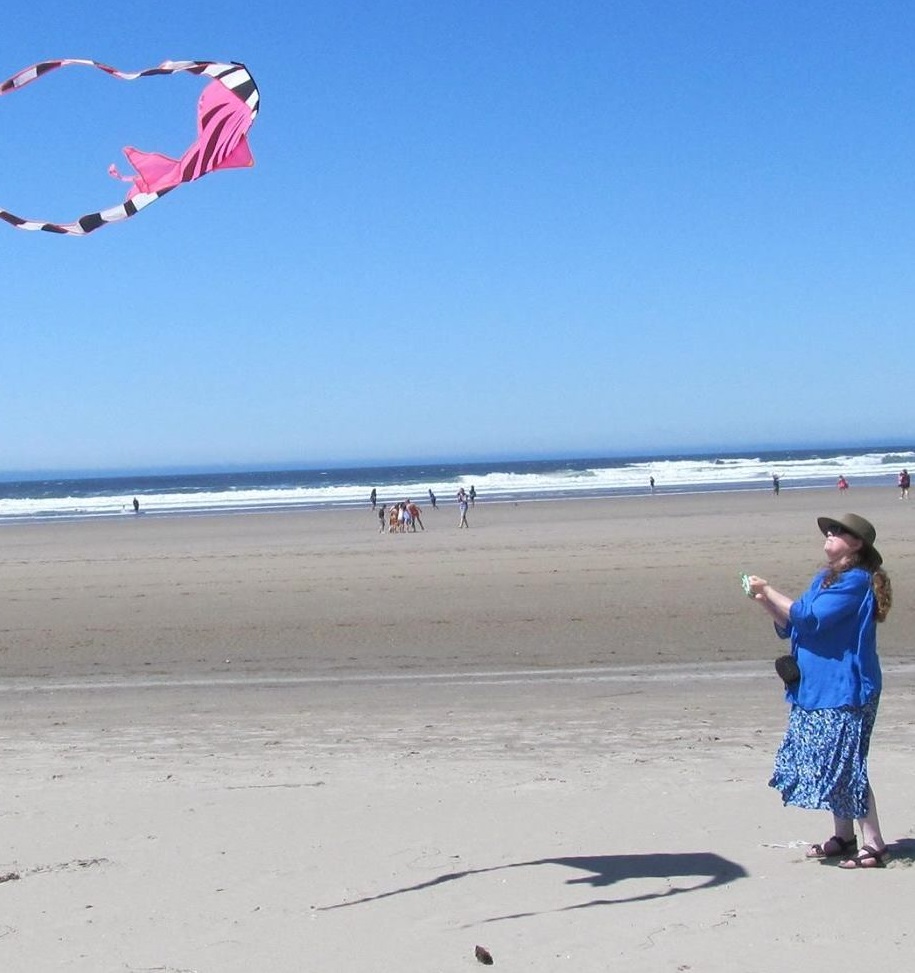
KiteFlying2018Such is NaNoWriMo—you never know what will happen during that month of madness and hilarity. I’ve been participating since 2010 and a Municipal Liaison since 2012, and every year is different. Some years I can only churn out short stories and poetry; other years, I’m cursed with novels.
So, now I am prepping the outline so I can hit the ground running on November first.

Also, progress is happening regarding my attempt to write a decent query. More work is required before I show this hinky mess to anyone, as queries are tricky. I’ve had success in writing them for short stories, and the basics are the same.

Fortunately, I have the support of a brilliant writing group, close friends and great authors who are happy to help me in all aspects of this process.


2 Comments

Filed under writing

Choosing a publishing path: Traditional vs. Indie #amwriting

The publishing industry is in a state of flux, as is the rest of the world.

According to the December 2020 Statshot of participating publishers, the Association of American Publishers, published February 25, 2021, total revenues across all categories for December 2020 were down 8.5% compared to December 2019, coming in at $1.1 billion.

In terms of physical paper format revenues during the month of December, in the Trade (Consumer Books) category, Hardback revenues were up 14.2%, coming in at $312.5 million; Paperbacks were up 2.4%, with $248.1 million in revenue; Mass Market was down 1.6% to $25.9 million; and Board Books were up 6.2%, with $16.7 million in revenue.

eBook revenues were up 18.4% for the month as compared to December of 2019 for a total of $89.7 million.  The Downloaded Audio format jumped 30.0% for December, coming in at $66.0 million in revenue. Physical Audio declined 6.7% coming in at $1.9 million. [1]

In this publishing world, what share of the market is claimed by Indie book sales? For Indie books, those published without ISBNs, the Amazon market share accounts for roughly 83% of US purchases.

What do these numbers mean when trying to decide whether to self-publish or attempt to go the traditional route?

In recent months, the traditional publishing industry has undergone a shrinkage. Where they once were the Big Five, they are now the Big Four: HarperCollins, Simon & Schuster, Hachette, and Penguin Random House.

Literative.Com says: Authors who publish with them may still not have boatloads of money (depending on how many books they publish in a year), but they certainly have prestige. [2]

The fact is authors, either Indie or traditionally published, rarely earn enough in royalties to support their families. This is because publishers, large and small, don’t waste budgets promoting work by unknown authors. They spend their money on the few who have risen to the ranks of their guaranteed bestseller lists.

So, why should an author consider going traditional? Why go to the trouble of wooing an agent and trying to court a publisher?

The fact is, the traditional publishing industry offers many legitimate perks to those who get their foot in the door.

  1. Once you are signed with a reputable publisher, you have an editor who works with you personally. Most of the time, you can forge a good working relationship with this editor. If you go Indie, you must hire a copy editor, which is not cheap. (And should not be.)
  2. While they may not treat a new author the way they do Stephen King, traditional publishers will dedicate a small budget to marketing your work for its launch. It will be more money than you might be able to pony up as an Indie.
  3. Once you have proven yourself, traditional publishers can get your work into markets like Target, Walmart, Costco, airports, and grocery stores.

That is a huge thing, assuming your publisher considers your work worthy of such a commitment on their part. Their confidence will have to be earned. You must expect to find your work on the slow track for a while as the publisher tests the water and sees how well your work is received at Amazon and Barnes & Noble.

  1. Once you have proven yourself, you will have a wider distribution, make far more sales. With those sales, your work will meet the criteria to be considered for industry honors and awards, which will help sell your books.
  2. There is an air of respectability, the cachet of being able to claim you’re traditionally published.

These are valid reasons for attempting to sell your work to the traditional publishing industry.

However, if you seek a legacy book contract, you must go through a gauntlet of gatekeepers. You must pass the assessments of literary agents, acquisition editors, editorial committees, and publishing-house CEOs.

These people all must answer to the international conglomerates that actually own the majority of American publishing companies.

This is why you are most likely to be stopped by a rejection letter. It’s not the quality of your work; it’s the publisher’s perception of what the reading market will purchase and what it means to the accountants, who in turn must answer to their shareholders.

As an Indie, you may not become a bestseller, but you’ll make more money on what you do sell. In most standard book contracts, royalty terms for authors are terrible, especially for eBook sales. Most eBooks are sold through online retailers like Amazon.

For the traditionally published author, if a publisher prices their eBook at $9.99, this is how the Amazon numbers break out (and remember, Amazon is still the Big Fish in the Publishing and Bookselling Pond):

  • Amazon takes 30% of the list price, leaving about $7.00 for the publisher, agent, and you to split.
  • The publisher will keep 75% of that $7.00, or $5.25.
  • The publisher will pay you 25% of that $7.00—just $1.75.
  • The author then must pay their agent a 15% commission—or 26 cents.
  • The author nets just $1.49 on each $9.99 eBook sale.

This is assuming the publisher honestly reports your sales and royalties. In my personal experience, while most small presses are honest, some small presses fail to pay royalties and can have an author’s work tied up in legal limbo for years. Investigate small presses before you sign with them. This is where knowing your legal rights and having a lawyer read your contract before you sign is a good idea.

If you self-publish your eBook at $4.99 or even $2.99, you stand to sell books and make a decent profit.

If you self-publish, you’ll get paid quickly. When a publisher accepts your book, he offers you an advance against sales. Advancements are often paid in installments stretched out over long periods and are tied directly to how well or how poorly your book is doing in real market time. Publishers report sales and pay royalties slowly, as royalty statements are usually issued semiannually. Your royalty checks arrive later, so you can’t rely on this income until you have become an established author in their world.

Conversely, most eBook distributors like Kindle Direct Publishing and Draft2Digital report your sales virtually in real-time. Best of all, they pay your royalties monthly, with just a sixty-day lag from the time sales began.

Finally, and from my point of view, most importantly, you retain all rights to your work. Legacy book contracts are a terrible danger zone for the author.

Most of us are not lawyers. The complexity of negotiating a contract can be confusing and intimidating.

You must hire a lawyer specializing in literary contracts or risk unwittingly signing away secondary and subsidiary rights to your own work forever.

Quote from the Authors Guild post of July 28, 2015:

Diamonds may be forever, but book contracts should not be. There’s no good reason why a book should be held hostage by a publisher for the lifetime of the copyright, the life of the author plus seventy years—essentially forever. Yet that’s precisely what happens today. A publisher may go bankrupt or be bought by a conglomerate, the editors who championed the author may go on to other companies, the sales force may fail to establish the title in the marketplace and ignore it thereafter, but no matter how badly the publisher mishandles the book, the author’s agreement with the original publisher is likely to remain in effect for many decades. [3]

Regardless of whether you choose the traditional route or not, you must do the work and absorb the initial costs of getting your name out there. You must find bookstores willing to host you for a signing, and you must get yourself to conventions and conferences.

You must still work your day job to feed your family either way.

Both paths are valid, and both have positive reasons for choosing that direction, as well as negatives.

How you go forward in publishing your first book is a serious decision. Choosing your publishing path deserves deep consideration of all the many pros and cons.


CREDITS & ATTRIBUTIONS:

[1] AAP December 2020 Statshot Report © 2021Association of American Publishers https://publishers.org/news/aap-december-2020-statshot-report-publishing-industry-down-8-5-for-month-up-0-1-for-calendar-2020/  (Accessed March 16,2021)

[2] Literative.com Popular Books Published by the Big Four, by Jennifer Mendez © https://literative.com/writers-resources/popular-books-published-big-four/#:~:text=HarperCollins,%20Simon%20&%20Schuster,%20Hachette%20and%20Penguin%20Random,in%20a%20year),%20but%20they%20certainly%20have%20prestige. (Accessed March 16, 2021)

[3] A Publishing Contract Should Not Be Forever, The Authors Guild, © 2021 https://www.authorsguild.org/industry-advocacy/a-publishing-contract-should-not-be-forever/, (Accessed March 16, 2021)

Image: Quill Pen, PD|by author, BWCNY at English Wikipedia.

13 Comments

Filed under writing