
The mechanics of writing are the framework that makes a story readable. Every language has specific rules for managing grammar. The language I work in is English, so if you also write in another language, you have my profound respect. You have double the work ahead of you.
 Last week, we talked about how punctuation is the traffic signal that keeps our words flowing smoothly.
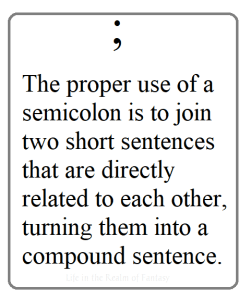
Ellipses, em dashes, hyphens, and semicolons are rare beasts in the punctuation realm. Authors who rely on spellcheck may be getting the wrong advice when it comes to the use of rare punctuation.
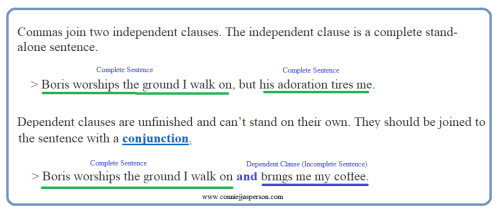
For instance, Microsoft’s editor app sometimes tells us to use a comma to join two independent clauses when they don’t relate to each other. Microsoft is wrong. That creates a comma splice. The comma splice is a dead giveaway that either the author has skimped on editing their work or they’re not well-versed in grammar. (See Monday’s post, Self-editing part 1 – seven basic rules of punctuation, for a better explanation of comma splices.)
So, let’s talk about ellipses. Many authors use them incorrectly or inconsistently. This is because ellipses are not punctuation and shouldn’t be used as such.
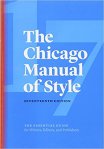
The ellipsis is a symbol that represents omitted words and is not punctuation. The Chicago Manual of Style says that when the conversation trails off, we must add ending punctuation.
Groundfall apples, bruised and over-ripe, lay scattered across the ground. But the apple orchard is across the road, so how did they…?
Hyphens are usually not necessary, although my first drafts are often littered with them. If the meaning of a compound adjective is apparent when written as two separate words, a hyphen is not needed.
- bus stop
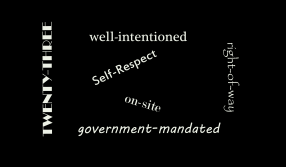 If the meaning is understood when two words are combined into one, and common usage writes it as one word, again a hyphen is unnecessary.
- afternoon
- windshield
Some combinations of “self” must have a hyphen:
- self-editing
- self-promotion
Dashes are not hyphens and are used in several ways. One kind of dash we frequently use is the ‘en dash,’ which is the width of an ‘n.’
En dashes join two numbers written numerically and not spelled out in US usage.
- 1950 – 1951
To insert an en dash in a Word document, type a single hyphen between two words and insert a space on either side (word space hyphen space word). When you hit the space bar after the second word, the dash will lengthen a little, making it slightly longer than a hyphen. UK usage often employs the en dash in the place of the em dash.
Em dashes are the width of an “m” and are the gateway to run-on sentences. To make one, key a word, and don’t hit the spacebar. Hit the hyphen key twice, then key another word, and then hit the spacebar: (word hyphen hyphen word space) word—word.
Authors sometimes use emdashes without thinking. Too many em dashes—like salt—ruin the flavor of the prose. It often works best to rephrase things a little and use a comma or a period.
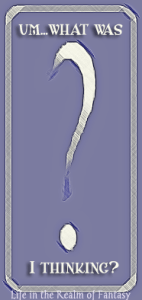
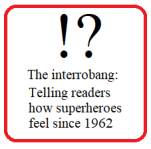 But what about !? These mutant morsels of madness are called “interrobangs.”
Writers of comics frequently employ interrobangs to convey emotions because they have little room for prose in each panel.
More than one punctuation mark at the end of a sentence is not accepted in most other genres. Editors working in the publishing industry will tell you that the interrobang is not an accepted form of punctuation unless you write comic books, manga, or graphic novels.
It’s your narrative, so you will do as you see fit. However, interrobangs are a writing habit writers should avoid in novels and short stories if they want to be taken seriously.
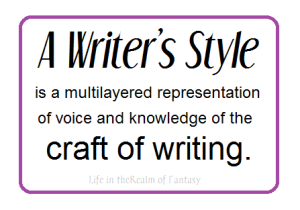
Readers expect words to flow in a certain way, but no one gets it right all the time. If you choose to break a grammatical rule, be consistent about it. Voice is how you break the rules, but you must understand what you are doing and do it deliberately.
Most readers are not editors. They will either love or hate your work based on your voice, but they won’t know why.
Craft your work to make it say what you intend in the way you want it said. Sometimes, you will deliberately use a comma in a place where an editor might suggest removing it. You should explain that you have done this to make something clear. Conversely, you might omit a comma for the same reason.
The editor you hired might ask you to change something you did intentionally. You are the author, and it’s your manuscript. If you know the rule you are breaking, you will be able to explain why you are doing so.
Most editors will do as you ask and will gladly ensure that you break that rule consistently.
Sometimes, the stories we consider powerful writing violate accepted grammar rules. Readers fall into the rhythm of the prose as long as the choices made for punctuation remain consistent throughout the manuscript.
One of my favorite authors, Ann McCaffrey, set off telepathic conversations with both italics and colons in the place of quote marks.
:Are you well?:
Spoken conversations in her books are punctuated using standard grammar and mechanics.
Hemmingway used commas but often connected his clauses with conjunctions.
The world is a fine place and worth the fighting for and I hate very much to leave it.
As readers get into a story, they become habituated to the author’s style and voice. They overlook grammar no-nos because the story captivates them.
I love a good story, but more than that, I enjoy seeing how other authors write, how they think, and how their voice comes across in their work.
 I certainly didn’t. If these authors hope to find an agent or successfully self-publish, they have a lot of work and self-education ahead of them.
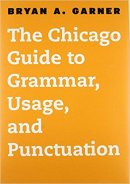 If you are writing in the US, you might consider investing in
  Let’s get two newbie mistakes out of the way: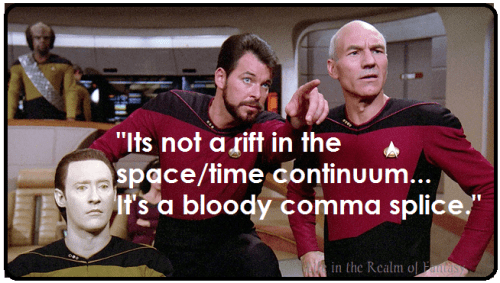
 All three of the above sentences are technically correct. The usage you habitually choose is your voice.
 Why are these rules so important? Punctuation tames the chaos that our prose can become. Periods, commas, quotation marks–these are the universally acknowledged traffic signals.
 All around us, gravity works in hidden ways. Gravity on a small scale keeps everything securely stuck to the surface of Planet Earth.
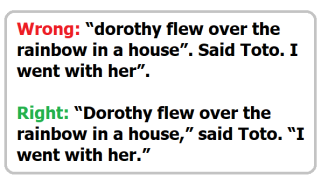
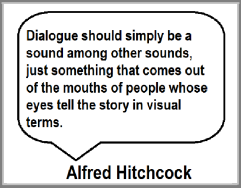 Creating memorable characters is the goal of all authors. After all, who would read a book with bland and uninteresting dialogue? Dialogue is where most information is given to the characters and the reader. However, when we are just beginning to write, many of us are confused about how to punctuate conversations. It’s not that complicated. Here are four rules to remember:
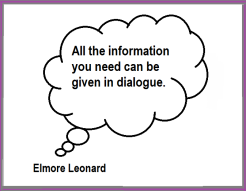 When you envision your characters in conversation, you must think about what the word natural means. People don’t only use their words to communicate. Bodies and faces tell us a great deal about a person’s mood and what they feel.
 For this reason, we don’t want to inject an excess of flushing, smirking, eye-rolling, or shrugging into the story. Those actions have a specific use in conveying the mood, but anything used too frequently becomes a crutch.
 Many authors are just beginning their careers and trying to self-edit their NaNoWriMo manuscript. The problem is, they don’t know how to write a readable sentence or what constitutes a paragraph. If they are hoping to find an agent or self-publish, they have a big, ugly job ahead of them.
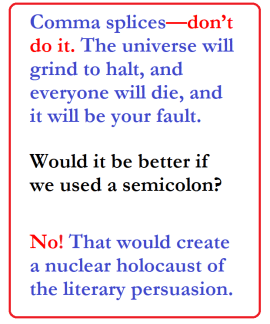 Comma Splice:
 I accept this Nebula award and thank my parents, Ralf and Maggie Jasperson, and Poseidon.





 Life in the Realm of Fantasy