
Fantasy is a popular genre because it involves people, and sometimes it features romantic love. People are creatures of biology and emotion. When you throw them together in close quarters, romantic connections can form within the narrative.
 I’m not a Romance writer, but I do write about relationships. Readers expecting a standard romance would be disappointed in my work which is solidly fantasy. The people in my tales fall in love, and while they don’t always have a happily ever after, most do. The other aspect that would disappoint a Romance reader is the shortage of smut.
I think of sex the way I do violence. Both occur in life, and we want our characters to live. While I have been graphic when the story demanded it (Huw the Bard, Julian Lackland, and Billy Ninefingers), the stories are about them as people and how events shaped them. I’m more for allowing my characters a little privacy.
I flounder when writing without an outline. Even in the second draft, I’ve been known to lose my way.
I struggle when attempting to write the subtler nuances of attraction and antipathy. We are sometimes repulsed by a person, and when trying to show that, I find myself at a loss for words.
When I’m building the first draft, emotions seem to come out of nowhere and feel forced.
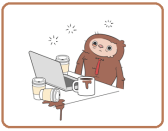
courtesy Office360 graphics
For me, the struggle is in foreshadowing these relationships and showing the gradual connection as it grows between two people.
I have friends who write Romance. I read their work, and I’ve attended workshops given by Romance writers and learned a great deal from them. However, being on the spectrum, as they say nowadays, I learn by pursuing independent study.
That works for me because I can’t pass up buying any book on the craft of writing.
Two books in my writing craft library that have seen heavy use were written by Damon Suede, who writes Romance. He explains how word choices can make or break the narrative.
As a reader, I have found his viewpoint to be accurate. As a writer, I have found putting it into practice takes work.
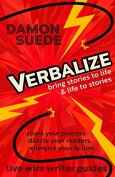 In his book Verbalize, Mr. Suede explains how actions make other events possible. Crucially for me, he reminds us that even gentler, softer emotions must have verbs to set them in motion.
Emotions are nouns. I sometimes struggle to find the best verbs to push my nouns to action.
Matching nouns with verbs is key to bringing a scene to life.
This is where writing becomes work. It’s time to get out the Oxford Dictionary of Synonyms and Antonyms and delve into the many words that relate to and describe attraction. Or I can go online: ATTRACTION Synonyms: 33 Synonyms & Antonyms for ATTRACTION | Thesaurus.com
I make a list of the words that I think will fit my characters’ personalities. Then, I have to choose the words that say what I mean and fit them into the narrative. Sometimes, this means I will rewrite a sentence two or three times before it says what I intend and flows naturally.

courtesy Office 360 graphics
I have written two accidental novels. Both feature romances, and because the novels were spewed onto the page, the relationships developed without preplanning.
Now, I’m in the final stages of one of these novels. The last two years have been spent fine-tuning the attractions and showing the growth of their relationships while exploring the central theme through the events my protagonists experience. (Have I mentioned it takes me four years to get a book from concept to publication?)
For me as a person and as a reader, true Romance has an air of mystery, of something undiscovered. It has to be a little bit magical, or I can’t suspend my disbelief.
I have no trouble writing adventures for my people. I have no difficulty noticing when two characters are gravitating toward one another. Writing the mystery of attraction, injecting the feeling of magic into it is the tricky part.
 When a beta reader tells me the relationship seems forced, I go back to the basics and make an outline of how that relationship should progress from page one through each chapter. I make a detailed note of what their status should be at the end. This gives me jumping-off points so that I don’t suffer from brain freeze when trying to show the scenes.
As I am rewriting the scenes involving a romance, I want to avoid weak phrasing. I look at the placement of verbs in my sentences. If it feels weak, as if told by an observer, I move the verbs to the beginning of the sentence so that my characters do things. I don’t want someone saying they did it. I want the reader to experience doing it.
-
- Nouns followed by verbs feel active. Bystanders narrate, but characters do.
Don’t get me wrong—some stories need an all-encompassing narrator. But most of the time, we’re not interested in being told what happened. We want to experience it ourselves, which is why I gravitate to one character’s point of view. Our characters are unreliable narrators, giving us their opinions and shading the truth, and are more interesting because of that.
 I think our characters have to be a little clueless about Romance, even if they are older. They need to doubt, need to worry. They need to fear they don’t have a chance, either to complete their quest or to find love.
Romance writers have it right: overcoming the roadblocks to happiness makes for great love stories. This is why I read in every genre. I try to learn what I can from the masters, seeing how they use their words to write their scenes and construct their stories.
Romance is drama, but it isn’t the entire story.
Adam Savage said something about drama and creativity on his recent podcast, talking about Stanley Kubrick’s creative process. He said that what Kubrick was good at was recognizing the points when a story could create drama.
And recognizing those places with potential is crucial to creating a great novel or short story. We will explore that thought further on Wednesday.


 Life in the Realm of Fantasy
