Tag Archives: writing romance

More random thoughts about the process of #writing

I’m not a Romance writer, but I do write about humans and their relationships. The people in my tales sometimes fall in love, and while they don’t always have a happily ever after, most do. An aspect of my writing that would disappoint a dedicated Romance reader is the profound shortage of smut.

I think of sex the way I do violence. Both occur in real life. I’m like every other author in that I want my characters to live. However, while I have been graphic in the past when the story demanded it (Huw the Bard, Julian Lackland, and Billy Ninefingers), their stories follow the events that change and shape them. Some of those events are traumatic, while others are moments of joy. I would likely write some of those scenes differently now, nearly twenty years on.

When I first have a glimmer of an idea about who the characters might be, I make a small outline of what their personality is, noting their likes and dislikes. This always evolves and changes as I lay down the first draft.

When I first know two characters are developing either antipathy or an attraction, I find writing the subtler nuances of those emotions difficult. In real life, we are sometimes repulsed by a person. It seldom happens, but when it does, I feign geniality but offer nothing beyond pleasantries. Nor do I encourage further communications beyond that chance encounter at a party or, as sometimes happens, in a work environment.
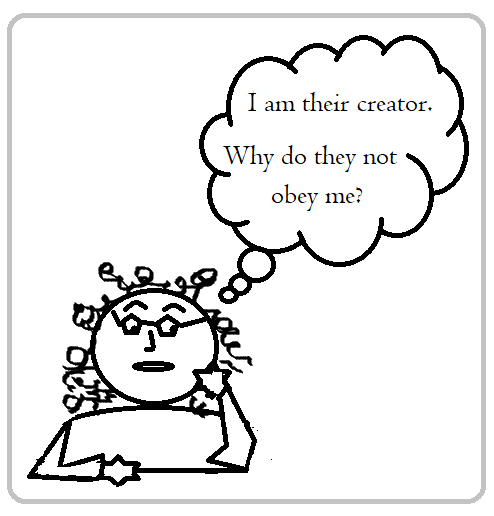
Cartoon: I am their creator. Why do they not obey me?When I’m building the first draft of a story, the characters’ emotions seem to come out of nowhere and feel forced. This gets ironed out in subsequent drafts.

For me, the hardest part is writing subtle foreshadowing. I try to show the gradual connection as it grows between two people, but it often takes two or three drafts to get it right.

I have many friends who write Romance. I read their work and enjoy it. I’ve also attended many workshops given by Romance writers and learned a great deal from them.

I love books on the craft of writing. Two books in my writing craft library that have seen heavy use were written by Damon Suede, who writes Romance. He explains how word choices can make or break the narrative.

As a reader, I have found his viewpoint to be accurate. As a writer, I have found putting it into practice takes work.

In his book Verbalize, Damon explains how actions make other events possible. Crucially for me, he reminds us that even gentler, softer emotions must have verbs to set them in motion.

So, emotions are nouns and need strong verbs to push them to action. Matching these nouns with verbs is key to bringing a scene to life.

This is where my writing experience becomes work. I open the Oxford Dictionary of Synonyms and Antonyms and delve into the many words that relate to and describe attraction. Or I can go online: ATTRACTION Synonyms: 33 Synonyms & Antonyms for ATTRACTION | Thesaurus.com

I make a list of the words that I think will fit my characters’ personalities. Then, I have to choose the words that say what I mean and fit them into the narrative. Sometimes, this means I will rewrite a sentence two or three times before it says what I intend and flows naturally.

My Billy’s Revenge series (Huw the Bard, Billy Ninefingers, and Julian Lackland) began from one accidental novel. That novel was spewed onto the page, and the relationships developed without preplanning. Thanks to my inexperience and a predatory publisher, that book had a rough life, but fortunately I had retained the rights to my book. It was unpublished, dismembered, and over the next ten years, the three character threads were separated into their own novels instead of jammed into one.

For me as a person and as a reader, true Romance has an air of mystery, of something undiscovered. It has to be a little bit magical, or I can’t suspend my disbelief.

Writing adventures for my people is easy. When two characters are gravitating toward one another, injecting the feeling of magic into that attraction is the tricky part.

When a beta reader tells me the relationship seems forced, I go back to the basics and make an outline of how that relationship should progress from page one through each chapter. I make a detailed note of what their status should be at the end. This gives me jumping-off points so that I don’t suffer from brain freeze when trying to show the scenes.

As I am rewriting the scenes involving a developing relationship, I want to avoid weak phrasing. I look at the placement of verbs in my sentences. When a scene feels weak, it is usually my phrasing that is off. As I revise each scene, I try to ensure that the reader will experience events as the characters do.
Harold felt attracted to Gertie. This is a scene that indicates attraction, but it is narrated. That makes it weak, telling. What did Harold’s experience of attraction feel like? Maybe a small wish to know her better? Pounding pulse?

Bystanders narrate their view of events, but characters experience the events. Reading their thoughts and emotions as they do is far more compelling than hearing a bystander talk about it.

It’s true that some stories need an all-seeing narrator. Even if a tale is told in the third-person omniscient voice, readers want to live the events with the characters.

I think this is why many authors gravitate to a first-person point of view. I confess I do enjoy stories with unreliable narrators. They offer their opinions and shade the truth, and sometimes outright lie to us. They’re more interesting because of that.

I think our characters have to be a little clueless about romance, even if they are older. They need to doubt, need to worry. They need to fear they don’t have a chance, either to complete their quest or to find love.

Romance writers have it right: overcoming the roadblocks to happiness makes for great love stories. This is why I read in every genre. I try to learn what I can from the masters, seeing how they use their words to write their scenes and construct their stories.

Romance is drama, but it isn’t the entire story.

Adam Savage of Mythbusters fame said something about drama and creativity on a recent podcast. He was talking about Stanley Kubrick’s creative process. His opinion was that Kubrick is best at recognizing the moments where a story could create drama.
Attraction and antipathy are two sides of one of those points. That place is a point where the smallest emotions can grow and create friction until they catch fire. And recognizing those places with strong emotional potential is crucial to creating a great novel or short story.

Yes, my first drafts are pretty uneven and flat, but I hope my beta readers can spot those missed moments. That way, I can illuminate them when the manuscript is in revisions rather than making my poor editor suffer.

Comments Off on More random thoughts about the process of #writing

Filed under writing

Random thoughts about #Writing #Romance

Fantasy is a popular genre because it involves people, and sometimes it features romantic love.  People are creatures of biology and emotion. When you throw them together in close quarters, romantic connections can form within the narrative.

WritingCraftSeries_romanceI’m not a Romance writer, but I do write about relationships. Readers expecting a standard romance would be disappointed in my work which is solidly fantasy. The people in my tales fall in love, and while they don’t always have a happily ever after, most do. The other aspect that would disappoint a Romance reader is the shortage of smut.
I think of sex the way I do violence. Both occur in life, and we want our characters to live. While I have been graphic when the story demanded it (Huw the Bard, Julian Lackland, and Billy Ninefingers), the stories are about them as people and how events shaped them. I’m more for allowing my characters a little privacy.

I flounder when writing without an outline. Even in the second draft, I’ve been known to lose my way.

I struggle when attempting to write the subtler nuances of attraction and antipathy. We are sometimes repulsed by a person, and when trying to show that, I find myself at a loss for words.

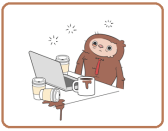
When I’m building the first draft, emotions seem to come out of nowhere and feel forced.

monkey_computer_via_microsoft

courtesy Office360 graphics

For me, the struggle is in foreshadowing these relationships and showing the gradual connection as it grows between two people.

I have friends who write Romance. I read their work, and I’ve attended workshops given by Romance writers and learned a great deal from them. However, being on the spectrum, as they say nowadays, I learn by pursuing independent study.

That works for me because I can’t pass up buying any book on the craft of writing.

Two books in my writing craft library that have seen heavy use were written by Damon Suede, who writes Romance. He explains how word choices can make or break the narrative.

As a reader, I have found his viewpoint to be accurate. As a writer, I have found putting it into practice takes work.

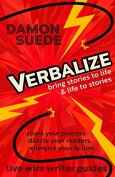
Verbalize_Damon_SuedeIn his book Verbalize, Mr. Suede explains how actions make other events possible. Crucially for me, he reminds us that even gentler, softer emotions must have verbs to set them in motion.

Emotions are nouns. I sometimes struggle to find the best verbs to push my nouns to action.

Matching nouns with verbs is key to bringing a scene to life.

This is where writing becomes work. It’s time to get out the Oxford Dictionary of Synonyms and Antonyms and delve into the many words that relate to and describe attraction. Or I can go online: ATTRACTION Synonyms: 33 Synonyms & Antonyms for ATTRACTION | Thesaurus.com

I make a list of the words that I think will fit my characters’ personalities. Then, I have to choose the words that say what I mean and fit them into the narrative. Sometimes, this means I will rewrite a sentence two or three times before it says what I intend and flows naturally.

desk_via_microsoft_stickers

courtesy Office 360 graphics

I have written two accidental novels. Both feature romances, and because the novels were spewed onto the page, the relationships developed without preplanning.

Now, I’m in the final stages of one of these novels. The last two years have been spent fine-tuning the attractions and showing the growth of their relationships while exploring the central theme through the events my protagonists experience. (Have I mentioned it takes me four years to get a book from concept to publication?)

For me as a person and as a reader, true Romance has an air of mystery, of something undiscovered. It has to be a little bit magical, or I can’t suspend my disbelief.

I have no trouble writing adventures for my people. I have no difficulty noticing when two characters are gravitating toward one another. Writing the mystery of attraction, injecting the feeling of magic into it is the tricky part.

Book- onstruction-sign copyWhen a beta reader tells me the relationship seems forced, I go back to the basics and make an outline of how that relationship should progress from page one through each chapter. I make a detailed note of what their status should be at the end. This gives me jumping-off points so that I don’t suffer from brain freeze when trying to show the scenes.
As I am rewriting the scenes involving a romance, I want to avoid weak phrasing. I look at the placement of verbs in my sentences. If it feels weak, as if told by an observer, I move the verbs to the beginning of the sentence so that my characters do things. I don’t want someone saying they did it. I want the reader to experience doing it.

    1. Nouns followed by verbs feel active. Bystanders narrate, but characters do.

Don’t get me wrong—some stories need an all-encompassing narrator. But most of the time, we’re not interested in being told what happened. We want to experience it ourselves, which is why I gravitate to one character’s point of view. Our characters are unreliable narrators, giving us their opinions and shading the truth, and are more interesting because of that.

lute-clip-artI think our characters have to be a little clueless about Romance, even if they are older. They need to doubt, need to worry. They need to fear they don’t have a chance, either to complete their quest or to find love.
Romance writers have it right: overcoming the roadblocks to happiness makes for great love stories. This is why I read in every genre. I try to learn what I can from the masters, seeing how they use their words to write their scenes and construct their stories.

Romance is drama, but it isn’t the entire story.

Adam Savage said something about drama and creativity on his recent podcast, talking about Stanley Kubrick’s creative process. He said that what Kubrick was good at was recognizing the points when a story could create drama.

And recognizing those places with potential is crucial to creating a great novel or short story. We will explore that thought further on Wednesday.

5 Comments

Filed under writing

Character creation: attraction and repulsion #amwriting

This week we’re continuing our dive into character building. I’m putting my beta reader’s comments to work, trying to iron out some of the rough patches, and one that I must work on is attraction.

WritingCraftSeries_romanceWriting emotions with depth is a balancing act. This is where I write from real life. I think about the physical cues I see when my friends and family feel emotion. When someone is happy, what do you see? Bright eyes, laughter, and smiles.
And when we’re happy, how do we feel? Energized, confident. We’re always slightly giddy when we have a little crush coming on and even happier when it blossoms into a romance.

The trick is to combine the surface of the emotion (physical) with the deeper aspect of the feeling (internal). Not only that, but we want to write it so that we aren’t telling the reader what to experience. We allow the reader to experience the emotion as if it is their idea.

Fantasy is a popular genre because it involves people. People are creatures of biology and emotion. When you throw them together in close quarters, romances can happen within the narrative.

I’m not a Romance writer. I write about relationships, but Romance readers will be disappointed in my work. My tales don’t always have a happily ever after, although most do. Also, while I can be graphic, I’m usually a fade-to-black kind of writer, allowing my characters a little privacy.

I flounder when writing without an outline, and even though I’m in the second draft, I’m floundering now.

Writing intense, heartfelt emotions is easy for me. I begin to have trouble when I attempt to write the subtler nuances of attraction and its opposite, repulsion. I find myself at a loss for words.

The problem is, if you write intense emotions with no buildup, they come out of nowhere and seem gratuitous.

So, how do I foreshadow these relationships and show the buildup? I go to Romance writers and ask questions. I’ve attended workshops given by romance writers and learned a great deal from them. However, being autistic, I understand more from pursuing independent study.

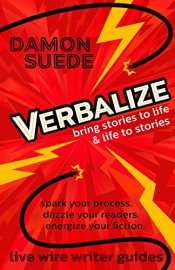
Verbalize_Damon_SuedeAlso, I’m a book junkie—I can’t pass up buying any book on the craft of writing. I bought two books on writing craft by Damon Suede, who writes Romance. These two books show how word choices can make or break the narrative.
In his book Verbalize, he explains how actions make other events possible. Even gentler, softer emotions must have verbs to set them in motion.

Emotions are nouns, and so I need to find and use the right verbs to activate them.

Therefore, matching nouns with verbs is key to bringing that romance to life. I must get out the dictionary of synonyms and antonyms and delve into the many words that relate to and describe attraction. ATTRACTION Synonyms: 33 Synonyms & Antonyms for ATTRACTION | Thesaurus.com

So, now that I have all these lovely words, the next step is to choose the words that say what I mean and fit them into the narrative.

This novel was accidental, so I didn’t plan the relationships out the way I usually do. I have five people in this convoluted tale. I’m a bookkeeper, so doing the math, if we end up with two couples, one character will be left out.

Now my beta readers tell me that while the final matches work, I need to hint at sexual tension from the opening pages on to better show the attraction.

Also, they pointed out that the odd-one-out creates endless opportunities for a real roadblock to the final event. This is something I hadn’t seen, but wow–what a great way to inject some power into the finale.

poetry-in-prose-word-cloud-4209005Each of us experiences emotional highs and lows in our daily lives. We have deep-rooted, personal reasons for our emotions, for whether we are attracted to or repulsed by another person. Sometimes those interactions can be highly charged.
Both the protagonist and the antagonist must have legitimate reasons for their actions and reactions. There must be a history of some sort. Failing that, there must be an instinctive attraction/rejection.

Our characters must have credible responses that a reader can empathize with, and there must be consequences.

For me, this is where writing becomes work.

4 Comments

Filed under writing

Creating Romance #amwriting

Normally people don’t look too romantic. On weekends they hang around the house in comfy clothes and only get cleaned up to go somewhere. Come Monday, they dress a certain way to go to work–dressing in whatever is suitable for their business.

However, no matter how they dress for work, people always dress in their fanciest clothes if they’re going out nightclubbing, or to dinner in a fancy restaurant, or going to a party. People want to look their best, especially if they are single and hoping to find love.

The point is, no one looks good all the time in real life. In many novels, the events and action leaves them dirty and disheveled for a large portion of the story, which in real life isn’t that pretty. But what if you want to give these unkempt, stinking heroes a romance? When it comes to injecting romance into an action adventure story, the author’s task is to make the protagonists ignore the dirt and seem attractive no matter what the circumstances. There is a bit of escapism in all readers. A grand adventure with a good romance is the sort of story I will gravitate to in a heartbeat.

I love an author who manages to take her heroes and heroines through rough adventures and still make the romance between them special. Sure, let them get dirty and sweaty, and make their lives hard. That makes them feel like real people.

Just please, make any romance between them a part of the story that advances the plot.

Writing romance into a scene and not going off the rails requires skill.  Do we keep it restrained or get graphic? Would my characters really get graphic? And how much graphic is too much graphic? When do we cross the line of writing fantasy and venture into erotica?

I don’t really see myself going into that area of writing, although I understand there is a large market for it.

As for what is too much, it depends on what story I am trying to tell. In my current work in progress, innuendo and allusion are the means to convey the deeper story. In my novel, Huw the Bard, a certain amount of graphic detail was required to advance the plot, although not as much as in many other authors’ books. Because these scenes were such a small part of the story but were defining moments in his life, the romance scenes of Huw’s book required many revisions to get right. They had to be important, but couldn’t overshadow the larger story.

For me as a reader, there is a fine line between enjoying an erotic scene and feeling like a voyeur. It’s easy to write graphic details, but are they romantic? Quite often they read like the assembly instructions for a set of bookshelves from IKEA—insert tab A into slot B.

Certain words repel me, especially if they are applied with no finesse, emerging from the prose with force of a jackhammer.

The lead up to romance is critical. Are you going to have them together forever? If so, make the road to happiness difficult. We must show longing, wondering, hoping, and there must be roadblocks to instant happiness. A trail of hints and innuendo creates a sense of growing connection between two characters. Each tiny connection between two characters raises the emotional stakes, and emotions are the key to a real romance. The chase is the story—‘happily ever after’ is the epilogue.

If the romance is a brief moment of respite in a sea of chaos, a long chase is not needed. With that said, the romance between two characters who are not destined for each other must be central to advancing the plot. Whether you choose the ‘fade to black’ method (which I usually do) or get graphic (which I have done on occasion) is up to you. You must consider your intended reader and what they will expect.

When I contemplate how to portray a love scene, I want the reader to feel like it was worth the time they took to read it. I want them to care about what happens next in that couple’s relationship—if anything does. Just as in real life, sometimes true love is not meant to be.

I want to be able to stretch myself as a writer and learn more skills at telling a good tale. I try to do that by finding the works of other writers that moved me and discovering what it was about a scene (regardless of whether it involved romance or not) that made me glad I had read it.

When I write, I’m like every other author—words fall out of my head, some good and some not so elegant. And if I have written something awkward, my beta readers will graciously (or bluntly) tell me so.

Being an author isn’t always roses and wine. Sometimes it’s weeds and pickle-juice.

Writing something worth reading is hard work. It’s striving to meet the expectations of people you’ve never met, which is not easy. By working closely with a circle of trusted author friends, I have gained a better ability to step back and see my work with a less prejudiced eye.

If they don’t see the charm that I do in a certain passage, I ask myself why. Sometimes, the answer lies in the fact they don’t enjoy the sort of work I do, but very often the answer is that what I wrote was not ready for someone else to read it.

That ‘proud child’ urge to display your work in its raw stage is one we all combat. Nevertheless, for me, having the opportunity to do this full time is living the dream.


Credits and Attributions:

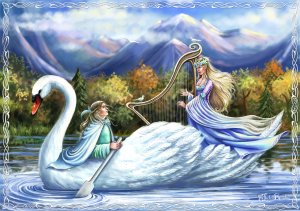
Galadriel and Celeborn, by Araniart [CC BY 3.0 (http://creativecommons.org/licenses/by/3.0)%5D, via Wikimedia Commons|Wikimedia Commons contributors, “File:Araniart – Galadriel and Celeborn.jpg,” Wikimedia Commons, the free media repository, https://commons.wikimedia.org/w/index.php?title=File:Araniart_-_Galadriel_and_Celeborn.jpg&oldid=262862472 (accessed April 1, 2018).

5 Comments

Filed under writing