Tag Archives: Scott Driscoll

Dark, Gothic, and hurtling toward disaster

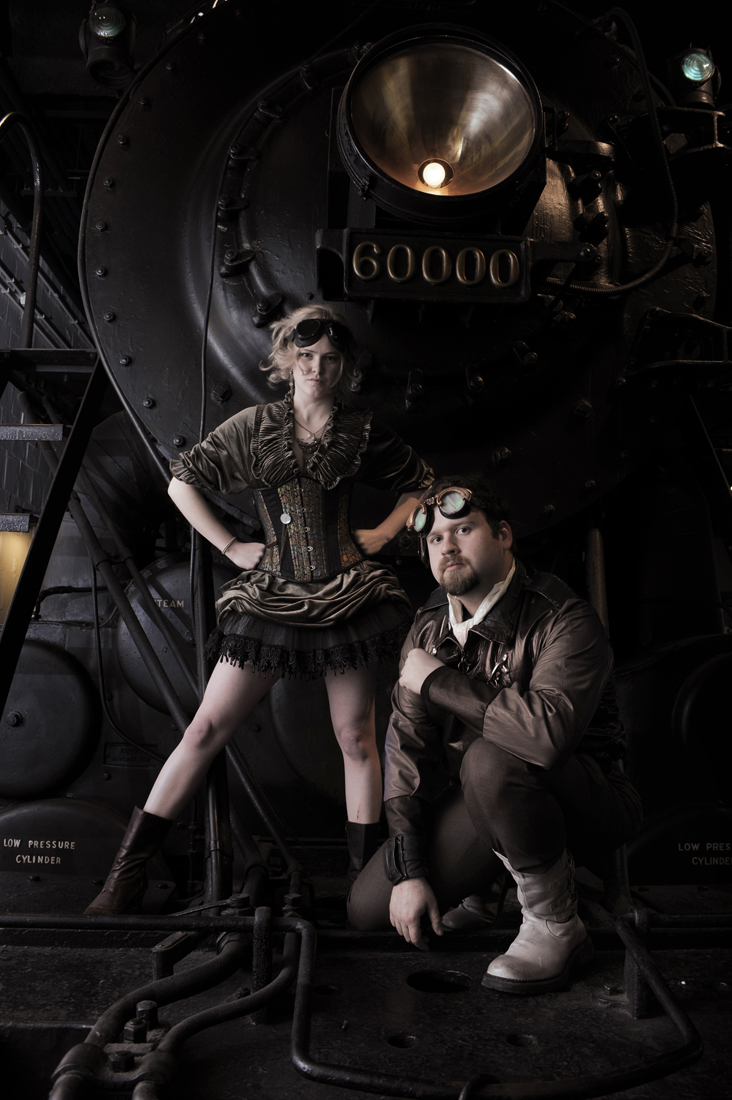
Steampunks  by Kyle Cassidy

Steampunks by Kyle Cassidy

Well…apparently my current scifi work-in-progress, a short story, is steampunk. Who knew? My good friend, author Lee French, figured it out yesterday at our regular Tuesday morning brainstorming session at Panera. After she pointed it out, I could see it clearly, despite my original thought that because I had set it on a mining-colony world, it was a scifi tale.

I was a little surprised I hadn’t seen it earlier, and once it was pointed out, I could see why I was struggling with the tale–I didn’t know what I was writing.

It began as an exercise in writing from the point of view of the flâneur–the man of leisure, the idler, the urban explorer, the connoisseur of the street. Click here for Scott Driscoll‘s great blogpost on the flâneur. In short, he tells us that: “With a flâneur narrating, you can remove the noticing consciousness from your point of view character to accomplish other purposes.”  

The flâneur  is frequently found in literature from the 19th century.  The story is filtered through his eyes and perceptions–it distances the reader from the immediacy of the scene, so be forewarned: genre-nazis and arm-chair editors who want the material delivered in 60 second sound-bytes of action won’t love it. Literary fantasy explores the meaning of life or looks at real issues, and I tend to write from that aspect. Often, the fantastic setting is just a means to posing a series of questions. Sometimes the quest the hero faces is in fact an allegory for something else. I read good literary fantasy–it tends to be written by men and women who can actually write. Not only are the words and sentences pregnant with meaning, but they are often beautifully constructed, and I learn the craft of writing from reading it.

The Rainy Day, Gustave Caillebotte

The Rainy Day, Gustave Caillebotte

My flâneur is Martin Daniels, a young, wealthy, retired crystallographer. He spends his time roaming his city’s streets and sitting in sidewalk cafés observing his fellow citizens, and making social and aesthetic observations. He regularly finds himself crossing paths with one man in particular, Jenner: a self-made man who came up through the mines.

Jenner is battering against the prevailing social barriers which stand in the way of his achieving a political office that he covets, using whatever means at his disposal. He is uncouth, a barely civilized rough-neck with a bad reputation, but something about him draws Martin’s attention, and so he finds himself both observing Jenner, and listening to the whispered gossip that surrounds the man.

One day, as Jenner is passing Martin’s table,  his hat blows off and Martin catches it, returning it to him. Jenner then introduces himself, and admits that he has been watching Martin for some time. He has a task for Martin, one that intrigues him enough to bring him out of retirement. Thus begins an odd relationship.

Thus my flâneur ceases to be merely an observer, and becomes my protagonist, yet he is reporting the events from the distance of his memory, so he is still the observer.
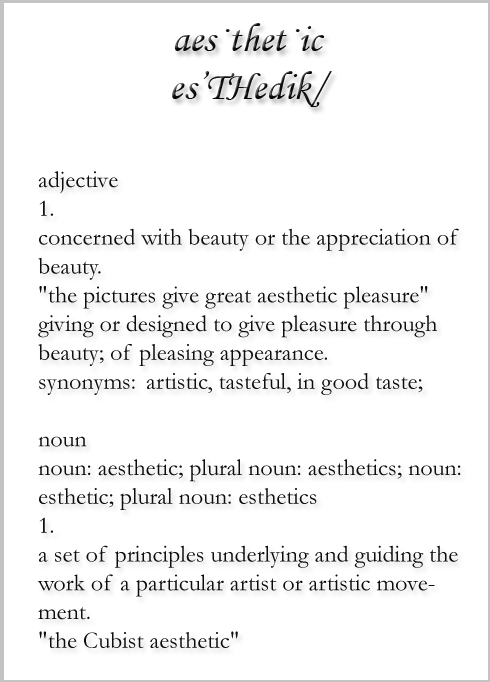
aesthetic definitionSo what is Steampunk?  Mike Perschon, in his dissertation, The Steampunk Aesthetic: Technofantasies in a Neo-Victorian Retrofuture, has described it as “…an aesthetic that mixes three features: technofantasy, neo-Victorianism, and Retrofuturism.” The key word here is aesthetic.

So how does that relate to my short story? When I looked at it with a critical eye, I realized it incorporates all three of those devices:

Technofantasy: Technology that lacks plausibility, or utilizes fantasy elements as the force or motive behind an action or process. No explanations will be given. The technology exists within the story, not the real world.

Neo-Victorianism: A setting that evokes the nineteenth century, whether it is set there or  not. In my tale, the use of the flâneur evokes a 19th century atmosphere, as do the other constraints I had inadvertently written into it.

Retrofuturism: How we think the past viewed the future. It is set in the distant future, but it is a future I think Victor Hugo would have recognized.

I have always perceived steampunk as cogs and diodes, dark atmosphere, rather Gothic, and with a plot that has the protagonists hurtling toward disaster. Now I know it is all that and more. They hurtle toward disaster, with a nineteenth century flair.

Thus my sci-fi flâneur is now the protagonist in a steampunk mystery. This short story, which had sort of stalled, is now back on track and fun to write. Through writing short stories we have the opportunity to write in different genres, and stretch our writing-wings.

I learn more about the craft of writing with each tale, and that fires me up, helping me see my longer works with fresh eyes.
2 Comments

Filed under Adventure, Books, Fantasy, Humor, Literature, Publishing, Self Publishing, Steampunk, Uncategorized, writer, writing

But let’s talk about books for a while

I noticed something this weekend–I’m obsessed with books.  No, it’s true! Apparently, and I have to agree, it’s all I can think of to discuss. Not only that, but my friends are all obsessed with what they are reading, too.

What a surprise!

So what have I read lately that really rings my bells? Several things, actually, in a wide range of genres.

Sleeping Late on Judgement Day Tad WilliamsI just finished the third book in Tad Williams’s Bobby Dollar series, Sleeping Late on Judgement Day. Wow, my favorite bad angel, Bobby Dollar, finally gets a break. I love the twists and turns of William’s prose, as his hard-boiled angel gets down to the dirty business of cleaning up the mean streets of Heaven. He uses ordinary words in an extraordinary way, but never commits the sin of dropping the reader out of the story.  THIS is why I read his work.  I highly recommend this book to all those who like a bit of a hardboiled-detective twist to their paranormal fantasy. It is a smart, well-crafted journey into the human condition, set in an environment guaranteed to keep things interesting, and peopled with unforgettable characters. I gave it 5 full stars on my book review blog, Best in Fantasy.

Better You Go Home Scott DriscollI also read Better You Go Home, by Seattle area author, Scott Driscoll.  This is not fantasy, it is literary fiction and a medical thriller. Chico Lenoch is an intriguing character. The tale is told in the first person, which I usually find difficult to get into as a reader, but didn’t in this case. Also something I usually find off-putting but didn’t in this case is the way Chico occasionally ‘breaks the fourth wall’–he sometimes addresses the reader directly. It works, because you are in his head the whole time and it feels perfectly natural. Driscoll is a professor at the University of Washington, and is work is both literate and intriguing. This is not genre fiction, instead it is written for mature, dedicated readers who want substance in a book. No fluff here, just good solid craftsmanship. I also gave it five full stars in my review.  But let’s be real–I don’t go to all the trouble of reviewing books I don’t love.

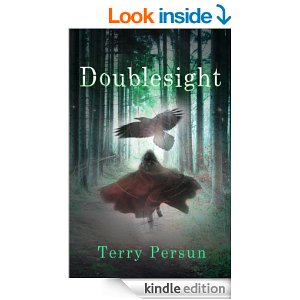
Doublesight--Terry PersunThen, in July I read a fantasy by another local author, Terry Persun: Doublesight. This was the most intriguing twist on the old shapeshifter theme I had ever read. Wholly human or wholly crow depending on what form she is in, Zimp is a great character, both endearing and aggravating. At first, she is weak and allows a less qualified, but more aggressive clan member, Arren, to make decisions for her. This book is as much about personalities and the need to remember their own commonality as it is about the great evil that threatens their kind. Each individual is sharply drawn, and has presence, struggling for their own place in their society while their world faces calamity. Zimp and Lankor, who is a doublesight dragon,  struggle to do what they know is right, in the face of treachery and occasional bad judgement.

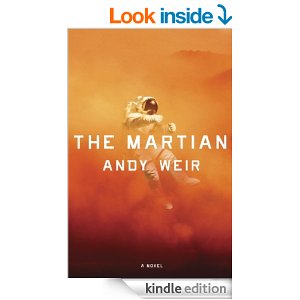
The MArtian Andy WeirMy mind is still blown by The Martian, by Andy Weir. This is hardcore science fiction and may well be the best book I read all year. Mark Watney is hilarious. He is the sort of man who gets through life by finding something positive in every disaster, and mocking the hell out of everything that is negative. A horrendous storm destroys much of their base, and his team is forced to abort their mission.  During the emergency evacuation of the Ares 3 landing site, he is severely injured in an accident that appears to have killed him. His body is unretrievable, and unaware that he is still alive, he is left behind. His companions begin the long journey back to Earth, grief-stricken at his sudden death. However, Mark is that rare breed of human, an astronaut, so of course he is extremely resourceful. He does what he has to in order to survive his injuries, and then figures out exactly what he must do to stay alive until the next mission.

I definitely read a mix of self-published and indie authors, but I like authors who take chances with their work, and who eschew the hamster wheel to hell of the Big Six publishing giants, who mindlessly chug out sequel after boring sequel. Tad Williams writes like an indie, rebellious and defiant. Scott Driscoll is also ‘a bit out there’ in the approach he takes in writing Chico’s story.

I love my job!


2 Comments

Filed under Adventure, Battles, Blogger, blogging, Books, Fantasy, Humor, Literature, Publishing, WordPress, writer, writing

The Flâneur ~ the 4th POV

In a literary fiction seminar  I attended at a recent convention in Seattle, University of Washington  professor, Scott Driscoll, discussed  a fourth point of view I had heard of in college, that of the detached observer.  I had forgotten about it, and Driscoll gave it a name I’d never heard of: the Flâneur (idler, lounger, loiterer.) Many of you have heard of it as third-person objective or third-person dramatic. I see it as a completely separate way to show a story.

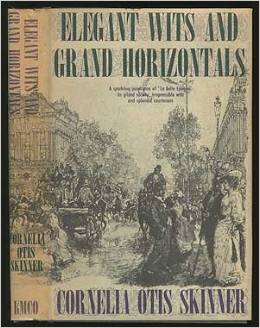
elegat wits and grand horizontalsWriting in 1962, Cornelia Otis Skinner said that there is no English equivalent of the term,  flâneur,  “just as there is no Anglo-Saxon counterpart of that essentially Gallic individual, the deliberately aimless pedestrian, unencumbered by any obligation or sense of urgency, who, being French and therefore frugal, wastes nothing, including his time which he spends with the leisurely discrimination of a gourmet, savoring the multiple flavors of his city”.

paris spleenThe French author, Charles  Baudelaire, characterized the flâneur as a “gentleman stroller of city streets.” He saw the flâneur as having a key role in understanding, participating in and portraying the city. Thus, in the narrative, a flâneur plays a double role by existing  as a present, but ignored, member of society who remains a detached observer of all that occurs within the story.

Having the option to use this point of view in the narrative of genre fiction opens up many possibilities for originality an author may not have considered:

  • he is NOT omniscient as in having complete or unlimited knowledge, awareness, or understanding of the fictional universe–he doesn’t know everything–but he does know what he sees.
  • he sees more than the individual characters do because his random travels take him all over town regularly, and he observes most of the tale as it unfolds.
  • Because he only knows what he sees, some information crucial to the resolution of the final events will be revealed to him at the last minute–a surprise to him too. When the last pieces of the puzzle are put together, his commentary summarizes the fall-out and final outcome of the characters involved.

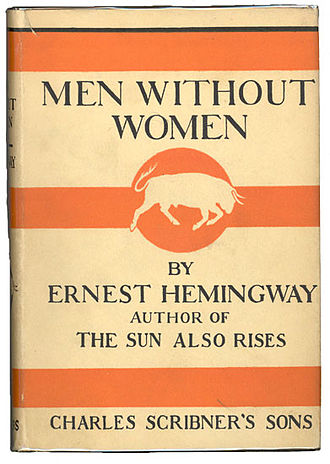
Men without WomenIt is a POV used in classic french modernist literature to describe the story of certain social scenes in the city, but I can see this as a useful way to relate the events on a space-station, or indeed in many traditional genre fiction social settings.

Now for the downside of using the flâneur as your vehicle to convey your narrative:

  • He is not reliable—he has his own personality, offering subtle judgments and unconscious opinions on the behavior of the characters. Therefore, just as in a first-person narrative, the reader cannot be sure he is telling the unbiased truth.
  • The narrator  tells the story without describing any of the character’s thoughts, opinions, or feelings; so the reader can only guess at character motivations, and must assume the objective observer truly is objective and has told the truth in that regard.
  • It separates the reader from the intimacy of the action and slows the pace down.
  • It could become voyeuristic, if one writes graphic love scenes. {eeew.}

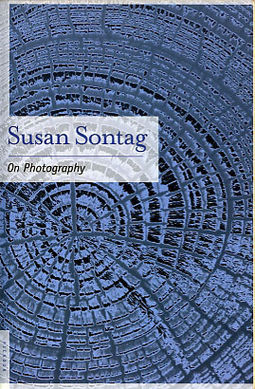
255px-On_PhotographyThe POV of a flâneur is also a vehicle used in in art, and in street photography.  Susan Sontag in her 1977 collection of essays, On Photographydescribes how, since the development of hand-held cameras in the early 20th century, the camera has become the tool of the flâneur:

The photographer is an armed version of the solitary walker reconnoitering, stalking, cruising the urban inferno, the voyeuristic stroller who discovers the city as a landscape of voluptuous extremes. Adept of the joys of watching, connoisseur of empathy, the flâneur finds the world “picturesque.”

Susan SontagOn Photography, pg. 55

I don’t see myself using this style of POV for an entire novel, but I can think of a thousand ways to use it in short-stories. Come November, when NaNoWriMo begins, I may give it a whirl, just for practice. Writing is a craft and I love finding different ways to express it. A fresh point of view to write from can only stretch my writing skills.

4 Comments

Filed under Blogger, Books, Fantasy, History, Humor, Literature, Publishing, Self Publishing, Uncategorized, WordPress, writer, writing

Crafting the scene

I often sit and stare out the window at some point or another during the day–a habit perhaps from the old days of being an ADD kid imprisoned in the basement classrooms of the old Michael T. Simmons Elementary school in 1965. Although that building has been long ago torn down and a new one now serves the community, I still remember sitting in Mrs. White’s overcrowded classroom, staring up at the small window, unable to concentrate on anything but the blue sky outside.  She was my favorite teacher, because she knew I needed extra help with math, and in a class with 42 children, she found the time to give it to me.

Amaranthus and Savvy at the needles by haystack rock cannon beach 2012I still stare out my windows when I am rolling a plot point over in my mind, and I sometimes notice what is happening in the neighborhood.  The window is closed, so I can’t hear their words, but I often see the children.

At first it looks as if they are all happily playing.  Then two of them stand up and from their posture you can see a quarrel is brewing. Suddenly one of them  clouts the other on the head with a toy sword, and another child intervenes. The angry child leaves, and the others are left to console the sobbing child with the bump on his head.

We know that what we have witnessed is not the whole story–there is a whole novel surrounding that interaction. If what I witnessed from my window was a book, this event would read this way:

1. Deciding to meet and spending the day playing in the neighbor’s yard is a chapter in the much larger story of how a group of children in one neighborhood spent their summer

2. The quarrel and resulting bump on the head with the final moments of consolation are one complete scene within that chapter, setting the stage for the next scene–tattling on and achieving penalties for the aggressor, who then apologizes and seeks acceptance back into the group. These two separate scenes comprise the whole chapter, Playing at So-and-So’s Yard.

The Arc of the StoryMost authors understand that there is an arc to the overall novel–the Story Arc,  which  consists of :

  • a. Exposition, where we introduce our characters and their situation.
  • b. Rising Action, where we introduce complications for the protagonist
  • c. Climax, the high point of the action, the turning point of the narrative
  • d. Falling Action, the regrouping and unfolding of events that will lead to the conclusion
  • e. Resolution, in which the problems encountered by the protagonist are resolved, providing closure for the reader.

However, within the larger story there are many smaller stories, all scenes created with this same arc, that come together to create this all-encompassing drama. The way these scenes unfold is what keeps our readers interested and invested in the narrative until the end of the book.

The main difference in the arc of the scene vs the overall arc of the novel is this: the end of the scene is the platform from which your next scene launches. 

This means each scene begins at a slightly higher point on the novel’s Narrative Arc than the previous scene did, pushing the narrative toward the climax.

876MilanoDuomoWhen you are structuring your novel, think of the way Gothic Cathedrals are constructed–smaller arcs of stone support the larger arcs until you have a structure that can withstand the centuries.

Like a Gothic cathedral, each small arc of the scene  builds and strengthens the overall arc of the greater novel. By creating small arcs in each scene, we offer the reader the chance to experience the rise and fall of tension, a pulse which never completely falls but is always increasing toward the high point of the book, giving the reader small rewards of emotional satisfaction along the way to the big event, the grand climax.

Better You Go Home, Scott DriscollAt the Pacific Northwest Writers Association Conference this last weekend, I went to a presentation by University of Washington Professor Scott Driscoll, who is a highly acclaimed author of literary fiction. His book, Better You Go Home is a gripping tale of a man in search of his roots and something more. Scott spoke at length on the importance of creating an arc within each scene, small arcs that propel the plot forward and hook the interest of the reader. In Scott’s work, each scene sets that hook just a little bit deeper.

Some authors make each individual scene a chapter, and some group several scenes with a common theme together to create a chapter. It’s your book–do it however suits you best.

The important thing to remember is that each scene that comprises the framework of the overall narrative arc must have its own arc–the Arc of the Scene.


4 Comments

Filed under blogging, Books, Fantasy, Humor, Literature, Publishing, Self Publishing, Uncategorized, WordPress, writer, writing

Setting inspiration ablaze

225px-Author_james_rollins_2008Last Thursday I was privileged to hear James Rollins speak at the opening of the 2014 Pacific Northwest Writers association conference in Seattle, Washington. He’s quite hilarious, and down to earth. He is still actively working a s veterinarian, which is a profession that would keep anyone humble, I  think.

It was a wonderful speech, and I was completely entertained, laughing so hard I had tears at one point. Jim kicked it off, but over those four days of immersion in the craft, 4 presenters in particular impressed me and rekindled my drive to write good novels.  Over the next weeks I will be blogging on the elements of the craft that each of these four speakers were able to convey.

scott-driscoll1The first to pique my interest and steal my literary heart was Scott Driscoll,  whose  novel, Better You Go Home , has been receiving high praise. I am in the middle of reading it now, and it is compelling work. I’ll be blogging at length about all the books I purchased at this convention.

Anyway, Scott gave 2 talks and I attended both of them  The first was on the arc of the scene, developing a rhythm for each scene that grips the readers attention, takes him through all the emotional points you want him to experience, and then sets the platform for the next scene.   The second was on literary fiction, which is my secret addiction.

In some ways I already understood the arc of the scene, but he was able to really get it across in an entertaining and concise way, and emailed me a wonderful handout to tape next to my computer. In his literary fiction seminar Scott Driscoll also discussed  a fourth point of view I had heard of in college, but forgotten about,and gave it a name I’d never heard of: the Flâneur (idler, lounger, loiterer,) which we will be discussing next week. Charles  Baudelaire characterized the flâneur as a “gentleman stroller of city streets,” he saw the flâneur as having a key role in understanding, participating in and portraying the city. Thus, a flâneur plays a double role by existing  as a present, but ignored, member of society who remains a detached observer of all that occurs within the story.

jason blackThe second speaker to really grab my interest was Jason Black. A well-known structural editor, Jason also writes middle-grade novels.  His discussion on steering your story where you want it to go was really pertinent to a problem I’ve been wrestling with in one of my current works in progress. I will be writing on his suggestions and putting them to work  for me.

One of the things that Jason jarred loose in my head is how I need to proceed with deploying information about a certain evil character while not revealing too much at the outset. He reminded me of the the concept of asymmetric information–A situation in which one party in a transaction has more or superior information compared to another. This often happens in business and stock transactions where the seller knows more than the buyer, although the reverse can happen as well. Potentially, this could be a harmful situation because one party can take advantage of the other party’s lack of knowledge.

In novels, not everyone in the scene knows everything, and those plot points are driven by the those characters who do have the critical knowledge. Applying this to my current plothole will be key to resolving it.

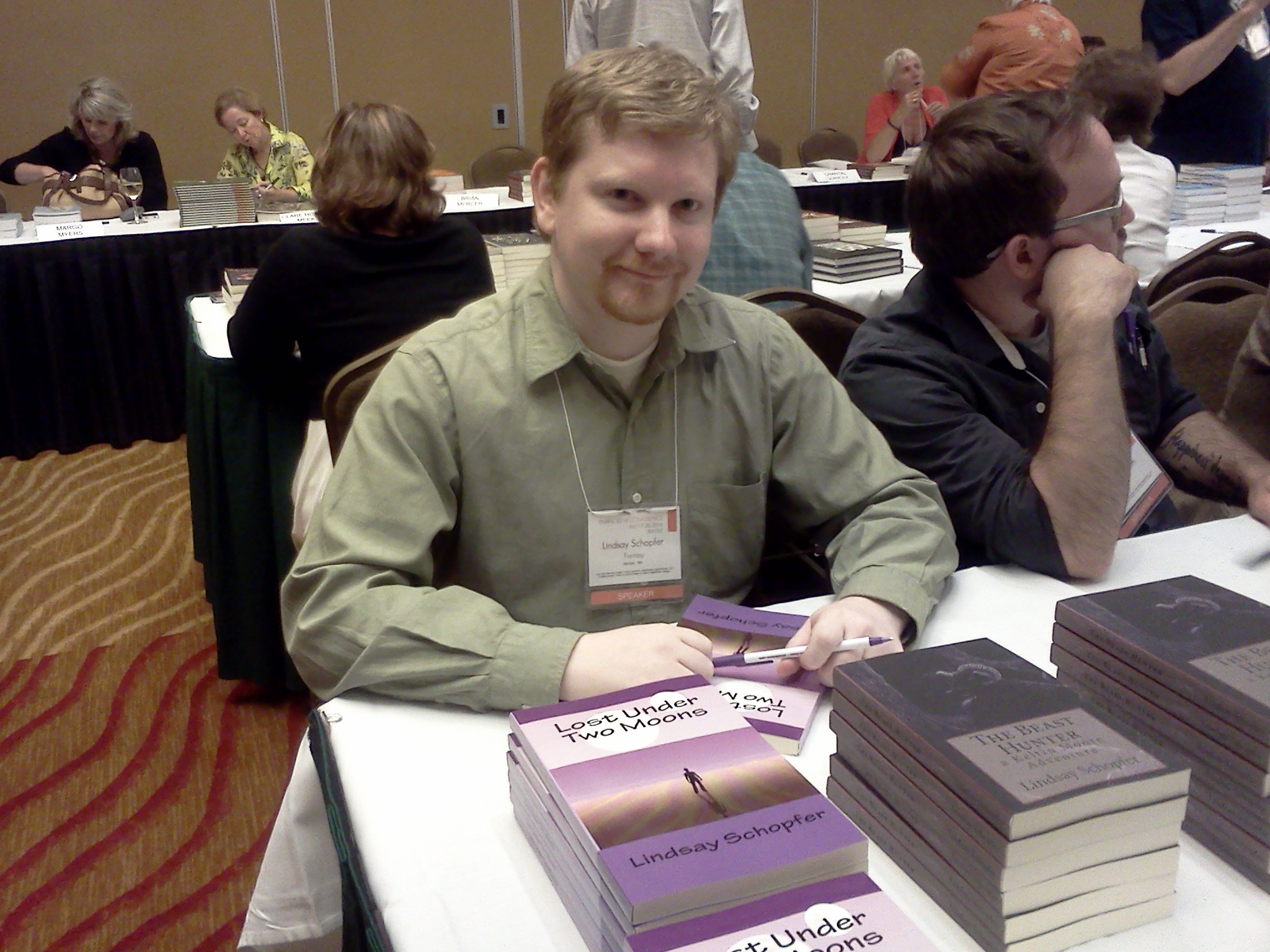
Lindsay Schopfer book signing PNWA 2014Then I was assisted by fantasy author, Lindsay Schopfer, in identifying character motivation. Sometimes it’s hard to understand why characters do the things they do–and Lindsay boiled how to identify it down to simple manageable chunks. Now I think my problems with the one evil character I am trying to flesh out will be resolved, because he now has clear motivations for his actions. I will be writing like a banshee for a week, anyway!

Lindsay’s characters leap off the page, and that is what we all want for our own work.   I really enjoyed The Beast Hunter and Lost Under Two Moons, and have reviewed both of them on Best in Fantasy.

Terry PersunAnother seminar I went to that really pushed my current work into focus was given by Terry Persun,  the award winning science fiction and fantasy author.  He was discussing point of view, the ubiquitous POV we sometimes struggle with, should we be omniscient, 3rd person, or first person? And what do they mean? Of course, I have a grip on that, but it was his side comments and sense of humor that jump-started my my brain. He managed to help me bring into focus the way to end the final bit of misery that is my current work in progress.

He made the point that the only POV a reader can really trust is the ‘omniscient’ as it is not told from any one character’s point of view and is therefore unlikely to be a lie. However, that said, he’s  written novels in every POV, because it’s more interesting for him as an author. I bought 4 of his books–just sayin’.  Can’t wait to get into Doublesight. I can smell a book blog review!

And while I was there, I finally met Janet Oakley in person. She is a long-time friend, an author I have known for several years, and whom I met through the Amazon Breakthrough Novel Awards Contest–but we only have known each other through the on-line community. She is an awesome person and her books, Timber Rose and Tree Soldier  have been winning awards right and left!

Janet and I met up with local author Don Harkcom, who writes thrillers, and who is now being courted by several agents. Don actually lives not far from me, and we spent a lot of time discussing everything from gaming to politics. All in all, it was a great conference and I am already looking forward to next year!

Me, Don Harkom, J.L. Oakley -Janet - PNWA 2014

Me, Don Harkcom, & J.L. Oakley at PNWA 2014

4 Comments

Filed under Uncategorized