Tag Archives: Tad Williams

Employing contrast in the architecture of a story #writing

There is a quote from the Buddha that I have found especially true for creating a great story. “There has to be evil so that good can prove its purity above it.”
J.R.R. Tolkien understood this quite clearly. His work was written in a highly literate style that everyone understood a century ago. Reading the Lord of the Rings trilogy requires commitment, and today, fewer readers are willing to undertake it.

Tolkien employs contrasts throughout the length of his stories. He shows the peace and prosperity that Frodo enjoys and then asks him to choose his destiny. Frodo chooses the difficult path. Tolkien takes the hobbit and all the central characters through many personal changes. He forces them to face their fears, gives them reasons to continue, to not give up.
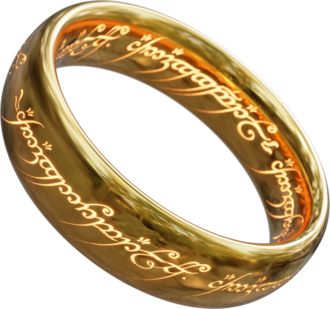
Frodo’s story is about good and evil, war and peace, and the hardships endured in the effort to destroy the One Ring and negate the power of Sauron. So why would ordinary middle-class hobbits living comfortable lives go to so much trouble if Sauron’s evil posed no threat to their peace and prosperity?

They do it because they can see that in the long run, Sauron’s orcs would overrun the Shire and destroy everything good and beautiful.

Lengthwise, the three books aren’t as long as people make them out to be, especially when compared to Robert Jordan and Brandon Sanderson’s long and winding 15-book Wheel of Time series (comprised of 4,410,036 words) or Tad Williams’ epic and highly literate Memory, Sorrow, and Thorn series (comprised of 1,121,720 words).

Tolkien’s trilogy totals only 455,175 words, which is considered an optimal length for a debut series in the epic fantasy genre. Fans of epic fantasy like and expect long books with large stories.

Whenever I talk about what we can learn from Tolkien, someone will respond that Tolkien wrote in a style that 21st-century readers find frustrating. Certainly, he used more words than a modern writer would dare to. A 21st century writer would face the slings and arrows of the modern critique group.

But while his style is more wordy than modern taste, his work is still compelling. He still has plenty to say that can resonate with us. In the process, he takes us on a journey with side quests and an epic, wonderful ending that was somehow left out of the movies – the Scouring of the Shire.

Hint: Yes, reading the books requires persistence, but if you want the real story and don’t have the time or patience, the audiobooks, as narrated by Andy Serkis (who played the role of Gollum in the movies), are a must-listen.

With the Ballantine Books paperback edition in 1965, J.R.R. Tolkien brought epic fantasy to my generation of college students. In the 1970’s, in my college town, the graffiti in downtown Olympia read “Frodo Lives.”  Frodo Lives! – Wikipedia
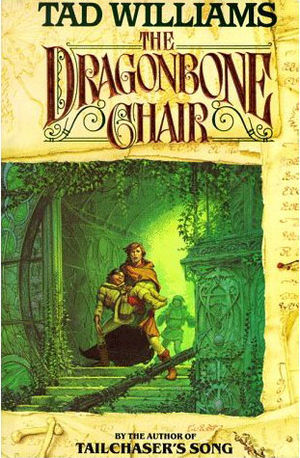
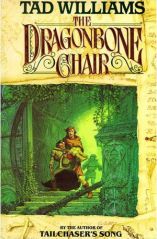
But how did Tolkien’s style of storytelling influence the genre as we know it today? For that, we take a look at Tad Williams’s masterpiece, The Dragonbone Chair. It’s the first book in the fantasy series Memory, Sorrow, and Thorn. It was published in 1988 and hooked me.

Williams takes the fourteen-year-old Simon, a kitchen boy, and Miriamele, a princess, and gives them an epic quest. He brings them together and then forces them down separate paths that eventually rejoin. Along the way, they grow into adulthood, and what they learn about themselves is both bitter and wonderful.

I read The Dragonbone Chair when it first came out in paperback. I loved it so much, I had to re-read it immediately upon finishing.

In both the Lord of the Rings trilogy and Tad Williams’ Memory, Sorrow, and Thorn, we have two of the most enduring works of modern fantasy fiction. Both feature an epic central quest and side quests, all of which must be completed for the protagonists to arrive at the final resolution.

In both series, we have moments of joy and contentment sharply contrasted with events causing terrible deprivation and loss. Each event urges us to keep reading, inspiring the deepest emotions and the desire to find out what happens next.
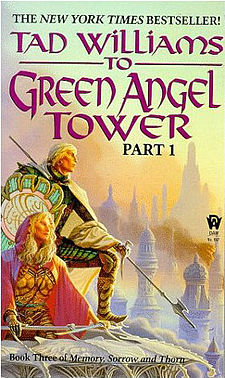
This use of contrast is fundamental to the fables and sagas that humans have been telling since before the discovery of fire. Contrast is why Tolkien’s work is the foundation upon which modern epic fantasy is built. The way Tad Williams wrote his characters, and his trimmed down prose further modernized the genre, but he kept the tropes of an engaging narrative, epic quests, and diverse fantasy cultures and races.

When the author employs the highs and lows of our human experience to tell their story, the reader empathizes with the characters. They live the story as if they were the protagonist.

And what about contrasts in world-building? It can be shown in subtle ways.

Juxtaposing plenty and poverty in your worldbuilding shows the backstory without requiring an info dump. Contrast and good pacing turns a wall of words into something worth reading.

In our real world, war, famine, and floods are followed by times of relative peace and plenty. The emotions and experiences of people living through all those times are the real stories.

This is not just a concept found in fantasy novels; it’s a part of our human history and our future.

We shouldn’t limit our reading to the old favorites that started us on this writing path. You may not love the novels on the NY Times literary fiction bestseller list, but it’s a good idea to read one or two of them every now and then as a means of educating yourself. We learn the architecture of stories by reading and dissecting novels and short stories written by the masters, both famous and infamous.

What you don’t like is as important as what you enjoy. Why would a book that you dislike be so successful? No matter how much money a publisher throws at them, some books are stinkers.
You don’t need to pay for books you won’t like. Go to the library or to the secondhand bookstore and see what they have from the NYT bestseller list that you would be willing to examine.

Give that book a postmortem.

  • Did the book have a distinct plot arc?
  • Did it have a strong opening that hooked you?
  • Was there originality in the way the characters and situations were presented?
  • Did you like the protagonist and other main characters? Why or why not?
  • Were you able to suspend your disbelief?
  • Did the narrative contain enough contrasts to keep things interesting?
  • By the end of the book, did the characters grow and change within their personal arc? How were they changed?
  • What sort of transitions did the author employ that made you want to turn the page? How can you use that kind of transition in your own work?
  • Did you get a satisfying ending? If not, how could it have been made better?

Reading and dissecting the works of successful authors is a necessary component of any education in the craft of writing.

When you read a book that you like or dislike, think about how you can apply what you learn to your own work.

I say this regularly, but I must repeat it – getting an education about the craft of writing is important. If you have a good library in your town, this sort of education is free, a price that fits my budget perfectly. What I learn from the masters helps me to plan the pacing, helps me balance the emotions and events in my own stories.


4 Comments

Filed under writing

Voice and Style vs. the Grammar Police #writing

Many of my blog posts revolve around grammar and the mechanics of writing. As authors, it’s important to understand the rules of the language in which we write. Yet, powerful writing often breaks those rules, and we are better for having read it.

MyWritingLife2021So why am I always pressing you to use proper punctuation? Authors must know the rules to break them with style. Readers expect words to flow in a certain way. If you break a grammatical rule, be consistent about it.
We who are serious about the craft of writing attend critique groups, and we submit our best work. At first, we feel bombarded with reprimands, spotlights highlighting the flaws in our beloved narrative.

  • Show it, don’t tell it.
  • Simplify, simplify.
  • Don’t write so many long sentences.
  • Don’t be vague—get to the point.
  • Don’t use “ten-dollar words.”
  • Cut the modifiers—they muck up your narrative.

These comments are painful but necessary. Putting this knowledge to work enables us to produce work our readers will find enjoyable.

However, all rules can be taken to an extreme. I’ve said this before, but it bears repeating. The most important rules are:

  • Trust yourself,
  • Trust your reader.
  • Be consistent.
  • Write what you want to read.

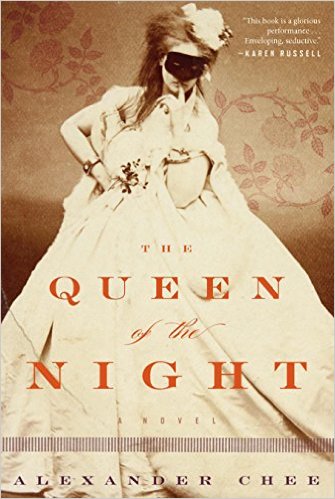
Queen of the Night alexander cheeErnest Hemingway, James Joyce, Alexander Chee, and George Saunders all have unique voices in their writing. Each of these writers has written highly acclaimed work. Their prose is magnificent. When you have fallen in love with an author’s work, you will recognize their voice.
Ernest Hemingway used commas freely, passing them around in his narratives like party favors. Alexander Chee employs sentences that run on forever and doesn’t use quotation marks when writing dialogue.

James Joyce wrote hallucinogenic prose and, at times, dispensed with punctuation altogether.

George Saunders writes as if he is speaking to you and is, at times, choppy in his delivery.

But their voices work because they know the kind of reader they are writing for. Each of the above authors breaks those rules consistently, and their work stands the test of time. Readers fall into the rhythm of their prose.

I HAVE A CONFESSION. I had to take a college class to understand James Joyce’s work.

Also, I grew frustrated and resorted to listening to the audiobook of Alexander Chee’s The Queen of the Night. Not setting dialogue apart with quotes? AAAAAAUGH!!! I’m an editor, and it’s my job to notice those things. It’s difficult for me to set that part of my awareness aside, but the audiobook resolved that issue.

I can hear the grumbles now. I just mentioned literary authors, and you are writing a cozy mystery, a fantasy, a romance, women’s fiction, or sci-fi. Shall I toss out a few more names?

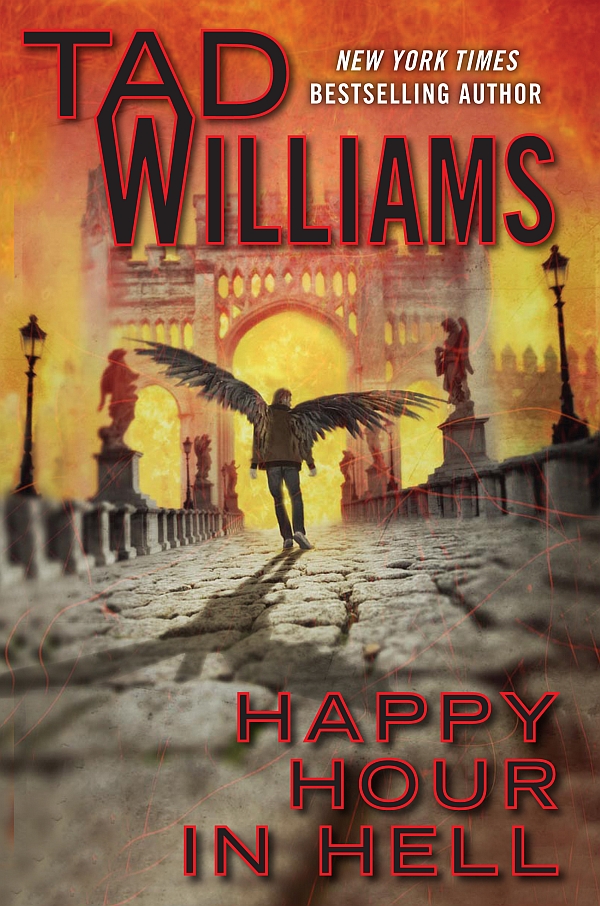
Happy Hour In Hell, Bobby Dollar 2 - Tad WilliamsTad Williams mixes his styles. His Bobby Dollar series is Paranormal Film Noir: dark, choppy, and reminiscent of Sam Spade. In this series, he seems to be somewhat influenced by the style of crime authors, such as Raymond Chandler or Dashiell Hammett. Each installment is a quick read for me and is commercial in that casual readers would enjoy Bobby’s predicaments as much as I did.

Yet Tad’s Memory, Sorrow, and Thorn Trilogy was a groundbreaking series that inspired countless fantasy authors. Those first three books and the subsequent novels set in that world are solidly epic fantasy. They are written for serious fantasy readers, people who want big stories set in big worlds.

These readers like BIG books. In that series, Tad Williams employs lush prose, multiple storylines, and dark themes. Beginning slow and working up to an epic ending is highly frowned upon in local writing groups, but Tad broke that rule, and believe me, it works. His powerful writing has generated millions of fans who are thrilled that he’s written more work in that amazing world.

Roger Zelazny wrote one of the most famous fantasy series of all time, the Chronicles of Amber, and was famous for his crisp, minimalistic dialogue. The style of his contemporary wisecracking, hardboiled crime authors also influenced him.

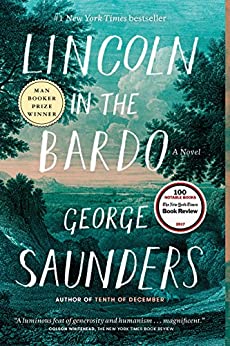
LincolnInTheBardo_SaundersCraft your work to make it say what you intend in the way you want it said, but be prepared to defend your choices if you deviate too widely from the expected.
Sometimes, I feel married to a particular passage, and it breaks my heart when someone points out that my beautifully crafted passage adds nothing to the narrative.

The fact is, some words and phrases are distracting. It is easy to fluff things up with descriptors and modifiers, which only increase the wordiness. Those mucky morsels are known as “weed words,” and I make an effort to cut them before my editor sees them, as she will gladly point out each one in a sea of red.

There will be times when you choose to use a comma in a place where an editor might suggest removing it. If asked, you should explain that you have done this to make something clear. Conversely, you might omit a comma for the same reason.

An editor might ask you to change something you did intentionally. Remember, you are the author, and it’s your manuscript. If you know the rule you are breaking, you will be able to explain why you are doing so.

Most editors will gladly ensure that you break that rule consistently—mine surely does.

Voice is how you break the rules. When you understand what you are doing and do it deliberately, your work will convey the story to the reader in the way you want.

The great blessing for those of us who pull novels out of our souls is this: the majority of readers are not editors or professional writers. Readers will either love or hate your work based on your voice, but they won’t know why.

powerwordsWordCloudLIRF06192021

4 Comments

Filed under writing

How the Written Universe Works: Theme #amwriting

Epic Fantasy is often dark in tone and always epic in scope. It usually explores the struggle against supernatural, evil forces.

how the universe works themeTad Williams’s Memory Sorrow and Thorn is a classic Epic Fantasy series. Many of the themes and tropes he explores are rooted in J.R.R. Tolkien’s work. However, Williams took those themes and tropes down a darker, more violent path, laying bare the evil and the good of which humanity is capable.

This trilogy revolves around a schism in the family of the late king, Prester John. That enmity drives the larger narrative. In this 3-book series, the underpinning theme is the circle of life represented through birth, growth, degeneration, and death. A prominent theme driving the action is the family dynamics, warped by lies and secrets kept across three generations.

The other fundamental themes are the hero’s journey and coming of age. Both Simon (the kitchen boy turned hero) and Miriamele (the princess turned hero) are driven by these themes, as are Jiriki and Binabik to a certain extent.

I’ve mentioned before that theme is the backbone of the story. It’s an idea, a thread that winds through a plot arc and connects events that would otherwise appear random.

Themes are often polarized, good vs. evil, faith vs. doubt, fate vs. free will, human vs. nature,

Epic fantasy novels, being longer in word count than other genres, leaves room in the plot for multiple themes to appear. This creates opportunities for the subplots to add depth, revealing the backstory without an info dump.

Polarity is a fundamental aspect of the inferential layer of a story.

The inferential layer is the unspoken, the knowledge a reader gains by extrapolation, interpretation, and reasoning. It is the layer that requires the reader to think. Polarity guides the reader as they make sense of the clues.

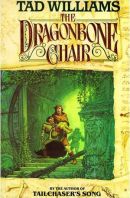
300px-The_Dragonbone_ChairWhen the story opens with the first novel, The Dragonbone Chair, events show the royal family is fraught with violent emotions, creating conflict. King Prester John’s sons, Elias and Josua, appear to be the center of a storm that will destroy Osten Ard.
In any story that explores the relationships within a family as part of the larger narrative, we begin with the circle of life.

Hubris is another theme that drives the plot and is expressed in the character of the apparent antagonist, Pryrates. Hubris refers to excessive self-confidence and the terrible decisions that arise from it.

This conflict allows Williams to employ the subtheme of chaos and stability. Evil is portrayed by taking this theme to an extreme: Pryrates enables Elias’s possession by the true antagonist, the Storm King.

Williams also riffs on the Hero’s Journey, the bonds of friendship, and the gray area between good and evil—moral ambiguity.

A crucial consideration in planning a fantasy novel is plot structure or how the story is arranged. As in all works, the central underlying theme is introduced in the early pages and supports the plot through to the end.

Subthemes are introduced and combined with the main theme to create a backbone for the story. Without that backbone, the narrative can wander all over the place, and readers will lose interest.

The hero’s journey is a theme that allows authors to employ the subthemes of brother/sisterhood and love of family. These concepts are heavily featured in the books that inspired me, so they find their way into my writing.

Tad Williams supported his themes by adding these layers to his narrative:

  • character studies
  • allegories
  • imagery

These three layers are driven by the central themes and advance the story arc.

Williams’s large cast of characters is portrayed as if they are real people. They are a mix of good and bad at the same time. Some lean more toward good, others toward bad. Either way, he has them act and react with good, logical intentions. Each desperately wants what they think they deserve.

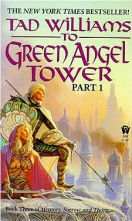
Green_Angel_Tower_P1By the end of the third book, To Green Angel Tower, Williams has employed the theme of Truth vs. Falsehoods to completely corrupt the Circle of Life theme. All the characters – the antagonists and the protagonists – deceive themselves about their own motives.

Regardless of their race, they share some characteristics with humans. Each character hides the truths they can’t face behind other, more palatable truths.

I always think that inserting a whiff of human frailty into a character makes them more interesting, more relatable.

Memory Sorrow and Thorn is considered a cornerstone of modern epic fantasy. This is because in the early 1980s, when Tad Williams began writing this trilogy, he took traditional themes and tropes and applied his original angle to them, along with modern prose and phrasing. He took each of the themes binding his narrative together and went one step farther, adding a hint of horror.

The horror would have been gratuitous if he hadn’t supported his narrative so well with all the themes and subthemes. Williams was inspired by Tolkien, and in turn, Memory, Sorrow, and Thorn has inspired countless authors.

Your assignment: on a new document, pick a theme from the following list, create a character or two, and write two paragraphs exploring that theme.

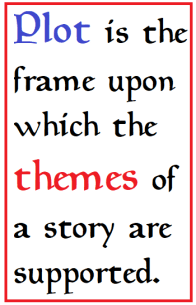
  • plot is the frame upon which the themes of a story are supportedFate vs. free will
  • Faith vs. doubt
  • Good vs. evil
  • Greed
  • Hubris
  • Humanity vs. nature
  • Justice
  • Lust for Power
  • Pursuit of Love
  • Revenge
  • Sacrificial Love
  • Survival against the odds
  • War

All genres are made specific by the tropes that define them. Epic fantasy shares some tropes with high fantasy.

It often includes elements such as elves, fairies, dwarves, dragons, demons, magic or sorcery, constructed languages, quests, coming-of-age themes, and multi-volume narratives.

My next post will discuss the tropes featured in the Memory, Sorrow, and Thorn trilogy and how the themes we’ve discussed support them.

3 Comments

Filed under writing

Crafting contrasts: @TadWilliams and Tolkien – how contrasts drive the story #amwriting

One of my favorite quotes for writers comes from the Buddha. “There has to be evil so that good can prove its purity above it.”

mood-emotions-1-LIRF09152020J.R.R. Tolkien understood this quite clearly. The Lord of the Rings trilogy is a significant reading commitment, one fewer and fewer readers are willing to undertake. It was written in a highly literate style that everyone understood a century ago.

Lengthwise, the saga isn’t as long as people make it out to be when compared to Robert Jordan‘s or Tad Williams’ epic (and highly literate) fantasy series. The LOTR series totals only 455,175 words over the course of all three books.

Tolkien shows the peace and prosperity that Frodo enjoys and then forces him down a road not of his choosing. He takes the hobbit through personal changes, forces him to question everything.

Frodo’s story is about good and evil, war and peace, and the hardships endured in the effort to destroy the One Ring and negate the power of Sauron. Why would ordinary middle-class people, comfortable in their rut, go to so much trouble if Sauron’s evil posed no threat to their peace and prosperity?

300px-The_Dragonbone_ChairTad Williams’s masterpiece, the Dragon Bone Chair, is the first book in the fantasy series Memory, Sorrow, and Thorn. These are the first three books in the epic Osten Ard series.  I read this book when it first went to paperback and had to re-read it again immediately upon finishing it. This book (and indeed the whole series) had a profound impact on me, and also my children when they became older teens.

In both the Lord of the Rings trilogy and Tad Williams’ Osten Ard books, we have two of the most enduring works of modern fantasy fiction. Both feature an epic central quest and smaller side quests, all of which must be completed for the protagonists to arrive at the final resolution.

Through it all, we have joy and contentment sharply contrasted with deprivation and loss, drawing us in and inspiring the deepest emotions.

This use of contrast is fundamental to the fables and sagas humans have been telling since before discovering fire. Contrast is why Tolkien’s saga set in Middle Earth is the foundation upon which modern epic fantasy is built.

It’s also why Tad Williams’ work in The Dragonbone Chair, first published in 1988, changed the way people saw the genre of epic fantasy, turning it into hard fantasy. His work has inspired a generation of fantasy writers: George R.R. Martin and Patrick Rothfuss, to name just two of the more famous.

In all his works, whether it’s the paranormal Bobby Dollar series or his epic Osten Ard series, Tad Williams’ novels come to life because he juxtaposes emotions in his characters and builds contrasts into every setting in his worlds. Ease and beauty are juxtaposed against harshness and deprivation.

f scott fitzgerald The Great GatsbyNo matter where we live, San Francisco, Seattle, or Middle Earth, these fundamental human experiences are personal to every reader. We have each experienced pain and loss, joy and love.
When the author successfully uses the contrasts of our human experience to tell their story, the reader empathizes with the characters. They live the story as if they were the protagonist.

So, what do I mean by contrasts in world-building? It can be shown in subtle ways.

Contrasting plenty against poverty in your world-building shows the backstory without requiring an info dump.

First comes the sunshine, and then the storm, and then the aftermath. Feast is followed by famine, thirst followed by a flood. Love and loss, safety and danger, loyalty and betrayal—contrast gives the story texture, and pacing turns a wall of words into something worth reading.

In our real world, war, famine, and flood are followed by times of relative peace and plenty. The emotions and experiences of people living through all those times are the real stories.

This is not just played out in fantasy novels; it’s our human history and our future.

I say this regularly, but I must repeat it: education about the craft of writing has many facets. We learn the architecture of story by reading novels and short stories written by the masters, both famous and infamous.

We shouldn’t limit our reading to the old favorites that started us on this writing path. You may not love the novels on the NY Times literary fiction bestseller list but it’s a good idea to read one or two of them every now and then as a means of educating yourself.

What you don’t like is as important as what you enjoy. Why would a book that you dislike be so successful? No matter how much money a publisher throws at them, some books are stinkers.

It’s alright to admit you disliked a book that Oprah or Reese Witherspoon recommends.

I despised House of Sand and Fog from page one but read it to the end. It begins in a bad place, and continues downhill, an unrelentingly depressing novel that left me with a bad taste in my mouth. Ugliness followed by more ugliness doesn’t make the ugliness beautiful.

clouds ms clipartPlot, in my opinion, is driven by the highs and lows. You don’t need to pay for books you won’t like. Go to the library or to the secondhand bookstore and see what they have from the NYT bestseller list that you would be willing to examine.
Give that book a postmortem. Why does—or doesn’t—it resonate with you?

  • Did the book have a distinct plot arc?
  • Did it have a strong opening that hooked you?
  • Was there originality in the way the characters and situations were presented?
  • Did you like the protagonist and other main characters? Why or why not?
  • Were you able to suspend your disbelief?
  • Did the narrative contain enough contrasts to keep things interesting?
  • By the end of the book, did the characters grow and change within their personal arc? How were they changed?
  • What sort of transitions did the author employ that made you want to turn the page? How can you use that kind of transition in your own work?
  • Did you get a satisfying ending? If not, how could it have been made better?

Reading and dissecting the works of successful authors is a necessary component of any education in the craft of writing.

Answering these questions will make you think about your own work. You will put more thought into how you deploy the contrasting events that change the lives of your characters.

7 Comments

Filed under writing

Voice #amwriting

If you write professionally, you develop habits, ways of expressing yourself that “sound” like you. Voice is how you bend the rules and is your fingerprint. For your voice to be compelling and not jarring, you must understand what rules you can break with impunity, and which ones must be obeyed. Knowledge is key—it enables you to craft your work so it says what you want, in the way you want it said.

Most editors will ignore liberties you take with dialogue but will point out habitual errors in the rest of the narrative.

If you work with an editor, you must be willing to explain why you are choosing to flout a particular rule. If you don’t understand the rule to begin with, you can’t defend your position with authority.

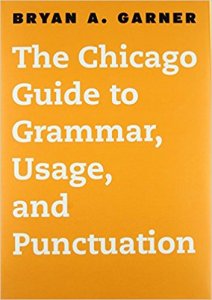
This is why I always suggest you buy a good style guide. I like the simplicity and thoroughness of Bryan A. Garner’s The Chicago Guide to Grammar, Usage, and Punctuation.

If an editor asks you to change something you did deliberately, you are the author. Explain why you want that particular grammatical no-no to stand. If you have a concrete reason, your editor will most likely understand.

Repetition of a key word for emphasis is one example of breaking a rule with style.

This is why it’s important to educate yourself. If you know the rule you are breaking, you will be better able to explain why you are doing so, and your work will reflect that confidence.

However, if I am your editor, you must be prepared to break that rule consistently. Readers do notice inconsistencies.

No one is perfect, and even authors who also work as editors need and use editors. Certainly, I have benefited from the editors I have worked with. I began this journey knowing nothing about the mechanics of writing, other than that which I had retained from my school days. Writers who were further along in the craft gave me good advice, and I began growing as a writer.

To go back to what I said in the first paragraph, you must understand what rules you can break with impunity, and which of them must be obeyed. The average reader doesn’t take joy in reading James Joyce’s experimental prose. Alexander Chee can be difficult for an average reader to enjoy. This is because both Joyce and Chee take liberties with punctuation that makes reading their work a real challenge. Some readers are up to that, others not so much.

I will admit, I had to take a class to be able to understand James Joyce’s work, and I did have to resort to the audiobook for Alexander Chee’s work. It’s the hypercritical editor coming out in me, making it difficult for me to set that part of my awareness aside. It’s my job to notice those things.

I can hear you now: these are literary authors, and you are writing genre fantasy fiction or sci-fi. Shall I toss out another name or two?

Tad Williams mixes his styles. His Bobby Dollar series is Paranormal Film Noir: dark, choppy, and reminiscent of Sam Spade. In this series, he seems to be somewhat influenced by the style of crime authors, such as Raymond Chandler or Dashiell Hammett. It is a quick read and is commercial in that it is for casual readers.

Yet his fantasy work set in Osten Ard has lusher prose, multiple storylines, dark themes. It is written for serious fantasy readers. The story starts slow, but his powerful writing has generated millions of fans who are thrilled to know he has set more work in that world.

Beginning slow and working up to an epic ending is highly frowned upon in writing groups, but Tad broke that rule and believe me, it works.

George Saunders writes sci-fi and historical fantasy but is considered literary. He has a unique, literary voice because he takes liberties with the rules.  His work reads like a conversation with him, a little crisp and choppy, but intimate.

If you are writing a genre such as fantasy or sci-fi or mystery, I suggest you do not get experimental with your punctuation unless you don’t mind bad reviews. People who look for quick reads for the adventure and romance don’t want experimental. They want an escape; they want prose that doesn’t interfere with the narrative. Run on sentences, commas inserted every place you breathe, or no commas at all—these are flaws that ruin the experience for the casual reader.

Get a good style guide and stop guessing about where the commas go and how to use that ellipsis.  Don’t know if you should use a semicolon or not?

Get a style guide.

Your writing will go faster, and your beta readers will be able to give you better opinions on what reads well and what needs more work.

2 Comments

Filed under writing

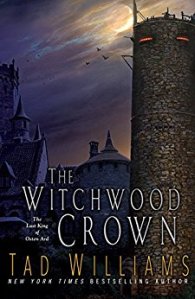
#BookReview: The Witchwood Crown by @TadWilliams

I am a great fan of Tad Williams’ work, in all its many incarnations. The Witchwood Crown is his most recent release, a follow up to his masterpiece series, Memory, Sorrow, and Thorn. It is a fitting continuation of the original story featuring four great characters, Simon Snowlock, Miriamele, Binabik, and Jiriki.

I became a confirmed fan of epic fantasy in 1988 when I first entered the world of Osten Ard and The Dragonbone Chair by Tad Williams. Simon was such a complex, sometimes clueless character that I was immediately drawn to him. Miri was also clueless and naïve. Binabik, Tiamak, and Jiriki had the wisdom needed to guide these two toward making good decisions.

Throughout the original series set in Osten Ard, it seemed like each character was deserving of a novel, and the diverse races whose cultures were so clearly shown fascinated me. The bigotry and arrogance shown by some members of each race, each believing in their innate superiority struck me as illustrating a sad truth about the real world.

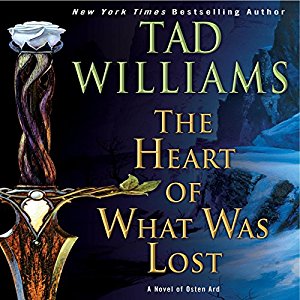
When this new series set in Osten Ard was announced, I was curious as to how Tad Williams would maintain that deep connection to the story after such a long absence. In my opinion, The Heart of What Was Lost proved Williams had not lost his touch, that indeed, he had matured as a writer.

I bought the Kindle version of The Witchwood Crown, but also downloaded the Audible book, because I have a monthly subscription. Andrew Wincott is the narrator, and he’s an incredible reader. His narration makes this one of the best audiobooks I’ve ever listened to. I read along with his narration, which is an awesome experience.

The Witchwood Crown, by Tad Williams

  • Series:Last King of Osten Ard (Book 1)
  • Hardcover:736 pages
  • Publisher:DAW; First Edition edition (June 27, 2017)
  • Language:English

MY REVIEW (as originally posted on my review blog, Best in Fantasy):

This book is not a light read. Tad Williams’ work is brilliant and complex because he understands the character arc and the importance of agency and consequences. Change and growth or degeneration happen to each character over the course of the story—no one is allowed to stagnate. With a character-driven plot set in a fantasy world, the growth of the characters is the central theme. The events, shocking and yet unavoidable, are the means to enable that growth.

The story opens some thirty years after final passages of To Green Angel Tower. Many events have occurred in that time, leaving scars on those who have lived through them. Prince Josua and his family have vanished. The League of the Scroll is no longer what it was, death and age having taken most of the people who had the knowledge. Simon and Miriamele have lost a son to a deadly fever, and are deeply concerned about the behavior of Prince Morgan, their grandson and heir. They have reservations about their son’s widow and fear her influence has ruined him. They also fear for their very young granddaughter, Lillia.

There are other problems for Simon and Miri to contend with. Political unrest, lack of hospitality and rudeness by the King of Hernystir, trouble in Nabban, and rumors that the Norns are stirring. Simon, who has always been gifted (or cursed) with prophetic dreams, is no longer dreaming. A council is held, and it emerges that Binabik the troll also has concerns.

Prince Morgan is more than just a womanizing young noble, but he doesn’t know it. Jiriki and the Sithi will have a large part to play in Prince Morgan’s journey, as they did in his grandfather Simon’s journey to manhood. Whether or not Prince Morgan is the kind of man his grandfather is, remains to be seen.

The Witchwood Crown is an epic fantasy which will put some hoity toity literary purists off. It is literary, illuminating the internal lives of the many characters, and is centered upon how the perception that the king is dying has gendered plots and plans for coups among many factions. This lack of focus on one primary hero will put off the genre purists who need more noise and sixty-second sound bites in their literature. Those readers will find it difficult to follow the many threads.

Osten Ard is a place of contrasts. Dark, in many ways Gothic, negotiating the rough waters of this dark-age world is not easy. The three main cultures differ greatly from each other and are worlds of extremes. These contrasts drive the plot and frame the story in such a way the world of Osten Ard seems more real and tangible than this world. The room in which I read grows colder when the Norns breeze into the narrative.

In the years since the original publication of Memory, Sorrow, and Thorn, Tad Williams has matured as an author. His prose is beautiful, almost poetic yet not going there. Harsh, lush, and carefully designed with layers of allegory and subtext, some readers will find the narrative too literary, difficult to read. Williams has a large vocabulary and sometimes takes the long way rather than dumping you into the fray immediately. He isn’t afraid to use compound sentences, which makes it an adult read. Other, more avid readers, like me, will devour it, savor it, and think about the deeper concepts long after closing the book on the final page.

I give this novel five stars for its complexity, maturity, and sheer originality. A powerful narrative, this book left a different kind of mark on me as a reader than the original series did. That series is young and brash, detailing the early days of kitchen boy who became king. A young and brash author wrote that first amazing series. This book is mature, not only because the author has matured in the craft but because the king is older—it shows us who that boy became, what kind of man he is, and offers us a glimpse of who might succeed him.

I look forward to the next chapter in this very large story.


Tad Williams is a California-based fantasy superstar. His genre-creating (and genre-busting) books have sold tens of millions worldwide. His considerable output of epic fantasy and epic science-fiction series, fantastical stories of all kinds, urban fantasy novels, comics, scripts, etc., have strongly influenced a generation of writers. Tad always has several secret projects on the go. 2016 will see the debut of a number of them; March 2017 brings ‘The Witchwood Crown’, the first volume in the long-awaited return to the world of the ‘Memory, Sorrow & Thorn’ novels. Tad and his family live in the Santa Cruz mountains in a suitably strange and beautiful house.

You can find out more about Tad Williams and his books at www.tadwilliams.com  


Credits and Attributions

This review of The Witchwood Crown by Tad Williams, as reviewed by Connie J. Jasperson,  was originally posted on Best in Fantasy,  on November 16, 2017

2 Comments

Filed under Book Reviews, writing

The Character Arc: Agency and Consequences #amwriting

My favorite novels are literary fantasy, a genre which has a character-driven plot set in a fantasy world. I love books where the prose has been carefully crafted, the growth of the characters is the central theme, the events are  the means to enable that growth, and the fantasy setting frames the story.

Thus, I am a great fan of Tad William’s work, in all its many incarnations. When not writing, I am currently finishing reading The Witchwood Crown, and I must say, his work never fails to move me. On Friday, I will post my review here.

Tad Williams’ work is brilliant because he understands the character arc, and the importance of agency and consequences. No character is allowed to stagnate,  a lesson I have taken to heart.

Because I love character driven work, some of what I write is literary fantasy. I have found that, for me, the first half of the book is easy to write, but beginning at the midpoint of my first draft, I begin to struggle.

For many authors, the rough draft is challenging because we are pulling the story out of the ether. The good news is that once the first draft is finished, we can get down to actually writing the book.

The first draft is where we take an idea, a “what if” moment and give it form on paper. When it is finished, the rough draft is basically made of sections of brilliance interspersed with a catalogue of events: who did what, where they did it, and why.  We are beginning to know our characters, but in the original version, we may not have a handle on how to portray their reactions. The character arc is uneven and making the story seem real becomes a challenge.

The term character arc is used to describe the personal growth and transformation of a character/protagonist over the course of a story. Stories that interest me have a strong character arc:  the protagonist begins as one sort of person, and through the events he/she experiences, they are transformed, frequently changing for the better, but sometimes they change for the worse.

The third quarter section of your story begins with the midpoint crisis. It is crucial because the seeds planted by the events of the first half must bear fruit here, forcing a visible change (usually a positive change) in the behavior and outlook of the protagonist and his/her friends. Sadly, some books fail to live up to their promise when they arrive at this point, and the reader gives up.

In a book where the storyline follows the hero’s journey, at some point in this third section, the protagonists may lose their faith or have a crisis of conscience. This is your opportunity to learn who they really are as human beings. The events leading to this place have combined to break the character down to their lowest emotional state.

The protagonist must emerge from this section remade as a stronger person, ready to meet whatever awaits them at the final showdown. And you must make it believable, done in such a way that it feels natural to the reader.

If you are stuck with a character you can’t figure out, ask yourself what personal revelations come out about the protagonist, or conversely what does he discover about himself?

The way to avoid predictability in a plot is to introduce a sense of danger, an unavoidable threat. How our characters react to that event should feel unpredictable because they have agency.

In many ways, agency is the ability your character has to surprise you when you are writing them and their reactions. They seem to drive the keyboard, making their own choices.

When we give our characters agency, an unavoidable threat removes the option of going about life as normal but leaves characters with several consequential choices, the final one of which will be made in a stressful situation.

I used the word consequential relating to the choices your characters must make. I chose that word intentionally. If there are no consequences for bad decisions a character might make, what is the story about?

Why would a random trip to a convenience store interest a reader if something out of the ordinary does not occur? After all—we go out for bread every day, and it’s not too exciting. Frankly, I’m not interested in reading about Nadine buying a loaf of bread. But make her the witness to a robbery and things begin to get interesting. Better yet, give her options:

  1. She can hide and wait for the intruders to leave.
  2. She can decide to be a hero.
  3. What other options does Nadine have? What does she see when she looks around the store?

Whatever Nadine chooses to do, there will be consequences. If things go awry, she could become a hostage. If she goes unnoticed but tells the police what she knows, she and her family could be in danger.

Once she is in the middle of these consequences, Nadine will have more crisis points to face, and a lack of bread will only be one of them. She will have many decisions to make, and each choice will drive the plot.

The obstacles your characters face and the choices they make in those situations are the story. Giving your characters an active role and allowing them agency is what drives a great, absorbing story.

At the outset, giving my characters agency is difficult to write. This is because, in the rough draft, the protagonist and her motives are still somewhat unformed. What I keep in mind is faithfulness in following the hero’s journey and allowing her choices to force her personal growth.

In one of my current works-in progress, my main character has been put through a personal death of sorts. Her world has been shaken to the foundations, and she no longer has faith in herself or the people she once looked up to. To write this story, I must discover the answers to these questions:

  • How is she emotionally destroyed by the events?
  • How was her own personal weakness responsible for this turn of events?
  • How does this cause the protagonist to question everything she ever believed in?
  • What makes her pull herself together and just keep on going?
  • How has she evolved after this personal death and rebirth event?

In all my favorite novels, this low point is a crucial part of the hero’s journey. It is the place during which she is taken down to her component parts emotionally, and rebuilds herself to be more than she ever believed she could be.

By the time you finish writing this part, you should have come to know your character and how they will react in any given situation.

Paying close attention to making this section emotionally powerful in your first draft will pay off when you begin the second draft. In the first draft, use all the adverbs and modifiers you need because you must get the idea down before you forget it.

In the rewrite, these words will be the guide you need to make the prose evolve into a greater, more polished version of the original.

4 Comments

Filed under writing

#My5: Genesis of the Tower of Bones series #amwriting


Today’s post is part of a project begun by author K.M. Alexander, called My5. It’s hard to narrow it down to only five, but here, in no particular order are five major influences that helped shape my career as a writer.

Number One: I’m a gamer. I’ve always been a reader, so when I discovered the Super Nintendo and Final Fantasy style RPGs, I found an activity that had the ability to suck me in and keep me as enthralled as my favorite books could. I’m just going to come out and say it—I play both PC and console-based RPG video games, sometimes to excess. Me and my old beater PlayStations 2 and 3 are best friends.

My epic fantasy series, Tower of Bones, got its start in life back in 2009 as the storyline for an old-school style RPG computer game that was intended to be built using RPG Maker XP, but for various reasons, it never got built. But, I had the story and the maps I had drawn, so three years later, I managed to pull a novel, Mountains of the Moon, out of my hat. This prequel to Tower of Bones was sprung from the original idea I’d had of what would make a great storyline for an epic RPG, if only I could entice Square-Enix to build it.

Number Two: I’m a huge Fritz Lieber fan. My first completed novel, written long ago in a galaxy far, far away, began with the idea of writing a book Fritz might write if he were still alive (and if he had consumed several hallucinogenic mushrooms). I had just finished re-reading my collection of Fritz Lieber tales, and had Fafhrd and the Gray Mouser on the brain. These two characters are scoundrels, living in a decadent world where a lack of scruples a requirement for survival.

What I actually produced had no resemblance to Fafhrd and the Gray Mouser, and was nothing like anything Fritz would have written, but within the uneven plot and frequently overblown dialogue, it had the bones of a good story. Eventually, the shreds of that manuscript spawned the novel featuring one of my favorite characters, Huw the Bard, and I have good old Fritz to thank for him. That proto novel also spawned Billy Ninefingers, which has entered the editing process and will be published in August 2017. Huw makes an appearance toward the end of Billy’s tale.

Number Three: Jack of Shadows by Roger Zelazny was a watershed book for me as a reader. In what can only be described as a genius move, Zelazny introduces the concept of the Trickster as the hero-antihero. Originally conceived as a serial for F&SF in 1971, it was published in book form that same year by Walker and Company. Lester del Rey was unimpressed with this tale, but I read this book to shreds. What I loved about this book was the typical Zelazny mystique—many questions abound regarding Shadowjack, and answers come at a slow pace, just information enough to keep you interested, and be warned: not all your questions will be answered. Even the ending is a question.

Jack is an awesome character. He is good, and he is bad. He has deep compassion and can be moved to do great deeds that benefit all of humanity at the cost of his own life. Conversely, he can be the smallest, meanest man over a tiny little slight to his ego, capable of inflicting great cruelty. He abuses his powers, and also uses them for good.

In this book, Zelazny fully realized the concept of “shadow.” It is neither light nor dark, and it is not here or there. It is all of those and none of them. Thus the unanswered questions. What Zelazny did in this less well-known of his books is create a story in which the reader decides what is true.

Number Four: I gravitate to tales written with guts and substance. Give me the Flawed Hero over the Bland Prince any day. Tad Williams is an author who absolutely understands the craft of writing brilliant, deep prose and creates compelling characters who aren’t exactly squeaky clean. He knows what makes epic fantasy EPIC. There is just the slightest hint of the rebellious indie in his work, which makes his work a little wild.

I became a confirmed fan of epic fantasy in 1988 when I first entered this world of Osten Ard and the books of Tad Williams. The Dragon Bone Chair blew me away.  Each character was deserving of a novel, and the diverse races whose cultures were so clearly shown fascinated me. The arrogance some members of each race have with regard to their innate superiority struck me as illustrating a fundamental truth about the real world.

Number Five: George Saunders is famous for his short stories. He has the ability to get inside each of his characters’ heads, showing them sharply as unique individuals. They aren’t always nice, and certainly not always moral as I see morality, but Saunders portrays them with such vivid strokes that you feel as if you understand their reasoning.

For me, the most powerful short story I have ever read was in Saunders’ collection of short stories, The Tenth of December,  “Escape from Spiderhead.”  This sci-fi tale has an almost Vonnegut-like flavor. It is a stark journey into the depths to which we humans are capable of sinking in the pursuit of knowledge for the sake of knowledge. Where does punishment end and inhumanity begin? This story lays bare concepts regarding our view of crime and punishment that are difficult, but which are important to consider. The scenario is exaggerated, as it is set in a future world, but it exposes the callous view society has regarding criminals and what punishment they might deserve.


So those are #My5,  the “tip of the iceberg” of the authors and ideas that influenced the creation of the Tower of Bones series, and also Huw The Bard. This strange collection of books, and video games has profoundly influenced my concept of story and shaped what I write, at least in my fevered mind if not in the execution.

I’m not alone in detailing #My5! I have joined many other authors who have written their #My5. If you choose to participate, go to K. M. Alexander’s post and follow the instructions at the bottom of the page. You can find some awesome articles by following the links below. Each article is really intriguing – it never ceases to amaze me how diverse and unique we authors are, and yet how similar.

1 Comment

Filed under writing

#bookreview: The Heart of What Was Lost, by @TadWilliams #OstenArd

tadwilliams-the-heart-of-what-was-lostI just finished reading Tad William’s latest book. Wow! Told from three points of view, Duke Isgrimnur of Rimmersgard, a Norn leader, Viyeki, and Porto, a Perdruinese mercenary, The Heart of What Was Lost, by Tad Williams is a gripping, worthy return to the world of Osten Ard.

But first, THE BLURB:

At the end of Memory, Sorrow, and Thorn, Ineluki the Storm King, an undead spirit of horrifying, demonic power, came within moments of stopping Time itself and obliterating humankind. He was defeated by a coalition of mortal men and women joined by his own deathless descendants, the Sithi.

In the wake of the Storm King’s fall, Ineluki’s loyal minions, the Norns, dark cousins to the Sithi, choose to flee the lands of men and retreat north to Nakkiga, their ancient citadel within the hollow heart of the mountain called Stormspike. But as the defeated Norns make their way to this last haven, the mortal Rimmersman Duke Isgrimnur leads an army in pursuit, determined to end the Norns’ attacks and defeat their ageless Queen Utuk’ku for all time.

Two southern soldiers, Porto and Endri, joined the mortal army to help achieve this ambitious goal—though as they venture farther and farther into the frozen north, braving the fierce resistance and deadly magics of the retreating Norns, they cannot help but wonder what they are doing so very far from home. Meanwhile, the Norns must now confront the prospect of extinction at the hands of Isgrimnur and his mortal army.

Viyeki, a leader of the Norns’ military engineers, the Order of Builders, desperately seeks a way to help his people reach their mountain—and then stave off the destruction of their race. For the two armies will finally clash in a battle to be remembered as the Siege of Nakkiga; a battle so strange and deadly, so wracked with dark enchantment, that it threatens to destroy not just one side but quite possibly all.

Trapped inside the mountain as the mortals batter at Nakkiga’s gates, Viyeki the Builder will discover disturbing secrets about his own people, mysteries both present and past, represented by the priceless gem known as The Heart of What Was Lost.

MY REVIEW:

the-heart-of-what-was-lostI became a confirmed fan of epic fantasy in 1988 when I first entered this world of Osten Ard and the books of Tad Williams. It seemed like each character was deserving of a novel, and the diverse races whose cultures were so clearly shown fascinated me. The bigotry and arrogance some members of each race have with regard to their innate superiority struck me as illustrating a sad truth about the real world.

When this new series set in Osten Ard was announced, I was curious as to how Tad Williams would maintain that deep connection to the story after such a long absence. When The Heart of What Was Lost was launched, I bought the hard-copy, but also downloaded the Audible book, because I have a monthly subscription. Andrew Wincott is the narrator, and he’s an incredible reader. His narration makes this one of the best audiobooks I’ve ever listened to. Like some gutter-dwelling book junkie, I read along with his narration–an awesome experience.

This is not a long novel, only 224 pages. It is well-written, with the harsh, beautiful prose I have come to expect from Tad Williams. Most importantly, an inspiring story is encapsulated in those pages. I found the pacing excellent, and at times, heart stopping. There is no place where it slows or becomes pedestrian.

Osten Ard is created from both good and evil, with all the many grey places between those two absolutes clearly defined. For each misery, some small glimmer of hope is introduced, offering a reason for the characters to keep struggling. The unlikely friendship between Porto and Endri is deep despite their humorous rivalry. Through their eyes we see the truth of the conflict and what it means in terms of human suffering.

Duke Isgrimnur is strong and resolute, driven on every level. He is faced with hard decisions, an impossible task, and does what he has to. A many-layered character, Isgrimnur is one of my favorite people in the series, as is Sludig. I had wondered about them at the end of To Green Angel Tower. This ties up their threads well.

Opposite Isgrimnur is Viyeki,  a Norn who has risen high in the Order of Builders. He has also been given an impossible task. It is through him we feel some compassion for the Cloud Children, the immortal Norns, and what they have lost. His thoughts and the way he deals with the constraints he is under illustrate the alien society he loves, making their reasoning more clear to us. He sees many things that worry him, but as a Host Foreman, his position is somewhat perilous. His world is at stake, but faced with conquering the terrors of the deeps or being crushed by the enemy, he is beset on all sides, caught in the middle. He has questions, doubts, and the answers he is given offer him no comfort.

I give this book five full stars. In the watershed series, Memory, Sorrow, and Thorn, Tad Williams originally created the world of Osten Ard masterfully, exploring it through the diverse people’s thoughts and conversations. This novel is a brilliant continuation of that tale. He uses his characters’ impressions to show the setting, the history, and the core of the conflict. Through their eyes, we know this amazing world. At the end of the book, it’s hard to let them go.

You can find  The Heart of What Was Lost, by Tad Williams  in paper, as an audiobook, or a Kindle download at Amazon. It is also available at other eBook retailers, and in paper at all brick and mortar stores.

1 Comment

Filed under Books, writing

#amreading: cold, dark days and four books worth reading

the-heart-of-what-was-lostI read a lot, and I’ve become a fan of audio books, especially when I am editing for clients or wrangling tough plot points in my own manuscripts. It frees my mind to enjoy more books when I can put on the wireless headphones and cook or do my house work and never miss a thing.

My current audio book is Tad Williams’ new novel, The Heart of What Was Lost. It was only launched yesterday, and I’m already about six hours into it. (And so far, WOW!) I bought the hard-copy, but also downloaded the Audible book, because I have a monthly subscription. Andrew Wincott is the narrator, and he’s an incredible reader. His narration makes this one of the best audio books I’ve ever listened to.

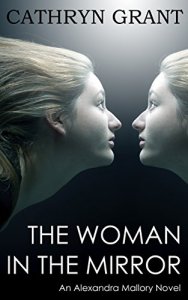
the-woman-in-the-mirror-cathryn-grantWhile I love audio books, I do still read my Kindle, and one I recently read and enjoyed was The Woman in the Mirror by Cathryn Grant. Published July 01, 2016,  it is a dark, contemporary tale, a psychological thriller. The many twists and turns make what could have been a rant on misogyny and abuse into a many-layered mystery you never quite get to the bottom of. The book is set on the foggy central coast of California, in a house perched on the edge of the crumbling cliff. The precarious state of the house is almost an allegory for Alex’s character: looks beautiful and feels dangerous.

The author, Cathryn Grant, did a good job. The storyline is compelling, doled out in bits and pieces. Each time you have the pieces to one puzzle, another has reared its head. Every character is a riddle you finally begin to understand as the novel progresses, even “sweet, responsible” Noreen. Behind that facade is a scary woman. The author’s voice is unique, and the narrative flows smoothly, although the switching of POV between Alexandra and Jared is occasionally jarring. But overall, it works. I had a hard time putting the book down, reading it straight through, and staying up late to finish it.

The ending is surprising, but when you look back, it fits perfectly. I highly recommend this book to readers of dark, contemporary fiction.

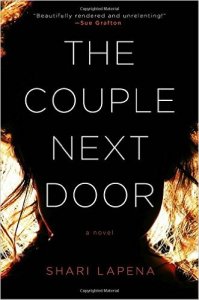
the-couple-next-doorAlso, recently I read Shari Lapena’s mystery thriller, The Couple Next Door. This is a tale of love, fear, greed, and secrets. Nothing is what it seems, except for the central plot point: A baby is missing from her crib.

Anne and her husband, Marco Conti have gone to a dinner party in the house next door. The sitter has cancelled at the last minute, and the hostess has insisted on an adults only party, as she doesn’t like children. Since they share a wall with these neighbors, they have brought the baby monitor with them, leaving their baby home in the row house next door.

The baby, Cora, disappears during the dinner party.

No one is free of secrets.

Rasbach is the detective, Jennings is his assistant. As the case unfolds they discover that Anne Conti’s family is more than merely rich. They are old money and secure in their sense of privilege, and her parents are quick to offer a ransom.

Little by little, evidence emerges about each character, none of it flattering. Anne herself is not without secrets.

Anne is a well-drawn character, with a mysterious history she has never fully explained to her husband. She is portrayed realistically, flaws and all. Marco is also a flawed protagonist, which makes him intriguing. This book was full of twists and turns, and the ending is a complete surprise.

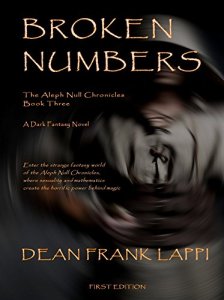
broken-numbersAnd to cap off my recent completed reads was the third installment in Dean Frank Lappi’s dark fantasy Aleph Null series, Broken Numbers. Violent and graphic, this series is not for the faint of heart, as it combines elements of horror, with a magic system based on mathematics and sexual energy. After a brief prologue bringing us up to speed on the Korpor (one of the creepier beasts of dark fantasy), Lappi opens the story with our protagonist, Sid, considering his losses, the death of his mother and loss of his magic being the two worst of them.

Sid, the Aleph Null, is a deep character, a man whose life has been seriously altered by events beyond his control. He has been traumatized by incidents that occurred in his early childhood, yet he remains kind and caring of others. His former childhood friend and now leader of the Oblate, Tris, has managed to rip away the Black Numbers from Sid. It’s a partial victory, but he won’t rest until Sid is dead.

The plot is full of twists and hard-hitting. Sid is desperate to get his numbers back but knows it won’t be easy. Nothing is simple, and every step forward brings another step back. Yet through it all, his companions remain strong in their support of him. This novel also had a surprise ending, and left me jonesing for the next book!

With the new year, we have entered my favorite reading time. Something about the dark and the eternal gloom of the Northwest winter encourages escapism, and what better way than through books?

Comments Off on #amreading: cold, dark days and four books worth reading

Filed under Books, writing