
If you are a follower of this blog, you know that Fridays are “Fine Art Friday” here. I love the art of the past, as well as many modern pieces. I also love examining photographic art.
 Paintings and photographs offer us a glimpse of a moment in time that may have occurred centuries ago or may not have occurred at all. It is the story of a moment frozen in time and preserved forever for us. Forever, that is, for as long as the painting or photograph exists.
I would love to have created beautiful visual art. I’ve shot some decent photographs, but I’m a writer. Perusing the vaults at Wikimedia Commons allows me to view images with possibilities. Each is a visual representation with a past and a possible future.
We see the whole story.
I’m not educated as an art historian and would never claim to be one. I’m just an old lady who loves the paintings of great artists. I doubt I will ever visit the great museums of Europe, as that would be an expensive endeavor, but I can view their collections in detail.
Anyone with internet access can see great art and photography from the past and present.
Every week, I scour Wikimedia Commons, looking for images that intrigue me. My goal is to give others like me access to see the art that humanity is capable of, the good and perhaps the not-so-good.
Art can be beautiful or savage, depending on the story the artist is trying to present. I love beautiful scenes, and sometimes, especially in winter, I crave the view of a warm summer’s day.
However, more than anything, I like images that tell a story. I am compelled to zoom in and look deeper whenever I view a painting. I research a museum’s website to discover the symbolism the artist snuck into the scene. I want to inform my perception of the story the artist has painted.
Whether I want if to or not, my writer’s brain will influence my interpretation. And the art of the past influences the art of today.
One of the most stunning works of modern art is Guernica, a 1937 painting by the Spanish artist Pablo Picasso (1881 – 1973). This painting is considered to be one of the most powerful anti-war statements of all time. This single painting, done in shades of black and white, tells the story of the bombing of Guernica, a Basque Country town in northern Spain that Nazi Germany and Fascist Italy destroyed at the request of the Spanish Nationalists.
(Yes, a faction in Spain bombed the citizens of their own country.)
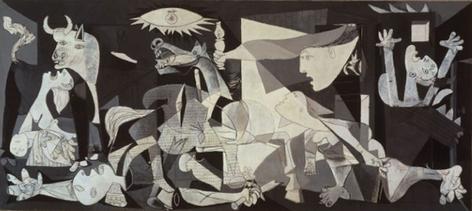
Pablo Picasso was influenced by the great art of the past and based the layout of Guernica on the layout of a history painting, The Consequences of War by Peter Paul Rubens.
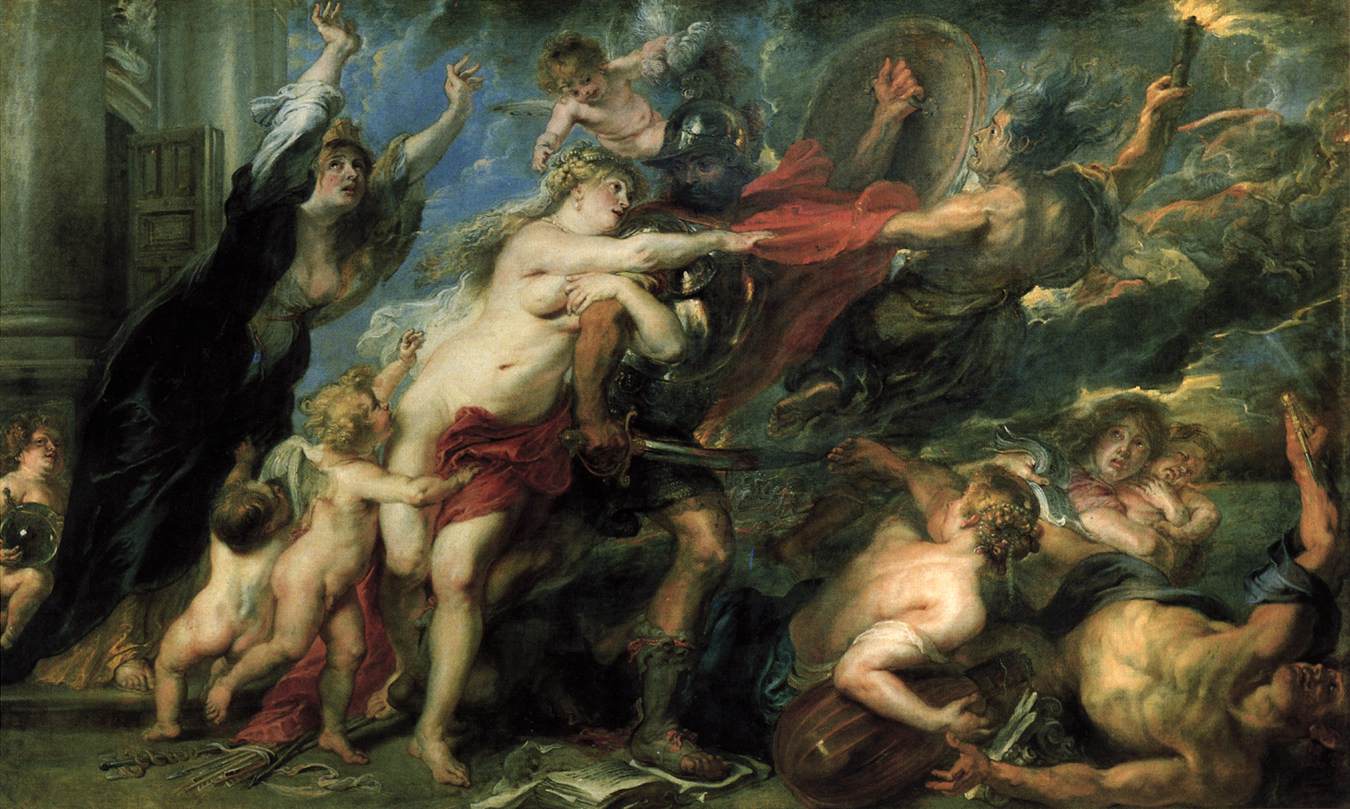 Looking at art can lead the viewer to new ways of looking at the world.
Some artists offer us fantasy, and others show us the truth about historical events. Both are necessary. Art can be pretty and comforting, and art can teach us a moral lesson.
Art can be brutally truthful.
One of my favorite artists is Pieter Brueghel the Elder. His paintings always tell us a story. He embeds a moral in every aspect of his work. For example, let’s look at The Hunters in the Snow, probably his most famous painting. On first glance, we see a comforting winter scene, a bucolic view of hunters returning and people frolicking on the ice. But when we look deeper, we see the true story.
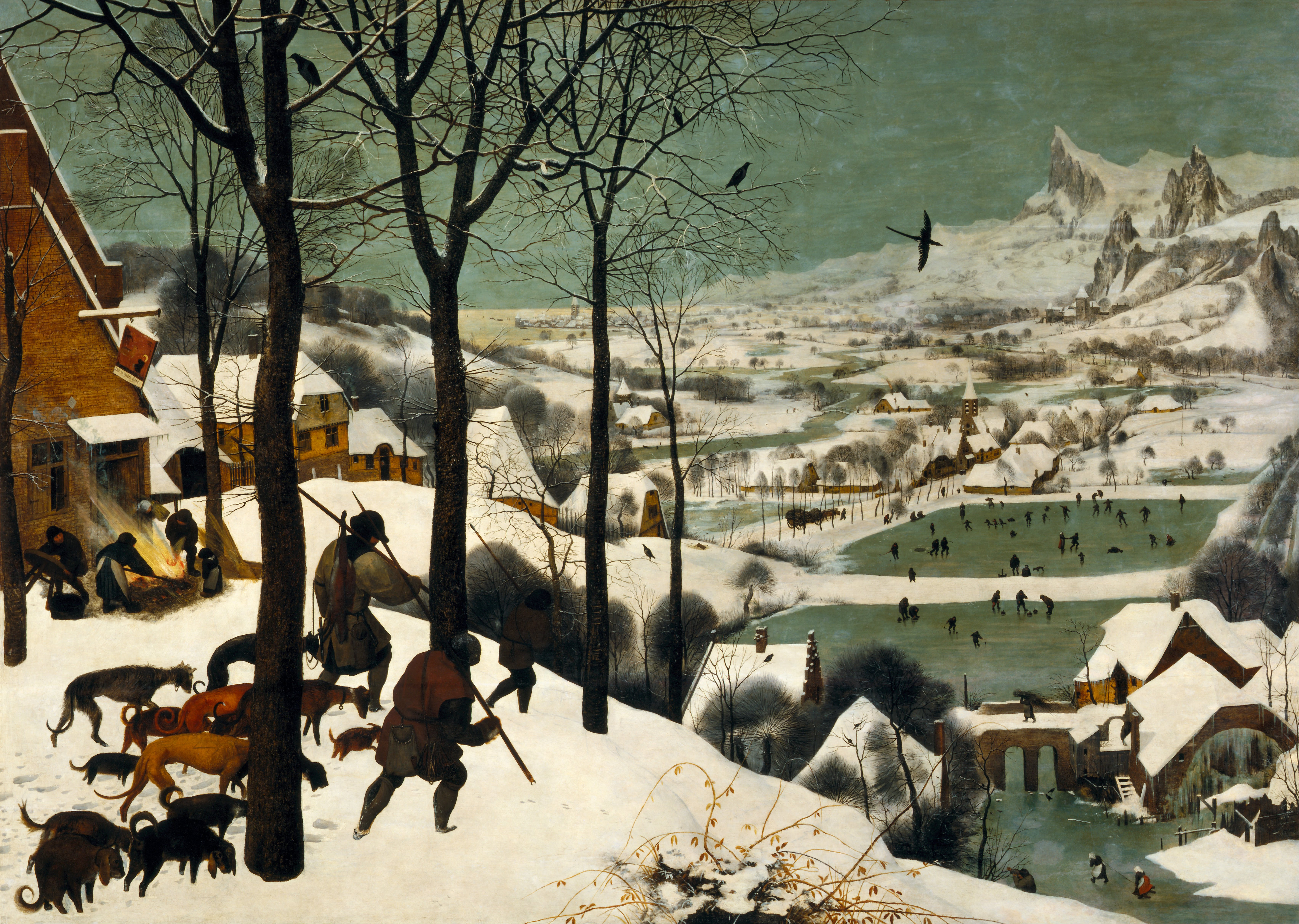
Brueghel used symbolism to convey an entire story by employing paradox and gallows humor in every painting. Here, he shows us that winter was harsh, and for the average person, survival required a lot of work, sometimes for nothing.
- He shows us the hunters returning with empty game bags, the lone corpse of a skinny fox, and little else.
- One dog looks at us with starving eyes, as if hoping for scraps.
- The tavern’s sign is about to fall down, a large hint that all is not well. That symbolic broken sign tells us the owners are bankrupt.
- The owners are cooking outside, directly in front of the door, evicted from their home and business. A woman brings a bundle of straw out of the inn to use as fuel, while in the distance an ox-drawn wagon is heavily laden with firewood. Where is it going? Not to their inn, that is for sure.
- A man is carrying a table away. He glances over his shoulder at the meager soup they are cooking, as if they had somehow gotten it away before he could take that too. Is he the new owner, having acquired it for pennies from the city by paying the taxes at a forced bankruptcy sale? Or is he a hired thug employed by the new owner?
- A rabbit has crossed the hunters’ path and evaded their snares.
- Ravens, which in Medieval times were considered birds of ill omen, roost in the trees above the inn and the hunters and fly above the revelers. They are a warning of worse days to come.
But in this story, Brueghel’s characters have hope and faith that things will improve. In the distance (the future), people are playing winter games. The future is indistinct and far away, shown in a fantastic, mountainous landscape rather than the flat terrain of the Netherlands. It is almost as if they are visions of what winter could be if only the harvest had been good, rather than the truth of the dead fox, hounds with empty bellies, a bankrupt tavern, and the rabbit that got away.
If you get a chance, visit www.wikimediacommons.org and see what the picture of the day inspires in you. Will you come away with an idea for a story?
Perhaps so. But take the time to write those thoughts down. Your notes could become a storyboard, which could become a novel.
A photograph or painting might inspire you, but the way you put those ideas into action will be uniquely yours. That story will be an expression of your voice and your art.
Credits and Attributions:
IMAGE: Wikipedia contributors, “Guernica (Picasso),” Wikipedia, The Free Encyclopedia, https://en.wikipedia.org/w/index.php?title=Guernica_(Picasso)&oldid=1361273241 (accessed June 28, 2026).
IMAGE: Wikipedia contributors, “Consequences of War,” Wikipedia, The Free Encyclopedia, https://en.wikipedia.org/w/index.php?title=Consequences_of_War&oldid=1361248306 (accessed June 28, 2026).
IMAGE: Wikipedia contributors, “The Hunters in the Snow,” Wikipedia, The Free Encyclopedia, https://en.wikipedia.org/w/index.php?title=The_Hunters_in_the_Snow&oldid=1361428760 (accessed June 28, 2026).


