
I discovered early on that creating a calendar and a map for each novel gives me a realistic view of my plot arc. A mushy timeline stands out. I don’t want my readers wondering how my characters managed to cram a week’s worth of running around into only two days.
 Think about it. Errands take time. Shopping for groceries takes time. If I go to a friend’s house, chat for an hour, and drive back home, I have spent at least two hours, possibly more.
The weather and time of year affect how long errands take. Walking in rain and wind vs. a mild sunny day will take longer and feel worse.
No matter the genre of your novel, it helps to know which season your events take place in. Foliage changes with the seasons, and weather is a part of worldbuilding.
And there are other reasons for making a calendar of events for your novel, whether you are writing romance, sci-fi, fantasy, military thrillers, etc. Time should not be fluid UNLESS a core plot point of your novel is the ability to alter the flow of time, such as Harry Potter’s Time Turner device.
 The calendar is a visual reference that helps with pacing and consistency. In conjunction with a map, a calendar keeps the events moving along the story arc. It ensures you allow enough time to reasonably accomplish large tasks, enabling a reader to suspend their disbelief.
They ensure you don’t inadvertently jump from season to season when describing the scenery surrounding the characters.
So, why worry about calendars in your fantasy worldbuilding? It’s just fantasy so anything goes, right?
No.
Fantasy must look and feel like reality, and fantastic elements must be organic and natural to that world. Inconsistency and mushy elements discourage readers. Springtime, summertime, winter, or fall, each season (or lack thereof) has to be consistent within itself, even if the plants and scenery are otherworldly.
 As you are writing a story, you might need to know what day of the week it is. Some things do take time, such as walking from one town to another. If you aren’t on top of things, you could have people breaking the sound barrier in their mad dash to the village forty miles away.
The distance a person can walk in a day varies depending on their health, terrain, and weather. A healthy person could travel from two to thirty miles. I would say that, on average, in varied terrain, a walk of forty miles might take a healthy person two days.
They should be prepared to spend one night camping alongside the road or hope to fine a roadside inn.
Much of my output is fantasy, and one might think a fantasy calendar with fantasy names for everything would lend a foreign atmosphere to the worldbuilding.
Not necessarily so.
 When it comes to calendars, I suggest you stick with what is familiar, and here is why.
While creating my first world in 2008, a special calendar seemed like a good thing. The storyline and world of Mountains of the Moon were originally conceived for an anime-style RPG that was never built. When the project was scrapped, I still had the rights to my storyline, maps, and calendars.
My calendar for that world was (and unfortunately must remain) a hot mess.
In the game as we envisioned it, the calendar wouldn’t have been a problem, as the days of the week were only mentioned in terms of when a shop was open. In stories set in the world of Neveyah … it’s a problem for me as a writer.
In Neveyah, a year has thirteen months, each with twenty-eight days. That’s doable, no problem. Thirteen months are easy to work with because they are on paper. The extra month at the end of the year is called Holy Month.
Yes, a 365-day year and standard twelve months would be less confusing. Please have pity. A newbie author invented this, unaware that one little story would evolve into a series. It seemed so “fantasy” at the time.
Unfortunately, the months are named after astrological signs. Capricas, Aquis, Piscus, etc. This is a problem because few people know which time of year Taurus or Capricorn is, unless they occasionally read their horoscopes or know their own sun sign.
I added one extra day at the end of the year, which ends on the Winter solstice. (Sure, whatever. No problem.)
The winter solstice is called Holy Day, belongs to no month, and marks the beginning of the new year. Every four years, they have a two-day holiday and a big party. (Sounds fun, so no problem.)
The names I assigned to the dates and months were exceedingly uncreative and awkward: Lunaday, Tyrsday, Odensday, Torsday, Frosday, Sunnaday, and Restday. (Oh, you noticed it too! Sunnaday is the sixth day of the week, which lends itself to serious confusion.) Restday is fairly explanatory, but why OH why didn’t I give the other names a bit more thought?
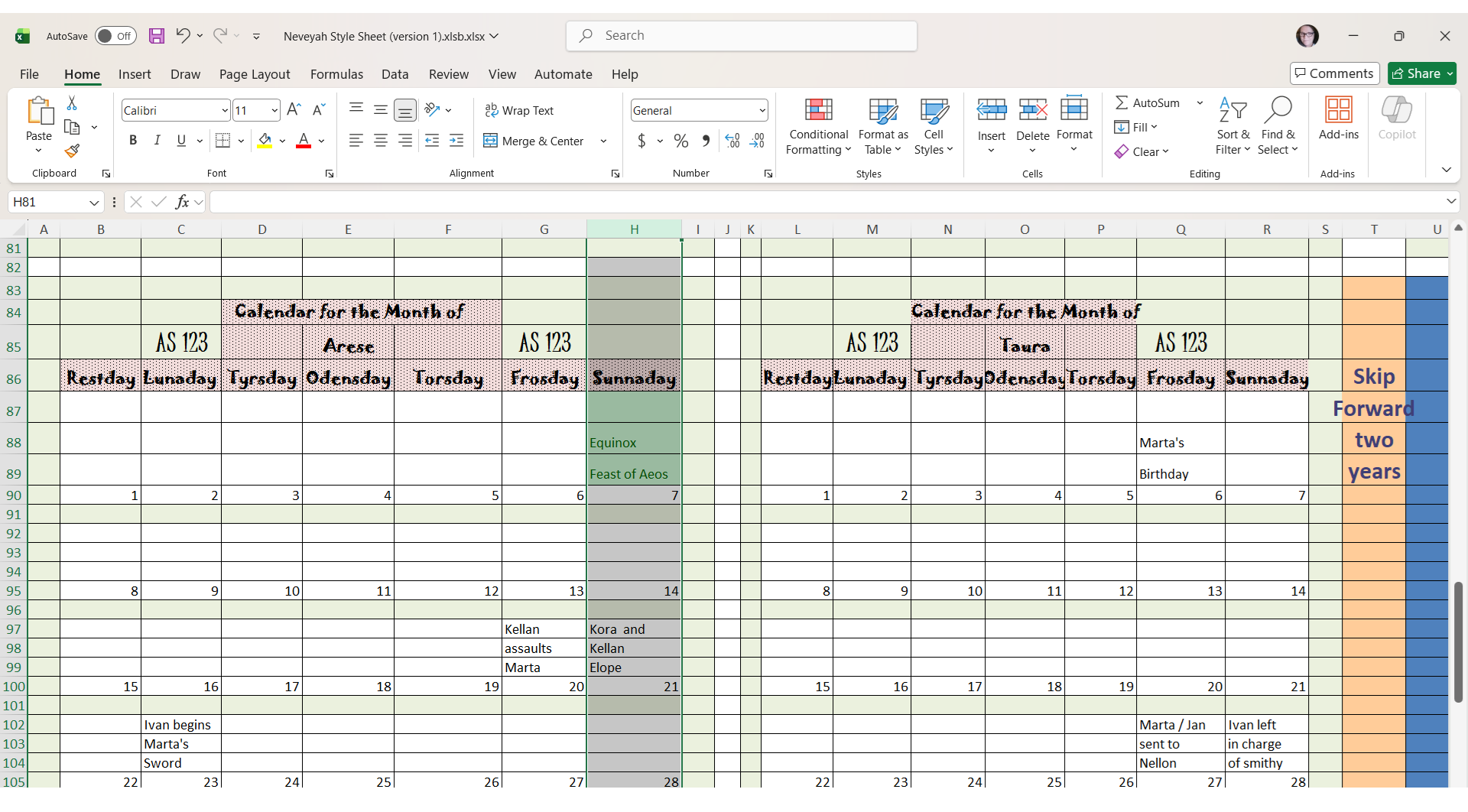
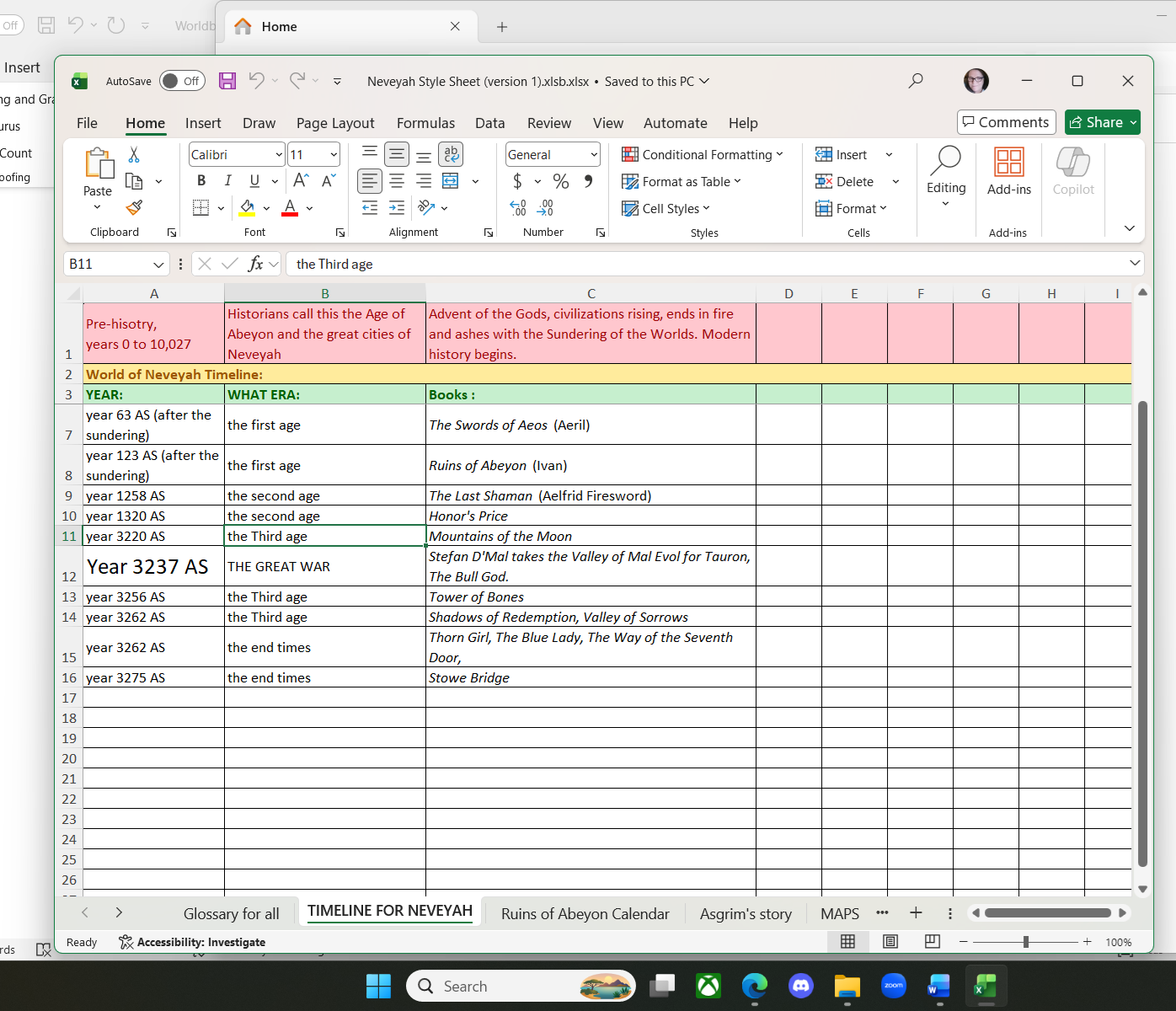
Every story I write set in that universe has its own calendar of events, and each is labeled with the year number that the story is set in. They feature different characters and skip around in the timeline. I update that calendar as I write to make sure no one is walking at the speed of light.
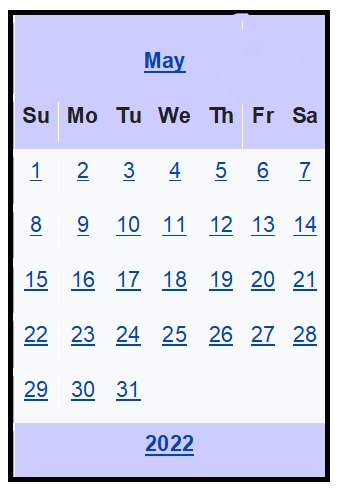
I create the calendar in Excel, but you can use anything to make your calendar. There are plenty of blank templates for creating 365-day calendars out there, and they cost nothing. I just like fiddling with mine when I’m stuck, as it usually helps me figure out how to move things along.
In 2008, I had no idea just how awful the Neveyah calendar would turn out to be. And now, eighteen years later, I’m stuck with it. Please, take my advice and keep it simple.
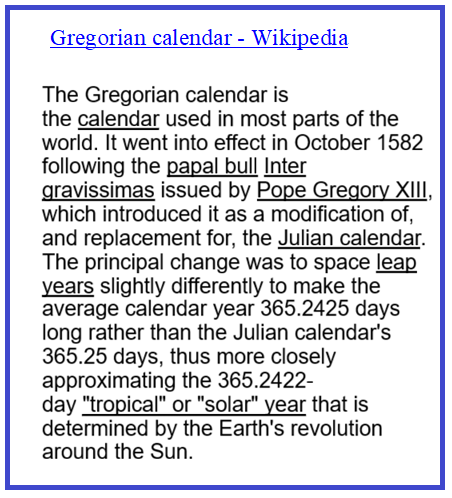
Just sayin’. This is why ALL my other books are plotted using the modern Gregorian calendar.
But what’s this about maps? Next week, we will explore maps and why they are important during the writing stage.

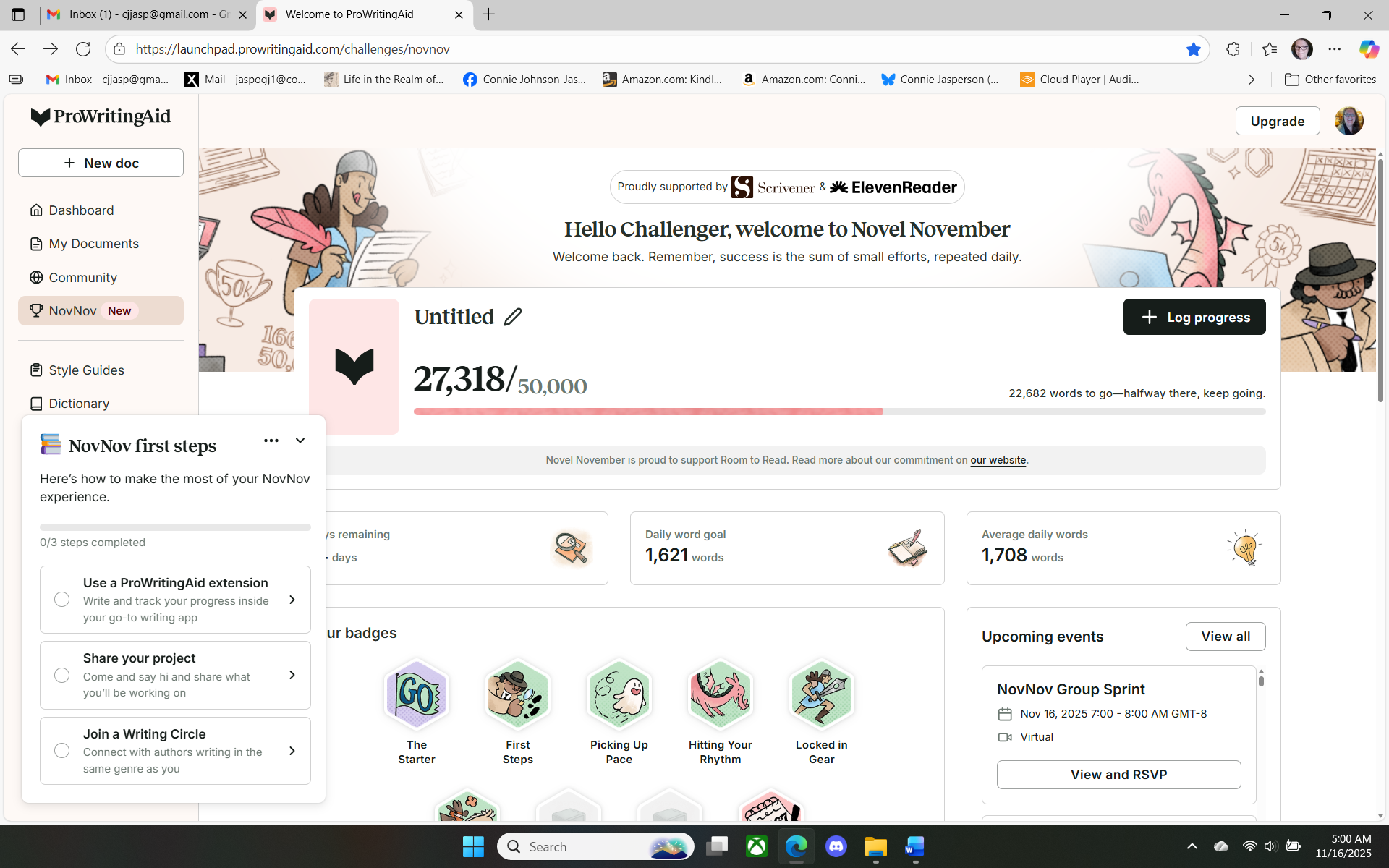





 First, what sort of world is your real life set in? When you look out the window, what do you see? Close your eyes and picture the place where you are at this moment. With your eyes still closed, tell me what it’s like. If you can describe the world around you, you can create a world for your characters.
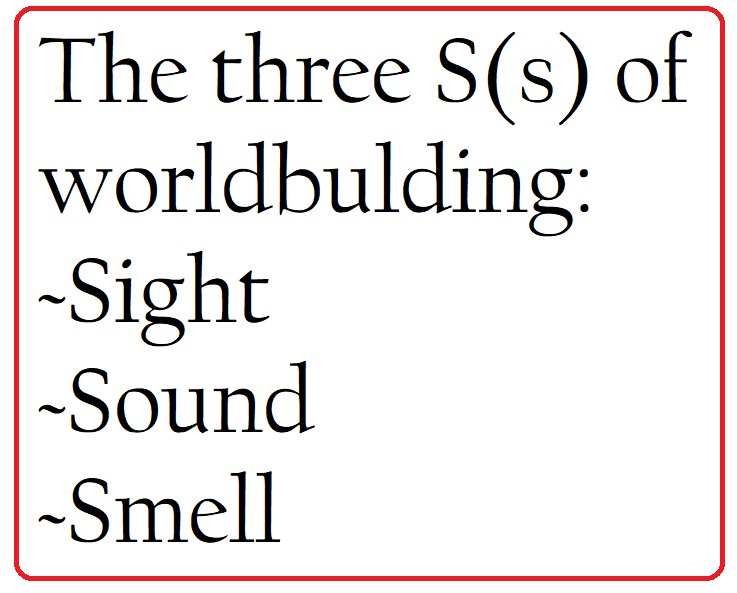
 What does the outdoor world look and smell like? Is it damp and earthy, or dry and dusty? Is there the odor of fallen leaves moldering in the gutters? Or have we wandered too near the chicken coop? (Eeew … get it off my shoe!) If an author can inject enough sight, sound, and scent into a fantasy or sci-fi setting, the world will feel solid when I read it.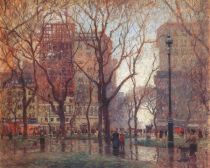
 What about transport? How do people and goods go from one place to another?
 Names and directions might drift and change as you write your first draft. Also, if they’re invented words, consider writing them close to how they are pronounced.
 We talked about getting a start on our characters in Monday’s post. Today, we’re going to visualize the place where our proposed novel is set, the place where the story opens.
 All worldbuilding must show a world that feels as natural to the reader as their native environment. I used the forests and lowlands of Western Washington State as my template. The entire series evolved out of three paragraphs that answered the following question:
 Seagulls are a good example of what could happen. They fly and do their business while on the wing, and sometime find enjoyment in “bombing” windshields.
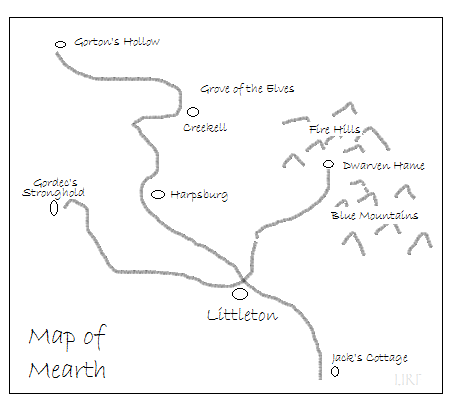
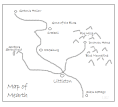 Some of us (Me! Me!) will make pencil-sketched maps of our fantasy world or the sci-fi setting. I find that maps are excellent brainstorming tools for when I can’t quite jostle a plot loose. It’s a form of doodling, a kind of mind wandering, and helps me find creative solutions to minor obstacles.
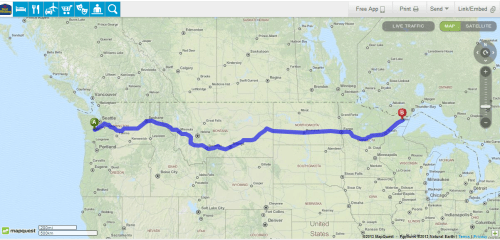
 Here, the shoreline of Puget Sound determines the path of the interstate highway. The major cities and towns are located where there are good deepwater ports.
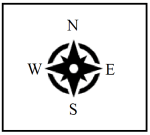 If you are designing a fantasy world, you might want to make a pencil-drawn map. Place north at the top, east to the right, south to the bottom, and west to the left. Those are called
 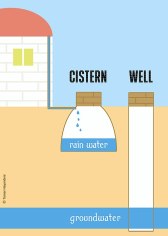 Access to water is crucial to life and prosperity. Humans have long understood the value of clean water for drinking, and you can’t count on getting that from streams or pools. Wells and the technology to make them have been around for a very long time. Cisterns have too, collecting rainwater for drinking and irrigation.
 Those birch trees were nowhere near as tall as the giant cedars and Douglas firs I was familiar with. But once you were away from the road, the birch forests became dark jungles, tangled and mysterious.


 Life in the Realm of Fantasy
