
Geography rules our lives. In my area, an inlet of the Pacific Ocean, Puget Sound, dominates the landscape. Numerous rivers, two decently large mountain ranges, a bunch of volcanoes, and innumerable lakes and ponds impede travel in this part of the world. We are forced to build roads that follow these obstacles, go around them, or climb the lowest passes.
 Here, the shoreline of Puget Sound determines the path of the interstate highway. The major cities and towns are located where there are good deepwater ports.
The roads wind around these obstacles and add to the distance we must travel, increasing the time it takes to go from one place to another. In this part of the world, we cross bridges every day.
Building even rudimentary log bridges requires engineering, but humans have been making them since before we discovered fire. If you want your log to stay put, you must drop it where
- It won’t roll away.
- It won’t be washed away.
- It will bear your weight.
- It will reach the other side with enough clearance that you can safely travel across it without its falling into the chasm or water.
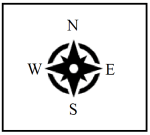 If you are designing a fantasy world, you might want to make a pencil-drawn map. Place north at the top, east to the right, south to the bottom, and west to the left. Those are called cardinal points. Placing the north at the top and the directions east, south, and west following at 90-degree intervals in the clockwise direction is standard in modern maps.
Even if your story is set in a town, a map will help you avoid contradictions. Knowing which direction they are going at the outset is critical if your characters travel from one spot to another. The lines and scribbles you add to your map are the information you can use to check for consistency in your narrative.
I use a pencil so I can easily make changes to my map as the story evolves during revisions. My first maps for any given novel aren’t fancy. But I do suggest you lay your map out like a standard real-world map.
Forests and meadows like water. The climate of an area will be affected by the placement of mountains. Mountain ranges running north and south create what is known as a rain shadow.
This is demonstrated by the radical difference in climate and fauna within my state of Washington. Wikipedia says:
The high mountains of the Cascade Range run north-south, bisecting the state. In addition to Western Washington and Eastern Washington, residents call the two parts of the state the “Westside” and the “Eastside,” “Wet side” and “Dry side,” or “Timberland” and “Wheatland,” the latter pair more commonly in the names of region-specific businesses and institutions. These terms reflect the geography, climate, and industry of the land on both sides of the Cascades. [1]
A river may emerge from a mountain spring or a glacier, but it will flow downhill to a valley where it will either continue on to the ocean or will pool and form lakes and ponds. Farms are usually situated on flood plains or near sources of water.
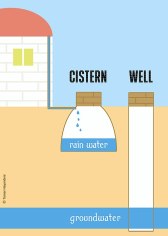 Access to water is crucial to life and prosperity. Humans have long understood the value of clean water for drinking, and you can’t count on getting that from streams or pools. Wells and the technology to make them have been around for a very long time. Cisterns have too, collecting rainwater for drinking and irrigation.
The oldest reliably dated well is from a neolithic site on the island of Cyprus. It has been dated to around 8400 BC and consists of a round shaft driven through limestone. The well tapped into an aquifer at a depth of 8 meters or 26 feet.
On your fantasy map, rivers, mountains, lakes, and ponds will impede travel, forcing a road to go around them.
Those detours will add to the distance and increase the time it takes to travel using whatever the common mode of transportation is for your chosen level of technology.
Having a realistic grip on the length of time it takes to go places is critical to keeping the narrative believable. I keep a calendar of events for each novel, which has saved me several times.
Maybe you aren’t artistic, but you want a nice map for your book. The little scribbled map you make to keep your narrative logical will enable a map artist to provide you with a beautiful and accurate product. An artist can give you a map containing the information readers need to enjoy your book.
Are changing seasons a part of your story?
In a first draft, it’s challenging to fit the visual world into a narrative without dumping it on the page because you are in the process of inventing it. Don’t worry about fine details when you are laying down the story. Go ahead and write “It was autumn” when you have an action scene that must be shown.
A blunt statement like that is a code embedded there for you to expand on in the second draft. It is there to enable you to get the story out of your head and move on.
However, in the revision process, I take those three words, it was autumn, and change them up, using them to lead into the action.
Ivan drew his cloak around himself, listening to the soft rattling of branches moving with the breeze. The occasional calls of night birds went on around him, as if he weren’t full of doubt and indistinct fears, as if he didn’t exist to them. Leaves fell, brown and harvest-dry, drifting, spiraling down to the forest floor.
When it comes to geography, the “three S’s” of worldbuilding are critical: sights, sounds, and smells. Those sensory elements create what we know of the world. What does your character see, hear, and smell? Taste rarely comes into it, except when showing an odor.
Moira slipped the egg into the bag. It was the smallest but was far heavier than she’d thought. It took all her strength to carry it back to the entrance. She moved from boulder to boulder until she disappeared into the shrubbery. At last, hidden in the thick undergrowth, she breathed deeply. The metallic aftertaste of terror and bitter air lingered in her imagination, overriding the musty scents of earth and leaves and the rank odor of dragon scat.
Now she had to wait until the beast returned and went back inside its lair. Moira wrapped herself and the egg inside her cloak, blending into the underbrush. “Don’t worry, little one. I’ll keep you safe and warm.” She felt justified in her theft; the little dragon would never have survived the hatching frenzy. The others would have devoured it.
In my part of the world, the native forest trees are mostly Douglas firs, western red cedars, hemlocks, big-leaf maples, alders, cottonwood, and ash. Because I am familiar with them, these are the trees I visualize when I set a story in a forest.
My husband and I once drove from Olympia Washington to Grand Marais, Minnesota. After leaving the rolling prairies of North Dakota, we went through many miles of birch forests—something I had never seen. I was surprised at how short the vast woodlands we passed through were as compared to the dizzying heights of the forests near my home.
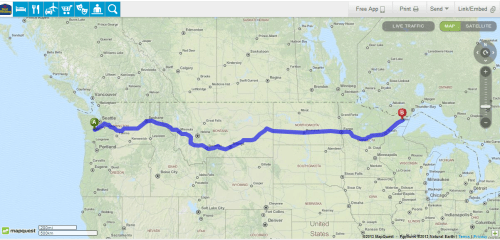 Those birch trees were nowhere near as tall as the giant cedars and Douglas firs I was familiar with. But once you were away from the road, the birch forests became dark jungles, tangled and mysterious.
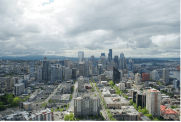
Cities have complex geography and an environment that is theirs alone. It is created by the city’s original terrain and the materials its founders used to develop the architecture. Tall buildings loom, creating canyons through which we must pass on our way to wherever.
The odors and sounds of modern 21st-century life are essential components of worldbuilding in a contemporary novel. Cell phones, the bells and alerts of appliances, traffic sounds—we live in a noisy world. The way the streets sound to pedestrians is a crucial element of modern city life.
But villages have always had sounds and smells that are unique to human habitations. We have always created communities where resources are plentiful, but over time, climate changes. When it does, we adapt.
History and geology tell us that what was once a good place may become a desert over time. Your narrative will mention all the terrain your characters must deal with, and a little map scribbled on notepaper will help you keep things on track.
Next up: Visualizing the flora and fauna of the world. No matter where your story is set or the era it is set in, there will be life of some sort–even on a moon where you are that life.
Previous in this series: Worldbuilding part 1 – Checklist for Creating Societies
Credits and Attributions:
[1] Wikipedia contributors, “Washington (state),” Wikipedia, The Free Encyclopedia, https://en.wikipedia.org/w/index.php?title=Washington_(state)&oldid=1142551716 (accessed March 5, 2023).
Image: Wikimedia Commons contributors, “File:Well-cistern.jpg,” Wikimedia Commons, the free media repository, https://commons.wikimedia.org/w/index.php?title=File:Well-cistern.jpg&oldid=730998786 (accessed March 5, 2023).
 Every world in which every story is set is imaginary. This is true whether it is a memoir, a cookbook, a math book, a sci-fi novel, a contemporary novel set in London, or an encyclopedia.
 When writing our narrative, we want to avoid contradicting ourselves about our protagonist’s world. Keeping it all in your head is not a good idea, especially if you’re like me—too much data means I regularly have the eternal loading screen when trying to recall something. (I’ll never forget what’s-his-name.)
 Just like we do when creating our characters, we want to begin with a paragraph that might be the encyclopedia explanation of where the action takes place. I write fantasy, so here is the one paragraph I might start with:
 If I were to write a thriller set in the current
 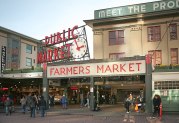 The internet has information about every kind of environment that exists on Earth. All we have to do is use it.
 Unfortunately, maps have fallen out of favor thanks to satellite technology and the GPS in our cell phones. Many people don’t know how to read a map.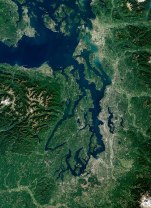
 If you are designing a fantasy world, you only need a pencil-drawn map. Place north at the top, east to the right, south to the bottom, and west to the left. Those are called
 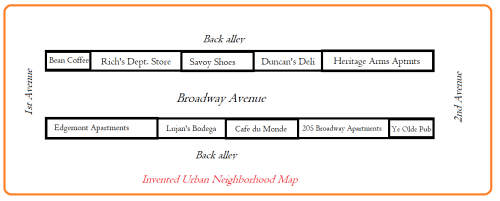 Use a pencil, so you can easily note whatever changes during revisions. Your map doesn’t have to be fancy. Lay it out like a standard map with north at the top, east on the right, south at the bottom, and west on the left.
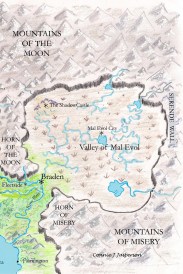 Many towns are situated on rivers. Water rarely flows uphill. While it may do so if pushed by the force of wave action or siphoning, water is a slave to gravity and chooses to flow downhill. When making your map, locate rivers between mountains and hills.
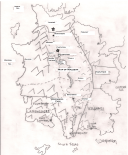 Maybe you aren’t artistic but will want a nice map later. In that case, a little scribbled map will enable a map artist to provide you with a beautiful and accurate product. An artist can give you a map containing the information readers need to enjoy your book.
 In my part of the world, the native forest trees I see in the world around me are mostly Douglas firs, western red cedars, hemlocks, big-leaf maples, alders, cottonwood, and ash. Because I am familiar with them, these are the trees I visualize when I set a story in a forest.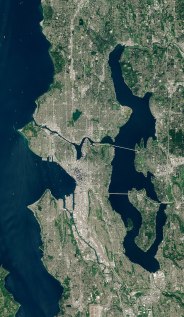
 Every fantasy world has a setting, and that environment has a climate. Certain climates limit the variety of foods available.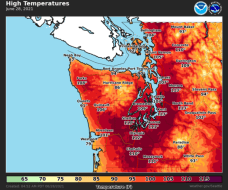
 We know from bitter experience that weather affects the food we produce and influences what is available in grocery stores. Abnormal heat waves across temperate states, category 4 hurricanes along the Atlantic seaboard and the Gulf of Mexico, and category 4 tornadoes down the center of the US and Canada, and even deep freezes in Texas and the deep south have been our lot in the last five years.
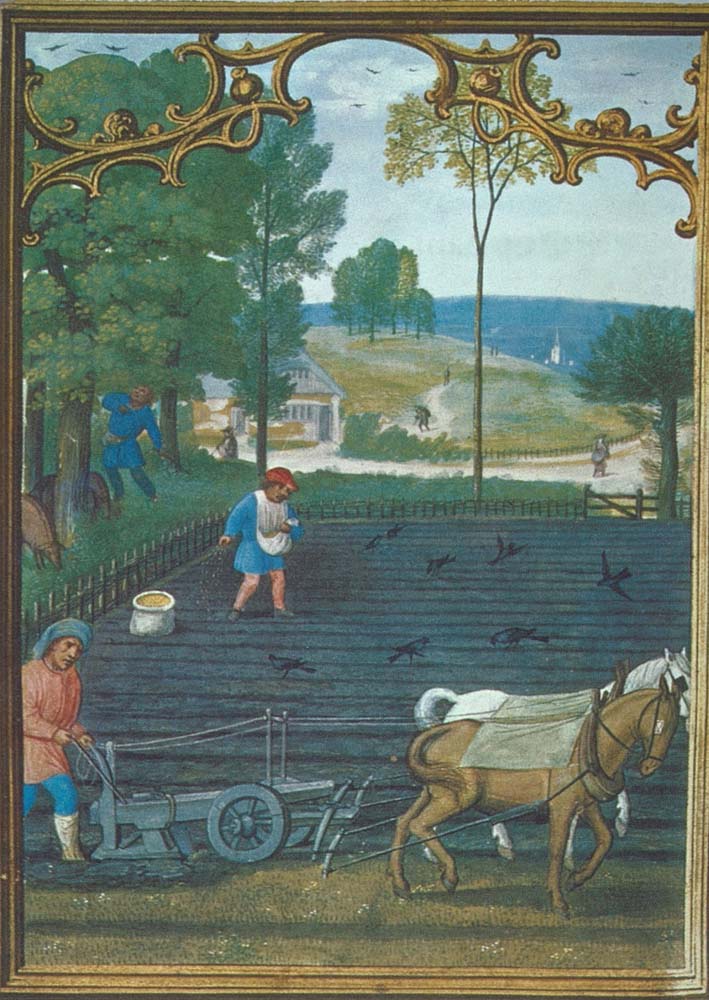
 Once you have decided your historical era, terrain, and overall climate, research similar areas of the real world to see how weather affects their approach to agriculture and animal husbandry. Look into the past to discover ancient agricultural methods to see how low-tech cultures fed their large populations:
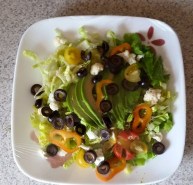 Also, if your story is set in a particular era, how plentiful was food at that time? Famines occurring all across Europe and Asia over the last two-thousand years are well documented. Egyptian, Incan, and Mayan history is also fairly well documented so do the research.
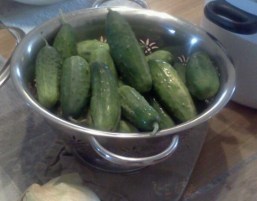 We have witnessed monumental changes since the turn of the millennium. We know California teeters on the edge of disaster, that a water shortage threatens the lives of millions, as well as one of the largest agriculture industries in the US.
 Time interests me because I mostly write fantasy, although I write contemporary short fiction and poetry. Fantasy, and all speculative fiction, relies heavily on worldbuilding, and managing time is a facet of that skill.
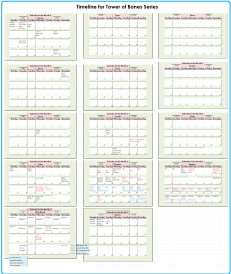 HERE is where I confess my great regret: in 2008, a lunar calendar seemed like a good thing while creating my first world.
 In an even worse bout of predictability, I went with the names we currently use when I named the days, only I twisted them a bit and gave them the actual Norse god’s name. (The gods and goddesses of Neveyah are not Norse.)
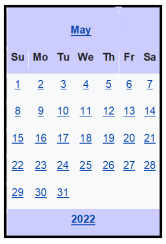 I LEARNED from my mistakes – the timeline for the Billy’s Revenge 3-book series, Huw the Bard, Billy Ninefingers, and Julian Lackland, uses the familiar calendar we use today.
 Why is this so? Let’s look at an example.
 So how is social class different from economic class? In some parts of the world, they are the same. In others, social class is inherited, and economic class is acquired.
 For instance, I grew up in a financially stable lower-middle-class family. But I never buy pre-distressed furniture, no matter how much the designers on TV love it. This is because, by the time my youngest child left home, all my hand-me-down furniture was distressed. I like my furniture to reflect my life—un-distressed.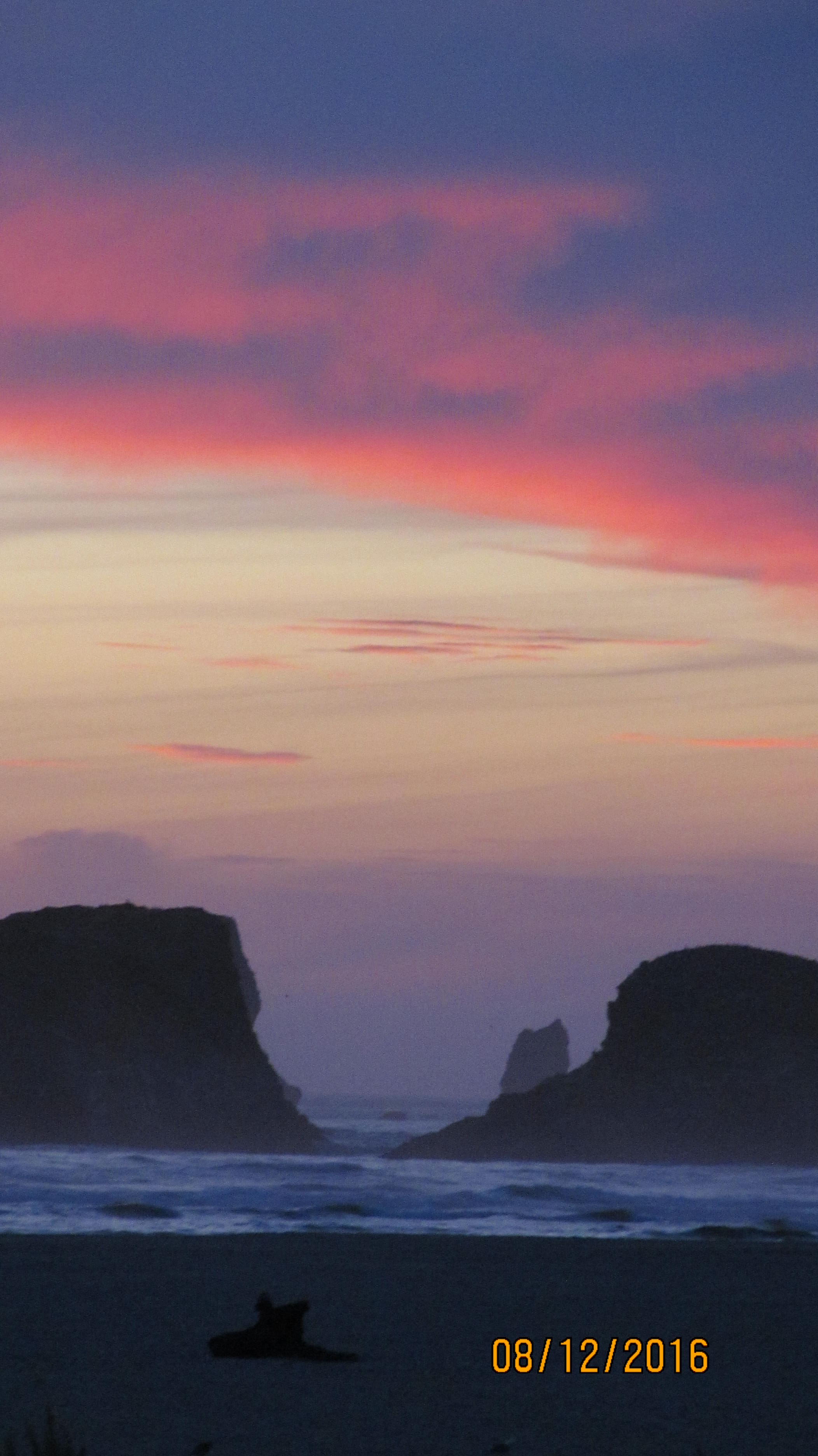
 Several years ago, I read a fantasy book where the author clearly spent many hours on the food of her fantasy world and the various animals. She gave each kind of fruit, bird, or herd beast a different, usually unpronounceable, name in the language of her fantasy culture.
 As many of you know, I have been vegan since 2012. However, during the 1980s, my second ex-husband and I raised sheep. Most of the meat we served in our home was raised on his family’s communal farm. Our chickens and rabbits roamed their yard and had good lives, and our family’s herd of twenty sheep was managed using simple, old-style farming methods.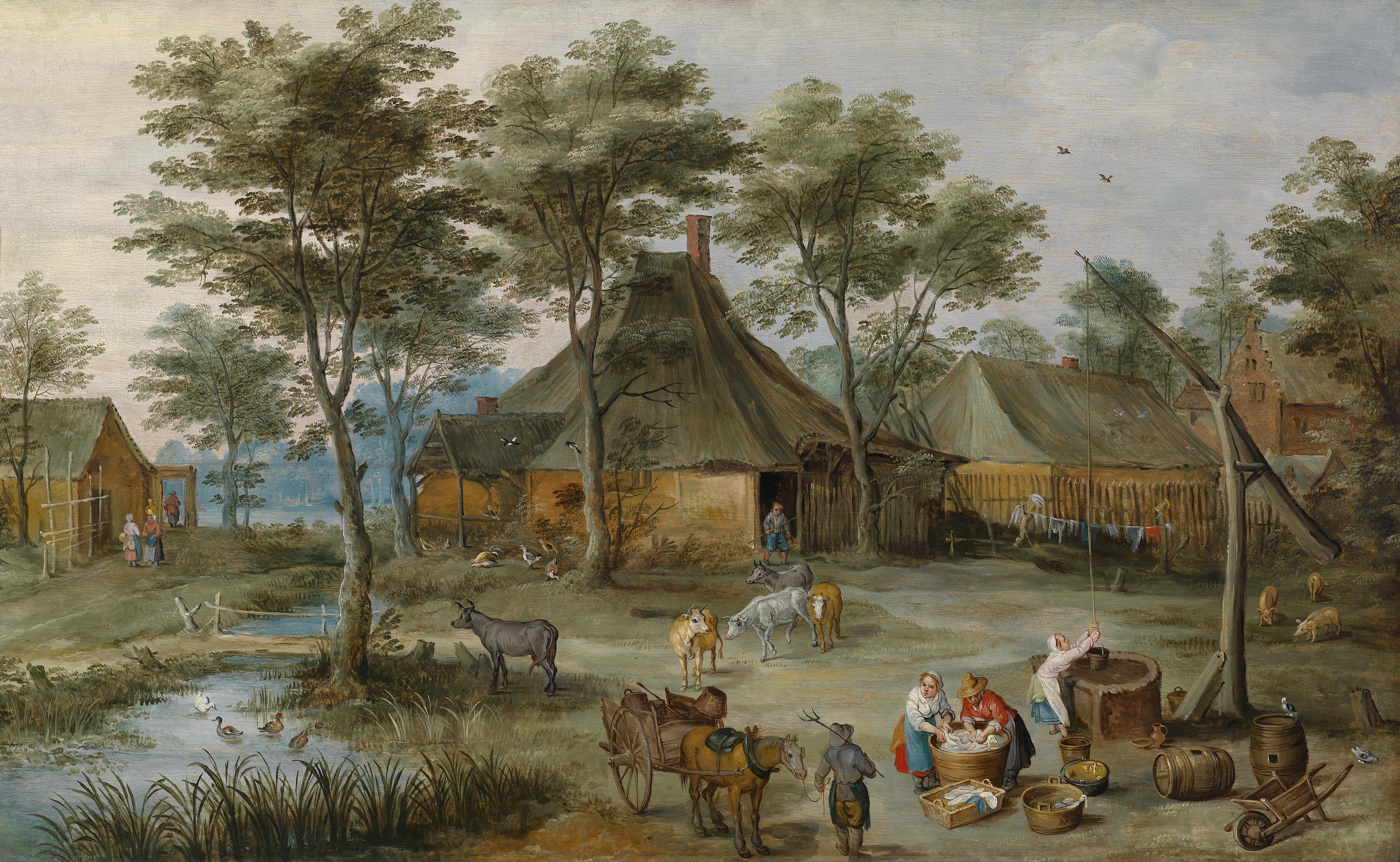
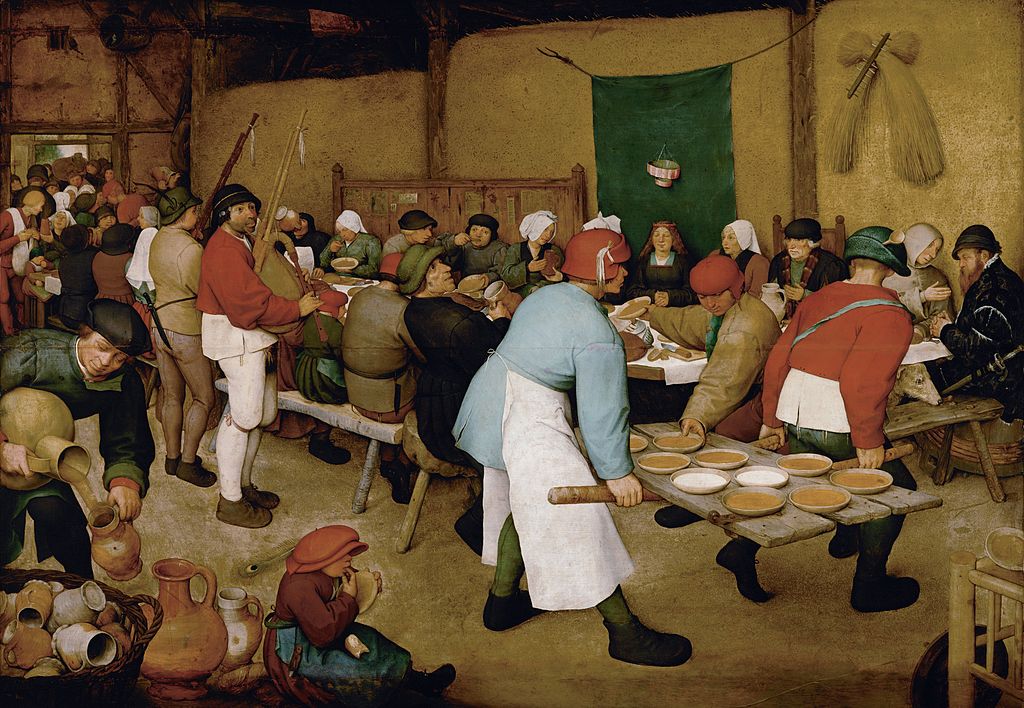
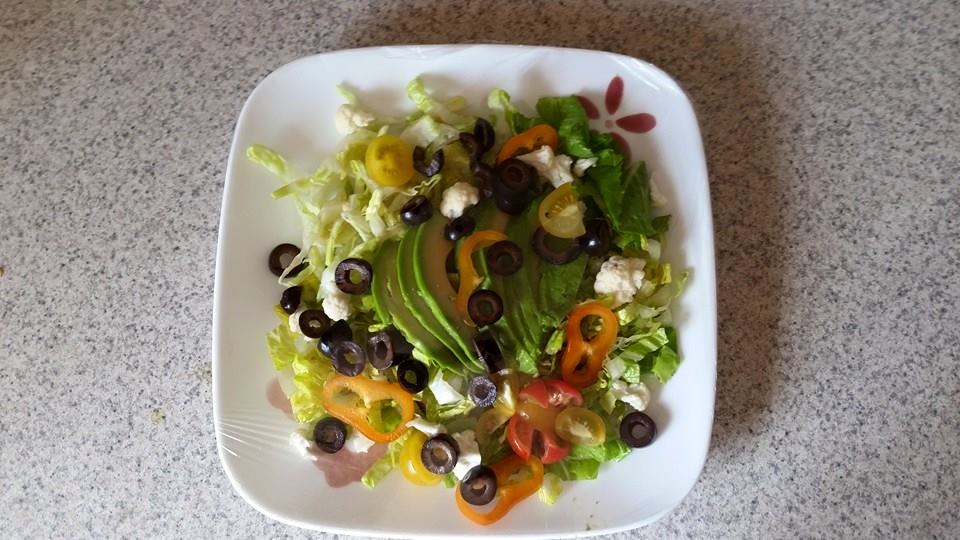 Knowing what to feed your people keeps you from introducing jarring components into your narrative. In
  Magic and the ability to wield it confers power. Magical creatures, elves, mythical races, mythological gods and demigods – these are some of the many natural and supernatural components of fantasy.
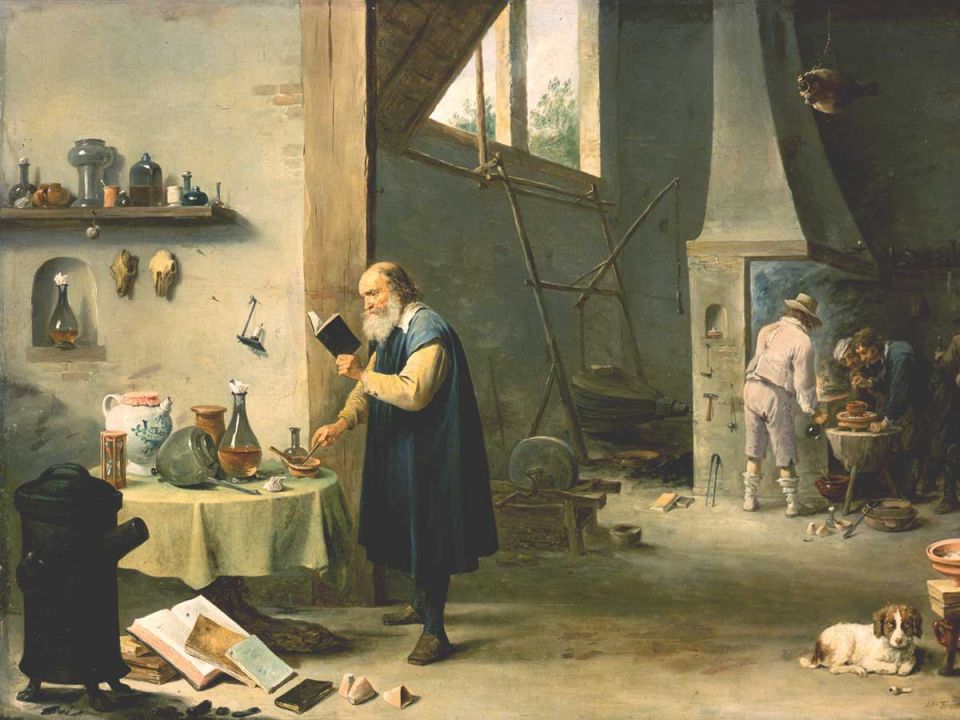 Authors of sci-fi must do the research and understand the
  The following is my list of places where the rules of believable magic and technology converge in genre fiction:
 Science or magic is only an underpinning of the plot. They are foundational components of the backstory.
 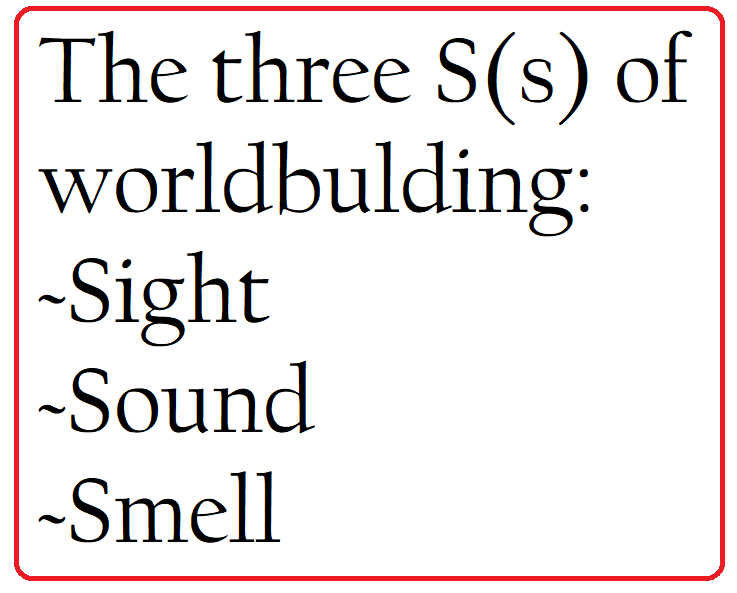 The “three S’s” of worldbuilding are critical: sights, sounds, and smells. Those sensory elements create what we know of the world. Taste rarely comes into it, except when showing an odor.
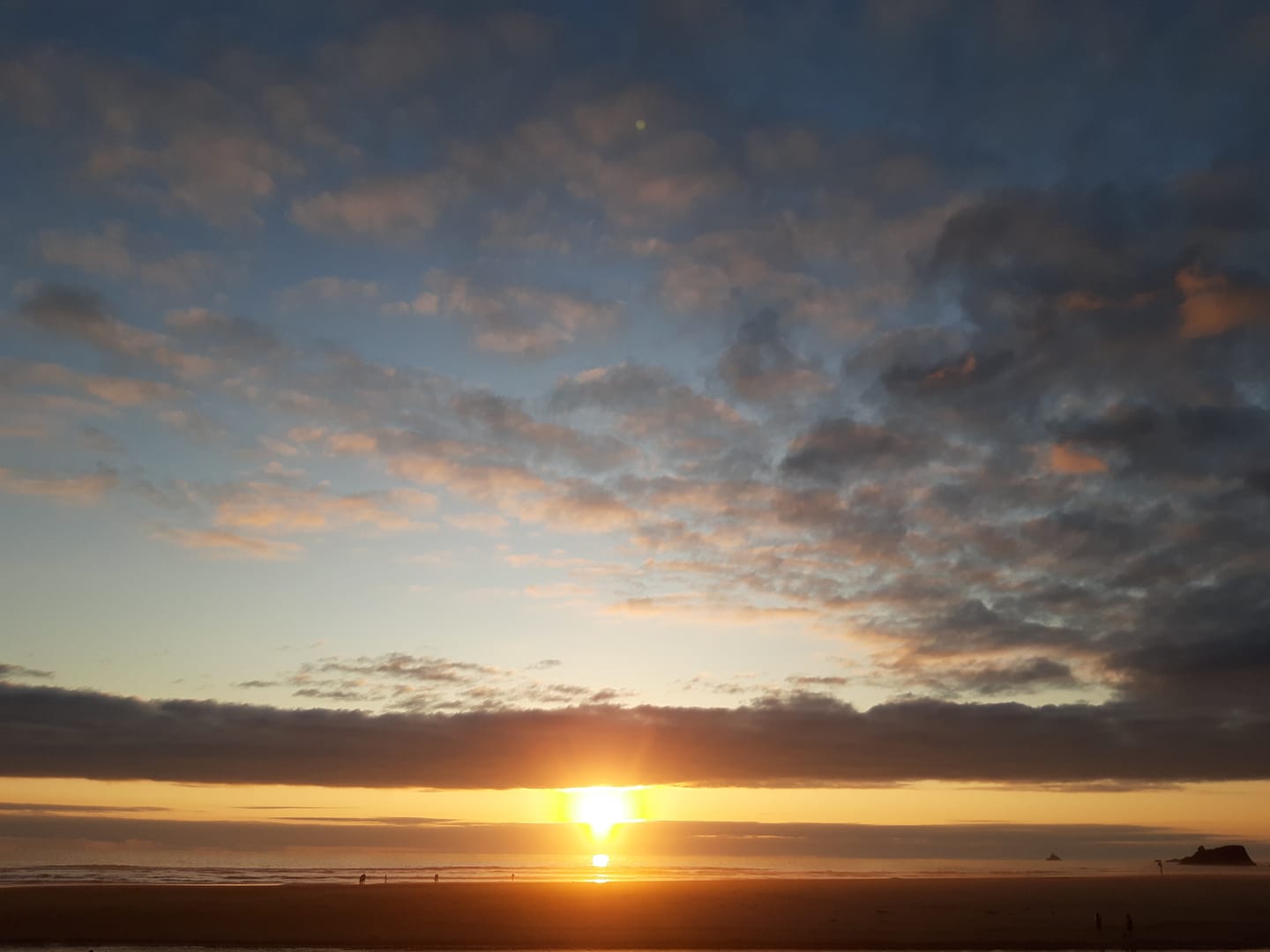 At this moment, inside your room and outside your door, you have all the elements you need to create an alien or alternate world.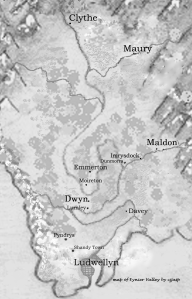




.jpg&oldid=670161517)


