Tag Archives: #writetip

Do the research before you do the murder #amwriting

I recently began reading a murder mystery where the author used a mushroom to kill the first victim. That’s where this book fell apart—the idea was good, but the facts and execution weren’t.
Using a mushroom stroganoff to poison him was a poor choice because fungi is an undependable weapon unless you are an expert. Also, individually, one mushroom may be more or less poisonous than another of the same kind, rather like people are. Judging how many one would need to kill a three-hundred-pound man takes more thought than I am capable of plotting out.

Also, it was stroganoff, which is basically beef and mushrooms in a sour cream sauce. This author danced over the fact that serving the food at this dinner party would have been a tactical nightmare. It would have been nearly impossible to ensure the intended victim got the poison mushrooms and no one else did, which is how this murder was written.

Agatha Christie knew that and regularly poisoned entire dinner parties, literarily speaking. Her murderers made everyone at the table sick but only the intended victim actually died.

This particular mystery was set in Scotland, and I don’t know how poisonous their mushrooms are, but I think that logic would hold true there as well as it does here in the Pacific Northwest.

If I hadn’t been on several nature walks with Ellen King Rice, a wildlife biologist and amateur mycologist who writes well-plotted mushroom thrillers, I would have accepted the slightly contrived fatal dinner as written and focused on the other failings of this novel.

This experience reinforced my belief that readers are often more knowledgeable than we authors are. E-readers can do the research just by highlighting the word and hitting search.

For this reason, having a solid base of information to back up what we are writing is critical.

My disappointment as a reader could have been avoided if the author had gone out to several mushroom hunter websites or even if she had found a local person to talk with. With only a small amount of effort, she could have made her plot a little less flimsy.

Targeted research is essential if you want your fiction to convey a feeling of truth. Identify what you want to know, use the internet, ask an expert, and create a searchable file or database of information that backs up your assertions.

Once you establish the technological era you are writing in, you know what you need to research and how theoretical you may have to get.

Here are some of my go-to sources of information:

If you seek information about low-tech societies (the past) :

My best source of information on low-tech agrarian (farm) life and culture comes from a book I found at a second-hand book store in Olympia in the mid-to-late-1980s. Lost Country Life by Dorothy Hartley is still available as a second-hand book and can be found on Amazon. This textbook was meticulously researched and illustrated by a historian who personally knew the people she wrote about.
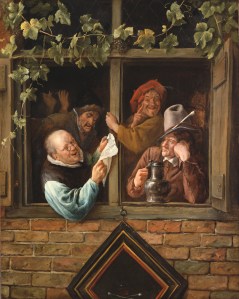
I also find a lot of information on how people lived from Wikimedia Commons.  Under the heading  Category: Painters from the Northern Netherlands (before 1830), you will find the brilliant works of the Dutch Masters, artists living in what is now The Netherlands.

These painters created accurate records of ordinary people going about everyday life. Their genre art depicts how they dressed, and what was important to them.

Talk to police, talk to doctors, talk to lawyers–many are willing to help you with your quest for accuracy about their professions. Also, you can Google just about anything. Fads, fashion, phone tech, current robotics tech, automobile tech—it’s all out there.

Looking things up on the internet can suck up an enormous amount of your writing time. Do yourself a favor and bookmark your resources so all you have to do is click on a link to get the information you want. Then you can quickly get back to writing.

Resources to bookmark in general:

www.Thesaurus.Com (What’s another word that means the same as this but isn’t repetitive?)

Oxford Dictionary (What does this word mean? Am I using it correctly?)

Wikipedia (The font of all knowledge. I did not know that.)

TED Talks are a fantastic resource for information on current and cutting edge technology.

ZDNet Innovation is an excellent source of current tech and future tech that may become current in 25 years.

Tech Times is also a great source of ideas.

Nerds on Earth has useful information about swords and how they were used historically.

If you want to know what interests the people in the many different layers of our society, go to the magazine rack at your grocery store or the local Big Name Bookstore, and look at the many publications available to the reading public. You can find everything from mushroom hunting, to culinary, to survivalist, to organic gardening. If people are interested in it, there is a magazine for it.

We can only extrapolate how societies will look in the future by taking what we know is possible today and mixing it with a heavy dose of what we wish were possible.

SpaceX

NASA

Digital Trends

If you write sci-fi, you must read sci-fi as that is where the ideas are. Much of what was considered highly futuristic in the era of classic science fiction is today’s current tech.

Ion drive, space stations—these are our reality but were only a dream when science fiction was in its infancy.

Think about it: your Star Trek communicator is never far from your side, and your teenagers won’t put theirs down long enough to eat dinner.

MAPS: If you are writing a story set in our real world and your characters will be traveling, walking a particular city, or visiting landmarks, bookmark google maps for that area and refer back to it regularly to make sure you are writing it correctly.

USE GOOGLE EARTH!

If you are writing about a fantasy world and your characters will be traveling, quickly sketch a rough map. Refer back to it to ensure the town names and places remain the same from the first page to the last. Update it as new locations are added.

Do the right research, target it to your needs, and don’t allow yourself to be sidetracked by the many bunny trails that lead you away from actually writing. And for the love of Agatha Christie, make sure your literary murders are done in a way that doesn’t fly in the face of logic.


Credits and Attributions:

Wikimedia Commons contributors, “File:Jan Steen, Dutch (active Leiden, Haarlem, and The Hague) – Rhetoricians at a Window – Google Art Project.jpg,” Wikimedia Commons, the free media repository, https://commons.wikimedia.org/w/index.php?title=File:Jan_Steen,_Dutch_(active_Leiden,_Haarlem,_and_The_Hague)_-_Rhetoricians_at_a_Window_-_Google_Art_Project.jpg&oldid=355150081 (accessed September 10, 2020).
13 Comments

Filed under writing

Chapter Length #amwriting

I was recently asked in an online group what length a chapter should be. I’ve discussed this before here, but I’m always happy to repeat myself. In my opinion, there is no hard and fast rule.

When we commit to writing daily, our writing style grows and changes. Fifteen years ago, I wrote long chapters, some over 4,000 words.

However, as time has passed, my writing style has evolved. Chapters have become shorter, averaging between 1,500 to 2,250. Some will be much shorter, for reasons I will go into further on down this article. Some might be longer if the story demands it.

However, it’s a good idea to consider comfort of your reader. Many readers want to finish a chapter in one sitting. I’ve attended seminars given by authors who say they have a specific word-count limit for their chapter length, a personal choice.

I’ve read and enjoyed many books where the authors made each scene a chapter, even if it was only two or three hundred words long. They ended up with over 100 chapters in their books, but the chapter-length went unnoticed by me when I read it.

L.E. Modesitt Jr. sometimes has chapters of only five or six-hundred words, which keeps each point-of-view character’s storyline separate and flows well.

For me as a reader, books work best when each chapter details the events of one large scene or several related events.

Chapters are like paragraphs. Packing too many unrelated ideas into one place makes them feel erratic and disconnected. In the end, you must decide what your style is going to be.

The key to a smooth, seamless narrative is how an author handles transitions.

This could be a conversation that moves the story forward to the next scene within a chapter.

Conversely, the transition conversation could end a chapter by offering a tidbit of information that compels the reader to turn the page—the hook.

Information is crucial but should be given only as the reader requires it.

A good conversation is about something one or more characters don’t know. It builds toward something they’re only beginning to understand. A conversation is an opportunity to close a scene or chapter with a hook.

That is true of every aspect of a scene or chapter. Each should reveal something new and push the story forward toward the final showdown. If a scene is there to fluff the word count, I suggest removing it.

Fade-to-black: I don’t like fade-to-black transitions except as a finish to a chapter. Fading-to-black in the middle of a chapter makes the story feel mushy.

Hard scene breaks: When a length of time has passed between the end of one scene and the beginning of the next, it makes sense to use the old 1-2-3:

  1. Wind it up with a firm finish
  2. Leave the reader with a hook that makes them want to turn the page
  3. Start a new chapter.

Short stories are different. If you are writing a short story, dividing it into chapters isn’t an option. At the end of a scene, you may find that a hard break is required. Editors with open calls for short stories will often ask that you insert an asterisk or hashtag to indicate a hard scene break.

Pacing is deeply intertwined with chapter length. Most readers find it easier to follow the story when they are only in one character’s mind for the majority of the narrative.

Some editors suggest you change chapters, no matter how short, when you switch to a different character’s point of view. That is my choice also, as a hard transition between characters is the best way to avoid head-hopping.

Head-hopping: first you’re in his head, then you’re in hers, then you’re back in his—it gives the reader “tennis neck” and makes following the storyline difficult.

Sometimes an event occurs where more than one character has a point of view that needs to be shown. How you navigate this will significantly affect the readability of the narrative.

If you switch POV characters, I strongly suggest that you either change scenes with a hard, visual break such as two blank spaces between paragraphs, or consider ending the chapter.

I’ve mentioned before that one of the complaints some readers have with Robert Jordan’s brilliant Wheel of Time Series is how he wandered around between storylines as if he couldn’t decide who the main character was.

Rand Al Thor begins as the protagonist, but Matrim, Perrin, Nynaeve, and Egwene are also given prime storylines.

I’m a dedicated Wheel of Time fan, but I was halfway through reading the series when I realized there was a good chance that we were never going to see Rand do what he was reborn to do. At that point, I kept reading because the world, the characters, and the events were so intriguing.

As very few of us are writers at Robert Jordan’s level, I suggest you concentrate on developing a single compelling, well-rounded main character, with the side characters well-developed but not upstaging the star.

Now we come to a commonly asked question: Should I use numbers or give each chapter a name? The authors I am acquainted with seem divided by this question.

What is your gut feeling for how you want to construct this book or series? If good titles pop up in your mind for each chapter, by all means, go for it. Otherwise, numbered chapters are perfectly fine and don’t throw the reader out of the book.

Whether you choose numbered or titled chapter headings, be consistent and stay with that choice for the entire book.

Limit point of view characters to one per scene.

Each chapter should detail scenes and events that are related, rather than a jumble of unrelated happenings.

In regard to chapter length, you as the author must decide what the right word count is.

End your chapters at a logical place, but do end each chapter with a hook that begs the reader to continue on to the next chapter.

9 Comments

Filed under writing

Winding up 2020: Random Thoughts on the Industry #amwriting

2020 has been a horror show in many ways. If I had written a novel based on a sketchy, random plot like this year gave us, no one would read it.

My review of 2020 is one star. The pacing was completely off. Just about the time I would begin to enjoy the year, some element of random weirdness was inserted just for shock-value. Overall, 2020 lacked believability. I found it difficult to sympathize with the main characters, possibly because they portrayed themselves as such outrageous caricatures.

All that aside, it’s been a good reading year for me. Being in lockdown for much of it has meant I had a lot of free time to devote to expanding my digital library.

I always review the books I enjoyed. I have mentioned before that for every book I feel good about recommending, I may have to read six that are just plain awful. I’m not only talking Indies here—large publishing houses publish many novels every year that are a waste of paper and digital space.

The problem goes beyond my not caring for the style or voice of the piece. Lack of proofreading and garbled sentences are problems in some. Two weeks ago, I read a traditionally published book where the editor didn’t catch a confusion between the words affect and effect, which meant the sentences the word affect was used in made no sense, “affectively speaking.”

Maybe a casual reader wouldn’t be bothered by that, but it jarred me out of the story.

I suggest looking at the first pages of a book by using the “look inside” option at Amazon and the other large online booksellers. The opening pages often show how awful or great a novel will be, so use that tool and don’t buy a book that you haven’t had a look at first.

Rushing to publish a poorly edited book isn’t limited to Indies. It happens all the time with traditionally published books, especially when the first novel in a series has had good success.

Some big publishers set impossible deadlines for the next book and race to launch what they hope will be a follow-up bestseller. However, because the authors were pushed to cough up a book prematurely, the resulting novels sometimes fail to live up to the hype.

The current state of traditionally published books is proof that the system is flawed. This last year, I read several books written by bestselling authors and published by the large publishing houses. These were novels I had anticipated and looked forward to enjoying but didn’t.

By the time I was halfway through them, it was clear the manuscripts were given a quick once over and pushed out the door, in a hurry to hit a hot market.

We have to consider our readers, who deserve the best you can give them. If you are just beginning in this craft, I have some suggestions, things I wish I had known thirty years ago.

Learn the mechanics of how to write in your native language. Grammar and punctuation are the traffic signals that keep your sentences and paragraphs from becoming traffic jams. This is a foundational skill every author must have, no matter what genre you write in.

Join a writing group and meet other authors, either in your local area or online. We grow and learn by talking to others in the industry.

Develop a thick hide. You must find an unbiased eye among your trusted acquaintances to read your work as you are writing it so you can make changes more effectively at an early stage. This way, you won’t be overwhelmed at the prospect of rewriting an entire manuscript from scratch.

Lose your ego. Your ego gets in the way of your writing.  Are you writing for yourself or for others to read and enjoy your work? There are hidden aspects to every great book, and they are all centered around knowledge of the craft.

An external eye is essential to the production of a good book. Find a good, professional editor.

  • Always check the references of anyone you engage for professional services.
  • When you do engage their services, do not take their observations personally—editorial comments are intended only to make a manuscript readable.
  • This editor must be someone you can work closely with, who makes suggestions and is patient.
  • If you disagree with a suggestion, discuss it with the editor and find out why they don’t understand what you intended to convey. Sometimes all you need to do is rephrase an idea.

If you have a symbiotic relationship with a knowledgeable editor, you will turn out a professional-looking manuscript.

Don’t give up your day job. Very few traditionally published authors receive hefty advances. Even well-known authors struggle to make ends meet.

To write well, you must read widely, no matter what your favorite genre is. You may have to read a few books you wish you hadn’t on your way to finding the book that sweeps you away.

Over the years, I have read many brilliant books by talented authors in all genres. These authors were writing on both the indie and traditional sides of the industry.

For me, finding the gems in the library makes wading through the lemons worthwhile. I especially love it when an indie book hits all the right chords.


Credits and Attributions:

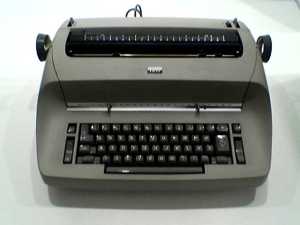
IBM Selectric, By Oliver Kurmis (Self-photographed) [CC BY 2.5], via Wikimedia Commons

3 Comments

Filed under writing

Dissecting the Scene: plot points #amwriting

Scenes are the Legos, the building blocks of the story. We all loved building things with our Legos, but readers are impatient. For that reason, no scene can be wasted, written just to entertain us, the writer. All of those scenes are background and world building, and should be saved in a separate file.

We want to ensure that each scene has a function. When I am writing the first or even the second draft, I can find myself at a loss as to what needs to happen next to advance the story.

I keep a list of plot points that could be explored and try to nudge my plot forward by exploring one of these actions:

  • Information
  • Confrontation
  • Reunion
  • Revelation
  • Negotiation
  • Decision
  • Capitulation
  • Catalyst
  • Contemplation/Reflection
  • Turning Point
  • Resolution
  • Deep emotions

Exploring each of these plot points alters the characters’ view of their world. Every change in a character’s awareness directly impacts the direction of the story and doles out information the reader and/or the characters require to advance.

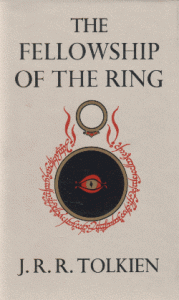
I like to use a watershed scene from the book, the Fellowship of the Ring, as an example of this. If you have only seen the movie, the version you know is quite different. You haven’t seen the real story as J.R.R. himself told it.

So, toward the end of book one of J.R.R. Tolkien’s Lord of the Ring series, we come to The Council of Elrond. The scene is set in Rivendell, Elrond’s remote mountain citadel.

Each character attending the Council has arrived there on a separate errand. Each has different hopes for what will ultimately come from the meeting. Despite their various agendas, each is ultimately concerned with the ring of power. Each wants to protect their people from Sauron’s depredations if he were to regain possession of it.

This scene serves several functions:

Information/Revelation: The Council of Elrond conveys information to both the protagonists and the reader.

It is a conversation scene, driven by the fact that each person in the meeting has knowledge the others need. Conversations are an excellent way to deploy necessary information. Remember, plot points are driven by the characters who have critical knowledge.

The fact that some characters are working with limited information is what creates the tension. At the Council of Elrond, many things are discussed, and the full story of the One Ring is explained, with each character offering a new piece of the puzzle. The reader and the characters receive the information at the same time at this point in the novel.

Inter-racial bigotry and confrontation: A well-placed verbal confrontation gives the reader the context they need to understand why the action occurs.

At the Council of Elrond, long-simmering racial tensions between Gimli the Dwarf and Legolas the Elf surface. Each is possessed of a confrontational nature, and it isn’t clear whether they will be able to work together or not.

Thus, we have action/confrontation in this vignette, followed by conversation, followed by the characters’ reactions.

The conversation and reaction give the scene context, which is critical. A scene that is all action can be confusing if it has no context.

Other conflicts are explored, and heated exchanges occur between Aragorn and Boromir.

Negotiation: What concessions will have to be made to achieve the final goal? These concessions must be negotiated.

First, Tom Bombadil is mentioned as one who could safely take the ring to Mordor as it has no power over him. Gandalf feels he would simply lose the ring or give it away because Tom lives in a reality of his own and doesn’t see Sauron as a problem.

Bilbo volunteers, but he is too old and frail. Others offer, but none are accepted as good candidates for the job of ring-bearer for one reason or another.

Each justification Gandalf and Elrond offer for why these characters are wrong for the job deploys a small bit of information the reader needs.

Turning Point: After much discussion, many revelations, and bitter arguments, Frodo declares that he will go to Mordor and dispose of the ring, giving up his chance to live his remaining life in the comfort and safety of Rivendell. Sam emerges from his hiding place and demands to be allowed to accompany Frodo. This moment is the turning point of the story.

(The movie portrays this scene differently, with Pip and Merry hiding in the shadows. Also, in the book, the decision about who will accompany Frodo, other than Sam, is not made for several days, while the movie shortens it to one day.)

The arc of the story is supported by smaller arcs. These arcs of conflict and reflection are scenes.

The arc of the scene is like any other: it begins, rises to a peak, and ebbs, ending on a slightly higher point of the overall story arc than when it started, leading to the brief transition scene.

Transitions can be as simple as a change of setting, one character leaving the room for a breath of air. They can be hard transitions; the scene ends, and with it, so does that chapter.

Within a chapter, conversations can serve as good transitions that propel the story forward to the next scene, offering a chance to absorb what just happened. This rhythm of action – reaction – action – reaction is how we adjust the pacing. Pacing is how we affect the reader’s emotions.

With each scene, we push the character arc, raising the stakes a little. Our protagonist is shaped by experiencing events and receiving needed information through action and conversation.

All the arcs together form a cathedral-like structure: the novel.

By creating small arcs, we offer the reader the chance to experience the rise and fall of tension, the life-breath of the novel at the same time as the protagonist does. This is how we give the reader a sense of immediacy.


Credits and Attributions:

Facade of the Cathedral of Milan, Italy, in February 2009, after its cleaning.  MarkusMark, CC BY-SA 3.0 <https://creativecommons.org/licenses/by-sa/3.0&gt;, via Wikimedia Commons

6 Comments

Filed under writing

Finish the job #amwriting

This year’s NaNoWriMo saw a large increase in the number of writers who managed to cross the 50,000-word line. This is probably due to the pandemic—we’re all locked up at home with nothing else to do. People who have been dabbling in writing for several years at last committed to the challenge. After all, why not write that space opera or elvish romance that has been rolling around in the back of their mind? It’s not like they had anywhere to go.

In our region, we had 235 participants sign up. Of those, 27 didn’t understand how to use the website, so their data didn’t get counted. Of the 208 participants who did manage to sign up correctly, 33 created their profiles but chose not to participate.

On November 1, 175 writers began updating their word count. To me, the most interesting statistics are found in the lower word counts, the places where people stopped writing.

# of Writers:     Ending Word Count:

15 between 10,000 and 14,999
17 between 5,000 and 9,999
12 between 2,500 and 4,999
19 Between 1,000 and 2,499
11 Between 1 and 999


One statistic I won’t see (but would love to) is how many of this year’s NaNo novels, winner or not, actually get finished. And of those that are completed, how many will be published? Far fewer authors publish than I would wish.

Many people in my region admit that they quit writing the day after NaNoWriMo ended, even those with their books nearly complete. I suspect that if that is true in my pocket of the universe, it is true everywhere.

Will they rediscover their passion and continue on? I hope so, but odds are, they won’t.

235 people in our region signed up. 33 people created projects but didn’t participate. 175 participants signed up correctly and updated their wordcount at least once. Out of those participants, 74 logged in and updated their word count daily, and wrote 50,000 or more words.

The reality sets in within the first week. A strange, coincidental statistic is this: We had 74 winners, but we also had 74 writers in our region who never got more than 15,000 words written.

This is an example of what I think of  as “First Line Syndrome.” Sometimes, the first lines are all an author has.

I have a dear friend who began writing a novel they are exceedingly passionate about several years ago. But the first lines, introducing the characters, and the first few chapters are all that has ever been written.

Yet the author of those few chapters speaks of their barely-begun book with enthusiasm as if they could pick it up and finish it any moment. When they talk about this book, it sounds so interesting; something I would love to read.

Truthfully, I fear that talk about this novel is all that will ever materialize. A writer must dedicate a short amount of time each day to writing, or their book will never be completed. An hour, thirty minutes–all it takes is a little pocket of time that is only for writing.

Why do prospective books languish unwritten?

These writers are passionate about the idea of writing, but not the real work of it. They aren’t obsessive enough about their vision to ignore the drama that keeps them too busy to write.

Once in a great while, when they’re bored and can’t find a book they want to read, they will open that old file and read what they wrote. They will talk about how they’re going to sit down and finish it someday.

But that won’t happen unless they become obsessed, sit their backside in front of the keyboard, and do it.

We all have drama in our lives. For me, writing keeps the drama at arm’s length, makes it manageable. Things crop up, health issues, family emergencies, needs that I can help fill. I wrote much of Forbidden Road and The Wayward Son while sitting in various hospitals. As my son recovered from a variety of life-threatening injuries incurred because of his seizure disorder, my laptop and my work kept me grounded when everything else was out of control.

I wrote a novel during the year I had my mother living with me. She was dying, and we knew it, but we made daily trips to Olympia for chemo, a fifty mile round trip every day. Still, she was failing and we knew it.

When it became clear that nothing was working, we acquired all the things that come with hospice, turning our home into a place where we could care for her more easily. Oxygen tanks, hospital bed, you name it, we had it as part of our décor. A nurse came for an hour every day to help me with bathing Mama and to see that she wasn’t suffering any pain, but I was the primary care giver.

During that time, I also worked part-time as a bookkeeper for a landscape company, dealt with health problems of my own, and had a daughter and son with health issues.

Mama passed away in 2009, but other challenges have arisen to fill that vacuum. Life still affects us.

Writing keeps me sane. Other people discover that writing is too stressful, but reading keeps them sane.

Participating in NaNoWriMo encourages discipline. When you must write 1,667 new words every day, you force yourself to write the entire book before you begin editing.

Once you have the novel’s arc written from beginning to end, you won’t be left wondering where to go next, writing and rewriting the same first chapter.

You can’t edit a book that hasn’t been written, but you can rewrite the same opening lines over and over, until they mean nothing to you.

I encourage writers to read for pleasure. How else will you learn the tricks, the many ways professional authors begin and complete their work?

If you want to write a novel, you must read what is already published in your genre. There is no other way to understand what readers of that kind of book expect and want to see.

But, to become an educated reader/author, you should look outside your favorite genre. You will find books that surprise you, challenge your biased perceptions. Even if you don’t like the book, something will stick with you.

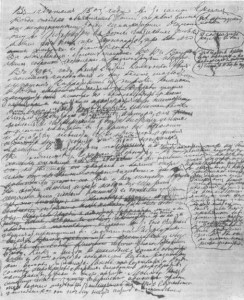
War and Peace, ninth draft, Leo Tolstoy 1864

Published authors, whether Indie or traditionally published, have finished their work.

Maybe they didn’t do as great a job as some people think they could have done, but they did finish writing the book.

Grand ideas about what you intend to write mean nothing if you don’t finish it.

If all you have ever written is the first chapter… over… and over… and over…, perhaps you need to set that idea aside. Perhaps at this point in your life, writing isn’t your passion, but reading is.

If writing isn’t your obsession, keep reading. Don’t stop searching for the one book to end all books.

And it is here that we come to a fundamental truth, one for which I am profoundly grateful.

Without readers, there would be no need for authors.


Credits and Attributions:

Image: Power of Words by Antonio Litterio |Wikimedia Commons contributors, “File:Power of Words by Antonio Litterio.jpg,” Wikimedia Commons, the free media repository, https://commons.wikimedia.org/w/index.php?title=File:Power_of_Words_by_Antonio_Litterio.jpg&oldid=503150259 (accessed December 12, 2020).

Лев Николаевич Толстой, Public domain, via Wikimedia Commons

6 Comments

Filed under writing

Revisions and Plotting the End #amwriting

Many authors who finished NaNoWriMo with a complete story are now beginning the revision process. This year, I wrote most of an unplanned novel, one I had no intention of writing, and therefore I had no outline.

In the rush of laying down those ideas, I wrote many scenes that will need to be moved to a more logical place in the story arc or cut altogether. Still other scenes don’t yet exist and will need to be written so that the ultimate outcome makes sense.

For me, working on the outline is a form of brainstorming. If you haven’t already done so, this is an excellent time to draw up a brief outline that shows you at a glance what you have written. If you are beginning from scratch, writing this outline will take the better part of a day.

However, having an outline to work with will speed the revision process up by a month or so.

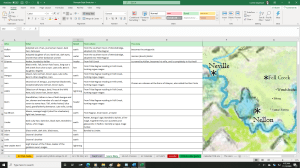
I did make an outline in an Excel Workbook as I went, so I have the basics done, but many things didn’t get noted. I have two major events to plan and write, and then the first draft will be complete.

I know what has to happen, but I’m not sure how to begin this push to the end. So, this week I’m planning what needs to be done next to carry this tale to its conclusion.

Using a spreadsheet program like Excel, or the free program, Google Sheets, allows you to cut and paste events, moving and rearranging scenes up and down the story arc, so they flow logically. There are programs like Scrivener out there that also help you do this, but I’ve never been able to figure out how to use them. I stick with the simple, cost-free options.

When I make the decisions first on a small, easily manageable scale rather than the larger manuscript, I don’t get confused. This makes cutting and moving scenes forward or back along the timeline a lot easier.

So, what do I need to look at first? In this case, it is the timeline: as I wrote, I noted most of the decisions my protagonist and the antagonist made on their way to this point, such as this scene in my antagonist’s thread:

  • Kellan shares relic w/Eriann.
  • Eriann possessed, goes mad.
  • Kellan terrified, casts sleep. Not sure what to do when she wakes.

In the rush to write during NaNo, some scenes didn’t get noted. I’m adding them now, and this is how I will brainstorm the chapters leading to the final scenes.

If you choose to do this, I recommend that you list every decision they made that triggers an event. You need to see the ripple effect of how their actions affect the other characters’ storylines.

Ivan, Marta, and Kellan all made decisions that affected their journey to this point. I need to ensure that I have written them in a way that follows a logical connective evolution. My mind sometimes thinks too far ahead while I am writing.

So, if these choices don’t seem to follow a logical path, I will use my spreadsheet program’s cut and paste function to rearrange the order of events. Then I will go to the manuscript and move or delete them.

Are the choices they made all necessary to achieve the final goal? Does every scene move the plot forward? Does the action reveal aspects of the characters to the reader that were hidden before?

We all write fluff, but it can be hard to recognize it. Are the scenes you wrote background or word-wandering for word count? If so, they don’t advance the plot. I will cut them and save them in a file labeled as background.

Next, I will look at the outline of the story structure again. In every second draft, I ask these questions:

  • Who is the story about now? Are the main characters still the original protagonist and antagonist, or have side characters stolen the show? If so, I would need to rewrite it so that the characters who best serve the story are the center of focus.
  • How high are the stakes if the protagonist fails? Why should we care?
  • How high are the stakes for the antagonist, and why should we care?
  • What do these two characters want most now that they have had a chance to evolve? Did the quest remain the same, or has a new goal emerged?
  • Did the protagonist grow and evolve as a person? If not, why not? Or did they turn to the dark side, becoming an antihero or an antagonist? Is there a new hero?
  • Where are the pivotal places where something important to the logic is missing?

I am going to examine my outline to see what doesn’t need to be included. What should I remove to make the ultimate ending feel more logical? I will write new scenes into the outline, events that push the plot to its conclusion.

I have read many stories that weren’t told in chronological order. Some were successful, but others failed.

Suppose you are going out of chronological order. The plot should still be the same logical chain, but the story might contain flashbacks or memories. I suggest you make a note on your timeline of where these occur so that you don’t repeat information the reader already knows.

Some authors use “flash-forwards,” which can easily make the story arc feel clumsy and unbelievable. I don’t use them myself but have read plenty of books that employ them.

I will tell you now that inserting a flash-forward requires good planning to fit seamlessly into the story and not ruin the mystery.

Good foreshadowing doesn’t tell the story in advance. It offers small clues hidden in the overall picture, hints in the scenery that all is not what it seems. It tantalizes the reader and makes them curious.

Many authors reject the outline process in the first draft because they prefer to “wing it.” The novel I am working on right now was written that way and was fun to write. However, my story has wandered and skipped its way to this point, and now I need to drag it to the conclusion. I will find many places to cut and other areas that need expansion.

This will require more work than if I had planned it and written to an outline, but I am glad I wrote it the way I did. NaNoWriMo 2020 was a good experience. It’s been a long time since I had a novel that insisted on writing itself.

9 Comments

Filed under writing

Submitting to Literary Contests #amwriting

With the advent of December, it’s time to prepare for the 2021 literary contest season.

I recently attended a virtual meeting of one of the professional organizations I belong to, PNWA (Pacific Northwest Writers Association). The discussion revolved around the submission guidelines and rules for their 2021 literary contest.

One point that was brought up and underscored was the importance of following the submission requirements strictly, with no deviations.

A manuscript has the potential of getting 100 points – and I have seen several stellar submissions that did just that.

Be warned, an association like PNWA will take ten points off your submission for each deviation from these requirements, but not more than twenty. If you are starting at 80 points instead of 100, you have already blown your chance.

You might think this is harsh and wonder why they would assess such a penalty.

These are professional organizations, with many best-selling authors in their ranks. They expect their members to have a high standard of professionalism.

Hobbyists generally don’t see the point of these rules and weed themselves out by virtue of not complying. Quite honestly, if an author cannot adhere to a contest’s submission guidelines, their manuscript might also be a mess.

Most writers are hobbyists for many years before they go full time as authors. By the time they decide writing is their career, they will have made all the newbie mistakes. They will better understand how the industry works and what is expected of us, no matter who we are or how great we think our work is.

PNWA and most other literary contests accept submissions through a service like Submittable. All manuscripts will be read “blind.”

Before you click the “submit” button, check and double-check each requirement to ensure your submission complies in full with every step. Once that button has been pressed, there is no turning back.

2015 Nancy Pearl Award

When entering most literary contests, the first rule is: do not include your name anywhere in your manuscript file.

That means that there should be absolutely NO identifying marks on the manuscript to indicate who the author might be. This ensures a fair contest, where each entry is judged on its merits rather than its provenance.

Most contests require submissions to follow specific guidelines, so first up is the font and general layout.

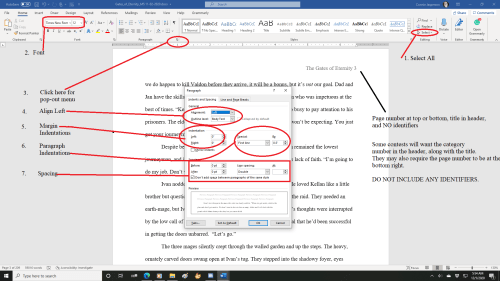
I use MS WORD, but Google Docs and Open Office have similar functions. On the Home tab, click on select all to highlight the entire manuscript.

Go to the font group on the left-hand end of the ribbon. Unless you write with a particular font, the default font, or pre-designed value or setting, will probably say ‘Calibri (Body),’ and the size will be .11.

  • Change font size on the home tab by clicking on the little grey square in the font menu’s right-hand corner and accessing the drop-down menu. Scroll down to Times New Roman and set it to .12. Clicking on that will change the font for the whole thing.
  • On the Home tab, look in the group labeled ‘Paragraph.’ On the lower right-hand side of that group is a small grey square. Click on it. A pop-out menu will appear, and this is where you format your paragraphs.
  • Align left. DO NOT justify the text. In justified text, the spaces between words and letters (known as “tracking”) are stretched or compressed. Justified text aligns with both the left and right margins. It gives you straight margins on both sides, but this type of alignment only comes into play when a manuscript is being made ready for publication.
  • Indentation: leave that alone or reset both numbers to ‘0’ if you have inadvertently altered it.
  • Where it says ‘Special’: on the drop-down menu, select ‘first line.’ On the ‘By’ menu, select ‘0.5.’
  • Line Spacing’: set to ‘double.
  • Click the little box that says, “Don’t add space between paragraphs of the same style.”

Once you have it formatted and submitted, the readers/judges will be examining the work closely. Points will be assessed for each aspect of the submitted piece.

Some of the things they will judge:

Synopsis: When submitting an unpublished novel, the synopsis is critical, as you won’t be submitting the entire manuscript.  Did the synopsis convey the essence of the novel, showing a full arc, including the ending? Did the author fit it into the page/word count as required by the contest rules? Do NOT exceed the word/page count for this. DO include the who, what, when, where, why, and how it ends.

Submission’s Overall Word/Page Count: Most short stories contests are limited to 14 pages, which is around 4000 words. Do not exceed this page/word count. AT ALL.

Novels are different. If the submission is limited to the first twenty pages of a novel, including the synopsis, did the author stick to that rule absolutely? Don’t cut a sentence or paragraph in half—end it a hair short of the upper limit rather than that. Do not exceed the limit, or you will lose 10 points off the top of your score.

In a “blind” contest, your name and reputation won’t come into it at all, so what will your work be judged on?

  1. Plot
  2. Structural arc
  3. Viewpoint
  4. Characterization
  5. Dialogue/Internal Narrative
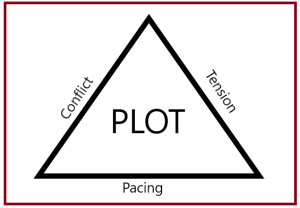
  6. Conflict/Tension/Pacing
  7. Hooks/Transitions
  8. Setting/Description
  9. Voice
  10. Mechanics: Does the author demonstrate an understanding of grammar, industry practices, etc.?
  11. Appeal (This is purely subjective and genre-driven. Don’t submit a literary fantasy to a sci-fi contest.)

Electronic submissions will be accepted through a service such as Submittable. In fact, Submittable will have a list of open calls for submissions, so check it regularly.

Some contests will still accept mail-in submissions, although this is more labor-intensive and requires someone to process them by hand. Many organizations don’t have that sort of office help, so they will only accept digital submissions.

2020 Nancy Pearl Award

Don’t worry that you won’t be credited for your work if you don’t have your name on it. Your name and bio will be in the Submittable profile and cover letter. Also, your entry will automatically be electronically linked to your profile.

It’s a good idea to go out to Submittable in advance and create a professional profile, with a short, professional bio less than 100 words and in the third person. Keep it simple; keep it professional.

Entry Fees will be listed if there are any. Non-profits who use a service like Submittable will have to charge one, as they must pay for that service.

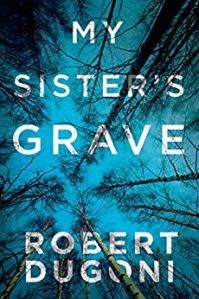
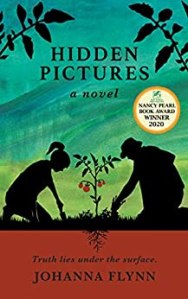
To see what quality of work you are up against if you choose to submit to a professional organization’s literary contest, I highly recommend Robert Dugoni’s My Sister’s Grave, and Johanna Flynn’s Hidden Pictures. Both are winners of PNWA’s Nancy Pearl Award.

“Blind” submissions and strict submission rules level the playing field. Every author, famous and award-winning, or completely unknown, is held to the same standard.

Your work will be judged on its merits, which is the real test of your skill. Some contests give the authors the judge/readers’ critiques. Because there are no preconceptions or bias, they tend to be honest and kindly worded. I think those are well worth any entry fees.

Happy writing, and good luck if you choose to submit to 2021’s upcoming literary contests.

8 Comments

Filed under writing

The Pros and Cons of Using Editing Software #amwriting

When you complete NaNoWriMo and get that winner’s certificate, you unlock many special deals on various software created for writers. I have tried Scrivener and didn’t find it useful for my writing style, but many people swear by it. My head doesn’t work that way.

Three of the many offers NaNoWriMo winners can get and which I am familiar with are:

All of these are good, reputable programs. Many people ask if I use them in my own work. I use editing software, but I don’t follow their suggestions blindly.

No software can replace knowledge of grammar. An author must have confidence in what they intend to convey and how they wish to say it.

For this reason, editing software is not as useful as we want it to be.

A person with no knowledge of grammar will not benefit from relying on an editing program for advice. There is no way to bypass learning the craft of writing.

I use Grammarly, an editing program for checking my own work. I also use ProWriting Aid. I pay a monthly fee for the professional versions of these two programs. Each one has strengths and weaknesses.

These programs operate on algorithms defined by finite rules.

Not every recommendation is right. However, when the editing program highlights something, I look at the problem sentence carefully. Just knowing that the way I phrased a sentence tripped the program’s algorithms encourages me to look at that passage with a critical eye.

I may not use the program’s suggestion, but something triggered the algorithm. That means my phrasing might need work. I may need to find a better way to get my idea across.

Editing programs will only confuse and mislead you if you don’t understand grammar, sentence construction, paragraph construction, or how to punctuate dialogue.

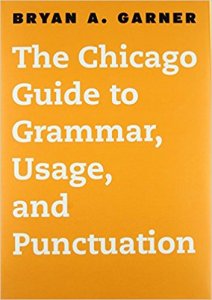
New writers should invest in the Chicago Guide to Grammar, Usage, and Punctuation and learn how grammar works.

You may have found that your word processing program has spellcheck and some minor editing assists. Spellcheck is notorious for both helping and hindering you.

Spellcheck doesn’t understand context, so if a word is misused but spelled correctly, it might not alert you to an obvious error.

  • There, their, they’re.
  • To, too, two.
  • Its, it’s

For me, especially in my first draft, some words are like tics. They fall out of my fingers and into my keyboard randomly and out of my voluntary control. I don’t self-edit as I go because I’m just trying to get the story down. The second and third drafts are where I shape my grammar and phrasing.

With each revision, I locate adverbs, descriptors, qualifiers, and “weed words.” I look at the context of the sentence and decide if they will stay or go. Many will go, but some must stay.

An excellent program to help point out when specific passages are passive and need to be “made active” is ProWriting Aid. I use the professional version for my own work. However, they have a free version that will alert you to a few of the most common problems.

These are expensive purchases and for that reason I would recommend trying the free versions first. The main reason for those who don’t understand the basics of grammar to NOT invest in them is this: these programs are unable to see the context of the work they are analyzing.

“The tea was cool and sweet, quenching her thirst.”

Grammarly suggested replacing quenching with quenched.

ProWriting Aid made the same suggestion.

I have no idea why they make that suggestion. You can see how a person blindly following mechanical advice could go wildly astray.

Context is defined as the parts of a written or spoken statement that precede or follow a specific word or passage, usually influencing its meaning or effect.

Currently, at this stage in our technology, understanding context is solely a human function.

Because context is so important, I am wary of relying on these editing programs for anything other than alerting you to possible comma and spelling malfunctions.

You might disagree with the program’s suggestions. You, the author, have control and can disregard suggested changes if, as illustrated above, they make no sense. I regularly reject weird recommendations.

Good editing software is not cheap, but for my specific needs it has been a worthwhile investment.

If you do choose to invest in some, use your common sense. Remember, you have the final say when it comes to your work.

17 Comments

Filed under writing

Goodbye NaNoWriMo2020 and Hello Revisions #amwriting

Today is the final day of 2020’s NaNoWriMo. Many writers have passed the hurdle and already collected their winners’ goodies. They have ordered their winner’s T-shirt and are embarking on revisions.

Others have decided they’re never going to finish, it’s a waste of time, and they’ll never do this again.

But some will.

The real storytellers, people who can’t completely stifle that dream of writing, will return in several years with a better idea and a realistic plan. They’ll conquer it, and writing will become their passion.

This year, I have so far written over 90,000 words. I wrote the final scenes of Bleakbourne on Heath, the alt-Arthurian serial I lost momentum on and couldn’t finish. Also, I made headway on my other unfinished novel, focusing on my antagonist’s story. In discovering the logic of a tainted relic, I accidentally wrote a backstory that became a novel. It is ¾ of the way done.

Participating in NaNoWriMo for the last ten years has taught me discipline.

It makes me do what is the most challenging thing for me—I have to ignore my inner editor to get my word count.

For that reason alone, I will most likely always “do” NaNoWriMo, even when I am no longer able to be a Municipal Liaison.

I love the rush, the thrill of having written something for myself, something I alone will see and enjoy. But more than that, I love knowing that some of what I have written is good and is worthy of sharing with readers.

When I finally write the last words of my accidental novel, the work will have only begun.

I will set it aside, as I need to gain some distance. I’ll go back to finalizing Bleakbourne on Heath, which will take a couple of weeks, or even a month or two. By the time that book is ready for the editor, I’ll be able to see my other work with fresh eyes.

Writers tell me all the time how new and intriguing characters pop up and take their tale in a different direction. Sometimes this works out well. Other times, not so much. I floundered for years on my first novel and can tell you now, it will never be published.

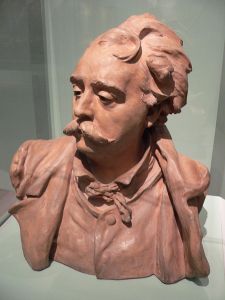
I didn’t know the first thing about how to write a novel, which is apparent when you look at that old manuscript. I didn’t realize that authors are sculptors. The first draft is not the finished product. It’s only a roughly shaped block of clay.

In that glorious moment where we write the final words of our novel, we see it as a precious object, as if it were complete.

Trust me, others won’t see the story the way you do just yet.

A block of clay is only a lump of sticky dirt, but a sculptor envisions what that mass of soil can become. They begin by scraping the layers away until the real shape emerges. That is what we must do.

We scrape away, scene by scene, removing the extraneous fluff in one place and adding more substance in others.

Each chapter is made up of scenes. It might be one scene or several strung together, but these scenes have an arc to them. They’re shaped by action and reaction.

These arcs of action and reaction begin at point A and end at point B. Each launching point will land on a slightly higher point of the story arc.

Strung together, these scenes give form to the narrative, with a beginning, middle, and end.

Often, the middle is where you discover that you have lost your novel’s overall plot. This happens to me for several reasons.

First, it can happen because I deviate from the outline, and while my new idea is better, it lacks something. I go back to the original idea and rewrite it so that it conforms to that outline.

We try to figure out why the plot has failed. I have to ask myself, did the original quest turn out to be a MacGuffin? The MacGuffin’s importance to the story is not the object or goal itself, but rather its effect on the characters and their motivations.

Many times, it is inserted into the narrative with little or no explanation, as the sole purpose of the MacGuffin is to move the plot forward.

Every story has a quest of some sort. It can be a personal quest for enlightenment or a search for the Holy Grail. No matter what, the characters want something, and that thing must be sharply defined.

If the quest has become a MacGuffin, the real quest is not for the object. It is a search for power, love, money, or personal growth and must be given more prominence. The effect that searching for it has on the characters must be clearly shown.

We peel back the layers of our first draft. What symbolism have we subconsciously inserted into the story, clues that we can work with?

Authors always leave hints and symbols in their work, signs of who they are and what they believe. Sometimes it is intentional, but often it is our subconscious writer-mind in action.

If we can identify the symbolic aspect of the plot, we have the opportunity to amplify it.

I have often used the film, The Matrix as an example of how symbolism, intentionally applied, is an underpinning of world-building. When it’s done right, it can show the story in a more focused light.

In one of my favorite scenes, when Neo answers the door and is invited to the party, he at first declines. But then he notices that Du Jour, the woman with Choi, bears a tattoo of a white rabbit. He remembers seeing the words: follow the white rabbit, on his computer.

Curious and slightly fearful of what it all means, he changes his mind and goes to the party, setting a sequence of events in motion. The white rabbit tattoo is a symbol, an allegorical reference to Alice in Wonderland, a subliminal clue that things are not what they seem.

What is the deeper story? With each pass through our manuscript, we sharpen the final product, scrape away from this part and add some over here, rewording and redefining as we go.

Ultimately, we will have exposed the core of our original vision, revealed the parts we couldn’t articulate at first. Some things only become more apparent to us as we dig deeper.

This is why, while many people can write, not everyone can write well. It takes patience and time to cut away the fat and bring out the core of the plot, the story that needs to be told. It also takes practice.

Digging the deeper story out doesn’t happen overnight.

A first draft is our block of clay, and after much effort, the final draft is our finished sculpture. November 30th has arrived, and NaNoWriMo 2020 is over.

Now the real work begins.


Credits and Attributions

David Monniaux, CC BY-SA 3.0 <http://creativecommons.org/licenses/by-sa/3.0/&gt;, via Wikimedia Commons

Auguste Rodin (French, 1840-1917): Bust of Albert-Ernest Carrier-Belleuse, 1882, terracotta, Iris & B. Gerald Cantor Center for Visual Arts, Stanford University Campus, Palo Alto, United States Wikimedia Commons contributors, “File:Rodin Carrie-Belleuse p1070141.jpg,” Wikimedia Commons, the free media repository, https://commons.wikimedia.org/w/index.php?title=File:Rodin_Carrie-Belleuse_p1070141.jpg&oldid=451362532 (accessed November 29, 2020).

5 Comments

Filed under writing

Conferring Power: logic and limitations #amwriting

We are now in the final six days of NaNoWriMo. My region is small, only 174 active writers, but we’re moving along well. As a whole, we just crested the four million word mark. That’s not as much as some regions, but wow!

In our forums on Discord and Facebook, the conversation sometimes turns to the use of magic or science in a narrative. Many of these authors are new at this and need a place to safely discuss their work, so I make it my business to not impose my opinions in either forum.

Besides, I have this platform for ranting about writing. So, how do I feel about science and magic?

In the words of Egon in Ghostbusters, “Don’t cross the streams.”

I have said this before, but I feel the need to repeat it. Science is not magic, and it should not feel to a reader as if it were.

Science is logical, rooted in the realm of real and theoretical physics. The scientific method objectively explains nature and the world around us in a reproducible way. Skepticism and peer review are fundamental parts of the process.

Those who read and write hard science fiction are often employed in the field of science in some capacity. They know the difference between reality and fantasy. The same goes for those who read fantasy—they are often employed in fields that require critical thinking.

Often, readers of both genres are avid gamers. Gamers learn to develop skillsets within strict parameters to advance in the game. Thus, logic and limitations define how much enjoyment they get from a gaming or reading experience.

I read a great many books in all genres. If I have one complaint, it is that many authors indulge in mushy science or magic. They make it up as they go, which is what we all do.

But when they get to the editing stage, they don’t go back and look for the contradictions in their magic or science, the places where a reader can no longer suspend their disbelief.

Having magic conveys power in the same way that having superior technology does. It should be held to the same standards.

If magic is a tool that your characters rely on, it should be believable. The science of magic is an underlying, invisible layer that is part of my world-building process.

The following is my list of places where magic and technology converge in genre fiction:

  1. The number of people who can use either magic or technology should be limited.
  2. The ways that magic or technology can be used should be limited.
  3. The majority of people are limited to one or two kinds of magic/technology. Only specific mages/technicians have the ability to make use of all forms of magic/technology.
  4. There must be strict, inviolable rules regarding what each kind of magic/technology can do.
  5. The conditions under which this magic/technology will work must be clearly defined.
  6. There must be some conditions under which the magic/technology will not work.
  7. There must be limits to the damage magic/technology can do as a weapon or the healing it can perform.
  8. Does the wielder of this magic/technology pay a physical/emotional price for the use?
  9. Does the wielder of this magic/technology pay a physical/emotional price for abusing it?
  10. Is the learning curve steep and sometimes lethal?

Personal power and how we confer it is the layer of world-building where writers of science and writers of magic come together.

  • Magic and the ability to wield it confers power.
  • Science and superior technology do the same.

For the narrative to have any real conflict, the enemy must have access to equal or better Science/Magic.

Often in the case of magic, the protagonist and their enemy are not from the same “school.” This means that the author has two systems and sets of rules to design for that story.

The same goes for technology. One group may have found a way to exploit physics that places the other group at a disadvantage. This is where the tension comes into the story.

WE authors must create the rules of magic or the limits of science for both the protagonist and antagonist. We must do it in the first stages of the writing process.

It will only require a small bit of time and maybe fifteen minutes of writing to create a system that satisfies the above ten requirements. This way, you will be sure the logic of your magic/technology has no hidden flaws.

When you take the time to research science technologies or create magic systems, you create a hidden framework that will support and advance your plot. Limits force us to be creative, to find alternative ways to resolve problems.

Within either science or magic, there can be an occasional exception to a rule, but it must be clear to the reader why that exception is acceptable.

There must be an obvious, rational explanation for that exception.

This is an underpinning of the plot and is a foundational component of the backstory. The only time the reader needs to know these systems exist is at the moment it affects the characters and their actions.

The best background information comes out at the moment that knowledge affects the story. It emerges naturally in conversations or in other subtle ways.

By not baldly dropping it on the reader in paragraph form, the knowledge becomes a normal part of the environment rather than an info dump.

5 Comments

Filed under writing