
One character archetype essential to any tale is the villain. Yet, despite being crucial to the story, this character is often less developed and two-dimensional.
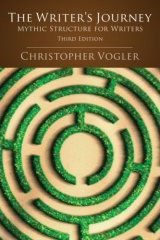 In his book, The Writer’s Journey, Mythic Structure for Writers, Christopher Vogler discusses how the villain of a piece represents the shadow. The enemy injects the narrative with the momentum of dark energy, powering the plot.
Some of the best narratives I’ve read feature the antagonist as the protagonist. We want to see them succeed, yet we fear they will and know it can’t end well. This tension creates a memorable narrative.
One novel that stuck with me was Grunts! by Mary Gentle. She features the orcs as the protagonists, and one feels a great deal of sympathy for the devil.
From Wikipedia:
Grunts! (1992) is a satiric fantasy novel by British writer Mary Gentle. It is set in a basic fantasy world taken from the usual The Lord of the Rings mould, with orcs and elves using magic and typical medieval weaponry, but it plays heavily on black comedy and strong doses of violence and graphic description, frequently depicting scenes “over the top.”
The story follows a group of orcs who always find themselves on the front lines of battle against the carefully prepared and always triumphant forces of good. The orcs decided to organize themselves and fight back. As a satire of high fantasy the novel mocks most of the conventions of the genre from using traditional villainous races, orcs, as the protagonists, to having the noble characters have much less than noble motivations and secrets.
The opening of the book plays up the orc warleader sent to reclaim a weapons cache in preparation for the ‘Last Battle’ between good and evil, which is well on its way. They are assisted by a pair of halflings whose cute demeanor is contrasted with extremely violent acts. [1]
In any narrative, the shadow provides opportunities for contrast. Whether a person, a creature, or a natural disaster, the antagonist represents darkness (evil), against which light (good) is shown more clearly. Also, the shadow, whether a person, place, or thing, provides the roadblocks, the reason the protagonist must struggle.
Large predatory animals will be aggressive toward humans because hunters need a large habitat and hefty prey. They are unpredictable and will attack when we enter what they see as their territory. This is plot-fodder for many a scary horror novel.
Storms and natural disasters make perfect antagonists. Everyone loves a good disaster novel or movie because when nature throws a tantrum, it’s terrifying and deadly. People love nothing more than tales of humanity surviving and overcoming the worst that nature can do.
Animals and natural disasters are straightforward antagonists with little room for backstory.
 However, when the antagonist is a person, I ask myself, why this person opposes the protagonist? What drives them to create the roadblocks they do? Why do they feel justified in doing so?
Perhaps you are writing a memoir. Who or what is the antagonist? After all, memoirs are written to shed light on the difficulties the author has overcome, so who or what frustrated your efforts? In some autobiographies, it is a parent or guardian. Other times it is society, the standards and values we impose on those who don’t fit into the slots designated for them.
For many novels, the enemy is the protagonist’s inhibitions and self-doubt.
In others, the two main characters have a sharply defined good versus evil chemistry. (Trust me, the antagonist is a main character, or the hero has nothing to struggle against.)
The struggle makes the story. The characters on both sides of the battle must recognize and confront the darkness within themselves. They must choose their own path—will they fight to uphold the light? Or will they take the easier way, following the shadow?
When the protagonist must face and overcome the shadow on a profoundly personal level, they are placed in true danger. The reader knows that if the hero strays from the light, they will unknowingly offer up their soul.
The best shadow characters are shown to have many layers, and not all of them are bad. They are charismatic because we can relate to their struggle. We may hope events will change them for the better but know in our hearts they won’t.
Characters portrayed as evil for the sake of drama can be cartoonish. Logic must support their actions, or the villain is not believable.
The most fearsome villains have deep stories. Yes, they may have begun life as unpleasant children and may even be sociopaths. Something started them down that path, reinforcing their logical reasons for what we consider villainy.
Speculative fiction has a trap waiting to snare the unwary writer. When the plot centers around the pursuit of a desired object, authors spend enormous amounts of time working on all the supporting reasons for the quest. They give the hero firm, logical reasons for struggling to acquire the Golden McGuffin.
Where some fantasies fail is in depicting the enemy. The villain must also have a plausible explanation for going to the lengths they do to thwart our heroes.
A mere desire for power is NOT a good or logical reason unless it has roots in the enemy’s past. Why does Voldemort desire that power? What fundamental insecurity drives them to acquire absolute control over every aspect of their life and to exert control over the lives of their minions?
 We must remember that the characters in our stories don’t go through their events and trials alone. We drag the reader along for the ride the moment we begin writing the story. They need to know why they’re in that handbasket and where the enemy thinks they’re going, or the narrative will make no sense.
Ask yourself a few questions:
- What made your villain turn to the darkness?
- What events gave them the strength and courage to rise above the past, twisted though they are?
- What is the void that drives their agenda?
- What do they hope to achieve?
- Why do they believe achieving their goal will resolve the wrongs they’ve suffered?
None of this backstory needs to be dumped into the narrative. It should emerge in tantalizing bits and hints as the plot progresses and conversations happen.
We must make the hero’s ultimate victory evoke emotion in the reader. But we also want them to think about the dilemmas the characters have faced.
The villains we write into our stories represent humanity’s darker side, whether they are a person, a dangerous animal, or a natural disaster. They bring ethical and moral quandaries to the story, offering food for thought long after the story has ended.
Credits and Attributions:
[1] Wikipedia contributors, “Grunts!,” Wikipedia, The Free Encyclopedia, https://en.wikipedia.org/w/index.php?title=Grunts!&oldid=1117040155 (accessed August 6, 2023).
 I quickly regretted that decision.
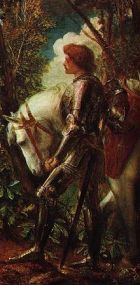 Arthur and his court originated as ordinary 5th or 6th-century warlords. But the tales featuring them were written centuries later. Their 11th-century chroniclers presented them in contemporary armor as worn by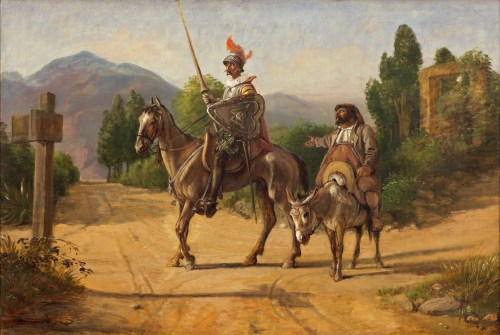
 I am an abject fangirl for Don Quixote, so different versions of both Galahad and Quixote appear regularly in my work.
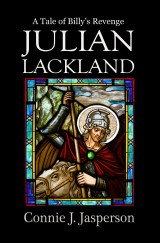
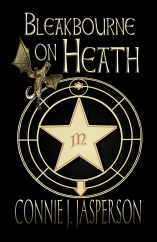 And sometimes a theme refuses to let go of me. I took Arthurian myth and the chivalric code and turned them inside out with the characters of Lancelyn and Galahad in
  During the 1980s and 90s, I listened to music on the stereo, writing my thoughts and ideas in a notebook while my kids did their homework. I drew dragons and fantasy landscapes and worked three part-time jobs to pay the bills.
 For most of my writing life, I was like a toddler given a package of
 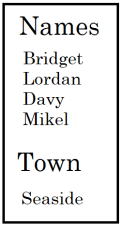 Build a glossary of words and spellings unique to your story, and be sure to list names. I use an Excel spreadsheet, but you can use anything you like to help you stay consistent in your spelling.
 The master file might be titled: Lenns_Story
 I gained a fantastic local group through attending write-ins for NaNoWriMo, the Tuesday Morning Rebel Writers. Since the pandemic, and with several of our members now on the opposite side of Washington State, we meet weekly via Zoom. We are a group of authors writing in a wide variety of genres.
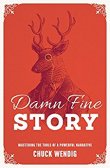 Learn about structure and pacing from successful authors. Spend the money to go to conventions and attend seminars. You will learn so much about the craft of writing, the genre you write in, and the publishing industry as a whole—things you can only learn from other authors. I gained an extended professional network by joining
 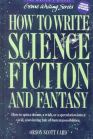 The year that followed was filled with mistakes and struggles. Legitimate publishers NEVER contact you. You must submit your work to them, and they prefer to work with agented authors.
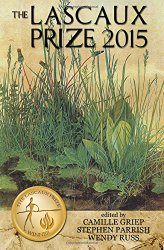 Short stories and micro fiction are a training ground, a way to hone your skills. They’re also the best way to get your name out there. I suggest you build a backlog of work from 100 to 5,000 words in length. Keep them ready to submit to magazines, anthologies, and contests.
 One of my favorite authors writes great storylines and creates wonderful characters. Unfortunately, the quality of his work has deteriorated over the last decade. It’s clear that he has succumbed to the pressure from his publisher, as he is putting out four or more books a year.
 This frequently happens to me in a first draft, but whoever is editing for him is letting it slide, as it pads the word count, making his books novel-length. I suspect they don’t have time to do any significant revisions.
 When we lay down the first draft, the story emerges from our imagination and falls onto the paper (or keyboard). Even with an outline, the story forms in our heads as we write it. While we think it is perfect as is, it probably isn’t.
 Inadvertent repetition causes the story arc to dip. It takes us backward rather than forward. In my work, I have discovered that the second version of that idea is usually better than the first.
 You see things from a different angle when you start reading the chapter from the end and work your way toward the beginning. It’s amazing how many bloopers show up when you do this, even though you have already read it aloud. When you read it aloud you were going the direction you always go, the way you know so well. The mind tricks us, and we read what should be there instead of what is.
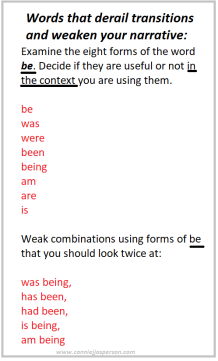 Here are a few things that stand out when I do this:
 I am fortunate to have excellent friends willing to do this for me. Their suggestions are thoughtful and spot-on.
 In my work, the suggestions offered by the beta reader (first reader) guide and speed up the revision process. My editor can focus on doing her job without being distracted by significant issues that should have been caught early on.
 Characters: Is the point of view character (protagonist) clear? Did you understand what they were feeling? Were they likable? Did you identify with and care about them? Were there various character types, or did they all seem the same? Were their emotions and motivations clear and relatable?
 Editing is a process unto itself and is the final stage of making revisions. The editor goes over the manuscript line-by-line, pointing out areas that need attention: awkward phrasings, grammatical errors, missing quotation marks—many things that make the manuscript unreadable. Sometimes, major structural issues will need to be addressed. Straightening out all the kinks may take more than one trip through a manuscript.
 An editor is not the author. They can only suggest remedies, but ultimately all changes must be approved and implemented by the author.
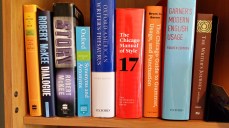 A reader won’t be familiar with it and will notice what we have overlooked.
 When observed by others, a person who is daydreaming appears lazy. Mind-wandering has no obvious purpose, but it is critical for creativity. Every groundbreaking discovery in science, every great invention we enjoy today—all were inspired by ideas that came to a person while thinking about something else or when they were mind-wandering.
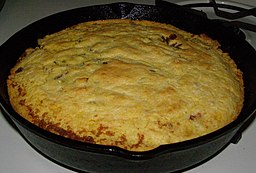 My oldest daughter, looking at our dinner, a casserole of beans with cornbread baked on top like a cobbler: “What the heck is that?”
 Perception is in the eye of the beholder. Observation and thought are seeds that inspire extrapolation, leading the viewer to come away with new ideas. When I see the story captured in a single scene by an artist, my mind always surmises more than the painting shows. I see the picture as depicting the middle of the story and imagine what came before and what happened next. Unintentionally, I put a personal spin on my interpretation, and ideas are born. I don’t mean to, but everyone does.
 This means that daydreaming is actually good for you. It boosts the brain, making our thought process more effective. Letting the mind wander allows a kind of ‘default neural network’ to engage when our brain is at wakeful rest, as in meditation, rather than actively focusing on the outside world. When we daydream, our brains can process tasks more effectively.
 You could be watching the birds, as my husband and I often do. Or maybe you’re perusing the display in a local art gallery or listening to music. I love all genres of music, but for writing I often find inspiration in powerhouse classical pieces such as Orff’s cantata,
  Today, however, I plan a long walk along the beach.
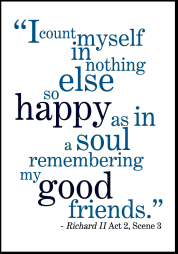 I have no trouble selling my friends’ books – I’ve read them all and love them, and love selling them. Maybe I can sell their books because I’m not emotionally invested in their creation, but I am invested as a reader.
 Next week on this blog we will talk about the creative process and the importance of mind-wandering. We’ll also talk about why it is important to beta read for your fellow writers, and how to be a good reader, one who gives positive feedback and offers constructive suggestions.
 Some novels are character-driven, others are event-driven, but all follow an arc. I’m a poet, and while I read in every genre, I seek out literary fantasy, novels with a character-driven plot. These are works by authors like
 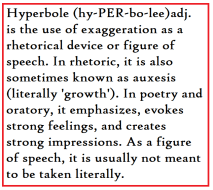 And the prose … words with impact, words combined with other words, set down in such a way that I feel silly even thinking I can write such works. Thankfully, my editor weeds out pretentious hyperbole and slaps me back to reality.
 This part of the novel is often difficult for me to get right. The protagonist must be put through a personal crisis. Their inner world must be shaken to the foundations.
 This emotional low point is necessary for our characters’ personal arcs. It is the place where they are forced to face their weaknesses and rebuild themselves. They must discover they are stronger than they ever knew.
 And what of my female protagonist? Where does her story begin?
 I must introduce a story-worthy problem in those pages, a test propelling the protagonist to the middle of the book. The opening paragraphs are vital. They are the hook, the introduction to my voice, and must offer a reason for the reader to continue past the first page.
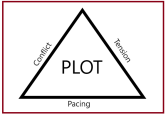
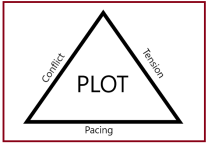 My favorite books open with a minor conflict, evolving to a series of more significant problems, working up to the first pinch point, where the characters are set on the path to their destiny.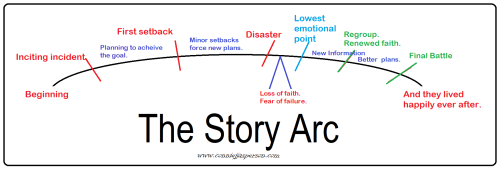
 In literary terms, this uneven distribution of knowledge is called asymmetric information. We see this all the time in the corporate world.
 Jared is hilarious, charming, naïve, a bit cocky, and completely unaware that he’s an arrogant jackass. He is a young man who is exceptionally good at everything and is happy to tell you about it. Jared has no clue that his boasting holds him back, as no one wants to work with him.
 When I started writing this story, I had the core conflict: Jared’s misguided desire to be important. I had the surface quest: rescuing the kidnapped kid. I had the true quest: Jared learning to laugh at himself and developing a little humility.


.jpg&oldid=449104554)