
Narrative time and calendar time are separate entities. They are team members working on the same project but with different tasks. Point of view and narrative time work together to create an author’s voice.
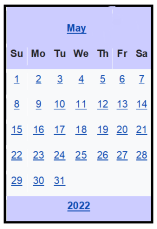 Calendar time is a layer of world-building. It sets the story in a particular era and shows the passage of time.
Narrative time is the grammatical placement of the story’s time frame in the past or the present, i.e., present tense (we go) or past tense (we went).
Narrative time works with point of view to shape the reader’s perception of a scene’s atmosphere and ambiance.
Once the reader passes the first page or two of a novel, a reader becomes used to the way the author has chosen to deliver the story. Narrative time and point of view fade into the background, becoming a subtle layer that goes unnoticed on a conscious level.
How does narrative time relate to “past” or “present” tense?
In grammar, tense is a word referencing time. Tenses are usually shown by how we use the forms of verbs, particularly in their conjugation patterns. The main tenses found in most languages include the past, present, and future.
We create depth by combining narrative time with two closely related components of a story:
- Narrative point of view (or the perspective) is a personal or impersonal “lens” through which a story is communicated.
- Narrative voice, or how a story is communicated, is an author’s fingerprint. Narrative voice or style arises from the words we choose and how we combine them. It is formed by our deeply held beliefs and attitudes. We may or may not consciously intend to do it, but our convictions emerge in our writing, shaping character and plot arcs.
The way that narrative tense affects a reader’s perception of the characters is subtle, an undercurrent that goes unnoticed after the first few paragraphs. It shapes the reader’s view of events on a subliminal level.
Every story is different and requires us to use a unique narrative time. Tense conveys information about time. It relates the time of an event (when) to another time (now or then). The tense you choose indicates the event’s location in time.
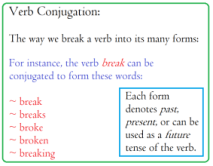 Consider the following sentences: “I eat,” “I am eating,” “I have eaten,” and “I have been eating.”
All are in the present tense, indicated by the present-tense verb of each sentence (eat, am, and have).
Yet, they are different because each conveys slightly different information (or points of view) about how the action pertains to the present moment.
I regularly “think aloud” in writing the first draft. When writing by the seat of my pants, passive phrasings find their way into the raw narrative. I think of these words as traffic signals for when I begin revisions. a shorthand that helps me write the story before I lose my train of thought.
- In the rewrite, we look for the code words (passive phrasing) that tell us what the scene should be rewritten to show.
Many writers avoid the third person omniscient mode because it takes more work to make the prose active. But some stories work best in that mode.
Which sentence feels stronger, more pressing? Each sentence says the same thing, but we get a different story when we change the narrative tense, point of view, and verb choice.
- He was hot and thirsty. (Third-person omniscient, past tense, passive phrasing.)
- Henry trudged forward, his lips dry and cracked, yearning for a drop of water. (Third-person omniscient, past tense, active phrasing.)
- I struggle toward the oasis with dry, cracked lips and parched tongue. (First-person present tense, Active phrasing.)
- You stagger toward the oasis, dizzy with thirst. (Second-person, present tense, active phrasing.)
The way we show this moment in time for these thirsty characters is important. If we write a sentence that says a character is hot and thirsty, we leave nothing to the reader’s imagination. The reader is on the outside, looking in. When we write that experience of thirst using active phrasing, no matter what narrative tense we write in, it changes everything.
Sometimes the only way I can get into a character’s head is to write them in the first-person present tense. This is because the narrative time I am trying to convey is the now of that story. (This happens to me most often when writing short stories.)
In traditional first-person POV, the protagonist is the narrator. We must remember that no one ever has complete knowledge of anything, so the first-person narrator cannot be omnipotent.
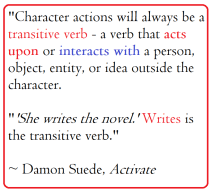 Every story is unique; some work best in the past tense, while others must be set in the present.
WARNING: When we begin writing a story using a narrative time unfamiliar to us, we may have trouble with drifting tense and wandering narrative points of view.
Drifting narrative tense and wandering POV are insidious. Either or both can occur if you habitually write using one mode but switch to another. For this reason, I must be vigilant when I begin in the first-person present tense but then switch to close third person.
For this reason, when you begin revisions, it’s crucial to look at your verb forms to ensure your narrative time doesn’t inadvertently drift between past and present.
So, where does voice come into it?
The way you habitually phrase sentences, how you construct paragraphs, the words you choose, and the narrative time you prefer to write in is your voice.
Summer is nearly upon us here in the Pacific Northwest. Packing and moving is going better than I thought it would. Time for writing is hit and miss this week, but by the second week of June, we will be settled in our new digs, and writing will be back on track. Life is good!
 If I were writing a story starring me as the main character, I would open it in the year 2005 with a couple of empty-nesters buying a house in a bedroom community twenty miles south of Olympia.
 The city center is isolated, twelve miles from the freeway and twenty miles away from every other town in the south county. If a fictional story were set in this town, it would feature the same political and religious schisms that divide the rest of our country. There are other tensions. Some families have been here for generations, and a few don’t appreciate the influx of low-paid state workers buying cookie-cutter tract homes (like mine) here.
 Two inches of rain fell the day we moved into our brand-new home in 2005, making moving our furniture into this house a misery. Our new house had no landscaping and rose from a sea of mud and rocks. With a lot of effort, we made a pleasant yard. When the housing bubble burst in 2008, many people on my side of the street lost their jobs, and some homes went into foreclosure.
 Our main street, Sussex, passes through a historic district. The buildings are all built from sandstone quarried at the old quarries. Many of the old buildings are home to antique stores. The masonic lodge is made of Tenino sandstone.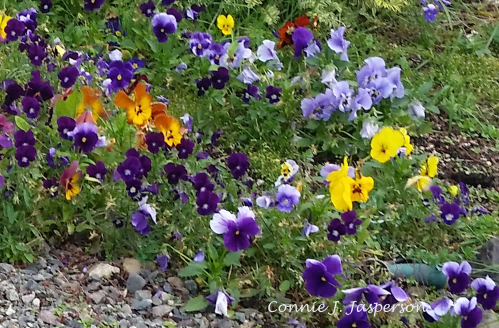
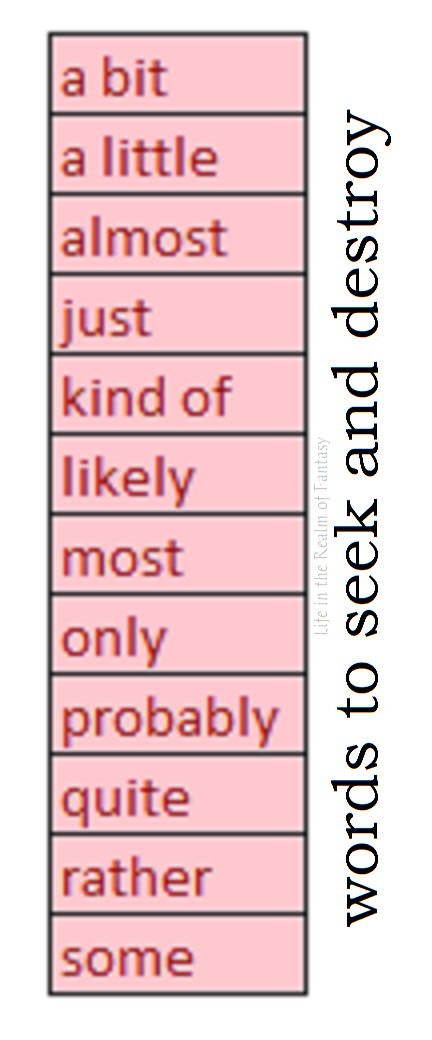
 In writing, we add depth and contour to our prose by how we choose and use our words. We “paint” a scene using words to show what the point-of-view character is seeing or experiencing. Yes, we do need to use some modifiers and descriptors.
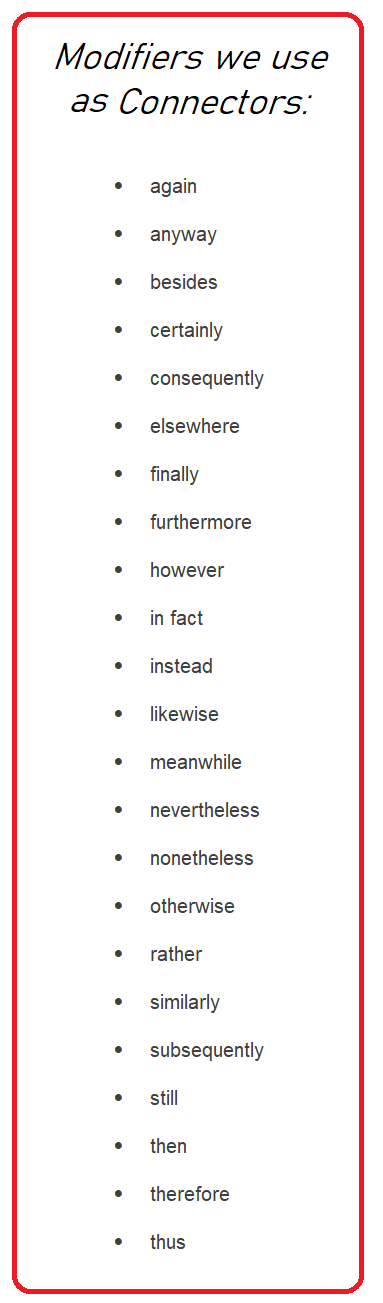 One of the cautions those of us new to the craft frequently hear are criticisms about the number of modifiers (adjectives and adverbs) we habitually use. This can hurt, especially if we don’t understand what the members of our writing group are trying to tell us.
 In the above sentence, the essential parts are structured this way: noun – verb (sunlight glared), adjective – noun (cold fire), verb – adjective – noun (cast no warmth), and finally, verb-article-noun (burned the eyes). Lead with the action or noun, follow with a strong modifier, and the sentence conveys what is intended but isn’t weakened by the modifiers.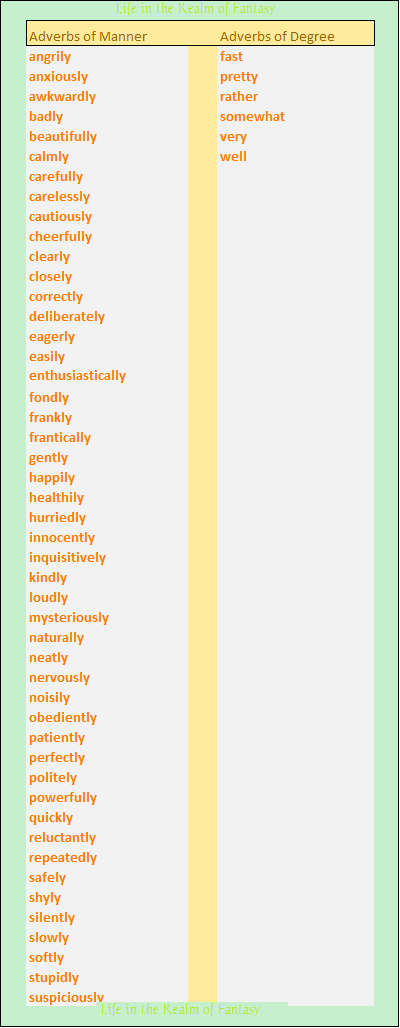
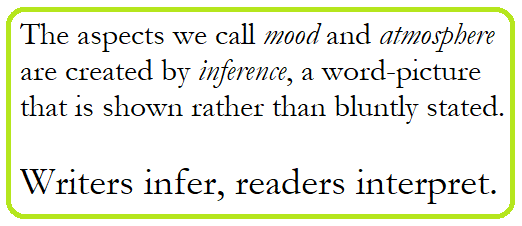 Mood is long-term, a feeling residing in the background, going almost unnoticed. Mood affects (and is affected by) the emotions evoked within the story.
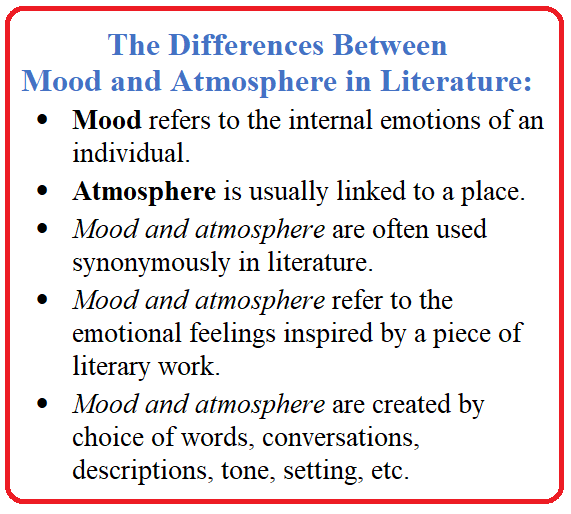 Undermotivated emotions lack credibility and leave the reader feeling as if the story is flat. In real life, we have deep, personal reasons for our feelings, and so must our characters.
 Robert McKee tells us that the mood/dynamic of any story is there to make the emotional experience of our characters specific. It makes their emotions feel natural. After all, the mood and atmosphere
  The commonly bandied proverbs of writing are meant to encourage us to write lean, descriptive prose and craft engaging conversations. These sayings exist because the craft of writing involves learning the rules of grammar, developing a broader vocabulary, developing characters, building worlds, etc., etc.
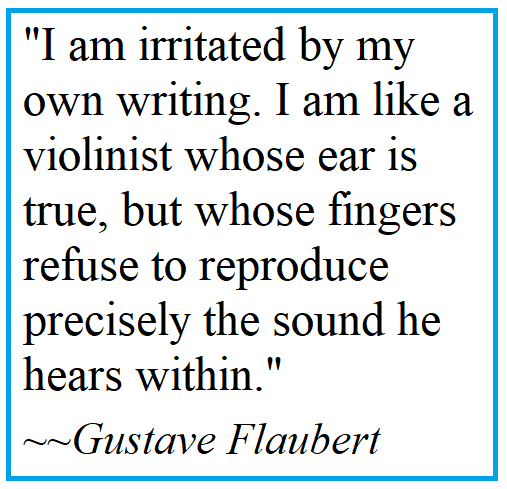 Then, there are the stories where the author leans too heavily on the internal. Creased foreheads are replaced with stomach-churning, gut-wrenching shock or wide-eyed trembling of hands.
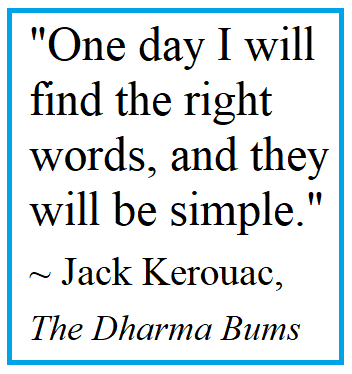 Indeed, we shouldn’t be married to our favorite prose or characters. Sometimes we must cut a paragraph, a chapter, or even a character we love because it no longer fits the story. But have a care – people read for pleasure. Perhaps that phrase does belong there. Maybe that arrangement of words really was the best part of that paragraph.
 Handy, commonly debated mantras become engraved in stone because proverbs are how we educate ourselves. Unless an author is fortunate enough to have a formal education in the subject, we must rely on the internet and handy self-help guides to learn the many nuances of the writing craft.
 I will have to spend a day or two thinking about the story as a whole and writing an outline as a framework to guide the story. The plot points I originally planned to occur at each of the four quarters of the story will be met, but how?
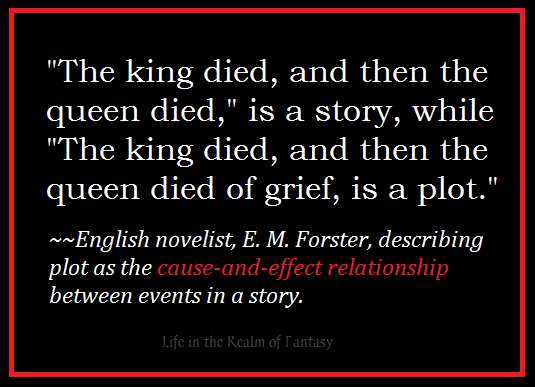 The midpoint of the story arc is often where the protagonists lose their faith or have a crisis of conscience. Something terrible happens, and they must learn to live with it.
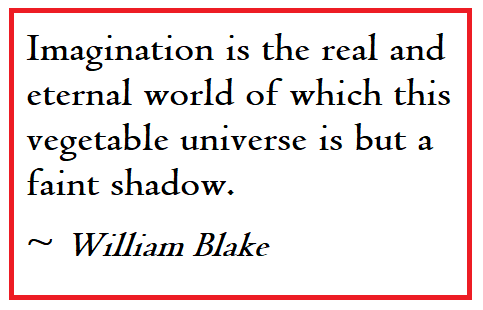 So, starting at the end, I look at my characters’ location when the story finishes. Then I ask myself what they were doing just before the final encounter.
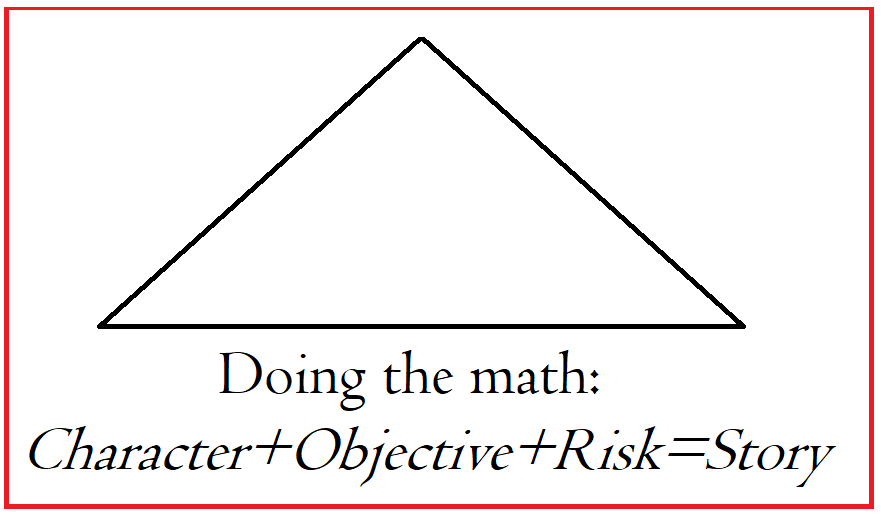 This happens even when I have an outline. I will get to a place where I don’t know what to write, and the characters stand around doing nothing. I repeat the same old crisis with slight variations, which is tedious.
 He says, “I rescued Lady Adeline, and the manticore is dead. Did you notice?”
 “Look, why don’t you sit here and watch TV for a while?” I park him in front of the TV and give him the clicker.
 “I’m sorry to bother you, but we desperately need a certain magical ingredient for my special anti-aging cream.” She looks at me expectantly. “My stepdaughter’s wedding is a big deal. But the outline says Percival and Adeline will assume the throne upon their marriage. It’s canon now, so I’m done, kicked to the curb in the prime of my life.” She dabs the corner of her squinty eyes with a silken handkerchief. “You set this story in an era where women have few career options. I simply must have my beauty cream, or I won’t be able to snare a new hubby.”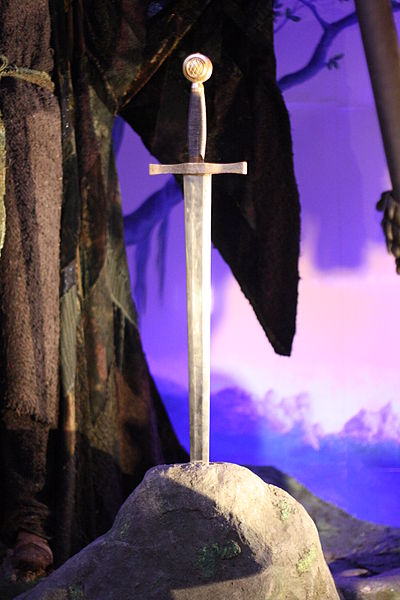
 At first, getting your books in front of readers is a challenge. The in-person sales event is one way to get eyes on your books. This could be at a venue as small as a local bookstore allowing you to set up a table on their premises.
 The final thing you will need is a way of accepting money. I have a metal cash box, but you only need something to hold cash and some bills to make change with. A way to accept credit cards, something like
  I suggest buying book stands of some sort. Recipe stands work, as do plate and picture stands. Whether they’re fancy or cheap, be sure you know how to use them properly so they aren’t falling over when someone bumps the table. I use folding plate stands as they store well in the rolling suitcase I use for my supplies.
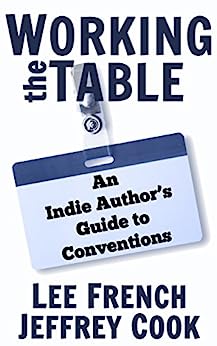 If you plan to get a table at a large conference this year, I highly recommend
  But when it comes to having a website, don’t sweat it. WordPress and Blogger (Google’s platform) offer free blogs and theme templates. You can have a nice-looking website, with only a small amount of effort and a little self-education.
 A blog post doesn’t have to be long. Think of it as a slightly longer tweet or Facebook post. Just write a paragraph or two about what you are interested in at that moment. You will have 300 – 500 words written in no time.
 After six months, you’ll have a history of stats to look at. Use that information to gauge what topics did best. Make sure the time the blog goes live is a good slot. You want to post it when people are looking for something short to read, like when riding the bus or train to or from work.
 If you enjoy reading magazines like
  The narrative essay conveys our experiences and ideas in a form that is easy to digest, so writing this kind of piece requires authors to have some idea of the craft of writing.
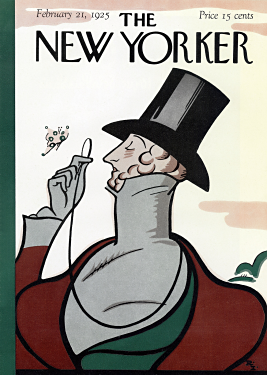 A narrative essay is a story that begins with an experience you once had. You know how that event began and ended. Just like any other form of short fiction, a narrative essay has a plot arc.
 We don’t want to disclose too much information about ourselves or the people we have encountered. An honest narrative essay contains an author’s opinions. Sometimes those sentiments are not glowing accolades. One can lose friends if they aren’t careful.
 Take some time to review what you submitted, keeping those comments in mind. Then form a plan to address those issues with a rewrite.


