Tag Archives: #writetip

How the Written Universe Works – the Physics of Magic part 1 #amwriting

In all my favorite science fiction and fantasy novels, the enemy has access to equal or better science or magic. The story is about how the characters overcome the limitations of their science, magic, or superpower and succeed in their quest.
How the written universe works magic and superpowers1Magic should exist as an underlying, invisible layer of your written universe, the way gravity exists in reality. We know gravity works and accept it as a part of daily life.

Magic should operate with the same limitations that, say, light photons have. Photons can do some things, and they cannot do others.

Your story won’t contradict itself if you establish the known physics of magic before you begin using and abusing it.

As a confirmed lover of all things fantasy, I read a great deal of both indie and traditionally published work. Both sides of the publishing industry are guilty of publishing novels that aren’t well thought out.

Inconsistencies in the magic system are usually only one aspect of a poorly planned world. It’s easy to tell when an author doesn’t consider the possible contradictions that might emerge as the story progresses.

When the magic is mushy, the rest of the setting reads as if they just wrote whatever came into their head and didn’t check for logic or do much revising.

If all the typos are edited out of the manuscript, and the characters are brilliant and engaging, the author might be able to carry it off. Unfortunately, mushy magic or science usually results in a book I can’t recommend.

We have several things to consider in designing a story where magic and superpowers are fundamental plot elements.
magicFirst, the ability to use magic is either learned through spells, an inherent gift, or both. Your world should establish which kind of path you are taking at the outset.

  • Magic is not science as we know it but should be logical and rooted in solid theories.

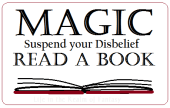
As a reader, I can suspend my disbelief if magic is only possible when certain conditions have been met. The most believable magic occurs when the author creates a system that regulates what the characters can do.

Magic is believable if the number of people who can use it is restricted, how it can be used is limited, and most mages are constrained to one or two kinds of magic. It becomes more believable if only certain mages can use every type of magic.

Why restrict your beloved main character’s abilities? No one has all the skills in real life, no matter how good they are at their job.
lute-clip-artConsider musicians. A person who wins international piano competitions most likely won’t be a virtuoso at brass instruments.

This is because virtuosity requires hours of practice on one thing, working on the most minor details of technique and tone. That kind of intense focus doesn’t leave room for branching into other areas of music.

Magicians and wizards should develop skills and abilities the way musicians do. Virtuosity requires complete dedication and focus. Some are naturally talented but without practice they never rise to the top.

Magic becomes believable if the physics of magic define what each kind of magic can do.

Those rules should define the conditions under which magic works. The same physics should explain why it won’t work if those conditions are not met.

Are you writing a book that features magic? I have a few questions that you may want to consider:

Are there some conditions under which the magic will not work? Is the damage magic can do as a weapon, or is the healing it can perform somehow limited?

Does the mage or healer pay a physical/emotional price for using or abusing magic? Is the learning curve steep and sometimes lethal?

When you answer the above questions, you create the Science of Magic.

So, what about superpowers? Aren’t they magic?

Superpowers are both science and something that may seem like magic, but they are not. Think Spiderman. His abilities are conferred on him by a scientific experiment that goes wrong.

scienceLike science and magic, superpowers are believable when they are limited in what they can do.

If you haven’t considered the challenges your characters must overcome when learning to wield their magic/superpower, now is a good time to do it.

  • Are they unable to fully use their abilities?
  • If so, why?
  • How does their inability affect their companions?
  • How is their self-confidence affected by this inability?
  • Do the companions face learning curves too?
  • What has to happen before your hero can fully realize their abilities?

These limits are the roadblocks to success, and overcoming those roadblocks is what the story is all about. The struggle forces the characters out of their comfortable environment.

The roadblocks you put up force them to be creative, and through that creativity, your characters become more than they believe they are. The reader becomes invested in the outcome of the story.

The next post in this series will delve into powers that are familiar tropes of fantasy: healing and telepathy.
14 Comments

Filed under writing

When Good Novels go Bad #amreading

On Monday, I reviewed a lovely memoir by Judy Kiehart, a book I heartily enjoyed. Today I want to talk about a book by one of my favorite authors, who shall remain nameless. I don’t love every book that comes my way, but I don’t do negative reviews.

magicHowever, we can learn a great deal from books embodying poorly executed plots and badly scripted dialogue.
The book in question is the third installment in what may become a five-part subseries set in the early days of his 22-book universe. I have been a fan of this author’s work since the opening pages of book 1 in this epic series.

I immensely enjoy the way he explores the concept of good vs. evil and gives the side that began in the first five books as antagonists a role that makes them heroes. His protagonists are usually likable, easily relatable people. I care about their happiness and want them to succeed.

In his universe, neither side is good. Both sides manipulate events to make their case, and both are convinced of the purity of their motives. This author has devised a magic system where some people are born with the ability to manipulate certain kinds of subatomic particles.

scienceThe first books of the series establish a science of magic. One can either use chaotic magic or ordered magic. Although some mages can only use one side or the other, the most powerful mages can manipulate both sides of the magic. The entire series explores this concept well. It is a well-planned magic system, with good rules.

These books are military fantasies. Politics and the abuse of power are frequent themes in his novels, as are the age-old conflict between men and women. The overall lesson of the entire series is that absolute power corrupts absolutely. Absolute order is death, and so is absolute chaos. Still, both are necessary for life, so maintaining the balance of order and chaos is crucial.

One of the crucial points of the 22-book series is that every great and powerful civilization begins with the purest of motives—to create a better place for humanity. Throughout the 22-book series, greed and an unquenchable lust for power eventually prove the ruin of the greatest empires.

So, let’s discuss what disappoints me about the subseries that begins with book 19. The protagonist is a naïve, untried young mage forced from his home. His uncle is a powerful chaos mage and raises him to use chaos, but our protagonist is bad at it. After the local ruler murders his uncle, our main character is forced into hiding and discovers he is an order mage.

This subseries deals with the origins of a city of mages, who in generations to come, will ultimately base their power on chaos magic. The twist the author explores in these books is that the city is founded by an order mage as a haven for all mages. It is a fact that future generations will choose to forget.

The prior subseries, books 17 and 18, was brilliant, two of my favorites. However, book 19 begins a decline in quality. The idea for the plot was strong in 19. However, the story arc weakened in 20 and was stretched too thin in 21.

DangerStructurally, the books in this subseries feel like he knew how to end it but struggled to fill in the arc. Past events and conversations get repeated verbatim to every new character. Long passages of remembering and agonizing over what is done and dusted fluffs up the narrative.
This is an author who has always championed both racial and gender equality. While he writes straight protagonists, he includes LGBTQ characters. Most of the time, he gets it right. But in book 19, he lost the way when it came to his female characters. We are supposed to think the women are strong and admire them, but they are two-dimensional, arrogant, and always have the last word.

I disliked the women intensely and felt that if a good editor had seen the work before it was published, the snidely superior way their dialogue reads could have been toned down. As it is now, they all come off as bitches.

And that is only the visible part of the iceberg that is sinking this subseries.

Unlikeable side characters don’t derail a book. However, the pacing stutters along, and that will ruin any novel.

The plots of the three books 19, 20, and 21 form one complete arc that would total around 300,000 words. However, the filler events feel forced, like the author would have set this project aside at several points but was contracted to churn out three books whether he was inspired to write or not.

The arc completely flattens in book 21. It feels like the author had the inspiration for one good book of a decent length but was required to peck out enough words to cut the manuscript into three novel-length sections.

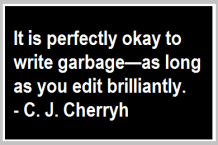
ok to write garbage quote c j cherryhTo me, book 21 reads as if (while books 19 and 20 were in the publishing gauntlet) he still had to fluff up the ending to make book 21 long enough to be considered a novel. The evidence of a lack of genuine inspiration is the absurd “scar” the protagonist is left with after winning an unbelievable victory and nearly dying.
My disbelief refused to be suspended.

In the early days of this series, the author managed to put out one book a year, and they were well-structured. Line editing and proofreading in this author’s books have never been a strong point. I have always felt like he was the only one who saw his work before publication but was able to ignore the flaws.

This subseries is different. I suspect once he had plowed to the end of his first draft, my favorite author checked the manuscript for typos using Word’s ReadAloud function and ProWriting Aid or Grammarly and handed it in at the last minute.

Then, the Big Traditional Publisher published it as is, assuming the manuscript was clear of obvious flaws and gave it scant editorial input. They knew they could sell the series just on the author’s name.

That kind of arrogance irks me and does the author no favors. This could have been a brilliant subseries. The concept of an origin story allows for so much opportunity—and because of Big Traditional Publisher’s churn-and-burn policy, it just fell flat.

The Flaws:

  • Two-dimensional characters
  • Repetitive dialogue
  • Thin plot
  • Absurd events are inserted to justify previous actions and keep things moving
  • Did I mention the repetitive dialogue?

The Positives:

  • Great worldbuilding overall
  • A wonderful exploration of power and the lengths people will go to acquire it
  • A believable magic system.
  • Good exploration of the layers of society
  • Good historical explanation of future societal tensions

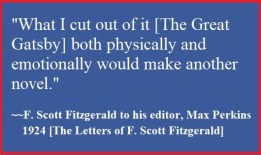
I wanted to love those three books. I really enjoyed books 17 and 18 and had hopes for a good, satisfying read. What I got instead was a hard lesson in the truth about writing:

f scott fitzgerald quoteEveryone, even your favorite author, writes a stinker now and then.
I’m ¼ of the way into book 22 in this series, which is a follow-up. It takes place fifteen years later, with the daughter of a side character as the protagonist. So far, she is more believable than the women in the prior three novels, and most of the dialogue is less annoying.

My inner editor is behaving herself, and it feels like we may enjoy this book.

7 Comments

Filed under writing

How the Written Universe Works part 4: Relativity and Possessives #amwriting

The theory of General Relativity is the geometric theory of gravitation published by Albert Einstein in 1916. According to the internet, it is the current description of gravitation in modern physics.

who whose whomIt deals with things like the mass of objects, the speed at which they travel, how speed and mass are converted to energy, and how mass warps the fabric of space and time.
In layman’s terms, “Gravity works well in some places and especially well in others.” It works especially well in my kitchen, which is why we don’t have matching cups.

But I digress.

Today we are here to discuss relativity in regard to pronouns. In the English language, the following are the most common relative pronouns: which, that, whose, whoever, whomever, who, and whom.

They are also known as possessives and genitives. We use these words every day in casual conversation, so on the surface, they seem simple. But when we write, relative pronouns can be complicated.

Most people know that an apostrophe denotes possession (and I’m not talking demonic here) or indicates a contraction.

Things to remember:

  1. Who’s is the contraction of “who is” or, less commonly, “who has.”
  2. Whose is the possessive of “who” or (controversially and only rarely) “which.”
  3. Their(s) is the possessive of “they.” (They’re proud to own it, it’s theirs, and it’s not there.)
  4. Its is the possessive of “it,” and “it’s” is a contraction of it is. Note that there is no apostrophe in the possessive form for both they and it. We will get to that later.

[1] Grammar-Monster says:

“Possessive adjectives and possessive personal pronouns are forms of the genitive case.” Examples:

  • our carpet (our – a genitive form of we)

  • Can I use yours? (yours – a genitive form of you) [1]

Who, whose, whom?

When referring to living beingswhose denotes possession and who’s is a contraction that refers to existence: who is.

[2] What about whom? Merriam-Webster says: Who performs the action of a verb (e.g. “Who sent us this gift?”), while whom receives the action (“We got this gift from whom?”). In grammar terms, that makes who a subject, and whom an object. When following a preposition, whom is the preferred choice (“To whom should we address our thank you note?”). [2]

Merriam-Webster also says the times are changing, and no one really cares except grammar nerds.

So now we have some idea of “whose” vs. “who’s” and “who” vs. “whom.”

aprostophes its theyBut what about “It?” Here, we are dealing with possession by the inanimate. We don’t need an exorcist, although a good maid service would resolve a great deal here at Casa del Jasperson. But in this case, we are referencing something owned by the inanimate:

I scratched myself on its surface.

Its … it’s … which is what and when to use it? The trouble is found in the apostrophe.

In probably 99% of English words, an apostrophe indicates possession, but it also signifies a contraction.

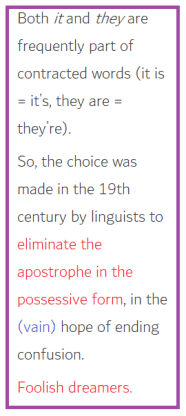
Both it and they are frequently part of contracted words (it is = it’s, they are = they’re). So, two hundred years ago, linguists chose to eliminate the apostrophe in the possessive form in the (vain) hope of ending confusion.

  1. It’s is the contraction of “it is”and sometimes “it has.”
  2. Its denotes possession: It owns it.

[3] According to Dictionary.com:

  • Way back when in English, we used his for the possessive form of it. (That wasn’t perplexing at all.)

  • The use of its for the possessive form of it takes off in the 1500s.

  • After, we did commonly write it’s to show possession for it, but that became nonstandard in the 1800s, probably due to the influence of pronouns like yourshers, etc. [3]

I love how our ancestors assumed inanimate objects were male. I took a hammer to the wall and dented his surface. The males I’m acquainted with resent being compared to inanimate objects, so we never refer to Uncle Jim as a bump on a log, to his face.

That and which are two commonly misused words. Most times, we don’t need the word that, but before you eliminate every instance, please look at each case where it is used.

Don’t gut your prose just because some online guru tells you ‘that’ is an unnecessary pronoun. Sometimes, “that” is the only word for a given situation. If you remove every instance of the word “that” you’ll end up with a mess on your hands.

Something you need to know: “that” and “which” are not interchangeable so you can’t just use a global search to change every instance of “that” to “which.”

“That” is a pronoun used to identify a specific person or thing observed by the speaker. It is a determiner, an adverb, and a conjunction.

  1. “That’s his dog on the curb.” (Identifier)
  2. “Look at that red car.” (Determiner)
  3. “I wouldn’t go that far.” (Adverb)
  4. “She claimed that she was married.” (Conjunction)

Epic Fails meme2In the case of number 4, the sentence would be stronger without it. Most of the time, the prose is made stronger when the word “that” is cut and not replaced with anything. I say most, but not all the time.
There are cases where only “that” will suffice. When do we use the word “that?” We use it when we have something called a ‘Restrictive Clause,’ the part of a sentence that you can’t get rid of because it specifically restricts some other part of the sentence. We watched the stars that gleamed red and ignored those that shone white. They watched specific stars and ignored others. Sometimes you can’t get rid of that, because the phrasing would be too awkward without it.

“Which” is a pronoun asking for information. It specifies one or more people (or things) from a particular set, and it is also a determiner:

  1. “Which are the best diapers for newborns?” (Pronoun)
  2. “I’m looking at a house which is for sale on Black Lake.” (Determiner)

Go lightly with “which” and “that,” but use them when required.

The same common-sense approach goes for “very.” I seldom need to use it, but I do when required. However, some people employ it too frequently, and it’s rarely needed, fluffing up the word count.

Use common sense. Don’t run amok in your manuscript and cut every relative pronoun.

Examine each instance and try to see why the members of your writing group are pointing it out. Cut it or leave it in based on whether the phrasing would be awkward without it.

words with wayward apostrophes

How the written universe works part 1: the connecting particle 

How the written universe works part 2: the physics of conversation 

How the Written Universe Works part 3: Lay, Lie, Laid


Credits and Attributions:

[1] GrammarMonster.com, What Is the Genitive Case? http://www.grammar-monster.com/glossary/genitive_case.htm, accessed April 12, 2022.

[2] How to Use ‘Who’ vs. ‘Whom © 2022 Merriam-Webster, Incorporated How to Use Who vs. Whom | Merriam-Webster, accessed April 12, 2022.

[3] Dictionary.com, What is the difference between its and it’s? What Is The Difference Between “It’s” And “Its”? (dictionary.com), accessed April 12, 2022.

6 Comments

Filed under writing

How the Written Universe Works part 3: Lay, Lie, Laid #amwriting

Every now and then, the most paradoxical mystery in the written universe rears its head—the question, “Is it lay, lie, or what?” Today we will revisit one of the more misused verbs in the English language: the many tenses and uses of the verb ‘lay.’

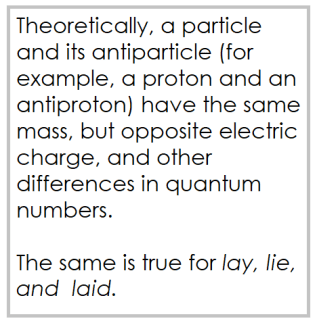
How the written universe works 3In the written narrative, the many forms of this verb are what antimatter is to ordinary matter. When used improperly, things unravel. The problem is, we routinely use the words lay and lie and all their forms incorrectly as a matter of habit in our daily speech.
We are accustomed to hearing the wrong use of verb forms in conversation. However, we notice incorrect usage when reading. This paradox causes confusion for our readers when we misuse the verb “lay” and all its tenses in a narrative.

Don’t feel alone in this. Even editors struggle with the words lay, lie, and laid and regularly refer to grammar guides to remind themselves of the correct usage.

I often have to stop in my own work and make sure I am using it correctly.

Do I mean to lay down or lie down?

It boils down to a simple concept: is the object of the verb RECLINING, or was it PLACED THERE?

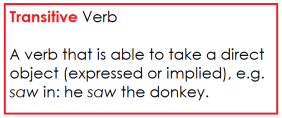
transitive verb“Lay” is a transitive verb that refers to putting something in a horizontal position. At the same time, “lie” is an intransitive verb that refers to being in a flat position.
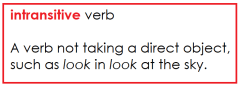
“Lay” is a verb meaning to put or place something somewhere. It has a direct object. Its principal parts are “lay,” “laid,” “laid,” and “laying.”

The words refer to the action: If you place it (object) there, it is laying there. Lay it there. Lay it on the pillow.

If it is resting or reclining, it is lying there.

  • Lie down.
  • Lying down.
  • Lie down, Sally. (Clapton had it wrong? Say it isn’t so!)

The internet is your friend. The following is a quote from the website, Get it Write: 

[1] The verbs to lie and to lay have very different meanings. Simply put, to lie means “to rest,” “to assume or be situated in a horizontal position,” and to lay means “to put or place.” (Of course, a second verb to lie, means “to deceive,” “to pass off false information as if it were the truth,” but here we are focusing on the meaning of to lie that gives writers the most grief.)

Languages change, and we are certainly moving toward a time when style and grammar books no longer distinguish between lay and lie, but we aren’t there yet.

intransitive verbTo lie is an intransitive verb: it shows action, and the subject of the sentence engages in that action, but nothing is being acted upon (the verb has no direct object).
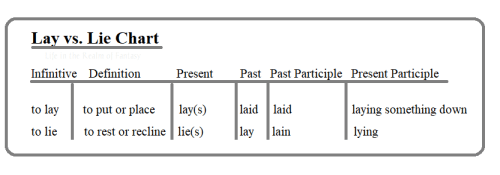
Put another way, the verb to lie does not express the kind of action that can be done to anything. Remember that it means “to recline” or “to rest.”

It is conjugated this way:

  • lie here every day. (Everyone lies here. They lie here.)
  • am lying here right now.
  • lay here yesterday.
  • will lie here tomorrow.
  • have lain here every day for years. [1]

Lay, Lie, Laid chart

This is where things get tense: present, past, and future.

A ring lay on the pillow. 

  • Present tense: I lay an object on the pillow.
  • Future tense: I will lay an object on the pillow.
  • Past tense: I laid an object on the pillow.

But I needed to rest. In this context, lie is a verb meaning to recline. It requires no direct object, and its principal parts are lie, lay, lain, and lying.

  • I’m going to lie in bed for another hour.
  • I feel safe lying in my bed.
  • I had lain in bed long enough, so I got up.

So, what this all boils down to is:

matter antimatter LIRF04102022 The verb that means “to recline” is “to lie,” not “to lay.” If we are talking about the act of reclining, we use “lie,” not “lay.” “When I have a headache, I lie down.”
The verb laid must have a direct object. Something is put or placed: “I laid my papers on your desk after the meeting.” In our modern dialect, the verb laid is used far less often than put, set, or placed, so it has become confusing.

But just to confuse things a lot more:

A living body lies down and rests.

A dead body is cleaned up and laid out by other people if the said corpse is important to them. However, after being laid out, the corpse is lying in state to allow mourners to pay their respects.

 >>><<<

Previous posts in the series, How the Written Universe Works:

How the written universe works part 1: the connecting particle 

How the written universe works part 2: the physics of conversation 

This post: How the Written Universe Works part 3: Lay, Lie, Laid


ATTRIBUTIONS AND CREDITS:

[1] Quote from: To Lie, or To Lay, by Nancy Tuten, Get it Write online, To Lie or To Lay? | Get It Write Online, accessed April 10, 2022.

16 Comments

Filed under writing

How the written universe works part 2: the physics of conversation #amwriting

The supermassive black hole known as Sagittarius A Star gives the spiral shape to our galaxy and keeps it together. Gravity is the force ensuring that “what goes into a black hole, stays in the black hole.”

How the written universe works 2All around us, gravity works in hidden ways. Gravity on a small scale keeps everything securely stuck to the surface of Planet Earth.
Except in my flying dreams. But I digress.

In writing, punctuation serves the same function as gravity, keeping paragraphs and sentences from flying apart, shaping prose. The physics that constrain the chaos of words and word clusters are the laws of grammar and punctuation. They are the quantum mechanics of writing.

What is spoken must be easily distinguished from the ordinary narrative. Therefore, punctuation is for the reader’s benefit. While we can take some liberties with grammar and dialect when writing conversations, following the established rules of punctuation is essential.

We want readers to be able to forget the punctuation and just enjoy the story. They only notice bizarre punctuations, such as:

All, hands on deck”. Said the captain.

“What do we do with the drunken sailor? Blurted the First Mate!

“Put him in the scuppers at the lee rail. With the captain’s teddy bear,” replied the bosun

So, they put him in the scuppers, and all hands were finally on deck. Some were prone, but all were there until a rogue wave washed drunk dave and the soggy bear away.

I’m sure you noticed the problems when reading the above example.  I have several times been asked to edit work with problems of that magnitude. I respectfully declined the job. No editor has the time to teach a writer how to write.

The one place where the fundamental laws of grammar are allowed to deviate from the norm is in conversation. But even conversations have quantum laws we must follow.

I didn’t make these rules – readers make the rules because their ability to suspend disbelief is the universe we are writing to.

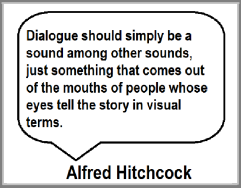
Alfred Hitchcock quote re dialogueCreating memorable characters is the goal of all authors. After all, who would read a book with bland and uninteresting dialogue? Dialogue is where most information is given to the characters and the reader. However, when we are just beginning to write, many of us are confused about how to punctuate conversations. It’s not that complicated. Here are four rules to remember:
Rule 1: Surround everything that is spoken with quotation marks. “I’m here,” Loretta said.

Begin and end the dialogue with “double quotes.” These are called closed quotes. All punctuation goes inside the quotation marks. This is a universal, cast-iron rule that we must follow.

Rule 2: When quoting someone else as part of a conversation, you should set the quoted speech apart with single quotes (apostrophes, inverted commas) and keep it inside the closed quotes.

You can do this in two ways:

  • George said, “When I asked her, Tammy replied, ‘I can’t go.’ But I’m sure she was lying.”
  • George said, “When I asked, Tammy replied, ‘I can’t go.'”

Note that in the second sentence, 3 apostrophes are placed after the period (full stop): 1 apostrophe and 1 double (closed) quote mark. This is in keeping with the rule that all punctuation goes inside the quotation marks in dialogue.

Indirect dialogue is a recapping of a conversation.

  • When asked, George said Tammy couldn’t go.

We don’t use quotes in indirect dialogue. Also, in the above sentence, the word that is implied between said and Tammy.

Rule 3: Commas—Do not place a period between the closed quotes and the dialogue tag. Use a comma because when the speech tag follows the spoken words, they are one sentence consisting of clauses separated by a comma: “I’m here,” she said.

  • When leading with a speech tag, the commas are placed after the tag and are not inside the quotation marks: She said, “I’m here.”
  • Dialogue that is split with the speech tag is all one sentence: “The flowers are lovely,” she said, “but they make my eyes water.” Note that the first word in the second half of the sentence is not capitalized.

Rule 4: When a speaker’s monologue must be broken into two paragraphs, lead off each with quotation marks but only put the closed quote at the end of the final paragraph. A wall of dialogue can be daunting in a story but sometimes happens in essays and when quoting speeches.

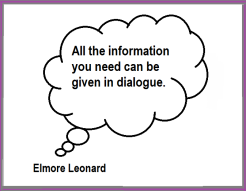
Elmore Leonard quote re dialogueWhen you envision your characters in conversation, you must think about what the word natural means. People don’t only use their words to communicate. Bodies and faces tell us a great deal about a person’s mood and what they feel.
Actions (also called beats) serve to punctuate the dialogue, give the scene movement, and maintain a strong mental picture in the absence of description.

George turned away, his expression cold. “She can’t go.”

These small actions can show a character’s mood and are often best placed where there is a natural break in the dialogue. They’re an effective tool and are essential to good conversations, but don’t rely entirely on them.

Just remember, certain facial actions are physically impossible to do while speaking. In life, they happen just before or after the words are spoken.

Try smiling and speaking at the same time. Or, try snorting the words out—it isn’t a pretty picture. Snorting=air goes in through the nose. Speaking=air goes out through the mouth.

They can be done at the same time—but it’s ugly.

Write those actions this way:

“Oh, she would say that.” Jane snorted.

“I love roses.” Tammy smiled. “But they make my eyes water.”

We do need speech tags of some sort. Nothing is worse than trying to figure out which character said what. I suggest using simple dialogue tags, like said or replied. Getting too creative with speech tags can cause the reader to stop reading out of disgust.

Even worse is when the action upstages the dialogue. The dialogue can fade into the background, obscured by the visual noise of the characters’ movements and facial expressions.

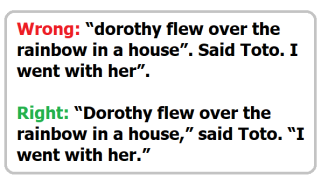
writng_dialogue_LIRFFor this reason, we don’t want to inject an excess of flushing, smirking, eye-rolling, or shrugging into the story. Those actions have a specific use in conveying the mood, but anything used too frequently becomes a crutch.
We must be creative, but speech tags must be unobtrusive. Achieving this balance is the hardest part of being an author.

To summarize, grammar and punctuation serve the same purpose as gravity, giving shape to the story and forming it into a familiar, identifiable structure.

Conversations, both spoken and internal, light up and illuminate the individual parts of the story, bringing the immensity of the overall story arc down to a personal level.

Good conversations and mental dialogues bring characters to life and turn them into our closest friends. The laws of grammar sometimes break down when our characters are speaking naturally.

But on the quantum level, punctuation is hard at work, holding the written universe together.

14 Comments

Filed under writing

Critiques and Rejections #amwriting

Negative feedback is a necessary part of growth. When we submit our work to a critique group, we will get feedback, some of which will be perceived as unfavorable. The writing life is a rough playground. Some of us handle rejection or a thorough critique with grace and dignity, and others make an uncomfortable situation worse.

MyWritingLife2021BWe are emotional creatures. When we are just starting on this path, getting an unbiased critique for something you think is the best thing you ever wrote can feel unfair.

But it isn’t. No one writes perfect work all the time, but we have our moments of brilliance. It’s just they are moments, and some areas of a good work-in-progress will need revising and line editing to make it shine. A writers’ group can help you find the weaknesses in the overall story arc.

I have received my share of criticisms and rejections. At first, it hurt, but after a while of growing, I began to see what my fellow writers were trying to show me. I also began to understand why my work didn’t win prizes or get accepted into publications.

When I look back on my earlier work it is clear that I had no idea what a finished manuscript should look like. Nor did I understand how to get it to look that way. I didn’t understand how to write to a specified theme.

I didn’t understand how vital a strong, unifying theme is when an editor assembles the works of many authors into one book or magazine. That lack of knowledge on my part was why my work was rejected.

In those days, I always received a standard rejection that boiled down to “Sorry, but no.”

In my experience, boiler-plate rejections are bad only because they don’t tell us why the piece wasn’t acceptable. You never know whether the piece was merely not what the editor was looking for that day or if it is something they wouldn’t take for any reason.

When my work doesn’t make the cut, it’s because I have misread what the editors wanted, not quite nailing the theme as firmly as other writers did. Or, maybe what I thought was a great plot was cliched and boring, or perhaps it was too farfetched.

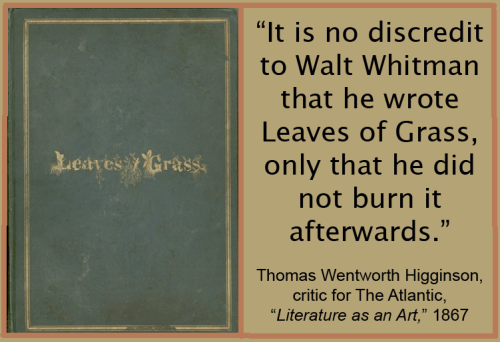
The key to peace of mind is to understand that most of what you write will NOT resonate with everyone you submit it to. Even if your writing group loved it.

leaves of grass meme

If you put two people in a room and hand them the most thrilling novel you’ve ever read, you’ll get two different opinions.

Good rejections offer a little encouragement. “Try us again.” That means exactly what it says, so the next time you have something you think will fit with that anthology or magazine’s editor, send them a submission.

For me, the best kind of rejections are those that follow a story being optioned for an anthology, and then for one reason or another, the editor releases it back to you. Yes, it is disappointing when a story that was optioned doesn’t get printed after all, because money is nice.  But they are good, because the editor liked it enough to option it, and if you handle that disappointment with grace, they will probably print the next story you send them.

I know it doesn’t make sense, but the more an editor writes in a letter about why they have rejected a piece, the more likely the author will be hurt and angry. This is because it’s a rejection and may contain details about why it wasn’t acceptable for that publication.

I once got a rejection from an anthology in the form of a terse note with one handwritten sentence, signed by the editor. “This subject has been done before.”

I was surprised by the curtness of the note, but after a moment, I realized that was just this particular editor’s way. He’s a busy man but took the time to send me a note instead of a form letter.

The single blunt sentence was a bit off-putting, but I learned a lot from that particular rejection. I have to try harder to imagine original situations instead of trying to write what I think will sell. I have to write from the heart and not worry about whether or not I’m writing a commercially viable story.

War_and_Peace_Franklin_Library_By_Leo_Tolstoy_First_Edition_1981I could have embarrassed myself and responded childishly, but that would have been foolish and self-defeating. When I really thought about it, I realized that particular plot twist had been done many times before. I thanked him for his time because I had learned something valuable from that experience.
I still love the concept of that story and the characters, but it’s an unmarketable story the way it was written. I have that tale in a file, and someday I will rewrite it, but with a more imaginative quest for the plot.

We must have a care about the way we behave. We are judged by how we act and react in every professional interaction. If you respond to a peer’s criticism without cooling down and thinking it through, you risk irreparable damage to your career.

You really don’t want your name to be a prominent entry on that editor’s “no way in hell” list.

An editor’s personal response that is a rejection means they have read your work and gone to some trouble for you.

DO NOT respond to the letter with a flame-mail, and DO NOT bad-mouth that editor or publication in your favorite writers’ forums. Editors are also authors, and they have friends who are authors. They may be involved with the same forums and all the many social platforms you are, so have a care what you say online.

They’re just like the rest of us—and they’ve experienced their share of rejection. If you respond publicly and unprofessionally, innocent bystanders will remember you and won’t want to work with you either.

But what if you received a request for revisions? Don’t be insulted! Celebrate and get cracking. Make those revisions. Do what that editor has asked and make no complaint.

When an editor wants changes, they like the work but can see how it could be made stellar. Be a professional and work with them. You might learn something.

Finally, never be less than gracious to the editor when you communicate with them.

My Coffee Cup © cjjasp 2013Treat all your professional contacts with courtesy, no matter how angry you are. Allow yourself some time to cool off. Don’t have a tantrum and immediately respond with an angst-riddled rant.
Sometimes we forget that how we interact online with others is public information and is visible to the world. When an interested reader Googles our author name, our online interactions and petty tantrums on Goodreads, Twitter, and every other public forum will be available for eternity.

Be respectful, even if the magazine or anthology you were rejected from is a minor player in the publishing world. Don’t say, “Well, that editor’s a nobody.”

Every famous editor/author begins as a nobody. All editors receive work that must be rejected.

How you respond to criticisms and rejections is where you have the chance to cross the invisible line between amateur and professional. Always take the high ground. If an editor has sent you a detailed rejection, it’s appropriate to respond with a simple “thank you for your time.”

12 Comments

Filed under writing

Exploring Theme part 4: Allegory #amwriting

Over the previous three posts, we’ve looked at the many ways themes can be employed in the stories we write. Themes exist in every story but can be difficult to identify if we have no plan to write to.

allegory2When you are pantsing it (writing-by-the-seat-of-your-pants), themes are like your drunk uncle. They hang out at the local pub until closing time and then weave their way home through dark alleys. Sometimes, as you are leaving for work in the morning, you find them under the neighbor’s shrubs. Other times they make it home.
If you still haven’t identified the defining theme when you have finished your first draft, look in the first chapters of your story. You may find clues sprinkled throughout the story, hints to point the reader toward the theme.

If you still haven’t identified the theme, you may be trying too hard. Often, the theme can be found in the things and events that are hindrances to happiness.

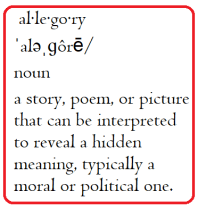
Allegory is an excellent tool to use when we want to emphasize a theme without beating our readers over the head. Allegories are objects within a story, poem, or picture that can be interpreted to reveal a hidden meaning,

A well-crafted allegory can subtly underscore your themes to drive home your point without resorting to an info dump.

Using symbolism and allegory allows an author to pack the most information into the least number of words. But it requires intention when you first begin creating the story arc. Words, phrases, and settings must be chosen, and the narrative’s prose must be purposefully crafted.

At the surface level, each genre looks widely different. But when you go deeper, you find that all literary genres have one thing in common: they have protagonists and side characters who all must deal with and react to the book’s underlying theme.

Highlighting a strong theme can be a challenge if you begin without an outline. A plan is not always required because, in some stories, the flash of inspiration we start with is a strong theme. The theme develops as you write, and immediately, you see what it is.

Personally, I need an outline most of the time.

Whatever the case, once you have identified the central theme, you can write the story in such a way that it is shown through:

  • Actions
  • Symbolic settings/places
  • Allegorical objects deliberately placed within the setting
  • Conversations

It can be difficult to decide the underlying theme, making the story weak. It has no legs and won’t ring true until you find what that unifying idea-thread is. This requires a little mind-wandering on your part.

allegoryI often sit on my back porch and just let my thoughts roam, thinking about nothing in particular. Usually, I will end up considering the character’s quest or dilemma. I ask myself what the root cause of the issue is—if it is a crime, why is crime rampant? Is it a societal problem, such as poverty or war? If the core dilemma is unrequited love, what are the roadblocks to a resolution?
Once I identify the root cause of the problem, I can see the themes. If the problem is poverty, dealing with and overcoming it becomes the theme throughout the story. You don’t have to say “they were dirt-poor” every scene. Yes, many of the poorest people are homeless. However, most people whose incomes are near or below the poverty line have homes and jobs.

People are not cliches. Most poor people work one or two jobs to keep food on the table and a roof over their family’s heads. They don’t have the time or money to be drunks or drug abusers—their wages go to providing as good a life as they can for their families. People can be shown as being basically happy in an environment that isn’t wealthy. Life has subtleties, and a strong theme can reinforce those nuances when it is shown through the use of allegories.

Poverty can be represented through many symbolic objects in their home or neighborhood:

  • Cracks in sidewalks
  • Cracks in mirrors
  • Chips in crockery
  • Peeling wallpaper
  • Broken-down vehicles

Whenever I talk about allegory, I like to use the movie, The Matrix as my example. Most people are familiar with the movie but aren’t consciously aware of the amount of symbolism and allegory that is laced into it. The films of The Matrix franchise pit man against machine in a clearly drawn battle, but they also reveal that the humans are more machinelike than they think and that the machines possess human qualities as well.

These are the prominent themes, but there are several simultaneous underlying concepts.

In the movie’s opening scenes, symbolism is used to underscore Neo’s unacknowledged dissatisfaction, a discontent he is unaware of. This unspoken unhappiness is shown in many ways. Allegory is built into their androgynous costumes and in the screenwriters/authors’ choice of words used in every conversation.

The symbolism continues in the way the setting is so sparsely dressed. Every object that is shown onscreen has a purpose and a meaning. Even the characters’ names are symbolic.

The themes are represented with heavy symbolism in the lighting used on the movie set:

>Inside The Matrix, the world is bathed in a green light as if filmed through a green-tinted lens.

>In the real world, the lighting is harsher, unfiltered.

In the movie, everything that appears or is said onscreen is symbolic and supports one of the underlying concepts. When Morpheus later asks Neo to choose between a red pill and a blue pill, he essentially offers the choice between fate and free will.

powerwordsWordCloudLIRF06192021These layers offer us an incredible amount of subliminal information about that surreal world and what is going on in reality, what the Matrix truly is.
I try to picture conversations, clothing, setting, and the broader environment as if I were creating a scene in a movie. How can I use allegory to support my story arc?

When we are immersed in reading a book or watching a movie, we don’t notice the heavy symbolism on a conscious level. However, it is all there on closer examination, making the imaginary real, solid, and concrete.

This post winds up our four-part dip into theme. Thank you for sticking with me! Below are the links to the previous posts in this series.

Exploring Theme part 1 – Henry James

Exploring Theme part 2 – Jane Austen

Exploring Theme part 3 – Learning from poetry

16 Comments

Filed under writing

Exploring theme part 3: learning from poetry #amwriting

Poems are stories told in a highly structured fashion. They are stories about the feelings one has for a place or a person, the emotions one feels when faced with shattering circumstances. Poems can be heroic and epic or tightly constrained to one moment, one person’s thoughts.

2WritingCraft_themePoets understand how central a theme is to the story. A poet takes the theme and builds the words around it. Emily Dickinson’s poems featured the themes of spirituality, love of nature, and death, which is why she appealed so strongly to me during my angsty young-adult life.
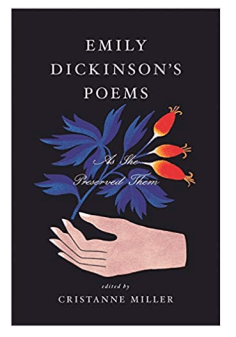
Via Wikipedia:

Emily Elizabeth Dickinson (December 10, 1830 – May 15, 1886) was an American poet. Little-known during her life, she has since been regarded as one of the most influential figures in American poetry.

Evidence suggests that Dickinson lived much of her life in isolation. Considered an eccentric by locals, she developed a penchant for white clothing and was known for her reluctance to greet guests or, later in life, to even leave her bedroom. Dickinson never married, and most friendships between her and others depended entirely upon correspondence.

While Dickinson was a prolific writer, her only publications during her lifetime were 10 of her nearly 1,800 poems, and one letter. The poems published then were usually edited significantly to fit conventional poetic rules. Her poems were unique for her era. They contain short lines, typically lack titles, and often use slant rhyme as well as unconventional capitalization and punctuation. Many of her poems deal with themes of death and immortality, two recurring topics in letters to her friends, and also explore aesthetics, society, nature and spirituality.

If one only knew that she had been agoraphobic and never left her room in an era where the internet didn’t exist, one would think she knew nothing of the world and had nothing to say that would be worth reading.

dickinsons poemsBut that would be wrong. Poets write words that range far more widely than their physical surroundings. Some poets are constrained by unrewarding jobs, others may be “on the spectrum,” as they now say, and still others are constrained by physical limitations.
Poetry is a craft that uses words to explore the interior life of a moment, a place, or an idea. Fleshing out and exploring every nuance of a theme is a core function of poetry.

A theme that Emily Dickinson often wrote about is “the undiscovered continent.” Literary scholars consider that Dickinson saw the mind and spirit as tangible visitable places she inhabited for much of her life.

As solitary as her life was, this interpretation of the undiscovered continent makes sense. It is the “landscape of the spirit,” embellished with nature imagery. It is imagery meant to convey a dwelling place of “oneself” where one resides with one’s other selves. It is an expansive, liberating force.

For example, in “They shut me up in Prose –,” she sets out the idea that society enforces limits upon the speaker, confining her to the acceptable female roles, concealing her to prevent her from expressing herself. But her prose is a product of her mind and refuses to be constrained.

Those constraints inspire her, fuel her drive to write. Society cannot limit her mind, no matter how they try. In the poem “I dwell in Possibility –”she shows us that limits are an illusion to one who dwells in possibilities.

Quote from GradeSaver:

“I dwell in Possibility –”is deeply interested in the power gained by a poet through their poetry. In the first stanza, the poem seems to just be about poetry as a vocation as opposed to prose and is explicit in comparing the two. The metaphors and similes used make it so that poetry is possibility, poetry is more beautiful, poetry has more doors and windows open for access, for different perspectives and interpretations, while prose by default, then, is more closed and limited and homely. [1]

Dickinson showed us how important employing themes can be when finding words to express our intent. Her work demonstrates that themes can be as common and ordinary as the juxtaposition of chaos and stability (or order), the fear of death, love of nature, or the expression of faith in God.

The 19th-century songwriter Stephen Foster employed the theme of rural poverty, using the term hard times to turn his simple songs into anthems that people embraced and are still singing. Tommy Fleming’s version can be heard here. The crowd embraces that song today as much as they did when it was written. Its popularity is due to the way Foster employed his theme, the way he presented it with words and melody.

‘Tis a sigh that is wafted across the troubled wave,
‘Tis a wail that is heard upon the shore
‘Tis a dirge that is murmured around the lowly grave
Oh! Hard times come again no more. [2]

But what of writers who don’t write poetry? How do we who write novels and short stories use themes in our work?

The possibilities are limitless.

An aspect of a setting can become a theme. These can be as solid and physical as a particular rock or tree that acquires an emotional meaning to the characters in the narrative. These physical objects gain a sense of presence that recurs throughout the story.

Or they can be as complex and intangible as a mental landscape that allows a prisoner to roam freely.

Poets have a lot to teach those of us who write narrative prose.

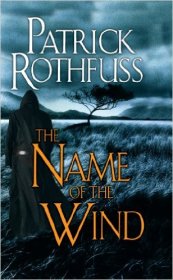
The Name of the Wind by Patrick Rothfuss 2nd coverFantasy author Patrick Rothfuss knows how to make use of a strong theme. He uses the theme of silence to create a powerful opening to his novel, The Name of the Wind. The opening paragraphs of that novel hooked me.

To wind up this dip into poetry, themes are the unifying threads woven through our work, connecting the dots and holding the plot together. The words we choose and other elements of the story, such as the setting, are how we present our themes. Themes, in turn, color our words and setting and steer the plot.


Credits and Attributions:

[1] Cullina, Alice. Chainani, Soman ed. “Emily Dickinson’s Collected Poems “I dwell in Possibility –” Summary and Analysis.” GradeSaver, 26 July 2009 Web. 20 March 2022.

[2] “Hard Times Come Again No More” (sometimes, “Hard Times“) PD|100. Written by Stephen Foster. Published in New York by Firth, Pond & Co. in 1854.

10 Comments

Filed under writing

Exploring Theme part 2: Jane Austen #amwriting

Born in 1775, Jane Austen is remembered today for her six novels, the most famous of which is Pride and Prejudice. Austen touched on familiar themes throughout her work, including romance, youth, wealth, and poverty.

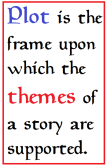
plot is the frame upon which the themes of a story are supportedEven today, her humor shines with sharp-edged wit delivered without condescension. Her most memorable protagonists rise above the trivialities of life that absorb the sillier characters.
Via Wikipedia:

With the publication of Sense and Sensibility (1811), Pride and Prejudice (1813), Mansfield Park (1814), and Emma (1816), in her lifetime she achieved modest success and, as the books were published anonymously, little fame. She wrote two other novels, Northanger Abbey and Persuasion, both published posthumously in 1818, and began another, eventually titled Sanditon, but died before its completion. She also left behind three volumes of juvenile writings in manuscript, the short epistolary novel Lady Susan, and another unfinished novel, The Watsons. [1]

Austen’s work delved deep into the issues women faced, which were not discussed in polite company, and she did it while navigating the shark-infested waters of her society. Her central themes were:

Financial insecurity: The need for a gentlewoman to marry well for financial security rather than love.

Patriarchy: The sure assumption that men know best and the societal value of a man’s opinion as opposed to a woman’s opinion.

Women as property: The value of youth; a young woman is more desirable than an older woman, no matter how intelligent and thoughtful.

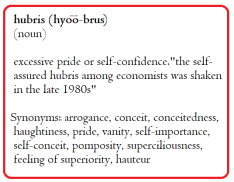
Hubris: Pride – and the humbling of pride.

The six published novels deal with social class, gender and society’s expectations, and morality.

What is right, moral, and proper? This theme of honorable morality winds through all her work.

And the other major theme, one opposing honorable morality, is pride. Pride loves power. It is listed as one of the world’s seven deadly sins because pride can become so powerful that it creates its own morality, crushing humility.

hubrisPride is a powerful theme because it is the downfall of many characters in all literature, not just Jane Austen’s work.
These two themes, pride and morality, power Austen’s satire, give weight to her humor and support the triumphs and tragedies of her characters. Austen saw pride as a form of hubris.

Jane Austen’s novels have inspired many debates. Some claim they are politically conservative, and others argue they are progressive. Those who see conservatism in her novels claim her heroines support the existing social structure by doing their duty and sacrificing their personal desires.

Those who see progressive tendencies in her work argue that she is skeptical of the patriarchal right to rule, evidenced by her ironic tone.

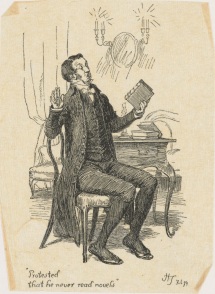
Houghton_Typ_805.94.8320_-_Pride_and_Prejudice,_1894,_Hugh_Thomson_-_Protested

Illustration by Hugh Thomson representing Mr. Collins, protesting that he never reads novels

Austen understood the political issues surrounding the gentry. As a member of that society, she was able to pose questions relating to money and property, framing them in such a way they were entertaining while being thought-provoking. Her satire exposed the patriarchy, the arbitrary inequality of inheritance laws, and the perilous economic position of women. In an era when few career choices were available for women, the social system enforced a lifetime of servitude, either as a wife, possibly a teacher/governess, or as a servant.

Throughout Austen’s work, there is a tension between the prerogatives of society and the desires of the individual. Austen is often considered one of the originators of the modern, interiorized novel character.

How did she achieve this?

Again, Wikipedia tells us:

Austen is most renowned for her development of free indirect speech, a technique pioneered by 18th-century novelists Henry Fielding and Frances Burney. In free indirect speech, the thoughts and speech of the characters mix with the voice of the narrator. Austen uses it to provide summaries of conversations or to compress, dramatically or ironically, a character’s speech and thoughts. In Sense and Sensibility, Austen experiments extensively for the first time with this technique. For example,

Mrs. John Dashwood did not at all approve of what her husband intended to do for his sisters. To take three thousand pounds from the fortune of their dear little boy, would be impoverishing him to the most dreadful degree. She begged him to think again on the subject. How could he answer it to himself to rob his child, and his only child too, of so large a sum?

[…] However, Page writes that “for Jane Austen … the supreme virtue of free indirect speech … [is] that it offers the possibility of achieving something of the vividness of speech without the appearance for a moment of a total silencing of the authorial voice.” [2]

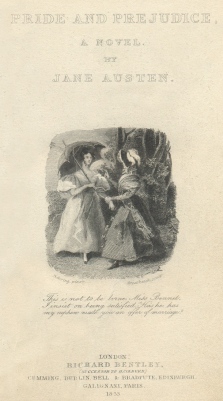
Pickering_-_Greatbatch_-_Jane_Austen_-_Pride_and_Prejudice_-_This_is_not_to_be_borne,_Miss_BennetClearly, Mrs. Dashwood feels that ensuring her sisters-in-law are not impoverished would make her only son less rich. Less appealing to other affluent families.
So, Jane Austen used her characters’ thoughts and their spoken conversations to subtly weave her themes of pride, the human tendency for greed, and social inequity throughout the narratives of her novels.

I’ve said this before, but it bears repeating: when your writing mind has temporarily lost its momentum, and you are stretching the boundaries of common sense, it’s time to stop and consider the central themes.

I find it helps to remind myself that theme is one of the elements that drives a plot.


Credits and Attributions:

[1] Wikipedia contributors, “Jane Austen,” Wikipedia, The Free Encyclopedia, https://en.wikipedia.org/w/index.php?title=Jane_Austen&oldid=1073632619 (accessed March 15, 2022).

[2] Wikipedia contributors, “Styles and themes of Jane Austen,” Wikipedia, The Free Encyclopedia, https://en.wikipedia.org/w/index.php?title=Styles_and_themes_of_Jane_Austen&oldid=1063968945 (accessed March 15, 2022).

Media: Wikimedia Commons contributors, “File:Houghton Typ 805.94.8320 – Pride and Prejudice, 1894, Hugh Thomson – Protested.jpg,” Wikimedia Commons, the free media repository, https://commons.wikimedia.org/w/index.php?title=File:Houghton_Typ_805.94.8320_-_Pride_and_Prejudice,_1894,_Hugh_Thomson_-_Protested.jpg&oldid=351956491 (accessed March 15, 2022).

Media: Wikimedia Commons contributors, “File:Pickering – Greatbatch – Jane Austen – Pride and Prejudice – This is not to be borne, Miss Bennet.jpg,” Wikimedia Commons, the free media repository, https://commons.wikimedia.org/w/index.php?title=File:Pickering_-_Greatbatch_-_Jane_Austen_-_Pride_and_Prejudice_-_This_is_not_to_be_borne,_Miss_Bennet.jpg&oldid=351959807 (accessed March 15, 2022).

6 Comments

Filed under writing

Exploring Theme part 1: Henry James #amwriting

A late 19th– early 20th-century writer whom many have heard of but never read, Henry James, has a great deal to tell us about using a story’s themes to create memorable characters. You may be familiar with some of his works, such as The Turn of the Screw and The Golden Bowl. His novels are still being made into movies and adapted as plays.

2WritingCraft_themeMany of James’s books feature one common theme—lust.
Lust for sex. Lust for money. Lust for control.

Lust for power.

The Golden Bowl is the story of deception, manipulation, lust for money, and lust for control. Many of James’s novels feature people in his contemporary world going through their lives. But he takes his characters down to their fundamental emotional components, peels back the veneer of civilization, and exposes their motives for you, the reader.

James understood the potential of a strong theme. He threaded his themes through every conversation and scene as if the theme was background music, an orchestra playing a musical score. Like a Roger Williams film score, James’s themes subtly, insidiously, propel the plot, reinforce emotions, and support the dramas as they are played out. This is why his novels are still considered among the most powerful works of modern fiction.

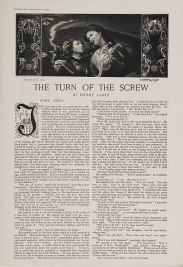
512px-The-Turn-of-the-Screw-Collier's-1AHenry James is famous for his novels and short stories laying bare the deepest motives and manipulations of the society he knew. However, he wrote one of the most famous novellas ever published, The Turn of the Screw.
On the surface, The Turn of the Screw is different from his other forays into Victorian society, a Gothic horror story. The four main themes are the corruption of the innocent, the destructiveness of heroism, the struggle between good and evil, the difference between reality and fantasy. A fifth theme is the perception of ghosts. Are the ghosts real or the projection of the governess’s madness?

However, there are several subthemes interwoven into the fabric of the narrative.

Secrecy.

Deception.

The lust for control.

Obsession

Via Wikipedia:

The Turn of the Screw is an 1898 horror novella by Henry James which first appeared in serial format in Collier’s Weekly (January 27 – April 16, 1898). In October 1898, it was collected in The Two Magics, published by Macmillan in New York City and Heinemann in London. The novella follows a governess who, caring for two children at a remote estate, becomes convinced that the grounds are haunted. The Turn of the Screw is considered a work of both Gothic and horror fiction.

On Christmas Eve, an unnamed narrator and some of their friends are gathered around a fire. One of them, Douglas, reads a manuscript written by his sister’s late governess. The manuscript tells the story of her hiring by a man who has become responsible for his young niece and nephew following the deaths of their parents. He lives mainly in London but also has a country house in Bly, Essex. The boy, Miles, is attending a boarding school, while his younger sister, Flora, is living in Bly, where she is cared for by Mrs. Grose, the housekeeper. Flora’s uncle, the governess’s new employer, is uninterested in raising the children and gives her full charge, explicitly stating that she is not to bother him with communications of any sort. The governess travels to Bly and begins her duties.

Miles returns from school for the summer just after a letter arrives from the headmaster, stating that he has been expelled. Miles never speaks of the matter, and the governess is hesitant to raise the issue. She fears there is some horrible secret behind the boy’s expulsion, but is too charmed by him to want to press the issue. Soon after, around the grounds of the estate, the governess begins to see the figures of a man and woman whom she does not recognize. The figures come and go at will without being seen or challenged by other members of the household, and they seem to the governess to be supernatural. She learns from Mrs. Grose that the governess’s predecessor, Miss Jessel, and another employee, Peter Quint, had had a close relationship. Before their deaths, Jessel and Quint spent much of their time with Flora and Miles, and the governess becomes convinced that the two children are aware of the ghosts’ presence. [1]

Lust for control—whether real or imagined, the ghosts refuse to move on, refuse to relinquish control of the children.

All these themes are woven around the delicate subject of the governess’s unhealthy romantic attachment to the boy.

Many theories abound regarding the governess and the ghosts:

Inquiries Journal says:

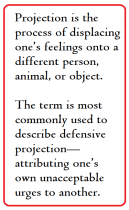
projection definitionProjection may explain what role the ghosts play in “Turn of the Screw,” but it does not explain why the governess feels she needs to use projection as a defense. The governess appears to be experiencing an inner battle that is affecting her perception of reality. She has fallen in love with a boy much younger than herself. Society sees this pedophilic behavior as corrupting the child. The governess’s conscience tells her that she must reform her ways. Her id tells her that she is right in pursuing what she desires. In “The Turn of the Screw,” the governess is using an unconscious means of defense, projection, to protect herself from her superego, while continuing to hold onto her sexual desires. [2]

James leaves several loose ends still hanging when we reach the final page of the novella. This asks the reader to reach their own conclusions about how these themes affect the characters as they go forward in their lives. Regardless of whether the ghosts are real or imagined, the story takes us on a dark journey.

What I take home from Henry James’s intense focus on his themes and the inner workings of his characters is this: find a strong theme and use it to underscore and support our characters’ motives.

Our characters are people. People are a mix of good and bad at the same time. Some lean more to good, others to bad. Either way, they act with good, logical intentions, believe themselves unselfish, and desperately want what they think they deserve.

Most importantly, they lie to themselves about their own motives and obscure the truth behind other, more palatable truths.

I always think that inserting a whiff of human frailty into a character makes them more interesting, more relatable.


Credits and Attributions:

[1] Wikipedia contributors, “The Turn of the Screw,” Wikipedia, The Free Encyclopedia, https://en.wikipedia.org/w/index.php?title=The_Turn_of_the_Screw&oldid=1073476225  (accessed March 13, 2022).

[2] Literary Analysis: Turn of the Screw – Inquiries Journal www.inquiriesjournal.com/articles/65/literary-analysis-turn-of-the-screw  © 2022 Inquiries Journal/Student Pulse LLC. All rights reserved. ISSN: 2153-5760. (Accessed March 13, 2022).

4 Comments

Filed under writing