
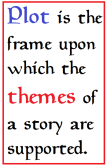
Over the previous three posts, we’ve looked at the many ways themes can be employed in the stories we write. Themes exist in every story but can be difficult to identify if we have no plan to write to.
 When you are pantsing it (writing-by-the-seat-of-your-pants), themes are like your drunk uncle. They hang out at the local pub until closing time and then weave their way home through dark alleys. Sometimes, as you are leaving for work in the morning, you find them under the neighbor’s shrubs. Other times they make it home.
If you still haven’t identified the defining theme when you have finished your first draft, look in the first chapters of your story. You may find clues sprinkled throughout the story, hints to point the reader toward the theme.
If you still haven’t identified the theme, you may be trying too hard. Often, the theme can be found in the things and events that are hindrances to happiness.
Allegory is an excellent tool to use when we want to emphasize a theme without beating our readers over the head. Allegories are objects within a story, poem, or picture that can be interpreted to reveal a hidden meaning,
A well-crafted allegory can subtly underscore your themes to drive home your point without resorting to an info dump.
Using symbolism and allegory allows an author to pack the most information into the least number of words. But it requires intention when you first begin creating the story arc. Words, phrases, and settings must be chosen, and the narrative’s prose must be purposefully crafted.
At the surface level, each genre looks widely different. But when you go deeper, you find that all literary genres have one thing in common: they have protagonists and side characters who all must deal with and react to the book’s underlying theme.
Highlighting a strong theme can be a challenge if you begin without an outline. A plan is not always required because, in some stories, the flash of inspiration we start with is a strong theme. The theme develops as you write, and immediately, you see what it is.
Personally, I need an outline most of the time.
Whatever the case, once you have identified the central theme, you can write the story in such a way that it is shown through:
- Actions
- Symbolic settings/places
- Allegorical objects deliberately placed within the setting
- Conversations
It can be difficult to decide the underlying theme, making the story weak. It has no legs and won’t ring true until you find what that unifying idea-thread is. This requires a little mind-wandering on your part.
 I often sit on my back porch and just let my thoughts roam, thinking about nothing in particular. Usually, I will end up considering the character’s quest or dilemma. I ask myself what the root cause of the issue is—if it is a crime, why is crime rampant? Is it a societal problem, such as poverty or war? If the core dilemma is unrequited love, what are the roadblocks to a resolution?
Once I identify the root cause of the problem, I can see the themes. If the problem is poverty, dealing with and overcoming it becomes the theme throughout the story. You don’t have to say “they were dirt-poor” every scene. Yes, many of the poorest people are homeless. However, most people whose incomes are near or below the poverty line have homes and jobs.
People are not cliches. Most poor people work one or two jobs to keep food on the table and a roof over their family’s heads. They don’t have the time or money to be drunks or drug abusers—their wages go to providing as good a life as they can for their families. People can be shown as being basically happy in an environment that isn’t wealthy. Life has subtleties, and a strong theme can reinforce those nuances when it is shown through the use of allegories.
Poverty can be represented through many symbolic objects in their home or neighborhood:
- Cracks in sidewalks
- Cracks in mirrors
- Chips in crockery
- Peeling wallpaper
- Broken-down vehicles
Whenever I talk about allegory, I like to use the movie, The Matrix as my example. Most people are familiar with the movie but aren’t consciously aware of the amount of symbolism and allegory that is laced into it. The films of The Matrix franchise pit man against machine in a clearly drawn battle, but they also reveal that the humans are more machinelike than they think and that the machines possess human qualities as well.
These are the prominent themes, but there are several simultaneous underlying concepts.
In the movie’s opening scenes, symbolism is used to underscore Neo’s unacknowledged dissatisfaction, a discontent he is unaware of. This unspoken unhappiness is shown in many ways. Allegory is built into their androgynous costumes and in the screenwriters/authors’ choice of words used in every conversation.
The symbolism continues in the way the setting is so sparsely dressed. Every object that is shown onscreen has a purpose and a meaning. Even the characters’ names are symbolic.
The themes are represented with heavy symbolism in the lighting used on the movie set:
>Inside The Matrix, the world is bathed in a green light as if filmed through a green-tinted lens.
>In the real world, the lighting is harsher, unfiltered.
In the movie, everything that appears or is said onscreen is symbolic and supports one of the underlying concepts. When Morpheus later asks Neo to choose between a red pill and a blue pill, he essentially offers the choice between fate and free will.
 These layers offer us an incredible amount of subliminal information about that surreal world and what is going on in reality, what the Matrix truly is.
I try to picture conversations, clothing, setting, and the broader environment as if I were creating a scene in a movie. How can I use allegory to support my story arc?
When we are immersed in reading a book or watching a movie, we don’t notice the heavy symbolism on a conscious level. However, it is all there on closer examination, making the imaginary real, solid, and concrete.
This post winds up our four-part dip into theme. Thank you for sticking with me! Below are the links to the previous posts in this series.
Exploring Theme part 1 – Henry James
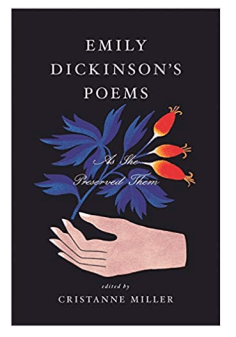
 Poets understand how central a theme is to the story. A poet takes the theme and builds the words around it. Emily Dickinson’s poems featured the themes of spirituality, love of nature, and death, which is why she appealed so strongly to me during my angsty young-adult life.
 But that would be wrong. Poets write words that range far more widely than their physical surroundings. Some poets are constrained by unrewarding jobs, others may be “on the spectrum,” as they now say, and still others are constrained by physical limitations.
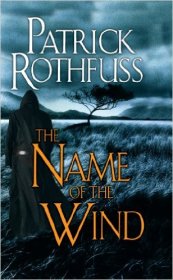 Fantasy author
  Even today, her humor shines with sharp-edged wit delivered without condescension. Her most memorable protagonists rise above the trivialities of life that absorb the sillier characters.
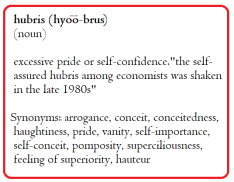 Pride is a powerful theme because it is the downfall of many characters in all literature, not just Jane Austen’s work.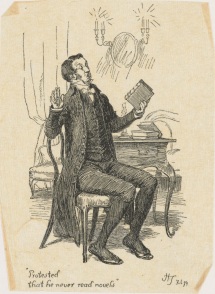
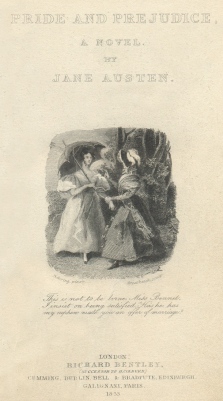 Clearly, Mrs. Dashwood feels that ensuring her sisters-in-law are not impoverished would make her only son less rich. Less appealing to other affluent families.
 Many of James’s books feature one common theme—lust.
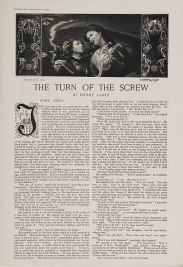 Henry James is famous for his novels and short stories laying bare the deepest motives and manipulations of the society he knew. However, he wrote one of the most famous novellas ever published,
 Projection
 Why is this so? Let’s look at an example.
 So how is social class different from economic class? In some parts of the world, they are the same. In others, social class is inherited, and economic class is acquired.
 For instance, I grew up in a financially stable lower-middle-class family. But I never buy pre-distressed furniture, no matter how much the designers on TV love it. This is because, by the time my youngest child left home, all my hand-me-down furniture was distressed. I like my furniture to reflect my life—un-distressed.
 February here in my little town was dryer than usual, far less rainy than in other parts of the Northwest. We have seen the sun much more than usual over the last two weeks, which doesn’t bode well for the summer. I can’t help but think of the horrible heat we had last June. We don’t like it when it gets up to 110 degrees Fahrenheit (43.3 Celsius). It’s literally hell when you realize most people here don’t have air conditioning in their homes. Up through the 1980s, we never needed it, as summers rarely topped 80 degrees (26.6).
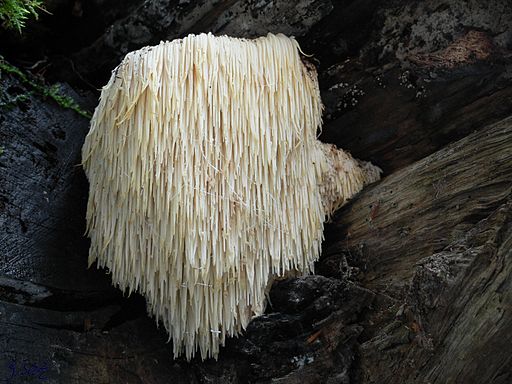 Edible mushrooms of all sorts abounded. One I hadn’t seen before, the lion’s mane mushroom, was the central feature in the displays of the two local craft fungi growers. It was interesting to look at, but … no.
 On the writing front, last week was quite productive. I received the final chapters back for my blended novel from my editor and am now going over the manuscript one last time. This is a merging of the stories of two characters and the events of one overarching plot arc. It’s the parallel stories of two battle mages, a father and son, told from their unique generational viewpoints.
 This merger of two novels into one involved cutting a number of chapters out of each and layering the stories so that the timeline moves forward at the right pace and doesn’t repeat what we already know.
 Also, I submitted my 2020 NaNoWriMo novel to
  Today we are discussing a particular kind of editor: the submissions editor. When I first began this journey, I didn’t understand how specifically you have to tailor your submissions for literary magazines, contests, and anthologies. Each publication has a specific market of readers, and their editors look for new works their target market will buy.
 The quality of your work isn’t the problem, and you have selected a publication that features work in your chosen genre. But your subgenre may not match what the readers of that publication want to see. After all, both spaghetti Bolognese and bruschetta are created out of ingredients made from wheat and tomatoes, but the finished meals are vastly different.
 Some hobbyists expect special consideration and are offended when they don’t get it. Egos are rampant in this business, but in reality, no one gets to be treated like a princess.
 er sending your work.
 Please, if you consider yourself a professional, format your submissions properly. You want to stand out but getting fancy with your final manuscript is not the way to do that—you will be rejected out of hand if you don’t make this effort.
 For new and beginning authors, it may take an editor more than one trip through a manuscript to straighten out all the kinks. This may be a three-step process involving you making the first round of revisions and/or explanations, sending them back to the editor, who will make final round of suggestions. At that point, the editor is done. You have the choice to either accept or reject those suggestions in your final manuscript.
 For creative writing, editing is a stage of the writing process. A writer and editor work together to improve a draft by correcting punctuation and making words and sentences clearer, more precise. Weak sentences are made stronger, info dumps are weeded out, and important ideas are clarified. At the same time, strict attention is paid to the overall story arc.
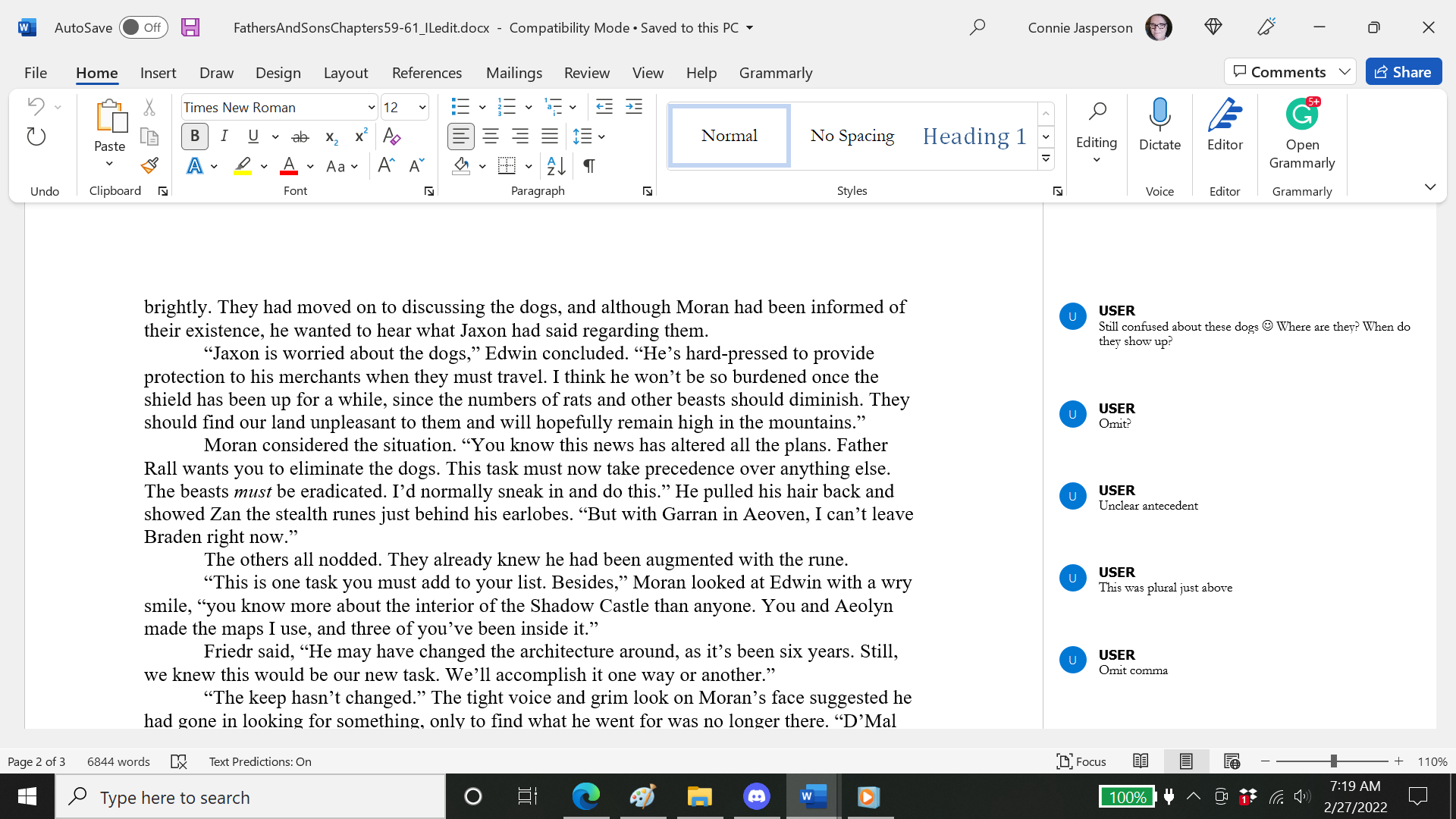 Editors who have been in the business for a long time find it much faster to use the markup function and insert inline changes. A new author or someone unfamiliar with how word-processing programs work might find it confusing and difficult to understand.
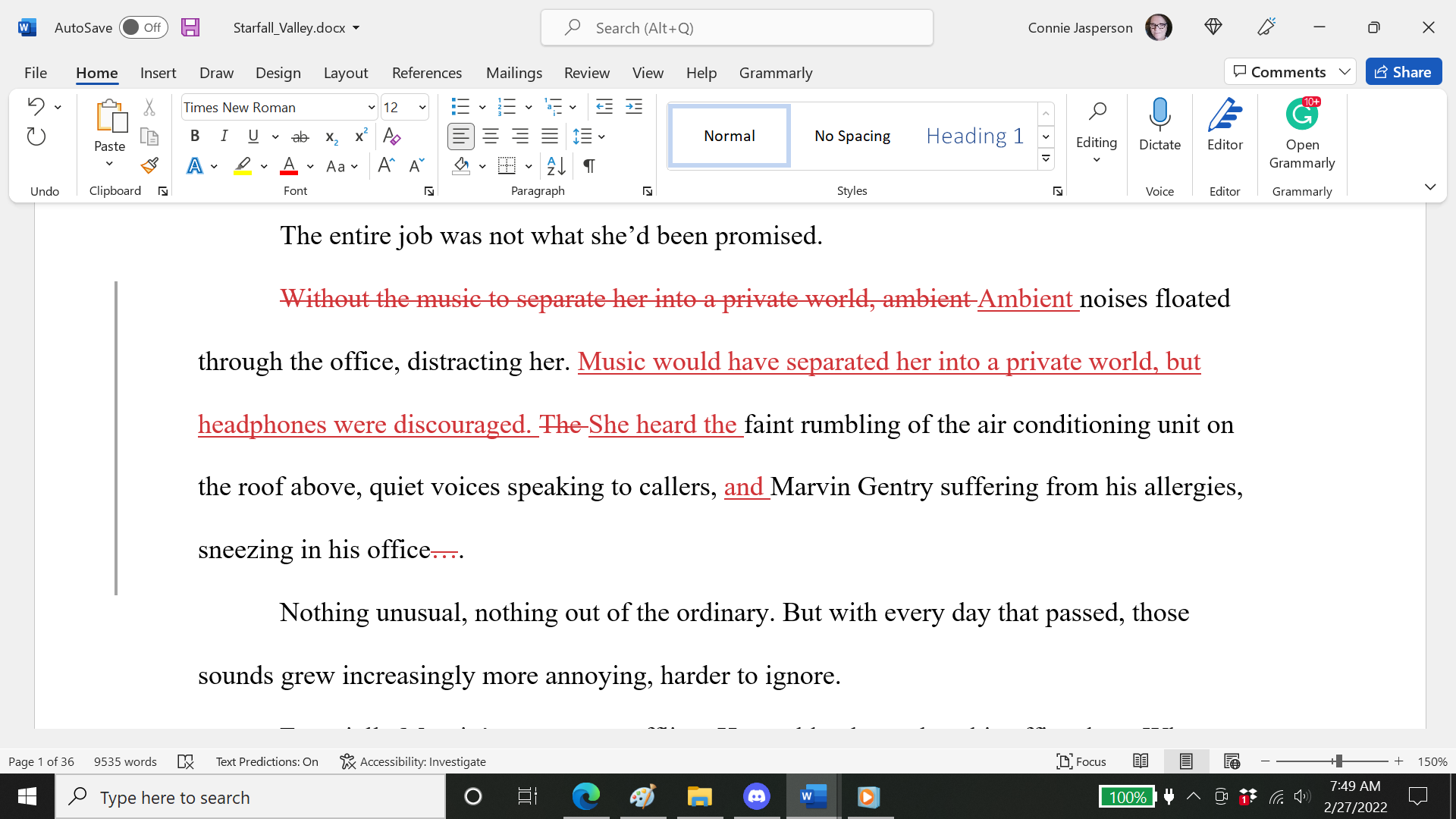 Inserting the changes and using Tracking cuts the time an editor spends on a manuscript. Writing comments takes time, and suggestions may not always be clear to the client.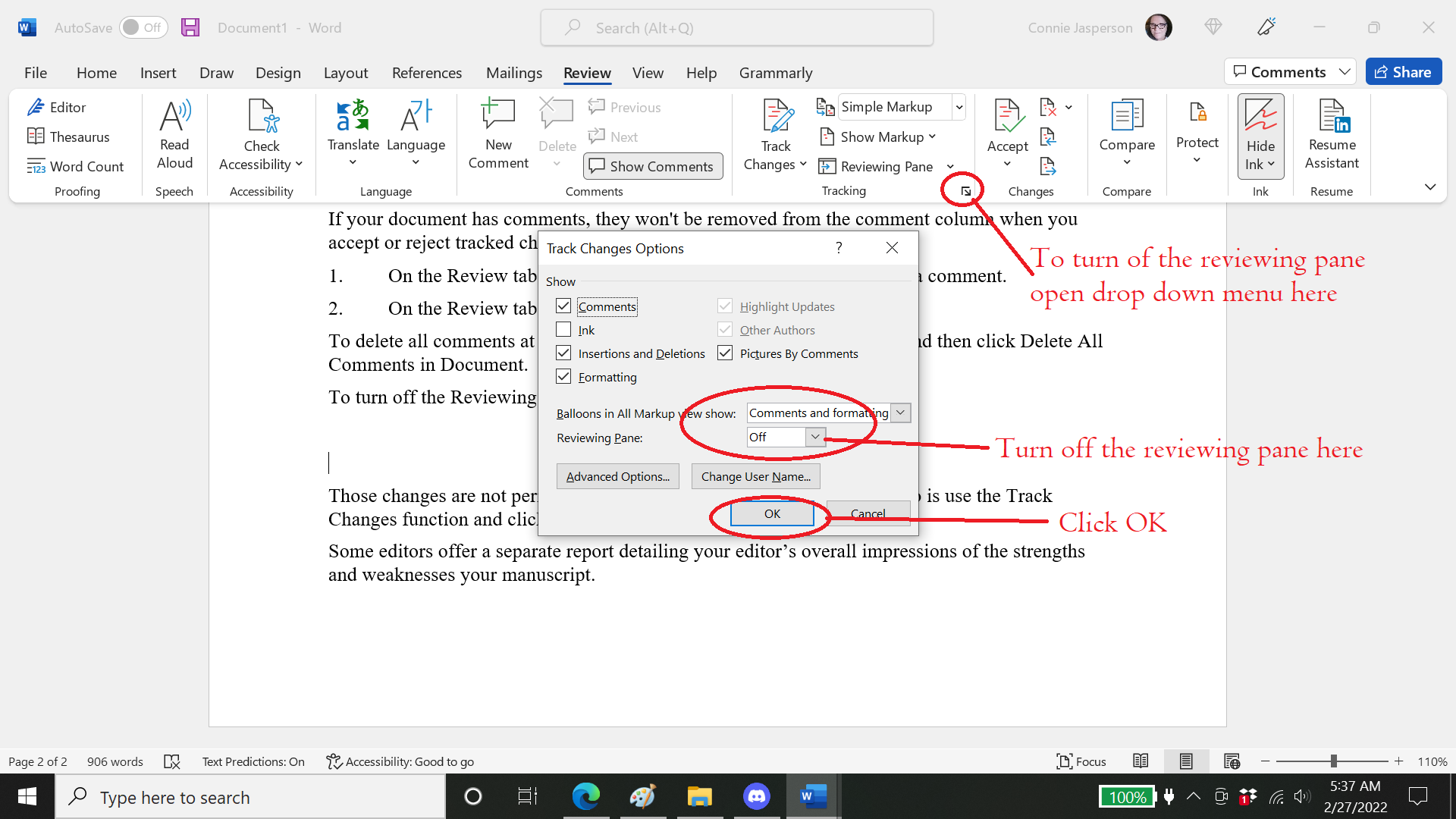
 However, many authors don’t have the money to hire an editor. If that is the case, you may have a friend in your writing group who has some experience editing, and they will often help you at no cost. Your writing group is a well of inspiration, support, and wisdom, and they are invested in your book. They want you to succeed and most will gladly trade services.
 When I am finished with the revisions, I will format my manuscript as both ebooks and paper books. At that point, I will be looking for proofreaders.
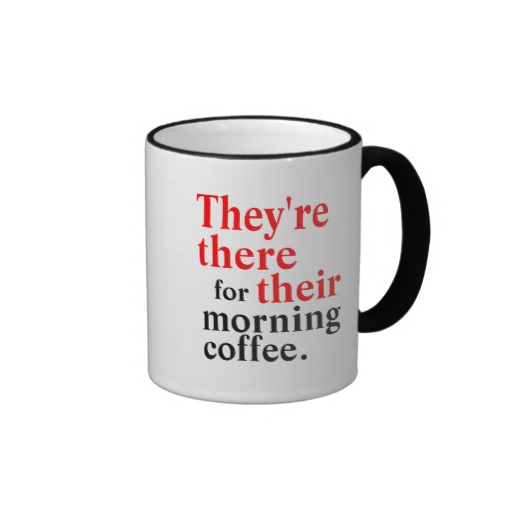 If you didn’t see it when I mentioned it above, I will repeat it: proofreading is not editing. We discussed self-editing in my previous post,
 Repeated words and cut-and-paste errors. These happen when making revisions, even by the most meticulous of authors. The editor won’t see any mistakes you introduce after they have completed their work on the manuscript.
 Unfortunately, my last book went live when I thought I was ordering a pre-publication proof.
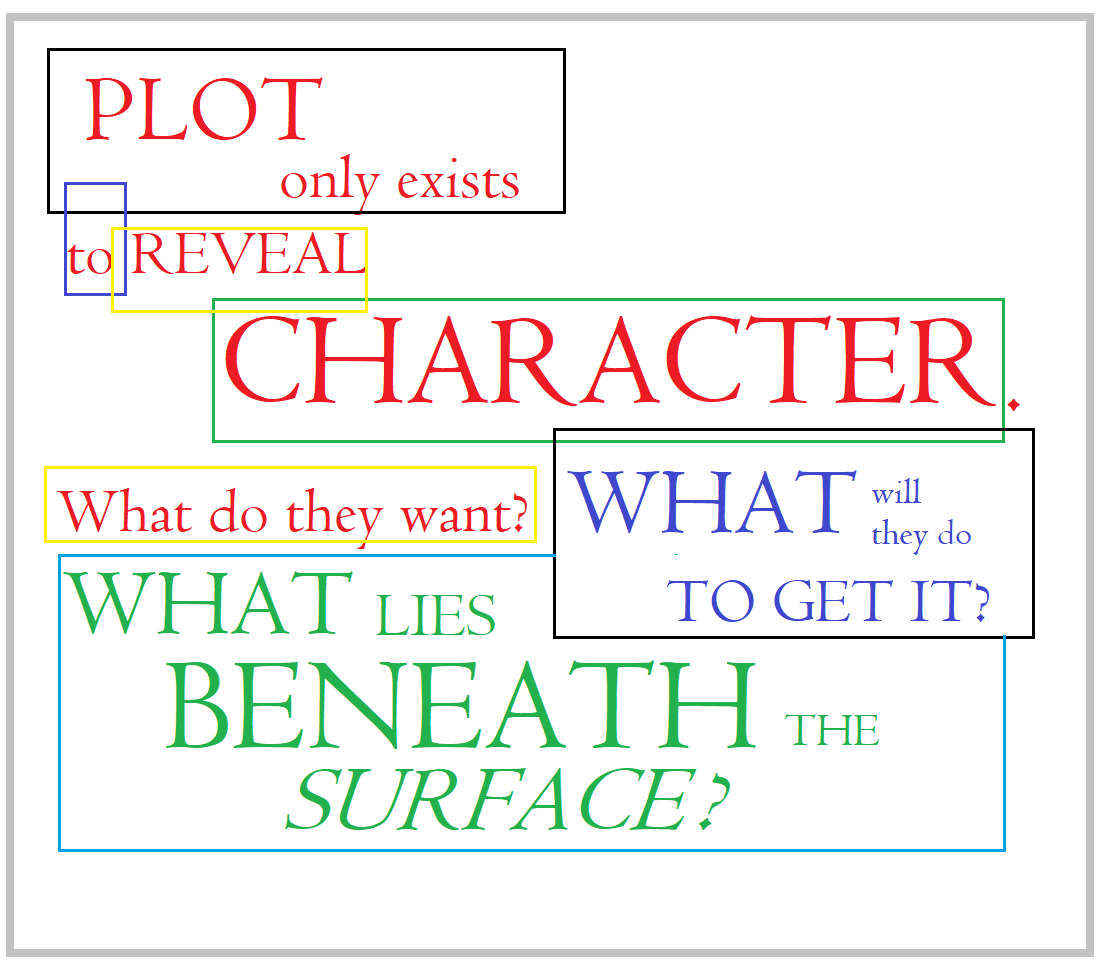 So, realizing I knew nothing was the first positive thing I did for myself. I made it my business to learn all I could, even though I will never achieve perfection.
 I use this function rather than reading it aloud myself, as I tend to see and read aloud what I think should be there rather than what is.
 This is a long process that involves a lot of stopping and starting, taking me a week to get through an entire 90,000-word manuscript. I will have trimmed about 3,000 words by the end of phase one. I will have caught many typos and miskeyed words and rewritten many clumsy sentences.
 This is the phase where I look for info dumps, passive phrasing, and timid words. These telling passages are codes for the author, laid down in the first draft. They are signs that a section needs rewriting to make it visual rather than telling. Clunky phrasing and info dumps are signals telling me what I intend that scene to be. I must cut some of the info and allow the reader to use their imagination.
 Editing programs operate on algorithms and don’t understand context. I am wary of relying on Grammarly or ProWriting Aid for anything other than alerting you to possible problems. If you blindly obey every suggestion made by editing programs, you will turn your manuscript into a mess.


