Tag Archives: writing craft

Revisiting Voice, Word Choice and Placement #writing


This week’s post is a reprint of a post on voice and how we phrase things. It first appeared here on February 17, 2020.

Writing is journey.

When I began writing, the way I placed my words slowed my prose, made it more passive. As I have grown, I have learned to place my verbs in such a way that the prose is more active. I say the same things, but my style is leaner than it was.

My weekend was spent with my hubby at the hospital (all is well now) and I had no time or inclination to write a new take on how word choices form our writing voice. I hope you enjoy this second look at one of my favorite subjects.


We are drawn to the work of our favorite authors because we like their voice. An author’s voice is the unique, recognizable way they choose words and assemble them into sentences.

With practice, we become technically better at the mechanics (grammar and punctuation) but our natural speech habits shine through. Voice is how we bend the rules and is our authorly fingerprint.

When we begin the editing process with a professional editor, most will ignore the liberties we take with dialogue but will point out our habitual errors in the rest of the narrative.

Many times, what we want to say is not technically correct, but we want that visual pause in that place, in that sentence. Casual readers who leave reviews will have gained some understanding of grammar but if your voice is consistent, they will accept your choice. However, they will notice inconsistencies and illiterate writing.

This is why the process of editing is so important. Knowledge of the mechanics of writing is crucial. If you don’t understand the rules, you can’t break them with authority. (For the first part of this series, see my post Revisions: Self-Editing.)

Consider Raymond Chandler’s dismay when he discovered his grammar had been heavily edited by a line editor and then published without his input in the corrections:

“By the way, would you convey my compliments to the purist who reads your proofs and tell him or her that I write in a sort of broken-down patois which is something like the way a Swiss waiter talks, and that when I split an infinitive, God damn it, I split it so it will stay split, and when I interrupt the velvety smoothness of my more or less literate syntax with a few sudden words of barroom vernacular, this is done with the eyes wide open and the mind relaxed but attentive. The method may not be perfect, but it is all I have.”  – Raymond Chandler, in a letter to Edward Weeks, Editor of The Atlantic Monthly, dated 18 January 1947. (Read the letter in its entirety here.)

When we self-edit, we don’t have to wrestle for control of our work, true. But I have to be honest—I have worked with many editors over the past ten years, and only one tried to hijack my manuscript.

What is the mood you want to convey with your prose? Where you place the words in the sentence greatly affects the mood. Active prose is Noun-Verb centric. Compare these sentences, two of which are actively phrased, and two are passive. All say the same thing, and none are “wrong.”

I run toward danger, never away.

I never run away from danger.

Danger approaches, and I run to meet it.

If it’s dangerous, I run to it.

Can you tell which are passive and which are active? Which phrasing resonates with you? Could you write that idea in a different way?

Where we choose to place the core words, I run to danger, changes their voice but not their meaning. The words we choose to surround them with changes the mood but not their meaning.

Other ways to use the core concept of I run to danger:

Danger draws me. I race to embrace it, to make it mine.

If it’s dangerous or stupid, I will find it.

Danger—who cares. Running away is stupid; it always finds you. Meet it, grab it, and make it yours.

I saw him, and in that moment, I knew I’d met my destiny. He was the embodiment of danger, and I wanted him.

We could riff for half an hour on just four words, I run to danger. Each of us will write that idea with our own brand of brilliance, and none of us will sound exactly alike.

One of the things we must look at in our work is consistency. Is our narrative comprised of a smooth pattern? We don’t want our work to be jarring, so we want to think push, glide, push, glide.

Once you have established the mood you are trying to convey, look at how you have placed your verbs in the majority of your sentences.

Some are: noun – verb – modifier – noun. I run to danger when I see it. (Active)

Some are: infinitive – noun – verb –  modifier – noun. When I see danger, I run toward it. (Passive)

NOTE: PASSIVE VOICE DOES NOT MEAN WRONG!

Good writing is about balance. How we combine active and passive phrasing is part of our signature, our voice. By mixing the two, we choose where we direct the reader’s attention.

Some work you want to feel highly charged, action-packed. Genres such as scifi, political thrillers, and crime thrillers need to be verb forward in the way the words are presented. These books seek to immerse the reader so more sentences should lead off with Noun – Verb, followed by modifiers.

If you clicked on the link and read Raymond Chandler’s letter in full, you will see it is aggressive and verb-forward, just the way his prose was.

In other genres, like cozy mysteries, you want to create a sense of comfort and familiarity of place with the mood. Perhaps you want to slightly separate the reader from the action to convey a sense of safety, of being an interested observer. You want the reader to feel like they are the detective with the objective eye, yet you want them immersed in the romance of it. To do that, you balance the active and passive sentence construction, so it is leaning slightly more toward the passive than a thriller.

Weak prose makes free with all the many forms of to be (is, are, was, were).

  • He was happy.
  • They were mad.

Bald writing tells only part of the story. For the reader to see and believe the entire story, we must choose words that show the emotions that underpin the story.

To grow in the craft, we learn to convey what we see through words.

Passive voice balances Active voice.

It is not weak, as weak prose distances the reader from the experience, and when active prose is interspersed with passive, it does not.

Voice is defined by word choice, and Passive or Active prose is defined by word placement, not how many words are used.

Weak prose usually uses too many words to convey an idea. So, we want to avoid wordiness no matter what mood we are trying to convey.

  • One clue to look for is the overuse of forms of to be, which can lead to writing long, convoluted passages.

How many compound sentences do you use? How many words are in each sentence? Can you see ways to divide long sentences to make them more palatable?

A wall of words turns away most readers. Look at your style, as you work your way through your revisions, and see what positive changes you can make in how you consistently phrase things.

Take a short paragraph from a work in progress and rewrite it. Try to convey that thought in both passive and active voice. Then blend the two. You might learn something about how you think as a writer when you try to write in an unfamiliar style.

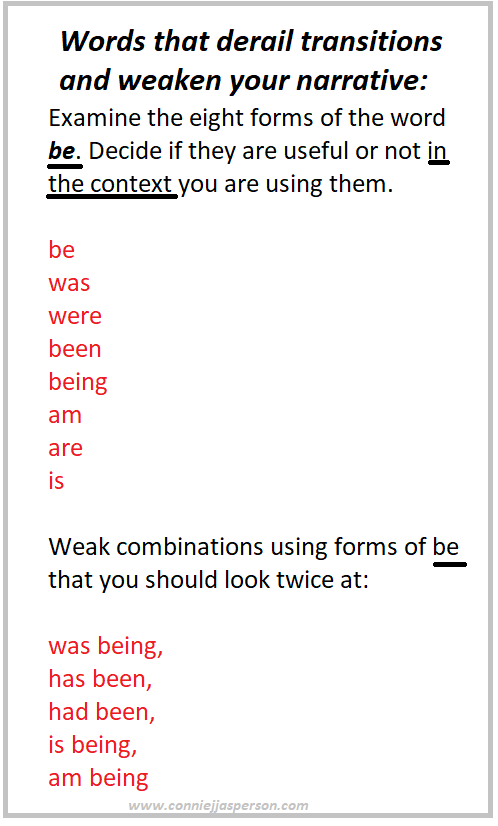
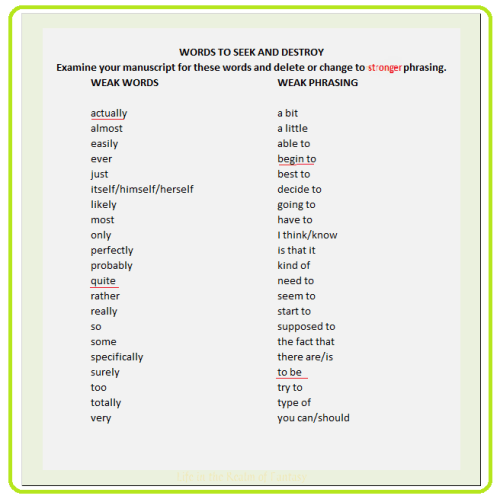
The following is a  list of words I habitually use in a first draft and then must look for in my own work. I look at each instance and decide if they work as they should or weaken the sentence. If they weaken the prose, I change or remove them.

Comments Off on Revisiting Voice, Word Choice and Placement #writing

Filed under writing

Notes on Managing Submissions #writing

Do you have a backlog of short stories? One of the best ways to build a reputation as an author is to submit your work to magazines and anthologies.

At first, finding places to submit your work can be challenging, but it’s not impossible. Here are links to two Facebook groups where publishers post open calls for short stories. I have posted these before, and they are still relevant.

Open Submission Calls for Short Story Writers (All genres, including poetry)

Open Call: Science Fiction, Fantasy & Pulp Market (speculative fiction only)

  • You must answer some questions to prove you are legitimately seeking places to submit your work if you apply to be accepted into these groups.
  • Once you are in, you must follow the rules of good conduct for a happy coexistence. Troublemakers and trolls are unceremoniously ejected.

A word of warning: some open calls will be for charity anthologies and are not paid. Do your due diligence. Some “charity” anthology mills have fancy websites featuring “glowing” reviews designed to trick you into publishing with them. Be wary and carefully research the unpaid ones to ensure that the publisher is reputable and that there is a good reason why you are being asked to donate your work for no compensation.

When an author is new to the mean streets of publishing, a vanity anthology mill can seem like a miracle. After all, your work will definitely be published by these predators, no matter how poorly edited it is. Worse, they sometimes offer that service for a steep fee (a BIG red flag). The only volumes they sell are the ones that the individual authors can pressure their friends and families to purchase.

Legitimate publishers do not charge for editing or any other aspect of the publishing process.

Before you sign a contract, remember this: your author name will be listed on the cover and forever associated with that book.

However, legitimate publishers are out there, and they are worth your time and effort. These publishers will pay industry-standard royalties and will offer reasonable contracts.

And on that note, be sure any contracts you sign limit the use of your story to that volume only, and you retain all other rights.

  • You should retain the right to republish that story after a finite amount of time has passed, usually 90 days after the anthology publication date.

SFWA maintains a list of predatory publishers to avoid doing business with. They also provide useful information on potential red flags in predatory contracts. You don’t need to be a member to access these. https://www.sfwa.org/

There are legitimate calls for extremely short fiction by highly reputable publishers. Flash fiction, works of 1000 words or less, is easier to sell to online magazines. Royalties will be paid by the word and might be small as the work they are contracting for isn’t long, but it is payment.

Reputable publishers often have open calls for charity anthologies, which are worth submitting to. These anthologies typically feature one or two well-known authors donating a short story, with work by up-and-coming writers comprising the rest of the book.

You could be one of those up-and-coming authors. But in order to achieve that goal, you must write something worthy of submission.

If a publisher is looking for work that explores a particular theme, such as “escape,” you must think creatively. Consider an original angle that will play well to that theme and then write it.

When you submit your work to various places, you should keep a record of it. Most publishers won’t accept simultaneous submissions. To avoid that, you should list:

  • what was submitted,
  • links or email addresses of where it was sent to,
  • when submissions close.

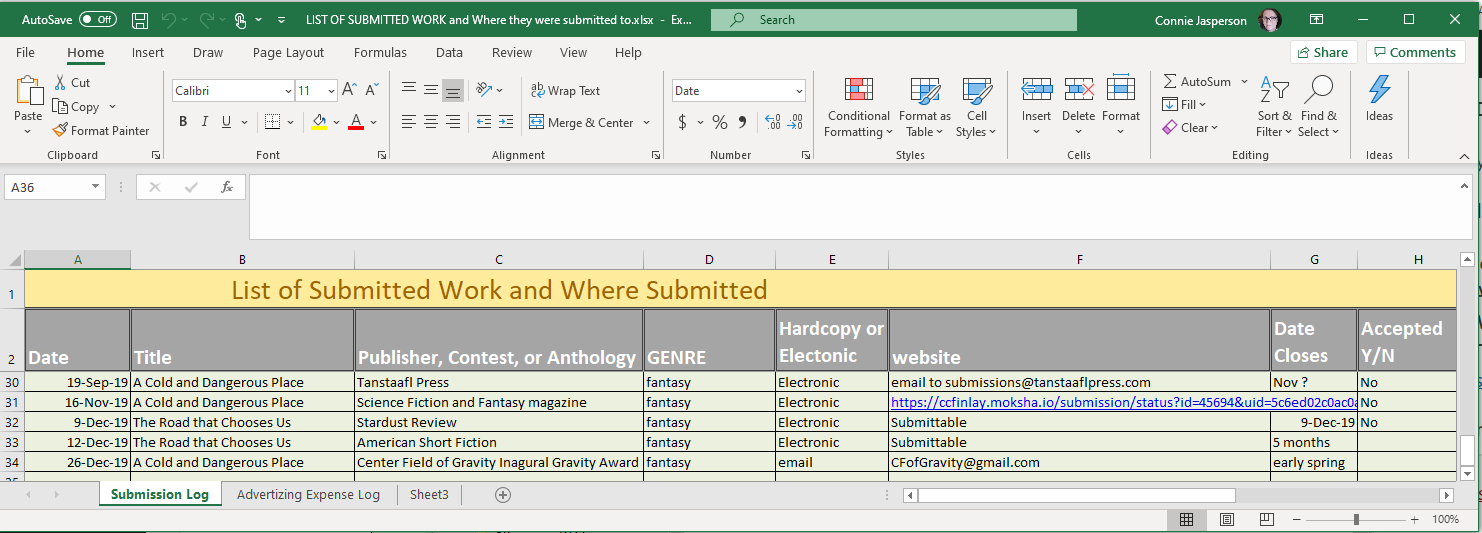
To that end, consider creating a database for your work. I use an Excel spreadsheet that lists the title, word count, completion date, where and when I submitted the work, how much I earned for it, etc.

Below is a screenshot of what my list of submitted work looks like. I started this file in 2015 and continue to use it to track my submissions.

In extremely short fiction such as drabbles and other flash fiction, you must include only the most essential elements of a story. This kind of constraint teaches us to write concisely and still show an engaging story.

As a poet, I find it far easier to tell a story in 100 words than in 1,000. That 100-word story is called a drabble and is an art form in its own right.

You can find publications with open calls at Submittable. Unfortunately, that site is no longer as useful for speculative fiction as it was several years ago. However, I have seen anthology calls for spec fic there. Still, poetry collections, literary anthologies, and contests use Submittable, so that is an option. https://www.submittable.com/

Some social media platforms are useful, as you may hear about open calls that way. I know many people are avoiding social media these days, but you don’t have to go nuts. Use it just for business (and yes, writing is a business). Follow editors on LinkedIn, Facebook, Instagram, and their Twitter feeds, if you are still using that platform. (I no longer use Twitter, but I do use Bluesky.) Consider following the magazines you submit to (or would like to send work to) on each social media platform you use.

A fellow author keeps a networking notebook. It includes the names of people in the industry she has spoken to, their affiliations (if they work for an agent or editor), their emails and/or business cards, and other relevant details. This information comes in handy when she has to write cover letters to go with submissions to these editors, as she can reintroduce herself as having met them at a specific seminar or conference.

This list of suggestions is meant for authors who intend to write professionally. It’s a business, so these habits help keep me focused and on track.

1 Comment

Filed under writing

Walking the path to becoming an author #writing

This last week I was asked what it takes for an ordinary person to be an author. My first thought was, no one is more ordinary than an author.

But I didn’t say that.

Authors are crafts folk, people who work at the craft of writing and take the time to turn out a finished product that is as good as we can make it. You wouldn’t enter a half-finished quilt at the county fair. You would go through all the steps to finish the job and take pride in your creation.

A serious writer takes the book through all the steps needed to make it readable, salable, and enjoyable because we love what we do, and we take pride in it.

It’s a lot of work.

Some writers are better than others, not unlike those crafters who work with wood. A good author is like a carpenter who makes a piece of furniture that will be handed down for generations.

Today seems a good day to revisit an article from February of 2020 on this very subject. Nothing has changed since I wrote this article, so here it is, a rerun that I hope you enjoy.


People often say they want to write a book. I used to say that too.

In 1985 I came across my first stumbling block on my path to becoming a writer. I didn’t know it, but to go from dreamer to storyteller is easy. Anyone can do it.

But if we choose to become an author, we’re taking a walk through an unknown landscape.

And the place where we go from dreamer to storyteller to author is the hardest part.

At first the path is gentle and easy to walk. As children, we invent stories and tell them to ourselves. As adults, we daydream about the stories we want to read, and we tell them to ourselves.

That part of the walk is easy. At some point, we become brave enough to sit down and put the story on paper.

The blank screen or paper is like an empty pond. All we have to do is add words, and the story will tell itself.

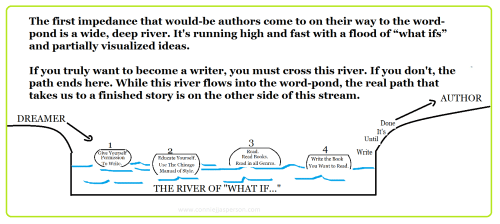
The first impedance that would-be authors come to on their way to filling the word-pond with words is a wide, deep river. It’s running high and fast with a flood of “what ifs” and partially visualized ideas.

If you truly want to become a writer, you must cross this river. If you don’t, the path ends here. While this river flows into the word-pond, the real path that takes us to a finished story is on the other side of this stream.

Fortunately, the river has several widely spaced steppingstones. Landing squarely on each one requires effort and a leap of faith, but the determined writer can do it.

The last thing you do before you step off the bank and begin crossing that river is this: visualize what your story is about.

The first stone you must leap to is the most difficult to reach. It is the one most writers who remain only dreamers falter at:

  • You must give yourself permission to write.

We have this perception that it is selfish to spend a portion of our free time writing. It is not self-indulgent. We all must earn a living because very few writers are able to live on their royalties. If writing is your true craft, you must carve the time around your day job to do it. All you need is one undisturbed hour a day.

The second stone is an easy leap:

  • Become literate. Educate yourself.

Buy books on the craft of writing. Buy and use the Chicago Manual of Style. You can usually find used copies on Amazon for around $10 – $15, passed on by those who couldn’t quite make the first leap.

I freely admit to using the internet for research, often on a daily basis, and I buy eBooks. However, my office bookshelves are filled with reference books on the craft of writing. I buy them as paper books because I am always looking things up. The Chicago Manual of Style is one of the most well-worn there.

Most professional editors rely on the CMOS because it’s the most comprehensive style guide—it has the answer for whatever your grammar question is. Best of all, it’s geared for writers of all streaks: essays, novels, all varieties of fiction, and nonfiction.

The third stone is the reason we decided to write in the first place:

  • Good writers never stop reading for pleasure.

We begin as avid readers. A book resonates with us, makes us buy the whole series, and we never want to leave that world.

We soon learn that books like that are few and far between.

The fourth stone is an easy leap from that:

  • We realize that we must write the book we want to read.

As we reach the far bank, we climb up and across the final hurdle:

  • We finish the work, whether it’s a novel or short story.

Over the years since I first began writing, I’ve labored under many misconceptions. It was a shock to me when I discovered that we who write aren’t really special.

Who knew?

We’re extremely common, as ordinary as programmers and software engineers. Everyone either wants to be a writer, is a writer, has a writer in the the family, or knows one.

Even my literary idols aren’t superhuman.

Because there are so many of us, it’s difficult to stand out. We must be highly professional, easy to work with, and literate.

Filling the pond with words and creating a story that hooks a reader is as easy as daydreaming and as difficult as giving birth.

Because writers are so numerous, every idea has been done. Popular tropes soon become stale and fall out of fashion.

A study by the University of Vermont says there are “six core trajectories which form the building blocks of complex narratives.” These are:

  1. Rags to riches (protagonist starts low and rises in happiness)
  2. Tragedy, or riches to rags (protagonist starts high and falls in happiness)
  3. Man in a hole (fall–rise)
  4. Icarus (rise–fall)
  5. Cinderella (rise–fall–rise)
  6. Oedipus” (fall–rise–fall)

No stale idea has ever been done your way.

We give that idea some thought. We apply a thick layer of our own brand of “what if.”

It’s our different approaches to these stories that make us each unique.

Sure, we’re writing an old story. But with a fresh angle, perseverance, and sheer hard work, we might be able to sell it.

And that is what makes the effort and agony of getting that book published and into the hands of prospective readers worthwhile.

2 Comments

Filed under writing

#Writing the Disaster 

Severe weather, fires, famines, and floods are terrible to live through, and many harrowing stories emerge from these experiences. Stories of apocalyptic catastrophes resonate because disaster drives humanity to strive for greater things. Those who survive and rise above it become heroes.

One disaster we may all face at some point is famine driven by climate change. Hunger exists in this world, and famine is an enemy that takes no prisoners.

Food deprivation can have a lasting impact on a person. People can survive on very little, and unfortunately, many do. To go without adequate food for any length of time changes you, makes you determined to never go hungry again. You stockpile preserved foods in times of plenty as a shield against the next famine.

Unfortunately, for some, hunger will lead them to make choices that challenge the accepted morality of those who have no concept of what hunger truly is.

If you are looking for the seeds of a good story, consider the small tragedies people face each day, deeply personal catastrophes. These disasters happen on what seems an unimportant level to people who have resources.

I have used this example before, but it’s a real-life situation, one that may be familiar to you and your community. A young widow is working two part-time jobs and raising her two small children. How would you write her story? Perhaps she lives in an area with no public transportation. She struggles to pay for fuel, but what if her car breaks down? How will she get to work?

All her money goes to fuel, childcare, rent, and utilities. What little she has left after those bills are paid goes to food. She has no resources and no means to pay for car repairs. Without her car, she will lose both jobs. That is a profoundly personal disaster, one from which she and her children might not recover.

But maybe that plot isn’t big enough to inspire you to write a book about it. Perhaps you want to write about a disaster that inspires heroics in the face of widespread devastation. The world itself can provide us with plenty of drama. Wildfires, floods, tornadoes, hurricanes, earthquakes, tsunamis – these catastrophes regularly destroy thousands of communities.

courtesy Office360 graphics

Once we have introduced our characters and set the scene, it’s time to bring on the natural disaster. When you begin writing the story, it will be chaotic. Just get the bones of the events down as well as you can and move on. You must get the entire story down while it is fresh.

In the first draft, write each scene as fast as you can, and don’t worry about fine-tuning it because you will come back to it later. The second draft is where you will iron out the rough spots and make things logical.

In the second draft, we take apart the scenes where we have told the story and reword them. We show the events as if we were painting with words. We use power words to inject real, believable emotion into the experience.

The window shatters, and a two-by-four impales itself in the wall beside David amid a shower of glass shards. I stare, dumbstruck, as the wind tears the door from my hand and slams it against the wall.

Verbs in that scene are: stare, impales, shatter, tears, and slams. Show the bones of the event by using verbs with powerful visuals, and the reader’s mind will fill in the rest.

I suggest you open a new document and describe the disaster in great detail. Then save it as background material for that story and walk away from it. Let it rest, and move on to something else. When you return to it, read it aloud and see what you can cut and condense and still have the bones of the action. As always, verbs and power words are action’s best friend.

Droughts often cause famines and worse. To go without water is to die. Thirst is a more immediate pain than hunger. The human animal can survive for up to three weeks without food but only three to four days without water. Rarely, one might survive up to a week.

Even brackish water must taste sweet when one suffers from a lack of potable water. And when one is starving, foods they would consider repugnant under other circumstances will fill their belly.

Look at the continual strife in some third-world countries. You will see how long-term droughts have precipitated widespread famine, leading to civil unrest. Gang wars are fought over the right to own a water source, and these conflicts can erupt into revolution.

We often forget this when we have plenty to eat and never have to worry about whether we will have water in our faucet as long as we can pay the bills. However, if we learned anything from the empty grocery store shelves in 2020 and the subsequent supply chain crisis, it is that our well-fed lives are standing on a one-legged stool.

Once the events of the disaster are on paper the way we want them, we have the opportunity to ratchet up the reader’s emotions by the way we portray the aftermath. Who finds strength through the calamity, and who is broken by it? What roadblocks do they face, and how do they recover?

We must complete the story and provide the reader with some closure by ending with our characters in a place of comparative happiness and security.

Drama, heartache, disaster, and violence are the backdrop against which humanity’s story plays out. The most powerful books in the Western Canon of Great Literature explore both the good and evil of the human experience.

We connect with these stories across the centuries because the fundamental concerns of human life aren’t unique to one society, one technological era, or one point in time. We all want enough food, enough water, and reliable shelter.

When we contrast ease with hardship, we add emotional texture to our narrative. I love a good story featuring courage in the face of personal disasters. Readers like me will think about the story and those characters long after it has ended.

5 Comments

Filed under writing

Idea to story part 2: thinking out loud #writing

Over the years, I have learned many tricks to help people get their ideas out of their heads and onto paper.

Nearly everyone says they have an idea for a good story. What separates writers out from the crowd is this: as time passes and they think about it, they write those ideas down. Ninety five percent never get beyond this stage but for a few, thinking about it on paper ends and they dive straight into writing it.

Most will begin without an outline. They are flying blind, or in author speak, “pantsing it.” I am a planner, but I’m also a pantser. I begin with a document that details what I think the story is, a loose outline. I sit somewhere noisy, like a coffee shop or my apartment balcony, and let my mind wander, taking notes as the story comes to me.

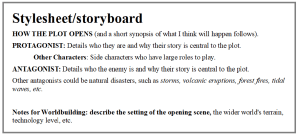
When I first began writing, I didn’t know how to construct a story. As time went on and I attended writing classes and seminars, I learned how arcs shape every story, plot arcs, and character arcs. My loose outlines became more detailed. Eventually I began making an Excel workbook as a permanent storyboard/stylesheet for each series.

ANY document or spreadsheet program will work. I think of outlining as pantsing it in advance—a visual aid for when the writing gets real. If I have an idea of how the story should go, I won’t run out of words before the first draft is done.

Once I have the bare bones of the story down on paper, I begin fleshing out each scene. The outline becomes my first draft, and I save it with a new name.

Once that first draft is finished and in revisions, some scenes will make more sense when placed in a different order than originally planned. So, I update the outline with each change. This allows me to view the arc of the story from a distance, so I can see where it might be flatlining.

Sometimes, an event no longer makes sense and no matter how much I love it, I have to cut it. (I always save my outtakes in a separate file for later use.)

In last week’s post, I went over the questions I ask of each writing project before the words hit the paper. Two important questions are what genre do I think I’m writing in, and what is the underlying theme?

I love reading character-driven fantasy so that is what I write. A world emerges from my imagination along with the characters, and I make notes as bits and pieces of that environment occur to me.

Humor is crucial when you write fantasy that has some dark moments. I have a deep streak of gallows humor that often emerges inappropriately to my family’s regret. Humor in the face of disaster will be a theme. This theme comes out in most of my work.

Next, I create a brief personnel description, less than 100 words for each prominent character. I note the verbs, adjectives, and nouns that describe the character, as those give me all the necessary information. This is just a paragraph, but it contains the essential information.

Sometimes it takes a while to know what a character’s void is (a deep emotional wound), but it will emerge by the time the first draft is done.

The protagonist in the following example doesn’t have a story as she is just an illustration of what I do. But it would be easy to write one for her if I had a few other people figured out.

How I get a story out of my head and onto paper:

What is the core conflict? Is it the Quest for the Magic MacGuffin? Is it a coup followed by a struggle for power? It’s a fantasy, so a wide range of options are open to us.

Who are the players?

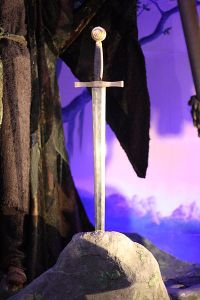
Excalibur London_Film_Museum_ via Wikipedia

Valentine (Protagonist) Hates her name and goes by Val. (Arms master, 36. Black hair, brown eyes, suntanned.) VOID: Deep sense of failure. A convergence of bad choices led to a stint in a dungeon. VERBS: Act, fight, build, protect. ADJECTIVES: wary, sarcastic, hopeful, dedicated, considerate. NOUNS: sorrow, guilt, purpose, compassion, wit.

Does Val have close friends? If not, will she gather companions? This question is important. If she doesn’t have friends at first, I will leave space on that page to add them when they emerge from my imagination. As I contemplate Val’s story, perhaps a love interest will show up later, or maybe not.

What happens to take Val out of her comfort zone? Sometimes I don’t have the answer to this for quite a while. Other times, it’s the spark that starts the story.

The entire arc of the story rests on how I answer the following question. What is Val’s goal, her deepest desire? Currently, it looks like she’s hoping to regain her self-respect. That will become a secondary quest when a more immediate problem presents itself.

What stands in her way? Who or what is the Enemy?

Let’s name the enemy Kai Voss. What is his deepest desire? How does Kai Voss control the situation at the outset? Once I know who the protagonist is and what they want, I give them the same personnel file I give all the other characters—I identify a void, verbs, adjectives, and nouns for him.

Once I have Kai Voss described in a paragraph, I can determine the quest. Kai Voss is the key to what Val must achieve. A believable villain is why Val’s story will be fun to write.

Later, after I have the characters figured out, I will work on the plot outline and try to shape the story’s arc. This is where roadblocks and obstacles do the heavy lifting, and my outline will contain ideas I can riff on. Val will have to work hard to achieve her goal, but so will Kai Voss.

Information and the lack of it drive the plot. Val can’t have all the information. Kai Voss must have more answers than Val and be ruthless in using that knowledge to achieve his goal. My outline will tell me when it’s time to dole out information. What complications arise from Val’s lack of information?

With each chapter, Val and her companions acquire the necessary information, but each answer leads to more questions. Conflicts occur when Kai Voss sets traps, and by surviving those encounters, Val gains more information about Kai Voss’s capabilities. She must persevere and use that knowledge to win the final battle.

Having my characters in place and an outline helps keep me on track when I am pantsing it through the first draft of a manuscript. New flashes of brilliance will occur as I am writing and will make the struggle real. But two fundamental things will remain constant:

Val’s determination to block Kai Voss and wreck the enemy’s plans is the plot.

Val’s growth as a character as she works her way through the plot is the story.

Next week in part three of this series, we will take a closer look at Val and Kai Voss and see how their strengths and weaknesses drive and help create the overall arc of the plot.


Credits and Attributions:

Excalibur, London Film Museum via Wikipedia

5 Comments

Filed under writing

Idea to story, part 1: novel, poetry, memoir, or short story? #writing

Stories are universes that begin with the spark of an idea and burst into existence.  When an author has this fledgling thought, it grows, expands, and won’t stop nagging at her. New authors often don’t know how to make that idea into the kind of story they have always wanted to write.

The basic premise of any story in any genre can be answered in eight questions. I have listed them before, but here they are again:

  1. Who are the players?
  2. Who is the POV character?
  3. Where does the story open?
  4. What does the protagonist have to say about their story?
  5. How did they arrive at the point of no return?
  6. What do they want, and what will they do to get it?
  7. What hinders them?
  8. How does the story end? Is there more than one way this could go?

Question number two is where, once the first rush of creativity passes, many would-be writers give up. They experience a momentary lull in creativity and don’t have the tools to visualize what to write next.

When we have a lull in creativity, we wonder how to free the words and get the story back on track.

It helps to consider what kind of story those ideas want to be.

Sometimes stories want to be novels.

Has the story decided what genre it is? Mine always come into existence with a setting, and that determines the genre. If your story wants to be a novel, ask yourself what the central theme is.

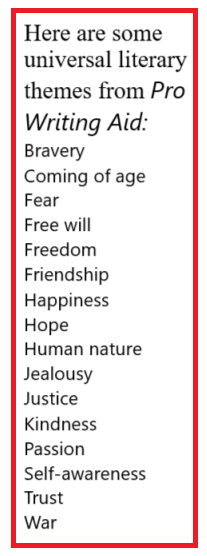
  • Theme is a core thread, such as love lost and regained, or coming of age, etc.

If you have a theme to write to, the plot will emerge more easily.

Will you “pants it” through the plot or create a plot outline? Outlines are just me thinking out loud on paper.

There are times when my stories want to be poems, because poetry is emotional and emotion powers my words. My poetry details the fantasy that is the memory of my childhood home.

It describes the way I felt about lake where I grew up, the forest surrounding our property and the swamp that bordered our driveway. A river emerged from the south end of my lake, and I write about the memories of fishing with my father.  To the west of the lake, the high hills rise above, dominating the western sky from every view in the county. When I see those hills, I know I am home.

When poetic words have a grip on your imagination, write them down. If you want to learn more about the different genres of poems and how to write them, here is a short list:

Free verse  is a modern construct that may not rhyme but the cadence and pacing of the syllables have rhythm.

Traditionally structured poetry includes OdesHaikusElegiesSonnetsDramatic Poetry, or Narrative Poetry.

In my misspent youth, I was a musician and wrote lyrics for a heavy metal band, so I tend to write lyric poetry. I have a friend who writes sci-fi poetry.

Much of my work is in the form of short stories. In the beginning of your writing life, you work might be short forms too. Will you “pants it” or write little outlines? I work both ways when it comes to short stories.

I’ve written more than a hundred short stories in the past few years, enough that I can put together several collections. I am working on editing one as we speak.

If I have learned anything over the last decade or so, it’s that a collection of stories can’t be a bunch of random tales shoved into a book. To make a coherent collection of stories in one volume, I must consider several things.

What genre? Or will it be a mix of genres? This is a risky choice but could succeed if a specific theme binds the stories together.

Another thing to consider is whether or not I have enough stories featuring a recurring character or location to bind the collection together. I do for one series but will have to rely on a theme for the other collection.

You’ve noticed that I’m repeating myself—but trust me, a fiction project is easier to create if you know what genre you are writing for and can see the central theme that will bind it together.

Sometimes new authors say their project is a memoir. If a new writer tells me this, I always wonder if they have read any. If they haven’t read any memoirs, there may be a problem. Reading the memoirs written by successful authors is the best way to learn how the plots of outstanding memoirs are constructed.

Memoirists should ask two questions of their work. Will you detail actual memories or write a fictionalized account? Do you dare to name names or not?

  • Naming names could be opening a can of worms, so think long and hard before you do that.

Some new authors have no intention of publishing a memoir. They just want to write a family history, a fun project. Here are some considerations if you fall into that category.

Are you just curious, or are you searching for an identity, trying to discover who you are and where your family comes from? Research from a site such as ancestry.com or gleaned from family bibles, letters, and other collected papers will greatly help you.

Will you include photographs or interviews with older family members who may remember something about your family’s history?

This is a project I’ve thought about embarking on, but I know I would never finish it. I don’t need another unfinished project laying around.

When we have the spark of a story, an idea that won’t let us go, we can spend years trying to get that vision out of our heads and ready for publication. It takes an incredible amount of work and a continuing habit of self-education to grow as a writer.

Getting your book to the publishing stage can be expensive. When we think we have our novel, memoir, or short story collection finished, we must consider hiring a freelance editor—even if we plan to find an agent and go the traditional route. We never submit anything that isn’t our best work.

But if you are in the “just starting out” phase, please know that you are not alone. When you hold the finished product in your hand, you will know the struggle was worth it.

1 Comment

Filed under writing

Speculative Fiction—Genre and the Liberation of Ideas #writing

Speculative fiction … it’s a subcategory of fiction, a genre. But what is a genre, exactly?

MyWritingLife2021In this case, genre is a category of literature that features similarities in form, style, or subject matter, or tropes. Speculative fiction is an overarching term for a genre that bookstores break into two main subcategories: science fiction and fantasy. Each category is subdivided into many smaller sub-genres.

We should consider the meaning of those two words, “speculative fiction.

Speculative = conjectural, suppositional, theoretical, hypothetical, academic, abstract, risky, hazardousunsafe.

Fiction = novels, stories, creative writing, prose literature, narration, storytelling, romance, fable, imaginative writing, works of the imagination.

Speculative fiction takes risky, often theoretical ideas and expresses them through storytelling.

The two words, speculative fiction, give an author permission to leave the boundaries of our known world. It frees authors and philosophers to examine deep and profound concepts by exploring them in a fictional environment.

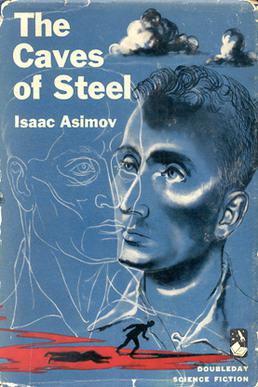
The-caves-of-steel-doubleday-coverIn 1953’s The Caves of Steel, Isaac Asimov took us into the future, a time when humanity had divided into two factions—spacers and earthmen. The Blurb:

Like most people left behind on an over-populated Earth, New York City police detective Elijah Baley had little love for either the arrogant Spacers or their robotic companions. But when a prominent Spacer is murdered under mysterious circumstances, Baley is ordered to the Outer Worlds to help track down the killer. 

The relationship between Baley and his Spacer superiors, who distrusted all Earthmen, was strained from the start. Then he learned that they had assigned him a partner: R. Daneel Olivaw.  Worst of all was that the “R” stood for robot—and his positronic partner was made in the image and likeness of the murder victim!

In 1953, racism was endemic, institutionalized. When Asimov wrote this novel, he took on bigotry and equality in a palatable way by showing us a civilization where androids are denied equality. To murder a human is a crime, but in this society, many otherwise good people refuse to believe that androids are sentient beings with a right to life. Yet, in R. Daneel Olivaw, we meet a sentient being and feel compassion for him.

Isaac Asimov trusted his readers.

Does the above example mean that speculative fiction only meant to point out our society’s shortcomings?

Not at all.

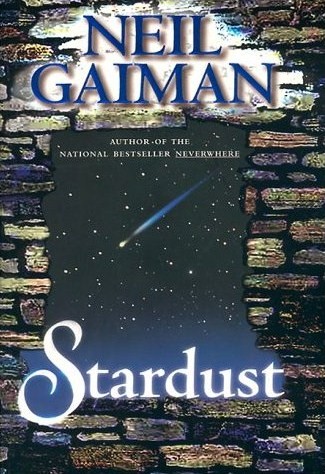
StardustGaimanbookcoverNeil Gaiman’s Stardust qualifies as a speculative fiction novel, even though it’s a literary fantasy. It is a fairytale that explores the core theme of transformation and is told with beautiful prose in an unhurried fashion. A story can be told leisurely, poetically, and still pack a punch.

In my opinion, good writing conveys a story in a crafted style. Words are chosen for their impact, and the prose is delivered with a voice that is uniquely that of the author.

Fairytales are often dark, scary stories, and always offer us morals. In Stardust, Gaiman shows us truth. He lays bare the lies we tell ourselves through the simple fairytale motif that real love is not gained through prodigious deeds. All through the narrative, Gaiman explores the difference between desiring a person and loving them. By the end of the tale, we know that love requires truth if it is to survive.

Neil Gaiman trusts his readers. That is something we all need to do. Sometimes a story needs to emerge slowly and be told with beautiful, immersive prose, and we need to trust that our readers will enjoy it if we craft it well.

There is room in the bookstore for books with a less urgent story to tell, as well as those that ambush the reader and beat them bloody with non-stop action.

Asimov showed us that tight, straightforward prose works.

Gaiman shows us that sometimes you can just have a little fun with it.

The genre of speculative fiction grew out of the repression of the 1940s and 1950s and has always been the literary field in which ideas that challenge society’s norms were sown. Radical concepts could be conveyed when couched fantasy and set in fictional worlds.

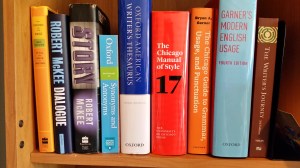
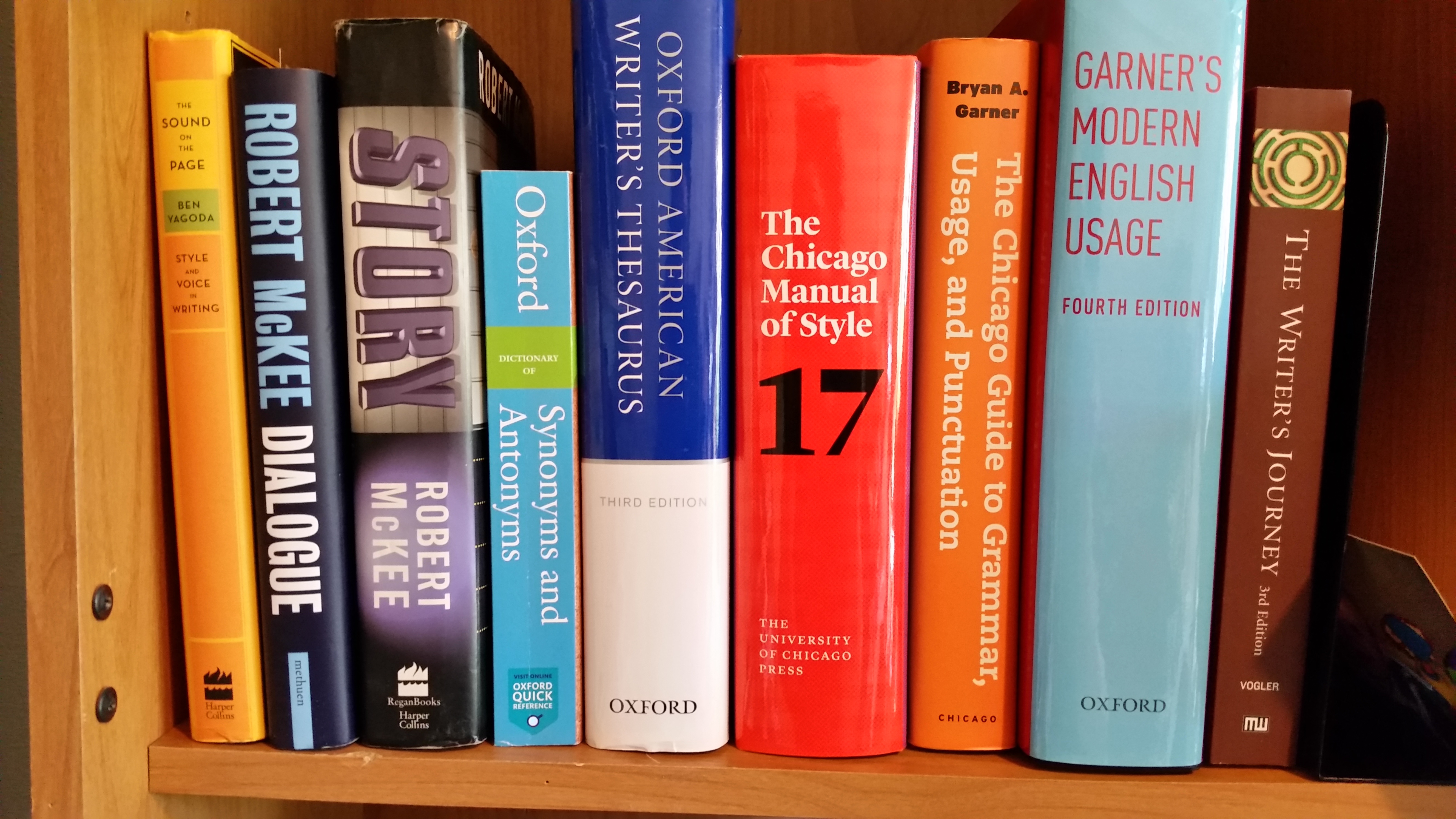
Editors_bookself_25May2018Dedicated authors are driven to learn the craft of writing, and it is a quest that can take a lifetime. It is a journey that involves more than just reading “How to Write This or That Aspect of a Novel” manuals. Those are important and my library is full of them. But how-to manuals only offer up a part of the picture. The rest of the education is within each of us, an amalgamation of our life experiences and what we have learned along the way.
I’ve said this before, but whenever I come across an author whose work resonates with me, I go back and reread it. The second time, I take notes. I study how they crafted their work, look at their word choices. Then I ask myself why it moved me.

I do the same with the books that left me feeling robbed—where did the author go wrong? What can I do to avoid this in my work?

I always learn something new from looking at how other authors combine and use words to form the moods and emotions that drive the plot. For me, writing is a journey with no finite destination other than the satisfaction of making small steps toward improvement.

Sometimes my work is good, other times Aunt Maudine’s budgie wouldn’t want the bottom of its cage lined with it. But when I look back at my early work, I can see improvement over time, which is all we can ever hope for.

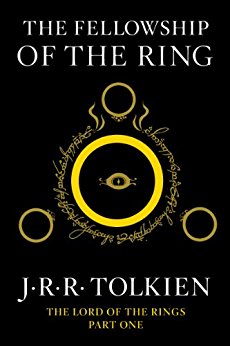
the fellowship of the ringAuthors write because we have a story to tell, one that might also embrace morality and the meaning of life. To that end, every word we put to the final product must count if our ideas are to be conveyed.
Don’t lose heart, and don’t give up just because you think you can’t write like your favorite author. Write for yourself and write because you have something that needs to be said.

And don’t quit until you arrive at the place where you write “the end” on the last page.

8 Comments

Filed under writing

The Second Draft: Decoding My Mental Shorthand #writing

Before we set the first words on a blank page, our minds have formed images of scenes we want to describe. Steven Pinker is a professor of psychology at Harvard University who specializes in visual cognition and developmental linguistics. He reminds us that we are not born with language, so we are NOT engineered to think in words alone. We also think in images.

depthPart1revisionsLIRF05252021It follows that certain words become a kind of mental shorthand, small packets of letters that contain a world of images and meaning for us. Code words are the author’s multi-tool—a compact tool that combines several individual functions in a single unit. One word, one packet of letters will serve many purposes and convey a myriad of mental images.
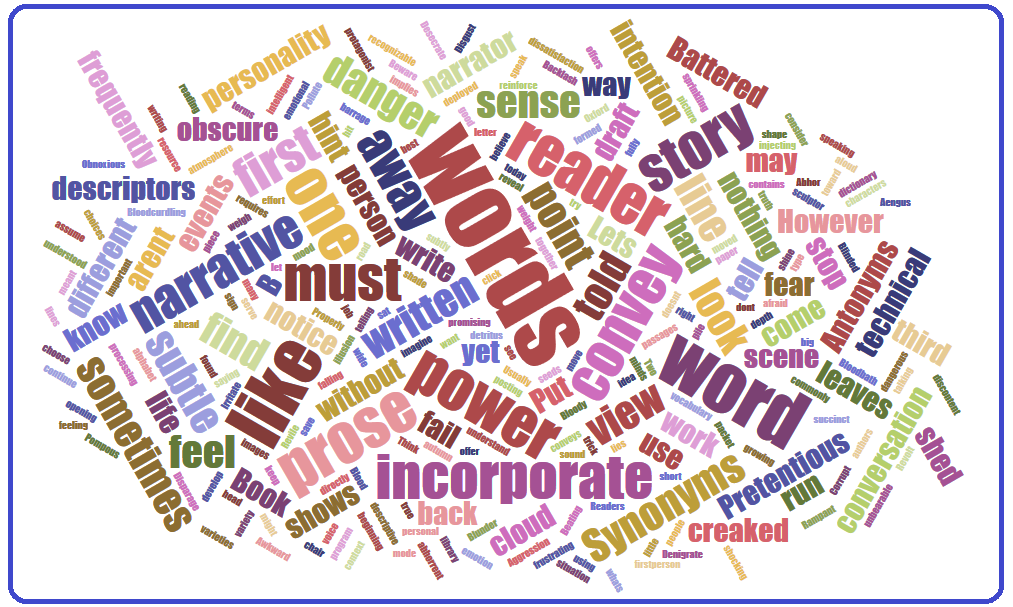
These words are sometimes used too often in the first draft as they are efficient. We write as fast as we can when we have the inspiration. Code words convey a wide range of information concisely, and because we use them, we can write the first draft of a story from beginning to end before we lose the fire for it.

In my current writing, I hope to portray my protagonists as I see them without bashing my readers with how I see their appearance. The big temptation is to go into detail about each person’s specific characteristics.

This is not necessary. We think in images, and so do our readers, who will fill in the details in a way that is pleasing to them. I want to convey their characteristics naturally and without beating the reader over the head.

A few years ago, I read a novel featuring a caterer who solves mysteries. She is continuously described as Junoesque, ample, vast, chubby, size eighteen, fat, large … and on and on. In every chapter, at least once and usually twice, we were given a visual description of her, along with indications of how she aroused the males around her.

Those constant descriptions were meant to emphasize the author’s perception of her protagonist as plump but irresistible to the males. However, as the book wore on, it became jarring and unnecessary. I skipped to the end and then set it aside, never to be read again.

powerwordsWordCloudLIRF06192021I want to avoid that sin in my work, but what are my code words? What words are being inadvertently overused as descriptors? A good way to discover this is to make a word cloud. The words that see the most screen time will be the largest. Free online word cloud generator and tag cloud creator – WordClouds.com.

A word frequency search is also a good tool. Word Frequency Counter – Counts frequency of words in text, free online tool (charactercounter.com)

In my current work, a prominent side character is an important mentor. He is tall with dark skin and dark eyes. His hair is a wiry halo shot with white and trimmed close to his head. This is a mixed-race society, a world where “race” means “species.” One is a human born in the world of Neveyah, a large minotaur from the Bull God’s world, or a small person with rat-like features from the Mountain God’s world. Those are the only racial differences people notice.

So, when showing my people, I use general descriptors, and thanks to my use of word frequency search, the code words are now used only a few times. My hope is that a reader will make appropriate visualizations as needed.

Every author thinks a little differently, so your code words will be different from mine. Another way to find your secret code words is to have the Read Aloud tool read each section. I find many inadvertent crutch words that way.

One of the code words I subconsciously overuse is “felt.” My thesaurus says I could exchange felt for:

  • ozford-american-writers-thesaurusendured
  • experienced
  • knew
  • saw
  • suffered
  • tasted
  • underwent,
  • witnessed

The thesaurus offers some other words related to felt:

  • regarded
  • viewed
  • accepted
  • depended
  • trusted
  • assumed
  • presumed
  • presupposed
  • surmised

It’s natural to overuse certain words without realizing it, but that is where revisions come in.

As you go along, you’ll discover that some words have very few synonyms that work.

Consider the word “smile.” It’s a common code word, a five-letter packet of visualization. Synonyms for “smile” are few and don’t show what I mean:

  • beam
  • grin
  • leer
  • smirk

Each occurrence of the word “smile” in my work must be considered individually. Sometimes, this requires a complete re-visualization of the scene. It hurts my heart to murder my darlings, but I look for a different way to convey my intention.

We don’t have to drag the reader through a long list of ever-moving facial expressions, such as lips turning up, down, drawing to one side, etc.

When done sparingly and combined with a conversation, this kind of visual display can work.

By sparingly, I mean no more than one facial change per interaction, please.

oxford_synonym_antonymSometimes, the only thing that works is the brief image of a smile. Nothing is more boring than reading a story where a person’s facial expressions take center stage. As a reader, I want to know what is happening inside our characters and can be put off by an exaggerated outward display.

Once you become aware of your first draft code words, go to the thesaurus, find all the synonyms you can, and list them in a document for easy access. If it is a word such as smile or shrug, you have your work cut out, but it will speed things up if you make a small list of visuals that you can use and change up as needed.

A list of mood indicators can keep you from losing your momentum and will readily give you the words you need to convey all the vivid imagery you see in your mind. I saved my list to my desktop, so I don’t have to waste time searching for it.

Here are some instances of body language an observer would see if a character was wary.

  • Crossed arms.
  • A stiff posture.
  • Narrowed eyes.

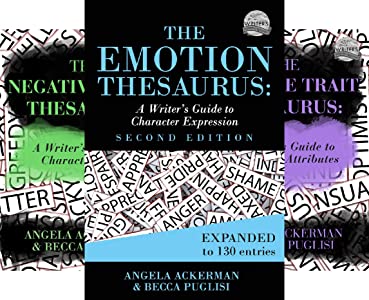
emotion-thesaurus-et-alIf you don’t have it already, a book you might want to invest in is The Emotion Thesaurus by Angela Ackerman and Becca Puglisi. Some of the visuals they list aren’t my cup of tea, but they understand how to use words that show what people are thinking.

This aspect of the revision process is sometimes the most difficult. It takes time to examine each instance of our code words. They don’t always need changing—sometimes, a smile is a smile, and that is okay.

6 Comments

Filed under writing

Revisiting the Apostrophe #writing

Some questions have been raised in an online writing group about the use and abuse of apostrophes, so I thought this would be a good day to revisit a post from February of 2019. Nothing has changed, and apostrophes remain as useful and confusing for new writers today as they were then. Hopefully, this rant will clear the murky waters of one of the English grammar’s most useful punctuations, the apostrophe.


The apostrophe has many uses, but I will only delve into the most common ways we use it in creative writing today.

comma or apostropheIn creative writing, the apostrophe is a small morsel of punctuation that, on the surface, seems simple. However, certain common applications can be confusing, so as we get to those I will try to be as concise and clear as possible.
First up, we all know that we use the apostrophe to denote possession:

  • This is George’s cat. (George owns this cat.)
  • This is Jorgensen’s cat. (A person who is going by the surname of Jorgensen owns the cat.)

Where this gets a little tricky is in the possessive form of a surname when it refers to the whole family. In this case, you insert a grammatical article (the) and make the name plural, and then add the apostrophe:

  • This is the Jorgensens’ cat. (The Jorgensen family owns the cat.)

If the Jorgensen family have a sign made for their front porch, they would have it made to read “The Jorgensens’ Home” (not “The Jorgensen’s Home,” as that would imply that only one Jorgensen lives there, and his legal name is “The Jorgensen.”)

When two or more people (or other entities such as businesses) are described as separately owning something, each name should be in the possessive form:

  • “Ralph’s and Janet’s cars are the same model.”

However, if Ralph and Janet share a possession, include an apostrophe and an s after the last name only:

  • “Ralph and Janet’s car is a Prius.”

In some cases, we need to use plurals of abbreviations. In a military thriller, you might need to say, “They disarmed several IEDs.” (We would not use an apostrophe.)

Writing a year numerically has been an area of confusion for me. This is because I rarely have had to write years in this way until recently and the use of an apostrophe for this is now considered outdated. However, this is how they should be written:

  • The tavern culture of the 1600s was flourishing. (1600’s would not be considered incorrect, just old fashioned.)
  • Dresses in the 1960s were shorter than in previous years.

An apostrophe should follow a number only if it is possessive.

  • It was 1985’s worst storm. (Some editors feel this is awkward, but I let it stand when I see it in a client’s manuscript.)

Numbers are frequently written numerically when writing books for middle grade and YA readers, as these stories often center around schools and sports.

A single digit, such as 7, is made plural with the addition of an s: 7s

Insert an apostrophe to denote possession when you must use a number to stand in for a person in an article, such as when an athlete is identified by a uniform number:

  • Number 8’s tackle won the day.

Contractions can be confusing. Two words made into one word are joined by an apostrophe:

  • Do not = don’t
  • We are = we’re
  • You are = you’re
  • They are = they’re

And so on. A list of contractions to watch for can be found at the fount of all knowledge, Wikipedia: Wikipedia: List of English contractions

Conjunctions also can be tricky.  Simply add an s, such as in the phrase “There are no ifs, ands, or buts about it” or “A list of dos and don’ts follows.” We do keep the contractive apostrophe in don’t and simply add an s to make it plural.

Sometimes a single letter looks awkward when we just use an s to indicate plurality.

  • “How many h’s do you spell shh with?” (just writing “hs” would look odd and be confusing.)

When pluralizing capital letters, we don’t use an apostrophe: Mike earned three Ds in English this year but still passed the class.

In a narrative, the two most common missions that apostrophes have are to denote possession or indicate a contraction.

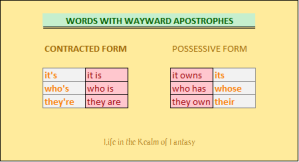
  • Who’s is the contraction of “who is” or, less commonly, “who has.”
  • Whose is the possessive of “who” or, somewhat controversially, “which.”
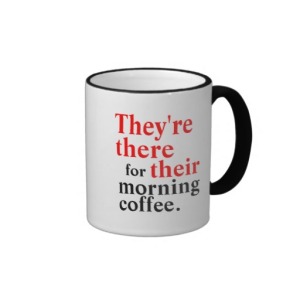
  • Their(s) is the possessive of “they.” (They’re proud to own it, it’s theirs, and it’s not there.)
  • Its is the possessive of “it,” and “it’s” is a contraction of it is.

Note that for both they and it, there is no apostrophe in the possessive form.

  • The texture of the wall —it’s rough. (contraction: it is rough.)
  • I scratched myself on its surface. (possession: the wall’s surface.)

In most English words an apostrophe indicates possession but can also indicate a contraction. The difficulty arises in the fact that both it and they are frequently part of contracted words.

In the effort to standardize English usage, early linguists made a choice to eliminate the apostrophe in the possessive form. They did this in the (futile) hope of ending confusion.

  • It’s is the contraction of “it is” and sometimes “it has.”
  • Its denotes possession: It owns it.
  • Their: they own it
  • They’re: they are

As with so many things that “seemed like a good idea at the time,” its and it’s will always cause problems for new and beginning writers. Inadvertent misuse happens even for old hands like me when I’m zipping along laying down the first draft of a manuscript.

We have to be vigilant and ensure we have looked for proper usage of its and it’s during revisions. Even the big traditional publishing houses admit sneaky errors like those like to go unnoticed until after publication.

In closing, the most common uses of the apostrophe aren’t too difficult once we learn the rules. Remember, apostrophes are integral parts of the traffic control system, signals that keep your words moving along at the right rate. Using them the way they are intended (and which readers expect) keeps the reader from throwing your book away.

I always suggest you set some time aside for writing new words every day, even if only for fifteen minutes. When we force ourselves to think about and use the basic rules of grammar regularly, we retain what we have learned.


This post first appeared on Life in the Realm of Fantasy on 13 Feb 2019 as The Apostrophe. https://conniejjasperson.com/2019/02/13/the-apostrophe-amwriting/

1 Comment

Filed under writing

Self-editing part 2: rare beasts – ellipsis, em dash, hyphen, and ?! #Writing

The mechanics of writing are the framework that makes a story readable. Every language has specific rules for managing grammar. The language I work in is English, so if you also write in another language, you have my profound respect. You have double the work ahead of you.

MyWritingLife2021BLast week, we talked about how punctuation is the traffic signal that keeps our words flowing smoothly.

Ellipses, em dashes, hyphens, and semicolons are rare beasts in the punctuation realm. Authors who rely on spellcheck may be getting the wrong advice when it comes to the use of rare punctuation.

For instance, Microsoft’s editor app sometimes tells us to use a comma to join two independent clauses when they don’t relate to each other. Microsoft is wrong. That creates a comma splice. The comma splice is a dead giveaway that either the author has skimped on editing their work or they’re not well-versed in grammar. (See Monday’s post, Self-editing part 1 – seven basic rules of punctuation, for a better explanation of comma splices.)

So, let’s talk about ellipses. Many authors use them incorrectly or inconsistently. This is because ellipses are not punctuation and shouldn’t be used as such.

The ellipsis is a symbol that represents omitted words and is not punctuation. The Chicago Manual of Style says that when the conversation trails off, we must add ending punctuation.

Groundfall apples, bruised and over-ripe, lay scattered across the ground. But the apple orchard is across the road, so how did they…?

Hyphens are usually not necessary, although my first drafts are often littered with them. If the meaning of a compound adjective is apparent when written as two separate words, a hyphen is not needed.

  • bus stop

hyphenated wordsIf the meaning is understood when two words are combined into one, and common usage writes it as one word, again a hyphen is unnecessary.

  • afternoon
  • windshield

Some combinations of “self” must have a hyphen:

  • self-editing
  • self-promotion

Dashes are not hyphens and are used in several ways. One kind of dash we frequently use is the ‘en dash,’ which is the width of an ‘n.’

En dashes join two numbers written numerically and not spelled out in US usage.

  • 1950 – 1951

To insert an en dash in a Word document, type a single hyphen between two words and insert a space on either side (word space hyphen space word). When you hit the space bar after the second word, the dash will lengthen a little, making it slightly longer than a hyphen. UK usage often employs the en dash in the place of the em dash.

Em dashes are the width of an “m” and are the gateway to run-on sentences. To make one, key a word, and don’t hit the spacebar. Hit the hyphen key twice, then key another word, and then hit the spacebar: (word hyphen hyphen word space) word—word.

Authors sometimes use emdashes without thinking. Too many em dashes—like salt—ruin the flavor of the prose. It often works best to rephrase things a little and use a comma or a period.

interrobangBut what about !?  These mutant morsels of madness are called “interrobangs.”

Writers of comics frequently employ interrobangs to convey emotions because they have little room for prose in each panel.

More than one punctuation mark at the end of a sentence is not accepted in most other genres. Editors working in the publishing industry will tell you that the interrobang is not an accepted form of punctuation unless you write comic books, manga, or graphic novels.

It’s your narrative, so you will do as you see fit. However, interrobangs are a writing habit writers should avoid in novels and short stories if they want to be taken seriously.

Readers expect words to flow in a certain way, but no one gets it right all the time. If you choose to break a grammatical rule, be consistent about it. Voice is how you break the rules, but you must understand what you are doing and do it deliberately.

Most readers are not editors. They will either love or hate your work based on your voice, but they won’t know why.

Craft your work to make it say what you intend in the way you want it said. Sometimes, you will deliberately use a comma in a place where an editor might suggest removing it. You should explain that you have done this to make something clear. Conversely, you might omit a comma for the same reason.

The editor you hired might ask you to change something you did intentionally. You are the author, and it’s your manuscript. If you know the rule you are breaking, you will be able to explain why you are doing so.

Most editors will do as you ask and will gladly ensure that you break that rule consistently.

Sometimes, the stories we consider powerful writing violate accepted grammar rules. Readers fall into the rhythm of the prose as long as the choices made for punctuation remain consistent throughout the manuscript.

AnneMcCaffrey_DragonflightOne of my favorite authors, Ann McCaffrey, set off telepathic conversations with both italics and colons in the place of quote marks.

:Are you well?:

Spoken conversations in her books are punctuated using standard grammar and mechanics.

Hemmingway used commas but often connected his clauses with conjunctions.

The world is a fine place and worth the fighting for and I hate very much to leave it.

As readers get into a story, they become habituated to the author’s style and voice. They overlook grammar no-nos because the story captivates them.

I love a good story, but more than that, I enjoy seeing how other authors write, how they think, and how their voice comes across in their work.

4 Comments

Filed under writing