
This last week I was asked what it takes for an ordinary person to be an author. My first thought was, no one is more ordinary than an author.
But I didn’t say that.
Authors are crafts folk, people who work at the craft of writing and take the time to turn out a finished product that is as good as we can make it. You wouldn’t enter a half-finished quilt at the county fair. You would go through all the steps to finish the job and take pride in your creation.
A serious writer takes the book through all the steps needed to make it readable, salable, and enjoyable because we love what we do, and we take pride in it.
It’s a lot of work.
Some writers are better than others, not unlike those crafters who work with wood. A good author is like a carpenter who makes a piece of furniture that will be handed down for generations.
Today seems a good day to revisit an article from February of 2020 on this very subject. Nothing has changed since I wrote this article, so here it is, a rerun that I hope you enjoy.
 People often say they want to write a book. I used to say that too.
In 1985 I came across my first stumbling block on my path to becoming a writer. I didn’t know it, but to go from dreamer to storyteller is easy. Anyone can do it.
But if we choose to become an author, we’re taking a walk through an unknown landscape.
And the place where we go from dreamer to storyteller to author is the hardest part.
At first the path is gentle and easy to walk. As children, we invent stories and tell them to ourselves. As adults, we daydream about the stories we want to read, and we tell them to ourselves.
That part of the walk is easy. At some point, we become brave enough to sit down and put the story on paper.
The blank screen or paper is like an empty pond. All we have to do is add words, and the story will tell itself.
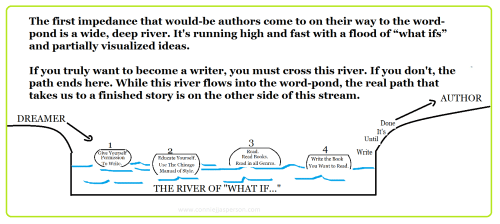
The first impedance that would-be authors come to on their way to filling the word-pond with words is a wide, deep river. It’s running high and fast with a flood of “what ifs” and partially visualized ideas.
If you truly want to become a writer, you must cross this river. If you don’t, the path ends here. While this river flows into the word-pond, the real path that takes us to a finished story is on the other side of this stream.
Fortunately, the river has several widely spaced steppingstones. Landing squarely on each one requires effort and a leap of faith, but the determined writer can do it.
The last thing you do before you step off the bank and begin crossing that river is this: visualize what your story is about.
The first stone you must leap to is the most difficult to reach. It is the one most writers who remain only dreamers falter at:
- You must give yourself permission to write.
We have this perception that it is selfish to spend a portion of our free time writing. It is not self-indulgent. We all must earn a living because very few writers are able to live on their royalties. If writing is your true craft, you must carve the time around your day job to do it. All you need is one undisturbed hour a day.
The second stone is an easy leap:
- Become literate. Educate yourself.
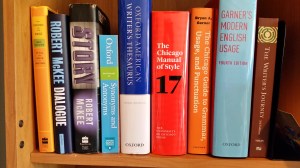
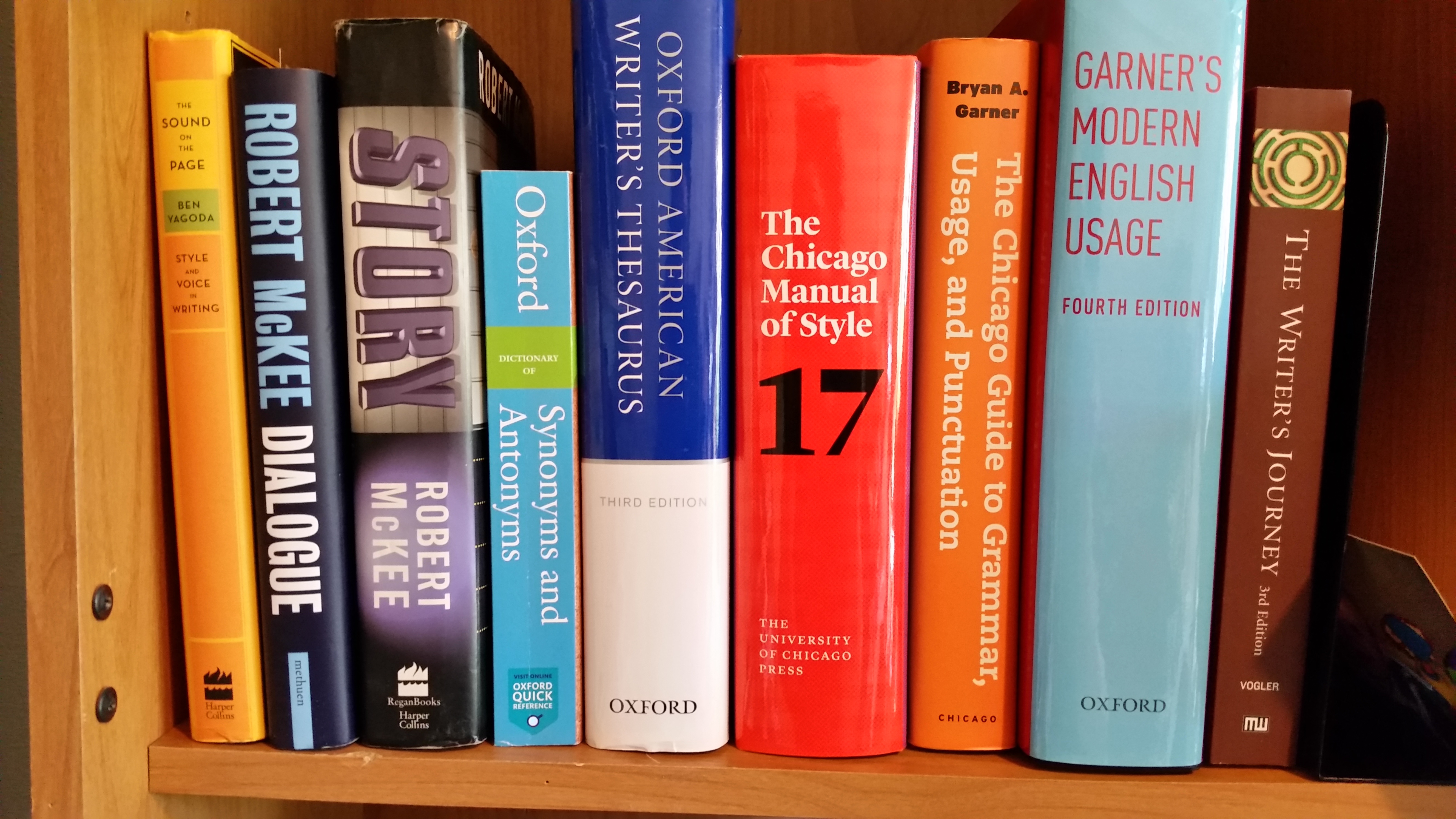
Buy books on the craft of writing. Buy and use the Chicago Manual of Style. You can usually find used copies on Amazon for around $10 – $15, passed on by those who couldn’t quite make the first leap.
I freely admit to using the internet for research, often on a daily basis, and I buy eBooks. However, my office bookshelves are filled with reference books on the craft of writing. I buy them as paper books because I am always looking things up. The Chicago Manual of Style is one of the most well-worn there.
Most professional editors rely on the CMOS because it’s the most comprehensive style guide—it has the answer for whatever your grammar question is. Best of all, it’s geared for writers of all streaks: essays, novels, all varieties of fiction, and nonfiction.
The third stone is the reason we decided to write in the first place:
- Good writers never stop reading for pleasure.
We begin as avid readers. A book resonates with us, makes us buy the whole series, and we never want to leave that world.
We soon learn that books like that are few and far between.
The fourth stone is an easy leap from that:
- We realize that we must write the book we want to read.
As we reach the far bank, we climb up and across the final hurdle:
- We finish the work, whether it’s a novel or short story.
 Over the years since I first began writing, I’ve labored under many misconceptions. It was a shock to me when I discovered that we who write aren’t really special.
Who knew?
We’re extremely common, as ordinary as programmers and software engineers. Everyone either wants to be a writer, is a writer, has a writer in the the family, or knows one.
Even my literary idols aren’t superhuman.
Because there are so many of us, it’s difficult to stand out. We must be highly professional, easy to work with, and literate.
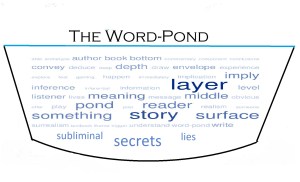
Filling the pond with words and creating a story that hooks a reader is as easy as daydreaming and as difficult as giving birth.
Because writers are so numerous, every idea has been done. Popular tropes soon become stale and fall out of fashion.
A study by the University of Vermont says there are “six core trajectories which form the building blocks of complex narratives.” These are:
- Rags to riches (protagonist starts low and rises in happiness)
- Tragedy, or riches to rags (protagonist starts high and falls in happiness)
- Man in a hole (fall–rise)
- Icarus (rise–fall)
- Cinderella (rise–fall–rise)
- Oedipus” (fall–rise–fall)
 No stale idea has ever been done your way.
We give that idea some thought. We apply a thick layer of our own brand of “what if.”
It’s our different approaches to these stories that make us each unique.
Sure, we’re writing an old story. But with a fresh angle, perseverance, and sheer hard work, we might be able to sell it.
And that is what makes the effort and agony of getting that book published and into the hands of prospective readers worthwhile.

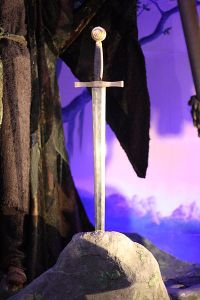
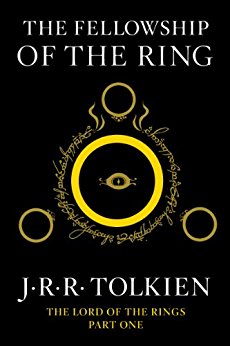
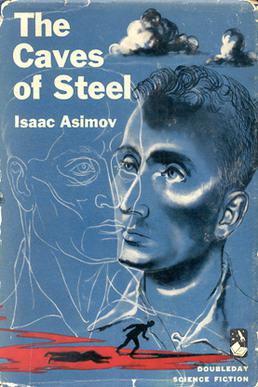 In 1953’s
 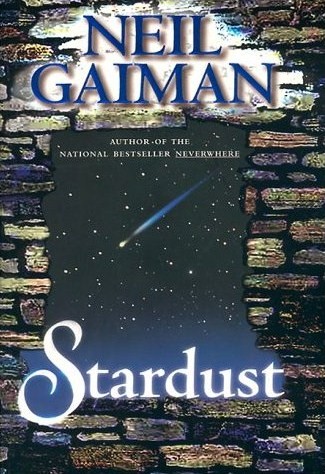 Neil Gaiman’s
  Dedicated authors are driven to learn the craft of writing, and it is a quest that can take a lifetime. It is a journey that involves more than just reading “How to Write This or That Aspect of a Novel” manuals. Those are important and my library is full of them. But how-to manuals only offer up a part of the picture. The rest of the education is within each of us, an amalgamation of our life experiences and what we have learned along the way.
 Authors write because we have a story to tell, one that might also embrace morality and the meaning of life. To that end, every word we put to the final product must count if our ideas are to be conveyed.
 It follows that certain words become a kind of mental shorthand, small packets of letters that contain a world of images and meaning for us. Code words are the author’s multi-tool—a compact tool that combines several individual functions in a single unit. One word, one packet of letters will serve many purposes and convey a myriad of mental images.
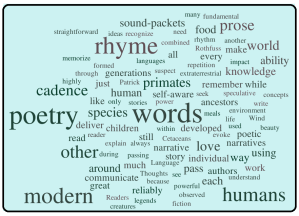
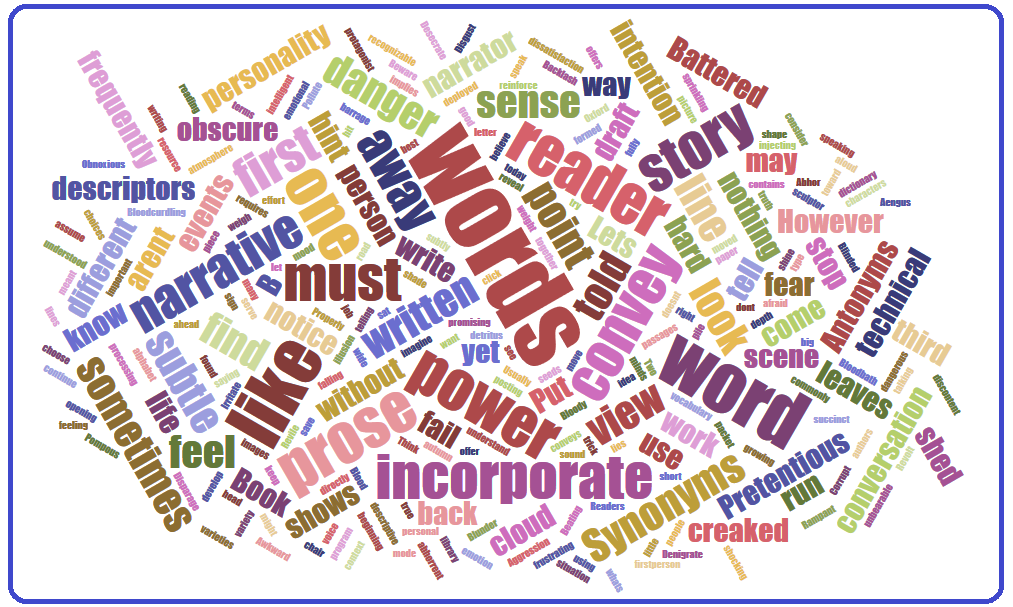 I want to avoid that sin in my work, but what are my code words? What words are being inadvertently overused as descriptors? A good way to discover this is to make a word cloud. The words that see the most screen time will be the largest.
  endured
 Sometimes, the only thing that works is the brief image of a smile. Nothing is more boring than reading a story where a person’s facial expressions take center stage. As a reader, I want to know what is happening inside our characters and can be put off by an exaggerated outward display.
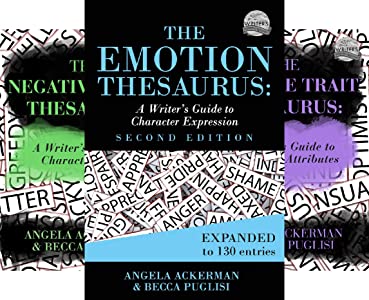 If you don’t have it already, a book you might want to invest in is
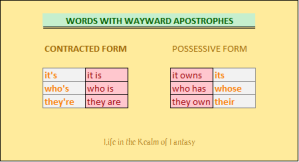
  In creative writing, the apostrophe is a small morsel of punctuation that, on the surface, seems simple. However, certain common applications can be confusing, so as we get to those I will try to be as concise and clear as possible.
 Last week, we talked about how punctuation is the traffic signal that keeps our words flowing smoothly.
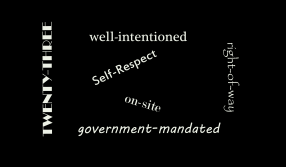 If the meaning is understood when two words are combined into one, and common usage writes it as one word, again a hyphen is unnecessary.
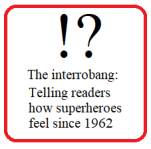 But what about !? These mutant morsels of madness are called “interrobangs.”
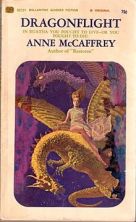 One of my favorite authors, Ann McCaffrey, set off telepathic conversations with both italics and colons in the place of quote marks.
 When we speak aloud, we habitually use certain words and phrase our thoughts a particular way. The physiology of our throats is unique to us. While we may sound very similar to other members of our family, pitch monitoring software will show that our speaking voice is distinctive to us.
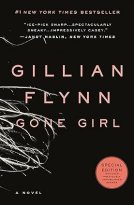 Flynn’s style of prose is rapid-fire, almost stream-of-consciousness, and yet it is controlled and deliberate. She is creative in how she uses the literary device of narrative mode. Primarily, Gone Girl is written in the first person present tense. But sometimes Flynn breaks the fourth wall by flowing into the second person present tense and speaking directly to us, the reader.
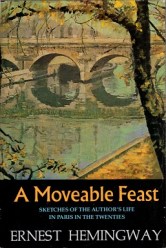 “I was learning something from the painting of Cézanne that made writing simple true sentences far from enough to make the stories have the dimensions that I was trying to put in them. I was learning very much from him but I was not articulate enough to explain it to anyone. Besides it was a secret.”
 How to get inspiration? That translates to getting a story idea. I used to think up nifty situations and wondered how an average person would deal with it. That’s the good ol’ what-if set-up you find mostly used in sci-fi stories. The problem with focusing on the cool idea is that usually the characters who have to deal with it become rather cardboard. That’s fine when you’re a young writer or producing a first draft. Slap it down and keep going. You can come back later to beef up the character, add description details, and so on. Whatever the idea is, get it out of your head at any cost.
 What is serious writing? Even if it’s comedy, it’s the writing you take seriously. What you want readers to admire, no matter the genre. That is all well and good, but you will find that what you think is good isn’t always what readers think is good. Got nothing to do with what you’re writing or how well you write it, it’s just the way it is. So don’t take yourself too seriously; you can take your writing seriously, of course. The idea is that the writing will get better for readers each time you go through a manuscript and revise and edit it. How many times you go through it is your decision. It helps to get someone else’s eyes on it at some point, especially if you are new at writing. You can look at a map but until you get to your destination you can’t be sure that map is accurate and you’re going the right way. Sounds like another thing I learned.
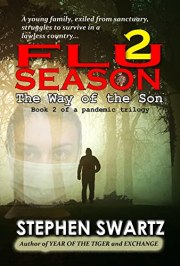 I started reading a long time ago. Started writing soon after, making up my own stories which I thought were better than the ones I read. I borrowed here and there – and in later writing had to tone it down so as not to sound like the sources I borrowed from (sci-fi authors, mostly). You develop your own style eventually if you write enough. So write a lot; you don’t have to show it to anyone. I like to try writing in different styles, too. I like trying to have characters speak in different ways, some slang, vernacular, accents, different levels of education, just for my own amusement – which is cruel, I’ll admit. But trying different things is good for a writer. Read different styles, too, and try to imitate them. Read the juicy parts aloud, let them get stuck in your head. Consider what is special about the style the author uses. Compare and contrast with other authors you read, and with your own writing. Most of all, read a lot in different genre and different writing styles. How much you absorb from that differs for everyone, but try it.
 Finally you have a complete story (or novel) from beginning to end and the plot is satisfying, characters compelling, dialog crisp, and so on. What next? Read and revise at least three times, but put it away at least a few days between each reading (a month is optimal; go get some coffee). Yes, I know you’re eager to get into it again but make yourself wait. Go to your slush file and work on that erotica. Now back to your masterpiece. Try to read it as a reader who’s never seen it before: what would the average reader think and feel in this scene or on that page? You’re no longer thinking of how to write the story so now you focus on how someone you don’t know might understand it. (Sure, go ahead and correct those pesky mistypes as you find them. No rule saying you have to do that in a separate pass.) I like to look at scenes in isolation: every scene should do something, even if it is “only” showing a character’s personality. I read dialog aloud (or, recently, have my computer read it to me); I catch a lot of mistakes and sloppy or weak sentences that way. Run spellchecker until it’s about to fall off the rails but understand it is not actually reading and still will miss errors. You must read your manuscript with your own eyes and ears more than twice. Look for pet-peeve errors (e.g., I type ‘form’ a lot when I mean ‘from’; obviously the spellchecker will not catch it because ‘form’ is correctly spelled, just the wrong word). I run a search for them. Most importantly, never ever hit “replace all”!
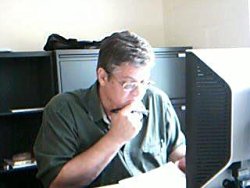 Stephen Swartz is the author of literary fiction, science fiction, fantasy, romance, and contemporary horror novels. While growing up in Kansas City, he dreamed of traveling the world. His novels feature exotic locations, foreign characters, and smatterings of other languages–strangers in strange lands. You get the idea: life imitating art.


