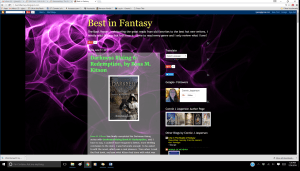
 I used to write an indie book review blog, before I got too busy to read as much as the blog required. The blog was called Best in Fantasy, and I still post reviews to it once in awhile, but only when something really rings my bells.
Sometimes I had to attempt to read six novels before I found one worth reviewing. In the process of searching Amazon for those really good fantasy reads, I’ve read a large share of badly written books. There is no describing the agony of seeing a perfectly good idea for a plot destroyed by an author who was too eager to share their genius and rushed to publish what was clearly an excellent first draft .
You will get no snarky reviews from me—in fact I don’t review books I don’t like. I just move on to the next one in my pile and hope for the best.
Instead, I focus on the really awesome books I have enjoyed, some written by the famous, but most by the NOT so famous. Many of the great books I have enjoyed will never be best sellers because they are just one drop in an ocean of Kindle books.
It’s the wild west of indie publishing right now, and while it’s not necessarily a terrible thing, many untutored authors publish less than stellar works. These books are written and published by people who have no idea how the industry works.
Writing is like any other craft. There is a learning curve. Publishing is a separate craft, but nowadays the two go hand-in-hand.
At some point, as indies gain the knowledge of what is involved in writing and publishing a good novel, the overall quality will improve and level out. Those who are in it for the long haul will gain better visibility.
I have some hard-earned advice for new authors, those of you who want to leave the ranks of the Karaoke novelists, screeching their inept renditions of Wind Beneath my Wings. If you’re serious about your work, get your manuscript professionally edited.
Yes, it will cost you money, and you may get feedback you don’t want to hear. But that experience will enable you to put a book out there that you can be proud of, one that will stand up to any put out by the big publishers.
When I was writing a book review blog on a weekly basis, I often spent my week looking through five reasonably priced books only to discover they were
- Poorly formatted.
- Poorly edited.
- Rife with newbie errors such as beginning the book with a big info dump (been there done that).
- Thick, lush descriptions of “creamy blue eyes” (pardon, must barf now).
- Written by an author with no concept of a story arc.
- Boring filler conversations to fluff up the word count.
- Threads to nowhere,
- A random event that was intended as a cliff-hanger ending, but was obviously stuck there to entice the reader to get the sequel, which hadn’t been written yet and was now on my “No Way in Hell” list.
This also happens regularly with traditionally published books. TOR can publish a novel that was poorly edited and no one will blink an eye, because they are one of the Big 5 Publishing houses.
Indies have to be better than that. Indies are scrutinized more closely and are held to a much higher standard. Flaws in our work are held up as an example of all that is wrong with the industry.
I used to curse at my Kindle when I read the first pages of books, both indie and traditionally published, that were travesties. Many had gorgeous covers. I feel strongly the authors would be better served if they spent that money having their manuscript professionally edited.
I cringe when someone blithely tells me their friends edit for them. Most people aren’t best mates with a professional editor, and if you don’t have a degree in creative writing, you probably need a professional eye on your work.
Indies–aren’t you glad I only reviewed the books I liked? I didn’t want to be known for being a bitch, which is what I felt like when I read some of those travesties.
Thus, I say
- Go to writing craft seminars and conventions.
- Take writing classes at your local community college.
- Take online classes in writing.
- Buy and read books on the craft of writing.
- Write every day, even if it is only a paragraph.
- Hire a professional editor and consider following their suggestions.
- Have your manuscript proofread professionally before you publish it.
 I can’t stress this enough: before you publish that book you wrote during NaNoWriMo, please develop the craft of writing and rewrite that amazing novel.
You can join a writing group in your town and they will help you with these things. With the right group helping you grow, you will develop the skills needed to truly be a published author. And remember, if one group doesn’t really feel like a good fit, keep looking until you find a group you can work with.

 Every author, indie or traditionally published, comes to a point in their career where they must craft a query letter. For many, avoiding having to do that is one of the reasons they went indie in the first place.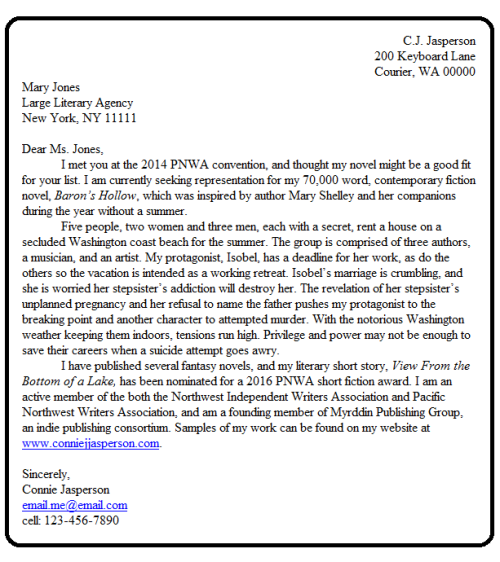
 I haven’t been able to read as much lately as I normally do and I miss it. However, time spent editing for clients and then trying to write has seriously cut into my ability to read. When I am editing for a client, I can’t disengage my mind from that mindset, which means I have a terrible time reading for pleasure. In fact, I haven’t written a book review in months. Lately, I am lucky to read two or three pages before falling out of the book. Thus I have been reading poetry and resorting to audio books.
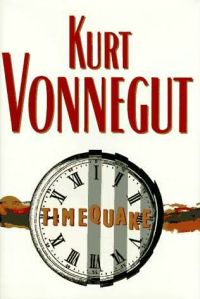
 Sometimes the errors and flaws in the work sold by the traditional publishing houses are hilarious, as we saw in the first Kindle edition of George R.R.Martin’s
  As an editor, I do my best. But, nothing is ever sure, and I won’t see the manuscript after I send my client the final suggested corrections. Mistakes can be made right up to the last minute while the client is making those adjustments, so someone else will have to proof-read her work.

 When you write a novel or an essay, whether it’s fiction or non-fiction, the setting is how you create the sense of place, and must be a creation of many layers: