
Today I’m featuring a post by fellow author, Dennis Mansker. Dennis is one of the more interesting characters I’ve met in the local writing community. I have found his work to be intriguing and daring.
 His chosen genre is mainstream fiction, and the characters he presents are interesting and full of human frailties. So, without any more talk on my part, here is Dennis Mansker.
>>><<<
- The story sometimes writes itself; most of the time it doesn’t. But I am continually amazed at how … mystical … the writing process is. I can sit down with a loose idea for a story – I usually have a beginning and an end in mind, but the middle is a vague and nebulous fog. Two or three hours later I regain consciousness and have a finished story. How it got that way remains one of the great mysteries. Always be prepared for surprises. For example, “The Lolita of Rogue River” started out as a completely different story, but my characters kind of bullied me out of the way and took over. I’m glad that happened; the original story, when I finally wrested control back, turned out to be so lengthy and involved, with so many moving parts, that it is now going to be my next book, Destiny in Dallas.
- Character is everything. You can have a perfectly serviceable plot, but if your characters are wooden, are cardboard cutouts, are simulacra of real human beings, you really don’t have a story. That said, you may notice my intentional violation of this precept in a story or two in the book.
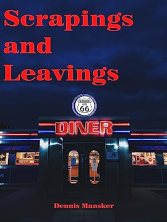 Did I mention be prepared for surprises? I can’t stress this too much. When I started what I call my New Wave of stories, in 2022, it wasn’t with the idea of collecting them in a book, but by the time I had written several of them and was reminded once again that the market for short stories was, to say the least, depressed, it dawned on me that if I collected what I considered the best of my previous stories along with the new ones, I had a book!
- Editing can be a bitch! No one wants to dismember his own children, but sometimes that’s what it feels like. Still, one needs to be ruthless, and sometimes no matter how much I may LOVE a story, it just doesn’t work. This is where friends come in. I put the manuscript out to three of my friends whose judgment I value, and took mostof their suggestions, even though it was painful. Some people like reading over their reviews on Amazon, some people don’t. Go ahead if you have a thick skin. I’ve gotten a few one-star reviews on Amazon for my first book, A Bad Attitude: A Novel from the Vietnam War, but these are far outweighed by the many four and five star reviews.
- You are never too old! I am at 78 among the very latest of late bloomers. Never give up! You are uniquely you. Make your voice heard!
>>><<<
Thank you for this fun and informative post, Dennis! Scrapings and Leavings will go live on September 1st but it is now available for preorder at Scrapings and Leavings – Kindle edition by Mansker, Dennis. Literature & Fiction Kindle eBooks @ Amazon.com.
 About the author: Dennis Mansker considers himself at 78 one of the latest of late bloomers. He published his first book, A Bad Attitude: A Novel from the Vietnam War, in 2002 at the age of 57. His second book, Scrapings and Leavings, will be published in 2023, and he is hard at work on his third book, Destiny in Dallas, which is on track to be published early in 2024.
He was born in Longview WA, spent five years on a dairy farm near Bristow OK, and is a 1973 graduate of Western Washington University in Bellingham WA.
He was drafted into the army in 1967, and spent nearly a year in Vietnam as company clerk of two US Army Transportation Corps trucking companies, an experience which formed the basis for the plot of his first book.
He retired after 31 years of state service with the Washington State Employment Security Department. He is responsible for producing four children, nine grandchildren and seven great-grandchildren (so far).
He lives in Olympia WA with his long-suffering wife Susan and two cats, who generously allow their humans to think that they are in charge.
Dennis Mansker at Amazon: Amazon.com: Dennis Mansker: books, biography, latest update
 During the 1980s and 90s, I listened to music on the stereo, writing my thoughts and ideas in a notebook while my kids did their homework. I drew dragons and fantasy landscapes and worked three part-time jobs to pay the bills.
 For most of my writing life, I was like a toddler given a package of
 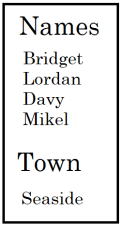 Build a glossary of words and spellings unique to your story, and be sure to list names. I use an Excel spreadsheet, but you can use anything you like to help you stay consistent in your spelling.
 The master file might be titled: Lenns_Story
 I gained a fantastic local group through attending write-ins for NaNoWriMo, the Tuesday Morning Rebel Writers. Since the pandemic, and with several of our members now on the opposite side of Washington State, we meet weekly via Zoom. We are a group of authors writing in a wide variety of genres.
 Learn about structure and pacing from successful authors. Spend the money to go to conventions and attend seminars. You will learn so much about the craft of writing, the genre you write in, and the publishing industry as a whole—things you can only learn from other authors. I gained an extended professional network by joining
  The year that followed was filled with mistakes and struggles. Legitimate publishers NEVER contact you. You must submit your work to them, and they prefer to work with agented authors.
 Short stories and micro fiction are a training ground, a way to hone your skills. They’re also the best way to get your name out there. I suggest you build a backlog of work from 100 to 5,000 words in length. Keep them ready to submit to magazines, anthologies, and contests.
 Do you write your heroes with few flaws, or do you portray them as “warts and all?” That becomes a matter of what you want to read.
 Still, I write stories about people who might have existed and have their own views of morality. In each tale, I try to get into the characters’ heads. I want to understand why they sometimes make terrible choices, acts that profoundly change their lives.
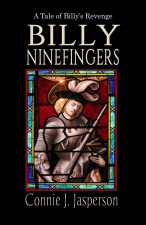
 To me, the flawed hero has much to offer us. In my most recently published book, a stand-alone novel called
 The difference between the antagonist and the hero is the amount of grayness in their moral compass. When does the gray area of morality begin edging toward genuinely dark? What are they not willing to do to achieve their goal?
 The commonly bandied proverbs of writing are meant to encourage us to write lean, descriptive prose and craft engaging conversations. These sayings exist because the craft of writing involves learning the rules of grammar, developing a broader vocabulary, developing characters, building worlds, etc., etc.
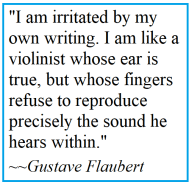 Then, there are the stories where the author leans too heavily on the internal. Creased foreheads are replaced with stomach-churning, gut-wrenching shock or wide-eyed trembling of hands.
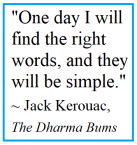 Indeed, we shouldn’t be married to our favorite prose or characters. Sometimes we must cut a paragraph, a chapter, or even a character we love because it no longer fits the story. But have a care – people read for pleasure. Perhaps that phrase does belong there. Maybe that arrangement of words really was the best part of that paragraph.
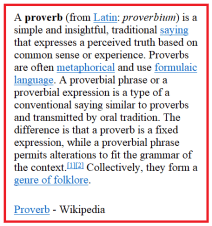 Handy, commonly debated mantras become engraved in stone because proverbs are how we educate ourselves. Unless an author is fortunate enough to have a formal education in the subject, we must rely on the internet and handy self-help guides to learn the many nuances of the writing craft.
 Then there is the marketing of the finished product, but that is NOT my area strength, so I won’t offer any advice on that score.
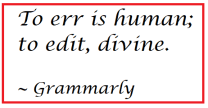 However, we must have a fundamental understanding of basic mechanical skills. These rules are the law of the road, and readers expect to see them. Knowledge of standard grammar and punctuation rules prevents confusion. Readers who become confused will set the book aside and give it a one-star review.
 Ernest Hemingway
 Each author is different, and the length of time they take on a book varies. Some authors are slow—their books are in development for years before they get to the finish line. Others are fast—their novels complete and ready to be published in a relatively short time. Regardless of your timeline, this is where project management skills really come into play.
 But as I said earlier, I have no skills in the area of marketing and no advice worth offering.
 Every world in which every story is set is imaginary. This is true whether it is a memoir, a cookbook, a math book, a sci-fi novel, a contemporary novel set in London, or an encyclopedia.
 When writing our narrative, we want to avoid contradicting ourselves about our protagonist’s world. Keeping it all in your head is not a good idea, especially if you’re like me—too much data means I regularly have the eternal loading screen when trying to recall something. (I’ll never forget what’s-his-name.)
 Just like we do when creating our characters, we want to begin with a paragraph that might be the encyclopedia explanation of where the action takes place. I write fantasy, so here is the one paragraph I might start with:
 If I were to write a thriller set in the current
  The internet has information about every kind of environment that exists on Earth. All we have to do is use it.
 Short story collection
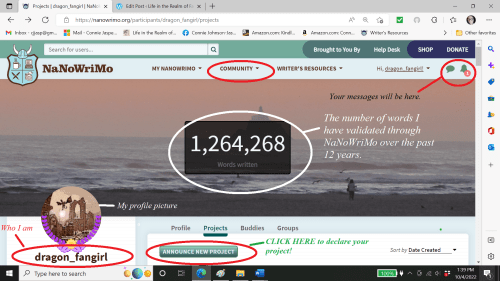
 Next, check out the community tabs. The tabs will be across the top if you are in full screen. If you have the screen minimized, the button for the dropdown menu will be in the upper right corner and will look like the blue/green and black square to the left of this paragraph.
 By the time November arrives, I hope that those who want to “do NaNoWriMo” will have the tools they need and the confidence to get it done.
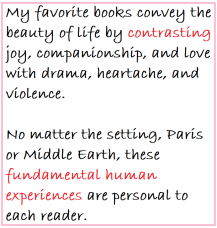 I aspire to write like my heroes, authors who create characters who come alive. While I’m in that world, I see the people and their stories as sharply as the author intends.
 Polarity gives the important elements strength. It provides texture but often goes unnoticed while it influences a reader’s perception.
 I use the
  Why do I say such a terrible thing? It’s true. All stories are derived from a few basic plots, and we have only so many words in the English language with which to tell them.
 Overcoming the monster
 For that reason, I have the
  Noisy
Noisy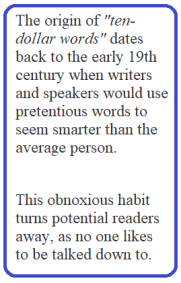 My Texan editor refers to those convoluted morsels of madness as “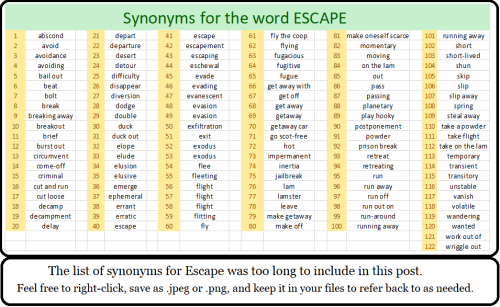
 Even if you have an MFA degree, you could spend a lifetime learning the craft and never learn all there is to know about the subject. We join writing groups, buy books, and most importantly, read. We analyze what we have read and figure out what we liked or disliked about it. Then, we try to apply what we learned to our work.
 You have just spent the last year or more combing through your novel. This is another example of silly advice that doesn’t consider how complex and involved the process of getting a book written and published is. I love writing, but when you have been working on a story through five drafts, it can be hard to get excited about making one more trip through it, looking for typos.
 When we first embark on learning this craft, we latch onto handy, easy-to-remember mantras because we want to educate ourselves. Unless we’re fortunate enough to have a formal education in the art of writing, we who are just beginning must rely on the internet and handy self-help guides.
 We can easily bludgeon our work to death in our effort to fit our square work into round holes. In the process of trying to obey all the rules, every bit of creativity is shaved off the corners. A great story with immense possibilities becomes boring and difficult to read. As an avid reader and reviewer, I see this all too often.


