Tag Archives: writing craft

Character Growth/Arc #amwriting

When we think of epic fantasy, the first books that come to mind are J.R.R.Tolkien’s The Hobbit and The Lord of the Rings trilogy. Tolkien’s work was compelling not only for the quality of his prose and the events, but for the characters and how they grew and changed in the course of their adventures.

Genre authors spend a lot of time plotting the events a character will go through. Equal time must be given to character development.

A great story evolves when the antagonist and protagonist are strong but not omnipotent. Both the antagonist and protagonist must have character arcs that show personal growth or inability to grow.

Sometimes, an antagonist’s weakness is their inability to accept change and adapt to it. Other times, events cause them to devolve, sending them into a downward spiral. Either way, for the antagonist to be realistic, this must be clearly shown.

Once we meet the hero, small hindrances must occur between the larger events, frustrating their path to success. As each hindrance is overcome, the reader feels a small sense of satisfaction. Following the protagonist as he/she is negotiating these detours is what makes the story captivating, in my opinion.

  1. The story begins with the opening act, where the characters are introduced, and the scene is set. It then kicks into gear with the occurrence of the “inciting incident,” that first plot point at the ¼ mark that triggers the rest of the story. It is “the problem,” the core conflict of the story. This is where the protagonist is thrown into the action and is where they first find themselves blocked from achieving the desired object.

At this point, the protagonist is not fully formed—they must grow as a result of their experiences. They may make mistakes, cause themselves more trouble because they are untried and don’t know what they are doing.

Also, at this point, the protagonist may be confused as to what is really going on. This is a good place to introduce a mentor, someone who can offer a little wisdom or set the hero on the right path.

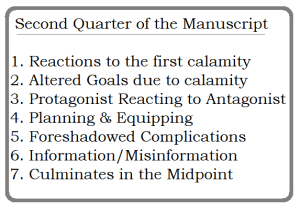
  1. Following the inciting incident is the second act: more action occurs which leads to more trouble, rising to a severe crisis. At the midpoint, the protagonist and friends are in grave difficulty and are struggling.

Each scene is a small arc of action that illuminates the motives of the characters, allows the reader to learn things as the protagonist does, and offers clues regarding things the characters do not know that will affect the plot.

Those clues are foreshadowing. Through the first half of the book, foreshadowing is important, as it piques the reader’s interest, and makes them want to know how the book will end.

The characters begin to be changed by the events they experience. How you show their emotional state is critical at this point because emotions engage readers. If you want your readers to feel the crisis, your characters must feel it and show their reactions to the reader.

We must contrast the relative security of the characters’ lives as they were in the opening paragraphs with the hazards of where they are now. We show the uncertainty, fear, anger, sense of loss they are experiencing.

  1. At the midpoint, another serious incident occurs, launching the third act and setting them back even further.

Now they are aware that they may not achieve their objectives after all. Bad things have happened, and the protagonists have to get creative and work hard to acquire or accomplish their desired goals. They must overcome their own doubts and make themselves stronger.

The midpoint is also where we really get to know the antagonist and learn what the enemy knows that the protagonists do not. We discover his/her motives and what they may be capable of.

First, we need to remember that very few people are evil for no reason at all. Sometimes they are likeable, people who appear innocuous, even loving. If this is the case in your story, you need to insert small clues for the reader about their personality into the narrative in the beginning pages.

Fleshing out the antagonist and making their motives realistic is important. He/she is as central to the story as the protagonist because their actions force the protagonist to grow as a human being.

  1. By the end of the third act, the protagonists are finding ways to resolve the conflict and are ready to commence the final, fourth act, where they will embark on the final battle. They will face their enemy and either win or lose.

By the end of the narrative, the protagonist has been through life changing events. They are no longer naïve but have knowledge and wisdom of their own. They are fit to be the mentors of the next generation.

It’s important to remember that at no point in the narrative can people be sitting around idly chit-chatting about the changes they have been through. The reader knows and doesn’t want to read a rehashing of events at the end of each chapter.

Many authors who are new to the craft say their characters just evolve with no thought ahead of time. As this lack of planning is clear in their muddy work, perhaps it’s a good idea to give a little thought to plotting the personal growth of the characters, how the experiences will change them. Readers become invested in the characters and want to see what happens next. Reward the reader by making the journey about the characters as much as you do about the events.


Credits and Attributions:

The Lord of the Rings The Fellowship of the Ring, 2001 theatrical poster, Copyright 2001, New Line Cinema, Fair Use

Wikipedia contributors, “The Lord of the Rings: The Fellowship of the Ring,” Wikipedia, The Free Encyclopedia, https://en.wikipedia.org/w/index.php?title=The_Lord_of_the_Rings:_The_Fellowship_of_the_Ring&oldid=853509330 (accessed August 5, 2018)

2 Comments

Filed under writing

Theme and the Short Story #amwriting

Even if you are a confirmed Indie author, as I am, you may feel the desire to write short pieces and submit them to anthologies, magazines, or contests. Writing a short story is an excellent way to explore in detail an idea that is inspired by your longer work, but that you don’t have room to include there.

If you are writing a series of speculative fiction novels set in a world of your creation, writing short stories is a good way to develop that world. You also have the opportunity to develop characters you can use later.

Once you submit your story, it will be up against many entries, so you must make yours as unique as is possible.

Anthologies are usually themed. According to Wikipedia:

A theme is not the same as the subject of a work. For example, the subject of Star Wars is “the battle for control of the galaxy between the Galactic Empire and the Rebel Alliance.”

The themes explored in the films might be “moral ambiguity” or “the conflict between technology and nature.”

If you intend to submit your work to an editor with an open call for themed work, you must demonstrate your understanding of theme as well as your ability to craft brilliant prose.

Analyze the theme and try to think creatively—think a little wide of the obvious tropes. Look for an original angle that will play well to that theme and then go for it. As an author, most of my novels have been epic or medieval fantasy, based around the hero’s journey, detailing how their experiences shape the characters’ reactions and personal growth. The hero’s journey is a theme that allows me to employ the sub-themes of brother/sisterhood, and love of family.

These concepts are important to me on a personal level, and so they find their way into my writing.

To support the theme, you must layer

  • character studies,
  • allegory, and
  • imagery

These three layers must all be driven by the central theme and advance the story arc.

The theme is introduced, either subtly or overtly, at the first plot point. In a really short story, this must happen on the first page. Many times, we are given a specific word count we cannot exceed, so lengthy lead-ins are not possible.

When writing a short story, it helps to know how it will end. I suggest you put together a broad outline of your intended story arc. Divide your story arc into quarters, so you have the important events in place at the right time. If you try to “pants” it, you might end up with a mushy plot that wanders all over the place and a story that may not be commercially viable.

When you assemble your outline, ask yourself

  • What will be your inciting incident? How does it relate to the theme?
  • What is the goal/objective? How does it relate to the theme?
  • At the beginning of the story, what could the hero possibly want to cause him to risk everything to acquire it?
  • How badly does he want it and why?
  • Who is the antagonist?
  • What moral (or immoral) choice is the protagonist going to have to make in his attempt to gain that objective?
  • What happens at the first pinch point?
  • In what condition do we find the group at the midpoint?
  • Why does the antagonist have the upper hand? What happens at the turning point to change everything for the worse?
  • At the ¾ point, your protagonist should have gathered his resources and companions and should be ready to face the antagonist. How will you choreograph that meeting?
  • How does the underlying theme affect every aspect of the protagonists’ evolution in this story?

In my own writing life, too much background info has been my greatest challenge. Writing short stories has helped me find ways to write more concisely. What is important for the reader to know? What is just info for me? Knowing what is important in my own work is difficult because it all seems so important.

Short stories follow a single thread in a character’s life. Each word must advance that one story thread. Work that wanders all over the place will be summarily rejected, and the editor will most likely not give more than a stock rejection.

Having your work beta read by your critique group will help you identify those places that need to be trimmed down. I have close friends who see my work first and who help me see what the real story is before I bother my editor with it. My beta readers are published authors in my writing group.

Because I am a wordy writer, I always have to keep in mind that info dumps about character history and side trails to nowhere have no place in short stories because every word is precious. By shaving away the unneeded info in the short story, the author has more room to expand on the theme of the story and how it drives the plot.


Credits and Attributions:

Wikipedia contributors, “Theme (arts),” Wikipedia, The Free Encyclopedia, https://en.wikipedia.org/w/index.php?title=Theme_(arts)&oldid=848540721(accessed July 29, 2018).


6 Comments

Filed under writing

Carving time for #writing

Time management is crucial for me. I don’t claim to be a great housekeeper, but I do need some order in my home, so it gets one hour of my attention. Laundry, dishes, dusting, picking up—one hour is all housekeeping gets. Period.

I have developed mad skills at carving out time for writing because every November, I participate in NaNoWriMo. As a municipal liaison for the Olympia area, I must get a minimum of 1,667 new words written each day. I usually average 3,000 to 5,000 words per day during that month. The rest of the year? 500 to 1,100.

I do this by having my daily prompts all set out in advance, and then I lock myself into my office and just wing it for at least two hours. Some of what emerges is good, and some, not so much. But it is an exercise in stream-of-consciousness writing at its most extreme, and it’s a good challenge for my elderly brain. Some of my better work was produced in its raw form during NaNoWriMo.

During the 1990’s, when I was working two jobs, I wrote every evening while my kids did their homework. Some nights I didn’t get a lot of words written, but many nights I did. Some days I wrote during my lunch half-hour. Countless afternoons were spent sitting in the car waiting for one of the kids to finish their after school activities, and I wrote then.

Every half-hour I spent writing was a gift in those days.

After the kids were out of the nest, I still wrote every night. I missed a lot of TV that way, but I had to choose what was important, and writing won.

Now I’m retired and write full-time. One of the most difficult parts of being a full-time author is the fact that we “work from home.” This means we’re on call at all times for any family emergency. It’s difficult for people to believe you are working if there is no tangible, visible reward such as a paycheck for your efforts.

However, once people can see that, yes, books have been published, they know that you really do write. But often, people still don’t understand how much time it takes to do this sort of work properly, or how difficult it is to get back into the writing mind after an interruption.

Time management comes into play for me because authors, both traditional and Indie, must be their own public relations team. I am very bad at this, but I use every automated assist available to me for that—Hootsuite has been a great help to me in scheduling tweets on my non-blogging days so that I don’t fade completely out of the Twitterverse. I care about that because much of my traffic here to this blog comes from Twitter.

WordPress’s “Publicize” tool is a real help. Thanks to that tool, this blog posts automatically to Twitter, Tumblr, LinkedIn, and my author Facebook page. I also went out to Amazon’s author central and linked it to my Amazon author page. I keep forgetting to post it to my Goodreads page because I don’t like the climate there and rarely visit that strange place. One of my other blogs posts there—a book review blog.

Of course, time management occasionally flies out the window. I drop everything to go sit with my grandkids, who all live a two- to three-hour drive away, or to help when a family member is dealing with difficult times. I have two kids with epilepsy, so difficult times happen with no warning.

But we handle those episodes and I keep writing because my laptop travels with me. Writing is my refuge, at times. But when life is uncomplicated and going well, writing is still my great joy, and the time I have to write is really important to me on a personal level.

Life in all its random glory is why good time management is so important for me. I schedule my writing time now that I am retired just as I did when I was working in Corporate America. If I didn’t, life’s little demands would eat away at my ability to just sit down and write.

After I finish editing on Sunday morning, I open Hootsuite and preschedule a week’s worth of random tweets on vegan food, favorite books, life observations, etc., which takes about ten minutes. Then I write at least one blog post, but usually, I write all the posts for the week. Being able to preschedule everything takes much of the work out of this gig.

I do any editing I may have for clients first thing in the morning. After editing, I get that one hour of housekeeping in. If you go fast enough, you actually get a good workout—dusting and vacuuming can be quite invigorating when done at top speed. Laundry looks a little haphazard when folded that quickly, but hey—once it’s shoved in the closet, who’s gonna notice?

Once I have put in my one hour of housekeeping, I put on my writing music, and that is my time to get some writing done. This time is inviolable—God help the neighbor who interrupts me to borrow an ax—they might get it, but not the way they hoped.

(Bad author! Bad! Bad!)

(No neighbors were harmed in the writing of this blogpost.)

7 Comments

Filed under writing

Disagreement, Dispute, and Combat #amwriting

In many books, the characters are forced to do a certain amount of fighting, whether it is a marital dispute, neighborhood quarrel, war, or a kickboxing tournament. Unfortunately, some authors don’t understand how important it is to choreograph the scenes of disagreement and disputes.

These scenes are crucial to the advancement of the story. They should be carefully planned and inserted into the novel as if one were staging a pivotal scene in a film.

Scenes involving physical action can be a morass of mindless mayhem, if  not well-choreographed to begin with. It takes time, but over the course of several hours, you can put the skeleton of your fight scene on paper. What is physically possible and what is not? The next step, after the action is laid down, is fine tuning it, so the reactions and responses of your characters are natural and real.

But there is a larger consideration for your battle: Scenes involving fighting are controlled chaos—controlled on the part of the author. The battle must advance the story.  Why did it happen? What is the purpose of injecting that conflict into the narrative?

I mentioned this in my last post on literary violence: In Billy Ninefingers, besides the obvious fact that he is seriously injured in the fight, which is the core plot point of the book, I had two other goals with that fight scene:

  1. I needed to show how the Bastard is jealous and acts on any thought that passes through his alcohol-soaked mind.
  2. In the resolution of that scene, I demonstrated that Billy, even with his life in ruins, has a sense of fair-play.

There are two sorts of fights, verbal and physical. Both have commonalities, although words are the weapons  in the verbal dispute.

Many authors get hung up on the technical side of the fight—how they were dressed, who hit who with what words or weapons, and so on.

Just as if the physical dispute were a verbal dispute, we map the violence out as we would a journey, with every slap, curse word, and gunshot occurring at its proper point in the melee. If physical violence is involved and you are not a martial arts aficionado or a weapons specialist, these are necessary elements of the combat scene that good, responsible research and an author’s diligence can resolve.

What we have to consider in each quarrel is that each character in the fight is, and must remain, a unique individual. There should be no blurring of personalities, which can happen when an author focuses too intently on the action of the fight scene, writing it as if they lived it. For the author, acting out the action ensures that the moves are reasonable and make sense, but you aren’t done writing that scene just because the hacking, slashing, and gunshots are on paper. It’s far too easy for the author’s voice to intrude in these scenes, as the author is so wrapped up in the emotion of the event they don’t see that the characters have fallen silent, and he is the one doing all the shouting.

If the dispute is verbal, the words hurled back and forth must be the words that character would use. Each character has habitual mannerisms. In real life, they wouldn’t all react the same way, so they can’t all be superheroes in your fight scene. You must go back to the first part of that section, and make sure you haven’t lost the individuality of the characters in the chaos. Each character’s reactions must be portrayed in the action sequence in such a way the reader doesn’t say, “He wouldn’t do that.”

I try to show this in small, unobtrusive ways by sitting back and visualizing the scene after the choreography is laid on paper. I replay it in my mind as if I were a witness to the events and look for the facial expressions and reactions of each combatant.

The most important reactions get briefly mentioned in the story, the reactions that push the plot forward. The others are witnessed but given less prominence, becoming part of the scenery.

When I choreograph a fight, I think of it as choreographing a conversation. In real life, people miss a few beats when they are speaking. They gather their thoughts and speak in short bursts. They shift in their chair, or stand up, or wave a hand to emphasize a point. They turn and sometimes mumble. In our literary conversations, we want to paint the impression of their individuality without boring the reader with minute details.

We must approach the fight scene the same way. When it comes to fighting, I keep it concise and linear, as drawn-out fight scenes bore me to tears. Just the facts, the immediate emotional impact, and we move on to the recovery scene.

In so many novels, battle scenes are long, drawn out, convoluted passages detailing blood and guts, but which make no sense. I don’t like books where the fights are senseless and too chaotic to follow, because I know that isn’t true to life. Violence is orderly and happens in a sequence of actions, within a fundamental framework of order.

I have been married four times, so trust me, I understand disputes and how they can escalate out of control. But I also have personal experience with physical violence. I played hockey for four years as a young woman, and I also took martial arts as a young adult. From my personal experience, I know that each fight is comprised of a specific sequence of events, despite the fact it appears to be chaotic. 

  1. the inciting incident – what triggers it
  2. the response – what each combatant does and how the opponent responds
  3. the resolution – how does it end?
  4. the aftermath

It is the swiftness of the event and the emotional impact of the violence that conveys the overwhelming sense of chaos.

Once you have the order of events, who did what and what the result of that action was, you must add the emotion, the sense of fear, the feeling that things are happening too swiftly that is the true chaos of the battle.

Every character’s emotions and reactions are individual, uniquely theirs. You, as the author, visualize them this way, but the difference between success and failure as an author is the ability to commit their uniqueness to paper. Many authors don’t succeed at this—they either fail to give enough subtle clues to the reader, or they are too specific. The fine line between enough and too much is where the author’s artistry comes in.

This has also been said before, but it bears mentioning again. Through physical actions and conversational interactions, we make our characters knowable and likable (or not, as the case may be).

Their actions as they interact with their environment and each other illustrate the world they exist in. Each scene, especially a fight scene, is your opportunity to convey the setting and the mood of your characters without resorting to an info dump.

We are painters with words. We give the impression of detail, offering the reader a framework to hang his imagination on. We use our words sparingly and with intention, giving the reader the idea and the atmosphere of the conflict as if painting the scene in the style of the impressionists.


Credits and Attributions:

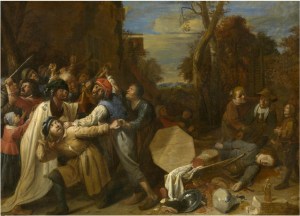
Dutch: De dood is fel en snel: Ruzie in een pub, English: Death is Violent and Fast: Quarrel in a Pub, painting by Joos van Craesbeeck, ca. 1630 – 1635 PD|100 via Wikimedia Commons.

4 Comments

Filed under writing

Information and Misinformation #amwriting

This week, I am involved in editing for clients, hosting a writing meetup, and working hard on a first draft.

Over the weekend I made good headway with new material, and now I am putting much of what we have previously discussed into action as I expand on those chapters.

I’m ensuring that within the larger story, I have a structure of smaller arcs,  scenes that will come together to create this all-encompassing two-volume drama. If I do this right, I will keep my readers’ hearts invested in the narrative until the end of the second book.

I’ve talked before about the arc of the scene vs. the overall arc of the novel.

The end of the scene is the platform from which your next scene launches. This means each scene begins at a slightly higher point on the novel’s narrative arc than the previous scene did, driving the narrative. That pulse is critical to creating the necessary tension.

At this point, I’m still fine-tuning the plot, deciding who has the critical knowledge. The fact that some characters are working with limited information is what creates the tension, a concept known as asymmetric information. This a situation in which one party has more or superior information compared to another. In business, this can prevent other companies from effectively entering and competing in an industry or market. The company with the information has a monopoly.

In real life, a monopoly of information creates a crisis. In the novel, it creates tension. A conversation scene should be driven by the fact that one person has knowledge the others need to know at that moment. Whether or not they receive the information in time is up to you in the plotting stage.

So, this is what I am doing now, making sure the information is divided up disproportionately. No one ever has all the knowledge, and what my protagonist doesn’t know at the beginning is central to the plot and the final confrontation at the end of the second half.

The reader must get answers at the same time as the other characters, gradually over the first 3/4 of each novel. Book one has the first half of the story line and a satisfying conclusion, and book two is the protagonists’ ultimate destination and final meeting with the enemy. Dispersing small but necessary bits of info at just the right moment so there are no info dumps is tricky but by the final draft of both books, all will have been smoothed out.

As I said, I am creating small arcs, scenes that pose questions, but also provide answers to previously posed questions. Large and small events occur but are linked by conversations because events don’t happen randomly. Sometimes an incident is self-explanatory, but action alone wouldn’t be enlightening.

My characters are charismatic, as they exist in my head. My task in this first draft is to show them in such a way that the reader sees the magic in them that I see. I have to create a pulse of each character’s desires and objectives, laced with information and misinformation. I am creating a trail of breadcrumbs leading to the first conclusion at the end of book one.

Book one’s final confrontation has to be good and resolve the first conflict. I hate cliff-hanger endings so there will be none of that in my work.

I will finish both books before I publish book one, with book two in the final editing stage when book one goes to press. By planning out my production schedule like this, I hope I can achieve what I envision, an epic fantasy that hooks the reader with small rewards of emotional satisfaction along the way to the big event.

My trusty beta readers will “politely” inform me (with a brick to my head) if I don’t somehow accomplish just that.

Comments Off on Information and Misinformation #amwriting

Filed under writing

The Paragraph #amwriting

This post pertains to the paragraphs in a literary narrative, whether the genre is contemporary, sci fi, fantasy, mystery, romance—or any kind of writing that is fiction.

Paragraphs are not just short blocks of randomly assembled sentences. A paragraph is a group of sentences that fleshes out a single idea. That means that only one thought or speaker is featured in each paragraph.

This rule is cast in stone and is especially critical if you are writing a technical piece. I have edited work for people who are pursuing literary degrees. That is a different kind of writing and requires strict adherence to style policies as set down by the professor at the beginning of the semester.

In scholastic and technical writing, a good paragraph begins with a topic sentence and is comprised of sentences that support the main idea. In writing for literature, we don’t begin with a topic sentence as such, but we do explore and expand on only one idea in each paragraph.

The rules are simple:

  • Present a single idea per paragraph.
  • Present the dialogue and reactions of only one person per paragraph.
  • Present the viewpoint of one character per paragraph.

I have used this example of a paragraph gone wrong before, but it is a good one:

Jamie said, “You cheated on me.” Kerry cringed and wept. “I don’t want to lose you.” He spat, “You disgust me.”

That is a confusing passage, but it doesn’t have to be. Three ideas are explored there: Jamie’s accusation, Kerry’s guilt and fear of losing him, and finally his disgust.

Jamie said, “You cheated on me.”

Kerry cringed and wept. “I don’t want to lose you.”

He spat, “You disgust me.”

While it makes for short paragraphs, you must break out Kerry’s reaction. One thought, one point of view per paragraph, no matter how short that makes it.

A good paragraph agrees with itself, is logical, and the central idea it contains is developed. Sometimes, this creates long paragraphs.

With that said, some considerations must be given to manuscripts intended for publication as an eBook. If you are self-publishing, I highly recommend you format at least two manuscripts for your book, three if you are planning an epub as well as a Kindle version.

One manuscript will be for the print version, which will be the version you send to Ingram Sparks, KDP, or CreateSpace. The other manuscripts will be the mobi (kindle) and epub (other ebook sellers) manuscripts. I use Draft2Digital to create both types of eBook manuscripts—it is free, and the simple instructions make it incredibly easy. You can also format your paper book there, also for free.

In a paper book, paragraph length isn’t as much of a problem as in an eBook. I’ve noticed that versions of eBook novels containing long paragraphs tend to appear as page after page of an unbroken wall of words. That can be confusing, and the reader may decide to move on to a different book.

Thus, for a manuscript that you intend to publish as an eBook, you will want to divide long passages at logical places, using two paragraphs to explore the idea. This is especially a problem when the paragraph contains a long section of internal dialogue, which is frequently written in italics.

In any type of writing, emails, literature, or scholastic, when a new idea comes into your writing, or a different character speaks, you must begin a new paragraph.

No matter what, you must have an amazing opening paragraph. One of the greatest hooks in literature is the following one by French author, Albert Camus, which opens the 1942 novel, The Stranger.

Mother died today. Or maybe yesterday, I don’t know. I had a telegram from the home: ‘Mother passed away. Funeral tomorrow. Yours sincerely.’ That doesn’t mean anything. It may have been yesterday.

One idea is explored here in ten short sentences, which combine to offer up a wealth of information. Put bluntly, Meursault received a telegram, possibly from an old-folks home, informing him his mother was dead and when the funeral was.

These first paragraphs are where Camus shows his skill. He takes a simple idea and presents it in deliberately crafted prose that feels loose, almost indifferent. Rather than a plain statement of fact, the few sentences exploring that one thought makes us curious about the protagonist and his state of mind.

Authors, please present only one central idea per paragraph. However, you are free to offer up that idea with your own flair and style.


Credits and Attributions

Quote from The Stranger, by Albert Camus, Original title L’Étranger © 1942 (Gallimard, French) © 1946 (Hamish Hamilton, English)

Wikipedia contributors, “The Stranger (novel),” Wikipedia, The Free Encyclopedia, https://en.wikipedia.org/w/index.php?title=The_Stranger_(novel)&oldid=796803119 (accessed August 30, 2017).

The Paragraph by Connie J. Jasperson was first published on Aug 30, 2017, and has been edited and updated with new material for this post.


8 Comments

Filed under writing

Thoughts on revisions and self-editing #amwriting

New and beginning authors often (loudly) assert their ability to edit their own work. If you are “editing” your own manuscript, you have a fool for a client. There is no such thing as self-editing—the best you can do is make revisions and admire your work. For that reason, we need other eyes on our work.

As authors, we see what we intended to write rather than what was written. We misread clumsy sentences and overlook words that are missing or are included twice in a row.  If you are in a critique group, you have a great resource in your fellow authors—they will spot things you have overlooked your work just as you do in theirs.

The first draft of any manuscript is the story as it flowed out of your mind and onto the paper. Yes, there is life and energy in your words, but your manuscript is not publishable at this stage, no matter how many times you go over it.

You need an unbiased eye upon your work, or your book will be published with typos, awkward sentences, dropped words—the list of inadvertent errors goes on.

Every author needs someone to read their work before it is published. Just because I can see six instances of the word ‘long’ in one paragraph of someone else’s work does not mean that I will spot it in my own.

To the author in the first flush of victory, the completed first draft of his manuscript is a thing of beauty, a flawless diamond to be cherished and adored.  It is the child of their creative muse and is perfect in every way.

Let us consider the word ‘that.’ The following passage is from one of my original manuscripts as it emerged from the first draft in 2008, ten years ago.

 Jeanne was not upset over something that he had not done or not said. Now he sensed that it was a mixture of anger, hurt, and guilt that she was feeling.

In just two sentences, my stream-of-consciousness writing included 3 instances of the word ‘that’ and 3 of ‘not.’  Yet, in my own mind, it was as good as I could make it. I didn’t see those unnecessary words.

This is how that paragraph read in my mind and is how I would write it now, ten years on:

Jeanne wasn’t upset over something he had done or said. He sensed she felt a mixture of anger, hurt, and guilt.

I began working with an editor in 2012, and that is when I truly began to grow as an author. Each time they showed me where I had gone wrong, I learned from it and gradually, my stream-of-consciousness writing improved. I use fewer unnecessary words, and my prose is leaner.

Better writing habits are learned over time by writing regularly and by consciously applying the tricks and tips you learn from other authors.

Once your writing/critique group has given you their best opinions on your manuscript and you have revised it to your best ability, you need an editor. Ask other authors who they might recommend as an editor and see if you can work well with that person.

Your editor will likely point some things out that you didn’t see, but that a reader will.  At that point, you might be slightly shocked and hurt, but if you’re smart you’ll consider each comment and make your revisions accordingly.

Once you see your work through someone else’s unbiased eyes, you will be able to take your story to the next level.

The fact is, unless you can accept criticism, your work will never be what you want it to be. You must be open to viewing your work the way the reader will see it. You’re not obligated to follow every suggestion an editor makes, but 9 times out of 10 I make changes along the lines they suggest because when I look at the problem area, I can see exactly what they meant.

Writing seems like a solitary craft, and much of the time it is. However, joining a local writing support group or a critique group will give you a sounding board that costs you nothing, but from which you will reap many benefits.

28 Comments

Filed under writing

Thoughts on the craft #amwriting

We who write all begin this journey with a story we think would make a great book, and a certain amount of natural talent for storytelling. However, unless we have an exceptional memory for the obscure and boring lectures we endured in grade-school grammar, authors who are serious about the craft must learn how to write.

This means they must learn how to construct a sentence using accepted rules of grammar. They must also learn how to construct a story, so it has a beginning, a middle, and an end. The core features of a great story are:

  • Originality
  • Plausibility
  • Plot arc
  • Character arc
  • A satisfying end

Within those pages, we want to see:

  • Unique characters
  • Well visualized settings
  • Compelling dialogue
  • Tension and pacing
  • Hooks and transitions that make a reader want to turn the page

Knowledge of grammar and writing craft is crucial if you want a reader to stay with your story. As I’ve mentioned before, commas are to clauses what traffic signals are to streets—they govern the flow of traffic, although, in the case of sentences, the traffic is comprised of words, not cars.

The opportunity to learn writing craft is out there on the internet, and it costs nothing.

Education in America is under fire at all levels. The determined learner can still get that education simply by going to the library and asking questions. Start there and use the information you glean there to lead you to other places to learn writing craft via the internet.

This is why it is crucial for us to support the libraries in our towns, both financially if possible, and with our patronage. In places where the education system is broken, libraries are the last bastion of opportunity for both children and adults with limited funds and unlimited curiosity.

If you are fortunate enough to have a secondhand bookstore in your town, purchase secondhand books on writing craft, and invest in technical manuals detailing different aspects of writing.

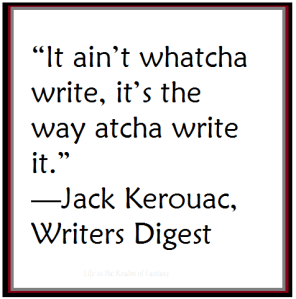
For the financially strapped author wanting to increase their knowledge, an amazing resource is the website Writers’ Digest. They are also for profit, but they offer an incredible amount of information and assistance for free.

So here are several sources of online information about the craft of writing (and I’ve listed them before):

I’ve also mentioned before that Harlequin has one of the best websites for teaching authors how to develop professional work habits, which is critical to being productive. I highly recommend you go to websites that specialize in writing romance novels regardless of what genre you write in.

I say this because the romance publishers have it right: they want to sell books, and they want you to succeed:

  • They get down to the technical aspects of novel construction and offer many excellent tools for getting your work out the door in a timely fashion–something I need to work on.
  • They also offer tips on marketing your work.

Many authors are able to get a degree in creative writing. But many talented authors don’t have the money or education to get into a program like that. They are working day jobs to support their families and money is tight.

However, an education can be obtained at little or no cost–but it takes effort and determination. Though we may not have the money or time to get an official degree, many of us will become knowledgeable the craft of writing by obtaining information in bits and pieces over time. This is the method I have used–a combination of some college classes, writers’ workshops, and many hours of reading books on the craft of writing.

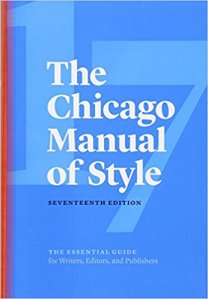
If you only have two books on your desk, one should be the Chicago Manual of Style, and the other should be the Oxford American Writers’ Thesaurus. Besides those two books, these are a few of the books I keep in hard-copy and refer to regularly:

Story, by Robert McKee

Dialogue, by Robert McKee

The Writer’s Journey, by Christopher Vogler

The Sound on the Page, by Ben Yagoda

Rhetorical Grammar, by Martha Kolin and Loretta Gray

You may not be able to afford to take writing classes or have the time to go to college and get that degree. But you may be able to afford to buy a few books on the craft, and it’s to your advantage to try to build your reference library with books that speak to you and your style. You will gravitate to books that may be different than mine, and that is good. But some aspects of our craft are absolute, nearly engraved in stone, and these are the basic concepts you will find explained in these manuals.

Reading is the key. Read widely, and you will begin to understand many different forms of literature. We all know that reading widens your horizons and opens your mind to possibilities in your own work that you otherwise wouldn’t consider.

Most importantly, you must lose the fear of being stuck reading works you don’t enjoy.

An essential skill for you to gain as a writer is the ability to clearly identify what you don’t like about a given work.

By reading widely, you will become less inclined to make broad statements, such as “I don’t like sci-fi.” You will be able to identify what it is that you don’t like about a given novel rather than dismissing an entire genre.

So much can be done at no cost financially, but it does require a desire to learn and the willingness to try.

If you have some funds to dedicate to learning the craft of writing, you can take online classes or attend seminars in your local area.

Look at the calendar of your local library and see if they are offering any FREE seminars on writing craft. If you check in your local area, you will be surprised just how many opportunities there are to learn about the craft of creative writing.


Credits/Attributions

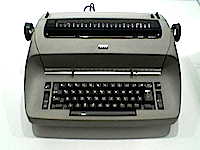
IBM Selectric, By Oliver Kurmis (Self-photographed) [CC BY 2.5 (http://creativecommons.org/licenses/by/2.5)%5D, via Wikimedia Commons, accessed Feb 26, 2017

The Chicago Manual of Style, University of Chicago Press; Seventeenth edition (September 5, 2017) Fair Use

12 Comments

Filed under writing

Five Thoughts On Writing #amwriting

Today, I have five thoughts for your consideration:

One: Some people don’t know what to do with commas and attempt to do without them altogether. This is not a good idea. Commas are to clauses what traffic signals are to streets—they govern the flow of traffic, although, in the case of sentences, the traffic is comprised of words, not cars.

  • Commas follow introductory words and clauses. Instead, they took a left turn.
  • Commas set off “asides.” Her sister, Sara, brought coffee.
  • Commas separate words in lists: We bought apples, oranges, and papayas for the salad.
  • Commas join two complete sentences, and once joined, they form one longer sentence. When used too freely, linked clauses can create run-on sentences.
  • Commas frequently precede conjunctions but only when linking complete clauses. When linking a dependent clause to a complete clause, don’t insert a comma. “I intended to come back to the Swords but found myself here instead.”

Consider how many sentences you link together with the word and. Could brevity strengthen your prose? Conjunctions are the gateway to run-on sentence hell. If you are deliberate in your use of conjunctions you will also use fewer commas. Craft your prose, but use grammatical common sense.

Two: Don’t write self-indulgent drivel. Go lightly with the praise, adoration, and general lauding of your characters’ accomplishments.

Three: Use active phrasing. There were Small colorful flowers growing grew in each raised bed. and some slightly Larger flowering plants growing grew around the fountain at the center. With a mixture of mild pastels and vivid colors, it was beautiful.

Four: Don’t waste words describing each change of expression and mood. Consider this hot mess of fifty-one words that make no sense: Eleanor looked at Gerard with concern. His voice changed so much in the telling of the story as his emotions came to the surface that it still seemed so raw, as if Timmy’s death had happened only days ago. In addition, his expressions also changed and his current one was akin to despair.

It could be cut down to fourteen words that convey the important parts of the sentence: Gerard’s raw despair concerned Eleanor, seeming as if Timmy’s death had happened only days before.

Five: Simplicity is sometimes best. “Delicious sounds captivated their eardrums. Please, just say it sounded amazing. If music touches the protagonist’s soul, it’s good to say so. We want to convey the fact the music was wonderful, and we don’t want to be boring. But when we try to get too artful, the prose can become awkward. Odors and sounds are part of the background, the atmosphere of the piece and while they need to be there, we don’t want them to be obtrusive, in-your-face. This is an instance of prose working better when it isn’t fancy.

Five thoughts to get your writing week started–now, go! Write like the wind!

15 Comments

Filed under writing

Character Development #amwriting

I see characters in books as if they were real people living through the events life hands them.

When a character in a book experiences confusion, it’s an opportunity for them to learn new things. If they are frustrated, they must devise a way around that frustration, and if they are tested to the limits of their endurance, they will become stronger. Keep this in mind when you are writing. Don’t make things too easy for your beloved characters—their struggle is the story.

  1. How is she emotionally destroyed by the events?
  2. How was her own personal weakness responsible for this turn of events?
  3. How does this cause the protagonist to question everything she ever believed in?
  4. What makes her pull herself together and just keep on going?
  5. How is she different after this personal death and rebirth event?

We want to write compelling characters who react to events in a realistic, natural way. We want the reader to believe it couldn’t have happened any other way, so we need to know WHO our character is on a personal level.

As we write the first draft, traits will emerge that create our characters, and this information is lodged in our mind. We know how and why they react a certain way, and so we write, write, write.

There are problems with this method. Sometimes I read work where the characters all sound and feel the same. When that is the case, it is the author speaking and not the characters. In a great book, the characters speak for themselves.

A good way to avoid that is to create a short history of each character’s life as it was before we met them in the first sentence of the story.

I do this once all the characters have been introduced.

This way, I know what their personalities are like, there is no blurring of reactions and comments. It’s crucial for me to know what will trigger reactions like anger or joy in each different person as these are things that will come into play as the events of the story unfold.

Knowing my characters makes their actions and reactions natural, and believe me, my trusty beta-readers will let me know when I have failed at that.

But there is a caveat to using this method of writing a history for your characters: Any background we write about a character’s life before the moment of the first meeting on the first page of the novel is for our eyes only. For me, this is my “meet and greet” moment, a chance to flesh them out so that when they appear, they are real in their actions and reactions.

The information you compile in this document must be kept off-scene. One of the main pitfalls of the first draft is the info dump. These boring stretches of background info are for you, the author, and are meant to set the character as a human being in your mind.

You know the rules, and don’t want info-dumps in the finished piece. But they slip into your work in insidious ways, so ask yourself if the information you are about to dispense is relevant to the character’s immediate need.

Does that background information advance the story?

  1. Resist the urge to include character bios and random local history with the introduction of each new face or place—let that information come out only if needed. Dispense background info in small packets and only as needed.
  2. Resist the urge to explain every move, every thought your character has. This is probably the most annoying thing an author can do.
  3. Is a flashback a scene or a recollection? Recollections are boring info dumps. Scenes take the reader back in time and make them a part of a defining moment. Write scenes, not recollections.

I write stories about people who might have existed, and who have their own views of morality. When writing, my characters stories don’t always follow the outline I had in mind for them. They sometimes go in directions I never planned for them to go, which throws my whole story-arc into disarray until I figure out how this new development fits.

In one of my current works in progress, a rewriting of my first novel, I never intended for my protagonist and a companion to fall in love. They did though, and that took the story in a direction that was a surprise to me back in 2010 when I first wrote it—and I think it’s one of my favorite side-plots. In the rewriting process, I have been able to use that relationship to great advantage.

In each story I write, I try to get into the characters’ heads, to understand why they make the frequently terrible choices that change their lives so profoundly.

In my work, I sometimes stretch the bounds of accepted morality, not for the shock value, but because the story demands it. And when I do this, I need to make sure that each individual character is a separate entity with unique emotional responses. They must be like real people, each one an individual who does NOT react to an event the same way their companions do.

Some people naturally work well under stress, and others don’t. Growth is essential to creating great character arcs. How characters grow and change under these events is the real story. Who they were on the first page should be an unfinished version of the person they are on the last.

My greatest trouble is in keeping the backstory off the page, so by having a file where it is documented, I don’t feel compelled to dump it into my narrative.

8 Comments

Filed under writing