Tag Archives: writing transition scenes

Tension and asymmetric information #amwriting

All writers begin as readers. As we read, we see an arc to the overall novel. It starts with exposition, where we introduce our characters and their situation. Then, we get to the rising action, where complications for the protagonist are introduced. The middle section is the action’s high point, the narrative’s turning point.

writing craft functions of the sceneAfter we survive the middle crisis, we have falling action. We receive the crucial information, the characters regroup, and we experience the unfolding of events leading to the conclusion. The protagonist’s problems are resolved, and we (the readers) are offered a good ending and closure.

I think of scenes as micro-stories. Each one forms an arch of rising action followed by a conclusion, creating a stable structure that will support the overall arc of the plot.  In my mind, novels are like Gothic Cathedrals–small arches built of stone supporting other arches until you have a structure that can withstand the centuries. Each scene is a tiny arc that supports and strengthens the construct that is our plot.

Each scene has a job and must lead to the next. If we do it right, the novel will succeed.

The key difference in the arc of the scene vs. the overall arc of the novel is this: the end of the scene is the platform from which your next scene launches. Each scene begins at a slightly higher point on the novel’s plot arc than the previous scene, pushing the narrative toward its ultimate conclusion.
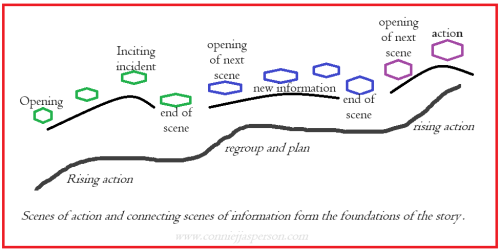
ArcOfScenesLIRF04062024These small arcs of action, reaction, and calm push the plot and ensure it doesn’t stall. Each scene is an opportunity to ratchet up the tension and increase the overall conflict that drives the story.

My writing style in the first stages is more like creating an extensive and detailed outline. I lay down the skeleton of the tale, fleshing out what I can as I go. But there are significant gaps in this early draft of the narrative.

So, once the first draft is finished, I flesh out the story with visuals and action. Those are things I can’t focus on in the first draft, but I do insert notes to myself, such as:

  • Fend off the attack here.
  • Contrast tranquil scenery with turbulent emotions here.

My first drafts are always rough, more like a series of events and conversations than a novel. I will stitch it all together in the second draft and fill in the plot holes.

So, how do I link these disparate scenes together? Conversations and internal dialogs make good transitions, propelling the story forward to the next scene. A conversation can give the reader perspective if there is no silent witness (an omniscient presence). This view is needed to understand the reason for events.
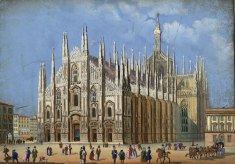
Milano_Duomo_1856Transition scenes must also have an arc supporting the cathedral that is our novel. They will begin, rise to a peak as the necessary information is discussed, and ebb when the characters move on.

Transition scenes inform the reader and the characters, offering knowledge we all must know to understand the forthcoming action.

A certain amount of context can arrive through internal monologue. However, I have two problems with long mental conversations:

  • If you choose to use italics to show characters’ thoughts, be aware that long sections of leaning letters are challenging to read, so keep them brief.
  • Internal dialogue is frequently a thinly veiled cover for an info dump.

An example of this is a novel I recently waited nearly a year for, written by a pair of writers whose work I have enjoyed over the years. I was seriously disappointed by it.

The protagonist’s mental ramblings comprise the first two-thirds of the novel. Fortunately, the authors didn’t use italics for the main character’s mental blather.

This exhausting mental rant contained very little critical knowledge. Ninety percent of what the man ruminated on was fluff—it was all background covered in the broader series and didn’t push the story forward. At the midpoint, I considered not finishing the book.
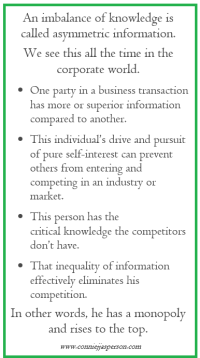
AsymetricInformationLIRF01062024Plots are driven by an imbalance of power. The dark corners of the story are illuminated by the characters who have critical knowledge.  This is called asymmetric information.

The characters must work with a limited understanding of the situation because asymmetric information creates tension. A lack of knowledge creates a crisis.

It’s tempting to waffle on but a conversation scene should be driven by the fact that one person has knowledge the others need. Idle conversations can be had anywhere, and readers don’t want to read about them. Characters should discuss things that advance the plot in such a way that they illuminate their personality.

The reader must get answers at the same time as the other characters, gradually over the length of a novel.

I struggle with this, too. Dispersing small but necessary bits of info at the right moment is tricky because I know it all and must fight the urge to share it too early. Hopefully, all these bumps will have been smoothed out by the end of my second draft.

8ce052b8e7c8182a51dc4999859c1061When we write a story, no matter the length, we hope the narrative will keep our readers interested until the end of the book. We lure readers into the scene and reward them with a tiny dose of new information.

I have no idea whether the novel I’m working on today will be an engaging story for a reader or not. But I’m enjoying writing it.

And that is what writing should be about: writing the story you want to read.

2 Comments

Filed under writing

Information, Pacing, and the Function of the Transition Scene #amwriting

The transition scene is the hardest part of a story for me to figure out when writing the first draft. I get stuck, trying to decide what information needs to come out and what should be held back. I forget that the first draft is only the foundation.

transitionsIn my work, the first draft is really more of an expanded outline, a series of scenes that have characters doing things. But those scenes need to be connected so each flows naturally into the next without jarring the reader out of the narrative.

My first draft manuscript is finished in the regard that it has a beginning, middle, and ending. But it’s only a skeleton, a pile of bones I’ve unearthed, waiting for the anthropologist’s forensic reconstruction. It still needs muscles and heart and flesh.

In a story, muscle is applied to the bones in the form of the transition scene. Transition scenes propel the weight of the narrative, pushing things forward. Action, transition, action, transition—this is called pacing.

Pacing of a story is created by the rise and fall of action. We have our characters do a little something, then they show something, then they tell us something, and it begins again.

I picked up my kit and looked around. No wife to kiss goodbye, no real home to leave behind, nothing of value to pack. Only the need to bid Aeoven and my failures goodbye. The quiet snick of the door closing behind me sounded like deliverance.

The character in the above transition scene completes an action in one scene and moves on to the next event. It reveals his mood and some of his history in 46 words and propels him into the next scene.

He does something: I picked up my kit and looked around.

His emotional state is shown through his thoughts: No wife to kiss goodbye, no real home to leave behind, nothing of value to pack. Only the need to bid Aeoven and my failures goodbye.

The scene is concluded with one last thought and an action that pushes him to the next event: The quiet snick of the door closing behind me sounded like deliverance. The door has closed, there is no going back, and he is now in the next action sequence. We find out who and what is waiting for him on the other side of that door.

pacing memeWe are always told, “Don’t waste words on empty scenes.” I find this part of the revision process the most difficult. Frankly, I have a million words at my disposal, and wasting them is my best skill.
Most fiction has one thing in common regardless of genre and tropes: characters we can empathize with are thrown into chaos-with-a-plot.

To make an enjoyable story out chaos, we must have an underlying foundation of order in the layout of the narrative. This is pacing, and it’s subliminal. But without it, the book is either flat and boring or too chaotic and confusing.

Pacing looks like this:

  • Processing the action.
  • Action again.
  • Processing/regrouping.

Our scenes have an arc, one that is as defined as the overarching arc of the story. A transition scene reveals something new and pushes the characters toward something unknown and unavoidable. It pushes us forward and lays the groundwork for what comes next.

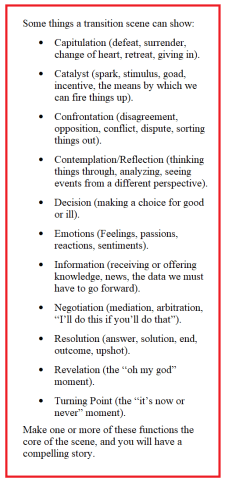
what_transition_scenes_can_show_LIRF023252023If you ask a reader what makes a memorable story, they will tell you that the emotions it evoked are why they loved that novel. They were allowed to process the events, given a moment of rest and reflection between the action. Our characters can take a moment to think, but while doing so, they must be transitioning to the next scene.

The narrative is driven by the characters who have information that must come out. This information must only be given at a certain point in the storyline, and only to those who must have that knowledge in order to accomplish their goal.

These information scenes are transitions and are vital to the reader’s understanding of why these events occur. They show us what must be done to resolve the final problem. The fact that some characters must work with limited information creates roadblocks and raises tension in the reader.

The transition is also where you ratchet up the emotional tension. As I showed in the example above, introspection offers an opportunity for clues about the characters to emerge. It opens a window for the reader to see who they are and how they react. It illuminates their fears and strengths. It makes them seem real and self-aware.

Characters’ thoughts must illuminate their motives at a particular moment in time and explore information not previously discussed. Keep the moments of mind wandering brief. Go easy if you use italics to set your thoughts off. A wall of italics is hard to read, so don’t have your characters “think” too much if you use them.

Internal monologues should humanize our characters and show them as clueless about their flaws and strengths. It should even show they are ignorant of their deepest fears and don’t know how to achieve their goals.

With that said, we must avoid “head-hopping.” The best way to avoid confusion is to give a new chapter to each point-of-view character. (Head-hopping occurs when an author describes the thoughts of two point-of-view characters within a single scene.)

strange thoughtsVisual Cues: In my own work, when I come across the word “smile” or other words conveying a facial expression or character’s mood, it sometimes requires a complete re-visualization of the scene. I’m forced to look for a different way to express my intention, which is a necessary but frustrating aspect of the craft.
Fade-to-black is a time-honored way of moving from one event to the next. However, I don’t like using fade-to-black scene breaks as transitions within a chapter. Why not just start a new chapter once the scene has faded to black?

One of my favorite authors sometimes has chapters of only five or six hundred words, keeping each character thread separate and flowing well. A hard scene break with a new chapter is my preferred way to end a nice, satisfying fade-to-black.

Chapter breaks are transitions. I have found that as I write, chapter breaks fall naturally at certain places.

Writing isn’t the simplest occupation I could have chosen. I struggle, trying to make each scene as emotionally powerful as possible without going overboard. In my case, walking the line between monotonous and melodramatic is a balancing act.

13 Comments

Filed under writing

Pacing and the Function of the Transition Scene #amwriting

The transition scene is the most challenging part of the narrative for me to devise in the first draft. I get stuck, trying to decide what information needs to come out and what should be held back. I forget that the first draft is only the foundation of the bigger picture.

transitionsWe add the details when we begin the revision process. One of the elements we look for in our narrative is pacing, or how the story flows from the opening scene to the final pages.
Our manuscript is finished in the regard that it has a beginning, middle, and ending, but it’s not yet ready for a reader. Now that we have the story’s skeleton, it’s time to flesh it out.

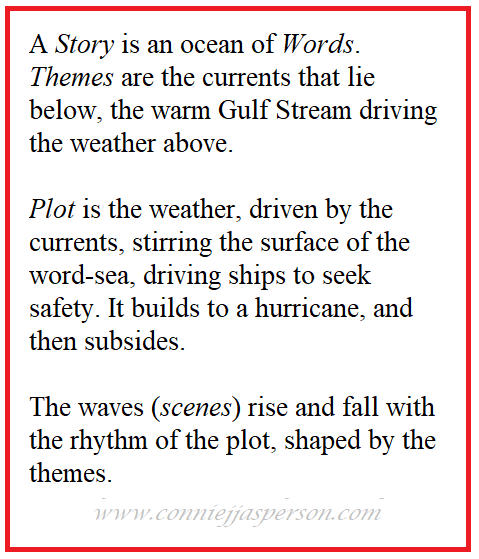
Stories are comprised of a string of moments that are connected by common themes. These moments are scenes, and when you put them together in the right order, they combine to form a narrative.

story as an ocean of wordsThis string of scenes is like the ocean. It has a kind of rhythm, a wave action we call pacing. Pacing is created by the way an author links actions and events, stitching them together with quieter scenes: transitions.
Genre fiction has one thing in common regardless of the tropes: characters we can empathize with are thrown into chaos-with-a-plot.

But while the characters might be immersed in turmoil, the reader needs an underlying order in the layout of the narrative. This pacing is subliminal, but without it, the book is chaos.

  • action,
  • processing the action,
  • action again,
  • another connecting/regrouping scene

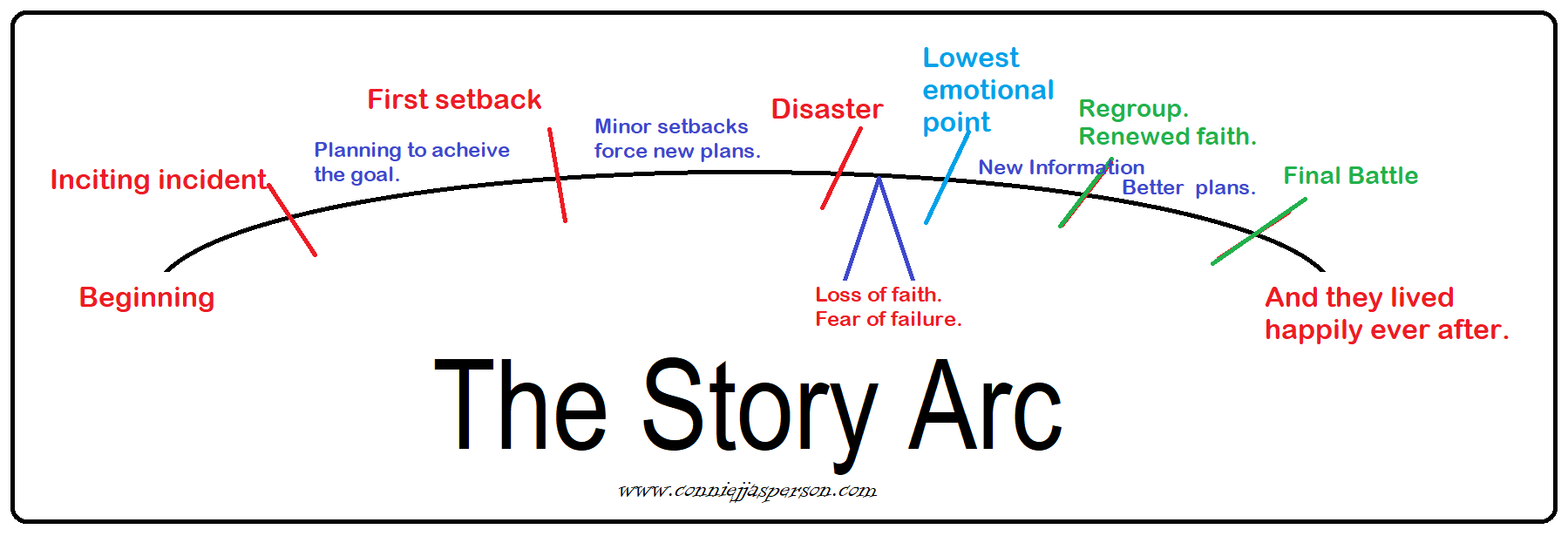
The scene’s arc is like any other: it begins, rises to a peak, and ebbs, ending at a slightly higher point of the overall story arc than when it started.

If you ask a reader what makes a memorable story, they will tell you that the emotions it evoked are why they loved that novel. They were allowed to process the events, given a moment of rest and reflection between the action. The characters can take a moment to think, but while doing so, they must be transitioning to the next scene.

While I am not always successful, I work hard to make each scene as emotionally powerful as possible without going overboard.

Here are a few things a transition scene can show:

  • Capitulation (defeat, surrender, change of heart, retreat, giving in).
  • Catalyst (spark, stimulus, goad, incentive, the means by which we can fire things up).
  • Confrontation (disagreement, opposition, conflict, dispute, sorting things out).
  • Contemplation/Reflection (thinking things through, analyzing, seeing events from a different perspective).
  • Decision (making a choice for good or ill).
  • Emotions (Feelings, passions, reactions, sentiments).
  • Information (receiving or offering knowledge, news, the data we must have to go forward).
  • Negotiation (mediation, arbitration, “I’ll do this if you’ll do that”).
  • Resolution (answer, solution, end, outcome, upshot).
  • Revelation (the “oh my god” moment).
  • Turning Point (the “it’s now or never” moment).

Make one or more of these functions the core of the scene, and you will have a compelling story.

Plot points are driven by the characters who have vital knowledge. The fact that some characters are working with limited information can create high emotional tension.

A scene comprised only of action can be confusing if it has no context. A properly placed argument or dispute gives the reader the context needed to process the action and understand why it happened. The reader and the characters should receive information simultaneously when they need it.

What concessions will have to be made to achieve the final goal? A transition scene must reveal something new and push the characters toward something as yet unknown, but which is unavoidable.

I picked up my kit and looked around. No wife to kiss goodbye, no real home to leave behind, nothing of value to pack. Only the need to bid Aeoven and my failures goodbye. The quiet snick of the door closing behind me sounded like deliverance.

The character in the above transition scene completes an action (departing for somewhere). It reveals his mood and some of his history in 46 words. Don’t waste words on empty scenes. This is why I find the revision process the most challenging aspect of writing.

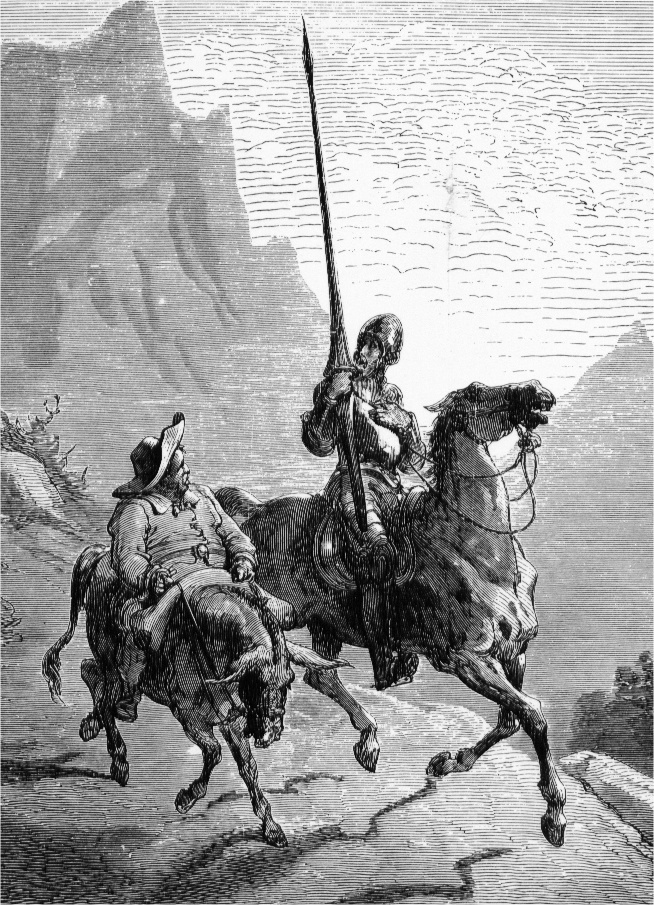
Don_Quijote_and_Sancho_Panza

Don Quixote and Sancho Panza, Gustave Dore PD|100

We can’t natter on about nothing, but conversely, we can’t have non-stop action. Pandemonium is exhausting to write and more exhausting to read. The characters and the reader both need to process information, so the character arc should be at the forefront during these transitional scenes. That period of relative calm is when you allow your characters’ internal growth to emerge.

We allow the characters to justify the decisions that led to that point and plan their next move, making it believable.

The transition is also where you ratchet up the emotional tension. Introspection offers an opportunity for clues about the characters to emerge. It opens a window for the reader to see who they are and how they react. It illuminates their fears and strengths. It makes them real and self-aware.

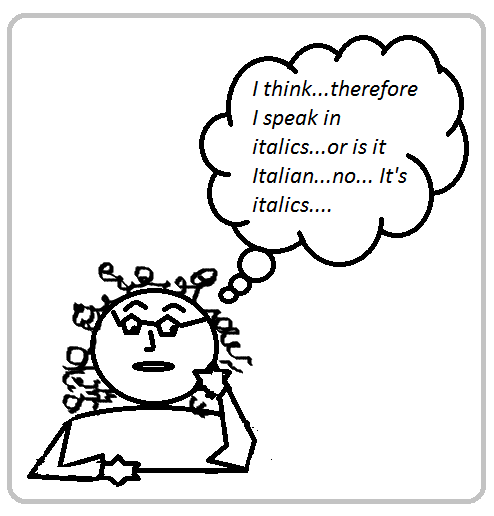
Keep the moments of mind wandering brief. Go easy if you use italics to set your thoughts off. A wall of italics is hard to read, so don’t have your characters “think” too much if you use those.

Characters’ thoughts must illuminate their motives at a particular moment in time and explore information not previously discussed.

conversationsInternal monologues should humanize our characters and show them as clueless about their flaws and strengths. It should even show they are ignorant of their deepest fears and don’t know how to achieve their goals. With that said, we must avoid “head-hopping.” The best way to avoid confusion is to give a new chapter to each point-of-view character. Head-hopping occurs when an author describes the thoughts of two point-of-view characters within a single scene.
Visual Cues: In my own work, when I come across the word “smile” or other words conveying a facial expression or character’s mood, it sometimes requires a complete re-visualization of the scene. I’m forced to look for a different way to express my intention, which is a necessary but frustrating aspect of the craft.

Fade-to-black is a time-honored way of moving from one event to the next. However, I don’t like using fade-to-black scene breaks as transitions within a chapter. Why not just start a new chapter once the scene has faded to black?

One of my favorite authors sometimes has chapters of only five or six hundred words, keeping each character thread separate and flowing well. A hard scene break with a new chapter is my preferred way to end a fade-to-black.

Chapter breaks are transitions. I have found that as I write, chapter breaks fall naturally at certain places.

The struggle to connect my action scenes into a seamless arc with good pacing is why writing isn’t the most uncomplicated occupation I could have chosen. But it is the best job I’ve ever had.

storyArcLIRF10032021

5 Comments

Filed under writing

Transitioning from scene to scene #amwriting

In my previous post, I showed how each scene is a small area of focus within a larger story and has an arc of its own. Small arcs hold up a larger arc. These arcs are created by events, and all the arcs form a cathedral-like structure that we call the story arc, which is the outer shell or the novel’s framework.

transitionsBy creating small arcs in the form of scenes, we offer the reader the chance to experience the rise and fall of tension, the life-breath of the novel.

Pacing is created by the way an author links actions and events, stitching them together with quieter scenes: transitions.

Transitions can be fraught with danger for me as a writer because this is where the necessary information, the exposition, is offered to the reader. This is the “how much is too much” moment.

In my first draft, the narrative is sometimes almost entirely exposition. This happens because I am telling myself the story, trying to get the events down before I forget them.

Every narrative has a kind of rhythm. While the characters might be in the midst of chaos, we must ensure there is order in the layout of the narrative.

  • action,
  • processing the action,
  • action again,
  • another connecting/regrouping scene

These “processing” scenes are transitions, moving the plot forward while allowing the reader to make sense of what just happened.

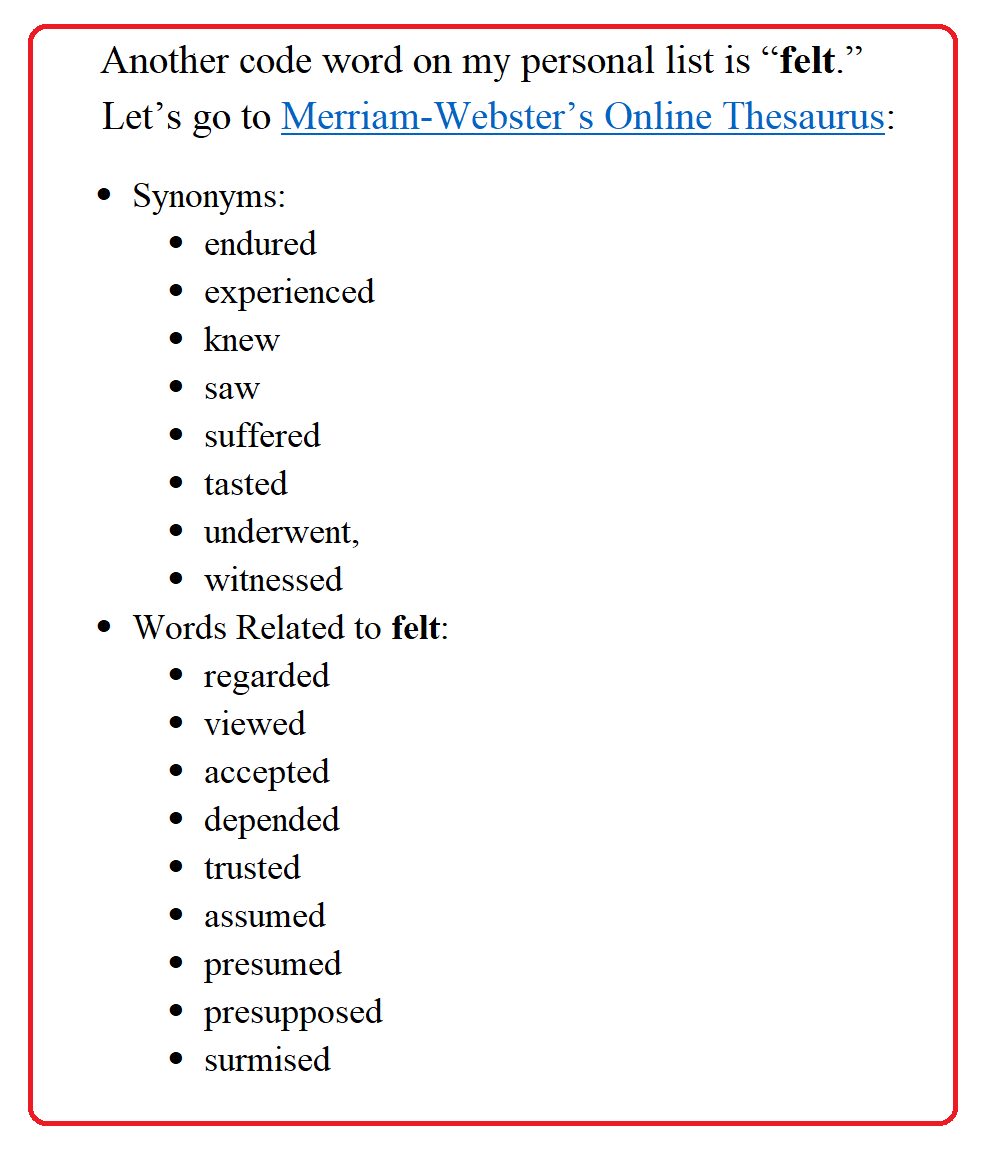
One word that slips into my first draft prose is the word “got.” It is a mental code word that I subconsciously used when laying down the story. This word signifies a small incident to revise in the second draft.

“Got” is on my global search list of “telling words.” The words in the list are signals to me, indications that a scene needs to be reworded to make it a “showing” scene.

Got:” He got the message = he understood.

Code_word_FeltCode words are the author’s first draft multi-tool—a compact tool that combines several individual functions in a single unit. One word, one packet of letters serves many purposes and conveys multiple mental images to the author.
In fact, all passive phrasing is a code. The author’s “subconscious writer” embeds signals in the first draft. It tells the author that the characters are transitioning from one scene to the next. They, or their circumstances, are undergoing a change. Is this change something the reader must know?

Each lull in the action should lead us into a new scene. When transitions are done right, readers won’t notice the narrative moving from one event to the next, as the progression feels natural.

Let’s look at two more code words for transitions:

  • Went
  • Thought

When I see the word “went,” I immediately know someone is going somewhere. It is a transition scene taking the characters to the next event.

I ask myself, “How did they go?” Went can be changed to any number of verbs:

  • walked
  • drove
  • rode
  • took
  • teleported
  • And so on and so on

You get the idea.

We can’t have non-stop action, as that is exhausting to write and more exhausting to read. The characters and the reader both need to process information, so the character arc should be at the forefront during these transitional scenes. That period of relative calm is when you allow your characters’ internal growth to emerge.

We allow the characters to justify the decisions that led to that point and plan their next move, making it believable.

The transition is also where you ratchet up the emotional tension.

We have more options than simply moving the characters from point A to point B, several paths to choose from.

strange thoughtsThought (Introspection):

  • Introspection offers an opportunity for new information to emerge.
  • It opens a window for the reader to see who the characters are and how they react and illuminate their fears and strengths. It shows that they are sentient beings, self-aware.

Keep the moments of mind wandering brief. Go easy if you use italics to set thoughts off. A wall of italics is hard to read, so don’t have your characters “think” too much if you use those.

  • Characters’ thoughts must serve to illuminate their motives at a particular moment in time.
  • In a conversation between two characters, introspection must offer information not previously discussed.
  • Internal monologues should not make our characters all-knowing. It should humanize them and show them as clueless about their flaws and strengths. It should even show they are ignorant of their deepest fears and don’t know how to achieve their goals.

Sometimes we have more than one character with information the reader needs to make sense of the next event.

The key is to avoid “head-hopping.” The best way to avoid confusion is to give a new chapter to each point-of-view character. Head-hopping occurs when an author describes the thoughts of two point-of-view characters within a single scene.

Visual Cues: In my own work, when I come across the word “smile” or other words conveying a facial expression or character’s mood, it sometimes requires a complete re-visualization of the scene. I look for a different way to express my intention, which is a necessary but frustrating aspect of the craft.

Fade-to-black is a time-honored way of moving from one event to the next. However, I don’t like using fade-to-black scene breaks as transitions within a chapter. Why not just start a new chapter once the scene has faded to black?

One of my favorite authors sometimes has chapters of only five or six hundred words, which keeps each character thread truly separate and flowing well. A hard scene break with a new chapter is my preferred way to end a fade-to-black.

Chapter breaks are transitions. As we write, chapter breaks fall naturally at certain places.

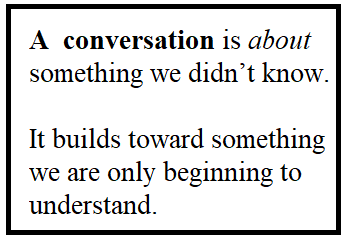
Conversations can serve as good transitions that propel the story forward to the next scene. However, they can easily become info dumps. In literary terms, a good conversation is about something we didn’t know and builds toward something we are only beginning to understand.

DangerThat is true of every aspect of a scene—it must reveal something we didn’t know and push the story forward toward something we can’t quite see.

The transition is the most challenging part of the narrative for me to formulate in the first draft. I get stuck, trying to decide what information needs to come out and what should be held back.

The struggle to connect my action scenes into a seamless arc is why writing isn’t the easiest occupation I could have chosen.

But when everything comes together, writing is the most satisfying job I have ever had.

4 Comments

Filed under writing

Transitions #amwriting

We love reading dramatic stories. However, in order for the events of the drama to be meaningful, we need to see it in context to understand what is going on. We need just enough artfully inserted exposition to show us what is really going on.

Within the narrative, moments of transition are critical, yet they are often done clumsily. These linking scenes can be too long, conveying far too much unneeded information. Conversely, they can be nearly omitted.

Neither of  those well-meaning faux pas serves the story.

Good transitions establish many things. The opening paragraphs are a critical transition. They show us

  • the general location (Alternate world, London, Seattle, a space station, etc.)
  • the setting (the immediate environment),
  • the era (past, present, future) in which the narrative takes place.

These first paragraphs are the doors through which the reader takes the first tentative steps from their real world and enters our invented world.

When a reader opens the book, they are a visitor, but they’re searching for something, questing for a good story. They hope you have supplied whatever it is they are looking for in the pages of that book.

Good opening paragraphs sink the hook and suck your reader into your world.

As the narrative moves beyond the opening scene, more transitions come along. These are the places where we must end one dramatic scene and open another—and do it gracefully. Sometimes it’s a moment where we must show the passage of time between events. Whatever the case, with each transition, we want the reader to remain engaged.

Transitions are more doors for the reader, portals that open at the end of the dramatic scene. By moving through them, we arrive at the next event.

Transitions are critical. Without good transitions, dramatic scenes have no context. Instead of progressing in an arc, the narrative leaps and falls along to a conclusion that may make no sense.

But transitions can be fraught with danger for me as a writer because this is where the necessary information, the exposition, is offered to the reader. This is the “how much is too much” moment.

In my first draft, the narrative is sometimes almost entirely exposition. This is because I am telling myself the story, trying to get the events down before I forget them.

In the second draft, I look at words like “went.” In my personal writing habits, “went” is a code word for the transition. In fact, all passive phrasing is code for the author. It is the code laid down in the first draft that indicates to the author that the characters are in the process of transition. They, or their circumstances, are undergoing a change. Is this change something the reader must know?

For example, when I see the word “went,” I immediately know someone goes somewhere.

I ask myself, “How did they go?” Went can be changed to

  • they walked (to the next room, or down the street, or to Mordor.)
  • they drove (a car, a wagon, a space ship.)
  • they rode (a horse, donkey, motorcycle, or dragon.)
  • they took a plane (bus, ferry, space shuttle, or sleeping pill.)
  • they teleported (vanished into the ether)

You get the idea. I have to find the “telling” paragraphs that connect my dramatic scenes together and decide what will stay and what should be cut. If the necessary information requires a paragraph, I have to consider how to rewrite it so that it is interesting and not a mind-numbing wall of words.

Many times, a transition can be cut to only a sentence or two because the necessary information it imparts can be consolidated.

This is where being a part of a writing group is most beneficial. Within the writing group, you will find a person you can bounce ideas off, someone you can trust and who will say, “This is not needed as it doesn’t advance the story” or “this scene seems to come out of nowhere. It needs more foreshadowing.”

Consolidating the transition into a sentence or two is optimal but isn’t always possible.

If it takes more than a paragraph to make the transition, I must be vigilant in my revision, and if I must give information, I must find and change all the passive code words to active prose. To that end, I look for these codes:

  • All forms of To be (see my post on subjunctives)
  • basically
  • Too many emdashes
  • Exclamation points (usually not needed)
  • Finally
  • I think
  • -ing
  • Its / it’s
  • –ize –ization (global search)
  • just
  • Like
  • -ly (global search)
  • now
  • Okay
  • Only
  • Really
  • Said (decide if speech tags can be eliminated and shown by actions)
  • Seem
  • Still
  • Suddenly
  • That (often not needed)
  • The
  • Then (often not needed)
  • There was (a subjunctive)
  • –tion (global search)
  • Very (usually not needed)
  • Which (not a substitute for ‘that’)

We know that each scene can be a chapter, or a chapter can consist of several scenes. In this regard, each author constructs the layout of the story the way they feel works best. The reader gets into the swing of it and rarely notices the overall structure. Whether a chapter or a series of scenes, dramatic passages have universal commonalities:

  • All scenes have an arc to them: rising action, climax, reaction.
  • These arcs of action and reaction begin at transition point A and end at transition point B.
  • Each scene will end at a slightly higher point of the overall story arc.
  • Each scene must blend so smoothly to the one that follows that the reader doesn’t notice the transition.
  • Pacing is the rise and fall of the action, drama and transition, the ebb and flow of conversations.

Conversations make great transitions. Inserting the necessary information into conversations and then fading to black and beginning a new chapter/scene can be the key to making the transition unobtrusively.

When we rewrite something, we are making revisions. Think about that word, revision.

re vision = to envision again.

Transitions are small connections that are woven into the larger narrative. When we begin revising them, we are looking at small passages of our work with new eyes and seeing how they might be changed to better fit the story—usually condensed, but sometimes expanded.

On the surface, it’s a daunting task, but it’s one of the most important parts of the writing process.


Credits and Attributions

Tavern of the Crescent Moon by Jan Miense Molenaer [Public domain or Public domain], via Wikimedia Commons

Wikimedia Commons contributors, “File:Jan Miense Molenaer 003.jpg,” Wikimedia Commons, the free media repository, https://commons.wikimedia.org/w/index.php?title=File:Jan_Miense_Molenaer_003.jpg&oldid=302686494 (accessed November 9, 2018

Wikimedia Commons contributors, “File:David Teniers de Jonge – Peasant Wedding (1650).jpg,” Wikimedia Commons, the free media repository, https://commons.wikimedia.org/w/index.php?title=File:David_Teniers_de_Jonge_-_Peasant_Wedding_(1650).jpg&oldid=225700063 (accessed November 2, 2018).

Autumn on Greenwood Lake, ca. 1861, by Jasper Francis Cropsey [Public domain], via Wikimedia Commons


Comments Off on Transitions #amwriting

Filed under writing

The transition scene #amwriting

A well-paced narrative has a kind of rhythm. Instructors commonly refer to this as “push, glide, push, glide,” as if skating. What that means is that while the characters might be in the midst of chaos, there is order in the layout and pacing of the narrative.

  • action,
  • processing the action,
  • action again,
  • another connecting/regrouping scene

These “processing” scenes are transitions, moving the plot forward while allowing the reader to process what just happened.

We can’t have non-stop action, as that is exhausting to write and more exhausting to read. The character arc is often at the forefront during these transitional scenes as that period of relative calm is when you allow your characters’ internal growth to emerge.

We justify what just happened, making it believable. It is also where you ratchet up the tension.

When it comes to writing transitions between scenes, we have several paths to choose from.

Introspection:

  • Introspection offers an opportunity for new information important to the story to emerge.
  • It opens a window for the reader to see who the characters are, how they react and illuminates their fears and strengths. It shows that they are self-aware.

Keep the scenes of introspection brief, and go easy on them if you are given to using italics to set them off. A wall of italics is hard to read, so don’t “think” too much if you are using those.

  • Characters’ thoughts must serve to illuminate their motives at a particular moment in time.
  • In a conversation between two characters, introspection must offer information not previously discussed.
  • Internal monologues should not make our characters too wise. Humanize them, show them as a bit clueless about their flaws, strengths, or even their deepest fears and goals.

Conversations:

  • Conversations should not become clumsy info-dumps. “As you know….”
  • Each character must speak uniquely, sounding like themselves. Don’t dump conversations into a blender and pour out a string of commentary that makes them all sound alike.

Don’t get fancy with speech tags/attributions. It’s best for me as a reader when the author avoids words that take me out of the narrative. Some words are eye-stoppers. I recommend you stick with said, replied, answered—common and ordinary  tags that don’t leap out at the reader like ejaculated, disgorged, spewed, and so on. Occasionally, you can get away with more forceful tags, but keep them to a minimum. Make the characters’ actions and words show the force of their words. In my opinion, you can do away with speech tags for some brief exchanges if the scene contains only two characters.

Fade-to-black and hard scene breaks:

I’m in two minds about using fade-to-black scene breaks as transitions. Why not just start a new chapter?

One of my favorite authors, L.E. Modesitt Jr. sometimes has chapters of only five or six-hundred words, which keeps each character thread truly separate and flows well.

In a short story, a hard scene break is sometimes required, as you don’t have the option to do chapters. Use an asterisk or hashtag between scenes. * #

New chapter:

Each of the major players has a point of view. Some authors use the aftermath of an action scene as an opportunity to advance the antagonist’s story line. That is a good strategy, as we do need to show why the enemy is the enemy.

The key is to avoid “head-hopping,” and I feel like the best way to do that is to give a new chapter to the point-of-view character. Head-hopping occurs when an author switches point-of-view characters within a single scene. It happens most frequently when using a third-person omniscient narrative because the thoughts of every character are open to the reader.

My favorite authors will employ all the above listed transitions as they move their characters through the story arc. Each transition will lead us into a new scene, and when they are done right, we the readers won’t even notice that they are transitional.

The transition is the most difficult part of the narrative for me to formulate in the first draft. I get stuck, trying to decide what information needs to come out, and what should be held back.

Sometimes, a transition just will not work no matter what. This happens when a flaw in the logic exists in the scene preceding it. Usually, I can’t see it at that point, but my writing group will show me what the problem is.

This struggle to connect my action scenes into a seamless arc is why writing isn’t the easiest occupation I could have chosen. But when everything comes together, it is the most satisfying job.


Credits and Attributions:

Detail from: Journey of the Magi (East Wall) by Benozzo Gozzoli 1459Magi Chapel of Palazzo Medici-RiccardiFlorence, 1459–1461. Wikimedia Commons contributors, “File:Benozzo gozzoli, corteo dei magi, 1 inizio, 1459, 51.JPG,” Wikimedia Commons, the free media repository, https://commons.wikimedia.org/w/index.php?title=File:Benozzo_gozzoli,_corteo_dei_magi,_1_inizio,_1459,_51.JPG&oldid=179731811 (accessed April 24, 2019).

Wikimedia Commons contributors, “File:Sir Galahad (Watts).jpg,” Wikimedia Commons, the free media repository, https://commons.wikimedia.org/w/index.php?title=File:Sir_Galahad_(Watts).jpg&oldid=277887181 (accessed April 24, 2019).

9 Comments

Filed under writing