Tag Archives: writing

The Word-Pond – Surface #amwriting

Story is an arc of action, but it is also a deep pond filled with words. Today we are looking at the visible layer, the surface.

When you look at a real pond you will see the effects of the world around it reflected in its surface. On a windless day, the pool will be calm, still. The sky and any overhanging trees will be reflected in it.

Add in a storm and things change. The waters move; ripples and small waves stir the waters, which only reflect the dark gray of stormy sky.

The surface of the Word-Pond is the Literal Layer; the what-you-see-is-what-you-get layer.

The storms that alter the surface are the events and the way our characters move through them.

This surface layer is comprised of

  • Setting,
  • Action and Interaction,
  • All visual/physical experiences of the characters as they go about their lives.
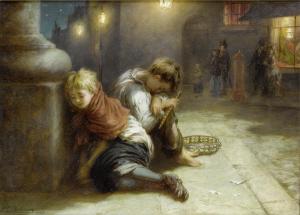
The surface of a story is like a picture. When we look at it we immediately see something recognizable. The surface is comprised of:

Setting – things such as:

  1. Objects the characters see in their immediate environment
  2. Ambient sounds that form the background of the immediate environment
  3. Odors/scents of the immediate environment.
  4. Objects the characters interact with in their immediate environment.
  5. Weapons (swords, guns, phasers)

The still, reflective surface of the word-pond is affected by the breeze that stirs it. As mentioned above, the breeze is made of the action and events that form the arc of the story:

  1. The opening.
  2. The inciting incident.
  3. Rising action and events that evolve from the inciting incident.
  4. The introduction of new characters.
  5. The action that occurs between the protagonist and antagonist as they jockey for position.
  6. The final showdown

These components form the literal layer because they appear to be the story.
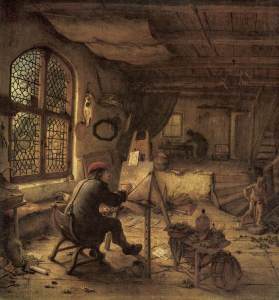
How do we shape this literal layer? We can add fantasy elements, or we can stick to as real an environment as is possible.

In Alice’s Adventures in Wonderland, Lewis Carroll showed us that while surrealism is a large, ungainly concept to describe, it can be incorporated into the literal layer. An author might build into the setting an unusual juxtaposition of objects. The characters behave and interact with their environment as if the bizarre things are normal. The setting may have a slightly hallucinogenic feel to it, making the reader wonder if the characters are dreaming. The placement of the unusual objects is deliberate, meant to convey a message or to poke fun at a social norm. Surrealism on the surface level takes what is real and warps it to convey a subtler meaning but doesn’t say “Look what I did!” It tries to pass as “normal.”

Most Sci-fi and some fantasy novels are set in real-world(ish) settings, with a good story and great characters. The settings are familiar, so close to what we know, we could be in that world. That is where good world building creates a literal layer that is immediately accepted by the reader.

SO, we know that the surface layer of our story can contribute to the feeling of depth. Setting, action, interaction—these most obvious components should give the reader a hint that there are deeper aspects of the story, more than what-you-see-is-what-you-get.

While the winds (action and reaction) may ruffle the surface, stir things up on the literal layer, it rarely disturbs the deeper waters of the Word-Pond. A good story has all these components, but it also has soul, makes you think about larger issues. The way our characters interact within this surface layer are influenced by what is going on in the next layer down—the Inferential Layer.

Just below the surface, in the Inferential Layer lies Mood and Emotion. They are not the same and the differences will require a little examination.  Friday’s art post will be a dip into surrealism–but on Monday we will pick this discussion up and talk about Mood vs. Emotion.


Credits and Attributions:

Wikipedia contributors, “American Realism,” Wikipedia, The Free Encyclopedia, https://en.wikipedia.org/w/index.php?title=American_Realism&oldid=902714117  (accessed June 29, 2019).

Wikimedia Commons contributors, “File:Augustus Edwin Mulready Fatigued Minstrels 1883.jpg,” Wikimedia Commons, the free media repository, https://commons.wikimedia.org/w/index.php?title=File:Augustus_Edwin_Mulready_Fatigued_Minstrels_1883.jpg&oldid=335802594 (accessed June 2, 2019).

Wikimedia Commons contributors, “File:Adriaen van Ostade – The Painter in His Studio – WGA16748.jpg,” Wikimedia Commons, the free media repository, https://commons.wikimedia.org/w/index.php?title=File:Adriaen_van_Ostade_-_The_Painter_in_His_Studio_-_WGA16748.jpg&oldid=270705051 (accessed May 10, 2018).
4 Comments

Filed under writing

Creating Depth: Layers of the Word-Pond #amwriting

We often talk about the story arc and its component parts and features. But when we want to add depth to a story, we must look at it from a different angle. Yes, “Story” is an arc, but it is also like a pond. It is something vast and deep, set in an enclosed space.

We know it has a beginning and end, a top and bottom, with something murky and mysterious in the middle. We instinctively know the pond is made up of those three layers, although we may not consciously be aware of it or be able to explain it.

Today we will have an overview of Depth, a component of Story that we will be exploring over the next few posts. This is a part of the puzzle that eludes many authors as depth is an advanced concept requiring a great deal of thought to convey.

On our pond, Layer One, the surface layer, is the most obvious. When you look at the pond, it could be calm , or if a storm is brewing, it will be ruffled and moving.

First, we must understand that Story is an immense, unfathomable word-pond.

In Story, Layer One, the surface layer is the Literal Layer; the what-you-see-is-what-you-get layer.

This is the setting, the action, the visual/physical experience of the characters as they go about their lives.

On the surface of a story, when you see something, you immediately recognize what you think is there. You immediately believe you know what is going on. This is the surface meaning. A gun is drawn, the weapon is fired—what happened is clear and obvious.

The ways in which we play with the surface layer are by choosing either Realism or Surrealism, or a blend of the two.

Realism is serious, a depiction of what undisputedly is.

Surrealism seeks to release the creative potential of the unconscious mind, for example by the irrational juxtaposition of images. It takes what is real and warps it to convey a subtler meaning.

This will be a fun layer to explore, with lots of wonderful art to help us along the way.

Back to the pond. Beneath the surface is Layer Two: the middle, the area of unknown quantity where lives are lived, and events happen. Fish hatch, swim, and eat other fish. These are the creatures of the middle, entities who rarely breach the surface layer or see the bottom and who exist independently of them.

Yet their world has limits—they are confined, as we are confined by the sky above us and the soil beneath our feet.

In Story, Layer Two, the wide layer of unknown quantity is the Inferential Layer. This is the layer where Inference and Implication come into play.

We show why the gun is drawn. We imply reasons to show why the weapon was fired. We offer ideas to explain how the shooter comes to the place in the story where they squeezed the trigger.

We make these implications and let the reader draw their own conclusions.

In a good story, the path to the moment the trigger was pulled is complicated. Perhaps no one knows exactly what led to it, but your task is to fill the middle of the pond with clues, hints, and allegations. This is where INFER and IMPLY come into play.

You can only imply something to someone, in our case, the reader.

A speaker (author) implies. One meaning is displayed on the surface, but deeper down, you enclose the true meaning, a secret folded within the story. Take an envelope and write the word “murder” on it.  Then write one word, “avenger,” on a  note and slip it inside the envelope. The message (inference) inside the envelope (story) is conveyed to the listener (reader).

A listener (reader) infers. The listener (reader) deduces or catches the meaning of something that is not said directly. In reading the inferential layer of the story, they open the envelope and draw out the note and deduce the meaning of what is about to happen.

The layer of implication must be done well and deftly because you want the reader to feel as if they have earned the information they are gaining. They must be able to deduce what you imply. As a listener (reader) you can only extrapolate knowledge from information someone or something has offered you.

Serious readers want this layer to mean something on a level that isn’t obvious. They want to experience that feeling of triumph for having caught the meaning. That surge of endorphins keeps them involved and makes them want more of your work.

This layer will be shallower in Romance novels because the point of the book isn’t a deeper meaning—it’s interpersonal relationships on a surface level. However, there will still be some areas of mystery that aren’t spelled out completely because the interpersonal intrigues are the story.

Books for younger readers might also be less deep on this level because they don’t yet have the real-world experience to understand what is implied.

This middle layer is, in my opinion, the toughest layer for an author to get a grip on. We will go to popular literature to find examples that will lead us to draw our own conclusions about this layer.

Below the middle layer is Layer Three, the bottom of the pond. This is the finite layer: Whatever passes from the surface travels through the middle and comes to rest at the bottom.

In Story, Layer Three is the Interpretive Level:

  • Themes
  • Commentary
  • Message
  • Symbolism
  • Archetypes

This layer is sometimes the easiest for me to discuss because we are dealing with finite concepts. Theme is one of my favorite subjects to write about, as is symbolism. Commentary is something I haven’t gone into in depth, nor have I really discussed conveying messages. Archetype is another facet I haven’t gone into in detail, and yet it is a fundamental underpinning of Story.

I am looking forward to gaining more understanding of the subtler, more abstract aspects of writing as I do the research for this series. When I come across a book or website that has some good information, I will share it with you.

In the meantime, a good core textbook is “Story” by Robert McKee. If you haven’t already gotten it, get it.

Another excellent and more affordable textbook for this is “Damn Fine Story” by Chuck Wendig. Chuck delivers his wisdom in pithy, witty, concise packets. If you fear potty-mouth, don’t buy it. However, if you have the courage to be challenged, this is the book for you.

In my next post we will begin at the surface of the Word-Pond: realism and surrealism.


Credits and Attributions:

Photograph, McLain Pond in July, © 2018 by Connie J. Jasperson, from the author’s private photos.

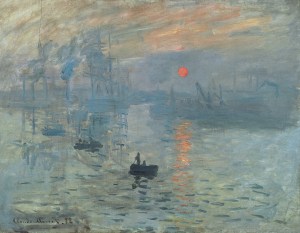
Impression Sunrise, Claude Monet 1872 [Public domain], via Wikimedia Commons

Comments Off on Creating Depth: Layers of the Word-Pond #amwriting

Filed under writing

Dramatic Irony: adding depth #amwriting

Creating depth in writing is an involved process. When we talk about adding depth to a scene, we are talking about many things, and over the next few weeks, we will explore the ideas and facets of depth more fully.

First of all, “depth” consists of a multitude of layers we add to a scene.

Even before we get into the deeper waters, writing fiction is a complex undertaking. We need a wide vocabulary, but we also need to be careful not to get too “high falutin’” with it. This requires an understanding of our chosen genre and the general expectations of our readers.

Also, the way we habitually structure our prose (our voice) can add to the feeling of depth. Of course, it’s important to have a fundamental understanding of basic mechanical skills:

  • Grammar
  • Punctuation

We don’t consciously think about this, but organizational skills are critical because we want the story to flow easily from scene to scene. How we plot a story requires a little thought and sometimes we cut or rearrange things.

If we are writing fiction, we need to be able to think critically and see a character’s thought processes from all sides. If we have tunnel vision in our writing, we only write what is directly in front of us. This can be one dimensional, boring. There is no surprise because we saw it coming all along, and no effort was made to counter it.

So how do we take that one-dimensional idea and make the reader believe we have (figuratively) plucked them from their comfortable existence and placed them in a real, three-dimensional world?

We do it layer by layer. Some layers are more abstract than others, but they add so much to a story. Take the unexpected. When you add something unexpected into the mix, the reader becomes interested in finding out more. They keep turning the pages.

One way to introduce the unexpected is to employ a literary device called Dramatic Irony. Employed deftly, irony inserted into the ordinary adds the element of surprise and a moment of “ah hah!” to a scene. The ordinary becomes extraordinary.

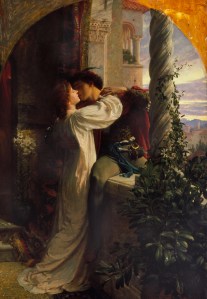
Let’s consider Romeo and Juliet. The way William Shakespeare wrote the play, we see layer after layer of irony, applied heavily.

First, the prologue announces that the  Capulets are at war with the Montagues and tells us that what happens to the star-crossed lovers at the end will bring about peace between the warring families. That the audience is aware of the situation from the outset, but the characters are not is one layer of irony. That “we know, but you don’t” factor was extraordinarily daring in its day and was one of the things Elizabethans loved most about the play.  

Now, the next layer is one that resonates with modern audiences. The second layer of irony is laid on when Romeo falls in love with his nemesis—the daughter of his family’s arch enemy. Again, the audience sees the irony there, but (third layer) Romeo pushes onward, trying to convince Juliet that her family won’t harm him, that her love will protect him. Alas, the ironic blindness of teenaged infatuation.

And at this point, despite the blatant warning the prologue gives us at the outset, we are all hoping for a happy ending, even though we’ve had 400 years of “we know how this will end, and it isn’t good.”

Mercutio and Benvolio discuss Romeo’s love-stricken behavior, assuming he is still pining for Rosalind (fourth layer of irony). The audience says, “We know something you don’t!”

Alas poor Romeo! he is already dead;

stabbed with a white wench’s black eye;

shot through the ear with a love-song;

“Shot through the ear with a love-song” is brilliant, ironic prose in any era. All through the play, from Tybalt’s murder to the suicides, the audience knows what is going on, but the characters don’t. That is dramatic irony taken to an extreme and was a contributing factor in the play’s success back in 1594-1595 when it first opened.

But tastes have changed over the 400+ years since that play was written. We can still inject irony into our work but don’t have to be quite so heavy-handed in our writing.

I’m just saying that nowadays it’s a bad idea to write a prologue explaining the end of the book, as that will encourage readers to put the book back on the shelf and purchase one where the outcome is more of a mystery.

Perhaps we have scene involving a committee’s conversation about what to do with a plot of land. Should we let it be developed commercially or make it playground? In itself, the topic might not be terribly interesting.

But what if in the opening paragraph a woman enters the empty conference room ahead of the meeting and places a backpack under the table. She makes an adjustment to its contents, sets the timer to go off at 14:25 (2:25 pm), and then leaves, being careful to leave no fingerprints.

Now every second that the conversation drags on ratchets up the tension. Each time a committee member gets up to get a glass of water, or make a phone call, and the clock on the wall ticks toward 2:25, you wonder: will they be the one to escape death?

Irony should be the backpack lurking under the table. It’s there; the reader knows it’s there but once it’s placed under the table we don’t have to mention it again until it is found or the clock ticks to 2:25.

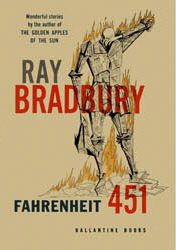
Consider Fahrenheit 451, by Ray Bradbury. Bradbury uses irony to convey information. First of all, Bradbury challenges us by introducing “firemen” not as those brave people who put out house fires, but as men charged with starting fires and burning all books. The naming of that job title is subtle. The author never resorts to explaining the irony, but it packs a punch when you first read it. So, in that case, we have “situational irony” delivering information we need, in a way that packs a wallop and promises more to come.

In the 1948 short story, The Lottery, Shirley Jackson wrote about something we typically think of as good. After all, winning the lottery usually means we’ve won money or a wonderful prize. But in Jackson’s story, it’s not about what is won, but what is lost. The irony is that stoning someone to death yearly purges the town of the bad and makes way for the good.

Dramatic Irony adds depth to a story, especially when done in such a way that the reader understands it but hasn’t been told what to think. Readers like to think for themselves.

For a good speculative fiction story that is one long scene filled with dramatic irony that becomes humorous, you might want to read The Machine that Won the War, by Isaac Asimov. This story first appeared in the October 1961 issue of The Magazine of Fantasy & Science Fiction and was reprinted in the collections Nightfall and Other Stories (1969) and Robot Dreams (1986).


Credits and Attributions:

Quote from Romeo and Juliet, William Shakespeare, 1594 – 1595 PD|100.

Cover for Fahrenheit 451 by Ray Bradbury, Artwork by Joseph Mugnaini Published October 19, 1953, by Ballantine Books. Fair Use.

Frank Dicksee, Romeo and Juliet, Wikimedia Commons contributors, “File:DickseeRomeoandJuliet.jpg,” Wikimedia Commons, the free media repository, https://commons.wikimedia.org/w/index.php?title=File:DickseeRomeoandJuliet.jpg&oldid=354454367 (accessed June 25, 2019).

2 Comments

Filed under writing

Update on Works in Progress #amwriting

Time flies when you’re having fun—it’s June already, and nothing I planned to have completed is done at this point.  However, I have made progress on some really important things.

I bought a new vacuum cleaner.

I’ve got a new vegan cookbook.

I dog-sat my neighbor’s boxer for four days.

But we’re here to talk about writing. In the short story department, I have had one story accepted by an anthology. I sent two others to magazines, and they’re currently hanging in that peculiar limbo. Waiting to hear if I’ve sold them or not is always a little frustrating but I try to just send them off and forget them, which is why it’s good to keep a list of what you sent and to where.

This is where the spreadsheet for submissions comes in handy. You can do this by hand or use Excel or Google Sheets. (see my blogpost of 1 May 2017 – Submissions: discovering who wants them and how to manage your backlist. My list has:

  • Date of submission
  • Title of Story
  • Genre
  • Name of publication/contest it was submitted to
  • Website for publication/contest
  • How it was submitted (i.e., through Submittable or through the publisher’s website)
  • Closing date
  • The date you can expect to hear back by at the latest: 90 – 175 days is common.
  • Where to respond and who to notify in the case of simultaneous submissions – some publications/contests allow simultaneous submissions, but you must notify them immediately if your work is accepted elsewhere.
  • Accepted Yes/No
  • Date accepted/rejected
  • Remarks if given

Once your spreadsheet is set up, it’s easy to keep track of what you sent to where and where it is in the process.  Using the Submittable App makes it even easier—they keep track of your submissions for you.

I’ve slowed down on the short story mill—my novels have once again claimed my attention.

The Author in her natural habitat.

The first draft of Heaven’s Altar is ¾ of the way done but is at a creative plateau point. This is a novel set in the Tower of Bones world of Neveyah but takes place fifteen generations before Edwin’s time. I have taken my main character through his vision quest, and he is now headed toward the showdown with destiny.

Those final showdown scenes are always so difficult to get out of my head and onto paper.  I do a lot of thinking, of trying to pry that elusive nugget of gold loose. But it’s still refusing to show itself, so for the moment, that manuscript is at the “inching” stage—mostly on the back burner.

Bleakbourne on Heath, my alternate Arthurian mishmash is nearing completion. This is a work-in-progress that began life as a serial, and while I did end the serialized version with a wedding, the main thread was left incomplete. That story has languished for two years while other projects took up my attention. I intend to finish Bleakbourne during NaNoWriMo this year, so I have been designing the final showdown for Merlin, Mordred, and Leryn. I know where Bramblestein, Lancelyn, and Galahad must be and what they each must do. I have also figured out how Morgause the Cat fits into the story and what her role will be in the big event.

Baron’s Hollow, my contemporary novel is in the outlining and backstory stage still. This book will also emerge more fully during NaNoWriMo if all goes well with Bleakbourne. As that should only take about 10,000 words to finish, I will have plenty of time to get Baron’s Hollow off to a good start. I expect Baron’s Hollow to top out at about 60,000 words.

I’m still trying to figure out the characters, what secrets each is keeping from the others, how those secrets mount up, and how each member of the cast makes it to the final showdown. In order to write their story, I need to know these people as individuals, understand how they would or wouldn’t react to each situation, and what the catalyst for the final event is. I know what has to happen during that scene. I know where it will happen. I just need to know why these particular people do what they do.

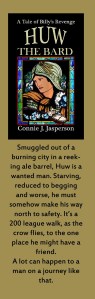
Finally, Julian Lackland, the final installment in the Billy’s Revenge series has been completed. I am just waiting for comments from the final group of beta readers. If all goes well, he will go to print in September. If more revisions are required than I hope, it could be November or December–I refuse to rush him to print.

So that is the update—I’ve been averaging 700 to 1000 new words a day, which isn’t exactly burning up the universe. However, combined with the revisions and editing work for other authors, it does move me forward.

How has your new work been progressing? Feel free to let me know in the comments, but include no links please, as the spam blocker will send those directly to the spam folder.

2 Comments

Filed under writing

@JasperTScott on Burnout and Productivity #amwriting

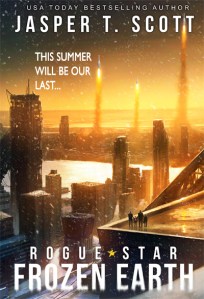
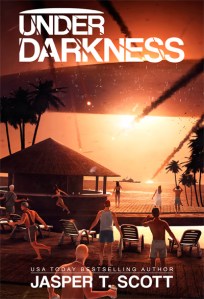
Today’s post features USA Today bestseller, Jasper T. Scott, who has agreed to talk with us about his approach to productivity, and how he deals with something that affects all professional authors: burnout.

First though, a little about Jasper. An indie, Jasper has written nineteen books that have sold over a million. Yes—you read that right. He has sold over a million books.

When you go back and read Jasper’s author blog, you will see that he has written his way through some of the roughest experiences life hands us. So, I asked him two questions, which he was kind enough to answer.

CJJ: Do you feel pressured to constantly produce new work?

JTS: Yes, I do feel pressured, but that’s because I am the sole provider for my family, and I have a responsibility to keep a relatively stable income. The only real way to do that as a writer is to keep churning out new books! But I consider myself fortunate because anyone else in a 9 to 5 will stop making money immediately if they stop working ;). Also, no one can fire me! Job security is unparalleled in this career.

CJJ: How do you deal with those dry spells we all have and still keep to your publishing schedule?

JTS: Dry spells… I had my first in 5 years at the start of this year. I was blocked and courting burnout after a hectic release schedule last year. So, I gave myself a break and took the pressure off. I still finished a book, but it was about 2 months later than it could have been.

More minor dry spells in the day to day are easily handled by pushing through, writing even when you think you can’t, even when you think you’re writing something that’s subpar. Usually it’s not as subpar as you think.

Another strategy is to take a break, do something unrelated and inspiration will strike when you are least expecting. Driving around doing errands, doing the dishes, going for a walk… those are all helpful activities when you’re stuck!

Jasper made two important points, reminders that really resonated with me. First, he reminded us that anyone who stops working stops earning money.

THAT is an important concept that productive authors seem inherently able to understand.

Second, he reminds us that dry spells are temporary, and everyone has them. He diverts himself and writes his way through them, and that is how I handle them too.

For me, blogging is something I can do, no matter how crazy my life gets, or how low on creative energy I am. For me, blogging is writing but it is having a conversation too. Because it’s like having a conversation, I can write blog posts when I can’t think of words to write on my works in progress.

I promise you—having two kids with epilepsy means I’ve blogged my way through everything from a kid having brain surgery to the same kid having a stint in the regional burn unit. That is what life handed us, and while we wish it were different, we’re used to it and know it could be so much worse.

It’s important to know that every author has a life outside their writing, and we each experience life’s triumphs and tragedies, some worse than others. The loss of a loved one, a terrible illness, a car accident, these kinds of days are life altering.

But just as in every other kind of job, we deal with days ruined by minor aggravations—telemarketers calling, the internet going down, bad weather, bad traffic—life hands us aggravating days. Maybe we aren’t as productive that day as we could have been, but working productively, whether working as a programmer, building houses, or writing books is a matter of discipline and ignoring the aggravations.

These rough patches affect us differently, but one thing writers have in common is the way we handle things. We lose ourselves in our work. We take that pain and confusion and subconsciously, we turn our emotions into a story that others will want to read.

Writers write.

In an earlier post, I mentioned that Amazon has placed an added burden on all authors, not just indies. This is called Rapid Release Publishing, and what it means is, if you publish once  a month, Amazon’s algorithms will give you a better slot in the rankings. It can be a short story, a novella, or a novel—just something new every 30 days.

That is a tough schedule, even if you are mostly publishing short stories and novellas. Discipline and a strong work ethic are required, and while I personally do have those qualities, I’m not a good keyboard jockey, so I write slowly.

Even though I’m slow, I’m able to publish a new book every year because I always have three manuscripts in various stages of the production process. Most days, I will write between 1,000 and 2,000 new words every morning on the unfinished first-draft manuscript. At noon I take a break, and in the afternoon, I spend several hours revising one of the other manuscripts.

At this point, I have a manuscript that is completed and in the final stages. Julian Lackland, the final installment in the Billy’s Revenge series will be published by September. I also have an Alternate Arthurian novel that is nearly finished, and a contemporary fiction novel that is in the beginning stage. When I wake up and have nothing to say on those works in progress, I will work on one of several short stories, or plot a new short story to work on during NaNoWriMo if nothing else.

Indy author Cat Rambo has over 200 published works.

Cat is both prolific and disciplined. At a conference two years ago, she told me she sits down and writes 1000 new words every day before she does anything else. She was nominated for a Nebula award for her short story, Five Ways to fall in Love on Planet Porcelain.

To be nominated for awards like Cat Rambo, you must write every day.

To be as prolific as Lee French, you must write every day.

To sell over a million books like Jasper T. Scott, you must write every day.

The most productive authors I know write something new every day even when they suffer from a temporary lack of inspiration. If they can do this, we can too.


Jasper Scott is the USA Today best-selling author of 18 sci-fi novels with 16300+ total reviews on Amazon and an average of 4.4 stars out of 5.0.

With over a million books sold, Jasper’s work has been translated into various languages and published around the world. Join the author’s mailing list to get two FREE books:

 https://files.jaspertscott.com/mailinglist.html

Jasper writes fast-paced books with unexpected twists and flawed characters. His latest project is a series of unrelated standalone sci-fi novels; no sequels and no cliffhangers, with one novel currently published, and five more planned to the end of 2019. Previous works include four other best-selling series, among others, his breakout success—Dark Space, a 9-book-long, USA Today Best-selling epic with more than 12,000 reviews on Amazon.

Jasper was born and raised in Canada by South African parents, with a British cultural heritage on his mother’s side and German on his father’s, to which he has now added Latin culture with his wonderful wife. He now lives in an exotic locale with his wife, their two kids, and two chihuahuas.

For more information check out the author’s website at: https://www.jaspertscott.com/ 

9 Comments

Filed under writing

The habits of productive writers #amwriting

I am friends with many productive writers, people who publish two or more good, high-quality books a year. One thing they have in common is discipline. They have a grip on time management. They understand that if you set aside a block time that is just for writing, it becomes less of a chore. It becomes part of your daily routine, habitual. Some writers have office hours, others must carve time outside work and family obligations.

Productivity is relative. I feel productive if I publish one book a year and sell a short story or two.

I write every day, and I also work on other aspects of book production every day. But I am not prolific. I always have several manuscripts in various stages of completion, which is why I can get one out the door every year, even though it takes me four years to write them.

Barbara Cartland dictated over 700 novels, and her secretary typed them up. In 1976  she published 23 novels. I think that’s crazy dedication to the craft, and I don’t have that many ideas, lol! Productivity depends on what you decide you want to achieve for your writing career.

Author Simon Wood writes to an outline. He publishes regularly, but not as often as some authors do. He gets at least one book published every year, sometimes two. Simon keeps to his production schedule, which is why he publishes regularly. He was kind enough to talk about how he plots his novels for my post in September of last year, Author Simon Wood on Plotting. In that post, he offers some awesome advice on how he uses pre-planning to keep the momentum going.

For Indies, writing involves more than just laying words on paper. It requires a work ethic and the commitment to doing the dirty work as well as the fun stuff.

  • We must find time to write,
  • Find editors to work with,
  • Carve out time to make revisions,
  • We format our books,
  • Arrange for cover art,
  • Arrange for tablespace at conventions and book signings, and market promotions and appearances.
  • Purchase swag (I use bookmarks as my business card) to give away, banners to dress up the booth, and make sure we have a reasonable stock of hardcopies of our books to sell at personal appearances. (Yes – we do have to pay for this.)

Each of these tasks requires discipline, sitting down and doing it.

It’s a time consuming business, and while you are doing these things, you aren’t writing. SO that must be fit into the process too.

Goals are good.

Many authors set deadlines, arbitrary dates for each aspect of the book to be finished. Be warned—to achieve your deadlines, you may have to establish firm boundaries to limit incursions into your writing time by friends and family members.

Consider establishing a dedicated working space—someplace where you aren’t bothered by the TV or ambient neighborhood sounds. Also, it should be strictly off limits to others, if possible. This will protect your files.

  • Finish the work, whether it’s a novel or short story.
  • You aren’t productive if you never finish the work.

One final thing I’ve noticed—productive authors are also dedicated readers. As a young adult I read every sci-fi or fantasy novel that came out in paperback, budgeting for books the way others of my acquaintance budgeted for beer. I’ve never stopped reading and researching great literature.

Reading for entertainment is my happy place. In the old days I jonesed for new books by the great ones, Anne McCaffrey, Jack Chalker, Marion Zimmer Bradley, Tad Williams, Robert Jordan, and Roger Zelazny, reading and rereading them until they were shreds held together with duct tape. Now I have the Kindle eReader and I still read two or three books a week.

Self-discipline and love of reading are common traits that the most productive authors of my acquaintance have in common. Realistic expectations and the ability to set goals and achieve them are also common traits.

We will be talking with two highly productive authors about how they work over the next few posts.

7 Comments

Filed under writing

World building – immediate community #amwriting

We have discussed the larger aspects of world-building – power structures such as religion and politics. We’ve talked about food, and about how word choices convey imagery which contributes to the reader’s visualization of the written world. Now we’re going to examine the immediate world, the community your character lives in.

If I were writing a story starring me as the main character, I would open it with a couple of 50-something empty nesters moving to a small quarry town, twenty miles south of the state capitol.

But what sort of town is this?

Tenino is a bedroom community; the commute isn’t too bad and homes here are affordable, whereas homes in Olympia tend to be quite expensive. This town has a long history of boom and bust; quarrymen, loggers, and farmers settled here.

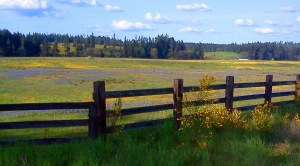
Timber is no longer big here. Nowadays our town is famous for Wolf Haven International, sandstone art, crafted whiskey, and wine. We still have a few large cattle ranches out on the Violet Prairie, but 5-to-7-acre executive “horse properties,” llama farms, alpaca ranches, goat yoga, and soap-making classes have found fertile ground here. In the early part of the 20th century bootlegging was an industry here (my maternal grandfather) so having the distilleries is the legal continuation of an old tradition.

It’s an isolated town, filled with quirky, wonderful people, and situated in a valley with heavily forested hills on the outskirts. If a fictional story were set in this town, it would feature the same political schisms that divide the rest of our country. There are other tensions. Some families have been here for generations, and  a few don’t appreciate the influx of low-paid state workers buying cookie-cutter tract homes here.

Other than the few local businesses, most people commute to work in Olympia or one of the other surrounding communities.

My street is a stretch of rough blacktop with no sidewalks. It runs east and west, with a fabulous view of Mount Rainier rising at the east end. It is lined with homes on both sides, but it’s divided. A nicely landscaped mobile home park is on the north side of the street, across from my front door. On the south side of the street is the long row of forty stick-built homes, built in 2005 just before the housing bubble crashed. On my side of the street, the row of homes are nearly identical, as there are only two types of floor plans, one for three bedrooms (mine) or the four-bedroom version.

This makes for a seriously boring-looking neighborhood, so for a few years we had the only house with an orange door.

The day we moved into our brand-new home in 2005, two inches of rain fell, making moving a misery. Our new house rose out of a sea of mud and rocks. With a lot of effort, we made a pleasant yard. When the housing bubble burst, many of the people on my side of the street lost their jobs, and their homes went into foreclosure.

For several years, wherever there were two or more empty houses, it looked somewhat like a ghost town. Also, there was a long period when our house was valued at far less than we paid for it, which meant that had we wanted to, we couldn’t sell it.

My town has one grocery store, which carries the basics, but their produce is awful, and you really have to check the pull dates on things like eggs, hummus, and cottage cheese. It’s more affordable to shop in Olympia.

We have a historic district, where the buildings are all built from sandstone quarried at the old quarries. Many of the old buildings are home to antique stores. The masonic lodge is made of Tenino sandstone.

The city park is a pleasant place to go on a hot Saturday afternoon, with a large public swimming pool in one of the flooded quarries.

It’s a nice place, a quiet town with several large Baptist churches, a Catholic church, and a large number of small off-shoot fundamentalist churches. Alas, those of us of the Lutheran persuasion must go to Olympia to find God.

In the morning, birdsong fills the air. Robins, wrens, finches, hummingbirds, crows, Stellar’s jays, mourning doves – the neighborhood is alive with birds.

Odors are important. The meat department at the grocery store smokes their own ribs and other cuts, and the wind carries the scent all over the neighborhood. When they mow the fields at the edge of our town the smell of cut hay fills the air.

During the day when I go outside, I can hear the children playing at the school. In the evening, the neighborhood is filled with the sounds of kids playing in each other’s yards.

Other familiar sounds are the traffic on Highway 507, and the horns sounding from the trains passing at the west end of town. Annoyingly, helicopters from the nearby military base sometimes buzz our town—flying low over our roofs, shaking the houses, rattling dishes in the cupboards.

It’s the perfect setting for a paranormal fantasy or a murder mystery.

Your characters subtly identify with the community they live in. Small town or large city, village or hut in the forest – where they are from shapes how they think, how they see the world. This is true of fantasy and sci-fi stories as well as murder mysteries and thrillers.

Visualize your own community and write a word picture of it. Then visualize the community your characters live in and write a word picture of this imaginary place.

Ambient sounds, odors, places the characters regularly frequent—these form the general environment, the setting of your story. This is the immediate world, the world of community.


Credits and Attributions

Photos and images in this post are from the authors personal collection © Connie Jasperson 2019

5 Comments

Filed under writing

World Building – creating political structures #amwriting

Every society, fantasy, sci-fi, or real-world, must have an overarching political structure—a government of some sort. Humans are tribal – like all primates we are comfortable when we have a hierarchy of decision-makers to guide the tribe.

A simple society might consist of an elder and several trusted advisors.

A more complex society might have a monarch leading a society composed of multiple layers:

Monarch/Royalty

→Nobility

→→Lesser Nobility

→→→Upper Middle Class

→→→→Middle Class

→→→→→Lower Middle Class

→→→→→→Lower Class

→→→→→→→Poorest Class

Every human society, large or small, is divided into layers and classes, whether we want to admit it or not. Change the word “Monarch” to “Mayor,” Governor,” “President,” “Pope,” or “Prime Minister,” and the society they lead falls into the same layers.

This is because someone is always more important, richer, has more power, makes the rules.

The politics of a society are an invisible construct that affects every aspect of a story, even if it isn’t directly addressed. Our characters have a place within that structure. When you know what that place is, you write their story accordingly. If you know your characters’ social caste, you know if they are rich or poor; hungry or well-fed. This will shape them throughout the story:

  • Hunger drives conflict
  • Well-fed could mean a complacent society

Every society has laws, inviolable rules. Breaking these laws has consequences.

Some small tribal societies have unwritten codes of ethics, but they are as firmly enforced as any written laws. When a character goes against the commonly accepted rules, they must face the consequences.

That flouting of civil laws is an opportunity for conflict.

Sometimes I run short of words on a new project but I can’t set it aside. At that point I go deep into the backstory and examine the hidden underpinnings of their society. Little, if any, of this backstory will enter into the finished product. But I have found that when my characters are sure of what their station in society is, I can write their journey with confidence and authority.

I need to know who they are, how they see themselves and their future, and how they fit organically into their world.

One aspect that is a hidden support structure of every fantasy society is the government.  Even if it doesn’t come into the story, take a few moments to examine the political power structure of your world. It’s a good idea to write down a page or so of information detailing the political and monetary structure of the world your characters inhabit.

As I create the political power-structure, I find that the opportunities for creating tension within the story also grow. I keep a list of those ideas so that when I run short on creativity, I have a bit in the bank, so to speak.

However, in order to convey that information logically and without contradictions, you must have an idea of how things work. Does the government/legal system affect your characters? If not, this exercise is a waste of time, sorry.

  • Who has the power and privilege in that society, and who is the underclass?
  • How is your society divided? Who has the wealth?
  • Who has the power? Men, women—or is it a society based on mutual respect? Is one race more entitled than another?
  • Monarchy, Elected officials, Warlords, Shamans, or what?
  • How do they get that power? Hereditary, elected, military coup?
  • What laws affect your characters or hinder them?
  • How are the governing people perceived? Foolish or wise? Honest or Corrupt?
  • What place does religion have in this society? We examined religion last week in the post Creating Power Structures and Religions.
  • What passes for morality? You only need to worry about the moral dilemmas that come into your story.
  • If a character goes against society’s unwritten or moral laws, what are the consequences?

One critical aspect of society that governments have control of is money. If you have a fantasy society, design a simple monetary system. Keep it simple, so you don’t contradict yourself over the course of the story.

I use the same system in all three of my fantasy worlds. A Gold is comprised of 10 Silvers. A Silver is comprised of 10 Coppers.

In a sci-fi world, you can get away with using a blanket term like credits. These are easy concepts for a reader to imagine without your having to go into detail. Examples might be:

  • Innkeeper: “A mug of ale is three coppers. No coppers, no ale.”
  • Spaceport pawnbroker: “It’s unregistered. A weapon like this is worth five hundred credits, don’t you agree?”

If you’re writing in a speculative fiction world and you absolutely must use created names for money and positions, make those words simple to read and pronounce, and once you have established them, don’t deviate from them.

Good world building takes the familiar and shapes it into unfamiliar ways. It’s only my opinion, but I suggest you keep to familiar terms for leaders. King/queen, president, mayor, admiral, captain—these are terms that convey an image with no effort on your part. Anything the reader doesn’t have to research is good. If you are too enthusiastic in creating an entire language in order to convey a sense of foreignness, you have gone to a great deal of trouble only to lose the majority of readers.

When you are building a world that only exists on paper, you must be sparing with the space you devote to conveying the social, religious, and political climate of your story.  This is atmosphere. This is knowledge the characters have, but the reader does not.

There is no need to have an introductory chapter describing the laws and moral codes of the religious order of St Anthony, or the political climate of East Berlin in 1962. The way you convey this is to show how these larger societal influences affect your character and his/her ability to resolve their situation.

You show this in small ways, with casual mentions in conversation ONLY when it becomes pertinent, and not through info dumps.

Familiar words convey familiar images. Use them wisely in showing an entire fantasy world. Consider the politics in a medieval setting:

Setting:

  1. the village of Imaginary Junction, in the Barony of Blackthorn.

General atmosphere:

  1. the weather is unseasonably cold

Introduce the protagonist and show him in his situation:

  1. In an alley, a bard, Sebastian, is  hiding.

Introduce the antagonist(s):

  1. Soldiers of Baron Blackthorn, whom Sebastian has inadvisably humiliated in a song are searching for him.

Introduce the way politics and power affect the protagonist:

  1. the soldiers surround and capture Sebastian
  2. he is hauled before the angry baron and
  3. thrown into prisonsentenced to hang at dawn.

The bolded words above offer a reader powerful images of both the physical and political world Sebastian lives in. These words are familiar to every reader of fantasy. They convey emotions and a feudal atmosphere without you having to resort to an info dump of the history of Imaginary Junction.

Show the coldness of the alley, show the irate nobleman’s anger, show the wretchedness of the protagonist in prison, show the arrogance of the soldiers. Use familiar terms to convey entire packets of images wherever possible, and they will be unobtrusive, allowing the reader to live the story, to fear the coming dawn as much as Sebastian does.


Image Credits and Attributions:

Henry VIII by Hans Holbein 1540 / Wikimedia Commons contributors, “File:Enrique VIII de Inglaterra, por Hans Holbein el Joven.jpg,” Wikimedia Commons, the free media repository, https://commons.wikimedia.org/w/index.php?title=File:Enrique_VIII_de_Inglaterra,_por_Hans_Holbein_el_Joven.jpg&oldid=344005488 (accessed June 2, 2019

Wikimedia Commons contributors, “File:Augustus Edwin Mulready Fatigued Minstrels 1883.jpg,” Wikimedia Commons, the free media repository, https://commons.wikimedia.org/w/index.php?title=File:Augustus_Edwin_Mulready_Fatigued_Minstrels_1883.jpg&oldid=335802594 (accessed June 2, 2019).

Wikimedia Commons contributors, “File:Ernst Meyer – A Roman Alley – KMS2097 – Statens Museum for Kunst.jpg,” Wikimedia Commons, the free media repository, https://commons.wikimedia.org/w/index.php?title=File:Ernst_Meyer_-_A_Roman_Alley_-_KMS2097_-_Statens_Museum_for_Kunst.jpg&oldid=330745323 (accessed June 2, 2019).

7 Comments

Filed under writing

World Building: Creating Power Structures and Religions #amwriting

ALL societies have an overarching power structure of some sort because someone has to be the leader. Similarly, all smaller segments within societies, from families to business, to churches, to governments have organized leadership structures, even if they aren’t formally described as such.

Power structure: the hierarchy that encompasses the most powerful people in an organization. An overall system of influence between individuals within any selected group of people.

Leader

→Assistant Leader(s)

→ →Assistant(s) to the Assistant Leader(s)

→ → → Middle-Level Clawing-their-way-to-Assistant Assistants

→ → → →Lower-Level-Hoping-to Survive-to-Retirement Assistants

→ → → → →Peons-Who-Do-the-Actual-Work-But-Don’t-Get-to-be-Called-Assistants

Religion rarely is a component of sci-fi but often figures prominently in fantasy work.

This is because a common way to train magic-gifted people is by apprenticeships, religious orders, or a school of some sort.

If you are taking the religious route, how important is the actual worship of the deity(s) in your tale?

Is there one god/goddess or many?

Benevolent or malevolent?

In many historical societies in this world, the Church/Temple was the governing power. The head of the religion was the ruler, and the higher one rose within the religious organization, the more power one had.

SO, in your world, how important is religion to your characters’ journey?

To convey that information logically and without contradictions, you must have an idea of how things work in the cities and towns, the segments of society outside the church.  Merchants, priests, teachers, healers, thieves—each occupation has a place in the hierarchy.

  • Is religion central to the governance of the society, or is it a peripheral, perhaps nonexistent thing?
  • What segment of society outside the church has the power and privilege, and who is the underclass?
  • How does the underclass live, and what is the role of religion in keeping them in their place?
  • How is your society divided? Who has the wealth?
  • Who has the power? Men, women—or is it a society based on mutual respect? Is one race more entitled than another?
  • What passes for morality? Is sex before marriage taboo? What constitutes murder, and how is it viewed? You only need to worry about the moral dilemmas that come into your story.
  • If a character goes against society’s unwritten or moral laws, what are the consequences?

If the worship of a deity is a key part of your tale, you must design the entire theology. You must know the rituals and know how their deity holds their hearts. You must know how that deity considers his/her worshipers.

  1. What sort of political power does the priestly class wield?
  2. What is the internal hierarchy of the priesthood?
  3. Who has the power?
  4. Is this religion a benevolent entity or all-powerful, demanding, harsh?
  5. How does the priesthood interact with the community?
  6. Who can join the priesthood?
  7. Do people want to join the priesthood, or do they fear it? How is the priesthood trained?

In the Tower of Bones series, the overarching government in Neveyah is the Temple of Aeos, which is really a large commune run by mages. Mage-gifted children must be trained, and a school exists for that purpose. Aeos is the Goddess of Hearth and Home, so her style is a gentler, community based kind of religion.

Tauron is the Bull God, who rules the world of Serende, but who wants to be the only god in the universe. Hoping to force Aeos to become his wife, Tauron has attacked and imprisoned Aeos’s husband, the Mountain God Ariend, and has taken half of Ariend’s world. In Tauron’s world, only the strongest are worthy of survival.

Aeos managed to find her husband’s prison and reclaimed half his world, but she can’t undo another god’s work. Thus, her husband’s prison remains a prize in the ongoing war of the gods.

These actions of the deities brought civilization to its knees on the three worlds. At the time of the Tower of Bones series, the worlds have mostly recovered.

When I created the religious power-structure in the Tower of Bones series, the opportunities for creating tension within the story grew exponentially.

As I said, the underlying premise of the story is that the gods are at war. But the imprisonment of Ariend caused the Universe to bar the deities from acting directly against each other ever again.

Thus, their battles are fought through their people, their clergy who are gifted with the ability to use magic.

When one god makes a move that affects the balance of the worlds, the others make a change to counter it and their people are the playing pieces in their great game.

That meant I had two radically different religions to create, that of Aeos, and that of Tauron. Highly structured religion is central to my characters’ worlds of Neveyah and Serende. Their places in their respective societies revolves around their positions within those hierarchies.

But what if your work has no religious element?

On Monday, we will explore creating political power structures.


Credits and Attributions:

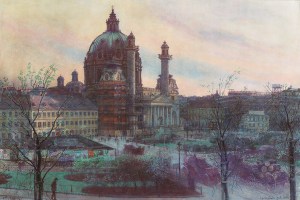
Wikimedia Commons contributors, “File:Carl Pippich Karlskirche Wien.jpg,” Wikimedia Commons, the free media repository, https://commons.wikimedia.org/w/index.php?title=File:Carl_Pippich_Karlskirche_Wien.jpg&oldid=234767606 (accessed May 29, 2019).

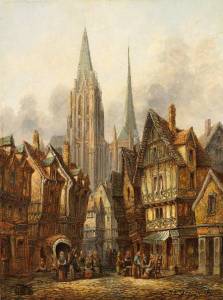
Wikimedia Commons contributors, “File:Dommersen Gothic cathedral in a medieval city.jpg,” Wikimedia Commons, the free media repository, https://commons.wikimedia.org/w/index.php?title=File:Dommersen_Gothic_cathedral_in_a_medieval_city.jpg&oldid=319795786 (accessed May 29, 2019).

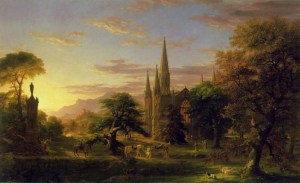
Wikimedia Commons contributors, “File:Cole Thomas The Return 1837.jpg,” Wikimedia Commons, the free media repository, https://commons.wikimedia.org/w/index.php?title=File:Cole_Thomas_The_Return_1837.jpg&oldid=301862305 (accessed May 29, 2019).

6 Comments

Filed under writing

World building Part 2 – the Commonalities of Need #amwriting

Need shapes the environment and forms an obvious but unobtrusive layer of the world our characters inhabit.

What our characters do for a living, the tools they use, what they must acquire – these things form a layer that grows out of need. This layer shows the reader the level of technology, the society they inhabit, and their standing within that culture. This layer is easy to construct in many ways but can be a stumbling block to the logic of your plot.

First, no matter what genre you are writing in, you must establish the level of technology and stick to it. Do the research and then create your technology.

The Romans had running water, central heating, and toilets in their homes. So did the Minoans. However, all their great architectural creations required human hands to do the physical work. They walked, rode horses, donkeys, or oxen, and were limited to wagons drawn by those same domestic beasts.

In the ordinary environment, cups will be cups, bowls will be bowls. The materials they are made of might be different, but those items will always be the same. Furniture will be similar—people need somewhere to sit or sleep. They need a place to cook and somewhere to store preserved food.

Clothing styles are up to you, but I suggest you keep it simple and don’t wax poetic about it.

Some aspects of a story require planning if you are to keep to the logic of your established world setting.

Characters remain the same, no matter what genre you are writing. Beneath the obvious tropes of a particular genre is a human being. Consider the soldier:

I write fantasy, so the following is an excerpt from a short story written this last year, The Way of the Seventh Door.

Worlds are like clothes. I could drop Jared into any world, and he would still be who he is—a young, hapless schmuck with potential. Genre defines the visuals, but the characters are paper dolls we dress to fit the society we have placed them in. The clothes and world of Soldier Barbie fits Corporate Barbie… and Malibu Barbie… and Star Wars Barbie.

We will take one protagonist and place them in one of three kinds of settings: fantasy, sci fi, or contemporary. As we go, write your own version of this scene.

  • A soldier, your choice of gender, gears up for an impending battle. It will take place on foreign soil and could involve personal, face-to-face combat.
  1. First, we must consider what garments they might wear.
  2. Next, we armor them.
  3. Then we give them weaponry.
  4. Finally, we equip them with some sort of rations and water, as sustenance becomes an issue if a battle stretches for several days.
  5. We do it in one paragraph.

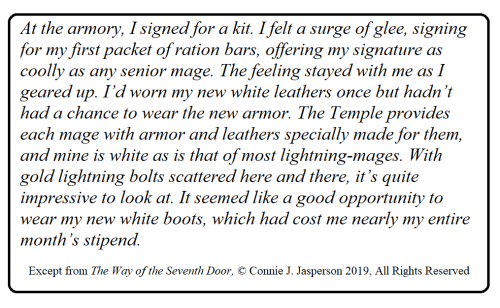
Now let’s put Jared, my luckless protagonist from the previous example into this scenario. Fortunately for the safety of everyone in Neveyah, he isn’t preparing for war, but he does have a mission, and it requires dressing appropriately, and ensuring he has what he might need to complete it:

In any setting, there are certain commonalities with only minor literary differences for soldiers: they all need garments, weapons, armor, and sustenance, and you can use those things to

  1. offer more clues about your character’s personality and
  2. set your protagonist up for a meeting with destiny by inserting clues: white armor, new boots – what could go wrong?

Whether the weapon is a rifle, a sword, or a phaser is dependent on the level of technology you have established.

Logic determines how each need is met. In the case of weapons, within each category there are many varieties of each. Which kind of hand-held weapon your protagonist will use is dependent on their skill level and physical strength as well as what is stocked in the armory.

When it comes to weaponry, if you are writing about them, you need to research them to know what is logically possible. Within each of the three world settings, strength and skill are determining factors—a cutlass is an efficient blade and is much lighter than a claymore. A one-handed blade allows the wielder to carry a shield. A shotgun is much lighter than a machine-gun but is less effective, so be true to the logic and research what might be most useful to your characters and don’t introduce an element that doesn’t fit.

Sci-fi writers—I suggest that for advanced weaponry, you should do the research into theoretical applications of lasers, sonic, and other theoretically possible weapons. Sci fi readers know their science, so if you don’t consider the realities of physics, your work won’t appeal to the people who read in that genre.

For soldiers of any technology level, from Roman to medieval, to contemporary, to futuristic—armor will always consist of the same elements: breast and back plate, shin-guards, vambraces, a helmet of some sort, and maybe a shield. These elements won’t vary much, although the materials they’re made of will differ widely from technology to technology. For the sake of expediency and logic, garments must be close-fitting as they will go under the armor.

Expediency affects logic which affects need. The same is true for any occupation–bookkeeper, lawyer, home-maker–the setting changes from genre to genre, but the fundamental needs for each occupation remain the same.

In every aspect of a world, expediency decides what must be mentioned and how important it is. At times, you must go back to an earlier place and make changes that allow for a certain necessary turn of events.

For instance, in a battle situation, food must be extremely compact, lightweight, and must provide nutrients the soldier needs. Nutrition bars, jerky—battle rations and how the soldier carries them must be considered. How do you fit that into the world building? Casually, with one sentence, a few words.

What basic things do you need in your real-world? You need food, water, clothing, and shelter, and a means of providing those things. Place the character in a room and call it a kitchen, and the reader will immediately imagine a kitchen. Mention the coffeemaker, and the reader’s mind will furnish the cups.

Need manifests in other, more subtle ways.

Do you require a way to communicate with others quickly? Messengers, letters, telephones, social media, or telepathy? Choose a method for long distance communication that fits your technology and stick to it.

If you are writing a sci fi tale, what sort of personal power does that technology confer on the characters? What powers it? What are the limits of that technology, and how do those limits hamper the protagonist? What do they need to acquire to overcome those limitations?

If magic is a part of your world, you must design the way it is used, what powers it, and set rigid limits. Limits create opportunities for both failure and creative thinking.

In all levels of technology, some of what the characters need should be denied to them.

Obstruction offers the opportunity for heroism.

No matter the genre, need and human failure makes the story more real.

Next week, we will explore the commonalities of science and magic and how they are applied to world building.


Credits and Attributions:

Excepts from The Way of the Seventh Door, © Connie J. Jasperson 2019, All Rights Reserved.

Gladys Parker [Public domain] “Mopsy Modes” paper doll published in TV Teens, Vol. 2, No. 9 Wikimedia Commons contributors, “File:Mopsy Modes – TV Teens, Vol. 2, No. 9.jpg,” Wikimedia Commons, the free media repository, https://commons.wikimedia.org/w/index.php?title=File:Mopsy_Modes_-_TV_Teens,_Vol._2,_No._9.jpg&oldid=344503399 (accessed May 21, 2019).

Metropolitan Museum of Art [CC0] Japanese Paper Doll, ca. 1897-1898 Wikimedia Commons contributors, “File:MET DP147723.jpg,” Wikimedia Commons, the free media repository, https://commons.wikimedia.org/w/index.php?title=File:MET_DP147723.jpg&oldid=305535412 (accessed May 21, 2019).

9 Comments

Filed under writing