Monthly Archives: June 2021

Author Interview: Ellen King Rice on characters #amwriting

51v0Z1IolxSOne of the best ways to learn about the craft of writing is to talk with other authors. We all have different ways of creating our work, so hearing how another author works always gives me new ideas.

Ellen King Rice writes mysteries set in the South Puget Sound area of the Pacific Northwest. She is a wildlife biologist and is happiest when out in the woods on a fungi hunt with her camera.

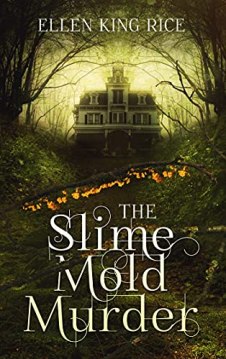
Ellen has a new book out, The Slime Mold Murder, and as one the advance readers, I found it witty and the series of events are well-plotted. The characters are engaging, and their stories emerge as the plot unfolds. She has agreed to talk about her characters in this book, and how she came to know them.


CJJ: Tell us about Dylan. When did he first come into your mind as a protagonist?

EKR: Dylan was in my first book, The EvoAngel, as a precocious eleven-year-old with impulse-control challenges. He channels my own life as someone who speaks boldly and often irritates others.

CJJ: This book has number of credible characters. Which character was most difficult to write, and why?

5EKR06042021LIRFEKR: Mitchell and Mark are a gay couple, but I didn’t want to write them as caricatures. I spent a great deal of time trying out descriptions to come up with two men who are individuals in their own right but collectively a pair who would rattle the conservative county commissioner.

CJJ: Which character do you identify with on a personal level. Why?

EKR: Mari reminds me of myself at eighteen. I was keen to explore romance but terribly inept.

CJJ: Do you create an outline for structuring a character arc, or do you wing it?

EKR: Authors are often divided into the pantser or plotter groups. Some of us are plontsers – a lovely hybrid who think they have a plan but are really making it up as they go along. No kidding. I do start with a plan and then I get distracted with new ideas.

CoralRootEKR06042021LIRFjpgCJJ: Do you think your characters or events drive the plot? How are your characters shaped by the events they live through?

EKR: For me it is the events that drive the plot and the characters respond, hopefully growing as they take action.

CJJ: Are there any final words you would like to say regarding the characters and events of The Slime Mold Murder?

EKR:  The inclusion of the sclerotia in the story is meant to be inspirational. Slime molds can enter a dry phase where they do not grow. This phase can last for years, but when conditions improve, there can be a vibrant response. I so hope that we humans can move past months of a global pandemic to build a better world where more of us thrive.


Ellen, thank you for taking the time to talk about how you approach the craft of writing and creating your wonderful characters.

If you are curious about this book, The Slime Mold Murder is available at Amazon as a paperback, and will be released for the Kindle on June 24th, 2021: The Slime Mold Murder.


OLYMPUS DIGITAL CAMERA

About Ellen King Rice:

I am a wildlife biologist who suffered a spinal cord injury many years ago. Although my days of field work are over, biology continues to intrigue me.

I am fascinated by sub-cellular level responses to ecosystem changes. I also like the predictability of animal behavior, once it is understood.

A fast-paced story filled with twists is a fun way to stimulate laughs, gasps and understanding. I work to heighten ecological awareness. I want the details and your new insights to remain in your thoughts forever.

You can find me and my books at www.ellenkingrice.com

Please join me on Instagram at:

https://www.instagram.com/mushroom_thrillers.

And on Facebook:

https://www.facebook.com/mushroomthriller/


Credits and Attributions:

All photos copyright 2021 Ellen King Rice. All images used in this post are the work and intellectual property of Ellen King Rice. She has kindly given me permission to use them in this post.

Comments Off on Author Interview: Ellen King Rice on characters #amwriting

Filed under writing

#FineArtFriday: A London Garden by Edith Corbet 1911

Edith_Corbet_A_London_gardenTitle: A London Garden

Artist: Edith Corbet (1846-1920)

Description: oil on canvas; 62 x 45 cm

Date: 1911

Signed and dated ‘Edith Corbet/1911’ (lower left).

What I love about this painting:

I love the serenity of older, slightly overgrown gardens. This garden is peaceful, with irises blooming, and beyond the gate, a path winds toward a pool ringed by hyacinths. Further beyond, steps lead to a home. Whoever lives here is lucky to have such a garden out their front door.

Birds find mature shrubbery attractive and make their homes there. Several birds are enjoying the birdbath, secure and safe from predators.

About the artist, via Wikipedia:

Edith Corbet née Edenborough (28 December 1846 – 1920) was a Victorian landscape painter, having close associations with the Macchiaioli group (also known as the Tuscans or Etruscans), who, in a break with tradition, painted outdoors in order to capture natural light effects and favoured a panoramic format for their paintings

She married the Victorian painter and illustrator Arthur Murch and moved to Rome, where she painted with Giovanni Costa, leader of the Macchiaioli group. In 1876 they both stayed in Venice. Olivia Rossetti Agresti wrote: Costa had a very high opinion of this artist’s gifts and used to remember with pleasure how on that occasion they used to go out together to paint from nature at Fusino (Agresti, 1904).

She frequently exhibited from 1880 to 1890 at the Grosvenor Gallery and the New Gallery. In 1891, after the death of her first husband, she married Matthew Ridley Corbet, one of the Macchiaioli group’s leading members, after which she exhibited mainly at the Royal Academy, visiting Italy and living in London for the remainder of her life. Corbet exhibited her work at the Palace of Fine Arts at the 1893 World’s Columbian Exposition in Chicago, Illinois. She died in Hampstead, north London, in 1920. [1]


Credits and Attributions:

Wikimedia Commons contributors, “File:Edith Corbet A London garden.jpg,” Wikimedia Commons, the free media repository, https://commons.wikimedia.org/w/index.php?title=File:Edith_Corbet_A_London_garden.jpg&oldid=555317886 (accessed June 3, 2021).

[1] Wikipedia contributors, “Edith Corbet,” Wikipedia, The Free Encyclopedia, https://en.wikipedia.org/w/index.php?title=Edith_Corbet&oldid=936468065 (accessed June 3, 2021).

Comments Off on #FineArtFriday: A London Garden by Edith Corbet 1911

Filed under #FineArtFriday

Fundamentals of Writing: Conveying Depth and Revealing Character through Conversations #amwriting

As I mentioned in my previous post, depth is a vast word, a sea of information created of layers. It is complex, intense, and profound. We use the arc of the opening scene to lure the reader, to hint at what lies hidden below. The scene opens, the first character(s) step onto the stage, the action rises and ebbs, and the reader wants to know more.

WritingCraftSeries_depth-through-conversationSome scenes have no dialogue, are comprised of the actions that propel the plot forward. But often, conversations are the core of the passage, propelling the story onward to the launching point for the next act.

Dialogue is an opportunity to reveal who your characters are and hint at what lies beneath the surface they present to the world. Conversations must have a purpose and follow an arc: they open, disseminate information, and move toward a conclusion of some sort.

Dialogue that doesn’t reveal character and advance the story in some vital way is a waste of the reader’s time.

  • We use dialogue to show the personalities of our characters.
  • We use it to reveal secrets and create empathy.
  • We use conversation to convey knowledge when the characters and the reader need it and reveal motivations.

First, we must identify what should be conveyed in our conversation. Who needs to know what? Why must they know it? How many words do you intend to devote to it? Be wary—conversations can get out of hand and become an info dump.

Info dumps don’t add depth. They add fluff.

Depth consists of many layers. It is a combination of story/plot information and character revelations. It is the underlying theme and the atmosphere of the world the characters inhabit. It is the mood created by the words you habitually use.

If you look in a thesaurus, you can see that most words in the English language have more than one shade of meaning depending on the context in which we use them. Your word choices are essential in showing a world of many shades of color.

Each word adds to or detracts from the feeling of atmosphere. Those choices are critical in conveying personality and creating a sense of empathy for our characters.

Conversations are opportunities to show depth as well as convey information. Your habits, how you form your phrases, and your choice of words establishes the tone.

approval-f-scott-fitzgerald-quote-LIRF05312021This pertains to the thoughts of your characters too.

We have mental conversations with ourselves in real life. Sometimes we even speak our thoughts aloud.

Researchers say that most of the time, our inner monologue concerns how we see ourselves. These thoughts are often in whole sentences and phrased negatively. And most telling of all, we aren’t usually aware of our inner thoughts when we have them.

However, an interior monologue is useful for revealing motives. What they think but don’t speak aloud tells the reader a lot about the character.

It shows who they think they are as well as how they perceive others.

Conflict keeps the protagonists from achieving their goals. In real life, our internal conflicts create greater roadblocks to success than any antagonist might present.

These tiny inner voices of self-destruction are crucial to creating relatable characters. They reveal the inner layers that make the character who they really are beneath the surface they show the world.

Sometimes, revealing a critical bit of backstory can only be accomplished through the protagonist’s thought processes or those of a companion.

A loud contingent at any gathering of authors will say thoughts should not be italicized. While I disagree with that stance, I do see their point.

As a reader, I dislike it when long strings of private thoughts are italicized. This is an accepted practice in the genres of Sci-fi, Fantasy, and YA novels, so readers of those genres expect to see thoughts presented in italics. However, we need to be aware of how overwhelming it is for a reader to be faced with a wall of words written in a leaning font.

If the author makes it clear that the character is having the conversation with themselves, italics aren’t needed.

It was, he thought, one of those rare days, where the sun shone benevolently upon mankind, a day when the constant wind was gentle, benign. Aloud he said, “Enjoy the sun while you can, my friend. The rain is eternal here.”

Dialogue, both spoken and interior, sets the scene and unveils the theme. Your word choices reveal characters and their secrets, their personalities.

Your word choices reveal you, the author. Through those words, we hear your voice.

So, let’s consider that voice. Voice is a combination of word choices and grammar. It is distinct to each author.

From the reader’s perspective, grammar/punctuation is to writing what gravity is to the universe. It holds everything together.

We obey traffic signals when driving to avoid getting into wrecks. In the same way, our written work must abide by specific fundamental rules, or it will be unreadable—a wreck.

This is especially important when it comes to dialogue. What is spoken must be easily distinguished from the ordinary narrative.

Overall, most readers don’t see minor grammar glitches in the narrative, which is good because we all make them. Even editors write crap and need editors. But readers do notice unprofessional writing, especially when it comes to how dialogue is punctuated.

Readers notice amateurish writing.

If you are new to writing and are unsure of how to punctuate conversations so that readers can understand your work, see my post from July 29, 2020: Four Rules for Writing Conversations. The post details four simple, easy-to-remember rules of punctuation, rules for keeping the conversations flowing and understandable.

Epic Fails meme2I have said this before, but it bears mentioning again: Never resort to writing foreign languages using Google Translate (or any other translation app). Also, please don’t go nuts writing out foreign accents. It’s frustrating for readers to try to untangle garbled dialogue. A word or two, used consistently, is all that is needed to convey foreignness.

Information dispensed gradually reveals the plot, unveils hidden layers. What your characters think and say are the reader’s window into them and their world.

Conversations pull the curtain back, revealing the characters’ innermost secrets and their story.

With every sentence, a prism of information illuminates who the characters believe they are and is passed from the author to the reader. It is a light, filtered through the characters, that colors the narrative with the shades and moods of the words you habitually choose.

5 Comments

Filed under writing