Category Archives: blogging

Purple Prose

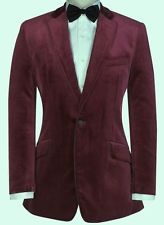
purple velvet blazerMmmm…everyone loves the lush feel of velvet, the way the texture imparts a depth to any color.

Black velvet feels cool, sophisticated and sexy, a little black dress and a vampire kind of cool.

Purple velvet, can feel royal, rich, but is frequently a bit too over-the-top for me.

Red velvet signifies something daring, just a bit risqué. This opulent fabric evokes emotion in us when we see and touch it.

In my mind, words are like velvet.  They evoke feelings and memories, and can alter our mood just by the way they are used. When we craft our narrative we aim to please our readers, to make them want to read it again.  To convey the atmosphere of our setting,  we use descriptors. We also use descriptors to show our characters, to indicate they are long-haired, dark-eyed, or bearded.

Good prose contains a certain amount of  descriptors, and like Goldilocks, we want to make it just right–not too little and not too much.

Too little, and the narrative is flat, uninvolving. To much and the reader finds themselves gagging.  This heavy, cloying style of writing is called “Purple Prose.”

Like purple velvet, a little goes a LONG way. “But wait, ” you’re saying, “aren’t you being a little hypocritical? What about your love of all things Dickens?  His work is rife with overblown, hyperdramatic descriptions.”  Cool your jets, kids–that was the style when he was alive and rocking out the paranormal fiction. People wanted to spend an entire day savoring the well-crafted poem. That style of writing has a place, but not in the current culture of commercially viable novels.

If you want to sell books, you must walk the fine line between overblown prose and its antitheses, eviscerated, flat narrative

The Elements of Style calls “Purple Prose” “hard to digest, generally unwholesome, and sometimes nauseating.”  To be fair, purple prose is subjective and each reader has a different level of tolerance for it, but it is something we definitely don’t want.

Plain: He set the mug down. (my choice)
Somewhere in the middle: He eased the tankard onto the table.
Bleah: Without haste, the tall, blond barbarian set the immense, pewter, ale-filled cup with a wooden handle onto the stained surface of the rough, wooden table.

Spare me the ‘creamy-blue eyes as deep a shade of amethyst as the lush, purple, velvet drapes.”

There is a tipping point where good, descriptive prose becomes distracting and cloying to the modern reader. I opt for a lean style in the majority of my own work, because, while I adore Charles Dickens,most readers just want a good novel that will provide a small diversion from the everyday grind.

Purple Prose done wrong bullies the reader into seeing only what the author tells them to see, and leaves no room for imagination. Telling the reader what to think forces her to walk away rather than suffer a moment longer. That book goes into the recycling bin, or gets deleted from my Kindle.

What I, as the author, think is good and beautiful may be ugly to you, as the reader.

Author Stephen Swartz recently posted a great blogpost on this very subject–available at Deconstruction of the Sekuatean Empire.  He loves the nuances of the english language as much as I do, but understands how to create lean narrative that allows a reader to see the scene, but leaves room for the imagination to fill in the gaps.

Right off the top of my head, I can think of many authors who manage to walk the line between purple and eviscerated prose, among them Ross M. Kitson, Shaun Allan, Neil Gaiman, and yes, you too, Stephen Swartz.
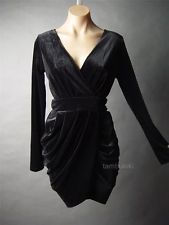
black velvet dressThese authors give you the framework around which your imagination builds the image, and they place that framework in well-crafted sentences that tease you, inviting you to read more. Like that  little black dress made of velvet, their work is lush, sleek, and sophisticated.

My advice is to read, read, read. If you like a certain style, write in such a way to evoke the feeling the author of that work raised in you. But never , never force the minute details of your vision on your readers. When you bludgeon your reader with the minutiae of your vision, you lose the beauty of story, and you lose your reader.

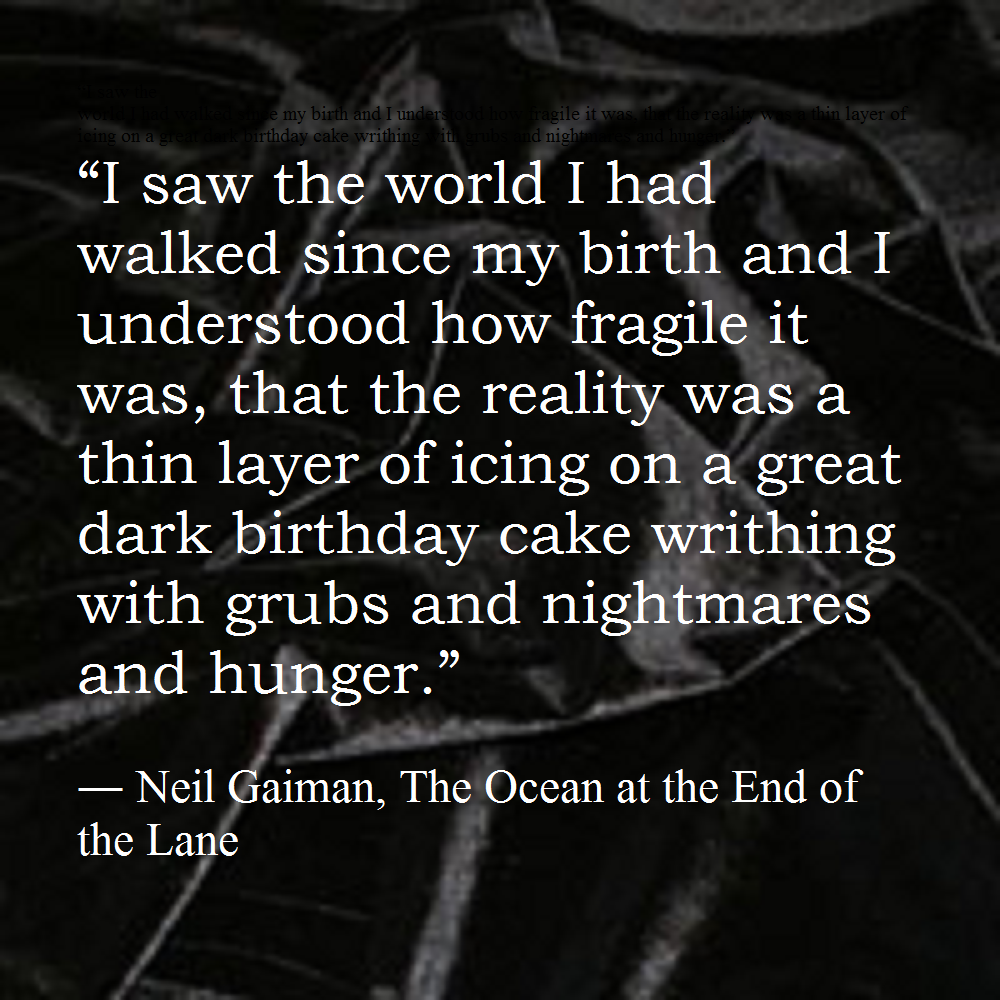
I think Neil Gaiman nails that fine distinction in this quote from “The Ocean at the End of the Lane:”
Neil Gaiman Quote

Creepy and to the point–and allows us to envision the shock the main character feels at the realization he knows nothing of his past, without beating us over the head with it.

My goal is to write with an economy of words, yet give enough description that my readers can build the environment in their own minds.
10 Comments

Filed under blogging, Books, Fantasy, Humor, Literature, Publishing, Uncategorized, vampires, writer, writing

What does “Submission-Ready” mean?

Gamalost-NorwegianOldCheeseI’m not talking bondage here, friends, so get your mind out of the erotica.

I’m talking about a manuscript with the potential to be made into something publishable.

I see a lot of manuscripts. Some are quite promising, some not so much. Literally anyone can write and publish a book nowadays, but not everyone can write a book others will want to read–THAT is a craft, and there are many who don’t feel the need to learn it before they submit their work to an editor or a publisher.  The quality of their work stinks like gamalost cheese, but they have the gall to wonder why the Big 6 haven’t snapped it up.

gibberish-american businesses onlineIt is important to learn the craft of writing, if you want readers to enjoy your work. Spend the time to learn the mechanics of the language you are writing in. However, if you are simply writing a pretentious pseudo-literary art piece, fine–go on and have at it–no one will ever read it, and you can feel superior for having written it. If you dare to compare yourself to James Joyce I will run you out of the writing group quicker than you can say Ulysses.

Before you submit your manuscript, take the time to make it submission-ready:

1. Properly format it: Set the indents, use a serif font of .11 or .12, double-space it with no extra space between the paragraphs, and do not justify it.

2. Hire an editor to help you straighten out the flaws YOU can’t see.

3. Go to the publisher’s website and find out what their submission guidelines are and FOLLOW THEM. (Yes, they apply to EVERYONE, no matter how famous, even  you.) If you skip this step, you will wait a year to hear that your ms has been rejected, and they won’t tell you why.  It’s not worth their time to teach you how to be a writer–you have to learn that on your own.

For a more in-depth description of this whole process, see my series “WORD-A Shifty Beast.”

learn something newTry to learn something new every day in your writing life, and with each success you have, try to keep some humility.  You will grow as an author, your work will remain fresh, and I will continue to beg to read it.

If you read the kind of work you want to write, you will gain inspiration from the masters in your genre. When I am not writing or editing, I am reading. And when I have the chance to read for pleasure, I read epic fantasy, paranormal fantasy and science fiction. When I find a book that rings my bells, I talk about it, and blog about it. Conversely, if I hated it, I never mention it again.

Yep–I’m that kind of a reader.


3 Comments

Filed under Blogger, blogging, Books, Fantasy, Humor, Literature, Publishing, Self Publishing, Vegan, WordPress, writer, writing

It may be rattlesnake, but it tastes like chicken

MSClipArt MP900390083.JPG RF PDWriting the first draft of your novel is a lot of fun, but there are times when getting your phrasing right is confusing. Wrangling words is not for the faint of heart! Many frequently used words are what is called “homonyms” — soundalike words.

Yeah–you know that casserole contains rattlesnake surprise, but it tastes like chicken, so the kids haven’t a clue.

You as the author, do not always see the rattlesnakes among the chickens in your work.

You MUST NOT expect an editor to straighten out a mess that you can take of with a little attention on your part, so it is important to do your  research, and learn your craft. Submitting a mess to an editor will result in rejection, as it is an expensive waste of time to try to teach a would-be author how to write a book.

At times, only a homonym, a word that sounds very much like another, can be used in a sentence. That similarity makes it hard to know which word is the correct word in a given circumstance, and when you are spewing the first draft of a manuscript, autocorrect may “help you” by inserting the wrong instance of those words. If their meaning is similar but not exactly the same, negotiating the chicken-yard of your manuscript in the second draft becomes quite tricky.

For instance, take this sentence from my current work in progress, where Friedr is explaining the events that led to Christoph’s sacrifice, speaking to Dane: “With Zan’s assistance, Edwin modified the parasite that will ensure no Bear Dogs can ever survive in Mal Evol ever again…”

Now I wasn’t sure that ensure was the correct word to express what I wanted to convey, because there are three words that could work and they sound alike, and have similar but different meanings.  So I did my research:

Assure: promise, as in I assure you the house is clean.

Ensure: confirm, as in Ensure that you have set the burglar alarm before going on a long trip.

Insure: protect with an insurance policy, as in Insure your home for your peace of mind.

Hmmm.  2 of these words will convey an intent that would work, but I think I will stay with my original idea– Ensure as in Confirm.


Some other oft confused soundalikes are ( these are borrowed directly from the Purdue Online Writing Lab)

  • advise = verb that means to recommend, suggest, or counsel:

advise you to be cautious.

  • advice = noun that means an opinion or recommendation about what could or should be done:

I’d like to ask for your advice on this matter.

  • advise = verb that means to recommend, suggest, or counsel:

advise you to be cautious.

  • advice = noun that means an opinion or recommendation about what could or should be done:

I’d like to ask for your advice on this matter.

Conscious, Conscience

  • conscious= adjective meaning awake, perceiving:

Despite a head injury, the patient remained conscious.

  • conscience = noun meaning the sense of obligation to be good:

Chris wouldn’t cheat because his conscience wouldn’t let him.

Idea, Ideal

  • idea = noun meaning a thought, belief, or conception held in the mind, or a general notion or conception formed by generalization:

Jennifer had a brilliant idea—she’d go to the Writing Lab for help with her papers!

  • ideal = noun meaning something or someone who embodies perfection, or an ultimate object or endeavor:

Mickey was the ideal for tutors everywhere.

  • ideal = adjective meaning embodying an ultimate standard of excellence or perfection, or the best:

Jennifer was an ideal student.

Its, It’s

  • its = possessive adjective (possessive form of the
    pronoun it):

The crab had an unusual growth on its shell.

  • it’s = contraction for it is or it has (in a verb phrase):

It’s still raining; it’s been raining for three days.

(Pronouns have apostrophes only when two words are being shortened into one.)

Lead, Led

  • lead = noun referring to a dense metallic element:

The X-ray technician wore a vest lined with lead.

  • led = past-tense and past-participle form of the verb to lead, meaning to guide or direct:

The evidence led the jury to reach a unanimous decision.

Than, Then

Than used in comparison statements: He is richer than I.
used in statements of preference: I would rather dance than eat.
used to suggest quantities beyond a specified amount: Read more than the first paragraph.
Then a time other than now: He was younger then. She will start her new job then.
next in time, space, or order: First we must study; then we can play.
suggesting a logical conclusion: If you’ve studied hard, then the exam should be no problem.

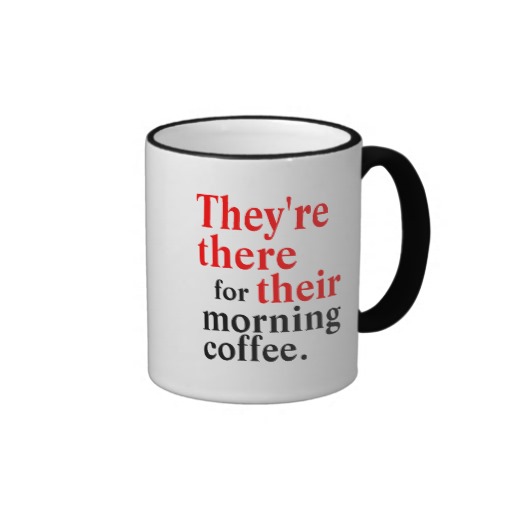
they're their there cupTheir, There, They’re

  • Their = possessive pronoun:

They got their books.

My house is over there.

(This is a place word, and so it contains the word here.)

They’re making dinner.

(Pronouns have apostrophes only when two words are being shortened into one.)

To, Too, Two

  • To = preposition, or first part of the infinitive form of a verb:

They went to the lake to swim.

  • Too = very, also:

I was too tired to continue. I was hungry, too.

  • Two = the number 2:

Two students scored below passing on the exam.

Twotwelve, and between are all words related to the number 2, and all contain the letters tw.

Too can mean also or can be an intensifier, and you might say that it contains an extra o(“one too many”)

We’re, Where, Were

  • We’re = contraction for we are:

We’re glad to help.

(Pronouns have apostrophes only when two words are being shortened into one.)

Where are you going?

(This is a place word, and so it contains the word here.)

  • Were = a past tense form of the verb be:

They were walking side by side.

Your, You’re

  • Your = possessive pronoun:

Your shoes are untied.

You’re walking around with your shoes untied.

(REMEMBER: Pronouns have apostrophes only when two words are being shortened into one.)

Special thanks to the Purdue Online Writing Lab for posting these amazing hints, and SO much more information crucial to the craft of writing. If you go out to their website you will find it chock full of really good lessons for you to use to improve your skill at the craft of writing.

to, too, twoIt seems like a no brainer when you are reading it, but when you’re in the throes of a writing binge these little no-no’s will pop up and confuse you the second draft. The problem is, you will see it as you intend it to be, not as it is written, so these are words you must pay attention to. Sometimes, doing a search will locate these little inconveniences.

Some are obviously wrong and stick out like sore thumbs, like improperly used they’re, their, and there but some like accept and except are so frequently confused and misused in our modern dialect that it is best to simply look it up to make sure you are using the right word for that context. If you search for these now, you will save your editor having to do this for you, and your edit will be much more productive.

Searching for these bloopers is what I like to think of as sorting the rattlesnakes out of the chicken yard, and is part of making your manuscript submission-ready.


2 Comments

Filed under blogging, Books, Fantasy, Humor, Literature, Publishing, Self Publishing, WordPress, writer, writing

Nurturing the Muse

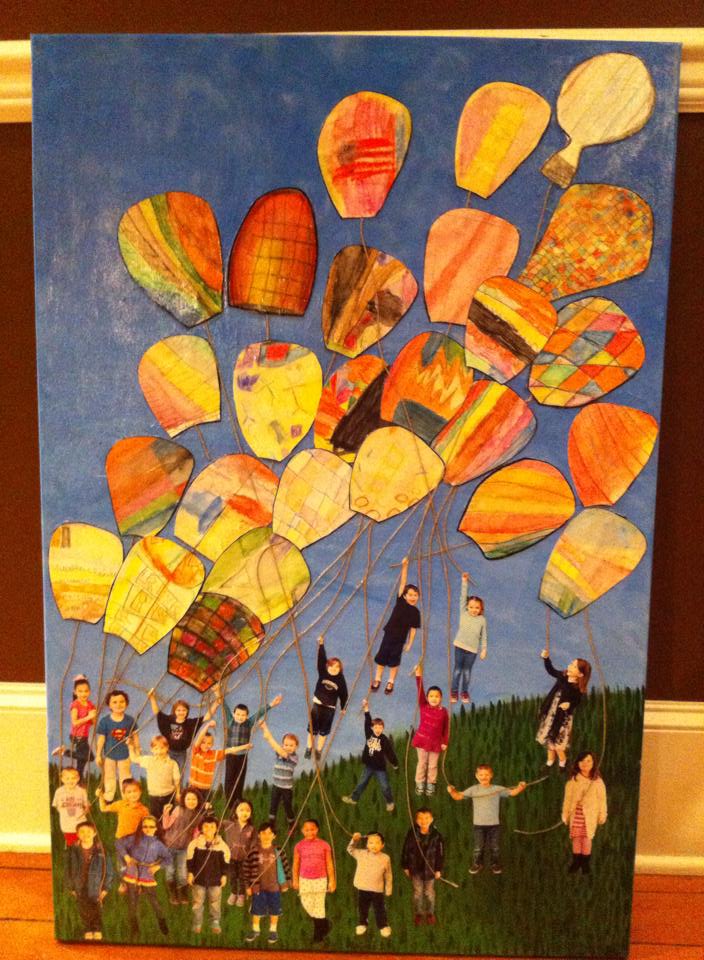
photo ©Leah Reindl 2014 used by permission

photo ©Leah Reindl 2014 used by permission

I come from a family whose creative muse is frequently expressed in music or in art. Musicians and artists dot the landscape of the old family tree. So far as I know, other than my daughter Leah, I am the only one who writes novels, but it may be that I am the only one who ever had the time to spend on such an endeavor.

When I watch children at play, I see the creativity that all musicians and artists know, that wonderful sense of “Ah ha! This is fun!” that comes with making something that exists only to bring pleasure to those who hear or see it. I see this sense of “I can do it!” in all the children, but by the time they are teenagers, much of that joy in creativity has been trained out of them. I wonder why and how it happens.

When I was young and working at dead-end jobs, I would come home and while my children did their homework or played, I would write, draw, or play the guitar. It was selfish, yes–in that it gave me pleasure. But it was not selfish, as it didn’t take me out of their world, and was something we could share. It taught them that they could take the time to be creative.

If there is any advice I would give young parents, it is to be creative in the presence of your children. You go to work every day, and by that you are teaching them that one must earn a living, yes, but the reward of earning that living is a life of love and creativity.

Some people will say bitterly that their job has burned all their energy and creativity from them. I say this is not necessarily so–you must take the time and energy you expend on hating your circumstances, and convert it into something creative. It’s amazing how many people I know who tell me they aren’t creative, but they doodle the most amazing  little pictures on the handouts during those requisite boring meetings-to-nowhere that we all endure in Corporate America.

That is creativity trying to get out.

The reason children are so creative is that they don’t do it for other people, they are doing it solely for the fun of it. Get out the crayons and a blank sheet of paper for a child who hasn’t been to school yet, and watch what happens. Add old magazines, round-end scissors, and mix up some flour & water paste, and the possibilities are endless. But once that child gets into a social environment where he begins to feel less talented than the child next to him, he shuts that creativity down.

science of relationships dot comInside every adult at the water cooler is kindergartner with a picture to draw, a song to sing, or a story to tell. Somewhere along the line, they began to fear they weren’t good enough and put it aside. Soon they have an “I can’t do it” attitude, because they fear failure and embarrassment. They have forgotten the joy of making a good, creative mess. They don’t remember how they learned as much from the failures as they did from the successes.

Don’t let the fact you have no money stand in your way. It takes very little money to draw a picture, or to write a story. You don’t need an expensive computer program–all you need is a pencil and paper.  And music?  You don’t need to play an instrument to sing. If you always wanted music lessons but couldn’t afford them, a great way to learn is to join a community choir. It’s free, and takes a little time away from your TV, but it is a way to jumpstart your joy of making music.

Our children are all artistic and creative in the most amazing (to me) ways, and I think that is because I never stopped making art or music.  They all sing or play instruments, or create art. Our older son, Billy, and youngest daughter, Meg, are working musicians. Billy is a drummer in a band with my ex-husband and my brother. Meg is a young mother and a working musician with several mp3s to her credit. If you are curious, here is her Facebook page where you can hear her work: Meg is Singing.

Meg and Billy are both incredible musicians, playing the drums, the guitar, keyboards, and in Meg’s case, the flute. Music is their passion. Son Dan is a guitar virtuoso, but he plays for his own pleasure. He is an incredible sports photographer, and his work can be seen here: SpotKazu

Christy and Leah express their art in other ways. Christy is an engineer who deeply loves her craft, and brings her sense of beauty into her home, designing an environment that is both serene and filled with color. Leah is an artist, one of her pictures can be seen at the top of this page, and a hair-dresser. She loves her craft as much as Christy does hers. They go to work, and art is expressed in their daily lives, enriching the lives of their children.

This is why I am and have always been a happy person despite the bumps and hardships of life–I did what I had to do to put food on the table, but I played and sang and wrote poems and goofy stories in my free time. My children were my audience and my co-creators. My husband’s children were raised in the same sort of environment (he is a trumpet player and she is an actress) and all 5 of our kids are sheer genius to me. They far outstrip me with their talents and abilities, and with their drive and ambition.

Tower of Bones Trailer, Music by MEG

2 Comments

Filed under blogging, Books, Fantasy, Humor, Literature, Music, Publishing, Self Publishing, Spirituality, writer, writing

Little yurt in the desert

cavemanred_labelsforprint_cmyk4My friend Evonne is turning 60 this year. She’s not a girl to do things in a low-key sort of way, so she is partying all year. In an effort to keep the party rolling she booked a little mini vacation for 4 of us ladies at Cave B, on the east side of the Columbia River, near the town of Quincy, Washington. My dear friend Irene, my new friend Vaun, and I were more than happy to make the trip with her.

It was a beautiful, peaceful spa, and we had a great time. The scenery was amazing to us who live in the forest–to be in a desert environment is really unique.  Once you go over the Cascade Mountain Range, you are in another world.

Jones Wine logo-hmNow just so you know, Washington State is not your regular state in the US–we’re divided by far more than just a mountain range. I live in Western Washington, and Quincy is in Eastern Washington. While there are no armed guards at the border, hippy-liberal-Obama-loving westerners are encouraged to leave their money and go back home–quickly. Anyone from the West Side is automatically labeled as being ‘from Seattle’ which could mean you are a liberal, tree-hugging, atheist, gay communist. Since there are more people living on the West side than on the East, and the West is generally more Democrat than Republican, during election years there are frequent discussions about the Republican East side seceding from the West, but so far nothing official has occurred and like an unhappily married couple, we muddle along.

White Heron winery labelEven so, they welcomed us and treated us well. Since two of us are vegan and one is a militant, evangelical vegan, their suspicions as to our identities as West-siders were confirmed, but they were raised to be polite, and Jesus loves everyone, no matter how misguided. (Leave your money here, thank you.)

My friend is a woman who works hard and likes to treat herself to an occasional luxury, such as a spa-vacation. She expects a really good return for her money, and could be considered demanding, if you fail to measure up, but she is lavish with her business and cash if you meet the test.

Thorp Fruit StandWe stopped in Thorp at the historic fruit stand for cherries, and continued on to the Columbia Gorge. Despite a minor hiccup the first night, the chef managed to provide a vegan option both nights, and it was a merry adventure.

Over the course of the stay, we toured the tasting rooms at four vineyards: Cave B of course,which was the best value with 10 samples & a glass for $5.00.) I am a non-drinker, but was along as the designated driver. Evonne was in love with their late-harvest wine.

At Cave B, we stayed in yurts, which was really fun. Our last night there we sat out on the deck in front of our yurt and sipped champagne (not me–I sipped water) in the warmth of the desert evening. The sunsets over the Columbia Gorge are sheer beauty–there are no words to describe them. All in all, four ladies, four wineries and no hubbys to provide restraints–it was a rolling party.

Cave B Inn Yurt Village sideshow1


Comments Off on Little yurt in the desert

Filed under blogging, Books, Fantasy, Literature, Politics, Publishing, Self Publishing, writer, writing

Update from the Realm of Fantasy

cover_art_Billy_39_s_RevengeI live in a fantasy world, hence the name of this blog. What better way to immerse one’s self in fantasy than in a good book? I love to read, and everyone who follows this blog knows I read anywhere from 1 to 6 books a week.

I also love writing, and right now I have 4 projects in the works:

1. The remastering of Tower of Bones  at the very capable hands of Eagle Eye Editors.

2. Finishing the final draft of Julian Lackland so that it can be made submission-ready.

3. Finishing writing the first draft of Valley of Sorrows.

4. Getting Mountains of the Moon through the editing process at Eagle Eye Editors.

These projects take all my time that isn’t occupied with publicizing Huw the Bard (or editing for other authors, or blogging , or beta-reading, or…)

IMG727Just so you know that I really am writing when I am holed up in the Room of Shame (my office.)

Many of the stories in Julian Lackland evolved from The Last Good Knight, and while there is a great deal that is new, it incorporates all but two chapters of the old book. It details the large events from his life, covering 40 years, beginning as he is leaving court as a very young man, hoping to join Billy Ninefingers and the Rowdies.

Young Julian is a strange mix–incredibly naive about how the world really works but at the same time he is quite worldly-wise about the way people are, and incredibly forgiving. He has a wide view of sexual morality, and a sharply defined view of good and evil.

The other writing project that occupies my time is Valley of Sorrows, the third book in the Tower of Bones series.  I have struggled with that tale, trying to keep it confined into one book.  However, there will be a fourth book that comes out of the mountain of words I have written here. Edwin’s quest will be resolved first, and I hope to get it into print in 2015.

It’s a crazy existence, being a writer, but it’s so fulfilling. I wonder how I ever survived before I had such a wonderful way to spend my time.

Comments Off on Update from the Realm of Fantasy

Filed under Blogger, blogging, Fantasy, Humor, knights, Literature, Publishing, Self Publishing, Uncategorized, writer

On Happiness

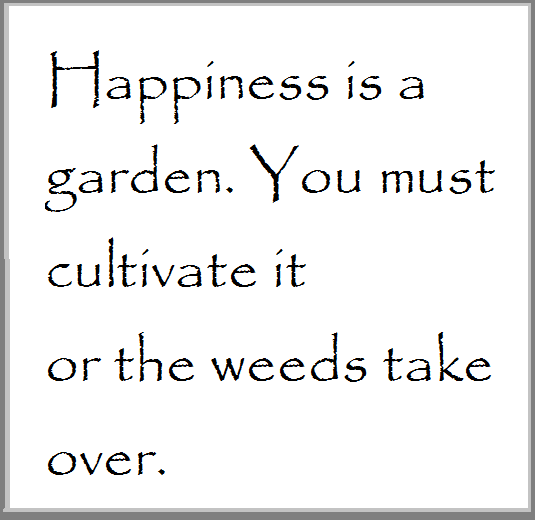
Be KindHappiness is like dark-matter. It is all around us, permeates and surrounds us.  You cannot measure it–it’s something that can’t be seen by human eyes, but once you know it’s out there you can look for and measure its effects.

1. Attitudes are muscles. The way we use them is the way they grow strongest.

In the beginning, you must consciously exercise a positive attitude at all times but as time goes on it become natural, a part of who you are. Project positivity at all times, and see how the environment around you changes.

be happy 22.Miserable people are poisonous. They want to spread the poison as far as they can, because they don’t know anything different. In order to remain happy in an environment where miserable people are lurking you must  accept the fact you cannot change toxic people. You can only step away from them.

Love them, pray for them, but hold them away from from you as you guide them to cultivate a positive outlook. Embrace them and comfort them, but do not allow them to infect you, because misery is a parasite always looking for a new host. You may have to love them from a distance.

be happy 33. Share your bounty with those who have less. Never lend money–if you have it to spare, and and want to give it to a needy loved one, GIVE it. Never LEND anything. Give it and do not expect to receive it back, with or without interest. Instead, give it as a gift and ask that they one day do the same for someone else. Conversely, do not become a private bank for anyone, no matter how beloved they are, as this will make them weak. Give to local charities or give to the world charities. Living a life of generosity is a key to true happiness.

Three small ideas, but three ideas that made all the difference in my life.


2 Comments

Filed under blogging, Fantasy, Humor, Literature, Publishing, Self Publishing, Spirituality, Uncategorized, Vegan, writer, writing

Comatose Ambiguity

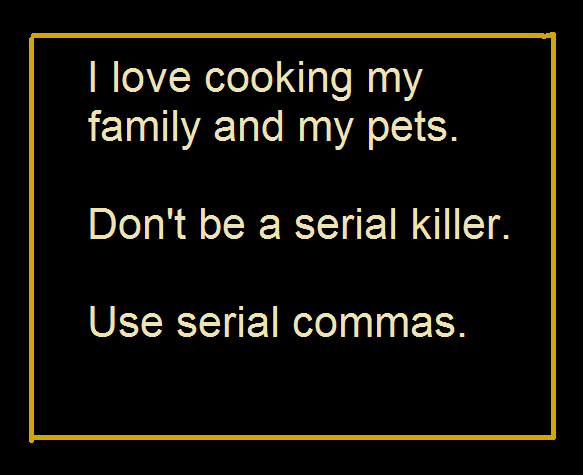
CommasThe Chicago Manual of Style, Strunk and White’s Elements of Style, most authorities on American English and Canadian English, and some authorities on British English (for example, Oxford University Press and Fowler’s Modern English Usage) recommend or require the use of the Oxford comma, also known as a serial comma.

Newspaper style guides (such as those published by The New York Times, The Los Angeles Times, the Associated Press, The Times newspaper in the United Kingdom, and the Canadian Press) recommend against it, possibly for economy of space.


IN GENERAL, OXFORD COMMAS ARE INTENDED TO RESOLVE AMBIGUITY:

ambiguityThe style that consistently uses the Oxford comma may be less likely to result in ambiguity. Consider the oft quoted, but (according to Snopes) mythological, book dedication:

To my parents, Ayn Rand and God.

There is ambiguity about the writer’s parentage, leading the reader to believe that the writer claims Ayn Rand and God are the parents. A comma before and removes the ambiguity:

To my parents, Ayn Rand, and God.

But lists can also be written in other ways that eliminate the ambiguity without introducing the serial comma, such as using other punctuation, or none, to introduce or define them. For example, in the following manner:

 To God, Ayn Rand and my parents.

I have used both styles in my writing, but am leaning more and more toward the Oxford comma.

Another wonderful example, reportedly collected by Nielsen Hayden, was found in a newspaper account of a documentary about country music legend, Merle Haggard:

Among those interviewed were his two ex-wives, Kris Kristofferson and Robert Duvall.

Whoa!  Who knew that Kris Kristofferson and Robert Duvall were Merle Haggard’s ex-wives? An Oxford comma would eliminate this hilarious inaccuracy:

Among those interviewed were his two ex-wives, Kris Kristofferson, and Robert Duvall.

I usually argue for consistent use of the serial comma because:

  1. Use of the Oxford comma is consistent with conventional practice as suggested by the Chicago Manual of Style, which is my primary reference manual.
  2. It matches the spoken cadence of sentences better, so reading passages aloud will flow more easily. This is something to consider if you intend to have your work turned into an audiobook.
  3. Properly used, it resolves ambiguity.
  4. Its use is consistent with other means of separating items in a list, for example, when consistently included before the last item even when and or or is present.
  5. Its omission can suggest a stronger connection between the last two items in a series than actually exists. (My parents, Ayn Rand and God.)

Common arguments against use of the serial comma:

  1. Improperly used, the comma may introduce ambiguity, and many authors are not clear on its proper use.
  2. I agree that it can be redundant in a simple list because the words  and & or  can serve to mark the logical separation between the final two items, when the final two items are a compound single item. (My parents, Marge and Bob.)
  3. When space is at a premium, the comma adds unnecessary bulk to the text—not usually an issue in a novel or short story. This is a journalistic issue common when writing for a newspaper.

It is fashionable for wouldbe writers to argue against using the Oxford comma, claiming it is unnecessary. However, I frequently see manuscripts where good authors fail to delineate a list in such a way that their intention is clear, by using and & or, thus resulting confusion, and a book that is less enjoyable than it should be.

_72982736_vikings courtesy of BBCThe Oxford comma is the basis of many violent quarrels in writing groups–people tend to be rabidly for or against either side. There is common ground here, people so put away the torches!

Good writing incorporates proper use of both styles and, above all else, avoids ambiguity.


1 Comment

Filed under Blogger, blogging, Books, Fantasy, Literature, Publishing, Uncategorized, WordPress, writer, writing

Dial-a-Plot

No matter how careful I am when building my outline, there is always a point where I am writing by the seat of my pants.  As I am normally rather a linear plotter, this can really change the direction a tale goes in.

I hear people whining all the time about this character or that one dying right and left in Game of Thrones. I don’t have HBO, so I’ve never seen it, but I have friends who seem to find this distressing.  I suspect that winging it and writing to a deadline is why people die  so frequently in George R.R. Martin’s world–it’s certainly how they meet a messy end in my world.

But how do we fly freely with our narrative, and yet not destroy the awesome story arc we have created? How do we avoid having to hide the mangled corpses of our beloved characters when they might be useful later?

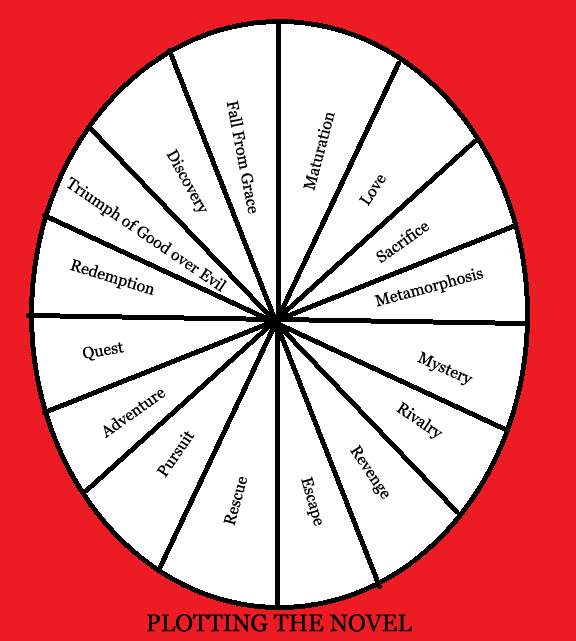
Enter my home-made Dial-a-Plot (sustainably powered by dark matter).  It’s just your standard circular thingy that can be printed out and taped to your desk.  Whenever you have lost your way writing your epic fantasy, rather than resort to a sudden influx of something as far-fetched as cannibal fairies, feel free to refer back to this little gadget to remind you of those elements that really drive a plot.

Dial-a-Plot

When your writing mind has temporarily lost its momentum and you are stretching the boundaries of common sense, it can’t hurt to take some time to consider the central themes that inject true tension into the story, to keep the action moving and the heroes swinging their swords.

Hopefully you won’t have to resort to killing anyone you might need later, and cannibal fairies won’t take your tale in a direction you can’t recover gracefully from…unless…heh heh…Cannibal FAiries

8 Comments

Filed under blogging, Books, Fairies, Fantasy, knights, Literature, Politics, Publishing, Romance, Self Publishing, Uncategorized, WordPress, writer, writing

Dear Sir or Madam

GerundsThere are times when the vagaries of modern English (previous error in capitalization edited by Stephen Swartz) get in the way of reading what could be a great novel.  Some weeks I see six or seven books, both indie and traditionally published, before I find one book worth reviewing for my book review blog, Best in Fantasy.

As authors, we are all overcome with the urge to shout to the world, to immediately show the world our precious child, to rush to publish it now.  It is the rare author who can write prose that is fit to read in his first draft–if that author actually exists, I’ve never read his work.

For the indie, this is fatal.

This is why I highly recommend hiring a reputable editorial service to go over your manuscript, even if you plan to submit it to a publisher. After all, why not submit the best work you can, rather than risk being stuck in the slush pile?

An editor will have several reference manuals at his/her hand, and will help you realize your vision, whittling away at the block of granite you gave birth to and love so much, carving away the unnecessary and extraneous words and cliches  until the book emerges in all its glory.

honorificsWhen I am editing, I refer to The Chicago Manual of Style, the Oxford A-Z of Grammar & Punctuation, and of course, Strunk and White’s Elements of Style. As I have been through the process of being edited and hate that horrible feeling of being called to task on silly things, I often refer to these books when I am second guessing myself in my own work.

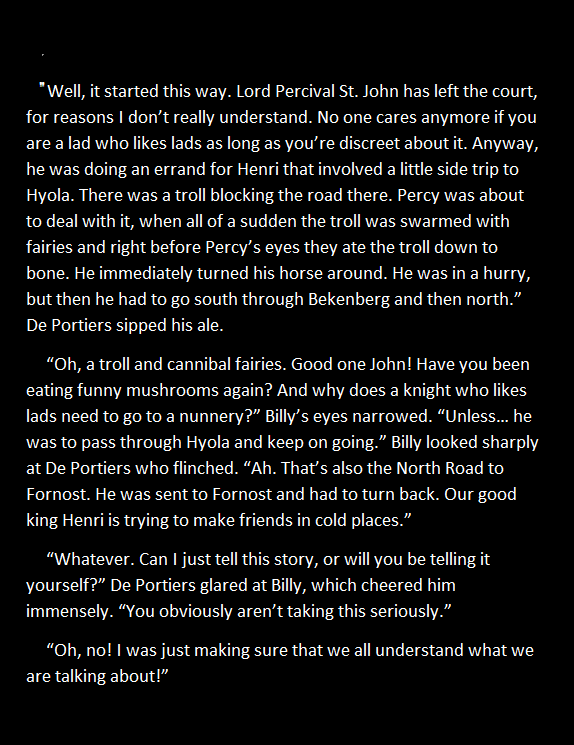
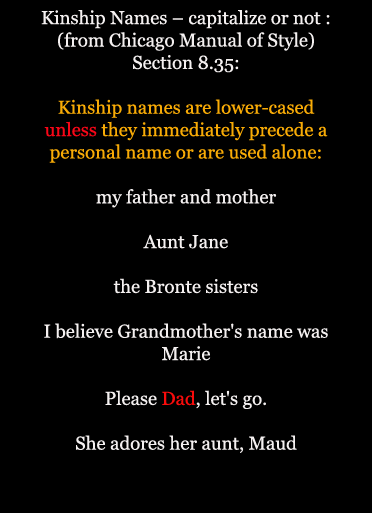
What are the silly things, you ask?  They are things we learned in grammar school but forgot as we grew older and didn’t use them.  Small things like when to capitalize an honorific title, and when not to–something that crops ups regularly in my work as I often write in a medieval setting.

I’ve found it helpful to use the control -f (find) function in WORD to locate every possible mangling I might have made of a particular word. Then I look at and replace each instance on an individual basis. (NEVER click replace all!)

KinshipConsistency is important, so  we must know when to capitalize titles and honorifics–words like king, and majesty, or even lord. Also, when to capitalize familial titles such as father, mother, son and aunt.  If you are determined to do it wrong, at least have your roommate ensure that you have done it that way throughout the entire manuscript, rather than sometimes one way and sometimes another, which is the normal, natural way to write a first and even second draft.

Editors not only correct grammar, they check for consistency. They are worth their weight in gold. They’re more important than the fine artwork for the cover, more critical than the catchy blurb. We live in the wild west of the publishing business, and we find ourselves doing whatever we can on the cheap to get our book published. DON’T skimp in this area, if you value your reputation. Once you have published, it’s a pain in the backside to unpublish, have it edited, reformat it, and go through the launch all over again. Remember, we see what we meant to write, not what is actually there.

But you don’t have to listen to me–experience is the great humiliator.

2 Comments

Filed under blogging, Books, Fantasy, Humor, Literature, Publishing, Self Publishing, Uncategorized, writer, writing