Category Archives: Books

Maya Angelou April 4, 1928 – May 28, 2014

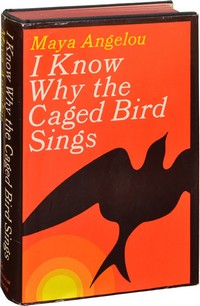
Caged_bird2Today, Maya Angelou died at the age of 86, a true hero to me and to women all over the world. She is best known for her series of seven autobiographies, which tell of her childhood and early adult experiences. The first, I Know Why the Caged Bird Sings (first published in 1969), tells of her life up to the age of seventeen, and brought her international recognition and acclaim.

From Wikipedia: I Know Why the Caged Bird Sings is the 1969 autobiography about the early years of African-American writer and poet Maya Angelou. The first in a seven-volume series, it is a coming-of-age story that illustrates how strength of character and a love of literature can help overcome racism and trauma. The book begins when three-year-old Maya and her older brother are sent to  StampsArkansas, to live with their grandmother and ends when Maya becomes a mother at the age of 16. In the course of Caged Bird, Maya transforms from a victim of racism with an inferiority complex into a self-possessed, dignified young woman capable of responding to prejudice.”

Beyond her struggles with the obvious bigotry and ignorance of the times, she represented to me the most beautiful thing of all–that a girl with very little education, who was blessed with a love of reading, could rise above the place society wanted to put her.

Some things I learned from her: “One isn’t necessarily born with courage, but one is born with potential. Without courage, we cannot practice any other virtue with consistency. We can’t be kind, true, merciful, generous, or honest.”

“You may not control all the events that happen to you, but you can decide not to be reduced by them.”

“We may encounter many defeats but we must not be defeated.”

The world is a better place because of Maya Angelou and what she represented. The literary world is a better place because of what she wrote.  Heaven is a better place, because she is there.

Comments Off on Maya Angelou April 4, 1928 – May 28, 2014

Filed under Adventure, Battles, blogging, Books, Fantasy, Literature, Uncategorized, writer, writing

Vegan Fried Chicken

photo courtesy 'Taste of Home'

photo courtesy ‘Taste of Home’

Tomorrow I am hosting a gathering of local authors at my home, for an all day immersion in the craft.  I am providing a lunch, and it will be a lot of fun. The menu will be:

Fried Chicken (a vegan will have fried it, so there you go–Vegan Fried Chicken)

Potato Salad – vegan

Green Salad – vegan

Avocado Salad – vegan

As I have said before, I was not always a vegan, and am frequently a reluctant one.  But for my health’s sake, I avoid meat, and dairy. I am careful what I consume, because I have an autoimmune response to these foods–inflammation of my joints that cripples me. While I love fried chicken as much as anyone, I really prefer to be mobile and off the cane.

The negative effects of going off my vegan diet are immediate–maximum suffering occurring within 24 hrs. Then it takes two or three days to clear out of my system.

tacos and burritosDue to the  way our food is grown and processed by the large food manufacturers, many people nowadays are suffering food related allergies. All the food I prepare for groups is gluten free, nut free, organic and locally grown (except the avocados-they don’t grow in Tenino.) Even the chicken is organic and raised humanely. I have become re-attuned to the notion of being connected to your food as more than a consumer. If you know where it came from, how it was grown, you have more appreciation for it, and each meal becomes a celebration.

Food is love, but only if love went into the preparation of it.

I am a vegan, but those around me are not, and I do love them, so I frequently prepare ‘blended meals,’ keeping the side dishes vegan, and creating a separate high-quality, organically raised meat dish for those who expect it. If I provide dairy, it is clearly labeled so that it isn’t accidentally mixed with the non-dairy foods.

SO–the vegan will fry the chicken, and carnivorous authors will consume it. The vegan really won’t miss it at all, as I have found new sources of protein that really satisfy me in the crucial areas of taste and texture, and the quality and pronounce-ability of the ingredients is excellent. That is the basis of my ongoing cookbook project that I hope to launch in late 2015.

Comments Off on Vegan Fried Chicken

Filed under Adventure, blogging, Books, Food, Literature, Vegan, writing

Fantasy and the cold hard truth

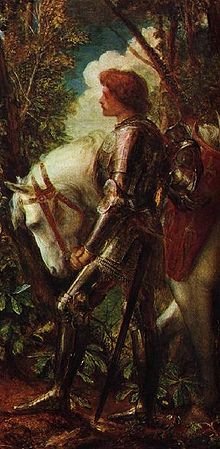
Saint_Alban_(cropped)In a good novel, there is a moment where the interactions between certain characters can become highly charged, fraught with anger and other intense emotions. That is the case with what I am writing now:  three of my characters spent a long time fighting alongside each other, brothers and sisters in arms, completely dependent on each other.

They have a long history. Several terrible incidents occurred during the war they once fought that they don’t understand, and which created a rift between them. Some of their close companions were killed under bad circumstances (are there ever any good ones?) and each of my characters suffers a little survivor’s guilt.

After the war, they went their separate ways and for the last 25 years, have rarely seen each other or spoken. They all bear a burden of responsibility for things they can’t change, and their lives are affected by this, although they don’t know why. For each of them, their anger and remorse are expressed in different ways.

Two of them can’t be in the same room for long without trying to kill each other.

One character in particular suffers disturbing recurring flashbacks, avoidance or numbing of memories of the event, and what we call ‘fight or flight syndrome,’ the uncontrollable urge to either fight or flee. These characters all three demonstrate varying degrees of avoidance,  withdrawal, aggressive defense, or in one case, complete frozen immobility. Certain memories trigger these behaviors, and now all three are being forced to face their demons.

My challenge is to bring these people back together with sensitivity and realism, in order to advance my story, and use only 1/3 of the allotted word-count for this book.

Does this sound like Post Traumatic Stress Disorder (PTSD)? You’re right. For more information on PTSD, see an article  on the website, Military Pathways, and this news article aired by CBS on their show, 60Minutes.

Because it’s a new term, I can’t refer to this ‘injury of the spirit’ as PTSD in my manuscript. But I can give it another name and air both the symptoms and the sometimes life-long problems untreated PTSD causes.

GeorgeSPatton - WikipediaMy father, and my uncles all suffered from this long after World War II ended. In many ways it has shaped our post WWII society. Our fathers were told to just shut up and  get on with their lives–something that is not always an easy thing. Alcoholism and domestic abuse lay just under the surface of many families in our community, hidden but there.

Prior to World War I, the U.S. Army considered the symptoms of battle fatigue to be cowardice or attempts to avoid combat duty. While the causes, symptoms, and effects of the condition were familiar to physicians, it was generally less understood in military circles. General George Patton garnered substantial controversy after he slapped two United States Army soldiers under his command during the Sicily Campaign of World War II.

It was common for soldiers who reported these symptoms to receive harsh treatment. At the time of the slapping incidents, the two soldiers Patton assaulted were suffering from “battle fatigue,” otherwise known as “shell shock” or “battle stress.” Today, this condition is characterized as a form of PTSD, which can result from prolonged severe exposure to death and destruction, among many other traumatic events.

220px-Sir_Galahad_(Watts)

Even though I write fantasy, the reactions of my characters to certain situations has to be realistic, and that is where a good grasp of what really happens to our vets comes in handy. Post Traumatic Stress Disorder (PTSD) is real and affects our returning veterans. More must be done to help ease our military wounded back into society, but generally speaking we pay more lip-service to that problem than we do tax dollars.

We write about incredible personal challenges, because they make great stories. But what about the people who live through those moments? How do they quietly go back to the farm once the war is over, and pretend it never happened? This is what I am writing about now, and it has been an emotional journey for me as as an author and a human being. Everyday, our paths are crossed by men and women living with PTSD caused by a variety of terrible circumstances,  They are just ordinary people trying to keep their lives together, not understanding why they sometimes do the things they do, and wondering why things just keep going to hell all around them.


2 Comments

Filed under Adventure, Battles, Blogger, blogging, Books, Fantasy, knights, Literature, Publishing, Self Publishing, WordPress, writer, writing

The road to perdition

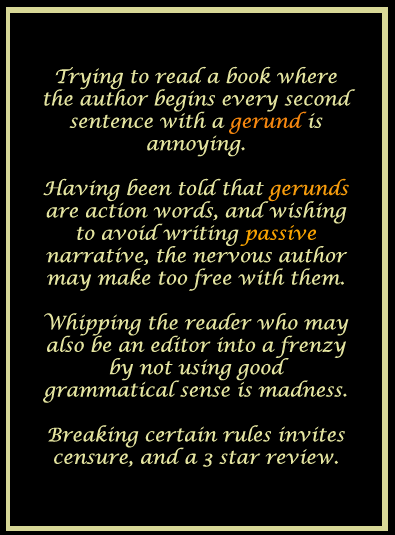
I just attempted to read a book.  I say ‘attempted.’ It may have been based on an intriguing idea, and there might have been wonderful characters, but I wouldn’t know, because after three pages of reading, I had to set that travesty aside. Every sentence began with a GERUND.

Gerunds, © Connie J. Jasperson 2014

Now I know how this happens.  New authors who spend a lot of time in writing forums and writing groups, and who have had their work trashed by the group guru as being passive might see using gerunds as a way to generate action in their narrative.

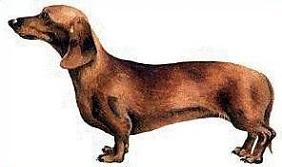
dachshund.04But Mama, what’s a gerund?  Is it like a dachshund?

No dear, gerunds are not like dachshunds, although both are insidious minions of evil that manage to work their way into … where was I? Oh yes, gerunds.

ger·und

ˈjerənd

noun
  1. a form that is derived from a verb but that functions as a noun, in English ending in -ing, e.g., asking in do you mind my asking you

SO a gerund is a verb is a noun that acts like a verb that acts like a noun.

Now that I have cleared that up, what is it really?  A gerund is not like a normal noun because a gerund can take a direct object (just like a verb can).

Basically, they are ING words—DOING words that when you combine them with possessive words such as his, my, him and their, can become nouns.

Writing – He is writing.  (it’s a verb)  I like his writing. (it’s a noun)

Running – The dogs were running. (verb)   The child’s running through the house aggravated me. (noun)

BUT wait—gerunds can also be participles?–oh, those cross-dressing fiends!

Participle phrases always function as adjectives, adding description to the sentence without resorting to that most heinous of writing-group crimes, the dreaded ‘ly’ words ( Satan, get thee away from me):

The child running across the lawn hopes you have brought him a present.

Running across the lawn modifies the noun child.

I could get really technical here and talk infinitives and prepositions–but we just want to get to the writing do-and-don’t part.  Do use them when they are necessary, and  don’t use too many. Remember it’s all about balance. Your narrative is like a ship and words are ballast–get too much on one side and suddenly your ship is at the bottom of Lake Erie.

Gerund phrases and present participle phrases are easy to confuse because they both begin with an ing word. The difference is that a gerund phrase will always function as a noun while a present participle phrase describes another word in the sentence.

SO how are ING words properly used when writing narrative? In my opinion, they should only rarely be used to begin phrases. Confusion abounds when we are too free with them, as they ruin the flow of the narrative for the casual reader.

When you are writing the first draft, none of this matters, because all that matters at that point is getting the story out of your head and onto the paper. HOWEVER, when you are working on the second draft of your manuscript, keep this in mind:

  • Adding excessive words to your narrative will result in a passive narrative. Using gerunds to begin your phrases will not turn a passive voice into an active voice. Instead, you must trim out the unnecessary words, because using active voice for the majority of your sentences makes your meaning clear for readers, and keeps them from becoming too complicated or wordy.

Relying on gerunds to create active phrases and avoid accusations of the dreaded passive writing is taking the road to perdition my friends, because just like any other grammatical crutch,  gerunds are the devil when used improperly.

>>>—<<<

 And on a different note–Last Monday I posted on My Writing Process — and today, Stephen Swartz and Shaun Allan have posted their blogs detailing their own writing processes:

Stephen Swartz can be found at Deconstruction of the Sekuatean Empire

Shaun Allan can be found at Flip and Catch

5 Comments

Filed under Adventure, blogging, Books, Dragons, Fantasy, knights, Literature, Publishing, Self Publishing, WordPress, writer, writing

Lindsay Schopfer, ‘The Beast Hunter’ launch

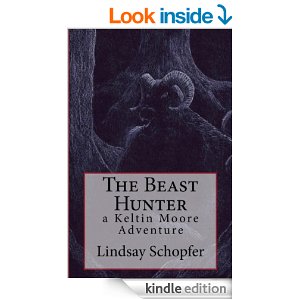
The Beast Hunter, Lindsay SchopferToday, Lindsay Schopfer, well-known Pacific Northwest author of science fiction and fantasy, instructor, and writing coach has consented to answer a few questions for us. His second book, The Beast Hunter is launching today, and I’ve been privileged to read an advance copy of it. If you are looking for an action-adventure in set in another world, brimming with political and personal intrigue, this is the book for you!

CJJ: Lindsay, you were one of my daughter Meg’s closest friends in high school. I’ve followed your career from the early days of your first play, “Techies,” knowing you had a wonderful future in writing ahead of you. Your own real life tale has been a wonderful journey, so tell us a little of early life and how you began writing:

LS: I started writing as a little kid, and I guess some people would have called me a prodigy. I wrote and produced my first full-length stage-play at 13, and went on to do five more, including two runs of “Techies.” After high school, I took a break from writing and spent two years as a service missionary on the Navajo Reservation in New Mexico. That experience, coupled with a health condition which could randomly cause me to be paralyzed for hours at a time, taught me important lessons of hardship, hope, and love.

I went to film school in Canada for a year, thinking that I would continue my passion for acting and directing, but I eventually realized that I just wouldn’t be able to tell the fanciful stories in my head unless I put them into novels. While I still daydream about film adaptations of my stories, I have to say that I’m very happy with my work and life right now.

CJJ: My favorite Lindsay Schopfer quote says it all, “I only write when I’m inspired, and I make sure I’m inspired every morning at 9 a.m.”  How do you channel the randomness of inspiration into an appointment?

LS: Actually, that quote originally comes from Peter De Vries, but it’s something that I try to live by as well. For me, turning on my inspiration means creating a mental place where I feel safe to be creative. I map out the times of day I have available when I seem to be the most productive and set them aside. I listen to music that fits my mood and the kind of writing I’ll be doing. I also try to remember that I can write whatever story I want to, so that I enjoy my work rather than feel confined by it. Ultimately, if I make writing my break from the world, then I don’t feel the need to take a break from my writing.
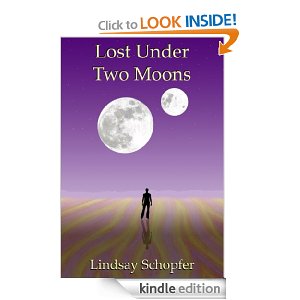
Lost Under Two moons, Lindsay SchopferCJJ: I read Lost Under Two Moons, and really enjoyed it. I find that your work is well-structured, with creative environments, good tension, and deep characters. Do you have a specific ‘Creative Process’ that you follow, such as outlining or do you ‘wing it’?

LS: My ideas for stories usually come in two parts, the beginning and the ending. Once I have those two points established in my mind, writing the novel is just a matter of connecting those two dots. I don’t do a lot of outlining because I find that I start to lose interest in a story if I feel ‘chained’ to a guideline I’ve set for myself. I do enjoy doing world-building early on, though I usually just sketch out enough details to get me started and only add to it if I get stuck. Of course, once the first draft is done, I always go back and fill out the rest of my backstory and world-building notes, but that’s usually a case of noting what I came up with as I was writing and trying to maintain continuity throughout the story.

CJJ: You are highly involved with the Pacific Northwest Writers Association, which I am also a member of. You gave a workshop on May 2nd, regarding turning off the inner critic. What advice would you give new authors, who may be struggling with this common problem?

LS: Like I said earlier, turning off the inner critic and getting inspired is a matter of creating a place where you feel safe to write. For some people, this means writing when you’re not fully awake. I do my best writing at three different times, when I first wake up, at around two in the afternoon (siesta time), and just before bed. Another way to turn off the inner critic that’s especially useful to new authors is to work on multiple projects at a time. Too many first-time authors have this mindset that they have to put all their good ideas into their first novel, or that the first book has to be perfect. By working on more than one project at a time, the writer is constantly reminded that she will have more chances than just this one book, which can be a common anxiety. Having a second project also means that you have a creativity lifeboat, and if you get writer’s block on one project you can “run away from it” and yet still be writing until you’re ready to go back.

CJJ: I absolutely agree, and I usually have three projects going at a time myself. So, I know why I chose the indie route for my work, but I’m curious as to why you’ve chosen this path.

LS: Actually, I never intended to be an indie author. When I finished Lost Under Two Moons, I pitched it to agents for a while before releasing it as an EBook and later in print. My decision to indie-publish that novel came mainly from a desire to start selling books and establishing a market for myself. I wanted credibility as a generative artist, and to be honest I felt like that happened once I finally had a book people could buy and read.

The Beast Hunter was also originally intended for a traditional publishing route. In 2012 I went to PNWA’s summer conference and asked agents what it would take to become a hot commodity to them. The answer I got was that I needed a built-in fan base, so I wrote The Beast Hunter online serial. Once I had the fan base, I went back in 2013 with my completed novel and loyal readers, and pitched it. I was shocked that the same agents who had encouraged me to do the serial now said I had ruined my chances for success with this book because I had already “saturated the market”, though I’d like to think that there are plenty of people who would like The Beast Hunter who haven’t read the serial! I decided to keep the serial going as a way to reward loyal fans, and indie-publishing the novel seemed like the best way to tie-in the serial with my novels.

I haven’t given up on traditional publishing. I have two additional book series that I’m working on that will be intended for a traditional book deal. I’m hoping that the exclusivity of these stories combined with the fan base from my indie publishing will finally allow me to be a hybrid author with both traditionally and independently published books.

CJJ: That is a great plan of action—one that addresses negotiating both sides of the publishing dilemma.  What advice would you offer an author trying to decide whether to go indie or take the traditional path?

LS: Don’t give up on traditional publishing. While the industry is still trying to figure out how to handle the electronic revolution, it is filled with very intelligent professionals that really know the business of selling books. On the other hand, I don’t think writers should give the industry any more power than it already has. An author desperate for representation and publication is an easily exploitable resource. I would advise authors to try for traditional publishing first, but don’t be overly eager. Remember that the greatest power you have is to say no, no to an agent that isn’t good for you, no to a publisher that won’t push your book, no to a book-deal that demands too many rights. Keep that in mind, and if you feel like your project isn’t right for traditional, go indie.

CJJ: Your new book, The Beast Hunter is launching today. This is a book with an interesting history! Tell us a little about it and how it came to be.

LS: The Beast Hunter actually started as a 1,000 word flash fiction story that I wrote more as an exercise for myself than anything else. I wanted to see if I could write an action sequence, something I hadn’t tried doing in my fantasy writing since becoming serious about pursuing a career as a novelist. At the time, I was playing a steampunk CRPG called Arcanum Of Steamworks & Magic Obscura, so I decided to try writing about a hunter using 19th century technology to bring down a monster.

I liked the result, and decided to expand on the character of Keltin Moore by continuing his adventures in a free, online serial.  A little more than a year later I’d finished the first season and The Beast Hunter had gained an international following. It’s kind of funny, because for a long time this story was my side-project, something that I wrote on to relax and just enjoy writing. To see it in print now is kind of like inviting all the world to play make-believe with me, and I’m excited to continue the adventure.

CJJ: Lindsay, thank you so much for being here today! I must say, I am looking forward to hearing your presentation at the PNWA convention on July 18, 2014 on UNLOCKING CHARACTER MOTIVATION.  I will be taking notes!

The Beast Hunter Books For Africa Fundraiser Event

To celebrate the launch of his latest book, Lindsay has decided to donate one dollar to Books For Africa for each verified copy of The Beast Hunter that is sold in the next two months!

Here’s how it works. Purchase The Beast Hunter in paperback or EBook form and then take a picture of yourself with your new book. Post that picture on this event page, and Lindsay will make a donation. Only one donation per copy of The Beast Hunter.

Books for Africa is an organization with just one goal: to end the book famine in Africa. BFA is the largest shipper of donated text and library books to the African Continent, and has a 4-star rating from Charity Navigator, America’s largest charity evaluator. A donation of 50 cents is enough to send a book to a child in Africa. For more about this amazing organization, check out http://www.booksforafrica.org.
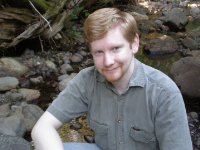
 

Lindsay SchopferAbout Lindsay Schopfer:

Lindsay Schopfer is the author of the rural steampunk adventure novel The Beast Hunter (2014) and the fantasy adventure novel Lost Under Two Moons (2012) . His short fiction has also appeared in The Daily Times, an international newspaper based in Pakistan. When he isn’t writing, Lindsay is a writing coach and instructor for Adventures In Writing, where he helps writers learn about and improve their craft.  He is also a mentor for Educurious, a Gates Foundation-funded program designed to connect high school students with professional writers.

Lindsay’s books are available at amazon.com and through his website, http://www.lindsayschopfer.com

You can also sign up for his wonderful workshops through his website at Adventures in Writinghttp://www.yourwritingadventure.com


Comments Off on Lindsay Schopfer, ‘The Beast Hunter’ launch

Filed under Adventure, blogging, Books, Fantasy, Literature, Publishing, Self Publishing, Uncategorized, writing

What I’ve learned from George R.R. Martin

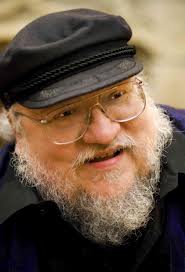
George R. R. Martin photoI’m not a fan of George R.R. Martin’s style of writing, but I adore the man as a person. He has the courage to say out loud what many people would sweep under the rug.

Recently George R.R.  Martin told journalist Dave Itzkoff of the New York Times that although his books are epic fantasy, they are based on history. He said,  “Rape and sexual violence have been a part of every war ever fought, from the ancient Sumerians to our present day.” 

“To omit them from a narrative centered on war and power would have been fundamentally false and dishonest, and would have undermined one of the themes of the books: that the true horrors of human history derive not from orcs and Dark Lords, but from ourselves. We are the monsters. (And the heroes too.) Each of us has within himself the capacity for great good, and great evil,” Martin said.

According to Martin, “History is written in blood, and although Westeros – the fictional continent where the series is set – is ‘not the Disneyland Middle Ages,’ it is “no darker nor more depraved than our own world. The atrocities in A Song of Ice and Fire, sexual and otherwise, pale in comparison to what can be found in any good history book,” he said. (End of quoted text.)

George is right, and he is not advocating or glorifying rape, in fact just the opposite. If you want to inject realism into a work of fantasy you must address uncomfortable realities that human history has shown to exist. The worst aspects of human nature are portrayed in our everyday life—things I could never dream up. Society at large is blasé about it—unless it affects one personally, it may as well not exist.  Rape in the military is a fact, friends, not a myth, and that is just within our own forces. Not only does she live in a danger zone while in the military, a  woman soldier also knows she faces rape and torture if she is captured by the enemy—that is the first step in breaking her. Many men also suffer sexual assault and torture for the same reasons, whether we wish to acknowledge their pain or not.

Image courtesy of CBS News, and Getty

Image courtesy of CBS News, and Getty

Consider this disgusting item of current news that only rarely makes it onto the nightly newscast in our town: To be a young girl in Borno, Nigeria is an invitation to be kidnapped and sold into sexual slavery. More than 200 young girls are living this nightmare right now, because an extremist group, Boko Haram, who is against educating women, goes door to door, breaking into their homes and boarding schools and taking the girls from their beds. This is done as a way to maintain political control and  keep their fathers in line. The families of the stolen children are powerless against these brutal thugs.

Do you think these schoolgirls are not being raped and tortured?  If so, you are living in a dream. The leader of these radicals publicly flaunts their intentions to sell or marry all of them, bragging to all the media that they do it because God told them to.  They loudly proclaim that they will sell all of these girls, and believe me, the world is full of buyers just waiting for such an opportunity. So far, 20 lucky girls have escaped their captors.

If I was writing modern literary fiction or political potboilers, I would have tossed out such an unbelievable plot–it would have seemed completely unrealistic–I mean, a religious cult of pedophiles and rapists systematically kidnapping 200 girls, claiming divine privilege, and no one is able to stop them? Come on, get real.

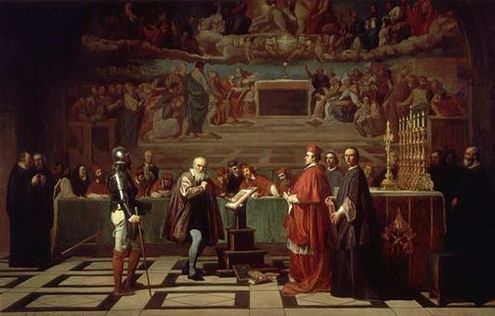
A 19th-century depiction of Galileo before the Holy Office, by Joseph-Nicolas Robert-Fleury image courtesy Wikipedia

A 19th-century depiction of Galileo before the Holy Office, by Joseph-Nicolas Robert-Fleury image courtesy Wikipedia

I suspect God would prefer we  humans didn’t give him the credit for our evil, thank you very much.

So what have I actually learned from George R.R. Martin? I have learned to be true to reality in my writing or my story will never hold water.  Draw from history, mash it up all you want, but don’t deny the roots and don’t turn away from the ugly truth. Also, we must  never forget that there is as much beauty to draw from as there is pain, for it is that contrast that makes an intense story compelling.

No work of fiction will ever be more horrific or glorious than the true history of our humanity and inhumanity. We authors will only scratch the surface, and if that small scratch makes a reader slightly uncomfortable, the reader can easily retreat to their ivory tower and read bland romance novels written by someone other than me or George R.R. Martin, where everything is rainbow perfect and happy endings are guaranteed.

If you were privileged to be allowed to learn to read, that is.

10 Comments

Filed under Battles, blogging, Books, Fantasy, news of the world, Politics, Publishing, WordPress, writing

My manuscript is a Doorstop

Saint_georges_dragon_grasset_beguleI give up.

I need ideas, and they–recalcitrant beasts that they are– will not appear.  Please, ideas…have pity on me and put yourself into this manuscript.

I woke with a new book in my head and now I can’t work on the one I am SUPPOSED to be doing…the one my nephew, Robbie, will beat me for if I don’t get it written…

The one that has been in limbo for more than a year.

Outline of Book: done.

First 1/4 of Book — done, done and then done some more — done to the point that there are 160,000 words: TWO books worth of done-ness to sort through and condense into no more than 50,000 words so that the total length of the Book won’t be so big that the paperback is a doorstop.

To_Green_Angel_TowerTad Williams can get away with a book  520,000 words long (To Green angel Tower) and David Foster Wallace could with Infinite Jest (543,709) –but I’m an indie.

I have to calculate my production costs, and believe me, it’s hard enough for an indie to sell work that is priced reasonably. Once an indie’s paperback increases to more than $14.99 it won’t sell at all, and at anything over 120,00 to 130,000 words your costs are well over the optimum of $12.99.


What to leave in? What to cut?

What the heck?

Second 1/4 of book mostly done, and looking good.

Last half of book nearly done, pleased with the way that is going.

Still drowning in flood of first 1/4–> think there may be a book of short-stories there.  Must decide who will live…

…and who will end their days in an anthology of tales of Neveyah….

Sigh.

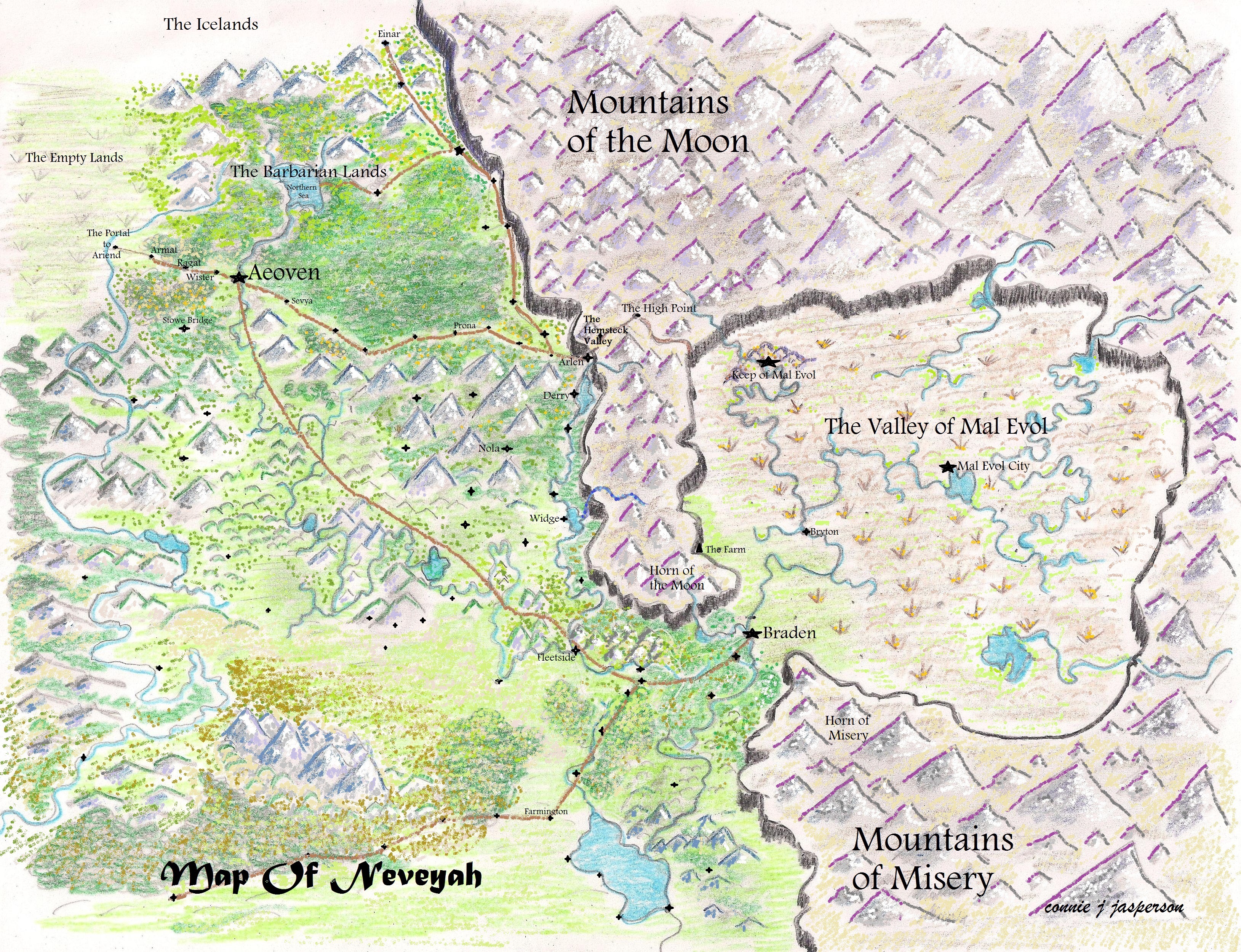
map of Neveyah relief 3-4-2013 001


Comments Off on My manuscript is a Doorstop

Filed under Battles, blogging, Books, Fantasy, Humor, Literature, Publishing, Self Publishing, WordPress, writer, writing

The Girl With the Tolstoy Tattoo

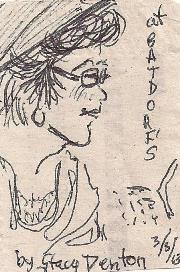
extra small caricature of connie  by street artist Stacey DentonYour blog is up. The Template is as well laid out as you could make it. You have your books or relevant social media listed in the sidebar. You have the catchiest blog title on the block. Now all you need to do is start blogging!

1. If you are using WordPress CHOOSE A CATEGORY NOW for your post–do it 1st so that you don’t forget to do it. I published this blog in the categories of Blogging, Self Publishing, Books, Fantasy, Literature, Humor, Publishing, and Writing.  Each blog post may have a different category. If you should forget to choose the category, it will go into the ‘uncategorized’ pile–the dreaded WordPress slush pile where blogs go to die.

Also in WordPress, chose a few TAGS now so that you do not forget to tag the post. That button is below the Categories list. Chose tags that most represent the core of your post, so that searcher for that subject will find it. For this post I am using ‘Blogging, Writing, Self Publishing, Humor, WordPress, Blogger’.   Also, ‘The Girl With the Tolstoy Tattoo.”

blogging 1.1

If you are using Blogger, PICK YOUR LABELS NOW–Blogger doesn’t use categories, so your labels are very important. On the right hand side, click on ‘LABELS’ and simply type your key words into the BOX, separated by commas. In Blogger, LABELS are what TAGS are in WordPress, so use words that are the core of what you are blogging about so that interested searcher will find your blog:

blogging 2.1

Now that you have that out-of-the-way, it’s time to blog!

2. Hook me with that catchy blog post title!  Today’s post is called “The Girl With the Tolstoy Tattoo” — for a multitude of reasons. I have a tattoo (it’s not Tolstoy) but we are all struggling authors, even those of us who blog on the most random subjects. And if you are ever at a writer’s convention, there is no better icebreaker in the autograph line than to offer to show Tad Williams your Tolstoy tattoo. (If you have one, and if you are insane.) (Be sure to add ‘Tad Williams’ to the Tags or Labels for that post.)

3. Put that catchy title in the White box at the top of the page:blogging 3.1

Now there are two paths for you.   You can wing it, keying directly into the Post box as I am doing now, or you can write it on a WORD document and copy and paste it into the body of the post.  I don’t do that often, because word is rife with HINKY FORMATTING that screws up your blog posts for both Blogger and WordPress, and then you have to use the handy “REMOVE FORMATTING” button that is located in the ribbon (tool box) of both Blogger and WordPress:

blogging 3.2

blogging 3.3

Both Blogger and WordPress have spell check functions, and both will save at times as you go, but as in everything, it is up to you to click “SAVE DRAFT” and save your work fairly frequently.

Play around with it. Practice uploading images and inserting them, playing with it until you feel comfortable and know how to ensure the image will appear where you want it, and will be the size you want it to be:

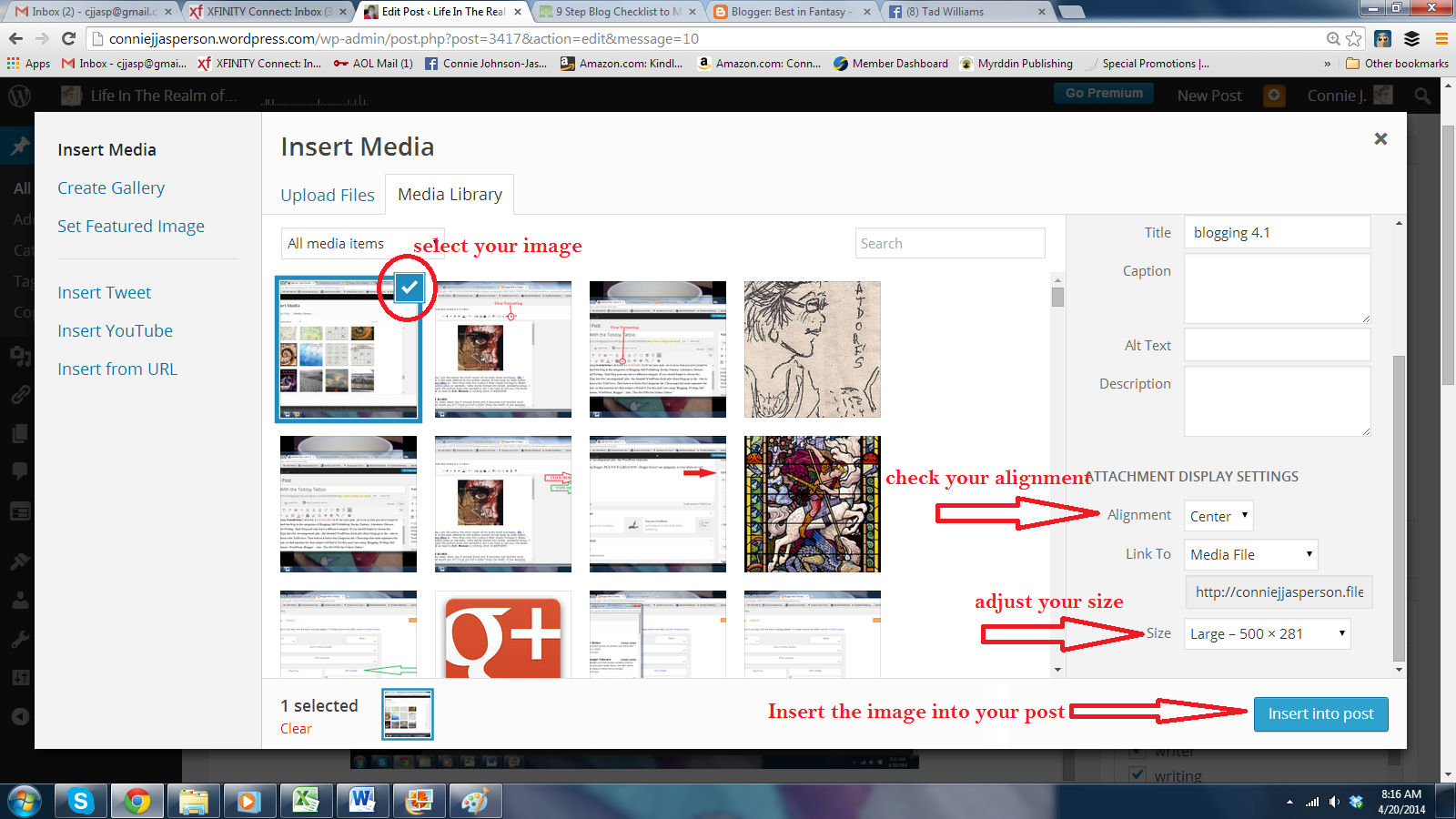
In WordPress, place your cursor in the body of the blog post and click once at the spot where you will want the image. Then scroll up to the left side of the ribbon (tool box) and click on “ADD MEDIA.” This menu will appear:


blogging 4.1

If this is your first blog post, you won’t have anything in your media library yet, so Click on “Upload Files.” Select the image you want to post,  then check your alignment, i.e. left, right, or center. Adjust your size options to fit your need for the image in that post (those requirements vary from post to post.) Then click ‘INSERT INTO POST.”

blogging 5.1


In Blogger you click on the little Picture in the ribbon (when you hover your mouse over it, it will say ‘insert image’). A pop-up menu will appear, and then you will upload the image, decide the placement and the size.  This nearly foolproof simplicity is why most people who have “never done this before” like Blogger.

blogging 6.1


Now your picture of your Tolstoy tattoo is right there, illustrating your hilarious post where you discuss why getting that tattoo while drinking vodka shots at the “Fans of Great Russian  Authors” convention wasn’t as good an idea as it seemed at the time, and that maybe the T-Shirt would have been a better investment.

leo_tolstoy_t_shirt-r207720cff4e14b059c7bba5cdb41c6c9_804gs_512 from Zazzle


All you have to do now is post your links to Twitter, Facebook, Tumbler and all other  social media you can think of and Voilà! You are a blogger. Do this regularly, and you will build up a following, and you will develop credibility as an author. Your name will be searchable on Google and Bing, and all other search engines.

3 Comments

Filed under Blogger, blogging, Books, Fantasy, Humor, Literature, Publishing, Self Publishing, WordPress, writer, writing

Blogger for the Beginner

science of relationships dot comLife in the Realm of Fantasy’ is a WordPress blog, i.e. I use WordPress, a free, open-source blogging tool and content management system.  This means that with very few skills,  I can post a decent blog at no cost to me, using the fine tools and templates provided by the wonderful people at WordPress.

The thing that is so awesome about it is that it is in what my husband the programmer calls ‘wysiwyg’ (pronounced wizzy-wig) or ‘what-you-see-is-what-you-get’ so the user does not have to know any programming or coding–all that is done for you already, and you just organize it the way you want it, within certain limitations.

wordpress logoI really enjoy WordPress, and have become quite fluent in it.  But what other free and open-source content management systems are out there?  Well, I just happen to have a weekly book review blog hosted by a Google company, called Blogspot. Their tools are called Blogger, and I have become fairly adept at using that particular system too, and while it’s not as versatile as WordPress, I like it a lot.  A friend of mine is new to Blogger and had some questions so I thought this would be a good topic for this blog.

First you sign up for a Google account. Then go to  https://www.blogger.com/features and click on the orange button at the top right.

blogger screen 1


Then you select the URL, or place your blog will forever be found on web searches by.

My Blogger blog, Best in Fantasy, is located at: http://bestinfantasy.blogspot.com

So if you are an author, use your author name as the URL. This WordPress blog is my author blog, so it is https://conniejjasperson.wordpress.com.

I also have a blogger address, http://conniejjasperson.blogspot.com.  That takes readers to another book blog, Billy’s Revenge, which showcases Huw the Bard and all things pertaining to Billy’s Revenge in the world of Waldeyn. A third blogger blog is http://neveyah.blogspot.com , which is the Tower of Bones showcase.

Whenever you are logged out of blogger, you can access your blog by going to the top right hand corner of your gmail mailbox and clicking the little group of squares up on the right hand side–the apps icon:

apps icon

This will open a menu filled with icons for every Google app like YouTube, or the calendar. Down at the bottom under ‘more’ will be the Blogger icon. Click on that and you will go to your blogger page:

blogger icon


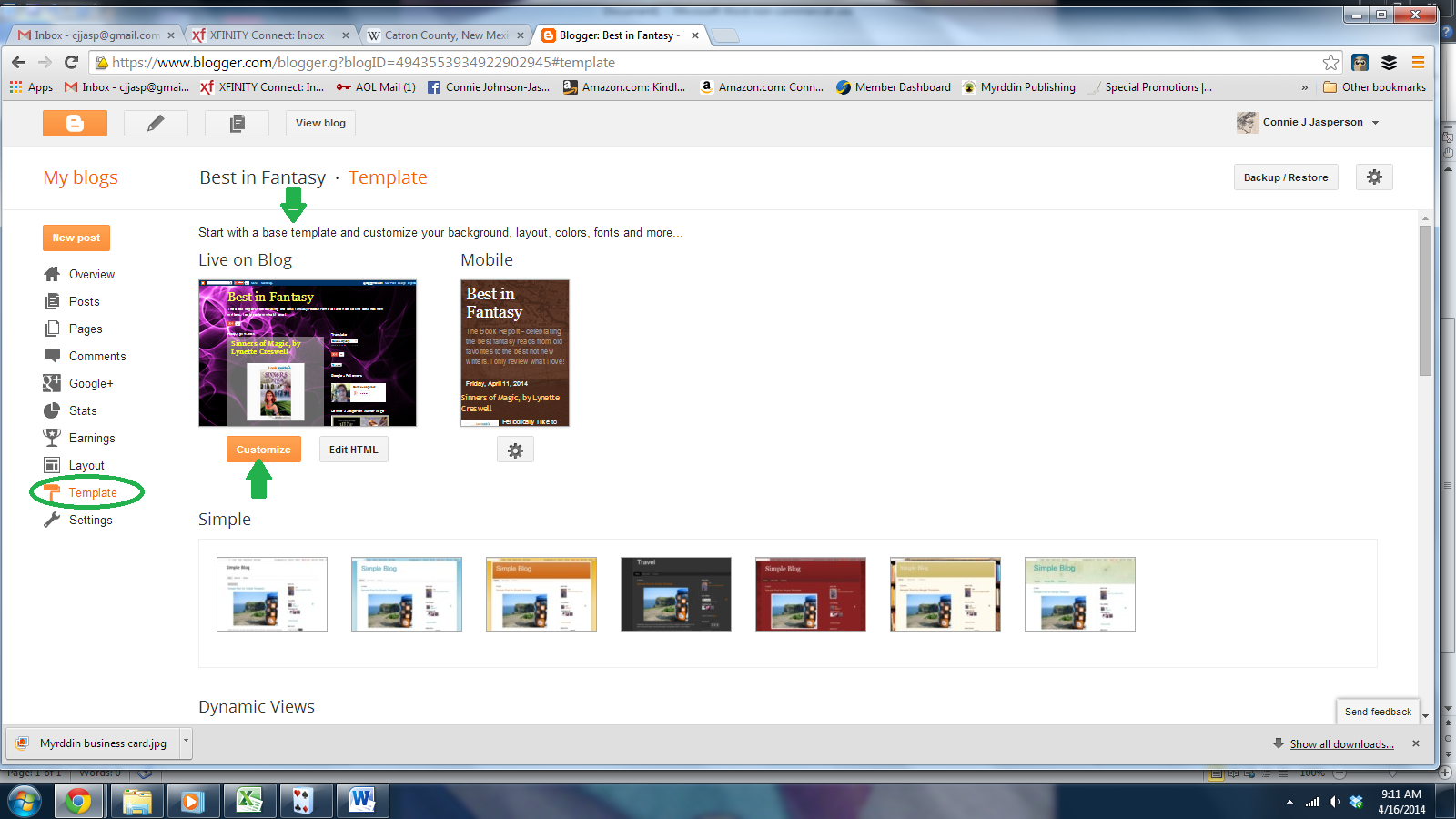
Once you have your URL selected, you can move on to building your blog. We start with choosing a template.  This is a lot of fun,  I think. Click on the orange “Customize” button.

Blogger screen 2

You will come to a screen with many options, and I suggest you just start at the top of the menu where it says template, and begin playing around with it, until you find the look and style you like best. You will be able to see most of your changes in the area below the Template Designer.  I pretty much keep the template simple, just because it is easier for people to read it when it is simple.

Blogger screen 3


Once you have decided on that catchy title for your blog, and have figured out the color of your fonts and background are all organized, decide the layout. You can make it one column with no sidebar, or with one or two side bars. Sidebars are good places for advertising your books and book trailers, along with many other things you want to share with the world, such as blogs that you follow, and gives a place for those who wish to follow your blog a place to sign up. The trick with sidebars is to keep them from junking up the blog, which I have a tendency to do.

Any way, once that is done click “Apply to Blog” in the upper right-hand corner. This should take you back to the Blogger page, where you will look in the menu on the left and click on the “Layout” button, just above the orange Template button. this will take you to the part where you REALLY customize the look of your blog.

Blogger screen 11


On the right hand side (yours may be different, depending on how you chose to display sidebars) click on add a gadget:

Blogger screen 10

This will open a menu that contains 28 ‘gadgets’ you can choose from to add to your blog. (In  WordPress they are called ‘widgets’ but they do the same thing.) These will  dress it up and help gain visibility:

1. A – g+ button (very important)

There are a lot of things, from images to ways to add html code for embedding videos and things.  In that regard, Blogger has a one-up on WordPress, because it is  difficult to embed videos, if not impossible on template I am using, which is free–at least I’ve never found a successful way to do so. I just post the links here on this blog and hope for the best, because so far I have been unable to get any code to work. THAT is why many people prefer Blogger to WordPress, despite the fact that WordPress offers so many more templates and options.

I suggest you take some time to play around with arrangements. You can click the save arrangement icon in the upper right hand corner, and then preview it, but if you accidentally hit publish, no worries– because until you add content and tell folks its out there, no one will see your mistakes. Take as long as you need to get comfortable with the system, and remember that anything you don’t like can be undone.

My next post will conclude the series on ‘Blogger”, detailing how to make your post, tricks to fine tune your layout, and get the word out that you are blogging. I will also have several posts on what I have discovered about WordPress. Authors should blog even if at first they have few followers, because the act of blogging is writing on the wing–and we must write every day or we are not really serious about the craft.


4 Comments

Filed under Books, Fantasy, Literature, Publishing, Uncategorized, writer, writing

Hawking Your Wares

Early hot dog merchant,  1936 by Berenice Abbott courtesy EphemeralNewYork.wordpress.com

Early hot dog merchant, 1936 by Berenice Abbott courtesy http://EphemeralNewYork.wordpress.com

Yay! It’s official, I’m an author now!  I wrote a book or four, I had them edited, I covered them, and I had them published.  Now all I have to is sell enough of the darned things and that Hugo award is mine!

So how do we go about that?  There is the tiny problem of that old “getting your name out there” thing…I stink at that.

Roy Huff, author of the Everville series, regularly uses Goodreads to publicize his work. All his Goodreads connections received emails last week like this:

EVERVILLE Roy HuffRoy has modified the event Everville (#3) TheRiseofMallory 99 cent promo begins Midnight Pacific The First Pillar FREE KINDLE PROMO starts in 12 hours.
Date: April 14, 2014 04:22AM

Description: A new promo has begun. You can join that promo here https://www.goodreads.com/event/show/… feel free to invite others to join. Details are below as well. Thanks so much!

FREE KINDLE PROMO April 15 to April 18th for Everville The First Pillar http://www.amazon.com/dp/B00BCOQSSQ
FREE KINDLE PROMO April 19 to April 22th for Everville The City of Worms [InD’Tale Magazine’s Creme de la Cover March Winner] http://www.amazon.com/dp/B00EQZ5T2E

99 CENT KINDLE COUNTDOWN DEAL April 15 to April 21th for Everville The Rise of Mallory http://www.amazon.com/dp/B00HYN 3NXC

Stay tuned on Facebook @http://on.fb.me/1ni21BT
Stay tuned on Twitter @evervillefans 

Well, I don’t know about you, but that seems like a good promotion to me, and I will be quite interested to see how well things go for him with it. Roy has a lot of connections on Goodreads, and he puts a lot of energy into promoting his work, so maybe he will do well. He has given me something to think about, in regard to the whole giveaway thing. One reason I made Tales From the Dreamtime, which is a novella, into the first of my audiobooks was the hope that it would generate some recognition for my brand, which if you remember, is my Author Name.

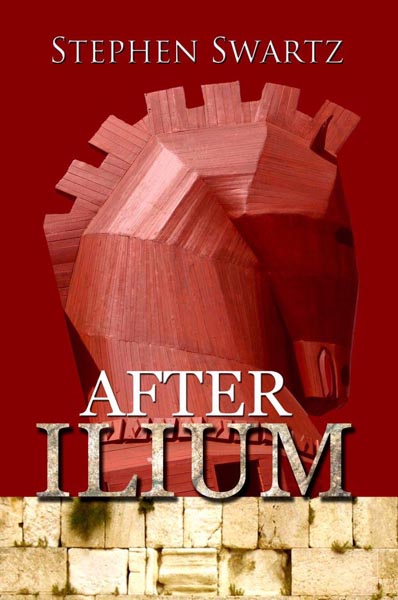
Swartz_After Ilium_FrontCvr_200dpi_3inAnother author friend, Stephen Swartz, is promoting his works too. Today is Tax Day in the US, so he is running a twitter campaign:

4/15 TAX DAY SPECIAL! 2 Books! 2 Bucks! ‪#‎Kindle‬ ‪#‎romance‬ 
‪#‎AFTERILIUM‬  http://bit.ly/AfterIlium_US
‪#‎ABEAUTIFULCHILL‬  http://bit.ly/BeautifulChill_US

He didn’t know if Amazon UK will honor the discount, but here are the UK links:

AFTER ILIUM kindle http://www.amazon.co.uk/dp/B009SDW1KC
A BEAUTIFUL CHILL kindle http://www.amazon.co.uk/dp/B00I6M4R9Y

I will also find out from him how well that went.

So, I am going to continue the way I have been, promoting via twitter. I have paid for a Goodreads ad for Huw the Bard, for the next two weeks or so and will let you know how well that went. I will also try the Goodreads promotion route in May, and will keep you posted on that.


3 Comments

Filed under Adventure, Books, Fantasy, Humor, Literature, Publishing, writer, writing