Category Archives: mythology

William Morris, Tolkien, and Modern Elves

Pauline Baynes' map poster of Middle-earth published in 1970 by George Allen & Unwin and Ballantine Books.

Pauline Baynes’ map poster of Middle-earth published in 1970 by George Allen & Unwin and Ballantine Books.

Lately I have been ‘guru-ed’ to death on various different writers forums by a few indie authors, whose own work is a great deal less than stellar, harshly criticizing the quality of writing of everyone from J.R.R. Tolkien to Robert Jordan.

Some people–I wonder, do they even read the comments they write? I am going to tell you straight up: Tolkien did NOT use too many words in The Hobbit, and the movie was not better.  Tolkien was Professor of Anglo-Saxon Studies at Pembroke College, Oxford, he invented the elfin language and as such, we may be assured he had a moderately good grasp of the English language, and the literature of his time.

He wrote in a lyrical style, with descriptions and side quests, things that enthralled avid readers like me who understood how to set aside a day to just to enjoy a good read.

The movie, while it is awesome, exciting and great fun, bears some relation to the actual book but certainly does not chronicle it. In the book for starters, Legolas was not a character, he did not have a love interest, and neither did Kili.  If you read the credits at the end of the movie, you will see it clearly says “BASED ON” the book, The Hobbit by J.R.R. Tolkien.
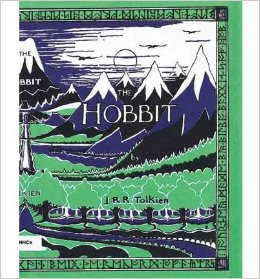
the hobbitThe problem with the book is not in Tolkien’s writing. It is in the eye of the beholder who never learned patience, or appreciation of a well-told story.

Fortunately, we now have an emerging generation of young women who consider “Pride and Prejudice” to be their favorite book of all time, and this gives me hope. Pride and Prejudice is about manners, yes–but it is also about that intrinsic thing all great novels consider, the search for self, and underneath the trappings of fantasy, the elves and goblins, so is the Hobbit.

That quest to discover who we are and what we are capable of is what drives Bilbo to keep  going, even in the face of terrible events. I have hope that if Jane Austen’s work is once again considered to be popular reading among young people, then the love of a beautifully crafted tale will never entirely disappear and the true appreciation of Tolkien’s great works will once again be celebrated.

What I frequently see in these forums see is an aggressive type of person who criticizes but lacks an understanding of what he/she is ranting about. They claim to be in writing groups, but if they are, I feel sorry for their fellow writers.  These people are the carrion-eaters, the ones who will pick an author’s work to the bone, and casually dismiss it, destroying a fellow authors sense of self-worth.

What a person who writes fantasy needs to know is what the masters of the genre wrote, and what made their work classics.  In other words,  stop looking AT the words as disparate parts that you could write better, and read them in context. You might be surprised at what you will find!
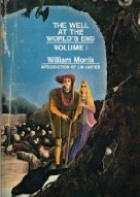
Well at World's End, William MorrisEven Tolkien had inspiration for his works, and he freely admitted he was a great devotee of the work of William Morris, an English textile designer, artist, writer, and socialist associated with the Pre-Raphaelite Brotherhood and English Arts and Crafts Movement. He loved Morris’s prose and poetry romances. Tolkien’s own work follows the general style and approach of Morris’s work. The Desolation of Smaug as portraying dragons as detrimental to landscape, has been noted as an explicit motif borrowed from Morris, just as countless fantasy authors borrow the modern concept of Orcs, Elves, and many other high fantasy motifs from Tolkien.
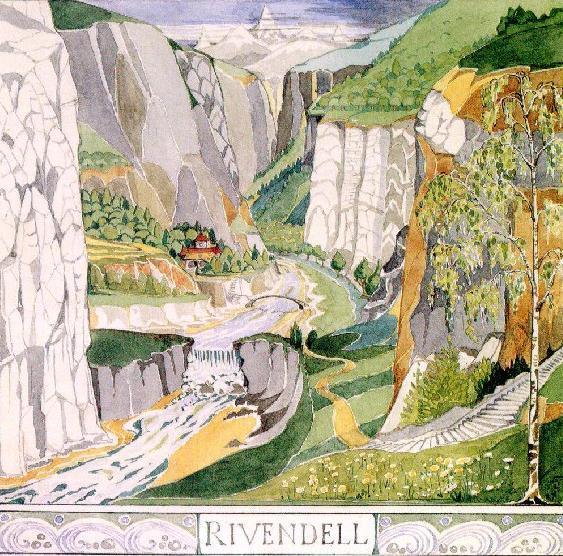
Rivendell_illustrationThe modern image and mythology of the elf as he is written into most of today’s fantasy has been directly modeled on the elves of Tolkien’s Rivendell, whether the author knows it or not. Even the elves we find in the onslaught of urban-fantasy-romances are created in Tolkien’s image.

So, now that I’ve had my rant about internet writer’s forums and the bad apples who occasionally haunt them, you’re probably wondering what  I find that is good out there? A great deal more good than bad, actually.  There are an incredible number of people who are willing to be helpful to aspiring authors, and who regularly share good information. The following is a list of good forums you might want to look into.

Writers Digest

Writers Cafe

Absolute Write

National Novel Writing Month (NaNoWriMo)

I’ve had a lot of fun on these forums and I learned a great deal. I never respond to Trolls, because acknowledging them encourages them to think they have power. How you handle them is up to you. Do your homework, research the great literature of your genre and write because you love it.

Ah! like gold fall the leaves in the wind, long years numberless as the wings of trees! The beginning of the Quenya poem Namárië written in tengwar and in Latin script, by J.R.R. Tolkien.

Ah! like gold fall the leaves in the wind, long years numberless as the wings of trees! The beginning of the Quenya poem Namárië written in tengwar and in Latin script, by J.R.R. Tolkien.

7 Comments

Filed under Adventure, Battles, Books, Dragons, Fantasy, Humor, Literature, mythology, Uncategorized, writer, writing

Joan Hazel, Burdens of a Saint

Cover BOAS3Today we’re talking with Joan Hazel, a lovely person and an author-friend whom I met through our former publisher. She is one of the founding members of our mutual publishing group, Myrddin Publishing. Over the last two years I’ve become quite good friends with her.

She is  a talented author, whose new novel, Burdens of a Saint, was released yesterday. I had been lucky enough to be a beta reader for her on the early manuscript and really loved the characters of Janet Beesinger, and Saint.

But first, the Blurb:

 Your life will change today…

When Janet Beesinger writes  the words in red on her calendar, she has no idea what they mean. But, as a psychic, she knows when the universe gifts you with personal information, you listen.  How was she to know the Universe meant an irritating and sexy shape-shifter who would challenge everything about her life?

Saint Wolfe can feel the gravity of his arrangement with the goddess Hel closing in around him, forcing him to confront his past and the betrayal of the woman he was to marry. Needing to make peace with his past, he returns to New Orleans in search of forgiveness, only to be confronted by his own immortality. His only hope for atonement lies in the hands of a woman claiming to be a psychic. Will she be able to help Saint find salvation before his debt to Hel comes due?

And now–the interview:

Me: Where did you get your original idea for a fantasy-romance involving a society of shape-shifters from?

Joan Hazel PicJoan: Would you believe they walked out of the bushes while I was mowing the yard and said “here we are, now tell our story”? It sounds strange, but that sort of what happened. I was doing yard work and thought what would happen if you found out you inherited a mansion and the surrounding lands, and while you were tending the yard four hot guys walked out of the woods and you found out it was your responsibility to take care of them? And, by the way, they are all shape shifters.

Me: I like that. I think we often find our inspiration in the most mundane places. When you are mowing the lawn, your mind is free to move about the airplane, so to speak.

What is your personal connection with Norse Mythology? 

Joan: I have always had an attraction to Norse Mythology and Vikings. It may come from my Germanic roots or it may come from a past life. LOL. Even when I sang opera I specialized in Wagner which is deeply steeped in Norse Mythology.

I just always felt the Norse gods were more connected to the common man more so than the Greek or Roman.

Me: I agree. I’ve always felt the Norse gods were too closely involved in human affairs for our own good, lol!  (Loki, please make mischief elsewhere, thank you….)

So I understand you use Dragon Naturally Speaking software. What is the evolution of your manuscript—how do you take it from the first draft to the completed stage? Is there some point where you switch to a standard word-processing program?

Joan: This is why it takes me so long! I do use Dragon, but only after I have written the manuscript in longhand. For me there is something magical about the brain-hand connection when it comes to weaving these stories.

After I have the written manuscript, I then input through Dragon into a Microsoft Document, then go into that and work formatting, etc.  The hardest part for me in using Dragon is the fact so many of my characters have unusual names. So far I have been unable to get the software to recognize names like Apple-y and Aegir.

Me: Wow–that seems time consuming. I don’t have that sort of patience.

Like me, you’re an indie author. What is the most difficult part of this process for you?

Joan: The most difficult part of the process for me is finding the time to write while juggling everything else. It seems that quite frequently I will be in “the zone” chugging away when the  my hubby yells at me from the other room or the dogs try and get my attention. Plus, my muses  have an irksome way of popping up at those times that I can do nothing about it, like when I am  driving or taking a shower. I have tried using a recorder, but listening to the sound of my own  voice irritates me.

Me: I know! I am always embarrassed by the sound of my own voice. And distractions are something we can all relate to.

What is your next project in this series and who will be the main character?

Joan: That is a great question. There are two books left in the series; one for Fergus Wolfe, who is the alpha of Delta Pack and the other, is for Ghost Thorolfur. The two are kind of battling it out to see who goes next. Originally, I had planned for Ghost to be next, but now I am not so sure.

Me: They are both intriguing characters, and I really can’t decide which one I am more curious about! You also write romance novels.  Do you have any other books in the works?

Joan: How much time do we have? There are probably 10 books jumping around in my head at the moment. There are two in particular that I have begun work on. One is a medieval fantasy set in an imaginary kingdom in Scotland. The other is a western set in post-Civil War Texas.

Me: You know me! I am all about the medieval fantasy!  What advice would you give an author who may be struggling with the decision of whether or not to go indie?

Joan: In my opinion going the indie publishing route is one of the best things a writer can do, especially if your storyline doesn’t quite fit into the mainstream (i.e. commando shape-shifters created for the goddess Freyja).

I like being an indie author and having the creative control over my babies. There are days you will want to bang your head against a wall and days you will want to jump for joy.

My word of caution, don’t go into it blindly. I learned a great deal about the business of being a writer, and believe me, it is a business. You can find a lot of information on the internet and there are small, indie publishing companies that will help you publish. Keep in mind, even if you signed with a large house, unless you are J.K. Rowling or Nora Roberts, marketing, branding, organizing book signings, or anything else for that matter is left completely to you.

Me: Joan, that is good advice. I would add that a quick glance through the list at Preditors & Editors will give a new author some idea of small publishers they may not want to go with.  

But thank you so much for stopping by, and for answering a few of my questions. I have really enjoyed it.

Joan: Connie, thanks for letting me stop by and share my thoughts. It has been fun.

———————————————————————————–

Just so you know, Joan is an awesome person! To find out more about Joan and her books check out her website, and these other fine social media:

Website: http://www.joanhazel.com

Blog: http://joan-hazel.blogspot.com/

Twitter: @guardianwriter

Facebook: https://www.facebook.com/pages/Joan-Hazel/362411800440684?ref=hl

Cover BOAS3

BURDENS OF A SAINT

available at Amazon.com

Available in print and for the Kindle

Joan Hazel has found success at virtually everything she has ever put her mind to doing.

A native of Corinth, Miss., she is an accomplished actress and vocalist who has performed with theater and opera companies across the eastern United States. She has also dabbled success-fully in theater as a director and vocal director for numerous award-winning productions.

She completed a double major in music and business from Delta State University and went on from there to earn a Master’s Degree from East Carolina University with another double major, in music performance and pedagogy.

She has spent time as a vocal and piano teacher at both Troy University and Enterprise State Community College. As a teacher she is much sought after for her skills and often works privately with students in her home. In 2010 she was a guest instructor at the International Music Theater Festival held in Venice, Fla.

In her spare time, she plays with a cast of characters who live in her head. She has written four novels that range from historical fiction to reality-based crime fiction to science fiction/fantasy.

Hazel is passionate about the protection of animals and supports a variety of animal conservation efforts.

She currently resides in DeLand, Fla., with her husband, Ricky, and their two dogs.

Comments Off on Joan Hazel, Burdens of a Saint

Filed under Books, Fantasy, Humor, Literature, mythology, Romance, Uncategorized, writer, writing

What the label says

Parisfal - Creator - Hermann Hendrich PD-Art Wikimedia CommonsDuring the Christmas hiatus I’ve been revisiting the manuscript of Mountains of the Moon, tightening it up. I will be sending it to my Beta readers soon, preparatory to the final edit. In the meantime I have still been searching for cover art – my head has an idea of what it needs to be, and I haven’t found it yet, nor have I created the right blurb, although I’m getting close–we want a short, intriguing, sell-the-book sort of blurb.

Huw The Bard progresses slowly–some things just can’t be rushed. I had hoped to have him ready this spring, but that may not happen. The cover is ready, the blurb is ready, but editing is going more slowly than I had anticipated. That is one area I will not rush, so it will go on the back burner for a while. I still plan to enter Huw in the ABNA Contest this year, if and when it is announced, in the genre of Fantasy, as I hope it will be ready to go by then. Nothing is sure or certain in this business, however.

DobrynaThe editing of Julian Lackland is progressing at a good rate–he may be ready for publication before Huw. His cover and blurb are also finished, as is his book trailer. Huw still needs a proper trailer, but we are rolling toward victory!

In the meantime, I am still writing Valley of Sorrows, and it is going really well.  All the threads in my mind are coming together well on paper. That may be a finished novel yet!

One thing that is a bit difficult is trying to decide what genre my work falls under and what labels will get my books to the people who most want the sort of tales I write.  Huw the Bard and Julian Lackland are Historical Fantasies, but there is no genre to cover that! The Tower of Bones series is Epic Fantasy, or so I think, so that is easy (?).

But I’ve never had any luck with my labels.

And labeling is critical–many people won’t look at work that is not in their favorite genre, so they may not stumble upon a work they might enjoy. Conversely, if it is mislabeled, a reader might buy it, find it is not their cup of tea, and write a stinker of a review, based on the fact it is really not at all a historical mystery and what was the author thinking anyway?

So this is my goal for this coming year year: Write good books, label them properly, and perhaps sell a few.

Quaglio_KipfenbergI’ve learned many amazing things about this craft over the last year, things I never knew I had a knack for.  I  sourced the art and designed my own covers for two books, and  Alison DeLuca (our fearless leader at Myrddin Publishing Group) says they will be good covers when the books go to press.  I have helped several authors get their work ready for publication and I managed to make it through another NaNoWriMo as a Municipal Liaison unscathed.

A new year looms, bright and shiny. My ambition is to get the hang of the trickier parts of the marketing of my work–properly labeling it, and making it available to prospective readers. After all, if they can’t find it, they can’t read it!

I hope your Christmas was a warm and cozy thing with good food and family that puts the fun in dysfuntional. I hope the new year brings you everything you need, and some of what you want. I wish you long life and happiness, and the wisdom to appreciate it!

2 Comments

Filed under Adventure, Battles, Books, Dragons, Fantasy, knights, Literature, mythology, writer, writing

Phil’s Cosmic Roulette Wheel

Photograph courtesy of RL5 Photography via www.spaceneedle.com

Photograph courtesy of RL5 Photography via http://www.spaceneedle.com

Today I want to discuss Phil’s Cosmic Roulette Wheel. Perhaps it’s fate, perhaps it’s the universe–whatever it is, it steers us down the path to perdition, and throws the almighty wrench in the works just when everything was going so well. In my world of Neveyah where the Tower of Bones series is set, Gods have a direct hand in the action.

The strange part was naming them. I’ve a friend, a Leo, named Phil. Phil is a lion among men and I thought, why not name a god Phil?

It turns out that if you write fantasy you  should probably give your  gods names that evoke omnipotent power. Apparently Phil is a bit too neighborly for a good ‘god-name,’ go figure. So I have opted for less comfortable names for my gods.

Phil is a longtime friend of mine, a man who will argue the opposite side of any topic you choose, and he will do it with passion and will even have some evidence to back his position.  He also enjoys the occasional rant on Facebook, but hey–who doesn’t? I figure he should get a blog and rant to his heart’s content, but what do I know.

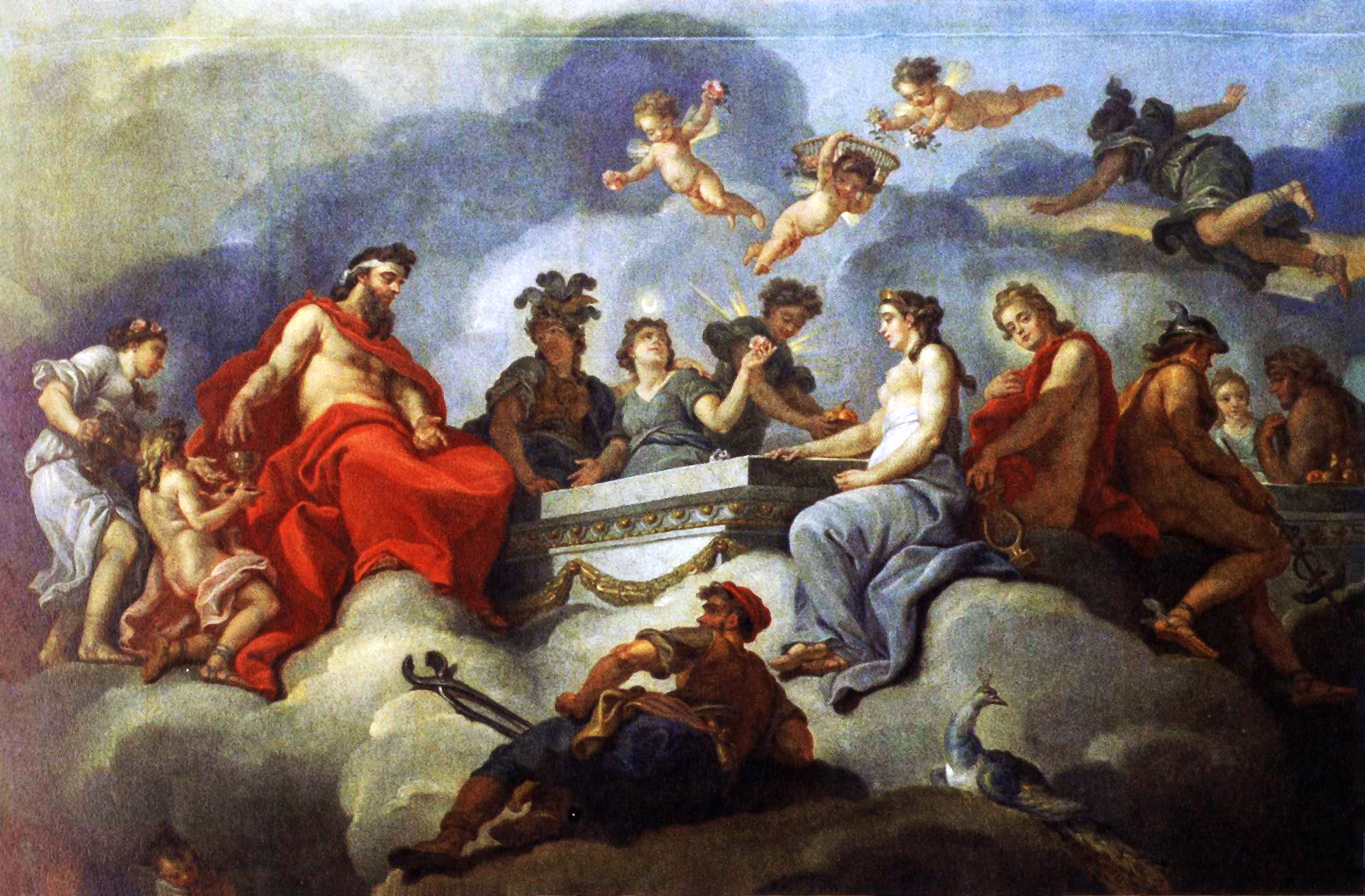
Die_Einführung_des_Ganymed_in_den_Olymp_(van_Loo)_-_AusschnittAny way, Phil was on a rant about something, and I forget exactly what it was, but the upshot was he is a bit of an atheist.

Well, that takes all the fun out of blaming the gods for everything that’s wrong in your life!

But I’m not here to argue about religion. Religion is like sex and politics–everyone has their own version, and other folks don’t want to hear about how great it is.

Phil got me to thinking about how events seem to occur, driving us to a specific moment in time. There is a sense of destination in the way events occur, as if the only place you could have found yourself, no matter how you tried to avoid it, was at that stop light.

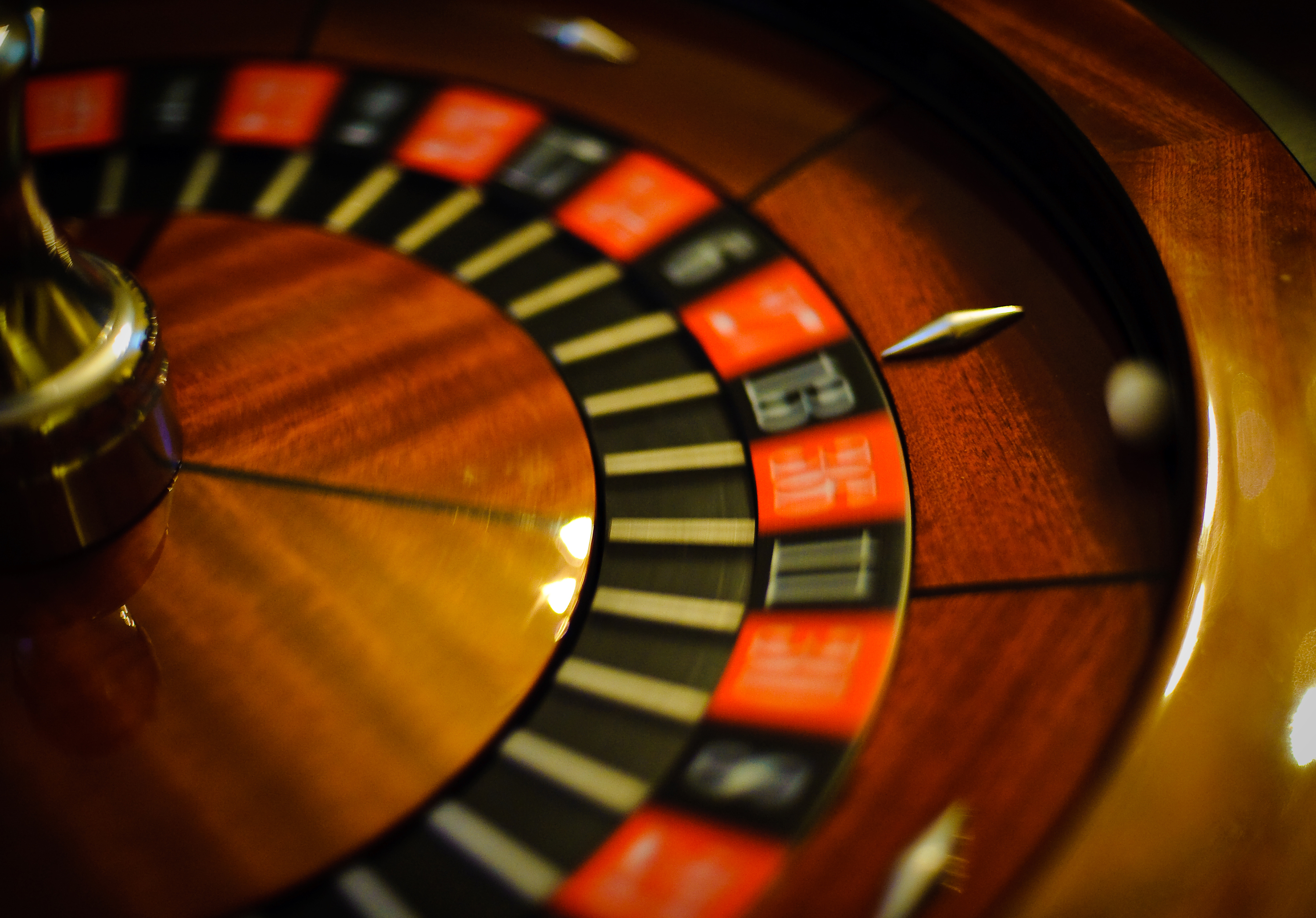
Roulette_-_detailThe upshot of all of this is the epiphany I had– the realization that Phil the God (who is an atheist) uses this giant cosmic roulette wheel to determine the fates of each denizen of his universe.  There he is, sitting in his heavenly bathrobe, watching movies on netflix and spinning his cosmic roulette wheel.

Now I know why things just seem to happen so randomly. Phil’s Cosmic Roulette Wheel is spinning and where it stops, no one knows….

2 Comments

Filed under Adventure, Books, Fantasy, Humor, Literature, mythology, Uncategorized, writer, writing

The Dilemma

GRAELENT AND THE FAIRY-WOMAN - Illustration from Legends & Romances of Brittany by Lewis Spence, illustrated by W. Otway Cannell.Romantic love and passion are two things that make up the bulk of many a book I’ve begun to read and then set aside over the past few years. Truthfully, romance novels don’t interest me the way adventure novels do–if they are seasoned well with a bit of romance. Graphic romance with no plot is porn, and I think we should just call it that and be done with it. Adventure with no romance is a travelogue detailing a rough trip, but nothing to write home about.

Dilemma.

In a novel, one without the other just does not work. Words splashed on a page for their shock value have been done and over-done, so for me it’s important to keep myself writing for the quality of the tale. If I do it right, I will intrigue the reader and challenge them, making them want to read more.

Adventure must have some sort of romance to drive the plot forward, some unattainable goal whether it is love or an object. I like to look back at history and see what it was about some tales that have kept the interest of readers, not just for years, but for centuries. What do these tales embody that new works should also have, to make them timeless?

Let’s examine the Arthurian Legend. From the website, www.arthurian-legend.com.

I quote:

Illustration by H.J. Ford for Andrew Lang's Tales of Romance, 1919. Arthur meets the Lady of the Lake and gets the Sword Excalibur“The legend of King Arthur and the knights of the Round Table is the most powerful and enduring in the western world. King Arthur, Guinevere, and Sir Lancelot did not really exist, but their names conjure up a romantic image of gallant knights in shining armour, elegant ladies in medieval castles, heroic quests for the Holy Grail in a world of honour and romance, and the court of Camelot at the centre of a royal and mystical Britain.”

There we have the essence of what constitutes a timeless tale: Powerful people doing heroic deeds, and finding a bit of romance along the way. Set them in intriguing surroundings and dress them in metal or velvet (or both) and voila! Now all you must do is cue the magic–bring on the wise old sorcerer.

Hey, it worked for J.K. Rowling!

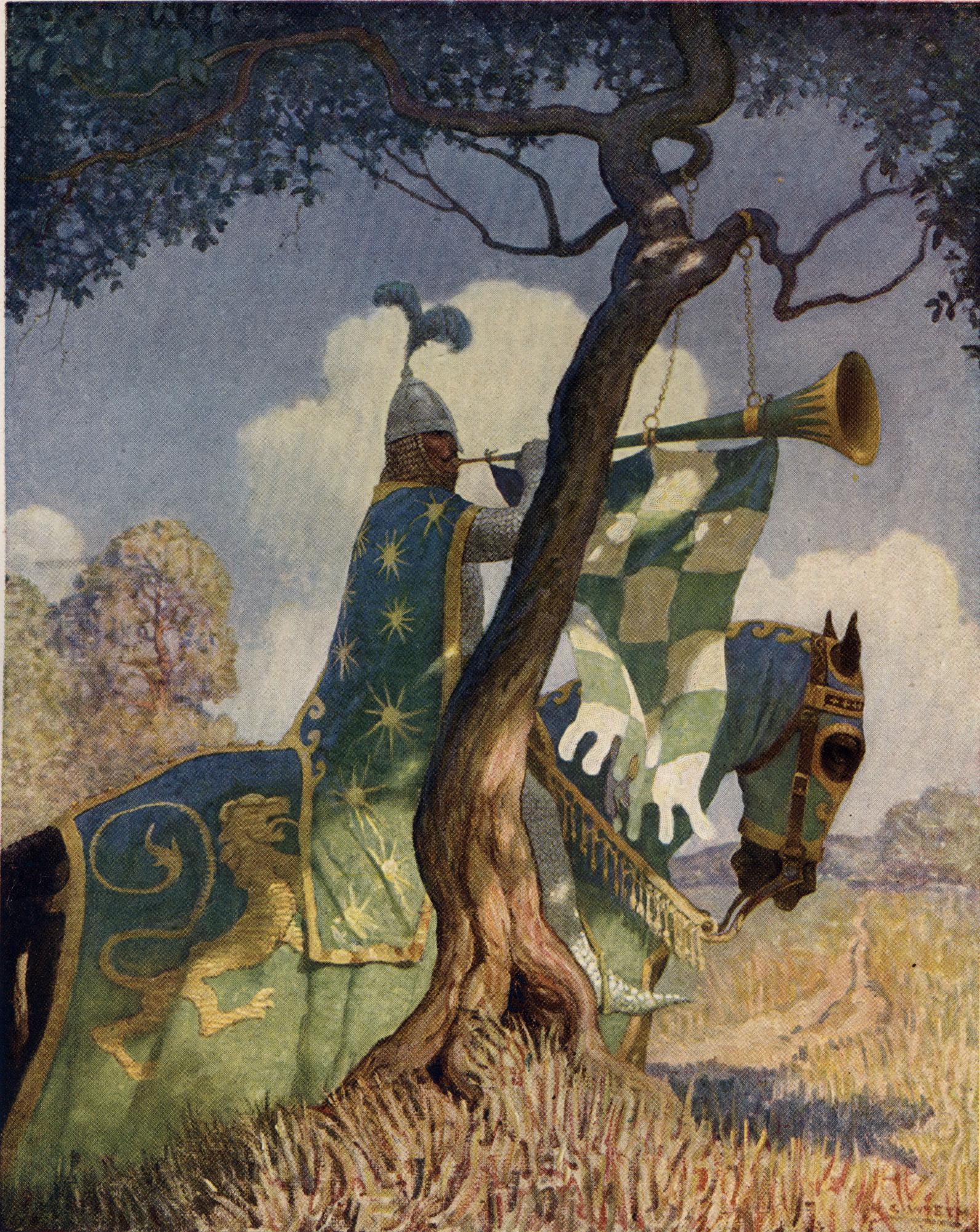
Boys_King_Arthur_-_N._C._Wyeth_-_p82I do a lot of reading, and if I am not reading, I am writing. My hope is that at some point in every tale I write, my readers will find themselves completely involved in the tale to the exclusion of the world around them. If that happens, then I have had an impact on my reader, the same way as Anne McCaffrey, Tad Williams, and Mercedes Lackey have each impacted me.

Someday I will have written that tale.

But if I do that,  I’ll have to sustain the momentum…keep writing good stuff only and forget writing crap….but crap is so much easier to write.

Unfortunately we’re only as good as our next book.

*Doh*

4 Comments

Filed under Battles, Books, Dragons, Fantasy, knights, Literature, mythology, Uncategorized, writer, writing

Art for the great cover-up

Medieval_forest wikimedia commons PD 100 yrsI love great fantasy art.  Fantasy art has been around for thousands of years, and examples of it can be found all over the globe. Some of the finest examples of fantasy art are in the heroic paintings from medieval times that were meant to describe the daily  lives of people. Like good fantasy, they were based in reality, but with a bit of a fairy-tale quality added, to lend a bit of interest to what they considered ordinary pursuits.

I’ve been spending a lot of time looking at art, with the intention of buying. I have the notion to redo all my book covers this next year, if I can get the hang of Photoshop.  I love good book covers and am always buying books based on them.  The graphics on my books are always done by the amazing Ceri Clark, but in my Tower of Bones series I’ve given her less than optimal art to work with. She has worked a miracle with what she has been given. Now I’ve amassed a really large database of affordable art, much of which will speak well to my books.

Tiepolo,_Giambattista_-_Die_Unbefleckte_Empfängnis_-_1767_-_1768_-_Drachen Giovanni Battista Tiepolo [Public domain], via Wikimedia CommonsThis has all come about because I have completely rewritten my first published novel and am now designing the new cover for it, based on its new title. This cover is critical, because there are two books currently based in that world, and a third is partially written. The covers for all three must relate to each other.

I think I was successful in getting the right art for Tales from the Dreamtime. Ceri’s graphics are perfect and make it intriguing.

This quest for great cover art is what I must do for my Tower of Bones series too.  There are two books currently published in that series, and one more in the editing pipeline at Eagle Eye Editors. (Actually, they currently have three books of mine in their pipeline, and Tower of Bones is one of them.)

Quaglio_Kipfenberg

The best art for a book tells some of the story but also make the eye go “Oh yeah, baby!”  For me, that means it is colorful and mysterious, something that makes me think about the image.  I have comps of all the art I’ve ever wanted and now I must go through each image and decide which  image will be purchased. It is difficult to find great art for reasonable prices, but not impossible.

Many of my friends go to DeviantArt.com, and many others go to iStock and Dreamstime.  I have gone to all of these places, and I’ve found many pieces that will combine well to build my covers. It will not be free, but it will be fun!

All I have to do, is learn how to use Photoshop.  I am now an old dog, learning a new trick!

1 Comment

Filed under Adventure, Battles, Books, Dragons, Fantasy, Humor, Literature, mythology, Vegan, writer, writing

What to do…what to do….

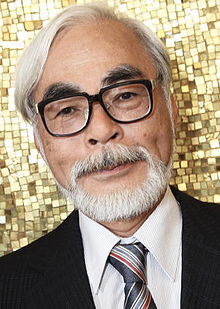
220px-Hayao_MiyazakiI found out today that the great Japanese artist and filmmaker  Hayao Miyazaki is retiring from making movies. His career has spanned over fifty years. Miyazaki  attained international acclaim as a maker of anime feature films. He and Isao Takahata co-founded Studio Ghibli, a film and animation studio. The success of Miyazaki’s films has been compared to that of  Walt Disney, British animator Nick Park and American director Robert Zemeckis. To be honest–I LOVE his work.

I first heard of Miyazaki in 1986, when my ex husband bought a little VHS movie for our daughter, Meg, called Warriors of the Wind. It was a wonderful movie, and we watched it over and over, but it felt incomplete, as if we only had part of the film.

It turns out that was indeed the case: the true name of the movie was Kaze no Tani no Naushika, translated to Nausicaä of the Valley of the Winds.  The movie tells the story of a young princess of the Valley of the Wind, Nausicaä (Shimamoto),  who gets involved in a struggle with Tolmekia, a kingdom that tries to use an ancient weapon to eradicate a jungle of mutant giant insects. Nausicaä must stop the Tolmekians from enraging these creatures.

230px-Nausicaa2coverThe underlying story is so powerful and is told so well that I was immediately hooked on Miyazaki’s work. According to Wikipedia, the most prominent themes of that movie are the anti-war and environmental focus of the film. (quote)  “Nausicaä, the heroine, believes in the value of life regardless of its form and through her actions stops a war. Loy and Goodhew state there is no evil portrayed in the film, but the Buddhist roots of evil: greed, ill will and delusion. Fear is what drives the conflicts, the fear of the poisoned forest results in the greed and resentment. Nausicaä, besides from being a transformative force, leads people to understand and respect nature which is portrayed as a welcoming, spiritual, and restorative for those who enter it peacefully.[6]

Nausicaä’s commitment to love and understanding—even to the point of death—transforms the very nature of the conflict around her and changes the attitudes and the hearts of those whose stubborn adherence to their biased views have brought the conflict to the boiling point.

It is said that Miyazaki’s inspiration for Nausicaä sprang from the works of Ursula Le Guin‘s EarthseaBrian Aldiss‘s HothouseIsaac Asimov‘s Nightfall, and J.R.R Tolkien‘s Lord of the Rings

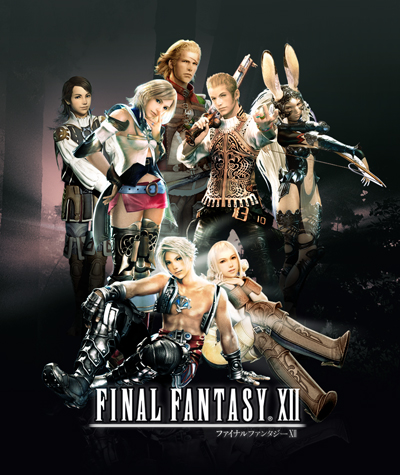
Ff12castAll I know is his work in this movie is gripping, sweeping and superlative. My Tower of Bones series was originally written to be an anime based RPG, that was proposed but never built. When I began plotting the game, I had the great Final Fantasy style plots in my mind, and Miyazaki’s art and influence is clear to anyone who has played them as obsessively as I have. When the game fell through, I was so in love with the story and the characters that I HAD to make it into a book. In my mind, my characters are much like the ones in the poster to the left. Sadly, I’ve never been able to get a cover designed that reflects this.

Because of Miyazaki I have been a devoted fan of Anime and Manga since the 1980’s. That love of sweeping sagas where good triumphs over evil at the cost of great personal sacrifice drives my own work today.

Mr. Miyazaki, I will miss your brilliant work, but I will continue to to cherish those wonderful movies you have so diligently and carefully crafted for us over the years. I can only wonder what your poor heart is feeling now, with the ever-worsening, mindbogglingly horrific Fukushima disaster. My heart and my prayers are with the people of Japan and indeed with the Pacific Ocean as the same water that washes the shores of Japan also washes the coast of Washington State.

Miyazaki’s great works taught me that we are all just one small living, breathing world, and each one of us is responsible for making it better or worse.

I choose to make it better.

1 Comment

Filed under Adventure, Battles, Brendan Fraser, Fantasy, Final Fantasy, Japan, Literature, mythology, ninjutsu, Vegan, writer, writing

It’s all Greek to me

Blender3D_Dragonfight_03 Sascha Kozacenko, with kind permission for GFDL.Dragons.

Two tons (or more) of muscle, scales and, frequently, fire.

What’s not to love?

They are rumored to be as devious and crafty as your mother-in-law.

Don’t bandy words with a dragon or you may lose more than the argument.

Again, not unlike your mother-in-law.

St._George_and_the_Dragon_-_Briton_Riviere Briton Rivière [Public domain], via Wikimedia CommonsMy dragons are not really the kind who bandy words about, however some do breathe fire. That heats things up a bit!

Heh heh.  Oops.

Darn it. Now we need a new hero.

I hate that when that happens.

In English, the word dragon is directly derived from Old French – dragon, which in turn comes from Latin draconem (or draco) meaning “huge serpent, dragon,” AND also from the Greek word drakon meaning “serpent, or giant sea fish”.  Both the Greek and Latin term referred to any great serpent, not necessarily mythological, and this usage was also current in English up to the 18th century. So in that sense, dragons REALLY did exist.

Which came first Latin or Greek? Greek – it’s a living language and has been spoken for over 3000 years.  Many Greek words found their way into Latin, and other proto European languages. Thus English has some roots in Ancient Greek.

Tiepolo,_Giambattista_-_Die_Unbefleckte_Empfängnis_-_1767_-_1768_-_Drachen Giovanni Battista Tiepolo [Public domain], via Wikimedia CommonsNow as far as dragons go, in my two worlds they are quite different from each other.  In Waldeyn, (Billy’s Revenge) there are two kinds. The smaller wingless variety often has a second breath that allows them to breathe fire–quite an effective weapon, as Huw the Bard will discover. The bigger ones fly and prefer to eat people, so they are considered a nuisance.

No, my dragons are NOT vegans. But that would be an interesting twist….

In Neveyah, (Tower of Bones) they tend to be immense creatures of both magic and the element water. This puts the mage at a disadvantage, as the element that heals the beast is the element of water and you must never use it against them. Water is also their best magic weapon, and they are relentless. They have high reserves of chi and strong magic at their disposal, along with excellent shielding ability, so using any magic at all against them is a no-no.

Good luck, boys.

There are ways to fight them, and all my heroes will find ways to do so with varying degrees of success.  Writing those scenes is a real adventure, as I get to put myself in the battle, and choreograph it so that it flows, is believable, exciting, and hopefully no one crucial to the story dies.

St._George_and_the_Dragon John Ruskin [Public domain], via Wikimedia Commons

1 Comment

Filed under Adventure, Battles, Books, Dragons, Humor, mythology, Vegan, writer, writing

What the Writer Reads

knights-round-table-2I love author blogs. I love the way authors who write novels think, and that is what I love about author-blogs. You get the raw mind in action when you read these works of art.  For example, today  before breakfast I read:

J.D.HUGHESA Few Thoughts About SnowIt’s an awesome post, and the way he describes the scenery and the thoughts that snow inspires in him is really beautiful.  Quote: “I live in a rural area and for the homeless here there are fewer places to escape nature than there are in the city. Every winter, with a regularity that suggests premeditation, an unfortunate is found frozen to death behind a stone wall, in a field or even a doorway and the death is recorded as misadventure. I doubt that person’s life was much of an adventure (I might be wrong), but to dismiss it with an innocuous word like ‘misadventure’ is an insult to the dead. Perhaps we should call it manslaughter or culpable homicide – in the Scottish legal sense  –  since we all partook in the death, by omission, or just by being too busy to notice someone slip from being a live human to being a dead misadventure.”

Then, oddly enough, I was inspired to read Carlie M.A. Cullen’s lovely flash-fiction post on Spring. Quote: “Birds warble as they flit from bough to bough; small creatures rustle the undergrowth, reminding me that soon their offspring will be born.” Such a lovely post today.

After that, Johanna Garth’s wonderful blog Losing Sanity made me laugh and think of how entertaining children are, and what a mystery their minds are. Quote from ‘Life Lessons From a Little Boy: “Mom, life is a lot like chess,” he told me as I stopped to photograph and tweet a picture of golden daffodils.

“How so?” I asked.

“You have to  have an open mind. Be ready for anything. If you just concentrate on one way of
winning you might not see all the other ways.” He was wearing his oversized blue  hoodie and ripped jeans. Suddenly I had a glimpse of him as an adult, possibly  wearing the exact same outfit.

I really identify with Johanna’s experience as a mother–the most entertaining, intelligent people I know are children. When I read her blog I get a bit of my own experience raising children back, and it makes me smile.

Alison DeLuca’s wonderful blog, Fresh Pot of Tea was on a subject near and dear to my heart–beauty and aging. Quote from her post, Lovely Age: “After watching Driving Miss Daisy on a date years ago, I turned to the fellow who had brought me to the movies.  “You know,” I said, “Jessica Tandy really is a stunning woman.”

“What?” He was horrified. “But – she’s old!”

Yeah, I broke up with him not long after that.”

Alison cracks me up, with her ability to tell the painful truth and make you laugh at yourself.

Then there are the helpful blogs, like Mary W. Walters’ blog The Militant Writer. This week’s post was particularly interesting to me as it is on marketing. Establish a S.M.A.R.T. book promotion goal is this weeks title. Quote: If “to sell books” is all I’m striving for, I’m never going to get anywhere. It’s like setting myself the goal “to lose weight” or “to read Tolstoy” or “to learn another language.” Those are ultimate goals, but they are not specific, measurable, attainable, relevant or time-sensitive goals, which is what SMART stands for (more on S.M.A.R.T. goals later).

I’ve learned a lot from following Mary’s blog since I began this journey.

These blogs are only a few of the ones I read this morning.

All in all, I spend the first one to two hours of the day reading blogs that show up in my email or blog-reader.  Some of the best writing on any given subject is out there in blog-form and it’s FREE!

Get out there and read, my friends.  And if you are an author, do me a favor, and BLOG!

3 Comments

Filed under Adventure, Fantasy, Literature, mythology, Romance, Steampunk, writing

Imago Chronicles, Lorna Suzuki

Imago Chronicles Book One  Lorna Suzuki Just like every other obsessed, fanatic reader of High Fantasy, I am always on the lookout for that one special book that presages the advent of a new classic series in the genre. In my opinion, Lorna T. Suzuki has written that book in Imago Chronicles Book One: A Warrior’s Tale.

 As many of you know, I review my favorite fantasy books on a blog called Best in Fantasy, and that is where I first reviewed Suzuki’s work in 2011.  I was blown away by her ability to draw you into her world and keep you there, mesmerized.

Since I began blogging on what I consider to be the best fantasy reads that come across my Kindle, I have read, on average, 4 to 6 fairly good books for every one really good book that made the blog; but ‘fairly good’ is not good enough for me to call a book ‘Best In Fantasy’. Hence, my frequent excursions back to my library of classics. In order for a book to be featured on that blog, I have to LOVE it! In ‘A Warrior’s Tale’, Suzuki has written a book that stands beside the works of my beloved heroes of modern fantasy Jean Auel, Mercedes Lackey, and David Eddings. Imago now ranks as one of my all-time favorite epic fantasy series. And now, joy of all joys! Books 1,2 and 3 have been optioned for a major motion picture trilogy!

And now the story:

In an intriguing twist, A Warrior’s Tale begins with the end. Taking shelter from a freak blizzard, Nayla Treeborn, half elf, half human and not fully either, huddles next to the corpse of a dead soldier; using his body and the now un-needed cloaks of other dead soldiers to shelter her from the killing weather. As she shelters there, she finds herself thinking about her life to that point; going back to a day when she had been a child the mental and physical equivalent of a mortal 12 year old, but was in reality 37 years of age.

Nayla’s father, a high Elf and the Steward of Nagana, Dahlon Treeborn, despises her for reasons which are not made clear in this book. He has punished her for publicly disagreeing with him; nearly beating her to death. Joval Stonecroft discovers her, dreadfully mutilated and bloody and is horrified. Healing her as well as he can, he spirits her out of the elven city of Nagana to the human city of Anshen, home of the legendary Kagai Warriors. Taking the name of Takaro, the young girl embarks upon a lifetime of training, eventually becoming the only female Kagai Warrior ever accepted into the brotherhood. When at long last she reaches womanhood, not only is Takaro fully trained in the manly arts of the warrior, but she is also a woman fully trained in the womanly arts as a spy, a courtesan and an assassin.

In book 1 of the series the main antagonist is Eldred Firestaff, a sorcerer who combines the nicer qualities of Lord Voldemort (Harry Potter) with the personal charm of Ctuchik (The Belgariad), and who is an immortal tool of evil, resurfacing every generation or so. Each time he comes back, he uses the armies of the weak Emperor of East Orien as his power-base in his eternal quest to conquer the world of Imago. However, in this first book of the series, although the battles with this slippery and long-lived villain are colorful and intense, they are almost secondary to Nayla’s personal battle for acceptance and with her own inner demons. This book is concerned with fleshing out Nayla and really whets your appetite for the rest of the tale!

As a half-caste, Takaro/Nayla ages much more slowly than humans, and much more quickly than elves. During the course of the story she outlives three of her Kagai Masters, all of whom live to be very old men. She also outlives their grandsons and their grandson’s grandchildren, yet at the end of the book she appears to be a woman of about twenty-five years of age. Her wisdom and abilities are that of a warrior at the prime of life, and she becomes the most respected of the fierce Kagai Warriors. When her father is maneuvered into asking for the finest Kagai Warrior to train his own warriors, Nayla finds herself back in Nagana, and her father is forced to suffer her presence there; a situation that is bad at best.

The world of Imago is clearly drawn, and is every bit as compelling as that of Tolkien’s Middle Earth. Here we have two distinct cultures living side-by-side in peace and harmony for generations; coming to each other’s aid whenever the other is threatened. Loyalty, honor, hard-work, love and family are the central facets of the human society that Nayla/Takaro finds herself adopted into as an abused child, and these values are echoed in the society of the Elves. Within each society, the political and social divisions are clear and the differences between Elves and Men are well drawn and consistently portrayed throughout the drama that unfolds.

Suzuki is herself a master of the martial arts, being a practitioner and instructor of Bujinkan Budo Taijutsu; a system that incorporates 6 traditional Samurai schools and 3 schools of Ninjutsu. As one who was once a mere grasshopper in the obscure art of Shou Shu, I fully appreciate the wisdom and experience that the master crafts into the fabric of this tale. Every element of this story evokes both the martial and the spiritual aspects of the culture of Imago; every element is vivid and believable to the reader.

With each book in this series, I was drawn deeper into this amazing and very real world of Imago. In book 2 of the series, Tales From the West we discover more about the true evil that threatens Imago, and discover who or what is behind the sorcerer Eldred Firestaff.

What I’ve learned from reading the works of indie author Lorna Suzuki is that to really craft a world and build believability you must know what you are writing about. She understands the warrior culture from the point of view of a female warrior becasue she IS a female and a warrior.

Know thy craft! Write what you want to read, know what you are writing about and readers like me will flock to read it!

Comments Off on Imago Chronicles, Lorna Suzuki

Filed under Adventure, Battles, Books, Dragons, knights, mythology, ninjutsu, Uncategorized, writing