Category Archives: Publishing

But what about poetry?

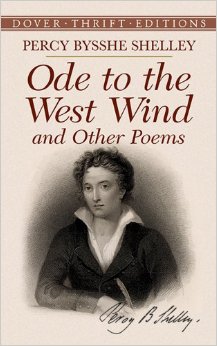
ode to the west wind-shelleyI love poetry because I love the many ways words can be manipulated on a blank page. To me, poetry is something beautiful and visually simple, a thing that looks like it should be uncomplicated. But nothing could be farther from the truth.

I guarrantee you, this post will not scratch the surface of why poetry is so much more than naughty limericks (which I do know a great many of and which are quite hilarious).

Bad poetry can be written by anyone, but writing great poetry takes a certain genius–I don’t consider myself a poet, although I do sometimes feel compelled to attempt poetry.

Poetry doesn’t always rhyme and it frequently involves complicated aesthetics that are both auditory and visual. This is because the reader may not always be reading the poem aloud, and so the visual art of the piece comes into play.

Sometimes, poetry is long, epic in actuality. Consider Manfred, by George Gordon, Lord Byron (From Wikipedia, the font of all knowledge): Manfred: A dramatic poem is a poem written in 1816–1817 by Lord Byron. It contains supernatural elements, in keeping with the popularity of the ghost story in England at the time. It is a typical example of a Romantic closet drama. (end quoted text)

Byron himself referred to his works as “closet dramas,” since they were intended more for the theater of the mind than the actual theater.
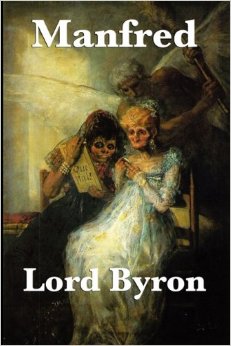
manfred-lord byronExcerpt from Act III, scene I of Manfred

There is a calm upon me–
Inexplicable stillness! which till now
Did not belong to what I knew of life.
If that I did not know philosophy
To be of all our vanities the motliest, 10
The merest word that ever fool’d the ear
From out the schoolman’s jargon, I should deem
The golden secret, the sought ‘Kalon,’ found,
And seated in my soul. It will not last,
But it is well to have known it, though but once.

And a “theater of the mind” is what Byron’s work sparks in me.

Words are bent and shaped by poets to evoke meanings, bent and formed into precise shapes. We novelists and writers’ of short fiction have the luxury of creating a long narrative. In poetry, space is intentionally limited by the author, forcing the the poet to write within narrow constraints. Thus, allegory, allusion, and indirection are common motifs in poetry.

Traditional forms have precise constraints: Sonnets are fourteen lines, following a set rhyme scheme and logical structure. Sonnets use iambic pentameter, which is characterized by the familiar “da dum da dum da dum da dum da dum” cadence of five sets of syllables.

Even in free verse, one must pay attention to the meter, the basic rhythmic structure  of a piece, the rhythm and cadence of the syllables. A clear example of this can be found in Walt Whitman’s poems, where he repeats certain phrases and uses commas to create both a rhythm and structure.

I love the poem,  When Lilacs Last in the Dooryard Bloom’d, written in free verse in 206 lines. Whitman used many of the literary techniques associated with the pastoral elegy. He composed it during the summer of 1865, a period of profound national mourning. The country was reeling in the aftermath of the assassination of President Abraham Lincoln, that occurred on April 14, 1865.

Despite the poem being an elegy to the fallen president, Whitman neither mentions Lincoln by name nor does he mention the circumstances of his death. Instead, Whitman used allegory–symbolic imagery:  the lilacs, a falling star in the western sky which was the planet Venus, and a shy bird, the hermit thrush. It is most definitely an elegy because he employed what scholars consider the traditional progression of the pastoral elegy: moving from grief toward an acceptance and knowledge of death.

It is is a beautiful poem, and is one I often return to. Lines 18-22 of Whitman’s leaves of grass-whitman When Lilacs Last in the Dooryard Bloom’d:
In the swamp in secluded recesses,
A shy and hidden bird is warbling a song.

Solitary the thrush
The hermit withdrawn to himself, avoiding the settlements,
Sings by himself a song.

And how has poetry evolved into the 21st century? For one unique direction of evolution check out the works of Seattle poet, Bill Carty on Pinwheel

For more famous contemporary poets, check out 31 Contemporary Poets You Need to Read.

I have always been a fan of the classic masters: Dickinson, Browning, the Brontë sisters, Byron, Shelley, Frost, Whitman. Wordsworth, and my beloved Yeats, among many.  I was raised in a home with their works proudly displayed on the bookshelves in the living-room, massive tooled-leather volumes from Grolier, smelling of romance and ideas.

I didn’t always understand the works of the great poets, and I still don’t–but I love them.

I leave you with a rhyming poem, The Song of the old Mother by William Butler Yeats:

I rise in the dawn, and I kneel and blow
Till the seed of the fire flicker and glow;
And then I must scrub and bake and sweep
Till stars are beginning to blink and peep;
And the young lie long and dream in their bed
Of the matching of ribbons for bosom and head,
And their days go over in idleness,
And they sigh if the wind but lift a tress:
While I must work because I am old,
And the seed of the fire gets feeble and cold.
4 Comments

Filed under Books, Fantasy, History, Literature, Publishing, Self Publishing, Uncategorized, writer, writing

How to format your manuscript for submission

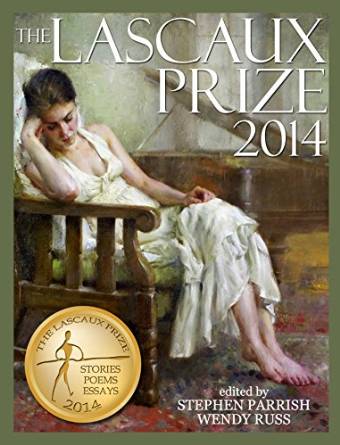
lasceax prizeThis post is a follow-up to the previous post on why indies need to write short stories. That article sparked some questions that I will answer to the best of my ability. All of this information was gleaned by searching the internet when I first wanted to know why my manuscripts were so regularly rejected.

First of all, a properly formatted manuscript shows that the author did her research and knows what the editor wants. That will help your ms make it past the first hurdle.

You will find that each publisher, magazine, or contest website will have a page or section called “Submission Guidelines.” That page is your friend, because within the words on that page will be the rules specific to that particular publication or contest:

  1. length of submissions in word count (Do not exceed or fudge this. Stay within their parameters.)
  2. how they want you to format your work for their best use.
  3. where to submit the work
  4. what dates submission will be open
  5. if it is a contest, fees will be listed there

If you are building a back-log of of short-fiction there are some short-cuts you can take to enable you to have submission-ready work that requires minimal adjustment to fit  various requirements. This is because most publishers use what is considered the industry standard, Shunn Manuscript Format. William Shunn didn’t invent this, but he made this knowledge available to all would-be authors via the internet.

First, if you are submitting this to a publisher that publishes hard-copy your manuscript should look typed, not typeset. If you are composing your manuscript on a computer, don’t succumb to the temptation to use fancy fonts. For hard-copy publishers use a Courier font. Every word processor and printer comes with Courier, so you have no excuse for not using it.

Use a 12-point Courier. This means it prints out at a pitch of ten characters per inch. Don’t use a 10- point Courier, which prints out at a pitch of twelve characters per inch. That is far too small and editors who have to read a lot of manuscripts won’t want to struggle to read yours and it will be summarily rejected.

On a side note, something I have learned through this publishing life is that in printing, point size refers to the height of the characters in a font; pitch refers to the width. This is critical knowledge, because the font that the publisher wants the ms submitted in is the only one that will make it past the first editor’s inbox.

If you are submitting this to a publisher that is publishing in an electronic format, they may require 12-point Times New Roman font. Times New Roman is easier on the eyes, when viewed on a monitor. As an editor I prefer submissions in Times New Roman, as I rarely work from hard copy.

The preferred font will be clearly stated in their submission guidelines.

IF YOU INTEND TO FORMAT YOUR MS FOR HARD-COPY SUBMISSION TO AN OLD-SCHOOL PUBLISHER:

  1. Set the margins for your document at 3cm (1 inch) on all four sides.
  2. Align to the left hand side only; the right hand side should remain jagged. (THIS IS CRITICAL)
  3. Use twelve point Courier in black type only. Times New Roman or Arial fonts may also be acceptable—check the submission guidelines of the magazine or anthology.
  4. Lines should be double spaced with no extra spaces between paragraphs. (THIS IS CRITICAL)
  5. Single space between sentences after periods. (this is also critical)
  6. Indent new paragraphs and each new section of dialogue, with the exception of a scene break paragraph.
  7. Indicate scene breaks by inserting a blank line and centering the hash sign (#) in the center of that line.
  8. Center a hash sign # one double-spaced blank line down at the end of the manuscript. Or simply write The End. This assures the reader that no pages are accidentally missing.
  9. Use underline for italicized words if you are using Courier font. If you are using Times New Roman you can use proper italics. (Again, check the submission guidelines)
  10. William Shunn says, “You should place a header in the upper-right corner of every page of your manuscript except the first. This header will consist of: the surname used in your byline, one important word from the title of your story, and the current page number. Do not place the header in the upper-left corner, because the typesetter will often have your manuscript clipped in that corner as he or she transcribes it and will not be able to see what the current page number is.” (end quoted text)

Your first page should include:

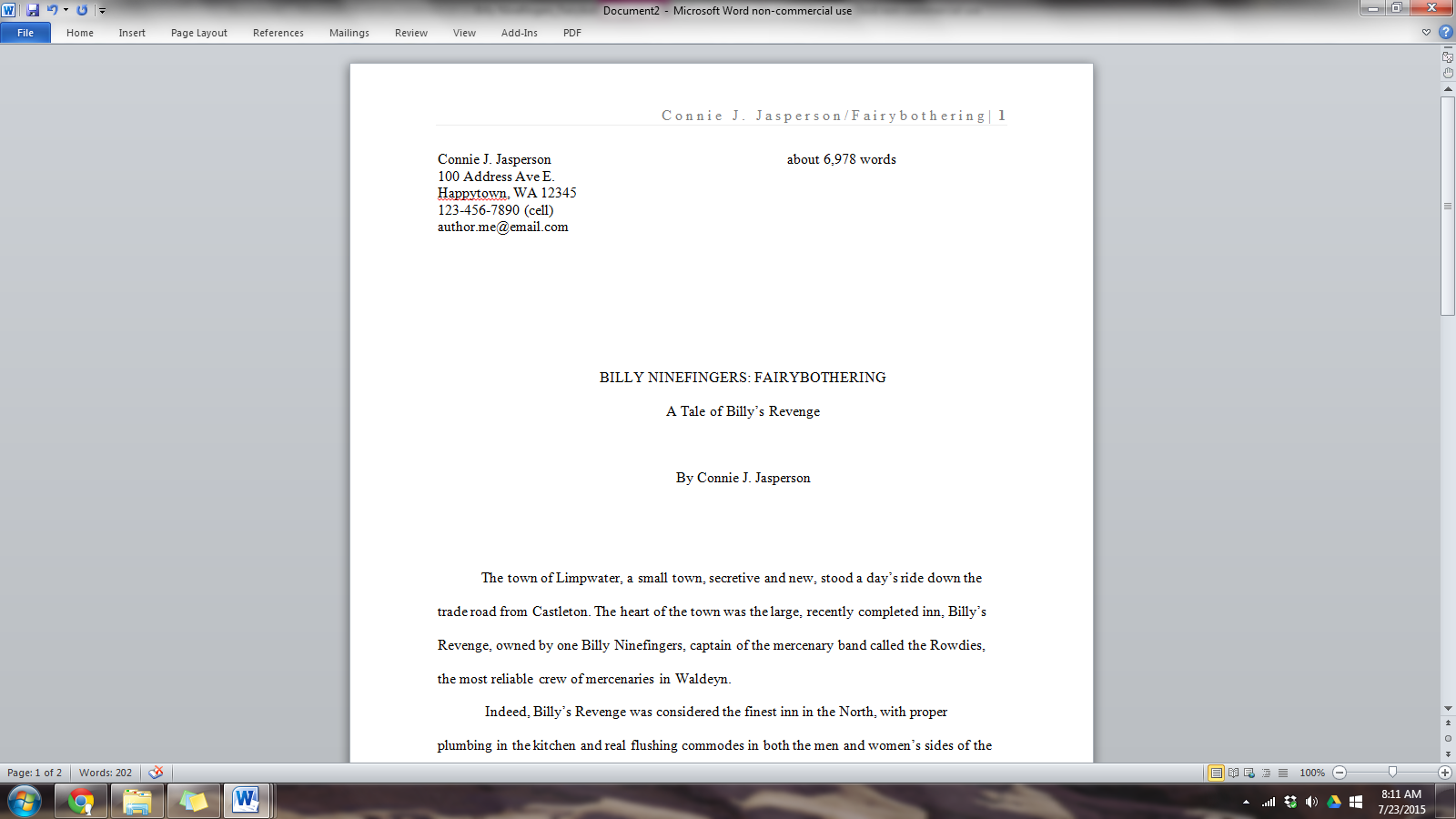
  1. The name of the work.
  2. The approximate word count, some will want it only to the nearest hundred.
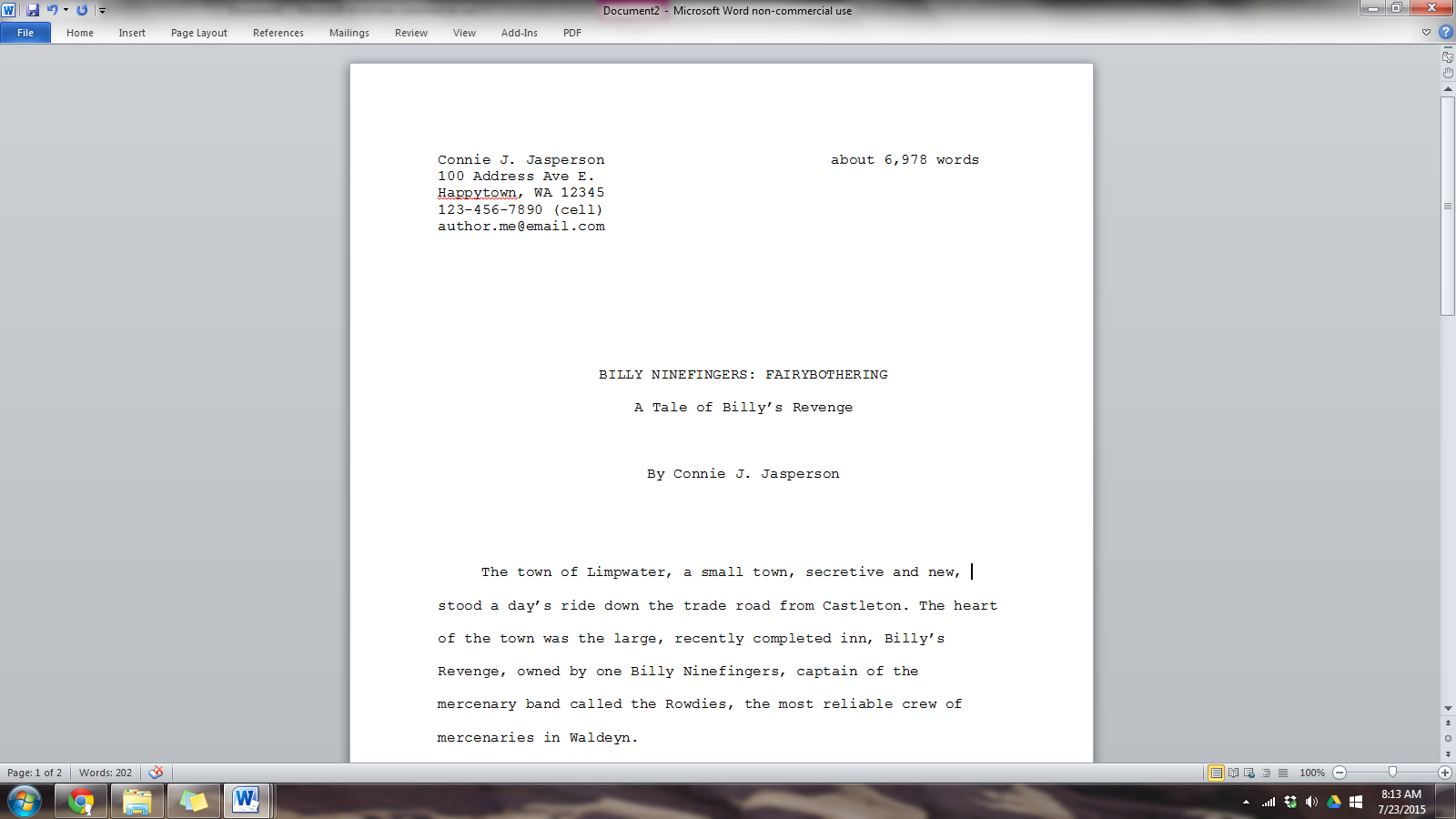
  3. In the upper left, your contact details formatted in the same font and size as the manuscript font.

prnt scrn Fairybothering 1

MANY contests and e-magazines want your manuscript formatted in a similar fashion, but may require a different font. Some will want the header on all pages, and some will want your full author name in the header:

prnt scrn Fairybothering 2

TO Format your header in MS WORD:

  1. Go to the Insert Tab and click on: page numbers>top of page
  2. From the drop down menu select plain number three (the upper right hand corner)
  3. Type your name and title just before the number
  4. Click on the body of your document and the header/page number is set, and will appear to gray out.

TO Format your ms so the page numbers start on page two: click on this link to go to this page at MS Office Help if you are using WORD 2007 or 2010. Later versions also have help pages there. The process is a little more involved, and I don’t want to fill this post up with that, so use the resource offered by Microsoft–that is how I learned. Most hard-copy manuscripts must be formatted this way, so learning how to do this is critical.

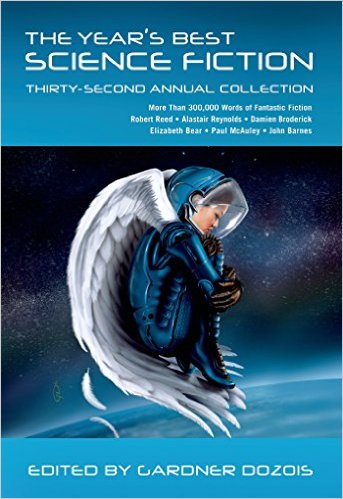
anthology sci fiWhen you submit your work to an anthology or contest, if your work is accepted you will receive a contract. That contract will have the terms of payment, conditions of use, and all the pertinent information you, as the author, will need to know. Most are simple, and don’t require a law degree to understand. If you receive a complicated contract, seek a literary agent or attorney for advice.

Also be aware that ALL contests  and magazines will want original work that has never been published before. Many anthologies, will too, unless they are promotional anthologies put out by publications showcasing the most popular stories they printed during the previous year. Often these collections are the editors’ favorites.

Most contracts will state that you can reuse or republish the work 3 months or 90 days after the date of their publication. When you do so, you must include on the copyright page a caveat stating that it was originally published in their anthology or magazine, and what issue/year.

1 Comment

Filed under Publishing, Self Publishing, writer, writing

Why indies should write short stories

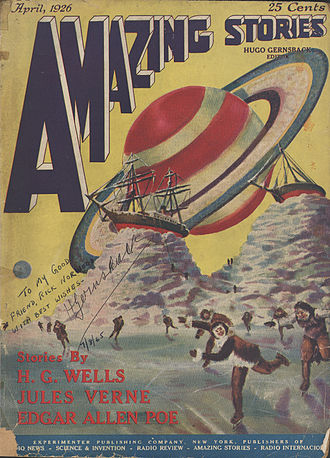
Amazing_Stories,_April_1926._Volume_1,_Number_1Some of the work that moved me most as a reader have been short stories. It is through writing short stories that people like Anne McCaffrey and Isaac Asimov first began to find acceptance in the publishing community.

Magazines focusing on speculative fiction were popular and at that time, there weren’t many authors writing in that genre. People didn’t have the internet, but they did have limited free time and short attention spans.

Magazines offered surprisingly high quality short fiction in lengths that fit into the busy lifestyle of the time.  My father subscribed to four magazines as did my mother. Magazines or books would arrive in our mailbox each week, as my parents were also members of the Science Fiction Book Club and the Double Day Book Club. This meant that besides the eight magazines, four new hard-cover books would arrive at our house every month.

Frequently, those books were anthologies of short stories.

Times have changed and so has the publishing industry. But writing short stories is still the way to get your foot in the door and not only gain visibility, but you will grow as a writer. Magazines are springing up all over the internet, and they are accepting submissions.

It is a good idea to begin putting together a collection of short pieces in a variety of genres and in as wide a range of topics as you can think of.  The following is a list of  on-line sci-fi/fantasy magazines, and many in every other genre are also accepting submissions:

Apex Magazine (submissions re-open in September)

Fantasy Scroll Magazine

Strange Horizons 

Challenger 

Space and Time Magazine 

Interzone 

Asimov’s Science Fiction 

The Magazine of Fantasy & Science Fiction

Analog Science Fiction and Fact

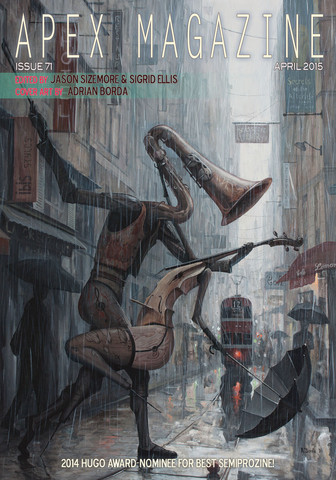
 ApexMag04_11b0889b-3b61-4c44-9a8d-9b2e89347e47_largeNow, I hear the Ghost of Rejections Past wailing in the background “But what if I get rejected?” Rejection happens. I could wallpaper the inside of an outhouse with them. Step back, take a good look at the story, and if you still think it is your best work, shop it to a different magazine. The ones I’ve listed are only the tip of the iceberg–there is opportunity out there for indies to gain both visibility and credibility by publishing short works through traditional routes.

The thing is, magazines are not the only reason you need a backlog of short stories–consider CONTESTS. Many are free and have reputable histories. The Write Life posted this article on 27 Free Writing Contests.

Not all contests are free, and not all contests are reputable. Exercise “due-diligence” here. I enter the Lasceaux Review contest every time a new one pops up, simply because it is highly reputable and is one of the most friendly to indies, and has a reasonable entry fee, usually $10.00.

lasceax prizeYes, that is cheap, and I know that entering contests can be far more expensive. I hear you asking if you must pay  to enter and you can’t be guaranteed a prize, why should you do it?

Writing chops. Because you must write to the parameters of the contest, you develop your writing muscles each time you exercise them. Being forced to work within the confines of an arbitrary external limit forces you to become more creative if you are (as I am) of a naturally rebellious nature.

You have to use common sense here. If you can’t afford it, don’t enter that contest. Find one you can afford and see what you have that fits their needs. Every contest has rules and limits for the work they want to see in their submissions.

Writing short stories gets you writing  more: more often, more widely on a wide range of topics, and more creatively using a variety of style. Using and building these writing-chops can only grow you as an author.

8 Comments

Filed under Books, Fantasy, Humor, Literature, Publishing, writer, writing

Epiphany, and the Writers’ Conference

PNWA 2015 My Books in the Bookstore

Epiphany.

A sudden revelation.

A moment in time where suddenly you understand the why of a certain thing. For a writer this can mean the plot suddenly unthickens and we know what we need to do!

This often happens when I am in traffic and completely unable to put said revelation into practice, but hey, we go with what we have, right?

I had several such moments of glory while in Seattle at the PNWA 2015 Writers Conference this last week. Fortunately I was able to immediately put my chicken-scratched notes into a more readable form via the little Android tablet, and these flashes of knowledge will soon be causing some positive changes in my current works-in-progress.

Over the next few months a lot of what the speakers and teachers had to say will filter through my mind and into this blog, but first I need meditate on it until I know what their insights mean to me on a practical level.

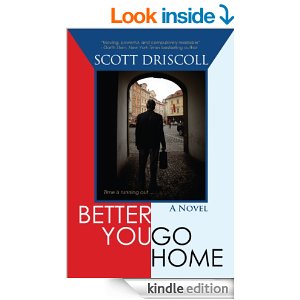
Better You Go Home Scott DriscollI attended two seminars offered by Scott Driscoll, who cuts right to the chase and explains his ideas clearly. One was on understanding your characters’ values and how the evolution of those core values fundamentally drives the story, and the other was on the inciting incident. Those two seminars dovetailed beautifully, and I had my first “I know what I need to do” moment after leaving the one on identifying and understanding the values (or ethics) your characters hold dear. If you ever get a chance to go to a seminar offered by him, I would recommend you do it.

Another speaker whose seminar really motivated me was offered by Bill Carty, on the intersection of ‘poetry and the everyday’ as a means for generating our own poems. (Yes, I have a dark side–I write poetry when no one is watching.)

I listened to my good friend, Janet Oakleyspeaking on a panel about bringing the past to life, when writing historical fiction. That too had an “ah hah!” moment.

Bharti Kirchner gave a seminar on the five essential elements of a short story, and she is an intriguing speaker. As you know, I am a strong proponent of writing short stories as exercise, to develop your writing chops, and I came away from that class knowing how to organize my thoughts so that a short story will remain short, and not accidentally turn into a novella or an epic trilogy.

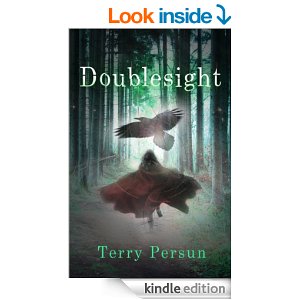
Doublesight--Terry PersunI wanted to attend the seminar on using language with intention that was offered by Terry Persun and his daughter, Nicole Persun, but I had a conflict and had to choose which class served a more immediate need, so I was unable to attend it. But all is not lost–I will be purchasing the download of that seminar. I had several wonderful conversations with Terry and he will be writing a guest post for this blog, perhaps on that subject.

Instead of that, I attended a class offered by Lindsay Schopfer on identifying the sub-genres of science fiction and fantasy so that when a book is published you can best identify your intended target audience. This is absolutely critical because when you go to publish, your publishing platform will always ask you what your “BISAC code” is. BISAC is an acronym for Book Industry Subject and Category subject headings, which are a mainstay in the industry and required for participation in many databases.

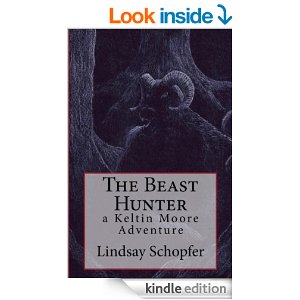
The Beast Hunter, Lindsay SchopferKnowing if you are writing Epic Fantasy or High Fantasy is critical when it comes to marketing your book to the proper audience, as die-hard readers of each sub-genre have strong feelings about what constitutes their favorite genre. Thus, there are certain tropes readers of those genres will expect, so proper labeling is critical if want your target audience to read your book.

Being able to immerse myself in learning the craft is absolutely wonderful, and I look forward to this conference every year. This year William Kenower  offered the final seminar of the event. Bill is an intriguing, energetic speaker who gets his listeners involved in what he teaching. His seminar on reconnecting with your confidence was quite appropriate for me, as I sometimes  listen to my inner critic and forget the joy I have in writing.

my sisters grave robert dugoniOther people spoke, Andre Dubus III and Robert Dugoni-two men with vastly different experiences and different styles of writing, and yet both had something to say that moved me in one way or another.  J.A. Jance, Nancy Kress , Elizabeth Boyle and Kevin O’Brien were on a panel that was fun to listen to.

If you are serious about writing, I highly recommend that you seek out and attend writing conferences. A great deal of good information can be found on the internet, but there is something about the networking and actually talking shop with the other authors that fires creativity and keeps the creativity flowing through the veins.

I suggest that you actively google writers’ conferences in your area, and see if you can find one that is affordable and offers sessions by respected authors in a wide variety of genres, and who are welcoming to authors who intend to go indie as well as those who hope to be traditionally published. It will be money well-spent.

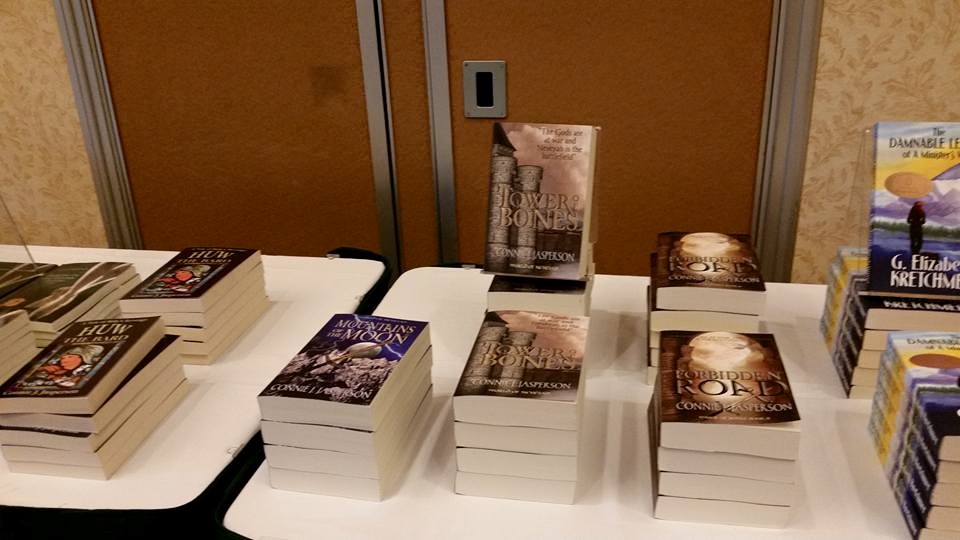
An intriguing thing happened at this conference during the book signing event. A highly respected agent (who shall remain unnamed) stopped by my table and looked over my books. He picked up Tower of Bones, and leafed through it, checking out the cover and the graphics, and also the maps. Pausing, he asked if I was indie published, and I explained I was, through a publishing group, Myrddin Publishing. He then paid me the highest compliment ever–my books were “highly professional.”

That interaction proves how important it is to put your best work out there. When you do that, you can be proud to play on that not-so-level playing field.

2 Comments

Filed under Books, Humor, Literature, Publishing, writer, writing

Elements of the story: Conversation, gestures, and actions

My Writing LifeCreating memorable characters is the goal of all authors–after all, who would read a book if the characters are bland or uninteresting? But what is it that makes a character interesting? Is it just witty conversation?

That is surely a part of it, but think about the people you know. Picture the ones you like to spend time with. What is it about them that captured your interest in the first place? I’m not talking lovers here, so set the intangible, irresistible chemistry aside, for the moment.

Was it their gestures, their mannerisms that intrigued you before you got to know them? Something about them caught your interest, and you found a kindred spirit.

That is what we want to do for our characters.

And no, I don’t mean for you to inject an excess of flushing, smirking, eye-rolling, or shrugging into your story.

I want you to think natural: People don’t only use their faces to communicate. People’s bodies and faces are in constant motion, and that is how you want your characters to seem. You can do this in small, unobtrusive ways by visualizing your conversations and the character’s who are having them.

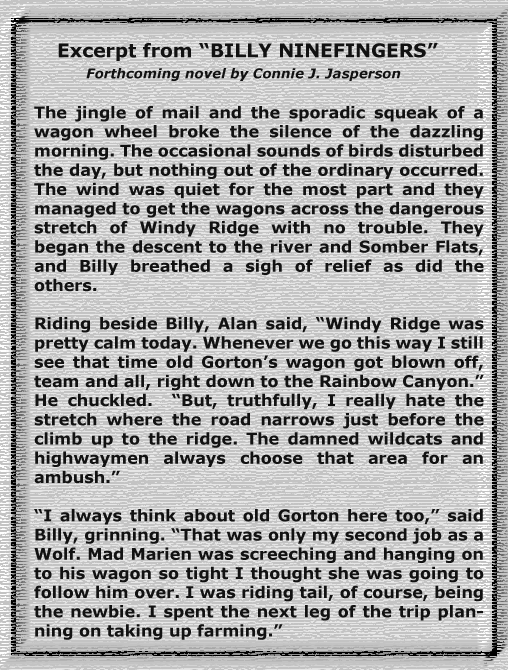
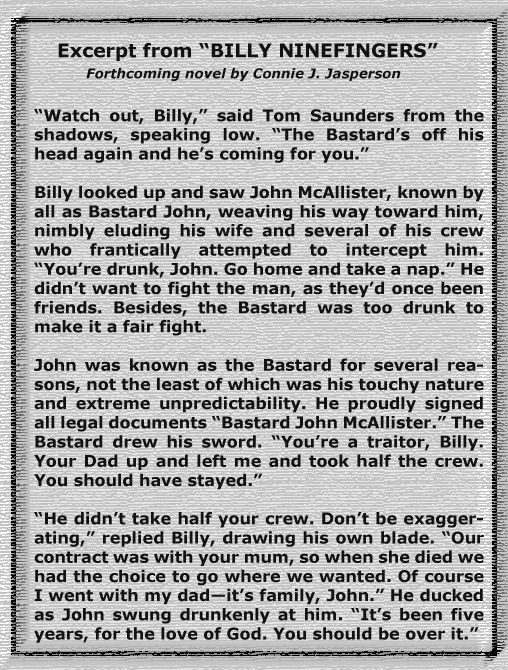
Consider this excerpt from one of my works in progress, Billy Ninefingers. These excerpts are from my rough draft and will be tightened up, but I am using them as the examples today.  This tale takes place in the world of Waldeyn, and Huw the Bard figures prominently in it, although not in the opening chapters. This conversation happens just before the first plot point. It is the calm before the storm and reveals some of Billy’s personality and his sidekick, Alan Le Clerk. It shows them as mercenaries and as people, and also shows their environment.

Conversation 1 Billy and Alan


Billy and Alan are clearly friends. It’s a sunny day and they are obviously wearing armor. Their conversation tells us they’re concerned about the trail they are on. Through that, we learn that world they live in is dangerous and people must hire guards to protect them from more than just highwaymen if they choose to travel. The three paragraphs of that conversation are all the reader needs to know about the work they do and the trail they are riding. That scene ends and the next scene  takes them and the merchant they are guarding to their destination, the dark, dirty town of Somber Flats.

That is where we come to the lead-up to the inciting action. This is where we meet Bastard John, and it is one of the few times he will be in such a place that we can see who he is. The second plot point makes no sense unless the reader knows that the Bastard is an obnoxious bastard, and proud to be so-named.

Conversation 2 Billy and Bastard John


We know the Bastard is a bastard when he is drunk. We know he is capable of acting on any thought that passes through his alcohol-soaked mind. We also see that Billy has a sense of fair-play.

Picture your conversations as if your were there with them. People miss a few beats when they are speaking. They gather their thoughts and  speak in short bursts. They shift in their chair, or stand up, or wave a hand to emphasize a point. They turn, and they sometimes mumble.

And it is important to remember that every character’s mannerisms are individual, uniquely theirs. You, as the author visualize them this way, but it is your task to commit their personalities to paper, and that is where many authors fail.

Through physical actions and conversational interactions we make our characters knowable and likable (or not, as the case may be). Their actions also help to show the environment they exist in. Within the scene of the conversation, you have the opportunity to convey the setting and the mood of your characters.

Claude Monet Painting in his Garden, by Pierre-Auguste Renoir [Public domain or Public domain], via Wikimedia Commons

Claude Monet Painting in his Garden, by Pierre-Auguste Renoir [Public domain], via Wikimedia Commons

We use our words sparingly and with intention, painting the setting as if we were artists in the style of the  impressionists. With color and small hints a good author gives the impression of detail, offering the reader a framework for  to hang his imagination on.

When characters act and speak naturally within a clearly visualized impression of a setting, we as readers,  suspend our disbelief and become immersed in the story.

Comments Off on Elements of the story: Conversation, gestures, and actions

Filed under Fantasy, Literature, Publishing, Uncategorized, writer, writing

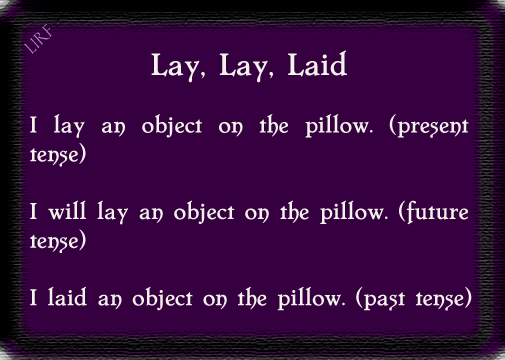
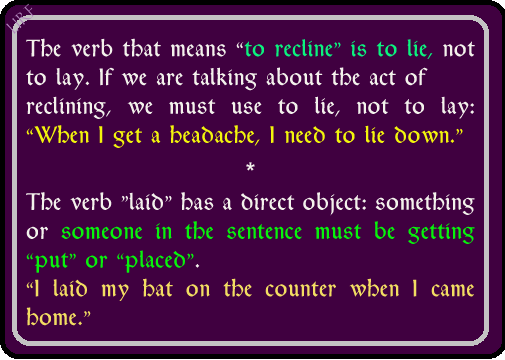
Lay, lie, laid

to lie means to restIs it to lay, to lie, or what? I want to get this right but these words can be a complicated morass of misery. It boils down to a simple concept: is it RECLINING  or was it PLACED THERE?

“Lay” is a verb meaning to put or place something somewhere. It has a direct object. Its principal parts are “lay,” “laid,” “laid,” and “laying.”

What the words refer to is the action: If you set it (object) there, it is laying there. Lay it there. Lay it on the pillow.

If it is resting or reclining, it is lying there. Lie down. Lying down. Lie down, Sally. (Clapton had it wrong? Say it isn’t so!)

The internet is your friend, and can teach you many things besides how to make cute kitty memes. Quote from the wonderful website Get it Write: The verbs to lie and to lay have very different meanings. Simply put, to lie means “to rest,” “to assume or be situated in a horizontal position,” and to lay means “to put or place.” (Of course, a second verb to lie, means “to deceive,” “to pass off false information as if it were the truth,” but here we are focusing on the meaning of to lie that gives writers the most grief.)

As another great resource, in his July 7th, 2015 post on this subject for Writers’ Digest,  Brian A. Klems gave us a useful chart:

Lay vs. Lie Chart


Infinitive    Definition         Present    Past    Past Participle    Present Participle


to lay      to put or place     lay(s)           laid     laid                     laying
something down

to lie     to rest or recline    lie(s)            lay      lain                     lying

“end of quoted text” 
Brian A. Klems is an awesome author and blogger. Check out his personal blog at The Life of Dad.

>>><<<

This is where things get tense: present, past and future.

A ring lay on the pillow. 

Lay, Lie, Laid

But I needed to rest:

LYING AS IN RESTING copy

So what this all boils down to is:

final comment lay laid

But just to confuse things:

A living body lies down and rests as is needed.

A dead body is cleaned up and laid out by other people,  if said corpse was important to them. However, after having been laid out, said corpse is lying in state to allow mourners to pay their respects.

5 Comments

Filed under Humor, Literature, Publishing, Uncategorized, writer, writing

Three audiobooks and why I liked them

First of all I love books. I’m the kid who was so desperate for books I would read the Encyclopædia Britannica  when the rainy Northwest summers got boring and I had read everything else. But now, beside writing, I freelance as a structural editor.

When I am editing for clients I don’t read, as it is hard to set aside my critical eye and just read for pleasure. I can’t go with out books, though, so when I am in editing mode, I rely on Audible Books to entertain me.

Three audio books that I heard over the last year really stand out. Two of them I would classify as literary fantasy and one is genre fantasy–but all are fantasy in the fullest sense.

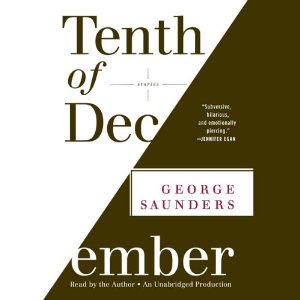
Tenth of December, George Saunders1. Tenth of December, written by George Saunders and also read by George Saunders.

Saunders has the ability to get inside each of his characters’ heads, showing them sharply as unique individuals. They aren’t always nice, and certainly not always moral as I see morality, but Saunders portrays them with such vivid strokes that you feel as if you understand their reasoning.

For me, the most powerful tale in this collection of stunning tales was “Escape from Spiderhead.” This sci-fi tale has an almost Vonnegut-like flavor. It is a stark journey into the depths to which we humans are capable of sinking in the pursuit of knowledge for the sake of knowledge. Where does punishment end and inhumanity begin? This story lays bare concepts regarding our view of crime and punishment that are difficult, but which are important to consider. The scenario is exaggerated, as it is set in a future world, but it exposes the callous view society has in regard to criminals and what punishment they might deserve.
.

George Saunders reads this book himself and he is an amazing narrator. This was an excellent, entertaining book to listen to, and I liked the audio book so much I bought the hard copy to take with me later this summer when I go on vacation.

Just so you know–I rarely buy hard copies of anything.

>>><<<

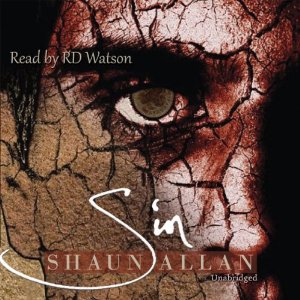
Sin audiobook coverI also listened to Sin, British author Shaun Allan’s masterpiece of stream-of-consciousness and fantasy, narrated by R.D. Watson. Allan breaks every rule of writing, and his work is powerful.

Sin is a dark, urban fantasy, written with a large dose of sardonic humor. We hear the tale from the man who was given the name ‘Sin Mathews’ at birth, but who goes by the name of Sin only, as the last name doesn’t matter; only the name which is the sum of his parts matters. R.D. Watson’s reading of Allan’s shining, witty, prose is moving and brilliant in every aspect. He gets into Sin’s head, and you are completely spellbound.

The atmosphere throughout is surrealistic, but it is well-balanced. I adore Allan’s lyrical, intimate style of prose, as in this series of images describing Sin’s disorientation, “History doesn’t relate whether Jonah, Gepetto, and Pinocchio sat around a table eating pizza, sharing stories of prophecy and puppetry while in the belly of the whale, but I thought that I could relate to being swallowed whole.”

Throughout the novel, Sin’s ruminations are self-mocking, and world-weary, yet naive and innocent.  He bears the guilt of the world, and suffers the unbearable pain of being the cause of so many deaths, but still he finds ironic humor in every situation. His sister, Joy, is grounded and guides him to the truth, but is not allowed to tell him anything.

Nothing is what it seems in this tale, and right up to the end, you are not sure which reality is real.

>>><<<

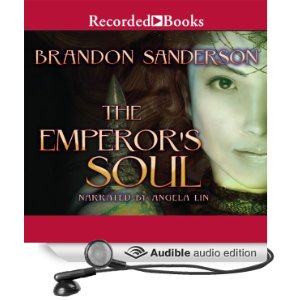
The Emperor's Soul - Brandon Sanderson. audibleThe Emperor’s Soul, by Brandon Sanderson and narrated by Angela Lin.

Shai is thief, but not just any kind of a thief. Shai has been trained to forge a replica of the original item to leave in its place. Her replicas are masterful. in many ways her replicas are better than the originals. The power of her work as she remakes her surroundings amazes Gatona, a man who holds her life in his hands, and every day he is more confused by her. This is not a love story–Gaotona struggles to understand why an artist of her caliber, who loves the craft as much as she does prostitutes her gift by making forgeries.
Two factions now control her fate. They have something she needs, and she has something they need, but for how long? The Emperor Ashravan’s condition has opened up new possibilities for some on the council, and they are ruthless. Shai is safe for the moment, but she knows her life hangs by a thread and only a miracle will save her.

In Shai, Sanderson has created a character who is compelling and completely believable. Shai is more than merely a forger, she is an artist.  She takes pride in her work, and rightfully so. The way she is portrayed is a departure for Sanderson, in that she is most definitely a woman, and she is the central figure. There is a strong sense of history to this tale, and the structure of their society is clearly drawn in only a few well-crafted words.

>>><<<

Audio books are great in the car, I think we all know that–but for me they are a way to access wonderful books when I am in too critical a state of mind to read for enjoyment. For my downtime I love to sit on my back porch and just listen to someone reading me a story.

Comments Off on Three audiobooks and why I liked them

Filed under Books, Fantasy, Literature, Publishing

Achieving balance

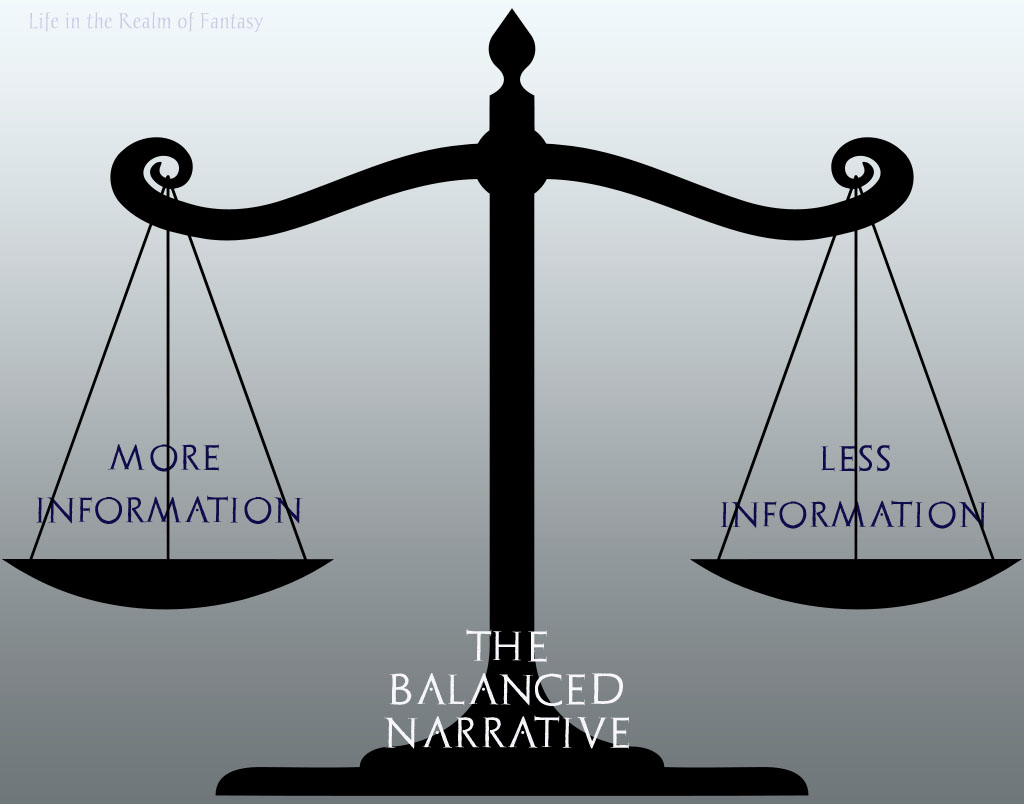
the balanced narrativeYou’ve heard the saying, “a little knowledge is a dangerous thing.” The implication is that a small amount of knowledge can lead to overconfidence and leaping to invalid conclusions based on what you do know without taking into account the things that you don’t know.

When we are newly-hatched authors, we eagerly soak up the wisdom offered to us through writing seminars and handbooks on the craft of writing.

But if you are an avid reader, someone who reads widely and in many different genres, you can see that writing is not simply a matter of following rules.

This is especially true in regard to the many-layered concept of exposition, introducing background and necessary information into the narrative.

Sometimes there is life in a manuscript that has broken all the rules. The work shines because it’s clear that the writer had passion and it was conveyed in the written word. Life is a natural consequence of the rush of creativity and is set into the manuscript when the first words are written.

Unfortunately it is easy to murder what began as a beautiful story. Consider those writers who spend years carefully combing every spark of accidental passion out of their work, creating textbook-perfect sentences that are flat, toneless. The reader has no desire to care about the characters or their struggle.

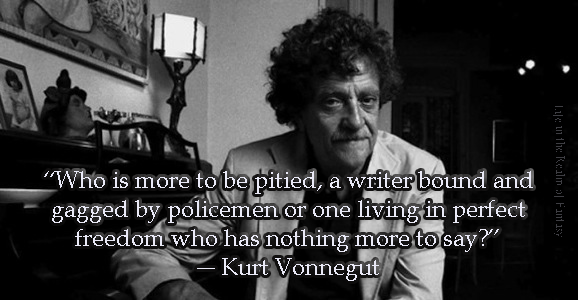
kurt-vonnegut_quoteI’ve also known people who use “the ‘f’ word” regularly in their work  because they think it’s cutting edge, and then they have the balls to say they write like Kurt Vonnegut.

They don’t.

Blindly breaking rules without understanding them is not good writing craft. Vonnegut understood the rules, and when he broke them, he did it to inject life into his work.

He understood balance and was not afraid to use it.

You want to create a balanced narrative:

  1. Information must be delivered only as the protagonists need it.
  2. The information can never be something everyone already knows.
  3. You must offer SOME information–people appearing out of nowhere mean nothing if you do not offer an explanation for them.
  4. No one will die if you use an adjective to describe an object, once in a while.
  5. Show people by using simple, general descriptions such as handsome or dark-haired, and use their mannerisms to convey their moods–things that allow the reader to form their own idea of what the characters look like and how they are feeling. But do give the reader something to build their visualization around.
  6. Stick to simple basic speech tags like said and replied, and if the conversation has only two people, skip them sometimes for a sentence or two.

I know a few authors who are like pendulums. They have no concept of balance and leave each meeting of their writing group with the notion that they have to go all or nothing when deploying information.

Thus, if they have been told they gave too much information, they go too far and now their characters appear out of the ether, with unexplained powers and do things that make no sense.

First you have to realize that no one writes a perfect, completely flawless manuscript, not even Neil Gaiman. And then you have to decide: are you writing for the critics who might be out there, or because you love to write.

If you are not writing for the joy of writing, quit now.

Otherwise, keep writing. Only by continued practice will you develop the balance you know you need. And you don’t have to be committed to only writing novels. Some of the best work I’ve ever read was in the form of short stories.

You can gain a handle on balance by writing short-stories and essays.

With each short-story you write, you increase your ability to tell a story with minimal exposition. This is especially true if you limit yourself to writing the occasional practice story—telling the whole story in 1000 words or less. These practice shorts serve several purposes:

  • You have a finite amount of time to tell what happened, so only the most crucial of information will fit within that space.
  • You have a limited amount of space so your characters will be limited to just the important ones.
  • There is no room for anything that does not advance the plot, or affect the outcome.
  • You will build a backlog of short stories and characters to draw on when you need a good story to enter into a contest.

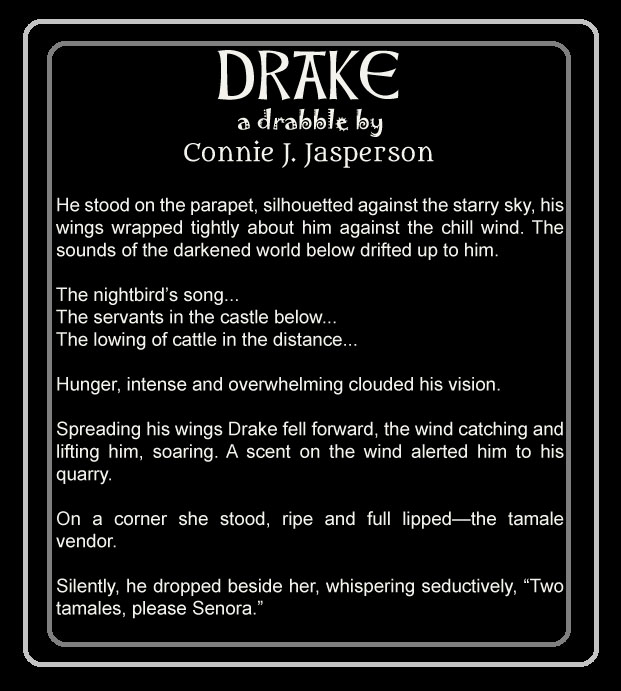
Go for the gusto, and try writing flash fiction–give yourself less than 1000 words to tell a story. Or really challenge yourself–tell that story in around 100 words ( a drabble):

Drake - a drabble by cjj

Drake, © Connie J. Jasperson 2013, All Rights Reserved

4 Comments

Filed under Humor, Publishing, Uncategorized, writer, writing

Elements of the story: the structure of the scene

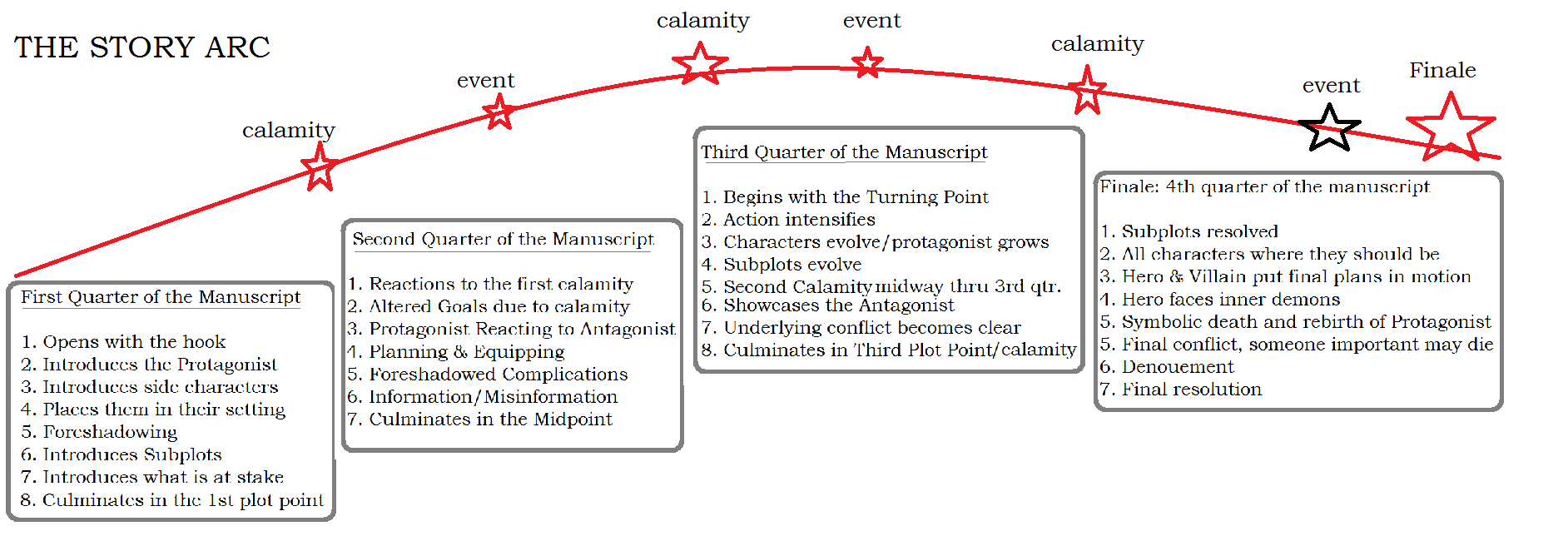
Most authors understand that there is an arc to the overall novel–the Story Arc  which  consists of :

  1. Exposition, where we introduce our characters and their situation.
  2. Rising Action, where we introduce complications for the protagonist
  3. Climax, the high point of the action, the turning point of the narrative
  4. Falling Action, the regrouping and unfolding of events that will lead to the conclusion
  5. Resolution, in which the problems encountered by the protagonist are resolved, providing closure for the reader.

The Arc of the Story

Wikipedia, the fount of all knowledge says, “In a story arc, a character undergoes substantial growth or change, and it ends with the denouement in the last third or quarter of a story: The end of a narrative arc is the denouement. It shows what happens as a result of all the conflict that the characters have gone through.”

However, as we’ve discussed before, within the larger story there are many smaller stories, “scenes” created with this same arc, that come together to create this all-encompassing drama. The way these scenes unfold is what keeps our readers interested and invested in the narrative until the end of the book.

Last July, at the 2014 PNWA Conference, in his seminar on the arc of the scene, author Scott Driscoll explained how the main difference in the arc of the scene vs the overall arc of the novel is this: the end of the scene is the platform from which your next scene launches.

Once he explained it in that fashion, I understood it. This means each scene begins at a slightly higher point on the novel’s Narrative Arc than the previous scene did, pushing the narrative toward the climax.

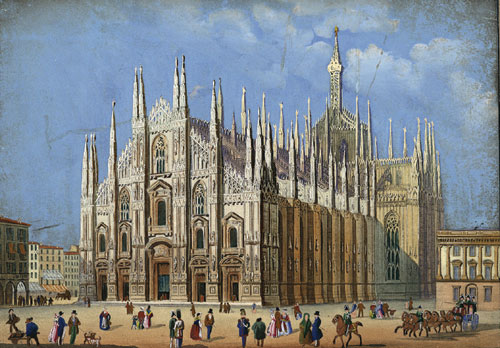
Milano_Duomo_1856

Milano Duomo 1856 via Wikipedia

In my mind, this means that novels are like Gothic Cathedrals–smaller arcs of stone support the larger arcs until you have a structure that can withstand the centuries. Each small arc of the scene builds and strengthens the overall arc of the greater novel.

These small arcs of action and reaction ensure the plot doesn’t stall and create tension that drives the story to the four cardinal points of the story arc.

Conversations are scenes that form a fundamental part of the overall arc: they begin, rise to a peak, and ebb. They inform us of something we must know to understand the forthcoming action. Conversations propel the story forward to the next scene. A good conversation is about something and builds toward something. J.R.R. Tolkien said “Dialogue has a premise or premises and moves toward a conclusion of some sort. If nothing comes of it, the dialogue is a waste of the reader’s time.”

That is true of every aspect of a scene: action, conversation, reaction. A scene that is is all action can be confusing if it has no context. A properly placed conversation can give the reader the context needed to understand the reason for the action.

A certain amount of context can arrive through internal monologue, but it must be done in such a way that the reader is not faced with a wall of italics. There are two problems with long mental conversations:

  1. italics are daunting in large chunks.
  2. it can become a thinly veiled cover for an info dump.

Remember, in novels, not everyone in the scene knows everything, so their thoughts won’t be that critical, and are therefore not needed. Plot points are driven by the the characters who do have the critical knowledge. The fact that some characters are working with limited information is what creates the tension.

Consider the concept of  asymmetric information–a situation in which one party in a business transaction has more or superior information compared to another. In business, one individual’s pursuit of pure self-interest can prevent other companies from effectively entering and competing in an industry or market–he has critical knowledge they don’t have, and effectively eliminates his competition. He has a monopoly.

That monopoly of information creates a crisis. In the novel, a conversation scene should be driven by the fact that one person has knowledge the others need. Idle conversation will bore your reader to tears.

We deploy info, but we don’t dump it in one large chunk though–the reader must find it out at the same time as the other characters, over the first 3/4 of the novel.

We do this in small arcs that combine to form the overall story arc. Events occur, linked by conversations, forming small arcs (scenes) that support the structure of the novel.

The Story Arc


By creating small arcs in the form of scenes, we offer the reader the chance to experience the rise and fall of tension, a pulse which never completely falls but is always increasing toward the high point of the book, giving the reader small rewards of emotional satisfaction along the way to the big event, the grand climax.

Comments Off on Elements of the story: the structure of the scene

Filed under Literature, Publishing, Uncategorized, writer, writing

To England and Wales, the mother country(s), on the 4th of July

First of all, my beloved sister nation, Great Britain, I want you to know that I love you like the siblings we are.

We here on the west side of the Atlantic just needed our own space, and having separate rooms really did improve how we interacted with each other.

We have so much in common, and by golly no one had better pick on you, because you are family!

My Father’s side of the family came to America from Herne Hill, Canterbury, England in 1630, sailing on the Winthrop Fleet, and ended up in Massachusetts.

My mother’s side came from  Laugharne, Carmarthenshire, Wales right around the same time, and ended up in Virginia.

So, today as we celebrate Independence Day here in jolly old America, I will raise my gin(less) tonic/w a twist of lime to the mother country(s)–and listen to the Beatles, in honor of my roots and my dear friends in both England and in Wales.

fireworks via wikipeda

Fireworks, via Wikipedia

2 Comments

Filed under Humor, Publishing, writer, writing