Category Archives: writing

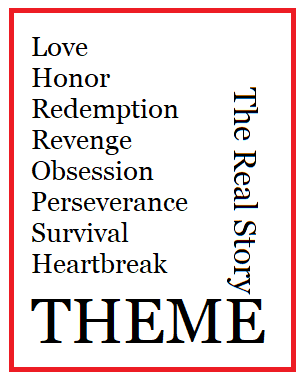
Exploring theme and morality: contrasts #writing

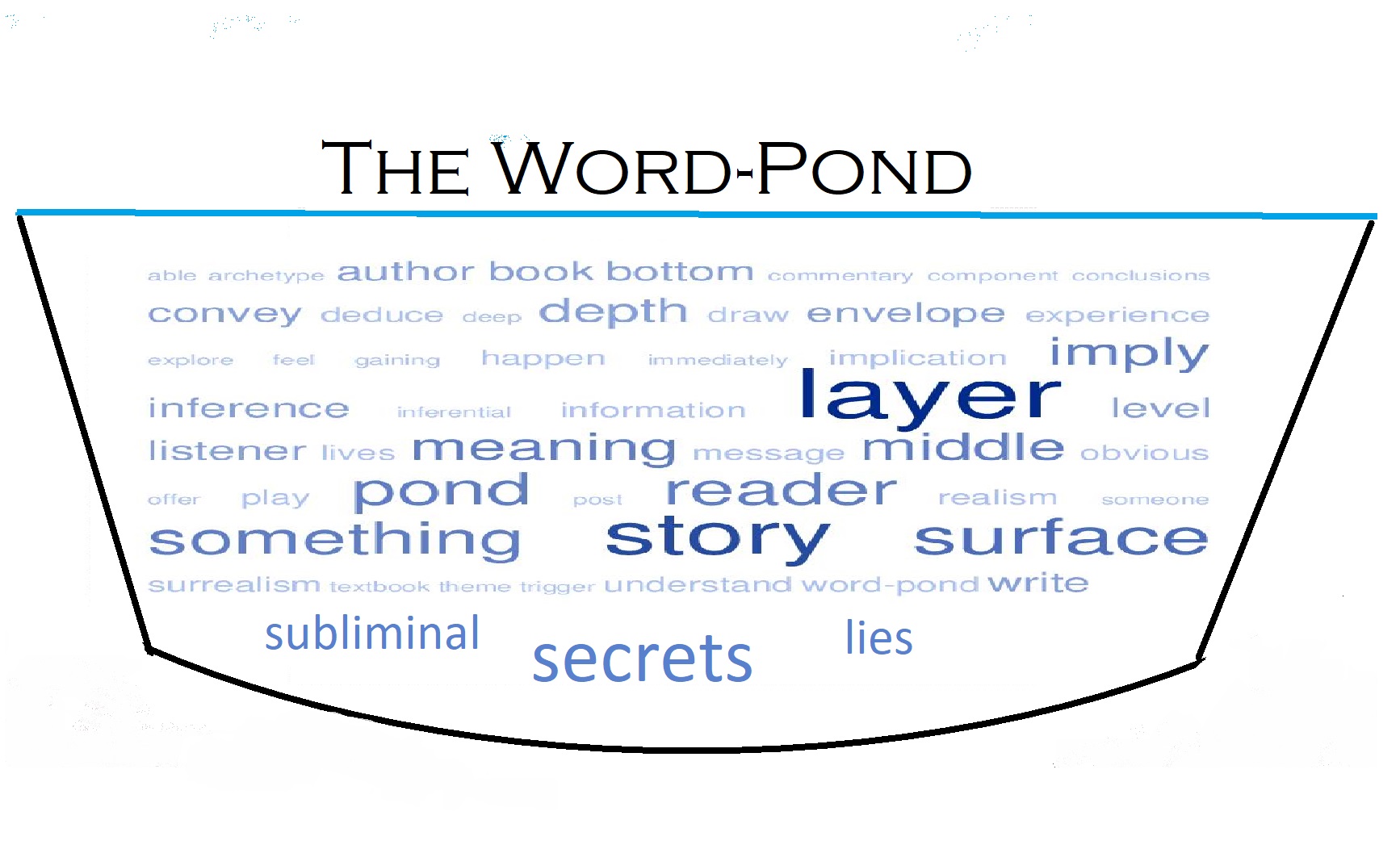
A few years ago, I wrote a short story for an anthology on the theme of Escape, published by the Northwest Independent Writers Association (NIWA). My story was titled “View from the Bottom of a Lake.” The genre of that story is not fantasy, although it is a dream, a memory of a time gone by.

One of the requirements for that anthology was that all stories must be set in the Pacific Northwest. I set mine in an environment I knew well, the shore of the lake that dominated my early years. With my setting established, I went online and looked up every synonym for the second requirement, which was the theme: “escape.”

Then, after I had all the synonyms, I looked for the antonyms, the opposites.

Capture. Imprisonment. Confront.

Universal Literary Themes such as braverym coming of age, etc.Once I had a full understanding of all the many nuances of the theme, I asked myself how I could write a story set in an environment I knew and loved. My solution was to set it in the late 1950s. Anything that is history may as well be fantasy because the victors write the history books.

Then, I began plotting.

The main theme of escape had to form the backbone of the plot, that was a given. I asked what my character needed most in her effort to escape. My gut answer was courage.

The first subtheme, the one that formed my main character, was courage. She is underage, fearful of her narcissistic mother, and armed with the knowledge of what she must do to escape.

Every day, she escapes her mother’s disdain by swimming in the lake and staying underwater as long as she can. In those brief moments of freedom, she plans for her long-term escape, determined that once she goes away to college, she won’t return. Her grandmother, who is also a prisoner in that household, is determined to help her escape by paying for her education.

Plot is the frame upon which the themes of a story are supported.The story loops around my protagonist’s fractured family and their twisted relationship with the nearest neighbors.

The second subtheme is hypocrisy. This is a theme of morality, of “do as I say, not as I do.” The parents live out their failed dreams through their children. The girl is forced to take ballet lessons that she despises, and the boy must play football. The girl’s mother is a former ballerina who got pregnant and had to get married, ending her career before it got started. The boy’s father’s glory days were his years as a small-town jock, before WWII changed everything.

In their social world, appearances are everything. And everything is colored by her mother and his father and what everyone knows but cannot speak of.

The final subthemes of that story are hope and perseverance, and in many ways, those themes are the most important.

For the girl, romance with the boy next door is still only a possibility, but the seeds are there through their lifelong friendship. Their plans will come to fruition if only they can survive their senior year and graduate with high grades. All they have to do is endure the pressure cookers of their homes for one more year, and they will achieve their post-high school dreams.

Thus, contrasts drive that short story, and strong themes enabled me to write that tale in three days. The brilliant Lee French was the editor for Escape, and her input was invaluable. View from the Bottom of a Lake is (in my opinion) my best work. Ever.

So, what can I take from that experience to breathe life into my current work-in-progress?

First, I need to identify the overall theme for this half of the story. A comprehensive list of literary themes can be found here: A Huge List of Common Themes – Literary Devices.

The main theme, as I see it now, is two-fold. The theme of religion is explored in the war of the gods, and how a lust for power corrupts one of them.

Cartoon: I am their creator. Why do they not obey me?The mortals are the playing pieces in their great game. For the people who must live their lives in the shadow of this war, the more immediate theme of change in the face of tradition underpins the plot. It is explored through the protagonist’s quest to save his people despite their stubborn clinging to xenophobic traditions.

  • My protagonists do have some allies, but they must unite the tribes and convince them of the danger presented by the antagonist.
  • My antagonist knows how the more traditional tribes fear change and ruthlessly stokes that fire.

The enemy presents himself as the man who will keep to the old ways, even though it means abandoning the Goddess Aeos and switching their loyalty to the Bull God. He lies to them about that minor detail, but justifies it as a good lie, a necessary lie.

The 3 S(s) of worldbuilding: Sight, Sound, Smell.So, a third subtheme that runs through the second half of this story is morality. The antagonist can manipulate things and people to achieve his goals. He doesn’t see this as immoral. While the villain is spreading disinformation, the protagonist must try to convey the truth to people who don’t want to hear it. He must convey the facts in such a way that even the staunch traditionalists will see how the antagonist manipulates them.

In real life, everyone is a mass of contradictions we aren’t really aware of. Sometimes, it helps if I use polarities (opposites, contrasts) to flesh out a character. They help me flesh out the protagonist and also the antagonist.

  • courage – cowardice
  • manipulative – honorable
  • truth – misinformation

Now, while I fill in the plot, I am also noting ideas that will support the themes as they come to me. Good use of contrasts will (hopefully) illuminate my characters’ motives and intentions as they work toward the final goal.

Over the next year, I will expand on all these themes and bring this epic to the desired conclusion.

I talk a lot about craft, and yes, it is important. But I believe the most important aspect of the writing process is to have passion for the characters and their story. Writing always flows well when I am emotionally involved.

How is your writing going? Are you able to stay emotionally involved with the characters and their lives?Doing the math: Character + Objective + Risk = Story

Leave a comment

Filed under writing

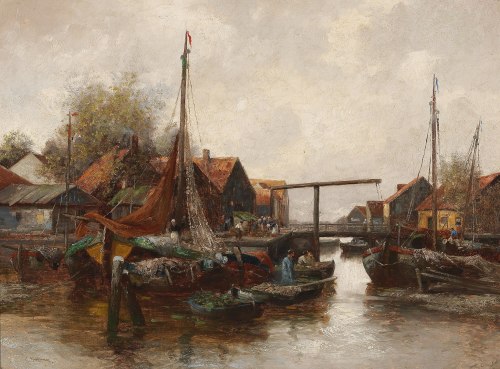
#FineArtFriday: Traditions of Christmas by Adolph Tidemand 1846

Artist: Adolph Tidemand (1814–1876)

Title: Norwegian Christmas Tradition

Date: 1846

Medium: oil on canvas

Dimensions: height: 69 cm (27.1 in)

Collection: Trondheim art museum

Inscriptions: Signature and date bottom right: A. Tidemand 46. Df.


What I love about this painting:

Adolph Tideman shows us a community gathering in front of a traditional Norwegian store house, a stabbur. Everyone is having fun, enjoying traditional winter activities. For me, the stabbur is the most interesting part of this painting. I love the architecture, the way it is constructed to protect the foods and items stored within it.

I also love the birds who circle above and roost on it. They are partaking of the feast offered by the sheaf of grain, apparently enjoying the festivities happening in the street below.

In Norway, the hoisting of a sheaf into the air during Christmas is a tradition known as Julenek or Kornband. They hang a sheaf of oats or grain on a pole near homes and barns to attract birds for an avian Christmas dinner. According to the article, Julenek – Christmas Sheaf A Norwegian Tradition | Norway with Pål, “It symbolizes good luck and is believed to bring prosperity for the coming year. Historically, it was thought to be an offering to the gods or a way to protect against evil forces. The sheaf is typically hung on Christmas Eve and is a common sight during the holiday season in Norway.” [1]

About the stabbur, via the Scandinavian Heritage Association website:

“Trunks with clothing and valuables were stored on the upper floor. Food and commodities were stored on the ground floor. Water and rodents were the biggest enemies in a storehouse. Stilts raised the floor level, the wooden steps did not come into contact with the building to reduce the possibility of rodent infestation and meat/cheese was hung from the ceiling.” [2]

About this painting, via the Trondheim Kunstmuseum:

” In this painting of modest size the pictorial space is packed with people who perform different tasks, all dressed in Norwegian national costumes. The store house is the centre of attention, and on the roof a sheaf is hoisted into the air, a Norwegian Christmas custom.” [3]

About the Artist, via Wikipedia:

Adolph Tidemand (14 August 1814 – 8 August 1876) was a noted Norwegian romantic nationalism painter. Among his best known paintings are Haugianerne (The Haugeans; 1852) and Brudeferd i Hardanger (The Bridal Procession in Hardanger; 1848), painted in collaboration with Hans Gude. [4]

To read more about this extraordinary artist’s life, go to  Adolph Tidemand – Wikipedia


Credits and Attributions:

IMAGE: Wikimedia Commons contributors, “File:Adolph Tidemand – Norwegian Christmas Tradition – Norsk juleskik – TKM-1-1867 – Trondheim kunstmuseum (cropped).jpg,” Wikimedia Commons, https://commons.wikimedia.org/w/index.php?title=File:Adolph_Tidemand_-_Norwegian_Christmas_Tradition_-_Norsk_juleskik_-_TKM-1-1867_-_Trondheim_kunstmuseum_(cropped).jpg&oldid=1030315615 (accessed December 11, 2025).

[1] Quote from Julenek – Christmas Sheaf A Norwegian Tradition | Norway with Pål © 2025 Pål Bjarne Johansen, Norway with Pål (Accessed December 11, 2025).

[2] Quote from Stabbur – Scandinavian Heritage Association © 2025 Scandinavian Heritage Association Contributors, (accessed December 11, 2025).

[3] Quote from Adolf Tideman – Trondheim kunstmuseum © 2025 Trondheim Kunstmuseum Contributors (accessed December 11, 2025).

[4] Wikipedia contributors, “Adolph Tidemand,” Wikipedia, The Free Encyclopedia, https://en.wikipedia.org/w/index.php?title=Adolph_Tidemand&oldid=1325534158 (accessed December 11, 2025).


2 Comments

Filed under #FineArtFriday, writing

Heroes and Villains #writing

If you read last week’s post, you know that I am working on both the hero and villain of my work-in-progress.

And now that it is December, I can expand on each character’s theme, a sub-thread that is solely theirs. A personal theme can shape how each character reacts and interacts throughout the narrative. The themes were established in the first book, but they (and the characters) will evolve as the story does.

Themes emphasize the motivations of our characters and underscore both strengths and weaknesses.

For example, a villain’s personal theme might be hubris (excessive self-confidence). It can also be a hero’s theme. It is a high degree of arrogance, and terrible decisions can arise from it.

A hero’s personal theme might be honor and loyalty. This might also be their weakness, as it can undermine their ability to act decisively. In trying to save someone she desperately loves, others might suffer. In Star Trek terms, the good of the one can exceed the good of the many, and people will die that could have been saved. Who is the villain in that case?

Sometimes, there is little distinction between heroes and villains in real life. Some heroes are jackasses who need to be taken down a notch. Some villains will extort protection money from a store owner and then turn around and open a soup kitchen to feed the unemployed.

Al Capone famously did just that. Mobster Al Capone Ran a Soup Kitchen During the Great Depression – HISTORY.

In reality, heroes are flawed because no one is perfect. So, don’t be too shocked and heartbroken when a public figure you admire is discovered to have personal failings. Most of the time, those failings are only a small part of their character, as we hope our own weaknesses are.

When I first designed my characters, I assigned them verbs, nouns, and adjectives, traits they embody. They must also have a void, an emotional emptiness, a wound of some sort.

The void is necessary because characters must overcome personal cowardice to face it. As a reader, I’ve noticed that my favorite characters each have a hint of self-deception. All the characters deceive themselves about their own motives.

The heroes we admire eventually recognize their flaws and become stronger, able to do what is necessary. The villains may also acknowledge their fatal flaw but use it to justify and empower their actions.

I like heroes and villains with possibilities. I like believing that the villain might be redeemed, or the hero might become the villain.

That is why in my current work, the tragic hero who becomes the villain is central to my story. In other stories, I have explored the broken hero, the one who rises from the ruins of their life to save the day. So, it just seemed right to consider a hero who fights with all his heart but for the wrong side.

My creative mind works by having plots and characters evolve together. When I sit down to create a story arc, my characters offer hints about how they will develop. Themes emerge, and their evolution can alter the course of different character arcs.

Who in your work will be best suited to play the villain? Character B?

Conversely, why is character A the hero?

In the early stages of a first draft, I know who the hero and the antagonist are. But until I know who they are when they are off duty and enjoying their downtime, I don’t really know them.

No matter what genre we write in, when we design the story, we build it around a need that must be fulfilled, a quest of some sort. The story needs a theme, each character needs a theme, and once I know what those themes are, I will have the heart of it.

Of course, for my protagonist, the quest to unite his world is the primary goal. But he has secrets, underlying motives not explicitly stated at the outset. There is a theme to those secrets. The same goes for my villain.

Now that I am building the second half of the story, my supporting characters also have agendas that conflict with the hero’s. Their role in that story is affected by their personal ambitions and desires. My hero’s first quest is to get them to shed their xenophobia.

The antagonists also have motives, both stated and unstated. They need to thwart the protagonist and must have a logical reason for doing so. They have a history that goes beyond the obvious “they needed a bad guy, and I’m it” of the cartoon villain.

No one goes through life acting on impulses for no reason whatsoever. On the surface, an action may seem random and mindless. The person involved might claim there was no reason or even be accused of it, but that is a fallacy, a lame excuse they might offer to conceal the secret that really drives them.

Half of this story is written and will not be published as a novel until its sequel is ready for publication. I can see the whole story, but the details are blurry. So, I have an idea of what the entire story will be. And now as I write, the second half of this story unfolds.

As a reader, I dislike discovering the author doesn’t really know how to get what their protagonist wants. I always have the urge to tell them that a working relationship with a trusted editor could have helped a great deal. A strong personal theme would help identify what each character needs and wants. Random events inserted to keep things interesting don’t advance the story. But motivation does, and using themes can lead the writer to it.

Character creation crosses all genres. I write fantasy, but even if you are writing a memoir detailing your childhood, the basics of story telling come into play. You are telling a story about the person you were in those days. What were the themes that bound your experiences together? You want the reader to see the events that shaped you, not through the lens of memory, but as if they were observing them unfold.

No matter the genre you write in, some things are universal. Who are your characters? Who do they love, and who do they despise? How can a strong personal theme emphasize a character’s personality?

I hope your work is progressing well. In the darkness of December, the Christmas lights decorating the apartment building across the way cheer me up. They make the eternal Northwest rain seem less oppressive.

My favorite comfort foods and a cup of tea make for cozy evenings spent thinking about how I want this plot to go.  Writing is hard work, but it’s good work.

1 Comment

Filed under writing

#NovelNovember has ended, my book isn’t done, and once again, I’m clueless #writing

Today is the first day of December 2025. Over the last 30 days, I have written more than 50,000 words to finish the plot of a novel that is ½ of a duology. The story is too big and would make a giant doorstop of a book, so I am splitting it.

Book one is a complete first draft and desperately needs revising, but book two has barely begun. Here is the screenshot of my ProWritingAid’s NovelNovember dashboard yesterday, after I added my final wordcount for November.

I feel good about this experience, and I’ll probably do it again if they offer it next year.

As to my novel, I know how this story is supposed to end, as it is canon. The history mentioned in the series tells us that my protagonist is the founder of the Temple, and the College of Mages and Healers. The story told in these two books will end once my lovebirds clear the final hurdle to achieving those goals.

I have written the first draft of six complete chapters. It’s a good start in the main manuscript, so that is now at 16,010 words. I am now brainstorming the middle section in a separate manuscript. As of the time I am writing this post, that involves 39,112 words of thinking aloud and going back to the other books to ensure I don’t contradict myself.

Since I am rereading the main series that was published in my early days as a writer, I have found much that needs re-editing. Because I am an Indie, I can (and will) re-edit the entire series. I will do that whenever I am stalled on my current manuscript.

Unfortunately, the results of my written thinking aloud are good ideas that often don’t work for what I envision as the final product.

But they may become short stories set in that world. In the meantime, I have to make the answers to these two questions drive the plot:

  1. This is a continuation of the story that began in the previous book, so what do the characters want now that some of their goals have been achieved?
  2. What stands in the way of their achieving the final goal of defeating the Bull God’s stolen champion?

Thus, the background writing is moving along. I now have two major events to choreograph plot arcs for, and then I can connect the dots between my chosen scenes and give it an upbeat ending.

I do my mind-wandering in a separate document until I have concrete scenes. That brainstorming is productive because some of those rambles will become chapters.

The premise of books set in this world is that the gods are at war, and the world of Neveyah is the battleground. The gods cannot interact directly with each other or undo another god’s work, so the people of their worlds are the playing pieces, albeit pawns with free will and the option to struggle against their fate.Need drives the story. Objectives + Risk= StoryMy heroes and villains both see themselves as the protagonist because the fate of their world is at stake. There must be one god for each world, and the Bull God has imprisoned his brother in an attempt to steal his brother’s wife. He can’t kill Ariend but intends to claim Aeos and add their worlds to his. That was the Sundering of the Worlds, a catastrophic event nearly destroying three of the eleven worlds.

Now, a thousand years have passed and he is once again on the move. If the protagonist wins, the Goddess of Hearth and Home will retain control of Ariend’s prison and the world Aeos created. Conversely, if the antagonist wins, the Bull God will claim it all, and the imbalance of the worlds will once again threaten the stability of their universe.

So, now I’m plotting the midpoint crisis. An important festival and a council of elders is held. My protagonist must work to sway the skeptics in his direction. In their personal arcs, he and his wife must overcome their own doubts and fears and make themselves stronger.

Then I must work on fleshing out the enemy. This mage is not a terrible person. Once a devoted follower of Aeos, he triggered a mage trap and was forcibly converted to the enemy’s side.

Now he is under an unbreakable spell and his loyalty is given to the Bull God, the Breaker of the Worlds. The god manipulates him. My antagonist’s motives stem from his imposed conviction that the Goddess is weak and that the tribes have strayed from the traditions that made them strong.

My antagonist is featured three times briefly in the first half of this tale. That story is devoted to the protagonist surviving several events that give rise to the tales that turn an ordinary warrior-shaman into the legendary hero the children’s books say he was. Now, I must write my antagonist with empathy because his fall from grace was a tragedy and a terrible personal loss to our protagonist.

Both intend to prevail at any cost. What is the final hurdle, and what will the characters lose in the process? Is the price physical suffering or emotional? Or both? This is an origin story, so history tells me who succeeds. But what is the personal cost of that success?

I know my protagonist and antagonist will meet in a large battle, face to face. Several people we love will die, enabling the desired ending. I know who must die, and I have an idea of where that will happen, because whenever I have a thought about any aspect of this story, I write it down.

By the end of this book, all the threads that began in book one will have been drawn together and resolved for better or worse.

In real life, people live happily, but no one lives a deliriously happy-ever-after. Thus, the ending must be finite and wrap up the conflict. The future must look rosy for my protagonist and his companions.

Thank you all for listening to me rant about my work. What is your project and how is it progressing? What has been your greatest struggle?

Sometimes writing is a lonely craft. It helps to have a writing group to talk to. They help me reframe ideas in a way that works better than my original plan. And when it gets to the beta reading stage, they will be there with good suggestions.

5 Comments

Filed under writing

Why #writers need to keep reading #NovelNovember

I have a favorite author, one who writes both sci-fi and fantasy. I really enjoy all his work, in both genres. However, I’m not going to name him because I am going to dissect what I love and don’t love about his work.

I never write a review for books I don’t love, and I have reviewed most, but not all, of his work. In this post, I’m going to point out things I notice with my editorial eye and which I want to avoid in my own work, so I’m not naming names.

Let’s start by saying this: the things I don’t love about his work come from having a contract with deadlines to produce two books every year, installments for two widely differing series. That is a commitment he is well able to honor, as he has been publishing two and sometimes three a year since the late 1980s.

The upside of his meeting his deadlines is this: I get an installment in my favorite series every year.

But the downside is that he has a contract and deadlines he must meet.

First, let’s talk about what I like:

His main characters are engaging from page one. I’m always hooked and want to see where he is going to take them.

The main character always has a good arc of growth and is easy to like.

In most installments of my favorite series, the author’s worldbuilding is excellent. One can easily visualize the settings, whether we are in a future space environment or a world where magic exists. He creates mood and atmosphere with an economy of words.

Science is always grounded in known and theoretical physics.

He has excellent systems for the two types of magic inherent in his fantasy world. They fit seamlessly into the story and feel plausible. They both have a learning curve, and even inadvertent misuse of magic can be lethal, so learning is required.

The societies in all his worlds, whether sci-fi or fantasy, are shown through the main character’s eyes. They are believable and feel personal.

What I don’t love about his work:

While I deeply enjoy his work, the author could use a sharp editor, one who’s not swamped with deadlines. The line editing is mostly adequate, but in recent books, one descriptor (sweetly) is used more than a few times and not to good advantage. “I thought so,” she said sweetly.

I dislike that phrasing because it diminishes the female love interest, making her sound a little snarky, as if she feels superior to the protagonist. I doubt that is the author’s intention, but that turn of phrase occurs more than a few times in more than one novel. Whether the main character is a man or a woman, the love interest is often two-dimensional, and this has been a thing throughout the last five or six books in this series.

I forgive that, because I like the main characters, the world, and love the plots.

Structurally, things can be a bit rough. The characters repeat what they have already done at every opportunity, covering old ground and stalling the momentum. Also, they frequently use the phrase “you deserve it” whenever the rewards of their accomplishments come up in conversation.

The main flaw that is showing up in the most recent installments would be fatal in an Indie’s work. It is something that would be ironed out if our author had a full year to take his manuscript through revisions, rather than only six months. Each time the MC is introduced to someone, his accomplishments are brought up and discussed with awe. Whenever he runs into a fellow officer, which is fairly often, they have heard of his exploits through the grapevine and feel compelled to rehash them.

This is aggravating and slows the pacing.

Finally, proofing the finished product seems to have been rushed. This author has a big-name publisher, so one would think they would put a little effort into the final product.

Overall, this author’s work is good and deserves publication. None of these issues occurs often enough to derail the books, and a reader who isn’t a writer would likely never notice them. I can see how they flew under the radar.

It is important for authors to re-read the books they fall in love with. We rarely notice flaws on a first time through. If we do, we ignore them in favor of the story.

When you read a beloved book a second time, look at it with a critical eye.

Analyze what you like about the structure, worldbuilding, and character creation, and apply those principles to your work.

Recognize what doesn’t work and make notes when you come across something that slows the pacing or diminishes a character. Look for those flaws in your own work during revisions.

I have been making headway with my writing goals this November. Most of the plot is finalized, but it is still in outline form and will likely change as the story evolves.

On Saturday, I crossed the 40,000-word mark at ProWritingAid’s Novel November. Most of what I’ve written (30,000 or so words) is background, stuff that won’t make it into the story but which helps me sort out the plot.

I have learned to write the background fluff in a separate document. When I begin filling out a now-skeletal plot, I have the information I need to flesh out a scene.

And hopefully, when I finally get this novel to the revisions stage, I will have an eye for the flaws. My writing group is sharp and when they beta read one of my manuscripts, they give me good advice.

The real trick is keeping the lid on my own repetitive words and gratuitous rehashing. Hopefully, in a year or two, my finished product will be a smooth read.

1 Comment

Filed under writing

#NovelNovember: writing in the blender of life enables world building #writing

I have said this before, but life is like a blended margarita from the ice cube’s point of view. Every now and then, Ice Cube gets a little cocky, cruising along, thinking “The s**t-storm is over! Everything is going to be fine.” Invariably, that’s when the powers-that-be turn on the blender.

Let’s be honest. This is real life.

The s**t-storm is never really over. It’s just paused and lurking in the shadows, waiting to jump-scare you, turning the blender of life on … then off. On – off. The powers-that-be love a good blended margarita, so buckle up, Ice Cube.

This is why I write fantasy. Reality can be processed more easily when it’s set in a mythic alternate universe, one where the fundamental laws of physics allow the chaos to be tamed through perseverance and a light application of plot armor.

My personal plot armor has worn thin lately.

My husband suffers from late-stage Parkinson’s, with the accompanying dementia and myriad other health issues, and last week, emergency surgery. All is well for now, but the underlying problems are not going away.

The last two weeks have been difficult here. I spend three hours writing first thing in the morning. At nine a.m., I put on my “leaving the house” clothes (as opposed to my “hanging around the house” clothes) and don my raincoat. Then I make my way around town, accompanied by driving rain and clogged drains, getting groceries and taking care of other obligations. Daily, I drive through the gloom and poor visibility, visiting my husband, whether he is in the hospital or at the Adult Family Home.

During these two strange and chaotic weeks, I have written 27,318 words, according to the word counter at ProWritingAid’s Novel November challenge. Some of those words might even advance the plot, but I suspect most are just mental fluff.

For the writer of any fiction, real life provides fodder for world-building. Look around you and take what you know, and reshape it into the world of your imagination. Take the time to write a paragraph or two of description and save it in a file for random world-building. You might not use that environment today, but a story may come along that needs it.

If I were to write a page detailing the November weather in my town, I would open a new document and write what I see as a journal entry. I would title that document Scenes_from_November_Storms2025. That title tells me what is detailed, so later, when I need ideas for a day filled with blue skies over a wide field of daisies and birdsong, I don’t have to open file after file and get frustrated.

What would I write? I would write it as if it were a conversation with myself.

The streets everywhere are lined with brown, soggy, windblown cairns built from the corpses of leaves. Wind and torrential rain have stripped many trees naked. The tattered remains of their finery cover the sidewalks, making walking slick and a bit tricky. They fill gutters to the curb, blocking street drains and forming long, soggy, decomposing ridges down the centerline of streets and alleys.

The above paragraph is true. The street-sweeper trucks can’t keep up with the leafy onslaught.

This, I suppose, is the downside of living on the lush green side of the continent. Storms roar across the Pacific and stop here, heavy black clouds blocked by the high Cascade Mountain Range, dumping rain on the lowland cities.

One must be careful when traveling, always alert for surprises. Your vehicle “gets a bit loose” when you hit that innocent-looking puddle at 60 miles per hour. Jack-knifed semi trucks shutting down the freeway during each storm give evidence of that truth. Pooling water on the interstate, combined with the actions of inexplicably stupid drivers, has caused many wrecks over the last month.

I drive the slower city streets as I have no need to take the interstate. Even there, at speeds slower than the posted limit of 25 mph, driving through a surprise puddle can liven things up. The adrenaline almost counteracts the dark, depressing scenery.

Pumpkin Soup with Garlic Croutons

Once I am home and nursing a cup of hot tea, the rain pounding on my windows feels a little cozy. Pumpkin soup with garlic toast for supper pushes back the gloom, cheery comfort food made better when followed by an evening spent with a good book.

Sometimes, that good book is the one I am working on. Some evenings I feel rested enough to make a second stab at writing, adding another 700 to 1,000 words to my daily word count.

Currently, I have no need in my novel for a world covered in moldy leaves or parking lots ankle-deep in water. But someday I might, and I will have that brief description to boost my memory. If needed, I’ll use it to create the scenery and atmosphere that will serve as the backdrop for a short story or novel.

For now, drier days are on the horizon. Spells of sunshine will return, and despite the worry, darkness, and gloom of these last few days, life is good.

I will continue to write my fantasy stories and draw inspiration from the real world. And I will continue to log descriptions of the world around me for later use.

And I will leave you with an image of the beautiful mountains that halt the storms over the lowlands. This scene was found on Wikimedia Commons and is titled Sunset at Image Lake on Miners Ridge in the Glacier Peak Wilderness by Ron Clausen, August 2001.

It’s hard to justify complaining about the dreariness and storms of November when we of the Pacific Northwest are surrounded by such beautiful scenery the rest of the year. It’s times like these that make us appreciate the bounty that lies a few hours’ drive away.


Credits and Attributions:

IMAGE: Screenshot of ProWritingAid Dashboard © Connie J. Jasperson 2025.

IMAGE: Pumpkin Soup and Garlic Croutons © Connie J. Jasperson 2025.

IMAGE:  Sunset at Image Lake on Miners Ridge in the Glacier Peak Wilderness by Ron Clausen, August 2001. Wikimedia Commons contributors, “File:Image Lake Glacier Peak Wilderness.jpg,” Wikimedia Commons, https://commons.wikimedia.org/w/index.php?title=File:Image_Lake_Glacier_Peak_Wilderness.jpg&oldid=484627222 (accessed November 16, 2025).

4 Comments

Filed under writing

Revisiting Voice, Word Choice and Placement #writing


This week’s post is a reprint of a post on voice and how we phrase things. It first appeared here on February 17, 2020.

Writing is journey.

When I began writing, the way I placed my words slowed my prose, made it more passive. As I have grown, I have learned to place my verbs in such a way that the prose is more active. I say the same things, but my style is leaner than it was.

My weekend was spent with my hubby at the hospital (all is well now) and I had no time or inclination to write a new take on how word choices form our writing voice. I hope you enjoy this second look at one of my favorite subjects.


We are drawn to the work of our favorite authors because we like their voice. An author’s voice is the unique, recognizable way they choose words and assemble them into sentences.

With practice, we become technically better at the mechanics (grammar and punctuation) but our natural speech habits shine through. Voice is how we bend the rules and is our authorly fingerprint.

When we begin the editing process with a professional editor, most will ignore the liberties we take with dialogue but will point out our habitual errors in the rest of the narrative.

Many times, what we want to say is not technically correct, but we want that visual pause in that place, in that sentence. Casual readers who leave reviews will have gained some understanding of grammar but if your voice is consistent, they will accept your choice. However, they will notice inconsistencies and illiterate writing.

This is why the process of editing is so important. Knowledge of the mechanics of writing is crucial. If you don’t understand the rules, you can’t break them with authority. (For the first part of this series, see my post Revisions: Self-Editing.)

Consider Raymond Chandler’s dismay when he discovered his grammar had been heavily edited by a line editor and then published without his input in the corrections:

“By the way, would you convey my compliments to the purist who reads your proofs and tell him or her that I write in a sort of broken-down patois which is something like the way a Swiss waiter talks, and that when I split an infinitive, God damn it, I split it so it will stay split, and when I interrupt the velvety smoothness of my more or less literate syntax with a few sudden words of barroom vernacular, this is done with the eyes wide open and the mind relaxed but attentive. The method may not be perfect, but it is all I have.”  – Raymond Chandler, in a letter to Edward Weeks, Editor of The Atlantic Monthly, dated 18 January 1947. (Read the letter in its entirety here.)

When we self-edit, we don’t have to wrestle for control of our work, true. But I have to be honest—I have worked with many editors over the past ten years, and only one tried to hijack my manuscript.

What is the mood you want to convey with your prose? Where you place the words in the sentence greatly affects the mood. Active prose is Noun-Verb centric. Compare these sentences, two of which are actively phrased, and two are passive. All say the same thing, and none are “wrong.”

I run toward danger, never away.

I never run away from danger.

Danger approaches, and I run to meet it.

If it’s dangerous, I run to it.

Can you tell which are passive and which are active? Which phrasing resonates with you? Could you write that idea in a different way?

Where we choose to place the core words, I run to danger, changes their voice but not their meaning. The words we choose to surround them with changes the mood but not their meaning.

Other ways to use the core concept of I run to danger:

Danger draws me. I race to embrace it, to make it mine.

If it’s dangerous or stupid, I will find it.

Danger—who cares. Running away is stupid; it always finds you. Meet it, grab it, and make it yours.

I saw him, and in that moment, I knew I’d met my destiny. He was the embodiment of danger, and I wanted him.

We could riff for half an hour on just four words, I run to danger. Each of us will write that idea with our own brand of brilliance, and none of us will sound exactly alike.

One of the things we must look at in our work is consistency. Is our narrative comprised of a smooth pattern? We don’t want our work to be jarring, so we want to think push, glide, push, glide.

Once you have established the mood you are trying to convey, look at how you have placed your verbs in the majority of your sentences.

Some are: noun – verb – modifier – noun. I run to danger when I see it. (Active)

Some are: infinitive – noun – verb –  modifier – noun. When I see danger, I run toward it. (Passive)

NOTE: PASSIVE VOICE DOES NOT MEAN WRONG!

Good writing is about balance. How we combine active and passive phrasing is part of our signature, our voice. By mixing the two, we choose where we direct the reader’s attention.

Some work you want to feel highly charged, action-packed. Genres such as scifi, political thrillers, and crime thrillers need to be verb forward in the way the words are presented. These books seek to immerse the reader so more sentences should lead off with Noun – Verb, followed by modifiers.

If you clicked on the link and read Raymond Chandler’s letter in full, you will see it is aggressive and verb-forward, just the way his prose was.

In other genres, like cozy mysteries, you want to create a sense of comfort and familiarity of place with the mood. Perhaps you want to slightly separate the reader from the action to convey a sense of safety, of being an interested observer. You want the reader to feel like they are the detective with the objective eye, yet you want them immersed in the romance of it. To do that, you balance the active and passive sentence construction, so it is leaning slightly more toward the passive than a thriller.

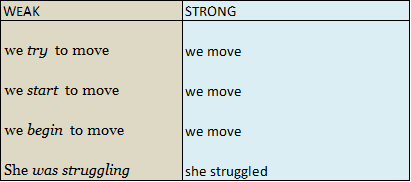
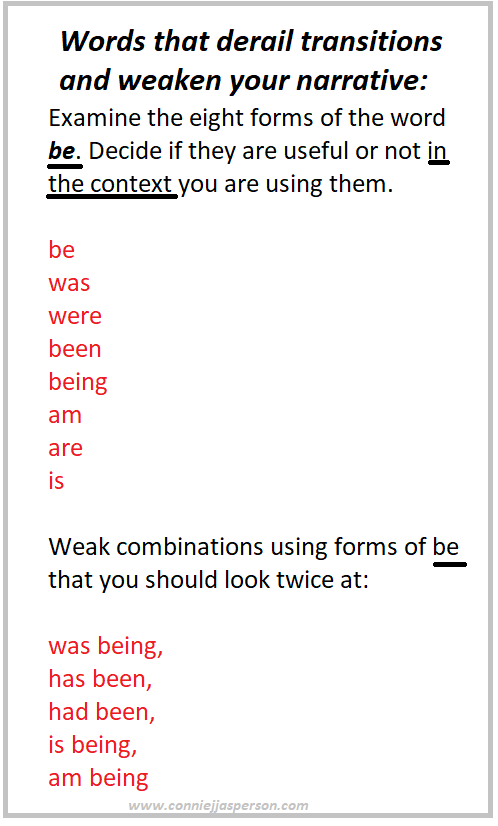
Weak prose makes free with all the many forms of to be (is, are, was, were).

  • He was happy.
  • They were mad.

Bald writing tells only part of the story. For the reader to see and believe the entire story, we must choose words that show the emotions that underpin the story.

To grow in the craft, we learn to convey what we see through words.

Passive voice balances Active voice.

It is not weak, as weak prose distances the reader from the experience, and when active prose is interspersed with passive, it does not.

Voice is defined by word choice, and Passive or Active prose is defined by word placement, not how many words are used.

Weak prose usually uses too many words to convey an idea. So, we want to avoid wordiness no matter what mood we are trying to convey.

  • One clue to look for is the overuse of forms of to be, which can lead to writing long, convoluted passages.

How many compound sentences do you use? How many words are in each sentence? Can you see ways to divide long sentences to make them more palatable?

A wall of words turns away most readers. Look at your style, as you work your way through your revisions, and see what positive changes you can make in how you consistently phrase things.

Take a short paragraph from a work in progress and rewrite it. Try to convey that thought in both passive and active voice. Then blend the two. You might learn something about how you think as a writer when you try to write in an unfamiliar style.

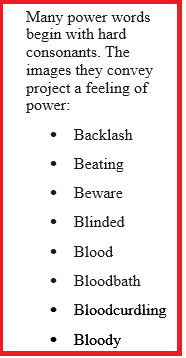
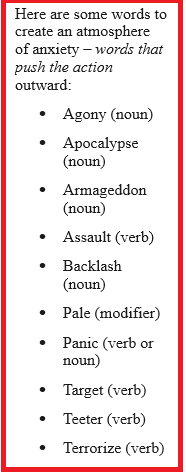
The following is a  list of words I habitually use in a first draft and then must look for in my own work. I look at each instance and decide if they work as they should or weaken the sentence. If they weaken the prose, I change or remove them.

Comments Off on Revisiting Voice, Word Choice and Placement #writing

Filed under writing

#NovelNovember – the quest has begun #writing

As many of you know, every November I set a writing quest goal for myself. Some years, it is to write the skeleton of an entire novel in 30 days. Other years, the goal might be to write a complete short story every day.

Caution I stop for Hallucinations © Connie J. Jasperson 2025This year, my goal is to write the skeleton of a novel that is the second half of a duology. I can’t publish the first book until the second book is finished, as I intend to publish the two halves of that story simultaneously.

Also, I need to source the proper cover art for a different book that is ready for the final stage of the publication process. I have found some good candidates, but none are exactly what I am looking for.

Writing 50,000 words in thirty days has never been a problem for me. I just sit down and let my fingers spew random stuff that sometimes turns into a usable novel, so getting a desired word count has never been a problem.

Unfortunately, meeting the goal of writing a complete story arc for a novel in only 30 days is, and always will be, a struggle. Thus, I work from an outline. That helps rein in the randomness.

Writing for at least an hour every day without fail for an entire month takes determination.

Meeting that goal builds discipline.

I do have some strategies I developed during my 12 years as a municipal liaison for the now-defunct organization, NaNoWriMo.

  • Set aside time to write every day, at least one hour.

If you need quiet time, make that hour inviolable, an hour during which you are NOT to be bothered unless an amputation has occurred or the house is on fire. When I was still working, I found that by rising an hour early, the kids were still sleeping and the house was quiet. I also wrote while everyone else was watching TV.

The most important thing about developing a writing process is to find one that works for you.

Give yourself permission to try different things until you find something that works.

  • Do you work best in short bursts?
  • Are you at your best when you have a long session of privacy and quiet time?
  • Or is your process something in the middle, a melding of the two?

What if my style changes? What if the way that worked last month no longer works?

Give yourself permission to change and find a way that works best for you. Be willing to be flexible.

I have my best ideas when I’m about to leave the house. That’s no joke. If that is a problem you also have, do as I do and write those thoughts down. I keep a notebook in my bag just for those moments.

You will be productive once you find your best style.

But first, you must give yourself permission to write.

  • Go to a coffee shop or the library to write. You might find the place packed with other writers!

My regional NaNoWriMo group had over 250 writers. Your region may have had that many or more. We have evolved into a more diverse group, one that is not focused on achieving word count in November. Your local region may have also reformed with a new direction.

As a group, we old hands are nurturing budding novelists, playwrights, poets, and songwriters. We hold in-person write-ins at coffee shops and also virtual write-ins via Zoom. New and aspiring writers in our area can find us through our Facebook group and also through our Discord channel.

  • Sit your backside down and write your ideas as they come into your head. Don’t delete and don’t cut anything just yet.

Don’t worry about story arc, or worldbuilding, or anything like that. Get the characters and the plot on paper. Once you begin writing those characters, their story and their world will take shape. You can worry about info dumps and issues like that later.

The exposition you put into your first draft is your brain doing the worldbuilding and character development that is necessary to take the story from the opening page to “the end.” You will trim back the exposition and expand on the important things after the first draft is finished and revisions have begun. Right now, you need the info your crafty mind is dumping into the story.

  • To be happy, we must have a balanced life.

Writers and other artists must make sacrifices for their craft. It’s just how things are.

But you don’t have to sacrifice your family for it. Sacrifice one hour of sleeping in, or something ephemeral and unimportant, like one hour of TV.

That is why I scheduled my writing time when I had to hold down a job. I had to cook and clean for my family and ferry them to their various after-school activities. They helped with the housework if I nagged long enough, but sometimes it was easier to admit defeat and do it myself.

I take comfort in the fact that they are raising their own teenagers now.

(Insert evil laugh here.)

Give yourself small rewards for every milestone, writing or otherwise. It might be a batch of cookies or an afternoon of binging on that show you love so much.

I’m a grandma now and living alone, as my spouse has late-stage Parkinson’s. He is being well cared for in an Adult Family Home, one staffed by wonderful people who are trained to care for patients who require that much assistance. I visit him every morning without fail, and I schedule everything, including my writing, around his needs.

Cartoon writer wondering "I am their creator. Why do they not listen to me?" 
I am their creator © Connie J. Jasperson 2025Nowadays, I have to force myself to do the ordinary household tasks (like laundry, my least favorite of all). My reward for doing that is an hour or two of reading or writing, whichever I am in the mood for.

However, for the month of November, my afternoons will be spent writing.

I will reward myself for achieving my writing goals. My self-indulgence is rewatching my favorite episodes of “The Brokenwood Mysteries.” Smart dialogue, wildly creative plots, great cast, and lovely New Zealand scenery.

Whatever your writing goals and however you choose to reward yourself, I hope you have a great and productive November.

If you are looking for something similar to the old NaNoWriMo (before it went off the rails) ProWriting Aid is running a Novel November quest, with a wordcount counter and plenty of ways to connect with other writers. I have signed up for this, just to see if it’s a good fit for me.

Go to What is Novel November? – ProWritingAid Help Center


Credits and Attributions:

Caution I stop for Hallucinations © Connie J. Jasperson 2025

I am their creator © Connie J. Jasperson 2025

2 Comments

Filed under writing

Homophones: Wrangling Willful Words #writing

Words are the paints that we who write use to convey our ideas to the world. In English, which is a mash-up of several other languages, we have so many wonderful, wild words it is impossible to use them all in one book. Even the most comprehensive dictionaries can’t contain them all.

Commonly used words often fall out of fashion, while new words are being invented and dropping into use every day. I talked about this in my post, English – a Language Full of Bothersome Words #writing | Life in the Realm of Fantasy.

Let’s have a look at homophones – sound-alike and near-sound-alike words. Even experienced authors sometimes use the wrong word. As a reader, I notice the improper use of near homophones (words that sound closely alike). They stand out even when they’re spelled differently, BECAUSE they have different meanings.

We all know people who mispronounce words. I am certainly guilty of incorrect pronunciation whether conversing or reading aloud! The different meanings and proper enunciation of seldom-used words become blurred, and wrong usage becomes part of a writer’s everyday speech. We assume we know what that rarely used word means, and so we put it in the sentence.

And we do this more than once.

And unknowingly, we have created an embarrassing mistake. Fortunately, a good editor can easily guide us in the right direction.

New and beginning writers are often unaware that they habitually misuse common words until they begin to see the differences in how they are written.

A good example details the difference between two of the most commonly confused words: accept and except. Many people, even those blessed with a higher education, frequently mix these two words up in their casual conversation.

Accept (definition): to take or receive something; to receive with approval or favor.

  • I accept this present.
  • I accept your proposal.

Except (definition): not including, other than, leave out, exclude.

  • Present company excepted.
  • With the exclusion of ….

We accept that our employees work every day except Sunday.

English, being a mash-up language, has a long list of what I think of as cursed words to watch for in our writing.

Farther vs. Further: (Grammar Tips from a Thirty-Eight-Year-Old with an English Degree | The New Yorker by Reuven Perlman, posted February 25, 2021:

Farther describes literal distance; further describes abstract distance. Let’s look at some examples:

  • I’ve tried the whole “new city” thing, each time moving farther away from my hometown, but I can’t move away from . . . myself (if that makes sense?).
  • How is it possible that I’m further from accomplishing my goals now than I was five years ago? Maybe it’s time to change goals? [1]

When we use these words, we want to ensure we are using them correctly.

  • Ensure: make certain something happens.
  • Insure:  arrange for compensation in the event of damage to (or loss of) property, or injury to (or the death of) someone, in exchange for regular advance payments to a company or government agency.
  • Assure: tell someone something positively or confidently to dispel any doubts they may have.

When I need to use unfamiliar words in my work, I look them up. I want to be sure that what I write means what I intend it to.

I was raised by parents who never stopped educating themselves and who loved words. They wanted us to be as well educated as possible, and reading was not only encouraged, it was required. However, Dad Loved Words. Big words, small words, short words, long words. My Dad loved them all.

He spun hilarious yarns about the ‘Kamaloozi Indians’, a non-existent tribe whose beloved Chief, Rolling Rock, had gone missing. The tribe was so distraught that they posted signs at every mountain pass reading “Watch for Rolling Rock.”

Everything in his toolbox had a name that was his own invention: Screwdrivers were ‘Skeejabbers.‘

Dad mangled words just because he loved the way they sounded. Sometimes he became so frustrated that he lost his words and resorted to creative cursing.

I confess, I’m just a product of my upbringing. I love obscure, weird words and regularly torment my adult children by using them in text messages.

But for the moment, let’s ignore the grandiose words and learn how to know when a word conveys the meaning you think it does, and when it does not. Using rare words correctly when they’re the only word that works is not pretentious.

However, ten-dollar words are to be avoided. If you pepper your narrative with highfalutin words, your readers might put the book down out of frustration, so go lightly.

Still, it never hurts to know the meaning and uses of words, even pretentious ones. Ten-dollar words #amwriting | Life in the Realm of Fantasy

Below is an image containing a long list of words that are easily confused with sound-alike words. Feel free to right-click, copy, and save it as a reference. Using the wrong word completely changes the meaning of a sentence, so if you have doubts or if the word is unfamiliar, look it up. The internet is your friend!


Credits and Attributions:

[1] Farther vs. Further: (Grammar Tips from a Thirty-Eight-Year-Old with an English Degree | The New Yorker by Reuven Perlman, posted February 25, 2021 (accessed 25 Oct 2025).

6 Comments

Filed under writing

#Preptober: is it historical fiction or sci-fi? #writing

Today, we’re continuing our Preptober series by designing a conflict and a story arc. I write fantasy, but every story is the same, no matter the set dressing. Protagonist A needs something desperately, and Antagonist B stands in their way.

Logo, my writing life.What does the protagonist want? Everyone wants something. The story is in the way they fulfill that need, or what happens when they don’t. Doubt, uncertainty, people facing the unknown as they struggle to succeed in their quest … these nouns are what makes the story interesting.

This is where we have to sit and think a bit. Are we writing a murder mystery? A space-opera? A thriller? The story of a girl dealing with bulimia?

Let’s do something different and write a historical fiction.

My Uncle Don fought in WWII in the Ardennes and was wounded, coming home with a steel plate in his head. He was an unfailingly kind man who never discussed his wartime experiences. Here in the US, that battle is referred to as the Battle of the Bulge.

  • Our proposed novel’s genre is historical fiction because it explores a fictional Allied soldier’s experiences. It isn’t a biography.

However, any historical fiction novel is a form of fantasy. This is because we must imagine how our soldier acted and reacted to the events, and the friends he made and lost along the way. Those events now exist only in a few places, such as military archives, old newspaper accounts, and the memories of a generation that is now in their nineties.

We will make a list of things we want to include in our worldbuilding. Filthy living conditions will provide the backdrop to the impending confrontation. Life on the frontline was brutal, and we need to use the environment to emphasize our characters’ experience of combat as it was in 1944-45.

We want to have a complete story arc, so what length should our manuscript top out at? We will plan for a mid-length novel of 75,000 words. We get out the calculator and divide our word count by 4.

  • The first quarter will be 18,175 words, the two middle quarters will be 37,500 words, and the final run-up to the climactic ending will be 18,175 words.

Visual depiction of dividing a story's wordcount into quarters.The first quarter opens our story and introduces the moment of no return, even if our characters still believe they can salvage things.

The following two quarters are the middle of the narrative, exploring the obstacles that our soldier faces. The final quarter winds our soldier’s story up.

Remember, the historical events are NOT movable or changeable if you want to remain in the historical fiction genre. Once you change the timeline or alter events in any way, you have ventured into alternate history and are writing speculative fiction.

I confess, spec-fic is my kind of book. But accuracy counts for readers of historical fiction.

Readers are smart. Military buffs will know that a soldier can’t be at both St. Vith and the Meuse River, unless he was in the US Army Air Force.

So, our four quarters can be divided this way if our soldier is American:

  1. Attack in the south
  2. Allied counteroffensive
  3. German counterattack
  4. Allies prevail

We will write the scenes that connect those events, and that is where we take a deep dive into history. We can invent characters and use our imagination to flesh out their lives within as accurate a WWII context as possible.

To complete our story arc, we will

  1. Take each incident and write the scenes that our soldier experiences.
  2. We might also write scenes showing the commanders planning the offensives and switch to show the enemy’s plans.

Drawing of an author saying "30 days, 50,000 words. We got this."No matter what genre of book you plan to write, all you need is a skeleton of the plot, just a series of events for you to connect. You will write the scenes between these events, connecting them to form a story with an arc to it.

As we write, our soldier’s thoughts and interactions will illuminate and color the scenes. His encounters, how he saw the enemy. Were they people like him or were they faceless? All his emotions will emerge as you write his story.

But maybe you aren’t writing a historical fiction. Some things are universal.

No matter what genre we are writing in, we start with a worthy problem, a test that will propel the protagonist to the middle of the book.

This event is the inciting incident and could be the hook. We discover a problem and set our heroine on the trail of the answer. In finding that answer, she is thrown into the action.

Drop the protagonist into the action as soon as possible, even if the conflict is interpersonal. It could be a minor hiccup that spirals out of control with each attempt to resolve it.

  • This is the place where the characters are set on the path to their destiny.

Some plots are action and adventure. Other books explore a relationship that changes a character’s life in one direction or another. Others, like our war story, explore surviving extreme hardship.

The inciting incident is the moment when the protagonists first realize they’re utterly blocked from achieving their desired goal. Note this event on your outline early in the first quarter. Then the trouble escalates, so make a note of the moment our protagonist realizes their situation is much worse than they initially thought.

At this point, our people have little information regarding the magnitude of their problem. One thing that I do is make notes that help limit my tendency toward heavy-handed foreshadowing. Most of what I write in the first draft will be severely cut back by the time I’m done with the final revisions.

Subplots will emerge once I begin writing. I note them on the outline as soon as I can, but sometimes I do forget.

The last weeks of Preptober are upon us and this is a good time to visit the brick-and-mortar bookstore and look at the books currently being offered in the genre you are writing in. Then you’ll know what you need to achieve in your work if you want to sell that story.

Depiction of the story arc.

1 Comment

Filed under writing