
 The ease with which anyone possessing the ability to access a computer and use the internet can publish their work independently has sparked a revolution in the publishing industry. Unfortunately, revolutions are NOT easy nor are they bloodless and pain-free.
For every book I feel good about recommending, I see on average 6 that are just plain awful. I’m not only talking Indies here–some are books that should never have made it past the gateway editor of a large publishing house, much less an agent.
It’s true that some indie books are so abysmally edited it is apparent the author is the only person who has ever seen the manuscript.
Others are moderately edited but not by a professional, or someone who knows how to write. This is a flaw that can drive away of all but the most determined readers, people who would ignore most typos and slight inconsistencies for a really good tale. For these books, the unbiased eye of the editor could have made a great novel out of a promising tale.
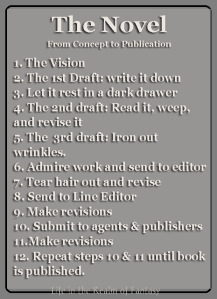
The core of this problem lies in the incredible number of people who are writing but have no concept of what it takes to write a good novel. Once they have rewritten the rough draft to their satisfaction, they believe they are done.
Then, they publish it.
Sadly, this sometimes happens with traditionally published books as well. I see this as evidence that editing and proofreading by the large houses for many successful traditionally published authors is sometimes overlooked in the rush to cash in on a commercial success. These publishers set impossible deadlines and race to launch what they hope will be a follow-up best seller, but because they were rushed, these books sometimes fail to live up to the hype.
 And while this means that they publish crap too, the stink washes off the traditional houses but clings to the Indie industry as a whole.
This brings me to my point: The big 5 traditional publishers pretend everything they publish is sheer magic, while loudly pointing out the faults inherent in self-publishing. And, while it makes me laugh that they decry us as worthless but leap to publish us the minute we show any sign of real success, there are hard truths here we indies who are committed to the craft of writing must face.
First off, I feel strongly that we shouldn’t rush to churn out more than one or two books a year. Romance novels can be a different kind of animal, but unless you are producing pulp fiction, the same applies. (Click here to read an article by romance novelist Merry Farmer on this subject.)
Traditional publishers fail us (as readers) by pushing successful authors to spew several books a year, beating dead horses and creating long-winded series that lose the way after the third book. We Indies have the luxury to take our time to craft a good book, as we don’t have externally imposed deadlines.
Some of the worst books I’ve read were written by traditionally published authors who also wrote books I loved. But their best (in my opinion) books were written in the early days when they weren’t book-producing machines.
Some general things for any author to do when they are first starting out:
- Learn the mechanics of how to write in your native language. Grammar and Punctuation are essential, even in modern literature.
- Join a writing group and meet other authors, either in your local area or on-line. This will help you with steps 3 and 4. Enter writing contests and participate in the boards and threads. Ignore the trolls; they pop-up everywhere (usually with badly written ego-stroking crap to their publishing credit.)
- Develop a thick hide, and find an unbiased eye among your trusted acquaintances to read your work as you are writing it, so you can make changes more effectively and not be overwhelmed at the prospect of rewriting an entire manuscript from scratch.
- Lose your ego. Your ego gets in the way of your writing. Are you writing for yourself or for others to read and enjoy your work?
- Find a good, professional editor. There are hidden aspects to every great book, and they are all centered around knowledge of the craft. An external eye is essential to the production of a good book. Check their references, and when you do engage their services, do not take their observations personally. This editor must be someone you can work closely with, who makes suggestions and lets you make the changes on your masterpiece yourself. They must understand it is your work and you have the right to disagree with any suggested changes. If you have this symbiotic relationship, you will turn out a good final product.
- Don’t give up your day job. Even authors receiving hefty advances have to struggle to make ends meet. (Read Thu-Huong Ha’s article, A New Book Shows the Financial Cost of Leading a Creative Life.)
 It’s far more affordable now for a dedicated reader to buy enough books to keep themselves happy, but making your way as a reader through the many offerings in our eBookstores is a perilous journey, and you can’t always trust the quality by reading the publisher’s label. You just have to realize that whether a novel is traditionally published or Indie, some books are frogs, and some are princes.
You may have to read a few books you wish you hadn’t on your way to finding the book that sweeps you away. For me, that’s just part of the journey.
Sources and Attributions:
How Many Books Should You Write Per Year, by Merry Farmer, Nov 13, 2013
A New Book Shows the Financial Cost of Leading a Creative Life, by Thu-Huong Ha, Jan 11, 2017, Flipboard
IBM Selectric, By Oliver Kurmis (Self-photographed) [CC BY 2.5], via Wikimedia Commons
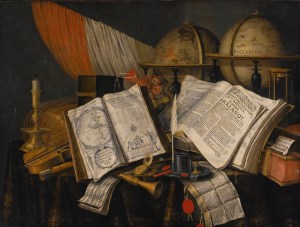
Still Life, By Evert Collier (1642-1708) [Public domain], via Wikimedia Commons

 Writers are offered many Facebook groups, some strictly private, professional, and writing-craft oriented. These tend to be good educational groups, and I have enjoyed them.
 Remember, nothing ever happens as fast as you want it to. Building a fan base takes time, years, actually. It doesn’t happen over night, although rewards will occur in small leaps and bounds. Those little surges of sales are what keeps us going, the lure that keeps us plodding forward.


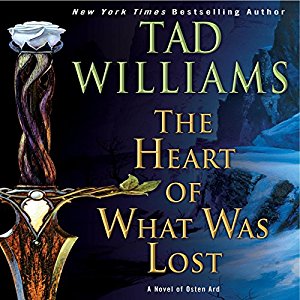
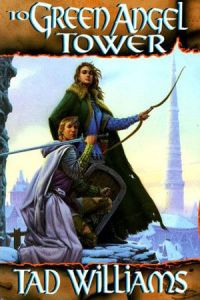
 One of my favorite authors is Tad Williams, who wrote the watershed series,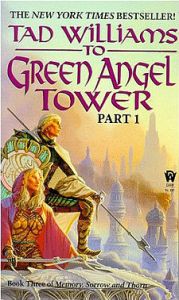







 Life in the Realm of Fantasy