Category Archives: writing

Resources for the struggling author #amwriting

When I was at the beginning stage of my writing life in the 1970s, I had no idea how a person could become a writer if they weren’t born under a lucky star. Over the next twenty years, I wrote reams of poetry and short stories. I also wrote the outlines of many novels.

MyWritingLife2021I still had no idea there was a wider community of writers in my area, and even if I had, I wouldn’t have felt worthy of gate-crashing one of their meetings.

One day in 1990, I stumbled upon a book offered in the Science Fiction Book Club catalog: How to Write Science Fiction and Fantasy by Orson Scott Card. The day that book arrived in my mailbox changed my life. 

That day, I stopped feeling guilty for thinking I could be a writer.

On writing stephen king 1st edition coverThe next book I bought was in 2002: On Writing, A Memoir of the Craft by Stephen King.

But if I were beginning today, I would have access to many more resources for new writers. Even if you aren’t participating in NaNoWriMo, I recommend checking out the NaNoWriMo Store, as it offers several good books to help you get started.

Brave the Page

Are you a first-time writer or a young author? While it is written for middle graders, adults just starting out will find good advice in this book.

From the official Blurb: Partly a how-to guide on the nitty-gritty of writing, partly a collection of inspiration to set (and meet) ambitious goals, Brave the Page is the go-to resource for middle-grade writers. Narrated in a fun, refreshingly kid-friendly voice, it champions NaNoWriMo’s central mission that everyone’s stories deserve to be told. The volume includes chapters on character, plot, setting, and the like; motivating essays from popular authors; advice on how to commit to your goals; a detailed plan for writing a novel or story in a month; and more!

Ready, Set, Memoir!

Are you writing a memoir, but don’t know how to get started?

From the official Blurb: Written by former NaNoWriMo Program Director Lindsey Grant, Ready, Set, Memoir! is full of helpful lists, exercises, inspiring quotes from famous memoirists, advice, lessons, and humor to help walk you through the writing process. This guided journal will inspire and motivate you to write—and finish!—your memoir.

no plot no problem_mainFinishing off the resources from the official NaNoWriMo store is Grant Falkner’s handbook, No Plot, No Problem!

This book is a resource for people who just want to write but have no idea where to start.

From the official Blurb: When you add No Plot? No Problem! to your personal library, it’ll give you a run for your lexical money! It’s a writing heavyweight, muscled with advice, activities, pep talks, and prompts that are sure to match your brain swing for swing in a literary tussle. Challenge this guide, and win, and you’ll have written a champ of a novel that can hold its own in the ring!

But maybe you are ready to move beyond the beginning stages and need more advanced information. My personal library of books on craft is huge. I can’t stop buying them. But what are the books I refer back to most frequently?

The following is the list of books that are the pillars of my reference library:

These are hard times for many would-be authors. How do we find cost-free resources? 

I usually begin my hunt for information by “googling” a question. No matter what browser you use, if you don’t ask, you don’t receive. Be wary of misinformation! Read several articles to get a broader view of the subject. I also check the date when something was posted to ensure the information is current. I bookmark the site if that information is relevant to my needs.

Note: If you are researching for a novel, your browsing history may look a little … unusual … after a while.

activateMany local libraries offer a service where one can submit a question and have it answered by email. If that isn’t an option and we’re feeling ambitious, you can check out eBooks on any subject.

Cost-free resources for authors to bookmark in general:

www.Thesaurus.Com This is good for when I need to know, “What’s another word that means the same as this word but isn’t weird or repetitive?”

Oxford Dictionary online is brilliant when I need to know, “Does this word mean what I think it means? Am I using it correctly?”

Wikipedia – The font of all knowledge, or so I hear. My go-to source of info is often Wikipedia. This resource is created and edited by volunteers. All articles must provide proper citations and reference links to outside sources to support every statement. Articles that don’t meet specific criteria are flagged. Some opinions may be presented as facts when discussing art or literature. But overall, I always find something useful by looking at the links in their footnotes and going directly to those sources.

Some other cost-free resources:

www.writersdigest.com

The Creative Penn

Creative Writing Now

Stardust, Neil GaimanHere is a link to the great Neil Gaiman’s absolutely wonderful, infinitely comforting, yet utterly challenging advice for writers: Writing Advice from Neil Gaiman | Discover MasterClass | MasterClass – YouTube

Your best resource is a good writers’ group. A good group is the best way to learn about this craft. Your area may have established writers’ groups, and some may be able to accept new members. The best way to find out is to Google writers’ groups in your town and make inquiries.

Attend a few meetings as an observer to see if this group is a good fit for you.

Maybe you don’t feel comfortable meeting in person or via Zoom. Many online writers’ forums exist, and one might fit your needs. From 2010 through 2012, I participated in an excellent online group, Critters Workshop. The support I found there gave me the courage to dive into the waters of my local writing community.

Wendig_Damn_Fine_StoryIn 2010, I gained a wonderful local group through attending write-ins for NaNoWriMo. Nowadays, we meet weekly via Zoom, as some members are now living far away from Olympia. My fellow writers are a never-ending source of support and information about both the craft and the industry. We write in various genres and gladly help each other bring new books into the world. But more than that, we are good, close friends.

I hope this short list of resources for the struggling author has been of help. May your words flow freely, and may inspiration never fail you.


Comments Off on Resources for the struggling author #amwriting

Filed under writing

Writing the Short Story part 2: The Narrative Essay #amwriting

This is part two of a series on writing short fiction. One of my favorite forms of short fiction to read is the narrative essay. For indie authors who wish to earn actual money from their writing, the narrative essay is often more salable and appeals to a broader audience.

narrative essayNarrative essays are drawn directly from real life, but they are fictionalized accounts. They detail an incident or event and talk about how the experience affected the author on a personal level.

One of my favorite narrative essays is 1994’s Ticket to the Fair (now titled “Getting Away from Already Being Pretty Much Away from It All“) by David Foster Wallace, published in Harpers. I’ve talked about this particular piece before. It’s a humorous, eye-opening story of a naïve, slightly arrogant young journalist’s assignment to cover the 1993 Iowa State Fair, told in the first person.

Wikipedia summarizes Ticket to the Fair this way: Wallace’s experiences and opinions on the 1993 Illinois State Fair, ranging from a report on competitive baton twirling to speculation on how the Illinois State Fair is representative of Midwestern culture and its subsets. Rather than take the easy, dismissive route, Wallace focuses on the joy this seminal midwestern experience brings those involved.

A-supposedly-fun-thing-first-edition-coverWallace went to the fair thinking it would be a boring event featuring farm animals, which might be beneath him. But it was his first official assignment for Harpers, and he didn’t want to screw it up. What he found there, the people he met, their various crafts, and how they loved their lives profoundly affected him, altering his view of himself and his values.

As we find in Wallace’s piece, the primary purpose of an essay is thought-provoking content. The narrative essay conveys our ideas in a palatable form, so writing this kind of piece requires authors to think.

Just like any other form of short fiction, a narrative essay has content and structure. It has

  • an introduction,
  • a plot,
  • characters,
  • a setting,
  • a climax.

Choose your words for impact because writing with intentional prose is critical. A good narrative essay has been put into an entertaining form that expresses far more than mere opinion. They sometimes offer up deep, uncomfortable views. The trick is to offer them in a way that the reader feels connected to the story. Once they have that connection, they will see the merit of the opinions and viewpoints.

So, narrative essays are a way of sharing our personal view of the world, the places we go, and the people we meet along the way.

  • Names should be changed, of course.

Harpers_Magazine_1905Literary magazines want well-written essays on a wide range of topics and life experiences presented with a fresh point of view. Some publications will pay well for first rights.

Authors make their names by being published in a reputable magazine. You must pay strict attention to grammar and editing to have any chance of acceptance. Never send out anything that is not your best work.

After you have finished the piece, set it aside for a week or two. Then, return to it with a yellow highlighter and a fresh eye. Print it out and read it aloud, checking for dropped and missing words. In this case, I do NOT recommend the narrator function of your word processing program.

In the process of reading aloud, you will find:

  • Spelling—misspelled words, autocorrect errors, and homophones (words that sound the same but are spelled differently). These words are insidious because they are actual words and don’t immediately appear out of place.
  • Repeated words and cut-and-paste errors. These are sneaky and dreadfully difficult to spot. Spell-checker won’t always find them. They make sense to you, the author, because you see what you intended to see. For the reader, they appear as unusually garbled sentences, and you will stumble over them as you read aloud.
  • Missing punctuation and closed quotes. These things happen to the best of us.
  • Digits/Numbers: Miskeyed numbers are difficult to spot when they are wrong unless they are spelled out.

oxford_synonym_antonymDon’t be afraid to write with a wide vocabulary, as people who read these publications have a broad command of language.

  • However, we never use jargon or technical terms that only people in certain professions would know unless it is a piece for a publication catering to that segment of readers.

Above all, be a little bold. I enjoy reading David Foster Wallace and George Saunders because they are adventurous in their work.

And finally, we must be realistic. Not everything you write will resonate with everyone you submit it to. Put two people in a room, hand them the most exciting thing you’ve ever read, and you’ll get two different opinions. They probably won’t agree with you.

Don’t be discouraged by rejection. I follow several well-known authors via social media because what they have to say about the industry is intriguing. They’re journalists who submit at least one piece weekly, hoping they will sell one or two a year. One says she aims for one hundred rejections a year because two or three stories or essays are bound to strike a chord with the right editor during that time.

Rejection happens far more frequently than acceptance, so don’t let fear of rejection keep you from writing pieces you’re emotionally invested in.

This is where you have the opportunity to cross the invisible line between amateur and professional. Always take the high ground—if an editor has sent you a detailed rejection, respond with a simple “thank you for your time.” If it’s a form letter rejection, don’t reply.

What should you do if your work is accepted but the editor wants a few revisions?

367px-Saturday_evening_post_1903_11_28_aIf the editor wants changes, they will make clear what they want you to do. Editors know what their intended audience wants. Trust that the editor knows their business.

Make whatever changes they request.

Never be less than gracious to any of the people at a publication when you communicate with them, whether they are the senior editor or the newest intern. Be a team player and work with them.

And when you receive that email of acceptance—celebrate! There is no better feeling than knowing someone you respect liked your work enough to publish it.


Credits and Attributions:

Wikipedia contributors. A Supposedly Fun Thing I’ll Never Do Again [Internet]. Wikipedia, The Free Encyclopedia; 2023 Sep 4, 00:32 UTC [cited 2023 Nov 20]. Available from: https://en.wikipedia.org/w/index.php?title=A_Supposedly_Fun_Thing_I%27ll_Never_Do_Again&oldid=1173714712.

Comments Off on Writing the Short Story part 2: The Narrative Essay #amwriting

Filed under writing

Writing the Short Story part 1: experimenting with the circular story arc #amwriting

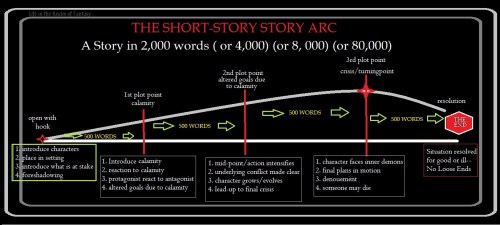
When I plan a story, I divide the outline into 3 acts. In a 2,000-word story, act 1 has 500 words, act 2 has 1,000, and act 3 has 500 more words to wind up the events. No matter the length of any story, if you know the intended word count, you can divide the plot outline that way.

WritingCraft_short-storyKnowing my intended word count helps me create a story, from drabbles to novels. For me, it works in stories with a traditional arc as well as those with a circular arc.

In any story, the words we use to show the setting, combined with a strong theme, will convey atmosphere and mood, so fewer words are needed.

The story I’m using for today’s example is the Iron Dragon, a 1,025-word story I wrote during NaNoWriMo 2015. That was the year I focused on experimental writing, putting out at least one short story every day and sometimes two.

This is a story of the web of time glitching and the perceptions of the characters who experienced it.

Some speculative fiction stories work well as a double circular arc—something like an infinity sign, a figure-eight lying on its side:

dragonIn a circular narrative, the story begins at point A, takes the protagonist through life-changing events, and brings them home, ending where it started. The starting and ending points are the same, and the characters return home, but they are fundamentally changed by the story’s events.

The infinity arc presents one story from two different viewpoints. The story begins with character 1, takes them through the events, and brings them back. At that point, the story takes up character 2 and retells the events through their point of view, bringing them back to where they began. (Two circular story arcs joined by one event.)

Both characters begin at the same place, experience the event(s) concurrently but separately, and arrive back at the same place. The worldview of both is challenged by what they have lived through.

The two characters may not meet. In the Iron Dragon, my characters physically don’t meet in person. However, they briefly occupy the same patch of ground during a glitch in the space-time continuum.

This story ends where it began but with the two sets of characters having seemingly experienced two different events. Their perception of the meeting is colored by the knowledge and superstitions of their respective eras.

The first paragraph of the Iron Dragon begins in the middle of a story—the center of the infinity sign. Those opening sentences establish the world, set the scene, and introduce the first protagonist. The following three paragraphs show the situation and establish the mood. They also introduce the antagonist—what appears to be an immense dragon made of iron.

The Infinty Story ArcAt this point, our first protagonist knows that he must resolve the problem and protect his people, which he does. There is more to his side of the story, of course. But this is a story with two sides. Aeddan’s point of view is not the entire story.

Again, I had to set the scene and establish the mood and characters. Here, we meet the second protagonist, an engine driver named Owen. He has the same needs as Aeddan and also resolves the problem. Neither character would have understood the strange physics of what just occurred had Michio Kaku been around to explain it to them. Both do what they must to protect their people.

The final paragraphs wind it up. They also contribute to the overall atmosphere and setting of the second part of the story. As a practice piece, this story has good bones. I didn’t feel it was the right kind of story for submission to a magazine or contest, as it’s not a commercially viable piece. So, I posted it here on this blog on November 4th, 2016. #flashfictionfriday: The Iron Dragon

Flag_of_Wales.svgWord choices are essential in showing a world and creating a believable atmosphere when limited to only a small word count. I had challenged myself to write a story that told both sides of a frightening encounter in 1000 words, give or take a few. I wanted to expand on the theme of dragons and use it to show two aspects of a place whose national symbol is the Red Dragon (Welsh: Y Ddraig Goch).

But I also wanted to use the double circular story arc, seeing it as a way to tell one story as lived by two protagonists separated by twelve centuries and a multitude of legends. That meant I had 1000 words to tell two stories.

Short fiction allows us to experiment with both style and genre. It challenges us to build a world in only a few words and still tell a story with a beginning, a middle, and an end.

The act of writing something different, a little outside my comfort zone, forces me to be more imaginative in how I tell my stories. It makes me a better reader as well as a better writer.


Credits and Attributions:

Wikimedia Commons contributors, “File:Flag of Wales.svg,” Wikimedia Commons, https://commons.wikimedia.org/w/index.php?title=File:Flag_of_Wales.svg&oldid=808619174 (accessed November 19, 2023).

3 Comments

Filed under writing

Transition scenes – direct dialogue vs. indirect speech #amwriting

Sometimes, writing is more about inspiration than anything else; other times, it is all about perspiration. We must work at it even when we are inspired, and our work is flowing.

WritingCraftSeries_depth-through-conversationWe all know the best stories have an arc of rising action flowing smoothly from scene to scene. Those changes are called transitions and are little connecting scenes. Conversations and indirect speech (thoughts, ruminations, contemplations) often make good transitions when a hard break, such as a new chapter, doesn’t feel right.

A properly placed argument or a moment of internal dialogue gives the reader the context to process the action and understand why it happened. The reader and the characters receive information simultaneously, but only when they need it.

Action – reaction -action – reaction. This kind of pacing isn’t obvious, but a narrative can easily become chaotic without it.

money_computer_via_microsoftWe know dialogue must have a purpose and move toward a conclusion of some sort. This means conversations or ruminations should provide a sense of moving the story forward. These are moments of regrouping and processing what has just occurred. Dialogue and introspection are also where the protagonist and the reader learn more about the mysterious backstory.

Sometimes, we end a scene and don’t know how to transition to the next. We can end it with a hard break or write a short transition scene. I always look at the overall length of what has gone before, and if it’s too short, say 500 or so words, I write a transition scene.

I ask myself three questions: Who needs to know what? Why must they know it? How many words do I intend to devote to it?

I try to keep the conversations and ruminations short and intersperse them with scenes of actions that advance the plot.

Author James Scott Bell says dialogue has five functions:

  1. To reveal story information
  2. To reveal character
  3. To set the tone
  4. To set the scene
  5. To reveal theme

CAUTION INFO DUMP ZONE AHEADSo now that we know what must be conveyed and why, we find ourselves walking through the Minefield of Too Much Exposition.

Some authors give their characters long paragraphs with lines and lines and lines of uninterrupted dialogue. This is known as bloated exposition and is something readers will skip over, trying to “get to the good part.”

Information can be dispersed via indirect speech,

Let’s look at a scene that opens upon a place where the reader and the protagonists must receive information. The way the characters speak to us can take several forms:

  • Direct dialogue: Nattan said, “I was going to give it to Benn in Fell Creek, but he wasn’t home, and I had to get on the road.”
  • Italicized thoughts: Nattan stood looking out the window. Benn’s not home. What now?
  • Free indirect speech: Nattan stood looking out the window. Benn wasn’t home, so who should he give it to?

Wikipedia describes free indirect speech as a style of third-person narration which uses some of the characteristics of third person along with the essence of first-person direct speech.

The following is an example of sentences using direct, indirect and free indirect speech:

  • Quoted or direct speechHe laid down his bundle and thought of his misfortune. “And just what pleasure have I found, since I came into this world?” he asked.
  • Reported or normal indirect speechHe laid down his bundle and thought of his misfortune. He asked himself what pleasure he had found since he came into the world.
  • Free indirect speechHe laid down his bundle and thought of his misfortune. And just what pleasure had he found, since he came into this world?

According to British philologist Roy Pascal, Goethe and Jane Austen were the first novelists to use this style consistently and nineteenth century French novelist Flaubert was the first to be consciously aware of it as a style. [1]

Epic Fails memeWhen I began writing seriously, I was in the habit of using italicized thoughts and characters talking to themselves to express what was happening inside them.

That isn’t necessarily wrong. When used sparingly, italicized thoughts and internal dialogue have their place. When they are used as a means for dumping information, they can become a wall of italicized words.

In the last few years, as I’ve evolved in my writing habits, I am increasingly drawn to using the various forms of free indirect speech to show who my characters think they are and how they see their world.

The main thing to watch for when employing indirect speech in a scene is to stay only in one person’s head. You can show different characters’ internal workings provided you have hard scene or chapter breaks between each character’s dialogue.

Lucky Coffee CupIf you aren’t careful, you can slip into “head-hopping,” which is incredibly confusing for the reader. First, you’re in one person’s thoughts, and then another—like watching a tennis match.

Readers like it when we find ways to get the story across with a minimum of words.

Showing important ruminations as an organic part of the unfolding plot is one way to give information and reveal aspect of a character. I love it when an author writes lean, powerful prose, but delivers the bits of information just frequently enough to keep me reading.

I hope your writing week has been going as well as mine has. I have made headway on my abandoned novel and feel good about what I’ve written. And that is the important thing—enjoying the act of creating a story out of thin air and thinner plot ideas.


Credits and Attributions:

[1] Wikipedia contributors, “Free indirect speech,” Wikipedia, The Free Encyclopedia, https://en.wikipedia.org/w/index.php?title=Free_indirect_speech&oldid=817276599 (accessed Nov 14, 2023).

Comments Off on Transition scenes – direct dialogue vs. indirect speech #amwriting

Filed under writing

writing prompts, symbolism, and stormy weather #amwriting

It’s cold and stormy as I write this post, with the promise of flooding in the next few days. And when the house feels chilly, Grandma fires up the stove and starts cooking. Scones, shortbread, cranberry nut bread – I have veganized all my old favorite recipes, and this is the time of year to indulge in comfort foods.

MyWritingLife2021Crockpot soups are high on the menu here at Casa del Jasperson. I do most of the work for dinner in the morning and get it out of the way along with the other housework, and then I can write and whine about writing.

Whining aside, writing is going well. I manage two and sometimes three scenes daily, so the NaNoWriMo project is moving forward.

The storms may swirl and rage outside our apartment, but I have tea to keep me warm and the memories of warmer places and gentler breezes to keep me writing.

So, let’s talk about inspiration. Poets know that writing to a pictorial prompt is one of the best ways to kickstart your imagination.

extrapolateThe work inspired by a visual prompt often has nothing to do with the image. But it has everything to do with the nature of storytelling. The ability to explain the world through stories and allegory emerges strongly in artists of all mediums—painters, sculptors, writers, musicians, and dancers.

I’ve been cursed with an over-active imagination and have no trouble visualizing what I want to write. The subliminal prompting of an image is the spark that lights the fire of creativity. Even though I’m not educated as an art historian, I gravitate to the paintings of great artists because they tell a story.

My Fine Art Friday posts came about because I like to share the images I come across. Hopefully, it gives others like me access to view the art that humanity is capable of, good and bad.

Perception is in the eye of the beholder. Observation inspires extrapolation, leading the viewer to come away with new ideas. When I view a scene captured centuries ago by an artist, my mind kicks into high gear. I see the painting as depicting the middle of the story, and I imagine what came before that moment and where it is going next.

Unintentionally, I put a personal spin on my interpretation. I don’t mean to, but everyone does.

One of my favorite prompts is Rhetoricians at a Window, by the brilliant 17th-century Dutch artist Jan Steen. The vivid characters who inhabit the scene inspired the creation of some of the characters who pass through my Billy’s Revenge novels, people my protagonists meet along the way.

Jan_Steen,_Dutch_(active_Leiden,_Haarlem,_and_The_Hague)_-_Rhetoricians_at_a_Window_-_Google_Art_ProjectThese jolly rogues have such vivid personalities that the viewer immediately feels a kinship. Who were they? Did they keep their day jobs? Or were they charming moochers living off the kindness of friends?

The public reading of a poem or play was an opportunity for the performers to party like rock stars. After researching this painting online, I learned that the group’s orator is reading a paper titled Lof Liet (Song of Praise). It is assumed the man who looks over his shoulder is the poet who composed the verse.

Symbolism is front and center in this picture. From the drinker in the shadows of the background to the grapevines growing around the window, Jan Steen tells us that wine and rhetoric are entwined.

I love the inclusion of both “the critic” who leans his head on his hand and listens analytically, and the man behind him, who has drunk a few too many pints and supports himself by grasping the window frame and heartily agreeing with some point.

The actor who reads is clearly enjoying himself, as are the others.

allegoryAnd what other symbolism was incorporated in this painting that art patrons in the 17th century would know but we who view it through 21st-century eyes wouldn’t? Eelko Kappe’s article on this painting, Rhetoricians at the Window by Jan Steen, tells us the characters in this painting represent the different emotions of the human condition:

  • Sanguine (active, enthusiastic, and social)
  • Choleric (fast, irritable, and short-tempered)
  • Melancholic (analytical, quiet, and wise)
  • Phlegmatic (peaceful and relaxed)

When I first read that article, I discovered four new words that I’ll never have a use for. But I love words, big or small, old and new—and now I know what sanguine, choleric, melancholic, and phlegmatic mean. While they were familiar and well-understood words when this painting was new, sadly they’re a little too obscure to use in today’s casual prose.

I hate it when I have shiny new words but am not allowed to show off with them.

Finally, as always, whether you are participating in NaNoWriMo or not, may the words flow freely for you, and may you never run out of new ideas to write. If you’re running a little low on inspiration, consider going to Wikimedia Commons and perusing the incredible art that is there for all to enjoy.

https://commons.wikimedia.org/wiki/Category:Landscape_paintings_by_artist


Credits and Attributions:

IMAGE:  Wikimedia Commons contributors, “File:Jan Steen, Dutch (active Leiden, Haarlem, and The Hague) – Rhetoricians at a Window – Google Art Project.jpg,” Wikimedia Commons, the free media repository, https://commons.wikimedia.org/w/index.php?title=File:Jan_Steen,_Dutch_(active_Leiden,_Haarlem,_and_The_Hague)_-_Rhetoricians_at_a_Window_-_Google_Art_Project.jpg&oldid=355150081 (accessed September 10, 2020).

Comments Off on writing prompts, symbolism, and stormy weather #amwriting

Filed under writing

Replenishing the Dry Well of Inspiration #amwriting

Week one of NaNoWriMo (National Novel Writing Month) is now behind us. I’m still zooming along and making good progress. However, this is where many writers will fall by the way. They can’t visualize what to write next and then lose momentum.

WritingCraftSeries_character-arcThe well of inspiration has gone dry.

Getting word count becomes too important for some of us, and we go a bit off the rails. We flail around and end up with bunny trails to nowhere.

There are ways to move the story ahead and still write something worth reading. And the story is what matters. The quest for word count is only a personal goal. National Novel Writing Month is not a race or a contest. It is a time dedicated to the act of writing.

I spent many years working in corporate America and often had my best ideas while at my job. If your employment isn’t a work-from-home job, using the note-taking app on your cellphone to take notes during business hours will be frowned upon. To work around that, I suggest keeping a pocket-sized notebook and pen to write those ideas down as they come to you.

That is an old-school solution that worked for me. The best part is that you don’t appear distracted or off-task.

Ideas come to me when I stop forcing my brain to work when it’s on its last legs. Trust me, pounding out 1,667 new words a day severely tests your creativity and endurance.

Strangely, cleaning and organizing my living space allows my mind to rest. Taking the time to wash dishes or clean the house helps reset my short-circuited creative mind. But getting outside and walking helps even more. I suggest taking a notebook or dictating into your note-taking app.

8ce052b8e7c8182a51dc4999859c1061Arcs of action drive plots. Every reader knows this, and every writer tries to incorporate that knowledge into their work. Unfortunately, when I’m tired, random, disconnected events that have no value will seem like good ideas.

  • But action inserted for shock value can derail what might have been a good plot.

I avoid acting on unplanned stupidity by brainstorming in a separate document and outlining as I go. This method helps me keep the overall logic in mind.

So, where are we in the story arc when the first lull in creativity occurs? At the story’s outset, we find our protagonist and see them in their familiar surroundings. The inciting incident occurs once we have met them, whether they are ready for it or not. At that point, we must take them to the next stumbling block. But what is that hurdle and how do they leap it?

Answering that question isn’t always easy and this is where some writers give up.

I’m writing a fantasy, and I know what must happen next in the novel because it’s an origin story. I’m writing it from a historical view. I know how this tale ends, so I am writing the motivations that lead to that ending.

Sometimes, it helps to write the last chapter first – in other words, start with the ending. That is how my first NaNoWriMo novel in 2010 began. I was able to pound out 68,000 words in 30 days because I had great characters, and I was desperate to uncover how they got to that place in their lives.

Lucky Coffee CupAs you clarify why the protagonist must struggle to achieve their goal, the words will come.

  • How does the protagonist react to pressure from the antagonist?
  • Why does the enemy have the upper hand?
  • How does the struggle affect the relationships between the protagonist and their cohorts/romantic interests?
  • What complications arise from a lack of information?
  • How will the characters acquire that necessary information?

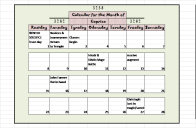
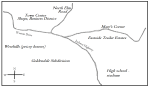
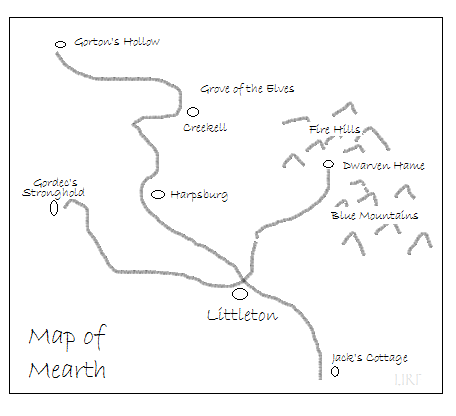
As I write, a broad outline of my intended story arc evolves. I keep my notes in an Excel workbook. It contains maps, calendars, and everything pertaining to any novel set in that world, keeping it in one easy-to-find place.

When logic forces change to the plot (as it always does), I go to my storyboard and update my plot outline, calendar, or maps.

If you are stuck, it sometimes helps to go back to the beginning and consider these questions:

  • What is the goal/objective?
  • Is the objective compelling enough to warrant risking everything to acquire it?
  • What will the protagonist face to challenge their moral values and sense of personal honor? How will this force them to be stronger?
  • Who is the antagonist? What do they want, and what are they willing to do to achieve it? Are they facing ethical quandaries, too?

Every obstacle we throw in the path to happiness for the protagonists and their opposition forces change.  They shape the narrative’s direction and the characters’ personal arcs.

When your creative mind needs a rest, step away from the keyboard and do something else for a while. I find that when I take a break to cook or clean out a corner, ideas for what to do next in my novel will occur to me. These little flashes of inspiration carry me a few chapters further into the story.

Excalibur London_Film_Museum_ via Wikipedia

Excalibur London_Film_Museum_ via Wikipedia

Finally, let’s talk about murder as a way to kickstart your inspiration.

I suggest you don’t resort to suddenly killing off characters just to get your mind working. Readers become angry with authors who casually kill off characters they have grown to like.

When a particular death is planned from the beginning, it is one thing. But developing characters is a lot of work. If you kill off someone with an important role, who or what will you replace them with?

You may need that character later, so plan your deaths accordingly.

Whether you are participating in NaNoWriMo or not, may the words flow freely for you, and may you never run out of new ideas to write.

2 Comments

Filed under writing

Food as set dressing #worldbuilding #amwriting

We’re well into NaNoWriMo, and writing is going well so far. I’m on track, and the words are flowing well. At our Saturday write-in, one of my fellow writers asked me how I introduce food into a narrative. As you might imagine, I have an opinion about that: I see food as set dressing, a part of world-building.

MyWritingLife2021BFood scenes serve as transitions between events. The act of dining occurs, but the conversations are the point of that scene. This is an opportunity to rest and regroup.

I write books set in fantasy environments, but you create a world no matter what genre you write in. As that world grows on paper, so does the culture. An aspect of worldbuilding involves including the casual mention of appropriate food for your ecology and level of technology.

I feel it’s best to concentrate on the conversations when writing about meals. The food should be part of the scenery. The conversations around food are where new information can be exchanged, things we need to know to move the story forward.

Apples 8-25-2013I’ve read many unforgettable fantasy books. One that shall go unnamed stands out, but not for a good reason. The author gave each kind of fruit, bird, or herd beast a different, usually unpronounceable, name in the language of her fantasy culture. She must have spent hours devising that hot mess of fantasy foods.

The characters were great and engaging, and the plot was engrossing. But the information about each and every kind of plant or vegetable was inserted into the narrative in long info dumps that ruined what could have been a great book for me.

As a reader, I think Tolkien got the food right when he created the Hobbit and the world of Middle Earth. He served common everyday food that his target audience was familiar with.

Food is an essential component of a culture but should be only briefly mentioned. Whether commonplace or exotic, it should be similar enough to known earthly foods to create an atmosphere a reader can easily visualize.

As many of you know, I have been vegan since 2012. However, during the 1980s, my second ex-husband and I raised sheep as part of a family cooperative.

I could write a book about those five years, but no one would believe it—fantasy is easier to make sense of.

I grew up fishing with my father and have a first-person understanding of putting meat, fish, or fowl on the table when a supermarket is not an option.

That experience taught me many things. Meat, fish, and fowl won’t be served daily in the average person’s home if they must catch, kill, and prepare it for themselves.

Village_scene_with_well_(Josse_de_Momper,_Jan_Brueghel_II)

Village Scene with Well, Josse de Momper and Jan Brueghel II PD|100 via Wikimedia Commons.

It’s a lot of work to raise an animal. Hunting is also labor intensive. Then you have a lot of messy, smelly work to prepare it for cooking.

Travelers often streamline this process by skinning game birds rather than plucking them. The feathers come off with the skin – the whole point of hunting for dinner is to get it roasting as quickly as possible.

Why not raise animals and eat them? In the Middle Ages, pigs were raised solely for meat. The wool a sheep could produce in its lifetime was of far more value than the meat you might get by slaughtering it. For that reason, lamb was rarely served. The only sheep that made it to the table were usually rams culled from the herd.

Chickens were no different because you lose the many meals her eggs would have provided once a chicken is dead. Young roosters were culled before they got to the contentious stage and were usually the featured meat in the Sunday stew. Only one rooster was kept for breeding purposes. If he was too ill-tempered, he went into the stew pot, and a young rooster with better manners took his place.

Cattle and goats were also more valuable alive. Cows were integral to a family’s wealth as they were milk producers and sometimes worked as draft animals. Only one bull would be kept intact in a small herd for breeding purposes. The others would be neutered, made into oxen and draft animals that pulled plows, pulled wagons, fertilized the fields with their manure, and did all the work that heavy farm machinery does today.

In medieval times, it was a felony for commoners in Britain to hunt for game on many estates. Poachers were considered thieves and faced harsh penalties, horrific by our standards, if they were caught.

cucumbers waiting to be pickles 08-24-2013

Cucumbers waiting to be pickles © 2013 cjjasp

However, most people were allowed to fish as long as they didn’t take salmon, so hutch-raised rabbits, fish, or salted pork were on the menu more often than fowl, sheep, or cattle. Eels and frogs were abundant and were a menu staple in the average peasant’s home. Anything one could raise in a garden was carefully harvested and pickled or dried. Berries were dried or made into jams and wines, as were tree fruits. Fish were dried and smoked or salted, and even pickled. These preserves were critical to surviving winters.

Common vegetables in medieval European gardens were leeks, garlic, onions, turnips, rutabagas, cabbages, carrots, peas, beans, cauliflower, squashes, gourds, melons, parsnips, aubergines (eggplants)—the list goes on and on. But what about fruits?

Wikipedia says:

Fruit was popular and could be served fresh, dried, or preserved, and was a common ingredient in many cooked dishes. Since sugar and honey were both expensive, it was common to include many types of fruit in recipes that called for sweeteners of some sort. The fruits of choice in the south were lemons, citrons, bitter oranges (the sweet type was not introduced until several hundred years later), pomegranates, quinces, and grapes. Farther north, apples, pears, plums, and wild strawberries were more common. Figs and dates were eaten all over Europe but remained expensive imports in the north. [1]

Pies of all kinds were the fast food of the era, often sold by vendors on the street or in bakeries.

Pieter_Bruegel_the_Elder_-_Peasant_Wedding_-_Google_Art_Project_2

Pieter Bruegel the Elder – Peasant Wedding (1526/1530–1569) via Wikimedia Commons

Wheat was rare and expensive. For that reason, the grains most often found in a European peasant’s home were barley, oats, and most importantly, rye. In the Americas, maize (corn)was the staple grain that provided flour for bread and was an essential ingredient in cooking.

Mostly, my characters eat fish, vegetables, grains, fruits, and nuts. The primary sources of protein are eggs, cheese, and fish. Herbal teas, ale, ciders, and mead are staples of the commoner’s diet. This is because drinking fresh, unboiled water can be unhealthy if your tale is set in a low-tech world. Medieval beers and ales were lower in alcohol but higher in nutrition than today’s brews. Ale or lager might be served at every meal, even to children.

pie and picklesIn my current work in progress, my people have a melding of familiar European and New World ingredients for their diet and do a lot of foraging. Fish, maize, and potatoes are essential staples, as are beans and wild greens. For a good list of what this diet might entail, visit this link: Indigenous cuisine of the Americas. You will be amazed at the variety of everyday foods that originated in the Americas.

Knowing what to feed your people keeps you from introducing jarring components into your narrative. But don’t make it the center of the scene unless your plot demands it. One of my favorite series does just that: Recipes for Love and Murder: A Tannie Maria Mystery (Tannie Maria Mystery, 1)


CREDITS AND ATTRIBUTIONS:

[1] Wikipedia contributors, “Medieval cuisine,” Wikipedia, The Free Encyclopedia, https://en.wikipedia.org/w/index.php?title=Medieval_cuisine&oldid=896980025 (accessed Nov 4, 2023).

Apples and pickles courtesy of the author’s own kitchen garden.

Pieter Bruegel the Elder – Peasant Wedding (1526/1530–1569) PD|100 via Wikimedia Commons.

Village Scene with Well, Josse de Momper and Jan Brueghel II PD|100 via Wikimedia Commons.

3 Comments

Filed under writing

#FineArtFriday: After the Rain, Gloucester by Paul Cornoyer

After_the_Rain_Gloucester_by_Paul_CornoyerTitle: After the Rain Gloucester

Artist: Paul Cornoyer (1864–1923)

Medium: Oil painting

Style: Pointilist/Tonalist/Impressionist

What I love about this painting:

Paul Cornoyer was a master of depicting weather. In this painting, a hard rain has just passed, and the late afternoon sun has emerged behind us. It casts a rosy glow over the wet pavement and rising mist, that rare moment of beauty that is the only apology bad weather ever makes. This painting is considered representative of the Ashcan School of art, an American art movement depicting urban scenes.

I especially appreciate the way Cornoyer depicts the far reaches of the city of Gloucester Massachusetts in the distance, using a pointillist technique. The church tower looms, a ghostly presence dominating the skyline.  Near the church, smoke from a distant factory hangs low, an ominous presence that lingers and then drifts away.

It’s as if the artist has just stepped outside and shows us the cold dampness of a rainy day to us. The shine of water on the street and the way it reflects the surroundings is masterfully done, one of the finest examples of water in art.

Cornoyer is one of my favorite artists. While he isn’t as well-known as some others of that era, he was nonetheless a master and is deserving of an important place in American art history. His work is as meticulous and moving as that of John Singer Sargent or Childe Hassam.

About the artist:

Via Wikipedia: Paul Cornoyer (1864–1923) was an American painter, currently best known for his popularly reproduced painting in an Impressionisttonalist, and sometimes pointillist style.

Born in St. Louis, Missouri, Cornoyer began painting in Barbizon style and first exhibited in 1887. In 1889, He moved to Paris, where he studied at the Académie Julian alongside Jules Lefebvre and Jean-Joseph Benjamin-Constant.

After returning from his studies in Paris in 1894, Cornoyer was heavily influenced by the American tonalists. At the urging of William Merritt Chase, he moved to New York City in 1899. In 1908, the Albright–Knox Art Gallery (formerly the Albright Gallery) hosted a show of his work. In 1909, he was elected into the National Academy of Design as an Associate Academician. He taught at Mechanics Institute of New York and in 1917, he moved to Massachusetts, where he continued to teach and paint. [1]

Quote from Cornoyer’s bio on Questroyal Fine Art: In New York, Cornoyer worked in a predominantly tonalist style, creating city and street scenes that received praise from critics and won awards. He favored rainy and snowy views of Washington Square Park, Madison Square Park, and Fifth Avenue, rendered in subtle grayed tones. Contemporaries observed that rather than conveying urban chaos, Cornoyer preferred images of calm amidst the bustle of the city. The poetic nature of his work and his sensitivity to atmosphere and color were duly noted. [2]


Credits and Attributions

IMAGE: After the Rain Gloucester, Paul Cornoyer [Public domain], via Wikimedia Commons. Wikimedia Commons contributors, “File:After the Rain Gloucester by Paul Cornoyer.jpg,” Wikimedia Commons, https://commons.wikimedia.org/w/index.php?title=File:After_the_Rain_Gloucester_by_Paul_Cornoyer.jpg&oldid=786054148 (accessed November 2, 2023).

[1] Wikipedia contributors, “Paul Cornoyer,” Wikipedia, The Free Encyclopedia, https://en.wikipedia.org/w/index.php?title=Paul_Cornoyer&oldid=1118249028 (accessed November 2, 2023).

[2] Paul Cornoyer | Questroyal (questroyalfineart.com) (accessed November 2, 2023).

Comments Off on #FineArtFriday: After the Rain, Gloucester by Paul Cornoyer

Filed under writing

My Stressless #writinglife

So, today is the first day of November, and NaNoWriMo has begun. But November is also the month of cooking, my other hobby. And it’s also a month of doctor appointments – go figure.

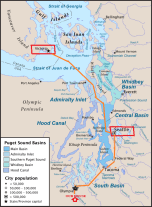
MyWritingLife2021On Monday, I had to drive to Seattle to take the hubby for a consult with a neurosurgeon. Getting to the doctor was fine. It was a matter of spending one hour sitting in traffic trying to leave Olympia and another hour of actually rolling forward once we made it past the Nisqually River. I had planned ahead for that, so we were on time. The upshot is no back surgery for him unless there is no other option, as Parkinson’s patients do very poorly after surgeries.

Which explains his cognitive difficulties after the hip replacement. Surgery Complications for People with Parkinson’s | APDA (apdaparkinson.org)

However, the neurosurgeon explained some of the non-surgical options which may help. Surgery is a last resort, and hopefully, one we can avoid.

The trip home was easy once I found an entrance to the southbound lanes of I-5. I found all sorts of options to go north, but Olympia is 65 miles south of Seattle, so north was the wrong direction. I finally went north, passed a southbound onramp, exited, and doubled back to that street. An hour later, we were back in Olympia.

30 days 50000 wordsSo, what am I writing today? I’m working on the second half of a novel I began writing seven years ago, so all the world-building and character creation has happened. The plot for this half is evolving. I know the ending, and over the next thirty days, my characters will take me from this high point in the middle, through several hurdles yet to be determined, to that final victory.

I expect you’re wondering how a novel goes half-finished for seven years—I sometimes wonder too, but it happened, so there you go. During that time, I wrote a novel that is nearly ready to be published. I also reworked two existing novels into one and published it (Shadows of Redemption). Also, I finished my alternate Arthurian mashup, Bleakbourne on Heath, finally getting it published.

I can write quickly during NaNoWriMo, but revisions usually take several years.

My half-finished novel was set aside when I was stricken with the idea for my forthcoming book, The Ruins of Abeyon. If all goes well with the beta read and Irene’s final edit, Ruins will be out this summer.

Our new furniture has arrived, and we no longer live like college students. Dining on a card table and sitting in a folding saucer chair was fun for the first week or two, but it wore thin after four months. Hauling my 70-year-old self out of the chair meant for teenagers was not a pretty sight.

desk_via_microsoft_stickersI’m settling into the new office. In my old house, my ramshackle desk was in the Room of Shame, a jumbled mess of a storeroom. My new desk is not duct taped together and has the right amount of storage for what I need.

All in all, this office has the best ambiance of any room I’ve ever had. Writing is easy here, and I hope this novel will fly out of my head and be finished in about 55,000 words.

Unless I am suddenly stricken with a new novel.

(Saints forbid, because I think I’m really going to finish it this time.)

Our apartment has very little storage, so I am gradually unpacking. The shelves do their appointed tasks, and the extra storage is ideal. Even so, some of what I had thought we could keep will have to go.

office chairToday, the office/guestroom walls are barren, but I hope to have all the family pictures hung by the end of this week. The hide-a-bed sofa and side chair make a pleasant conversation area or guest room, whichever is needed. All I lack is my new desk chair, which is on its way here from Norway. (Yes, I splurged on a Stressless desk chair since I spend most of my time sitting in front of my computer.) It should be here in a week or two, and I can hardly wait as my current desk chair loses its appeal after an hour or so.

November is not just for writing here at Casa del Jasperson. My oldest daughter and her family will be with us for Thanksgiving this year, so a certain amount of food preparation will happen. And yes, the vegan will roast a turkey for her son-in-law, along with all the trimmings. Thanksgiving falls on Thursday, the 23rd, so my pre-cooking will be done over the course of that week. Anything that can be cooked in advance will be, and writing will happen as always.

food and drinkWhat are some of my planned treats? Cranberry and walnut shortbread, for one thing. Shortbread is so easy and affordable to make that it always surprises me when people don’t. I have veganized all of my old traditional recipes, so everyone can sneak a treat now and then.

November is one of my favorite months. I connect with the local writing scene, meet new authors, and make lots and lots of comfort foods. I feel incredibly fortunate to be at this place in my life. Happiness means something different for each person, but for me, it’s a comfy home with my husband, a good space for writing, and food with family and friends.

So, on this first day of NaNoWriMo 2023, may you find a little joy, and may your words flow freely!

4 Comments

Filed under writing

#NaNoPrep: write the novel first – worry about fine-tuning it later #amwriting

Over the next few months, authors embarking on their first NaNoWriMo will hear many rules about the craft of writing. Some will be good, and some will lead to later problems. I suggest you write the story as it falls out of your head during NaNoWriMo. Don’t worry too much about the rules until you get to the revision stage.

WritingCraft_NaNoPrep_101Getting those ideas out of your head now is what is important. The bloopers and grammar hiccups can all be ironed out in the second draft.

The common axioms of writing exist because writing a story that others can enjoy involves learning grammar rules, developing a broader vocabulary, developing characters, building worlds, etc.

However—some commonly repeated mantras of writing advice have the potential to backfire. An author with too rigid a view of these sayings will write lifeless prose, narratives an algorithm could produce.

The worst rules, in my opinion, are these three:

  • Remove all adverbs and adjectives. This advice is complete crap. Use common sense, and don’t use unnecessary modifiers.
  • Don’t use speech tags. What? Who said that, and why are there no speech tags in this nonsense?
  • Show, Don’t Tell. Don’t Ever Don’t do it! Oh, dear. What an amazing gymnastic routine your face is experiencing.

Nothing is more disgusting than a scene where a person’s facial expressions are described in minute detail.

My Coffee Cup © cjjasp 2013Yes, we do need to show moods, and some physical description is necessary. Lips stretch into smiles, and eyebrows draw together. Still, they are not autonomous and don’t operate independently of the character’s emotional state. The musculature of the face is only part of the signals that reveal the character’s interior emotions.

Another extreme is when the author leans too heavily on the internal, describing the stomach-churning, gut-wrenching shock and wide-eyed trembling of hands in such detail the reader feels queasy and puts the book in the trash.

Which reminds me—don’t forget the weak-kneed nausea.

For me, the most challenging part of revising a manuscript is balancing the visual indicators of emotion with the more profound internal clues. This is something that really only takes shape to my satisfaction through multiple drafts.

  • Write what you know, and don’t dare to write something you don’t. In other words, what they’re saying is don’t use your imagination.

True, you should be careful when writing a real-world ethnicity you don’t have a personal experience of. If your heart is set on that story and only that story, you might want to consult someone from that culture. 5 Tips for Avoiding Cultural Appropriation in Fiction | Proofed’s Writing Tips

But in fantasy, while our life experiences shape our writing, our imagination is the story’s fuel and source. J.R.R. Tolkien understood senseless conflicts and total warfare—because he had experienced it. His books detail his view of the utter devastation of war but are set in a fantasy environment and feature elves and orcs. (Those are two races that don’t abound in England, at least not that I’ve heard.)

Another unreservedly silly mantra is this one:

  • If you’re bored with your story, your reader will be too.

That’s NOT true. You have spent months immersed in that story, years even. You know it inside and out, but your reader doesn’t. Set it aside and come back to it a month or more later. You’ll fall in love with it again.

Commonly discussed writing proverbs go on and on.

  • Kill your darlings.

Indeed, we shouldn’t be married to our favorite prose or characters. Sometimes, we must cut a sentence, a paragraph, a chapter, or even a character we love because it no longer fits the story. But have a care – people read for pleasure and because they love good prose. If it works, keep it.

  • Cut all exposition.

The timing of when we insert the exposition into the narrative is crucial. A story must be about the characters, the conflict, and the resolution. The reader wants to know what the characters know. But they only need that knowledge when it becomes necessary for the plot to move forward. They don’t want information dumped on them.

8ce052b8e7c8182a51dc4999859c1061Bad advice is good advice taken to an extreme. But all writing advice has roots in truth. So, when it comes to making revisions, consider these suggestions:

  • Overuse of adverbs fluffs up the prose and ruins the taste of an author’s work. Don’t get too artful.
  • Too many speech tags, especially odd and bizarre ones, can stop the eye. When the characters snort, hiss, and exclaim their dialogue, I will put the book down and never pick it up again. My favorite authors seem to stick to common tags like said and replied. Those tags blend into the background.
  • Too much telling takes the adventure out of the reading experience. Too much showing is tedious and can be disgusting. It takes effort to find that happy medium, but writing is work.
  • Know what you are writing about. Research your subject and, if necessary, interview people in that profession. Readers often know more than you do about certain things.

Education doesn’t happen overnight. I’ve been studying the craft for over twenty years and always learn something new. Unless an author is fortunate enough to have a formal education in the subject, we must rely on the internet and handy self-help guides to learn the many nuances of the writing craft.

I buy books about the craft of writing modern, 21st-century genre fiction and rely on the advice offered by the literary giants of the past. I seek a rounded view of crafting prose and look for other tools that I can use to improve my writing. I think this makes me a better, more informed reader. (My ego speaking.)

chicago guide to grammarI recommend investing in a grammar book, depending on whether you use American or UK English. These books will answer your questions, and you won’t be in doubt about how to use the standard punctuation readers expect to see.

The Chicago Guide to Grammar, Usage, and Punctuation (if you use American English)

OR

The Oxford A – Z of Grammar and Punctuation (if you use UK English)

Both American and UK writers should invest in:

The Oxford Dictionary of Synonyms and Antonyms (UK and American English). This will increase your vocabulary and help you avoid repetition and leaning on crutch words.

There are many other books on the craft of writing, but a grammar guide and a dictionary of synonyms will take you a long way.

oxford_synonym_antonymI recommend checking out the NaNoWriMo Store, which offers several books to help you get started. The books available there have good advice for beginners, whether you participate in November’s writing rumble or want to write at your own pace.

Other books on craft that I own and recommend:

  1. Damn Fine Storyby Chuck Wendig
  2. Dialogue, by Robert McKee
  3. Steering the Craft: A Twenty-First-Century Guide to Sailing the Sea of Story, by Ursula K. Le Guin
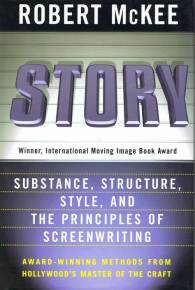
  4. Story, by Robert McKee
  5. The Emotion Thesaurusby Angela Ackerman and Becca Puglisi, and I also have all the companion books in that series.
  6. The Writer’s Journey, by Christopher Vogler
  7. VERBALIZE by Damon Suede and its companion book, Activate.

they're their there cupI study the craft of writing because I love it, and I apply the proverbs and rules of advice gently. Whether my work is good or bad—I don’t know. But I write the stories I want to read, so I am writing for a niche audience of one: me.

Be brave. Write your novel during NaNoWriMo and worry about fine-tuning it later. That’s what revisions are all about.

2 Comments

Filed under writing