
This is the fourth installment of our NaNoWriMo Prep series. (I’ve listed links to the previous posts down below.) We now have an idea of who our characters are. We also know a bit about the world in which our narrative will be set. We know the genre we’re writing in and what the story might be about. Now we’re going to take a closer look at the plot.
 I am the queen of front-loading too much history in my first drafts. Fortunately, my writer’s group has an unerring eye for where the story really begins.
I have to remind myself that the first draft is the thinking draft. It’s where we build worlds and flesh out characters and relationships. It’s also where the story grows as we add to it.
Let’s write a medieval fantasy:
Act 1: the beginning:
Setting: London in the year 1430. The weather is unseasonably cold. A bard is concealed amongst the filth and shadows in a dark, narrow alley. Tam hides from the soldiers of a prince he has unwisely humiliated in a comic song.
Opening plot point: the soldiers surround and capture Tam, hauling him before the angry prince. The trial is brief and painful. Beaten and bloody, Tam is thrown into prison and sentenced to be beheaded at dawn.
That moment of despair is the end of chapter one.
 You have done some prep work for character creation, so Tam is your friend. You know his backstory, who he is attracted to (men, women, none, or both), how handsome he is, and his personal history. But none of this matters to the reader in the opening pages. The reader only wants to know what will happen next.
You know who Tam will meet in prison, someone who will help him escape. Depending on Tam’s romantic preference, Dagger (an assassin’s professional name) will be male or female and will dislike the bard on sight. Still, Dagger needs Tam’s help to escape as they too are scheduled to die at dawn.
You have decided that the prince is a dark-path warlock. His close friend is a highly placed cardinal who uses his authority to conceal the prince’s nefarious deeds.
Now we will think about Tam and Dagger’s escape, the first pinch point. The information they learn from each other while quarrelling in prison fuels a quest: killing the Warlock Prince. Each will have different reasons for this, but despite their inability to get along, the enemy of my enemy is my friend and all that.
The escape is successful. Now they are on the run and have no idea how to accomplish their mutual goal. They don’t trust each other, but are forced to work together despite their clash of personalities.
And we all know how friction heats things up. Romance or no romance, this interpersonal tension is crucial.
We (the author) know the Warlock Prince must die if Tam and Dagger are to save London, but who will be willing to help them? What roadblocks stand in their way? The people you need to help them past these hurdles will emerge as you write the first draft.
You might have had an idea for the ending and may have written it down. If you did, you have a goal to write to. If not, perhaps the ending is beginning to show itself. Either way, at this point, the middle of the story is a work in progress.
 Tam and Dagger will tell you what events and roadblocks must happen to them between their arrests and the final victory. This knowledge will emerge from your imagination as you write your way through this first draft.
But the opening moment, the scene showing a lowly bard hiding behind a rubbish heap, is the moment in Tam’s life where the story the reader wants to hear starts.
That scene is where this story begins, regardless of how fascinating Tam’s backstory, London’s history, or the Warlock Prince’s backstory was before that day. It is the beginning because this is the point where all the essential characters are in one place and are introduced.
- The reader meets the villain and sees him in all his power
- Tam can sink no lower—he has hit bottom and can only go up from there.
- Dagger is in the same low emotional place, but this mysterious character has an escape plan.
The story kicks into gear at this pinch point because the assassin is at risk on two fronts, which means Tam is, too. Dagger’s original task of killing the prince has failed, so now they must avoid both the prince’s soldiers and the mysterious employer’s goons.
For Dagger, the original commission must be fulfilled despite the fact there will be no payment. It’s more than merely a matter of pride, but the secret that drives them will slowly emerge as we write the first draft.
Tam agrees to help ensure it happens because he has a conscience and wants to protect the people of London.
Attraction often grows in the most unlikely of places. Will it blossom into romance? It’s London, a city filled with romance and intrigue. But you’re the author, so only you know how their relationship grows as you write their adventure.
What will emerge in bits and pieces over the following 40,000 or more words?
- We will learn who Dagger’s employer is.
- We will learn who Dagger really is and how they became an assassin.
 Tam will find this information out as the story progresses and we will learn it as he does. With that knowledge, he will realize his fate is sealed—he’s doomed no matter what. But it fires him with the determination that if he goes down, he will take the Warlock Prince and his corrupt Cardinal, with him.
The backstory behind the song that precipitated Tam’s arrest, the assassin’s employer, and the enraged prince who intends a lingering, painful death for him must come out gradually.
If we dump Tam and Dagger’s history at the beginning, the reader has no reason to go any further. We’ll have wasted words on something that doesn’t advance the plot.
The people who will help our hapless protagonist will enter the story as he needs them. Each person will add information the reader wants, but only when Tam requires it. Some characters who can offer the most help will be held back until the final half of the story.
By the end, the reader will know everything about the relationship between Dagger and the Warlock Prince. With that information, the final pieces of the puzzle will fall into place.
The reader will follow the breadcrumbs of information. That desire to know all the secrets will be the carrot that keeps the reader turning the pages.
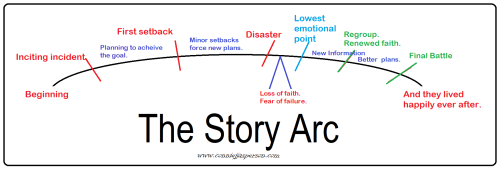
And making that trail into a logical story arc is why I do a certain amount of prewriting and outlining.
PREVIOUS POSTS IN THIS SERIES:
#NaNoPrep: creating the characters #amwriting | Life in the Realm of Fantasy (conniejjasperson.com)
#NaNoPrep: The initial setting #amwriting | Life in the Realm of Fantasy (conniejjasperson.com)
 Now, we’re going to hear what our characters have to say about what their story might be.
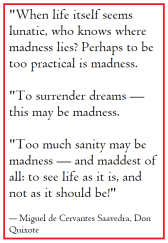 An important point to remember is that no matter how decent they are, people lie to themselves about their motives. It’s human nature to obscure truths we don’t want to face behind other, more palatable truths. Those secrets will emerge as you write.
 In my most recent book,
  I’m going off-topic here for a moment. While the death of a character stirs the emotions, it must be a crucial turning point in that story. It must be planned and be the impetus that changes everything. The death of a character must drive the remaining characters to achieve greatness.
 Unless, of course, you are writing paranormal fantasy. Death and resurrection may be the whole point if that’s the case.
 If your employment isn’t a work-from-home job, using the note-taking app on your cellphone to take notes during business hours will be frowned upon. I suggest keeping a pocket-sized notebook and pencil or pen to write those ideas down as they come to you.
 We talked about getting a start on our characters in Monday’s post. Today, we’re going to visualize the place where our proposed novel is set, the place where the story opens.
 All worldbuilding must show a world that feels as natural to the reader as their native environment. I used the forests and lowlands of Western Washington State as my template. The entire series evolved out of three paragraphs that answered the following question:
 Seagulls are a good example of what could happen. They fly and do their business while on the wing, and sometime find enjoyment in “bombing” windshields.
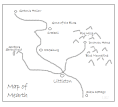 Some of us (Me! Me!) will make pencil-sketched maps of our fantasy world or the sci-fi setting. I find that maps are excellent brainstorming tools for when I can’t quite jostle a plot loose. It’s a form of doodling, a kind of mind wandering, and helps me find creative solutions to minor obstacles.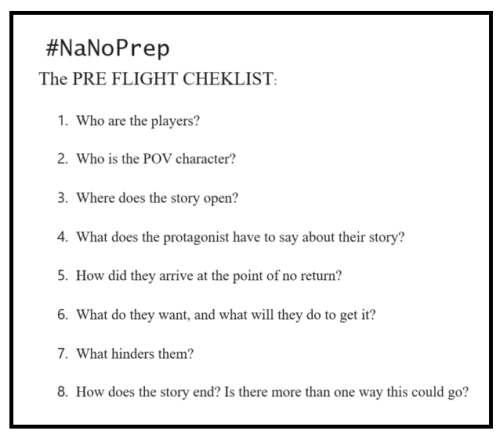
 No matter how many characters you think are involved, one will stand out. That person will be the protagonist.
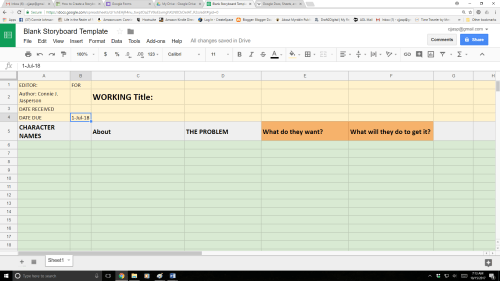
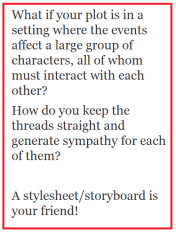 Once I know the basic plot, I make a page in my workbook with a bio of each character, a short personnel file. Sometimes, I include images of RPG characters or actors who most physically resemble them and who could play them well—but this is only to cement them in my mind.
 Names say a lot about characters. If you give a character a name that begins with a hard consonant, the reader will subconsciously see them as more intense than one whose name starts with a soft sound. It’s a little thing, but it is something to consider when conveying personalities.
 Every year I participate in
  Who are the players?
 Characters usually arrive in my imagination as new acquaintances inhabiting a specific environment. That world determines the genre.
 You might want to attend a conference but are worried about cost. I have ways to keep your expenses down.
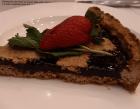 Four: Did I mention food? If you are planning to attend a large convention or conference where you will need to stay in a hotel, take simple foods that can be prepared without a stove and are filling. As I am vegan, I’m an accomplished hotel-room chef. Most coffee bars don’t offer many plant-based options. If they do, there will likely only be one to choose from, and it may not interest you. While that bias is changing, I still travel prepared.
 I’m a small fish in a vast ocean. Attending local conferences puts me in contact with other authors and industry professionals, most of whom are successfully pursuing their craft. I meet people I don’t usually come into contact with as they hail from all over Washington State, Oregon, Idaho, and British Columbia.
 Not every program or platform supports curly quotes, so those gurus who claim they are the only quotes you should use are wrong.
 Another frustration, this one of my own devising, is the mess I have deliberately created in a new project. I’d run into a wall with this story last winter, so I set it aside. Then, two weeks ago, I had the bright idea to change the viewpoint and make it present tense.
 We do get out sometimes, though. We have a wonderful
  September is always a month of transition. The summer weather is changing to cooler days, and leaves are turning red and yellow. The days are growing shorter, and the traffic outside our windows during rush hour is a little more frantic.
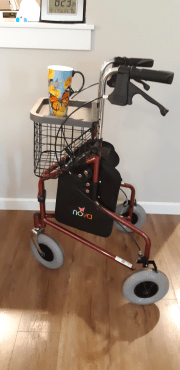 Something we don’t think about when we’re young and healthy is that the equipment disabled people rely on can fail. The first thing that failed this week was his little walker for getting around in indoor spaces—I’ve named it R2D2 since it’s perfect for serving drinks on the space-yacht that is our home.
 So, we had to supply dates and names of previous marriages and divorces—which, in my case, involved getting copies of three divorce decrees from the county. (I’ve had a life, and while I could have done some things differently, I don’t regret it for a moment.)
 But enough chit-chat about me. Let’s talk about writing. This week, I made headway on a first draft I had set aside a year or so ago because I was stuck at the 30,000-word point. I changed the narrative tense from close third person omniscient to first person present tense for the protagonist and third person present tense for the side characters. That change kickstarted things and the plot is unfolding as it should.
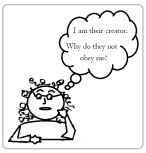
 Also, my first drafts are not written linearly. I write what I am inspired to, skipping the spots I have no clue about. I fill in those places later. Even after completing the first draft, things will change structurally with each rewrite.
 It wasn’t exactly literary brilliance, but it gave my idea a jumping-off point. I just began telling the story as it fell out of my mind. Surprisingly, I discovered my word count averaged 2,500 to 3,000 words daily. By day fifteen, I knew I would have no trouble getting to 50,000, and by November 21st, I had passed the 50,000-word mark.
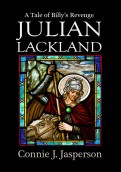 But I took that incoherent mess apart, and over the next ten years, it became three books:
  It helps to check in on the national threads each day. Look at your regional threads on the national website to keep in contact with other local writers. You will find out when and where write-ins are scheduled.
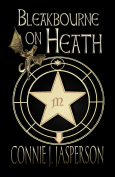 Included in this mess were ten dreadful poems, along with chapters 7 through 11 of
  Conferences are excellent places to make good connections with other writers. You meet people you can talk to about every aspect of the experience of writing as well as craft. No one’s eyes glaze over when you try to explain your main character’s inner demons and you find people with struggles similar to your own.
 Some new writers are completely fired up for their novels, obsessed. They go at it full tilt for a week or even two, and then, at the 20,000-word mark, they take a day off. Somehow, they never get back to it. These writers will continue to write off and on and may participate in NaNoWriMo again.
 Cooking is my love language. I have many tips and ideas for getting word count and having a proper family feast. As a dedicated writer, I know how to plan for all aspects of life.


 Life in the Realm of Fantasy