
We are two weeks away from the opening hours of November and the official start of National Novel Writing Month, or NaNoWriMo. So, let’s talk about inspiration. Poets know that one of the best ways to kickstart your imagination is writing to a pictorial prompt.
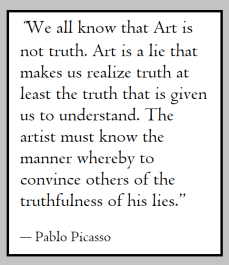 Often the work that is inspired by a visual prompt has nothing to do with the image. But it has everything to do with the nature of storytelling. The ability to explain the world through stories and allegory emerges strongly in some people. Many are naturally able to form and express a story, and others find the subliminal prompting of an image will be the spark that lights their creativity.
My friends here at Life in the Realm of Fantasy know that I love looking at and talking about art. I’m not educated as an art historian, but I love the paintings of great artists because they tell a story. I like to share the images I come across and hopefully give others like me access to see the art that humanity is capable of, good and bad.
Perception is in the eye of the beholder. Perception also inspires extrapolation, leading the viewer to come away with new ideas.
When I see the story that was captured in a single scene by an artist, my mind always surmises more than the scene shows. I see the painting as depicting the middle of the story. Unintentionally, I put a personal spin on my interpretation, and ideas are born. I don’t mean to, but everyone does.
We are all inspired by the intellectual things we surround and entertain ourselves with, the art, the music, the television and movies, and the books we read.
Contemplating art, either paintings or photographs, or listening to music helps us relax. When we are at peace and contemplative, our minds wander. Pondering an image offers us a view of a static moment in time, but our minds are free to invent a past, a present, and a future for the scene.
But paintings also inspire ideas that have nothing to do with what the artist portrayed. The possibilities we imagine are endless, which is why visual images make great prompts for writers.
Let’s consider Guernica, a 1937 painting by the Spanish artist Pablo Picasso. This painting is considered to be one of the most powerful antiwar statements of all time. This single painting, done in shades of black and white, tells the story of the bombing of Guernica, a Basque Country town in northern Spain that was destroyed by Nazi Germany and Fascist Italy at the request of the Spanish Nationalists.
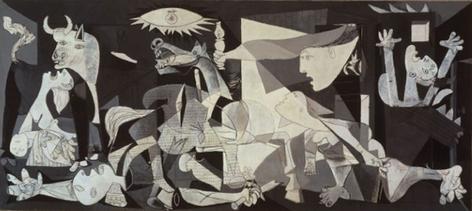 Picasso’s choice to use black and white to tell that story is brilliant. Newsreels of the day were black and white, which influenced his decision. This piece is powerful because of the emotion the artist painted into the image.
In turn, the composition and symbolism in this painting had a genesis in the great art of the past. In planning the layout of Guernica, Picasso himself was inspired by Consequences of War by Peter Paul Rubens.
Watch this excellent YouTube video to see a short explanation of what inspired the artist, his view of both the horrific attack and the fundamentals of classic art. It explains Guernica well: Picasso’s Guernica by Great Art Explained.
So, we see that history, both the past and the present, inspires art, which inspires stories.
I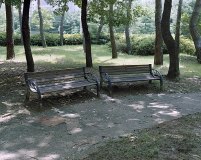 nspiration can be found in the image of an unoccupied park bench in winter. The gray weather, the barren scenery, the loneliness of the empty bench could be the seeds from which a novel grows. Who is that bench waiting for? Who has just left it? Is the story light or dark?
The same can be said for an empty bench in summer. Either way, the viewer’s mind will answer the question of a light or dark story.
Meditating on a tone, a pattern, or an image is a time-honored means of expanding one’s mind. Meditating or daydreaming turns off parts of your brain. Our brain has an analytic part that makes reasoned decisions and an empathetic part that allows us to relate to others.
Researchers have found when a person daydreams, their mind naturally cycles through the different modes of thinking, analytic and empathetic. During this time, the rational and sympathetic parts of your brain tend to turn each other off, which is why this habit is so crucial to creativity.
Creative people are often guilty of mind-wandering, but researchers have shown that daydreaming makes you more creative.
You could be sitting on your porch watching the birds, as I often do. Or maybe you’re perusing the display in a local art gallery, or listening to Orff’s cantata, Carmina Burana—whatever you choose to meditate on doesn’t matter. The act of mind-wandering generates ideas. Soon, you may have the idea for a novel, a painting, or a piece of music.
Here are two good places where you can find both visual and non-visual writing prompts:
1100+ Creative Writing Prompts To Inspire You Right Now (reedsy.com)
Creative Writing Prompts – Writer’s Digest (writersdigest.com)
Alternatively, go out to www.wikimediacommons.org and see what the picture of the day inspires in you. Will those thoughts become your novel?
Perhaps so. But take the time to write those thoughts down. Writing them down in a journal offers you a mental image to contemplate, leading to the story, which grows into the novel.
Every step you take leads to another, and your notes become a storyboard, which becomes your novel. How you execute those ideas will be uniquely yours, your voice, your art.
#NANOPREP SERIES TO DATE:
#NaNoPrep: part 1: What’s the Story? (the storyboard)
#NaNoPrep, Setting: Creating the Big Picture
#NaNoPrep, Building Characters
#NaNoPrep, More Character Building
#NaNoPrep, Designing Science, Magic, and the Paranormal
#NaNoPrep, Terrain and Geography
#NaNoPrep, Connections and Interconnections
#NaNoPrep, Construction and Deconstruction
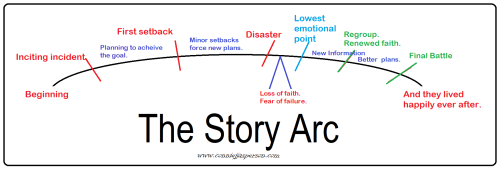
#NaNoPrep, The Story Arc Part 1
#NaNoPrep, The Story Arc Part 2
#NaNoPrep, The Story Arc part 3, the End
#NaNoPrep: Signing up and Getting Started
Credits and Attributions:
Guernica by Pablo Picasso. 1937. Oil on canvas. © Picasso’s Estate and the People of Spain, Fair Use. https://en.wikipedia.org/wiki/Guernica_(Picasso) accessed 10, October 2021.
Neglected Park Bench, Park taeho, CC BY-SA 4.0 https://creativecommons.org/licenses/by-sa/4.0, via Wikimedia Commons, accessed 10, October 2021.
Wikimedia Commons contributors, “File:Facades of Handelskade, Willemstad, Curaçao – February 2020.jpg,” Wikimedia Commons, the free media repository, https://commons.wikimedia.org/w/index.php?title=File:Facades_of_Handelskade,_Willemstad,_Cura%C3%A7ao_-_February_2020.jpg&oldid=598836309 (accessed October 16, 2021).
 Once there, create a profile. You don’t have to get fancy unless you are bored and uber-creative.
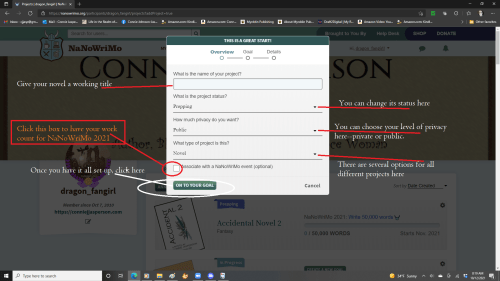 You can play around with your personal page a little to get used to it. I use my NaNoWriMo avatar and name as my Discord name and avatar. This is because I only use Discord for NaNoWriMo and one other large organization of writers. (Next week, we’ll talk about Discord and why NaNoWriMo HQ wants us to use it for word sprints and virtual write-ins.)
 Next, check out the community tabs. If you are in full screen, the tabs will be across the top. If you have the screen minimized, the button for the dropdown menu will be in the upper right corner and will look like the blue/green and black square to the right of this paragraph.
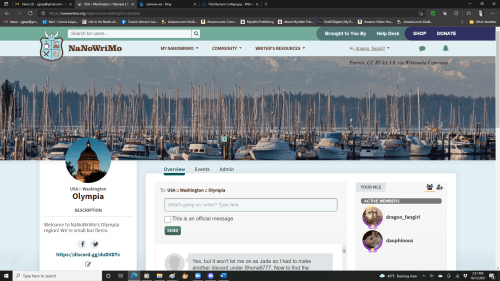 You may find the information you need in one of the many forums listed here.
 Make a master file folder that is just for your writing. I write professionally, so my files are in a master file labeled Writing.
 Give your document a label that is simple and descriptive. My NaNoWriMo manuscript will be labeled: Accidental_Novel_2.
 Still, we can come together and support each other’s writing via the miracle of the internet. My region is finalizing a schedule for “Writer Support” meet-ups via Zoom – little gab sessions that will connect us and keep us fired up.
 But sometimes, when writing the first draft, we realize our manuscript has gone way off track and is no longer fun to write. That is where the storyboard and my loose outline become important.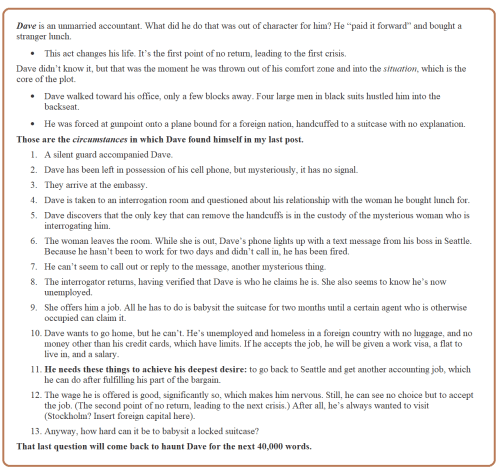
 Every novel is different, has a different genesis, and emerges from the author’s mind with its own personality.
 I usually do this with a little advance preparation. Then on November 1st, I sit in front of my computer, and using the ideas I have outlined as my prompts, I wing it for at least two hours.
 How will the next phase of Dave’s story start? That will begin the middle section of the story, and this is what we are going to give a brief outline of.
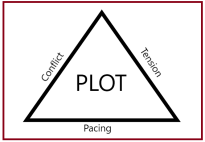 In any story, the crucial underpinnings of conflict, tension, and pacing are bound together. Go too heavily on one aspect of the triangle, and the story fails to engage the reader. By outlining a few important events now, we can add trouble and hitches during the writing process and increase the tension. Pacing will be something to worry about in the second draft—at this point, we just want to get the bones of his adventure down on paper.
 We know our genre and have written a few paragraphs that describe our characters and who they are the day before the story opens. Also, we know where the story takes place. (To catch up on earlier posts, the list is at the bottom of this article.)
 Every reader knows that stories have a beginning, a middle, and an end. They start in a place of relative comfort, and through rising action, they follow the characters through events that change them for better or worse.
 In your musings, on what day does the serious event occur, the one that changes everything? THAT day is where the story begins, and everything that happens before that moment is backstory and isn’t necessary. A plot outline I have used before as an example is set as a political thriller, but it could easily be a paranormal fantasy, a sci-fi thriller, or a romance.
 If you work at a day job and using the note-taking app on your cellphone to take notes during work hours is frowned on, you can still capture your ideas for the storyboard.
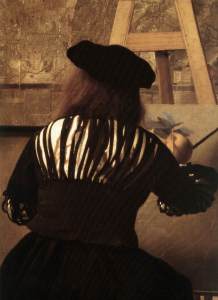
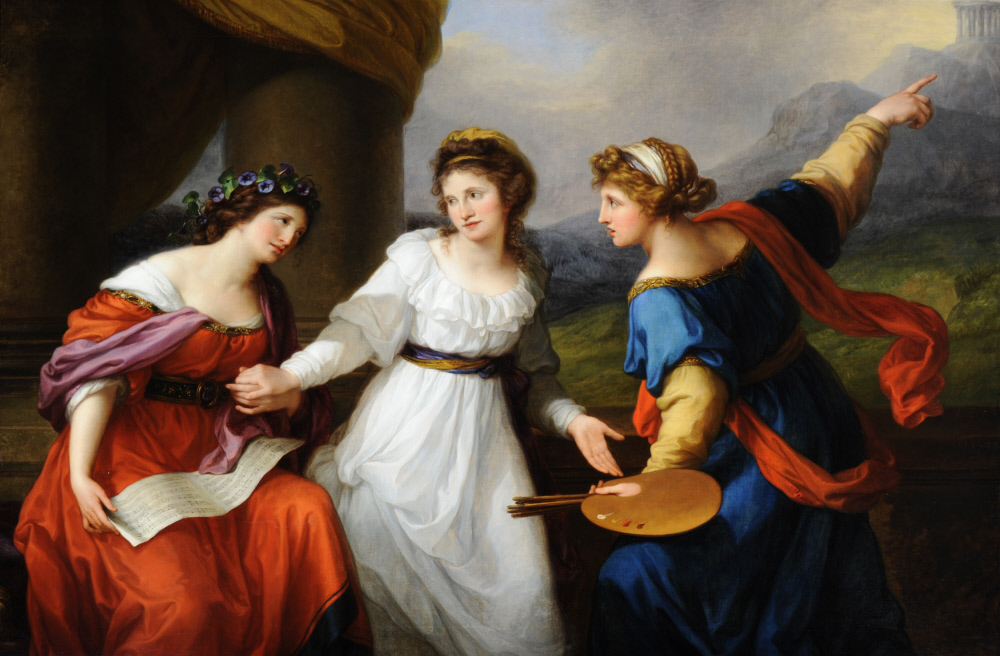
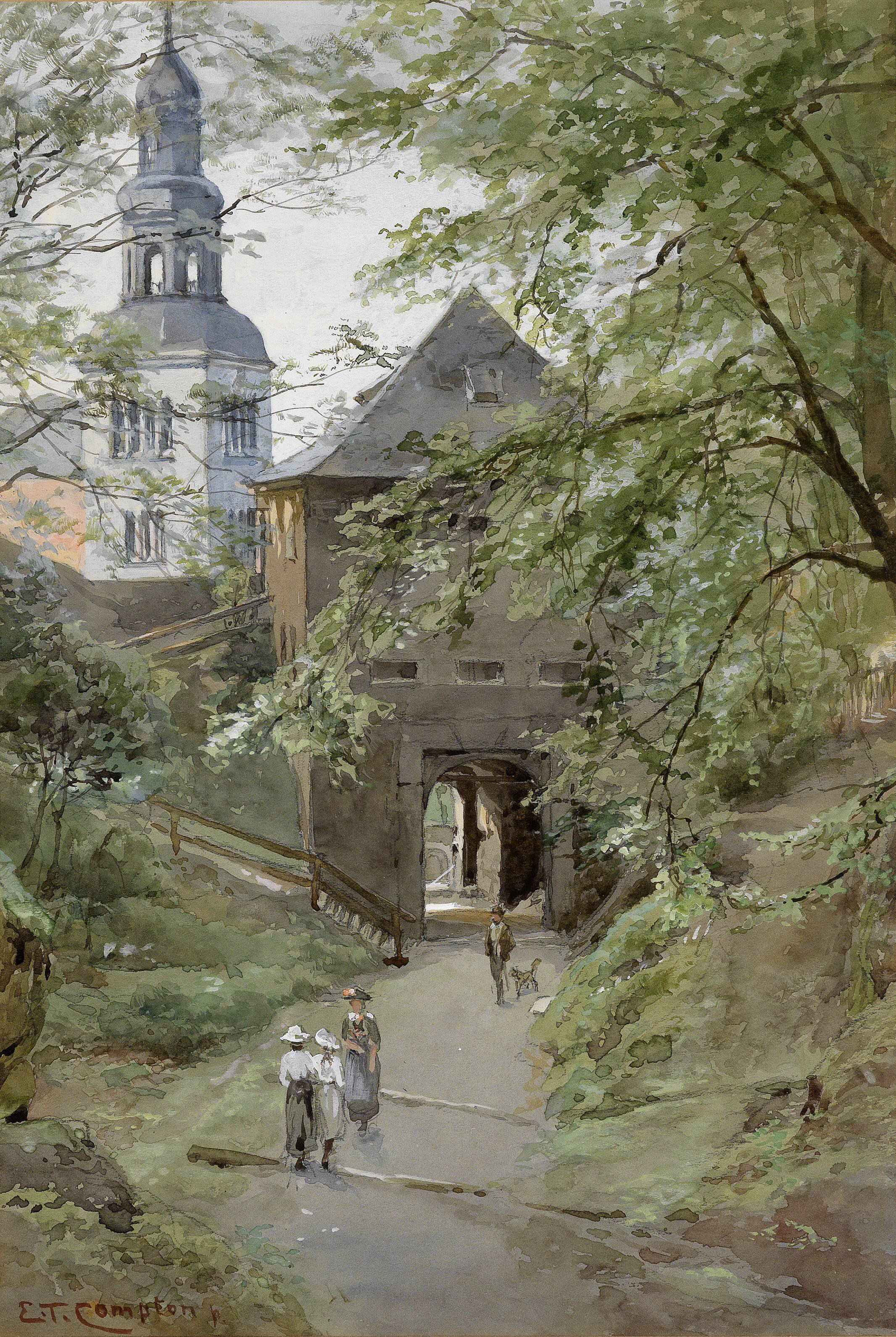 Painting:
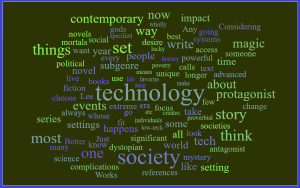
  Whether you hope to be published traditionally or plan to go indie, you must know what the reading public is buying. You will probably write a book that is squarely set in your favorite genre.
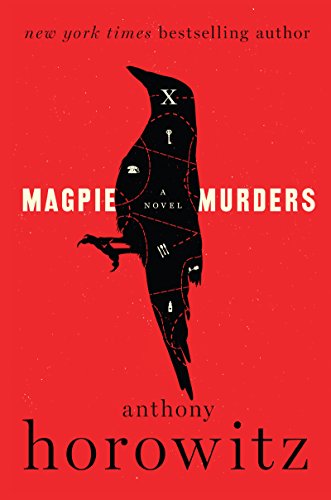 When editor Susan Ryeland is given the manuscript of Alan Conway’s latest novel, she has no reason to think it will be much different from any of his others. After working with the bestselling crime writer for years, she’s intimately familiar with his detective, Atticus Pünd, who solves mysteries disturbing sleepy English villages. An homage to queens of classic British crime such as Agatha Christie and Dorothy Sayers, Alan’s traditional formula has proved hugely successful. So successful that Susan must continue to put up with his troubling behavior if she wants to keep her job.
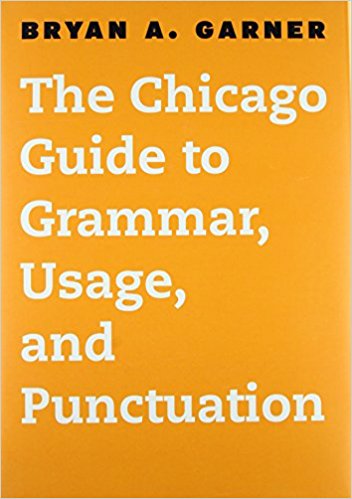 Now, let’s talk MECHANICS. The author of the Magpie Murders has worked as a journalist. He has taken the time to become educated in grammar and understands common industry standards.


 Life in the Realm of Fantasy
_-_WGA24677.jpg&oldid=268076769)
