Category Archives: writing

Self-editing: The Point of No Return #amwriting

Misfortune and struggle create opportunities for growth. We place obstacles in our protagonists’ paths that will force change on them. Crises, even small ones on the most personal of levels, are the fertile ground from which adventure springs.

In the editing process, we must ensure these opportunities are clearly defined, logical, and in the right place.

Most disasters are preceded by one or more points of no return.

Consider the engineering that goes into building and maintaining a dam.

Wikipedia says:

Dams are considered “installations containing dangerous forces” under International humanitarian law due to the massive impact of a possible destruction on the civilian population and the environment. Dam failures are comparatively rare, but can cause immense damage and loss of life when they occur. In 1975 the failure of the Banqiao Reservoir Dam and other dams in Henan Province, China caused more casualties than any other dam failure in history. The disaster killed an estimated 171,000 people and 11 million people lost their homes. [1]

When a mistake is made in the planning or construction process of a dam, it sets a chain of events into motion.

There are usually opportunities to notice the problem and resolve it long before the dam breaks, but despite the diligence of the engineers, the construction workers, and the maintenance personnel, the flaw may go unseen, and everyone is at risk.
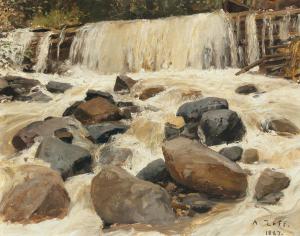
Once the river begins flooding, the workers and people living downstream are faced with an event from which there is no turning back.

We must identify this plot point and make it subtly clear to the reader. Knowing the flaw is there, and seeing the workers unaware of it ratchets up the tension. The moment cracks appear in the dam, you have placed the protagonist at maximum risk.

Many times, in my real life, I’ve been boxed into a corner, frantically dealing with things I could have avoided, had I noticed the cracks in the metaphoric dam. When you look at history, humanity seems hardwired to ignore the “turn back now” signs.

In every novel, a point of no return, large or small, comes into play. The protagonists are in danger of losing everything because they didn’t recognize the warning signs, and they are pushed to the final confrontation, whether they are ready for it or not.

Arcs of action drive the plot. Sometimes that action is a chain of seemingly unconnected events. The first event is a catalyst, setting in motion the small events that follow. Each incident progressively forces the protagonist and their companions to a meeting with destiny.

In the editing process, we want to make sure the events are in a logical order, and that they serve the purpose of forcing the protagonist down the path we have chosen for them. Also, we want the reader to say, “Now I see the connections.”

Points of no return aren’t always large disasters. Events can force the protagonist to a confrontation with himself.

Perhaps a family is forced to deal with long-simmering problems.

Events from which there is no turning back are the impetus of change, and that change is what the book is about.

Midpoint is often a place where a choice is made from which there is no turning back. From that point, the narrative rises to the Third Plot Point, an event that is either an actual death or a symbolic death.

This major event forces the protagonist to be greater than they believed they could be. Conversely, it can break them down to their component parts.

Either way, the protagonist is profoundly changed by this crisis.

The structure of the story must be closely examined in the process of self-editing to ensure the logic of the plot.

During the build-up to the final point of no return, we want to ensure these events develop our characters’ strengths, so they are ready to face the final crisis.

Structural editors identify both the protagonist’s goals and those of the antagonist early on. They look at the arc of the story to make sure the author shows why these goals are important and why they justify the struggle that will ensue.

  • How does the protagonist react to being thwarted in his efforts?
  • How does the antagonist currently control the situation?
  • How does the protagonist react to pressure from the antagonist?
  • How does the struggle deepen the relationships between the protagonist and their companions or romantic interest?
  • What complications arise from a lack of information regarding the conflict?
  • How will the characters acquire that necessary information?

Obstacles in the protagonist’s path to happiness make for satisfying conclusions, no matter what genre you’re writing in. Whenever the protagonist overcomes an obstruction, the reader is rewarded with a feeling of satisfaction. That reward keeps the reader turning pages.
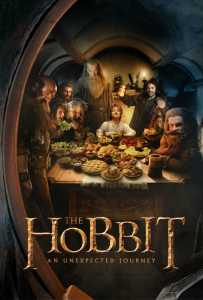
I love books that allow us to get to know the characters, see them in their environment. An incident happens, thrusting the hero down the road to the Lonely Mountain, or trying to head off a war.

In The Hobbit, J.R.R. Tolkien set the first point of no return early. An acquaintance, Gandalf the Wizard, invited himself and twelve friends to dinner at Bilbo’s house, knowing that politeness would compel the hobbit to feed them.

The next day Bilbo found himself walking to the Misty Mountains with a group of Dwarves he only just met, leaving home with nothing but the clothes on his back.

By serving dinner to the unexpected guests, Bilbo passed the first point of no return. He heard the stories and listened to their songs. After having seen the map, even if he were to turn back and stay home, Bilbo would have been forever changed by regret for what he didn’t have the courage to do.


Credits and attributions:

[1] Wikipedia contributors, “Dam failure,” Wikipedia, The Free Encyclopedia, https://en.wikipedia.org/w/index.php?title=Dam_failure&oldid=943367090 (accessed March 3, 2020).

Wikimedia Commons contributors, “File:Alfred Zoff – A River Dam.jpg,” Wikimedia Commons, the free media repository, https://commons.wikimedia.org/w/index.php?title=File:Alfred_Zoff_-_A_River_Dam.jpg&oldid=283453136 (accessed March 3, 2020).

The Hobbit, An Unexpected Journey, Theatrical release poster, Warner Bros. 2012 (Fair Use).
3 Comments

Filed under writing

Self-editing: Action, Events, and Introspection #amwriting

If you are a member of any writers’ forum on Facebook or through a private group, you know that today’s authors are constantly prodded to emphasize the action in their narratives. For new, inexperienced authors, this can lead to an imbalance, a narrative where the characters aren’t allowed time for introspection.

An editor looks at the scenes to see how they fit into the narrative and to ensure they are in the right order and flow into each other well.

Sometimes, I see a manuscript where it seems as if a horrific event has been inserted for the sake of shock value. In the revision process, you should examine these scenes to see if they do their job.

  • Was the event foreshadowed well, or did it come out of nowhere?
  • Is the scene necessary to force change and growth on the protagonist?
  • How are her fundamental ethics and ideals challenged by this event?

A structural editor will tell you that if there is no personal cost or benefit to the protagonist or antagonist, there is no need for that scene.

Writing these blind alleys is not a waste of time. You never know when you will need those ideas, so don’t throw them away—always keep the things you cut in a separate file. The fact that an idea doesn’t work for one book doesn’t mean it won’t work in another.

For my own work, I label that file “outtakes.” Having these unused scenes ready to adapt to other uses comes in handy when I need an idea to jump-start a new story.

In the rush of writing the first draft, it can be easy to focus on setting traps and roadblocks for our protagonist and her nemesis. We forget that readers need a chance to process what we have written.

Events must force the character to grow. Creepy scenes must have a purpose. If your story absolutely must contain that scene, it must deeply affect the characters involved in it. Events must be catalysts for the character’s evolution and growth.

We may think we have written evolving characters, but they remain stagnant if you don’t allow the reader time to see that evolution and process it.

We’re all avid readers. Consider how your favorite authors in these genres connect their underlying themes with the action and growth of their protagonists, and how they allow the reader to process each event.

Political thrillers are set against the backdrop of a political power struggle. They feature political corruption, terrorism, and warfare as common themes. How the protagonist negotiates these situations and is affected by them is the story. Introspection is key to the reader’s understanding of the events and their root cause.

Romance Novels detail the developing relationship between two people and show how they overcome the roadblocks to happiness. Both the conflict and climax of the novel are directly related to the core theme of a romantic relationship with a happy conclusion. Without small chances for introspection, the reader won’t feel connected to the protagonist and their story.

Literary fiction focuses on the protagonist of the narrative. This genre features introspective, in-depth studies of complex, fully developed characters. Action and setting are not the points here, although they frame the character and provide a visual perspective. In other words, opportunities for introspection are a key feature of literary fiction.

Science Fiction details realistic speculation about possible future events. All technology should be based solidly on knowledge of real world science, both past and present. A thorough understanding of the nature and significance of the Scientific Method is crucial. Events involving science and technology must be based on known and theoretically possible physics. Morality and the wider effects of  the choices we make are a strong theme in all science fiction. Without introspection, moral choices get lost.

Fantasy is my usual genre to write in. It is often set in an alternate, medieval, or ancient world. The common themes are good vs. evil, the hero’s journey, coming of age, morality, romantic love. Some fantasy is set in urban settings with paranormal tropes, but if that is the case, the author has similar constraints to those affecting the science fiction author. In urban fantasy, the reality must be true to life and contrast with the paranormal. This contrast highlights and emphasizes the fantasy elements.

These genres look widely different, but they all have one thing in common—they have protagonists and side characters who experience life-changing events. These moments become important to the reader.

In my mind, genre and setting are a picture-frame, a backdrop against which the themes that drive the action of the story are played out.

What is the underlying theme of your story? While you were laying down the first draft, did you notice a moral concept that was woven into the story? Was it love? Was it destiny? Was it the death of hope?

In the revision and editing process, we must identify the events that strengthen that theme, and frame them with moments of reflection.

Personal growth and the hero’s journey are often the central themes in my work. Those are the stories that hooked me as a young reader, and I still gravitate to them.

The idea of the heroic journey was first introduced by Joseph Campbell, the American mythologist, writer, and lecturer, in The Hero with a Thousand Faces (published in 1949). In this ground-breaking work, he discusses the monomyth or what is called “the hero’s journey.”

He describes how this motif is historically the common pattern of humanity’s myths and legends. Each of these tales involves an unlikely hero going on an adventure. This hero, in a decisive crisis, wins a victory, then returns home changed or transformed.

I often use Tolkien’s masterpiece, The Hobbit as an example. When Bilbo Baggins faces the giant spiders, he also faces his own cowardice. Bilbo is amazed to find he has the courage to fight them.

That scene was the first step in his realization that his bravery doesn’t depend on the magic ring he found earlier. He is afraid, but he is not afraid to be courageous. This is a core concept of this book, and of the entire Lord of the Rings series.

What is important to you? When you look for a book, what catches your interest? When you look at it from a distance, what do all the stories you love best have in common?

Those are the themes you should be writing to, what your events must support. You must allow your reader the chance to consider how those events affect the protagonist, to absorb the theme and deeper personal meaning of that character’s journey.

In that way, you will hook the reader and keep them firmly in your world.

4 Comments

Filed under writing

Self-Editing: Looking at Paragraphs and Sentence Length

I was recently asked how long sentences should be. There is no hard and fast rule, but opinions abound, so I will offer you some things to be considered in the editing process.

Let me say first that sentence length is a matter of the author’s personal style. Some of us write long sentences strung together with commas, and others break things out into shorter, more concise packets of information.

If you are familiar with the rules of punctuation and use your commas wisely, longer sentences will flow well.

If you’re unsure of how to use commas, and simply put them anywhere you pause, or take a breath, you’ll have a long, convoluted mess on your hands, similar to this sentence.

In writing genre work, we consider the age and reading experience of our intended reader. Generally speaking, for younger readers, we use shorter sentences and a narrower vocabulary.

For older readers who read in a wide variety of genres, compound sentences and a wide vocabulary pose no problems.

In the final chapter of his novel, Ulysses,  James Joyce enters the head of Molly Bloom. He spews an internal dialogue that runs on for more than 24,000 words with only ONE punctuation mark. The final paragraph of the book goes like this:

“…I was a Flower of the mountain yes when I put the rose in my hair like the Andalusian girls used or shall I wear a red yes and how he kissed me under the Moorish wall and I thought well as well him as another and then I asked him with my eyes to ask again yes and then he asked me would I yes to say yes my mountain flower and first I put my arms around him yes and drew him down to me so he could feel my breasts all perfume yes and his heart was going like mad and yes I said yes I will Yes. “

As a side note, I had to take a college class in order to read and enjoy James Joyce’s work. Most of us hope our work won’t require a reader to take a college-level course to appreciate it.

Sentence length becomes problematic for most readers when:

  • The sentence contains numerous clauses
  • The clauses are unrelated.
  • The sentence runs on and on and on.
  • The author uses little or no punctuation.

Several factors affect sentence length. Commas and the fundamental rules for their use exist for a reason. If we want the reading public to understand our work, we need to follow them.

Commas join two independent clauses. The independent clause is a complete stand-alone sentence. Sometimes, if sentences are too short, our work becomes choppy.

  • Greg worships the ground I walk on. His adoration never tires me. (Two sentences)
  • Greg worships the ground I walk on, and his adoration never tires me. (One compound sentence)

Dependent clauses are unfinished sentences and can’t stand on their own. They should be joined to the sentence with a conjunction.

  • Greg worships the ground I walk on and brings me my coffee.

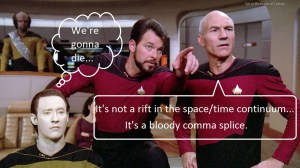
You do not join unrelated independent clauses (clauses that can stand alone as separate sentences) with commas as that creates a rift in the space/time continuum: the Dreaded Comma Splice:

Comma Splice: Greg kissed the hem of my garment, the dog likes to ride shotgun.

The dog has little to do with Greg, other than the fact they both adore me. The same thought, written correctly:

  • Greg kissed the hem of my garment.
  • (New paragraph) The dog likes to ride shotgun.

Would it be better if we used a semicolon? No. A semicolon in an untrained hand is a needle to the eye of an editor.

The dog riding shotgun is an independent clause and does not relate at all to Greg and his adoration of me.

Semicolons join independent clauses that could stand alone, but which relate to each other.

I recommend you avoid joining more than two clauses. Even when an author uses semicolons correctly, they can create some lo-o-o-o-ong, run-on sentences. Sentences comprised of more than twenty to thirty words can be difficult to slog through.

Sentences all become paragraphs, whether they are comprised of one sentence or several.

Paragraphs are not just short blocks of randomly assembled sentences. A paragraph is a group of sentences that fleshes out a single idea. That means that only one thought or speaker is featured in each paragraph.

The rules are simple:

  • Present a single idea per paragraph.
  • Present the dialogue and reactions of only one person per paragraph.
  • Present the viewpoint of one character per paragraph.

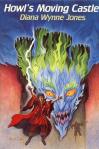
All through her book, Howl’s Moving Castle, Diana Wynne Jones wrote two points of view into one paragraph. The story is brilliant, but that habit made the dialogue very difficult to follow in some places.

A paragraph done wrong:

Ron said, “You cheated on me.” Jamie clutched his arm. “I don’t want to lose you.” He pulled away. “You disgust me.”

That’s a confusing passage, but it doesn’t have to be. Three ideas are explored there: Ron’s accusation, Jamie’s guilt and fear of losing him, and finally, Ron’s disgust.

Ron said, “You cheated on me.”

Jamie clutched his arm. “I don’t want to lose you.”

He pulled away. “You disgust me.”

While it makes for short paragraphs, you must break out Jamie’s reaction. One thought, one point of view per paragraph, no matter how short that makes it.

In English, a good paragraph agrees with itself. It is logical, and the central idea it contains is developed.

Sometimes, we will end up with long paragraphs. In a paper book, paragraph length isn’t as much of a problem as in an eBook. I’ve noticed that versions of eBook novels containing long paragraphs tend to appear as page after page of an unbroken wall of words.

That can be confusing, and the reader may decide to move on to a different book.

Thus, for a manuscript that you intend to publish as an eBook, consider dividing long passages at logical places, using two paragraphs to explore the idea. This is especially a problem when the paragraph contains a long section of internal dialogue, which is frequently written in italics.

Each author writes differently. Both sentence length and paragraph length are individual, part of the fingerprint that is the author’s voice. If longer sentences are your style, by all means, write them.

I no longer use as many compound sentences as I once did. Those who have read my earlier work are grateful for that gradual change.


Credits and Attributions:

Quote from Ulysses, by James Joyce, published 1922 by Sylvia Beach

Wikipedia contributors, “Ulysses (novel),” Wikipedia, The Free Encyclopedia, https://en.wikipedia.org/w/index.php?title=Ulysses_(novel)&oldid=777540958 (accessed May 7, 2017).

Howl’s Moving Castle, by Diana Wynne Jones, Tim Stevens, Illustrator, Greenwillow Books (US), Methuen (November 1986) Fair Use.

Wikipedia contributors, ‘Howl’s Moving Castle’, Wikipedia, The Free Encyclopedia, 20 February 2020, 02:23 UTC, <https://en.wikipedia.org/w/index.php?title=Howl%27s_Moving_Castle&oldid=941685495> [accessed 25 February 2020]

11 Comments

Filed under writing

Self-editing: ensuring consistency #amwriting

Today I’m continuing a series on self-editing that I began on February 12, Revisions: Self-Editing.

The revision process is where some of the worst errors that can mess up a manuscript are committed. This is because making changes on a large scale within your manuscript is a tricky job at best. Ensuring consistency requires focus, the ability to be meticulous, and an eye for detail.

Good editors have these qualities, but if the services of a good editor are out of your financial reach, you must find a way to self-edit and still come out with a literate manuscript that flows well and engages the reader.

A tool I have mentioned before in this series is the style sheet.

In 2012, after reading the first chapter of my raw manuscript, my editor asked me for a style sheet. She was disappointed but not surprised to find I didn’t know what she meant.

My work was so uneven that it was clear I had never listed my made-up names. Things evolved as I went along. I forgot how I spelled that one minor character’s name in the one scene where it was mentioned. However, at the midpoint of the novel, the character had an important role and a slightly different spelling.

This happens because fundamental things sometimes change as we are going along in our first draft:

  • Character names evolve.
  • Place names evolve.
  • A different character becomes the protagonist—it may be someone you initially thought was a sidekick.

These adjustments happen because we realize something isn’t logical, make the changes, and move on.

Unfortunately, we’re only human and don’t always catch all the places we needed to change.

Once my editor pointed this out to me, I put together a comprehensive list of how I wanted to spell the names of every person, place, and creature in my novel.

Even though I spent several days doing this, the editing process was slow and agonizing because I didn’t catch half the words.

What the style sheet should cover:

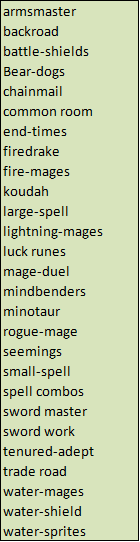
All names, created or not: Aeos, Aeolyn, Beryl, Carl, Edwin, etc.

Real and created animal names: alligator, stinkbear, thunder-cow, waterdemon

Created words that are hyphenated: fire-mage, thunder-cow

All place names, real or created: Seattle, Chicago, Ragat, Wister, Sevya, Arlen, Neveyah

Some authors use a program called Scrivener, which apparently assembles all that information for them and does magic tricks to boot.

I’m happy for those who have figured it out, but be warned, there is a large learning curve if you go that route.

Frankly, Scrivener was a waste of money for me because my mind doesn’t work the way Scrivener does, and I became quite frustrated with it.

For me, it’s simpler to copy and paste my words into a spreadsheet or document labeled with the book or series title and the words style sheet, such as Bleakbourne_style_sheet.xls.

You don’t have to be fancy unless you want to. Google docs, Open Office, and MS Office all offer perfectly good word processing programs with both documents and spreadsheets, and all you need is to keep a simple list of people, places, and things.

I keep this document open while I am writing a first draft and try to be scrupulous about listing every name, place, animal, and hyphenated word.

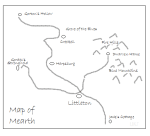
In cases where your characters are traveling, you might need a simple map. I get fancy because I’m a wannabe artist, but you don’t have to. All you need are lines with north and south listed, and the names of towns and other places that have parts in the story.

But how do we make these corrections in our manuscript? We do what is called a global search.

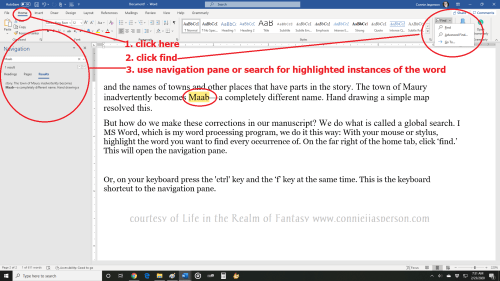
I open MS Word, which is my word processing program, and do it this way: With your mouse or stylus, highlight the word you want to find every occurrence of. On the far right of the home tab, click ‘find.’ This will open the navigation pane.

Or, on your keyboard, press the ‘ctrl’ key and the ‘f’ key at the same time. This is the keyboard shortcut to the navigation pane.

With that word automatically highlighted, you have a choice to make: is it a word you want to delete or replace?

First, you must understand that you are about to embark on a boring, time-consuming task.

If you get hasty and choose to “Replace All,” you can inadvertently ruin your entire manuscript. I’ve used the following example before, but it bears repeating:

Your writing group tells you that you overuse the word “very.” You decide to simply eliminate every instance of the word “very” because that seems like the most logical way to resolve the problem quickly.

So, you open the navigation pane and  the advanced search dialog box. In the “replace with” box, you don’t key anything, thinking this will eliminate the problem. You then hit “replace all.”

Don’t do it.

Please.

Every, everyone, everything—you get the idea.

Every word in the English language is made up of a selection of letters chosen from only 26 letters. These letters are used in many combinations, with different meanings. Before you click “replace all” consider how many common words have the letters h-a-s in their makeup:

  • hasty
  • chase
  • chastity

Trying to cut corners in the editing process can easily mess things up on an incredibly large scale. Looking for weak words and phrasing is a time-consuming task.

Things to look for and possibly delete or change:

  • Any kind of qualifier or quantifier: just, a little, a bit, somewhat—these are words that show indecision. Active prose should not be indecisive.
  • Action-stopping words: started to, began to— these are word combinations that slow and stall the action. They are passive, so if you want to write active prose, go lightly with them. Your characters shouldn’t begin to move. Have them move and be done with it.
  • words that end in the letters ly: probably, actually, sympathetically, magically … etc. These are weak, telling words. It takes thought and intention to show what you mean rather than telling it.

Examine the eight forms of the word be. Decide if they are useful or not in the context you are using them.

  1. be
  2. was
  3. were
  4. been
  5. being
  6. am
  7. are
  8. is

Weak combinations using forms of be that you should look twice at:

  1. was being,
  2. has been,
  3. had been,
  4. is being,
  5. am being

Why do we look at each instance of weak word combinations? Sometimes the words and combinations I’ve noted in this post have a purpose, which is why they remain currently in use.

We may need them to make a certain point in conversations, but in the narrative, your prose is often stronger without them. That and very can easily become crutch words, bloating and fluffing word count.

Once you see the magnitude of what the editing process involves, you realize that most editors don’t charge enough money for the amount of work involved in doing the job right. However, while the process of self-editing is time-consuming and requires diligence, it is doable.

Don’t underestimate how savvy and smart your readers are. You can’t cut corners, and you can’t let small things slide.

Passionate readers care about the quality of what they purchase. We should take pride in the quality of what we publish.

4 Comments

Filed under writing

Revisions and Self-editing: repetition and inconsistency #amwriting

I just finished reading book two of a three-part sub-series, set within a larger 21-book series. I enjoyed it but would have liked it more had the protagonist not repeated his back story aloud every time he was asked. That was a flaw that ran deep into book three. All that repetition just padded the word count.

All through this 21-book series, numerous proofing errors and random cut-and-paste-mistakes make it clear to me that few people other than the author see these manuscripts, and they aren’t professional editors. Yet, his work sells because he has marvelous characters and compelling storylines. He is now putting out four or more books a year and is published by TOR.

The Big 5 publishing giants are just as tempted to rush a manuscript to publication as we indies are, and editing sometimes falls by the way. However, if an indie publishes work as badly edited as that, the entire indie community suffers abuse.

Since the large publishing houses aren’t doing editing the way we always thought they did, it’s up to us to find the flaws before we submit our work to them or publish it ourselves.

When we lay down the first draft, the story emerges from our imagination and falls onto the paper (or keyboard). Even with an outline, the story is forming in our heads as we are writing it. While we think it is perfect as is, it probably isn’t.

The revision process is about far more than merely grammar and word placement. It is about making sure the story arc doesn’t flat-line.

Those who regularly read my blog know that I frequently repeat an idea, phrased just a bit differently further down the post. My elderly brain seems determined to make that point, no matter what. We all do this in our first drafts, and very few things are more “first draft” than a blog post.

Inadvertent repetition causes the story arc to dip. It takes us backwards rather than forward.  What I have discovered in my own work is that the second version of that idea is usually better than the first.

Last week, in my post called Revisions: Self-Editing, I talked about the way I do my revisions, how I try to get an unbiased view of my work. Basically, I print out each chapter. Beginning with the last paragraph on the last page, I work my way forward with a yellow highlighter.

Then I put the corrected copy on a recipe stand beside my computer and make the revisions in a new file. (I never delete the old files, because we never know when we might need something we have already written.)

Here are a few things that stand out when I do this:

  • Repetition of entire ideas, each instance worded slightly differently.
  • Inadvertent shifts in the spelling of names for people and places, such as Dyljan becomes Dyjan. (Keeping a style sheet of how names and created words are spelled and doing a global search for each before publishing resolves that.)
  • Places where I have contradicted myself, such as a town being north of the main character’s location, but they travel south to get there. Making a simple hand drawn map resolves the location problem if you remember to look at it.
  • Punctuation errors and missing quotation marks also stand out when printed.

The style sheet can take several forms, but it is only a visual guide to print out or keep minimized on my desktop until it’s needed. I copy and paste every invented word, hyphenated word, or name the first time they appear in my manuscript, and if I am conscientious, I’ll be less likely to inadvertently contradict myself later on in the tale.

My editor is grateful that I make this list so that she doesn’t have to.

All the lists of words and things to look for, all my knowledge comes from having worked with editors who are passionate about writing. Many years ago, Maria gave me the list of weak words to watch for.

Carlie trained me out of using “that” as a crutch word.

Irene trained me to notice my inadvertent shifts in spelling and to love how grammar works. She kindled my desire to learn more about the craft.

Alison trained me not to be so thin-skinned and self-important.

If you have the resource of a good writing group, you are a bit ahead of the game. I suggest that you run each revised chapter by your group and hear what they have to say. Some of what you hear won’t be useful, but much will be.

And yes, you will have to make more revisions. I have discovered that the real work of writing comes after you have written the story.

3 Comments

Filed under writing

The Author’s Voice: Word Choice and Placement #amwriting

We are drawn to the work of our favorite authors because we like their voice. An author’s voice is the unique, recognizable way they choose words and assemble them into sentences.

With practice, we become technically better at the mechanics (grammar and punctuation) but our natural speech habits shine through. Voice is how we bend the rules and is our authorly fingerprint.

When we begin the editing process with a professional editor, most will ignore the liberties we take with dialogue but will point out our habitual errors in the rest of the narrative.

Many times, what we want to say is not technically correct, but we want that visual pause in that place, in that sentence. Casual readers who leave reviews will have gained some understanding of grammar but if your voice is consistent, they will accept your choice. However, they will notice inconsistencies and illiterate writing.

This is why the process of editing is so important. Knowledge of the mechanics of writing is crucial. If you don’t understand the rules, you can’t break them with authority. (For the first part of this series, see my post Revisions: Self-Editing.)

Consider Raymond Chandler’s dismay when he discovered his grammar had been heavily edited by a line editor and then published without his input in the corrections:

“By the way, would you convey my compliments to the purist who reads your proofs and tell him or her that I write in a sort of broken-down patois which is something like the way a Swiss waiter talks, and that when I split an infinitive, God damn it, I split it so it will stay split, and when I interrupt the velvety smoothness of my more or less literate syntax with a few sudden words of barroom vernacular, this is done with the eyes wide open and the mind relaxed but attentive. The method may not be perfect, but it is all I have.”  – Raymond Chandler, in a letter to Edward Weeks, Editor of The Atlantic Monthly, dated 18 January 1947. (Read the letter in its entirety here.)

When we self-edit, we don’t have to wrestle for control of our work, true. But I have to be honest—I have worked with many editors over the past ten years, and only one tried to hijack my manuscript.

What is the mood you want to convey with your prose? Where you place the words in the sentence greatly affects the mood. Active prose is Noun-Verb centric. Compare these sentences, two of which are actively phrased, and two are passive. All say the same thing, and none are “wrong.”

I run toward danger, never away.

I never run away from danger.

Danger approaches, and I run to meet it.

If it’s dangerous, I run to it.

Can you tell which are passive and which are active? Which phrasing resonates with you? Could you write that idea in a different way?

Where we choose to place the core words, I run to danger, changes their voice but not their meaning. The words we choose to surround them with changes the mood but not their meaning.

Other ways to use the core concept of I run to danger:

Danger draws me. I race to embrace it, to make it mine.

If it’s dangerous or stupid, I will find it.

Danger—who cares. Running away is stupid; it always finds you. Meet it, grab it, and make it yours.

I saw him, and in that moment, I knew I’d met my destiny. He was the embodiment of danger, and I wanted him.

We could riff for half an hour on just four words, I run to danger. Each of us will write that idea with our own brand of brilliance, and none of us will sound exactly alike.

One of the things we must look at in our work is consistency. Is our narrative comprised of a smooth pattern? We don’t want our work to be jarring, so we want to think push, glide, push, glide.

Once you have established the mood you are trying to convey, look at how you have placed your verbs in the majority of your sentences.

Some are: noun – verb – modifier – noun. I run to danger when I see it. (Active)

Some are: infinitive – noun – verb –  modifier – noun. When I see danger, I run toward it. (Passive)

NOTE: PASSIVE VOICE DOES NOT MEAN WRONG!

Good writing is about balance. How we combine active and passive phrasing is part of our signature, our voice. By mixing the two, we choose where we direct the reader’s attention.

Some work you want to feel highly charged, action-packed. Genres such as scifi, political thrillers, and crime thrillers need to be verb forward in the way the words are presented. These books seek to immerse the reader so more sentences should lead off with Noun – Verb, followed by modifiers.

If you clicked on the link and read Raymond Chandler’s letter in full, you will see it is aggressive and verb-forward, just the way his prose was.

In other genres, like cozy mysteries, you want to create a sense of comfort and familiarity of place with the mood. Perhaps you want to slightly separate the reader from the action to convey a sense of safety, of being an interested observer. You want the reader to feel like they are the detective with the objective eye, yet you want them immersed in the romance of it. To do that, you balance the active and passive sentence construction, so it is leaning slightly more toward the passive than a thriller.

Weak prose makes free with all the many forms of to be (is, are, was, were).

  • He was happy.
  • They were mad.

Bald writing tells only part of the story. For the reader to see and believe the entire story, we must choose words that show the emotions that underpin the story.

To grow in the craft, we learn to convey what we see through words.

Passive voice balances Active voice. It is not weak, as weak prose holds the reader away from the immediacy of the experience, and when active prose is interspersed with passive, it does not.

Voice is defined by word choice, and Passive or Active prose is defined by word placement, not how many words are used.

Weak prose usually uses too many words to convey an idea. So, we want to avoid wordiness no matter what mood we are trying to convey.

  • One clue to look for is the overuse of forms of to be, which can lead to writing long, convoluted passages.

How many compound sentences do you use? How many words are in each sentence? Can you see ways to divide long sentences to make them more palatable?

A wall of words turns away most readers. Look at your style, as you work your way through your revisions, and see what positive changes you can make in how you consistently phrase things.

Take a short paragraph from a work in progress and rewrite it. Try to convey that thought in both passive and active voice. Then blend the two. You might learn something about how you think as a writer when you try to write in an unfamiliar style.

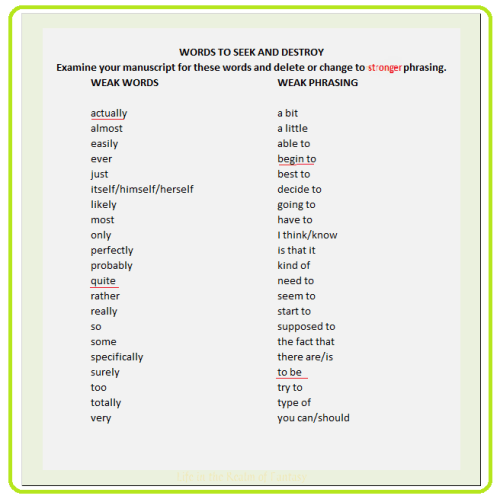
The following is a  list of words I habitually use in a first draft and then must look for in my own work. I look at each instance and decide if they work as they should or weaken the sentence. If they weaken the prose, I change or remove them.

7 Comments

Filed under writing

Revisions: Self-Editing #amwriting

Nowadays, all authors are financially responsible for getting their manuscript revised, edited, and proof-read, even if they intend to go the traditional route. Editors for the large publishing companies have a landslide of work to pick from, so they aren’t going to accept unedited messes, no matter how good the story is.

Hiring an editor is not cheap. Freelance editors are in business for themselves and must be paid for their work. Therefore, a 70,000 word manuscript can cost from around $700.00 or more to have edited, depending on the services you want.

An editor spends many hours combing the manuscript, so if you break their fees down to an hourly wage, they probably aren’t charging enough.

I always recommend that authors hire an editor if they can, because our eyes may skip typos and autocorrect errors in our own work. Those who are regular readers of my posts know that I am horrible at catching my typos and other errors.

We overlook the flaws in our work because we are as immersed in visualizing the scene as we were during the moments when we first wrote it. Our eyes see what we imagine to be there, rather than the typos or missing words.

Many editors offer a service called Beta Reading at a much more affordable price. Beta reads are helpful in identifying areas you may want to revise.

If you’re a member of a writers’ group, you have a resource of people who will beta read for you at no cost. As a member of that critique group, you will read for them too.

Be careful how you phrase your comments on their work. Be accurate and find positive things to point out as well as areas that need work. If you are harsh and dismissive, your work will receive that treatment in return.

Regardless, if you intend to publish what you write, you are responsible for making the line edits in your work.

If you are unable to afford a full professional edit, there is a way to make a pretty good stab at revising your own manuscript. However, it is time consuming, which is why an editor’s services are not cheap.

Open your Manuscript.

Break it into separate chapters by copying and pasting each individual chapter to a new document. Doing this preserves the original manuscript, and breaks it down into manageable chunks.

Save the chapters in a new file labeled with the word ‘revisions.’ For a current work-in-progress, I would label this new file: Barons_Hollow_revisions_02-12-2020

Clearly and consistently label each chapter. Make sure the chapter numbers are in the proper sequence, and that they don’t skip a number. For a work in progress, Baron’s Hollow, I labeled my individual chapter files this way:

  • BH_ch_1

Print out the first chapter. Everything looks different printed out, and you will see many things you don’t notice on the computer screen.

  • Turn to the last page. Cover the page, leaving only the last paragraph visible.
  • Starting with the last paragraph on the last page, begin reading, working your way forward.
  • Look for typos and garbled sentences.
  • With a yellow highlighter, mark each place that needs correction.

YOU MUST UNDERSTAND AND OBEY THE BASIC RULES OF GRAMMAR.

First, you need something called a style guide. As an editor, I regularly refer to my copy of The Chicago Manual of Style. If you are an author writing fiction you someday hope to publish, and have questions about sentence construction and word usage, this is the book for you.

The researchers at CMOS realize that English is a living changing language, and when generally accepted practices within the publishing industry evolve, they evolve too.

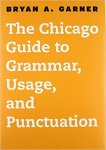
A less expensive option you might consider investing in is Bryan A. Garner’s Chicago Guide to Grammar, Usage, and Punctuation. This is a resource with all the answers to questions you might have regarding grammar and sentence structure. It takes the CMOS and boils it down to just the grammar.

For quick reference, here is a list of links to articles I’ve posted on the basics of grammar:

Authors are like everyone else. We get tired and sometimes take shortcuts.

Punctuation is not an area where we can cut corners. Punctuation serves as the traffic signals, keeping the words flowing at a good rate, and avoiding verbal chaos.

Those who  think the common rules of grammar don’t matter to readers are doing their work and their reputation a disservice.

You don’t have to be perfect, but readers want to enjoy the book, not struggle through rambling, garbled sentences.

Self-editing is not an easy task. As a rule, I don’t recommend it, because we authors see what we want to see. However, the costs of such services place severe constraints on some of us. This means that hiring an editor is out of reach for some.

With that in mind, on Monday we will look at how the placement of words, both nouns and verbs, affects the flow of our narrative.

13 Comments

Filed under writing

The Quantum Mechanics of Conversation #amwriting

The supermassive black hole known as Sagittarius A Star gives the spiral shape to our galaxy and keeps it together. Gravity keeps what goes into it from flying out.

All around us, gravity works in less massive, unobtrusive ways. Here on Earth, gravity on a small scale keeps everything securely stuck to the surface.

In writing, punctuation serves the same function as gravity, keeping our sentences from flying apart.

Even if you aren’t writing science fiction, your work must obey certain fundamental rules, or it will be unreadable. But in this case, the physics that constrain the chaos are the laws of grammar and punctuation, the quantum mechanics of writing.

The one place where the fundamental laws of grammar are allowed to deviate from the norm is in conversation.

Creating memorable characters is the goal of all authors. After all, who would read a book if the characters are bland or uninteresting? But what is it that makes a character interesting? Is it only witty conversation and great scenery?

When you envision your characters in conversation, you must think about what the word natural means. People don’t only use their words to communicate. Bodies and faces tell us a great deal about a person’s mood and what they feel.

You want to convey those visual cues in small, unobtrusive ways by picturing your conversations and the characters who are having them.

Beats or actions serve to punctuate the dialogue, to give the scene movement, and to maintain a strong mental picture in the absence of description.

These small actions can show the mood of a character and are often best placed where there is a natural break in the dialogue. When done unobtrusively, beats allow the reader to experience the same pauses as the characters, without stopping the action. They’re an effective tool and are essential to good dialogue, but don’t overdo it.

Otherwise, just use a simple dialogue tag, like said, or replied.

Don’t make the mistake of getting rid of speech tags and attributions entirely. Even with only two characters in a scene, the verbal exchanges can become confusing. Use speech tags every third exchange or so to keep things clear for your reader. Nothing is worse than trying to figure out which character said what.

Even worse, the action takes over. The dialogue fades into the background, obscured by the visual noise of foot shuffling and paper rattling. For this reason, we don’t want to inject an excess of flushing, smirking, eye-rolling, or shrugging into the story. Each of those actions has a specific use in conveying the mood, but anything used too frequently becomes a crutch. We must be creative, the hardest part of being an author.

What about exclamations and verbal tics? We frequently speak this way  in real life, but we don’t want it in our work, so I recommend you avoid using them.

When an author employs exclamations and verbal tics to excess, it is exhausting for the reader to wade through. Paragraphs peppered with instance after instance of “Ahhhh…” “Ugh!” “Yuck!” and  “Blech!” are too distracting.

Have you ever met a person who habitually holds conversations hostage, not allowing others to speak? They open with a meaningless syllable, such as “Aaahhh…” and continue droning on that syllable while they gather their thoughts.

These are ‘thinking syllables.’ This is what is known as a ‘verbal tic’ and can be such an ingrained habit that the speaker is unaware of it. The guilty party may suffer hurt feelings if you try to hurry them along.

These are difficult speech behaviors to convey. They are supremely annoying in real life and are excruciating to read in a book. Therefore, we don’t want to read them in a story or novel. I recommend you don’t begin your sentences with thinking syllables like  “Ahh…” or “Hmmm….”

As a reader, I’ve come to feel your best bet when dealing with verbal tics is to give a brief instance of their speech pattern. After that, if it is important, occasionally mention the way their habits annoy other characters.

I don’t enjoy reading heavy accents and am leaning away from writing them into my dialogue.

More and more, I try to limit the use of misspellings, bad grammar, and vulgar accents, especially when trying to point out that the character is uneducated or from a rural background.

Writing their dialogue by using common words and employing a few vernaculars conveys the sense of who they are, where they are from, and allows the character dignity.

It’s far too easy to go over the top, and turn the character into a parody, a cartoon of a person, instead of someone who feels real.

Use only a few well-chosen words to convey the idea of the accent. Use those words in a consistent manner for that character in such a way that it isn’t incomprehensible.

I have discussed conversations at length before, so I won’t bore you with repeating myself. Instead, I will list the peeves I have with the work of even the most famous authors:

  1. The exposition dump: “Bob, remember how I told you (blah blah blah)?”
  2. Repetitively naming the characters being spoken to: “Bob, remember how I told you (blah blah blah)?”
  3. Bizarre speech tags such as ejaculated or spewed.
  4. Internal dialogues that are a wall of italics going on forever.
  5. Spelling out accents to the point they are visually incomprehensible. “Oive got a luverly bunch uv coconuts…”
  6. Leading off with verbal tics. “Aahhh…ummm…”
  7. Never resort to writing foreign languages by using Google Translate (or any other translation app). A single word used consistently here and there to convey the sense of foreignness is one thing, but in general, if you don’t speak the language, don’t write it.

The word-pond of Story is like a supermassive black hole.

Grammar and punctuation serve the same purpose as gravity, giving shape to the Story, forming it into a familiar, identifiable structure.

Conversations, both spoken and internal, light up and illuminate the individual corners of the story, bringing the immensity of the overall story arc down to a personal level.

Good conversations and mental dialogues bring characters to life and turn them into our  closest friends. The laws of grammar sometimes break down on the quantum level when our friends are speaking naturally.

4 Comments

Filed under writing

The Indie Cooperative #amwriting

In May of 2012, the indie publishing cooperative that I am a part of, Myrddin Publishing Group, was formed. As a group, we originally met through a now-defunct literary contest. We have members all across the US, the UK, and Australia.

The way we communicate is through a private group page on Facebook. We numbered twenty-five when we first began, and while we have lost a few members to traditional publishers, we have also gained a few.

Membership in our group is closed at this time. We don’t seek new authors, and as a company, we do not control any author’s royalties.

Each of us is an indie, in that all funds earned by our books go directly to the author from the point of sale.

That storefront could be Amazon, Kobo, Smashwords, Barnes & Noble, Books2Read (Draft2Digital’s storefront), or Ingram Sparks. The individual author uploads their books to the sales outlet of their choice.

I publish through both Amazon KDP and Draft2Digital. Amazon is the big kid on the block, and so far, I’m satisfied with their print book services. Some in my group use Amazon KDP for print, and others use Ingram Sparks for their print books.

Draft2Digital partners with a wide variety of digital storefronts, including Bibliotheca, which gets my books into libraries around the world.

Each member author has sole responsibility for their book. They must pay any local or federal taxes owed on their royalties and are responsible for marketing their own work.

The publishing co-op model we use is quite simple. We pay $25.00 a year to be a member.

One of our members lives in Wales, and her husband is employed in internet security. She manages the website and he is our IT man.

  • Each member author is each responsible for creating their own author page on the website, listing their books, and keeping their author page updated.

We have a nominal leader since every group needs a person in charge. She manages our tiny bank account and makes a full report of how the money was spent every year. Usually, our funds are spent on services the group can use and benefit from.

For us, the main benefit is low cost ISBNs that are not provided by Amazon KDP. Some people don’t mind using Amazon’s ISBNs, but we like having our own.

When we first started in 2012, we bought 1000 ISBNs. A member who is a retired bookkeeper in Essex, England, manages those for us.

In 2012 those ISBNs cost us $1000.00, and we divided up the costs ($40.00 for each of us). I believe the cost for ISBNs has doubled since then, but don’t quote me on that.

All our financial transactions are through the Myrddin PayPal account to our leader, and each Myrddin member can ransom back the  requisite number of ISBNs (Kindle, Draft2Digital, and Print, etc.) for $1.00 each.

We have enough ISBN’s for all of us to create books for many years to come.

  • We trade services within the group.

Several of us will edit or beta-read as needed. I and several other members do book covers, digital maps, banners, bookmarks, and logos as needed.

There are some things to consider before you start your own publishing cooperative:

  • Member participation is what makes the group functional.

Not every member will be an active participant. As time goes on, you may find yourself doing more work than you want and getting little in return from some.

  • At the outset, the group should develop and vote on a list of member responsibilities ( a group charter).

This list should detail what sort of behavior is expected or discouraged in online interactions.

That charter should also explain clearly what the group will do for its member authors, and how membership is obtained.

You will need two Facebook pages. One should be private for group discussions. The other should be public for posting entertainment pieces, such as memes that relate to writing and books.

  • The public page is where book launches can be advertised.
  • Also, the public FB page is where you publicize information about events individual member authors will be at or forthcoming book releases.

I suggest that you have two or three people in charge of posting things on the Public Facebook page and several other people in charge of your group’s Twitter and or Instagram account.

  • Someone with good bookkeeping skills should act as a financial officer.

This person manages any funds generated by member dues or anthologies and pays for the group’s website hosting.

  • The financial officer should have two assistants to review the financial records and ensure transparency.

Financial reports should be posted regularly, so the member authors know how the group is doing. The assistants should be authorized to step in if the financial officer is unable to fulfill their duties for any reason.

  • All decisions should be voted on by the group.

When things need to be discussed that affect the group as a whole, my co-op will hold a “meeting thread” over the course of a week on our private FB group page. That is where we decide what we want to do with the fee-money.

  • Google any publishing names you might want to use before you settle on one.

Don’t choose a name that is already in use as it may be trademarked. Be unique and be clever, but be careful.

Editing, beta reading, proofreading—these services are why a co-op is a good thing and should be traded freely.

Some members may have skills in graphic design and will design book covers, or logos.

  • You must be able to politely express that you can’t use a service, such as a cover design you don’t like. At that point, be prepared to quietly seek and pay for professional services outside the group.

Remember, all of these are time-consuming services. When you trade services, those who provide them for you are not earning money. Be gentle with those who are helping you.

I can’t stress this enough: Even if you don’t use a service that a fellow member offers to you, be a good friend. Give back to the group and help them when it’s their turn to seek services and help.

There will sometimes be rough patches in the group’s overall Zen.

I mentioned that each member of our co-op is responsible for listing their own books on the website and keeping their author page updated.

Sometimes we have problems with people who are less website savvy not being able to figure out how to update their books on the website.

Also, people get sidetracked by life and forget what they’re supposed to do for the group.

Those are minor irritations.

Overall, I have found this publishing model to be the best fit for me. I write short stories and submit to traditional publications, but I prefer to go indie for my novels.

As group, Myrddin certainly doesn’t have all the answers. We have evolved more independently than from where we began, but we are all still good friends. This is not a one-size-fits all kind of thing.

Use the internet and research other small press models.

If you are considering forming an indie publishing cooperative, I hope this has answered some questions you might have had.

Comments Off on The Indie Cooperative #amwriting

Filed under writing

The path to becoming an author #amwriting

People often say they want to write a book. I used to say that too.

In 1985 I came across my first stumbling block on my path to becoming a writer. I didn’t know it, but to go from dreamer to storyteller is easy. Anyone can do it.

But if we choose to become an author, we’re taking a walk through an unknown landscape.

And the place where we go from dreamer to storyteller to author is the hardest part.

At first the path is gentle and easy to walk. As children, we invent stories and tell them to ourselves. As adults, we daydream about the stories we want to read, and we tell them to ourselves.

That part of the walk is easy. At some point, we become brave enough to sit down and put the story on paper.

The blank screen or paper is like an empty pond. All we have to do is add words, and the story will tell itself.

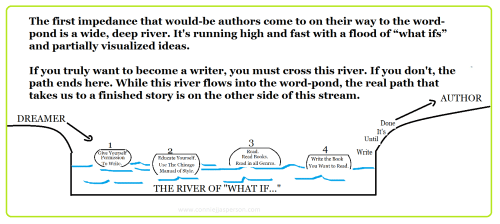
The first impedance that would-be authors come to on their way to filling the word-pond with words is a wide, deep river. It’s running high and fast with a flood of “what ifs” and partially visualized ideas.

If you truly want to become a writer, you must cross this river. If you don’t, the path ends here. While this river flows into the word-pond, the real path that takes us to a finished story is on the other side of this stream.

Fortunately, the river has several widely spaced steppingstones. Landing squarely on each one requires effort and a leap of faith, but the determined writer can do it.

The last thing you do before you step off the bank and begin crossing that river is this: visualize what your story is about.

The first stone you must leap to is the most difficult to reach. It is the one most writers who remain only dreamers falter at:

  • You must give yourself permission to write.

We have this perception that it is selfish to spend a portion of our free time writing. It is not self-indulgent. We all must earn a living because very few writers are able to live on their royalties. If writing is your true craft, you must carve the time around your day job to do it. All you need is one undisturbed hour a day.

The second stone is an easy leap:

  • Become literate. Educate yourself.

Buy books on the craft of writing. Buy and use the Chicago Manual of Style. You can usually find used copies on Amazon for around $10 – $15, passed on by those who couldn’t quite make the first leap.

I freely admit to using the internet for research, often on a daily basis, and I buy eBooks. However, my office bookshelves are filled with reference books on the craft of writing. I buy them as paper books because I am always looking things up. The Chicago Manual of Style is one of the most well-worn there.

Most professional editors rely on the CMOS because it’s the most comprehensive style guide—it has the answer for whatever your grammar question is. Best of all, it’s geared for writers of all streaks: essays, novels, all varieties of fiction, and nonfiction.

The third stone is the reason we decided to write in the first place:

  • Good writers never stop reading for pleasure.

We begin as avid readers. A book resonates with us, makes us buy the whole series, and we never want to leave that world.

We soon learn that books like that are few and far between.

The fourth stone is an easy leap from that:

  • We realize that we must write the book we want to read.

As we reach the far bank, we climb up and across the final hurdle:

  • We finish the work, whether it’s a novel or short story.

Over the years since I first began writing, I’ve labored under many misconceptions. It was a shock to me when I discovered that we who write aren’t really special.

Who knew?

We’re extremely common, as ordinary as programmers and software engineers. Everyone either wants to be a writer, is a writer, has a writer in the the family, or knows one.

Even my literary idols aren’t superhuman.

Because there are so many of us, it’s difficult to stand out. We must be highly professional, easy to work with, and literate.

Filling the pond with words and creating a story that hooks a reader is as easy as daydreaming and as difficult as giving birth.

Because writers are so numerous, every idea has been done. Popular tropes soon become stale and fall out of fashion.

A study by the University of Vermont says there are “six core trajectories which form the building blocks of complex narratives.” These are:

  1. Rags to riches (protagonist starts low and rises in happiness)
  2. Tragedy, or riches to rags (protagonist starts high and falls in happiness)
  3. Man in a hole (fall–rise)
  4. Icarus (rise–fall)
  5. Cinderella (rise–fall–rise)
  6. Oedipus” (fall–rise–fall)

No stale idea has ever been done your way.

We give that idea some thought. We apply a thick layer of our own brand of “what if.”

It’s our different approaches to these stories that make us each unique.

Sure, we’re writing an old story. But with a fresh angle, perseverance, and sheer hard work, we might be able to sell it.

And that is what makes the effort and agony of getting that book published and into the hands of prospective readers worthwhile.

16 Comments

Filed under writing