Category Archives: writing

Depth – creating reality #amwriting

We have been talking about ways to create depth in our writing for the last month, and we still have areas of the Word-Pond we call Story to explore.  One aspect of depth that we can’t skimp on is setting.

Setting is a surface element but it also has a subliminal role in creating depth.

The problem is, many people believe that world-building requires a massive amount of effort.

It does take some work up front, but  once begun, worlds grow as we write them.

Perhaps you have an idea for your story and characters who have great chemistry. However, while you might know how the plot will go, you feel like you can’t quite get a grip on the story. This is because the world is still mostly unformed.

At this early point in the process you don’t yet know their world. So, the setting is the literary equivalent of an empty apartment with a chair and a table but nothing else. You have an idea of what you want it to be when it is fully furnished, but aren’t sure how to make that vision real.

I have a method of building worlds that works for me, and I will share it with you, but you must keep it an absolute secret. This is just between you and me and the internet at large.

I move in and live there, mentally.

I picture the opening scene, and in a separate document labeled something like (story title)_worldbuilding.docx, I begin writing, answering questions about this world as I think of them.

What is the name of the place the story opens?

Does it take place on earth in a real place? On earth in an alternate time/place? Or is it set on some other world entirely?

Where is my protagonist? Does the environment work against him/her?

Looking through their eyes, are they indoors or outdoors?

What does s/he see at that opening moment?

How does the air feel and what scents and odors are common to that place?

How is the lighting both indoors and out? If they are out of doors, what is the weather like?

On this world-building document, write every single detail, from the largest down to the insects. Keep adding to it whenever you think of something new as you are writing the first draft. The act of designing this scenery builds the world in your mind. I go with the world that is familiar to me, with some unfamiliar creatures thrown in for fun.

The Tower of Bones series began life as the story line for an anime-based RPG that never went into production. The world of Neveyah is an alien environment, yet it’s familiar to me because it’s based on the world I live in, the Pacific Northwest. The plants and the way they fit into the geography are directly pulled from the forested hills of Southern Puget Sound and Western Washington State.

I created the maps, so I knew the topography. I had to first build and then destroy the ecology for the game because the dangerous environment and elemental creatures are a core plot point in the story, a threat with which the protagonist must learn to coexist. So, when I began writing the book, all the hard work was done. Ten years of writing work set in Neveyah is why the world seems so solid from the opening paragraphs.

You say you can’t picture a place you haven’t been. But what does that really mean? Open your eyes and look around. At this moment, inside your room and outside your door, you have all the elements you need to create an alien or alternate world. These elements could exist before your eyes, or they exist in your memory. I say, use what you know, reshape it, reuse it and make it yours.

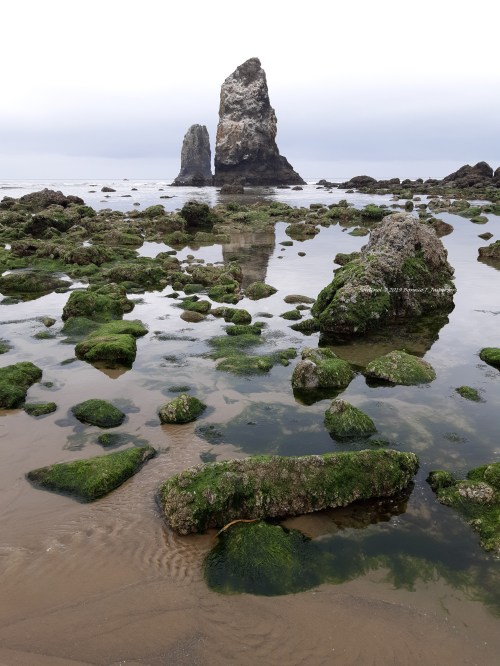
Everyone has a place they want to be more than anywhere else. For me, one place on earth represents my serenity, my creative happy place, and it exists in the real world but is a four-hour drive from my home. Yet, when I need to, I can pull that place up in my mind. By visualizing it, I recharge my serenity-batteries.

Think about a place you love but are parted from. What is the strongest memory about that place, the one that calls to you, lingers in your heart and makes you happy?

If you can describe that feeling, that memory, you can create a world.

The fact is, unless we are there physically, other places don’t really exist for us. We see them on the news, or read about them, but until we visit them, they are distant, merely rumors.

Our consciousness is contained in the packet of water and flesh we call our bodies. For this reason, the only world that really exists in this incarnation is the space we physically occupy as individuals. The only true reality is the space we can see, hear, smell, and touch.

Everywhere else is only a daydream or a memory. When you aren’t there, it doesn’t exist.

However, you can go there in your mind if you picture it strongly enough. We build worlds every day just by planning our next move. We do it by thinking about where we are going next, and where we have just come from. If you can visualize stopping at the mini-mart on your way home after work, you can visualize the convenience store on a space station.

It does take time, but not a lot. Consider spending an evening building the framework of the world for your novel. Use your best, most colorful words to show that place in a word-picture that is just for you.

Get fluffy in your writing—it’s only a practice piece, and no one will see it but you. The smells, the sounds, the way certain doors creak are all good things to know. Draw maps and floor plans. List the furniture the characters interact with and know where it’s placed.

Use all the descriptive words you can think of to build that world in your mind–this research document is where adverbs and adjectives should be used.

Once the world in which the story opens is solid in your mind, rewrite that opening scene again. Allow the world to unfold through the characters’ experiences and interactions. Show us the world your characters inhabit in that scene.

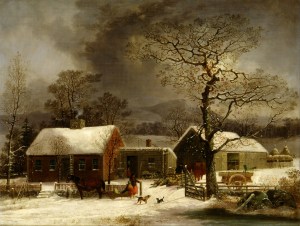
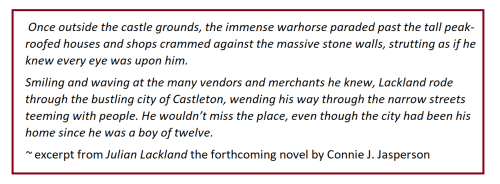
The following passage is from the opening page of my forthcoming novel, Julian Lackland, the third and final installment in the Billy’s Revenge Series. In the opening scene, this is how I show the world my protagonist inhabits.

All the world-building was done ten years ago. Building an RPG world taught me to visualize and describe heavily in my background notes. I used the same method when plotting Huw the Bard and Billy Ninefingers as I did for Tower of Bones.

Now, ten years on, I’m a leaner writer, so those images are condensed into a only few words, a picture to show where he is on day one of our story. As the novel progresses, his environments change, but it’s my task to keep the word-pictures concise and yet as visual as possible.


Credits and Attributions:

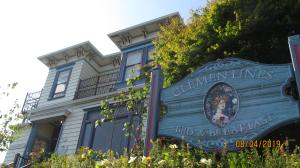
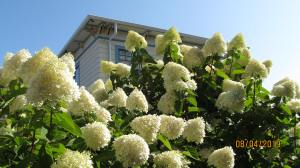
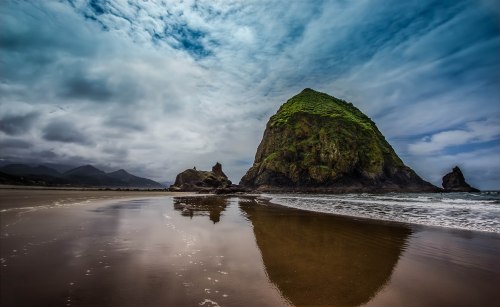
All photography in this post is from Connie J. Jasperson’s portfolio

2 Comments

Filed under writing

The Depths of the Word-Pond – Word Choice #amwriting

The depths of the Word-Pond we call Story are clouded and visibility is poor. Who knows what creatures prowl down here, waiting for their next meal?

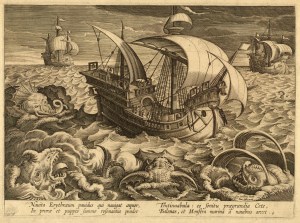
Exposition, the Kraken of the Deep is down here somewhere, lurking. How will we get out of here alive?

In a balanced narrative, some exposition is essential in order to provide context. How much is inserted and how it is delivered is what makes or breaks a story. The same goes for those subversive packets of inadvertent exposition: adverbs.

Some newly converted zealots loudly repeat mantras uttered by their personal gurus, whispering prayers to the demi-god Elmore Leonard– an author whose advice was good, but who would be surprised to learn he’s been elevated to such heights, his short list of advice turned into a holy text. The crusaders can be recognized from a distance because they’re all standing on soapboxes shouting, “If it sounds like writing, rewrite it. Kill every Darling who uses an adverb!”

That kind of devotion is short-sighted. Words like “later,” or “everywhere,” or “never” or “alone” are adverbs. Do these well-meaning fanatics really believe they can write decent prose with no adverbs whatsoever?

As with all religious cults, there is a solid kernel of truth to that arrogant fixation, but to think you can ban exposition and adverbs from the narrative completely is a delusion. Chuck Wendig, in his post The Danger of Writing Advice from Industry Professionals, says,

“And so the advice really should be, don’t use adverbs or adjectives when they sound awkward, or when they fail to tell us something that we need to know.” [1]

Other Word-Choice Mantras bring discord to the ranks of the newly converted. The word ‘very’ comes in for a lot of abuse in writing groups and writers’ chat rooms.

Suppose you decide to simply eliminate every instance of the word “very” because you have discovered you overuse it. You are savvy—you understand your word-processing program well and know all the shortcuts. You open the navigation pane and bring up the advanced search dialog box. In the ‘Replace With’ box you don’t key anything, because you know this will delete the word and are convinced this will eliminate the problem and tighten your prose.

Before you click ‘replace all’ consider three common words that have the letters v-e-r-y in their makeup:

  • Every
  • Everyone
  • Everything

Deleting every instance of ‘very’ could mess things up on an incredibly large scale. Context is everything. Take the time to look at each example of the offending words and change them individually. You’ve already spent a year or more writing that novel, so why not take the time to do it right?

“Actually” is another word to look at individually. Perhaps you have been told it is a ‘weed word,’ and, feeling mocked by the more experienced authors in your writer’s forum, you experience a nearly uncontrollable gut reaction to eliminate it entirely in a scorched earth campaign. Before you obey that compulsion, examine the context.

Have you used the word “actually” in a conversation? If so, you may want to keep it, as dialogue must sound natural, and people use that word in conversation.

Just as the laws of physics break down at the center of a Black Hole, the inviolable laws of grammar break down in conversations. And, just as gravity still rules, keeping chaos constrained in the singularity, punctuation still reigns in conversation, holding our sentences together.

Now that we have adverbs and religious zealots out of the way let’s continue on with word choice. Words, carefully chosen and used properly, have power. Choosing your words with care and binding them into small packets inserted into conversations is how you distribute your exposition (backstory) without resorting to a blatant info dump. Dole it out in small portions, delivered only when the reader needs to know it.

We choose words with power. In English, words that begin with hard consonants sound tougher and therefore carry more power.

Verbs are power words. Fluff-words and obscure words used too freely are kryptonite, sapping the strength from our prose.

  • Placement of verbs in the sentence
    1. Moving the verbs to the beginning of the sentence makes it stronger.
    2. Nouns followed by verbs make active prose.
      1. I ran toward danger, never away.
  • Parallel construction
    1. When two or more ideas are compared in a sentence, each part of the sentence uses the same grammatical structure.
    2. What parallelism means can be shown by a quote attributed to Julius Caesar, who used the phrase “I came; I saw; I conquered.” in a letter to the Roman Senate after he had achieved a quick victory in the Battle of Zela. Caesar gives equal importance to the different ideas of coming, seeing, and conquering.
  • Contrast
    1. In literature, we use contrast when we describe the difference(s) between two or more things in one sentence.
    2. The blue sun burned like fire, but the ever-present wind chilled one to the bone.
  • Simile
    1. Similes show the resemblances between two things through the use of words such as “like” and “as.” They are different from metaphors, which imply that something “is” something else.
    2. The blue sun burned like fire.
  • Deliberate repetition.
    1. Repetition of the last word in a line or clause.
    2. Repetition of words at the start of clauses or verses.
    3. Repetition of words or phrases in the opposite sense.
    4. Repetition of words broken by some other words.
    5. Repetition of the same words at the end and start of a sentence.
    6. Repetition of a phrase or question to stress a point.
    7. Repetition of the same word at the end of each clause.
    8. Repetition of an idea, first in negative terms and then in positive terms.
    9. Repetition of words of the same root with different endings.
    10. Repetition both at the end and at the beginning of a sentence, paragraph, or scene.
    11. It can also be a construction in poetry where the last word of one clause becomes the first word of the next clause.

Every book is a quotation, and every house is a quotation out of all forests, and mines, and stone quarries; and every man is a quotation from all his ancestors.”  Ralph Waldo Emerson, Prose and Poetry. [2]

  • Alliteration
    1. The occurrence of the same letter (or sound) at the beginning of successive words.
      1. Peter Piper picked a peck of pickled p
      2. Once upon a midnight dreary, while I pondered, weak and weary, (The Raven, by Edgar Allan Poe 1845) [3]
  • When I see birches bend to left and right

Across the lines of straighter darker trees, (Birches, by Robert Frost 1916) [4]

Poets know and use all the above word choice concepts to convey large ideas and entire stories with a minimum of words.

How we add depth to our prose without adding kryptonite involves verb placement and using ordinary words that most people know and don’t have to look up in a dictionary. Craft happens when you combine those common words in unexpected ways, forming extraordinary passages.


Credits and Attributions:

[1] The Danger of Writing Advice from Industry Professionals, by Chuck Wendig, Terribleminds,  The Ramble, http://terribleminds.com/ramble/2017/12/12/the-danger-of-writing-advice-from-industry-professionals/  ©2017. Accessed 31 July 2019.

[2] Ralph Waldo Emerson, The Complete Works. Published in 1904. Vol. VIII. Letters and Social Aims, VI. Quotation and Originality, Bartleby.com, accessed (31 July 2019)

[3] Wikipedia contributors, “The Raven,” Wikipedia, The Free Encyclopedia, https://en.wikipedia.org/w/index.php?title=The_Raven&oldid=908701892 (accessed July 31, 2019).

[4] Wikipedia contributors, “Birches (poem),” Wikipedia, The Free Encyclopedia, https://en.wikipedia.org/w/index.php?title=Birches_(poem)&oldid=886359747 (accessed July 31, 2019).

Images

Wikimedia Commons contributors, “File:Print, Three ships surrounded by monsters, ca. 1590 (CH 18553601).jpg,” Wikimedia Commons, the free media repository, https://commons.wikimedia.org/w/index.php?title=File:Print,_Three_ships_surrounded_by_monsters,_ca._1590_(CH_18553601).jpg&oldid=276506077 (accessed July 31, 2019).

Wikimedia Commons contributors, “File:Black hole – Messier 87.jpg,” Wikimedia Commons, the free media repository, https://commons.wikimedia.org/w/index.php?title=File:Black_hole_-_Messier_87.jpg&oldid=359992100(accessed July 31, 2019).

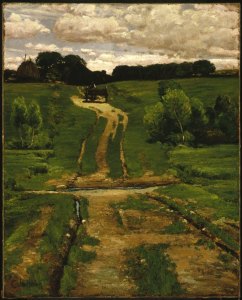
Wikipedia contributors, “Childe Hassam,” Wikipedia, The Free Encyclopedia, https://en.wikipedia.org/w/index.php?title=Childe_Hassam&oldid=831999910 (accessed April 6, 2018).

4 Comments

Filed under writing

The Inferential Layer of the Word-Pond – Symbolism #amwriting

The Word-Pond is dark, and near the bottom the waters are murky. It’s hard to find your way, but knowing the theme gives us a diver’s guide-rope to hold onto.

We’ve identified the theme, but we need to strengthen it. We want to add depth to our narrative, but wonder how. This becomes easier when we remember that theme, mood, and atmosphere work closely together.

An important tool in our writer’s toolbox is Symbolism. It is an aspect of Story that helps create mood, atmosphere, and supports and strengthens the theme. When a little thought is applied to how you place it, symbolism becomes a subtle tool that speaks subliminally to the reader.

Intentionally placing symbolic objects in the setting influences the characters’ emotional mood. It represents the theme and will help reinforce the desired atmosphere without your having to resort to an info dump.

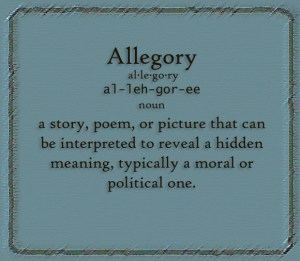
Words can have subtle meanings beyond the obvious, when used as allegories. Using allegory in the narrative offers images for the reading mind to see and understand.

So, what is an allegory? An allegory is an essential tool of the author who wants to convey important ideas with the least amount of words.

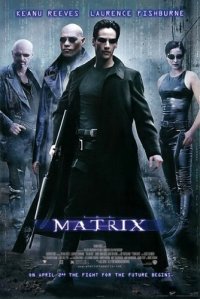
The storytelling in The Matrix series of movies is a brilliant example of employing heavy allegory in both the setting and conversations to drive home the multilayered theme of humankind, machine, fate, and free will. The theme is represented with heavy symbolism in:

  • The names of the characters,
  • The words used in conversations
  • The androgynous clothes they wear

Everything on the set or mentioned in conversation underscores those themes, including the lighting. Inside The Matrix, the world is bathed in a green light, as if through a green-tinted lens. In the real world, the lighting is harsher, unfiltered.

In the movie, everything that appears or is said onscreen is symbolic and supports one of the underlying concepts. When Morpheus later asks Neo to choose between a red pill and a blue pill, he essentially offers the choice between fate and free will.

Neo chooses the red pill—real life—and learns that free will can be unpleasant. Cypher regrets choosing the red pill and ultimately chooses to return to the Matrix.

The reader/viewer infers the mood and atmosphere by virtue of embedded symbolic clues, hints that also strengthen the theme.

One of my works-in-progress that is in its infancy is a contemporary novel. I want to convey a Gothic atmosphere in this piece and yet maintain the setting and time-frame of a novel set squarely in the  21st century. I can only do this through the use of allegory. I will have to approach writing a scene as it would be portrayed in a movie, keeping the symbolism in mind.

In this novel’s case, I have several character threads that converge in the large themes of trust and fidelity. It’s a multilayered piece, and each layer has its own sub-theme

  • Social responsibility.
  • Ethics and the lengths we will go to achieve a goal.
  • What constitutes family, nurture or nature?

Making good use of symbolism and allegory will be critical if I want to convey the mood and the atmosphere without resorting to an info dump.

Just to be clear, a plan is not always required because sometimes the flash of inspiration we begin with is a strong theme in itself.

If you are lucky, the theme develops as you write, and immediately, you see what it is. This strong theme will whisper suggestions and symbols to you as you create the world and the visual environment.

In my case, I need a plan fifty percent of the time.

Whatever the case, once you have identified the main theme, you can write the story in such a way that it is shown through:

  • Actions
  • Symbolic settings/places
  • Allegorical objects in the setting
  • Conversations

We try to picture conversations, clothing, settings, and wider environments as if they were scenes in a movie. As you do so, consider how you can insert small allegories and symbols to support your theme.

The casual reader doesn’t notice symbolism on a conscious level. However, dedicated readers will, and that is what will keep them reading. Dedicated readers love work that holds up on closer examination, enjoying work that has layers of depth.

Yet, for the casual reader, it is all there, making the imaginary surface look and feel real, solid, and concrete.


Credits and Attributions

The Matrix movie poster, © 1999 Warner Bros. Entertainment Inc. (US, Canada, Bahamas and Bermuda); © 1999 Village Roadshow Films Limited. (All Other Territories) Fair Use

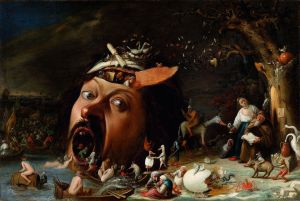
The Temptation of St Anthony, Joos van Craesbeeck ca. 1650 [Public domain], via Wikimedia Commons

Comments Off on The Inferential Layer of the Word-Pond – Symbolism #amwriting

Filed under writing

The Interpretive Layer of the Word-Pond: Theme

Deep within the narrative, mingling with other heavier aspects of Story and sinking to the bottom of the Word-Pond is theme. A fundamental underpinning of the story, theme can be a tricky fish to get a grip on. Theme is a subtle aspect of any written work. It is rarely stated in a bald fashion, but even if it isn’t obvious, theme is a unifying thread that goes through the story from beginning to end.

According to Wikipedia:

A theme is different from the subject of a work. For example, the subject of Star Wars is “the battle for control of the galaxy between the Galactic Empire and the Rebel Alliance.”

The themes explored in the films might be “moral ambiguity” or “the conflict between technology and nature.” [1]

In other words, theme is what the story is about on a deeper level than what is seen on the surface. It’s the big meaning, a thread that is woven through the entire story, and sometimes it is an unstated moral for the reader to infer.

I’ve said this elsewhere, but theme is an idea-thread that winds through the story, supports and gives meaning to the plot. On the surface, each of the different commercial literary genres looks different. Each genre is deliberately tailored to fit a wide variety of niche readers. Yet, from shelf to shelf, we will find commonalities, themes that all stories tell in one way or another.

Genre is the bookstore label guiding a reader to the shelf containing books they are most likely to enjoy.

But some aspects of Story are universal and independent—they roam through all the genres from children’s books to literary fiction and connect them.

Theme is a universal feature of Story.

We all recognize Romance as a theme. It can be the major theme or a supporting theme. Romantic love is a defining feature of the genre of Romance. But what are some different aspects of love that can be found in every genre from fantasy to sci-fi, to horror, to crime fiction?

  • Love gained (the fairytale romance)
  • Love lost
  • Tragic love
  • Selfish love
  • Passion
  • Brother/Sisterly love
  • Dangerous Attraction
  • Friendship
  • Parental love

Love is only one theme despite the fact an entire genre has been built around it. Others abound, large central concepts that build tension within the Story.

Here is a brief list, just a small jumping off point for your creative mind. Some are large themes that entire genres have been built around, and others are good supporting themes:

  • Separation and reunion
  • Grief
  • Nostalgia for the good old days
  • Ambition
  • Fall from Grace
  • Rebellion and revolution
  • Redemption
  • Coming of age
  • Crime and Justice
  • Midlife crisis
  • Alienation/loneliness
  • The hero’s journey
  • Humanity in jeopardy
  • War
  • General dehumanization of society
  • Conspiracy
  • Good vs. Evil
  • Plagues
  • Religious intolerance
  • Abuse

Again, Wikipedia, the fount of all knowledge, offers us wisdom:

(Theme) can often be summed in a single word (e.g. love, death, betrayal). Typical examples of themes of this type are conflict between the individual and society; coming of age; humans in conflict with technology; nostalgia; and the dangers of unchecked ambition. A theme may be exemplified by the actions, utterances, or thoughts of a character in a novel. An example of this would be the theme loneliness in John Steinbeck‘s Of Mice and Men, wherein many of the characters seem to be lonely. It may differ from the thesis (hypothesis; idea)—the text’s or author’s implied worldview. [2]

Sometimes we can visualize a complex theme but can’t explain it. If we can’t explain it, how do we show it? Consider the theme of “grief.” It is a common theme that can play out against any backdrop, sci-fi, or reality based, where there are humans interacting on an emotional level. When you see a dog grieving the loss of her mistress, or a husband grieving for his wife—what do you see? You can’t read their mind, so you must look for clues. What behaviors inspire empathy for their sorrow in you, the observer?

Highlighting a strong theme can be a challenge if you begin without a plan. A plan is not always required because, in some stories, the flash of inspiration we begin with is a strong theme. The theme develops as you write, and immediately, you see what it is. In my case, I need a plan fifty percent of the time.

Whatever the case, once you have identified the main theme, you can write the story in such a way that it is shown through:

  • Actions
  • Symbolic settings/places
  • Allegorical objects deliberately placed within the setting
  • Conversations

Other times, it is difficult to decide what the underlying theme is, and the story is weak. It has no legs and won’t ring true until you find out what the underlying theme is. This requires a little mind-wandering on your part. You must ruminate on the character’s quest or dilemma. Ask yourself what the root cause of the issue is—if it is a crime, why is crime rampant. Is it a societal problem? If the core dilemma is unrequited love, what are the roadblocks to a resolution?

Themes exist in every story. However, when we are first laying down the story, themes are like your drunk uncle—they hang out in the bar until closing time when they have to weave their way home through dark alleys and the neighbor’s shrubs. When you have finished your first draft (closing time), if you still haven’t found the defining theme, look in the local bar in the first chapters for clues your subconscious mind has sprinkled throughout the story. If you still haven’t got a theme, pick one and develop it.

At the surface level of the Word-Pond, each genre looks widely different. But when you go deeper, you find that all literary genres have one thing in common: they have protagonists and side-characters who all must deal with and react to the underlying theme of the book.


Credits and Attributions:

[1] Wikipedia contributors, “Theme (arts),” Wikipedia, The Free Encyclopedia, https://en.wikipedia.org/w/index.php?title=Theme_(arts)&oldid=848540721 (accessed July 27, 2019).

[2] Wikipedia contributors, “Theme (narrative),” Wikipedia, The Free Encyclopedia, https://en.wikipedia.org/w/index.php?title=Theme_(narrative)&oldid=765573400 (accessed July 27, 2019).

Images:

Photograph, McLain Pond in July, © 2018 by Connie J. Jasperson, from the author’s private photos.
Worked to Death, H. A. Brendekilde. Wikimedia Commons contributors, “File:H. A. Brendekilde – Udslidt (1889).jpg,” Wikimedia Commons, the free media repository, https://commons.wikimedia.org/w/index.php?title=File:H._A._Brendekilde_-_Udslidt_(1889).jpg&oldid=355191092 (accessed July 16, 2019).

3 Comments

Filed under writing

The Depths of the Word-Pond: Archetypes #amwriting

Down at the bottom, lodged in the mud of the Word-Pond we call Story are the foundations, the underpinnings. One of these foundations is archetype.

An archetype is an ancient pattern, describing a type of character that exists across different cultures and eras of human history. In ancient times, we had no communication with different cultures, yet our myths and legends share these common, recognizable characters we call archetypes.

I am a great fan of both Joseph Campbell and Christopher Vogler, and the hero’s journey is central to much of my work. In his book, The Hero With a Thousand Faces, Campbell discusses his theory of the journey of the archetypal hero found in world mythologies.

Quote from Wikipedia, the fount of all knowledge:

In his 1949 work, The Hero with a Thousand Faces, Campbell described the basic narrative pattern as follows:

A hero ventures forth from the world of common day into a region of supernatural wonder: fabulous forces are there encountered, and a decisive victory is won: the hero comes back from this mysterious adventure with the power to bestow boons on his fellow man.

There are other archetypal characters that we find in all sorts of guises. Consider the “wise old man/woman/mentor.” This character exists in the stories of all ancient cultures, offering advice, and pushing the protagonist to achieve the goal. The mentor is Obi-Wan Kenobi, Glenda the Good Witch—or even a small, green dispenser of wisdom called Yoda.

Psychology says that an archetype is a recognizable behavioral pattern. In a story, the archetypal character is the embodiment/reflection of that familiar pattern of behavior.

The Writer’s Journey, Mythic Structure for Writers, by Christopher Vogler, details the various traditional archetypes that form the basis of most characters in our modern mythology, or literary canon.

The following is the list of character archetypes as described by Vogler:

  1. Hero: someone who is willing to sacrifice his own needs on behalf of others
  2. Mentor: all the characters who teach and protect heroes and give them gifts
  3. Threshold Guardian: a menacing face to the hero, but if understood, they can be overcome
  4. Herald: a force that brings a new challenge to the hero
  5. Shapeshifter: characters who constantly change from the hero’s point of view
  6. Shadow: a character who represents the energy of the dark side
  7. Ally: someone who travels with the hero through the journey, serving a variety of functions
  8. Trickster: embodies the energies of mischief and desire for change

Christopher Booker, author of The Seven Basic Plots: Why We Tell Stories, tells us that the following basic archetypes underpin the plots of all stories:

  1. Overcoming the Monster
  2. Rags to Riches
  3. The Quest
  4. Voyage and Return
  5. Comedy
  6. Tragedy
  7. Rebirth

We feel comfortable with these basic recognizable plots, no matter how differently they are presented to us. They are peopled with characters we feel we know, friends who occupy the familiar traditional roles. Even in a non-heroic story, we have these archetypes:

Take The Maltese Falcon, by Dashiell Hammett. The archetype of the plot is a Quest.

On the surface, this is a detective novel, a thriller, nothing at all like The Hobbit, which is an obvious quest tale. However, The Maltese Falcon most definitely is a quest tale.

Yes, it’s a quest with a twist.

The object of the quest is a black statuette of significant value. However, the statue itself is a classic example of a MacGuffin. The MacGuffin’s importance to the plot is not the object or goal itself, but rather the effect it has on the characters and their motivations—in this case, the quest changes Sam’s life. The sole purpose of the MacGuffin is to move the plot forward.

The object of the quest was not the purported “Maltese Falcon” after all, despite the obvious quest to acquire it and the lengths the characters must go to in the process. The true core of the story is the internal journey of both Sam Spade (the hero) and Brigid O’Shaunessy (the shapeshifter/trickster), two people brought together by the quest, and whose lives are changed by it.

So, The Hobbit and The Maltese Falcon begin with the same character archetype of the unintentional hero. Bilbo (the hero) is hired to steal the Arkenstone back from a Dragon for Thorin (the trickster) and the dwarves, and Sam Spade is hired to obtain the Maltese Falcon for Brigid O’Shaunessy.

In both tales, another archetypal role that appears is that of the mentor: Bilbo has Gandalf the Wizard, and Sam Spade has Caspar Gutman. Despite their very different personalities and reasons for offering wisdom, both are mentors.

The fundamental stories are the same: the hero endures hardship to acquire an object (the Maltese Falcon or the Arkenstone) but finds that the object is no longer that important. Sam never acquires the true Maltese Falcon but finds out who really killed his business partner. He loses much in the process and emerges a different man.

Bilbo also loses his naïveté, and after all the work of finally finding it, he hides the Arkenstone because of Thorin’s uncharitable actions toward the Wood-elves and the Lake-men who have suffered from the Dragon’s depredations.

Despite the similarities on the level of archetypes, these are radically different novels.

And that is the beauty of the deeper level of the story. Something so fundamentally similar as plot archetypes and character archetypes can be written so differently that the same story emerges completely unique and wildly dissimilar from others based on that archetype.

I highly recommend this book for anyone interested in learning more of what archetypes are and how they fit into the story:

The Writer’s Journey, Mythic Structure for Writers, by Christopher Vogler


Credits and Attributions:

Wikipedia contributors, “Archetype,” Wikipedia, The Free Encyclopedia, https://en.wikipedia.org/w/index.php?title=Archetype&oldid=906671691 (accessed July 23, 2019).

Christopher Booker (2004). The seven basic plots: why we tell stories. London: Continuum. ISBN 978-0826452092. OCLC 57131450.

Wikipedia contributors, “The Writer’s Journey: Mythic Structure for Writers,” Wikipedia, The Free Encyclopedia, https://en.wikipedia.org/w/index.php?title=The_Writer%27s_Journey:_Mythic_Structure_for_Writers&oldid=804454608  (accessed July 23, 2019).

Wikipedia contributors, “Trickster,” Wikipedia, The Free Encyclopedia, https://en.wikipedia.org/w/index.php?title=Trickster&oldid=811022016  (accessed July 23, 2019).


Comments Off on The Depths of the Word-Pond: Archetypes #amwriting

Filed under writing

Deeper into the Inferential Layer of the Word-Pond #amwriting

For the last two weeks, we have discussed how, in the word-pond that we call Story, below the surface is the wide layer of unknown quantity: the Inferential Layer.

But as we go deeper, we discover the vast expanse of words is comprised of many smaller, less obvious layers of varying temperatures and clarity.

We sink past the sharks of Emotion and the intangibles of Atmosphere and Mood. There we discover a murky layer where the visibility goes away, and it’s difficult to find your way. Deeper down, below the slightly too-warm danger zone of mawkish show-don’t-tell, lies the cold, silty layer where Inference and Implication come into play.

Consider the oft repeated mantra of Chekhov’s Gun:

“Remove everything that has no relevance to the story. If you say in the first chapter that there is a rifle hanging on the wall, in the second or third chapter it absolutely must go off. If it’s not going to be fired, it shouldn’t be hanging there.” [1]

In this dark, eerie layer, we show why Chekhov’s gun is on the wall through the actions of our characters. We imply reasons to show why the weapon was fired. We offer ideas to explain how the shooter comes to the place in the story where they took the gun from the wall and squeezed the trigger.

But we don’t baldly state in chapter one that “Bob was a jealous bastard.” We slowly dole out these implications in Bob’s conversations and mental dialogue. We show the visuals of his demeanor and his actions, and let the reader draw their own conclusions.

In the best stories, the path to the moment the gun was fired is complicated. Perhaps no one knows exactly what led to it. As the author, your task is to fill the middle of this story-pond with clues: broad hints and allegations. This is where Inference and Implication come into play, the two aspects of Story that give the inferential layer its name.

You can only infer something from clues offered to you. The author presents clues, and you interpret the meaning.

You can only imply something to someone. In our case, we are offering clues to the reader.

One meaning is displayed on the surface, but deeper down, you enclose the true meaning, a secret folded within the story.

For example, take an envelope and write the word “murder” on it. This is the inciting incident, the engine that drives the story. It is clear and obvious, as dead bodies always are.

Then write one word, “obsession,” on a  note. Place the note inside the envelope and seal it. Leave that note laying around for our reader, who is the sleuth, to discover. The Envelope is the story arc that encompasses the note, which is the “why” of the narrative.

That is how we convey meaning. The message (inference) is inside the envelope (story) that is gradually revealed to the reader. In reading the inferential layer of the story, they open the envelope and draw out the note, and with each clue, they deduce the meaning of what is about to happen.

The layer of implication must be done well and deftly because you want the reader to feel as if they have earned the information they are gaining. Yet, you must leave enough clues lying around that they can understand what you are implying. Readers can only extrapolate knowledge from information the author has offered them.

This is where those sharks of show-don’t-tell still lurk, waiting to make a mockery of your narrative.

Balance is crucial. Our story is like the seesaw on the playground. “Tell” is the older, heavier child—it carries a lot of weight in comparison to “Show,” that slender young visual descriptor.

If we “tell” a little and “show” a lot, we’ll keep the seesaw of the narrative balanced.

We employ this balance because we must offer the reader the framework to hang their imagination on. Making strong word choices is the key to maintaining this good balance. Lean, hard verbs and nouns that begin with consonants convey impact and lead the reader in the direction you want them to go.

On a subconscious level, serious readers want to discover something that isn’t obvious at the surface. The feeling of triumph for having caught the deeper meaning keeps them immersed in the book. It’s a surge of endorphins that makes them want more of your work.

I concede that in most Romance novels, the point of the book isn’t a deeper meaning—it’s interpersonal relationships on a surface level. However, the surge of endorphins is there with the successful completion of the star-crossed love-quest. Each of the two characters will have some air of mystery about them because the interpersonal intrigues are the story, and readers love to discover secrets.

Books for younger readers might also be less deep on this level because they don’t yet have the real-world experience to understand what is implied. The level of language must be a little more direct than in books meant for adults.

This middle layer is difficult to get a grip on. Knowledge of the craft of writing is important. How you use grammar, the tense (first person, third person, etc.) in which the piece is written, length and structure of sentences, word choices, metaphors and allegories—these aspects of an author’s voice also contribute to the feeling of depth.

And underlying all of this is the bottom layer—the Interpretive Layer. Everything thing you throw into a pond finds its way to the bottom. The things we met and passed on the way down are there:

  • Themes
  • Commentary
  • Messages
  • Symbolism

When all else fails, gravity still works.

Gravity pulls everything down to the bottom adding to the mud that eventually becomes the bedrock of our story. Everything that that drifts to the bottom becomes lodged in the soft mud along with

  • Archetypes

We haven’t discussed this aspect of the pond, but Archetypes are up next.


Credits and Attributions:

[1] Wikipedia contributors, “Chekhov’s gun,” Wikipedia, The Free Encyclopedia, https://en.wikipedia.org/w/index.php?title=Chekhov%27s_gun&oldid=902300179  (accessed July 21, 2019).

Skagit River Mist/PFly CC-BY-SA-2.0

Sunset view from the back of the Seljalandsfoss waterfall, photo by Diego Delso, Wikimedia Commons, License CC-BY-SA 4.0.


10 Comments

Filed under writing

Atmosphere and Mood, the Conjoined Twins of the Word-Pond #amwriting

Within the depths of the Word-Pond that we call Story is the inferential layer. This is the layer where the reader must infer (deduce, guess) many things, all of which form a subtle, invisible path to understanding and connecting with the story.

We have talked at length about conveying Emotions, Part 1 and Part 2. But the inferential layer is about far more than the immediate emotional condition of your characters. The mood of the piece also comes into play.

Mood and atmosphere are two separate but entwined forces that form subliminal impressions in the awareness of the reader. Where you find atmosphere in the setting, you also find mood in the characters. For this reason, when talking about depth in a narrative, the conjoined twins of mood and atmosphere are best discussed together.

We know that emotion is the character’s experience of transitioning from the negative to the positive and back again. The overall mood also changes over the course of the story. Mood is an emotional setting that begins with the characters and their experiences, and encompasses the reader as they immerse themselves in a story. It is developed by other aspects of the narrative: setting, theme, ambiance, and phrasing.

Emotion is a constant force in our lives. On the page, it must be truthful and based in reality or it becomes maudlin.

The same goes for atmosphere and mood–they must feel real; solid. The atmosphere/mood dynamic of any narrative is there to make the emotional experience of the story specific. The atmosphere of a setting is not a substitute for emotions you can’t figure out how to write. However, creating the right atmosphere leads to shaping the characters’ overall mood, and the right mood can help you articulate the specific emotions.

What do you want to convey? Let’s talk about one of the all-time masterpieces of atmosphere and mood: Wuthering Heights, the 1847 gothic novel by Emily Brontë.

Theme is the universal, fundamental ideas that are explored in a work. Theme is also an underlying aspect of mood. In Wuthering Heights, the two main themes are

  • The many aspects of love: obsession, hate, selfishness, and revenge. These are shown in the course of exploring the destructive power of obsession and fixated, unchanging love.
  • Social class, gender inequality, security and insecurity in a society where money and breeding matter.

World-building comes into it. Environmental symbols are subliminal landmarks that shape the reader’s mood. They give us hints about what we should feel.  In Wuthering Heights, the landscape is comprised primarily of moors. The depiction of these desolate places is wild and starkly beautiful; wide expanses high in elevation but also boggy, as they are made of peat.

Setting the story there immediately implies infertility and death. Moorland cannot be cultivated, and the desert-like lack of landmarks makes it easy to lose your way. In some places, the land is so waterlogged a person can drown. Becoming lost and drowning is a possibility that is raised several times over the course of the story. Thus, the moors symbolize the threat posed by untamed nature.

Houses are also symbolic in the piece: most of the action in the novel occurs at Wuthering Heights (the manor from which the novel takes its name) or Thrushcross Grange. Also, much of it happens on the vast stretch of moorland that lies between the two houses. All three locations are distant from neighboring towns, most especially from “the stir of society” (London) which emphasizes the loneliness of the setting.

Each house is symbolic of its inhabitants. Those who reside at Wuthering Heights tend to be strong, wild, and passionate—untamed like the moorlands. Conversely, the characters living at Thrushcross Grange are passive, civilized, and calm.

That underlying threat of danger in the environment affects the mood and emotions of the characters as well as affecting the overall atmosphere of the novel.

The mood/atmosphere of Wuthering Heights is dark and gothic.

Words are our tools, and they are also our Jedi mind trick–properly wielded, words put the reader into the story where they live it, becoming the characters.

In this quote from A Tale of Two Cities (1859) by Charles Dickens, we see how he uses words to convey a dark, ominous mood:

“There was a steaming mist in all the hollows, and it had roamed in its forlornness up the hill, like an evil spirit, seeking rest and finding none. A clammy and intensely cold mist, it made its slow way through the air in ripples that visibly followed and overspread one another, as the waves of an unwholesome sea might do.”

A gloomy setting creates an ominous atmosphere, which affects both how we perceive the characters and how they perceive themselves.

In Chapter Two of The Great Gatsby, (1925) F. Scott Fitzgerald’s opening paragraph runs like this:

About halfway between West Egg and New York the motor-road hastily joins the railroad and runs beside it for a quarter of a mile, so as to shrink away from a certain desolate area of land. This is a valley of ashes—a fantastic farm where ashes grow like wheat into ridges and hills and grotesque gardens where ashes take the forms of houses and chimneys and rising smoke and finally, with a transcendent effort, of men who move dimly and already crumbling through the powdery air. Occasionally a line of grey cars crawls along an invisible track, gives out a ghastly creak and comes to rest, and immediately the ash-grey men swarm up with leaden spades and stir up an impenetrable cloud which screens their obscure operations from your sight.  

This sets the tone for what follows. In reading these passages, we know that the way we present the setting impacts the mood. Also, the overall emotional life of the characters contributes to the mood of the piece. If they are tense, worried, then the narrative takes on an ambiance of tension.

Use your Jedi mind tricks. Set that interpersonal stress in the right environment, as Brontë, Dickens, and Fitzgerald did, and write a story that will compel the reader to keep turning the page.


Credits and Attributions:

Quotes from:

A Tale of Two Cities (1859) by Charles Dickens PD|100, originally published by Chapman & Hall.

The Great Gatsby, (1925) F. Scott Fitzgerald PD|75, originally published by Charles Scribner’s Sons.

Images:

Worked to Death, H. A. Brendekilde. Wikimedia Commons contributors, “File:H. A. Brendekilde – Udslidt (1889).jpg,” Wikimedia Commons, the free media repository, https://commons.wikimedia.org/w/index.php?title=File:H._A._Brendekilde_-_Udslidt_(1889).jpg&oldid=355191092 (accessed July 16, 2019).

Moorland Landscape with Rainstorm by George Lambert. Wikimedia Commons contributors, “File:George Lambert – Moorland Landscape with Rainstorm (1751).jpg,” Wikimedia Commons, the free media repository,https://commons.wikimedia.org/w/index.php?title=File:George_Lambert_-_Moorland_Landscape_with_Rainstorm_(1751).jpg&oldid=234912081 (accessed July 16, 2019).

Ellen Berry McClung, by Lloyd Branson. Wikimedia Commons contributors, “File:Berry-ellen-mcclung-by-branson.jpg,” Wikimedia Commons, the free media repository, https://commons.wikimedia.org/w/index.php?title=File:Berry-ellen-mcclung-by-branson.jpg&oldid=324386360 (accessed July 16, 2019).

3 Comments

Filed under writing

Emotions: Sharks in the Word-Pond part 2 #amwriting

via buzzfeed

When something “strikes home” with us, it happens on a visceral level. Merriam Webster says:

Visceral is an adjective:

vis·​cer·​al | \ ˈvi-sə-rəl  , ˈvis-rəl\

Definition of visceral

1: felt in or as if in the internal organs of the body DEEP a visceral conviction

2: not intellectual INSTINCTIVE, UNREASONING visceral drives

3: dealing with crude or elemental emotions EARTHYvisceral novel

4: of, relating to, or located on or among the viscera SPLANCHNIC (internal organs, especially those of the abdomen) visceral organs

In other words, emotions that hit us hard evoke sudden feelings deep within our guts as well as in our hearts and minds. Yes, these feelings can be reflected in our expressions, but facial contortions alone don’t show what is going on inside the character.

Visceral reactions are involuntary—we can’t stop our face from flushing or our heart from pounding. We can pretend it didn’t happen or hide it, but we can’t stop it. It is this internal physical gut reaction that is difficult to convey without offering the reader some information, a framework to hang the image on.

Simplicity has impact, so selecting the most powerful words to convey emotion is critical. What do we want to do with our opening paragraphs? We want to tantalize the reader.

Words are the author’s Jedi mind tricks. The right words compel the reader to turn the page because they must find out what comes next.

When choosing words with visceral and emotional impact, consonants are your friend. Verbs that begin with consonants have more impact.

One way to create a sympathetic response in the reader is to use a simple 1 – 2 – 3  trick of word order when describing the character’s experience.

  1. Start with the visceral response. How does a “gut reaction” feel? Nausea, gut punch, butterflies—what?
  2. Follow up with a thought response. “Oh my god!” That is how it hits us, right? Gut punch then mental reaction as we process the event.
  3. Third, finish up with body language.

Twenty years ago, I witnessed a horrific motorcycle accident. The young man flew by me on his bike at twice the speed limit, with his girlfriend clinging precariously behind. Both wore helmets but were dressed for a hot day in the sun, wearing cut-off shorts and tank-tops. As they passed me, I had a premonition their ride would end badly. No sooner had I registered that thought, when they blew through a red light at the next intersection and crashed into the side of a minivan at fifty miles per hour.

Severe emotional shock strikes us with a one-two-three punch: the disbelief/OMG moment, followed by knocking knees, shaking hands, or a shout of “No!” which is sometimes followed by disassociation.

In the slow-motion minute that the motorcycle plowed into the side of the van, I experienced those reactions in that order. In the immediate moments following the crash, I felt disbelief, which transitioned into calm disassociation. Separated from the emotion, I was able to think clearly, knew exactly what to do. Getting the medics called and the injured stabilized took priority: action overrode emotion. However, afterward, with the injured gone from the scene, I broke down, shaking so badly I was unable to drive.

When you dissect them, you will see that all emotions, from the mildest to the strongest, affect us both physically and mentally in that 1-2-3 order:

  1. Initial gut reaction
  2. Flash of mental processing
  3. Body language, expression etc.

When we write mild reactions, it’s not necessary to offer a lot of emotional description because mild is boring. But strong emotions create powerful, compelling characters and highly charged situations.

But if you want to emphasize a certain chemistry between two characters, good or bad, visceral reactions on the part of your protagonist are a good way to do so.

Here are some examples of simple emotions from F. Scott Fitzgerald’s The Great Gatsby. Despite the fact it was written ninety years ago, and we all have different tastes in reading, hopefully you will see the powerful words he uses.

Here, Fitzgerald describes a feeling of hopefulness:

And so with the sunshine and the great bursts of leaves growing on the trees—just as things grow in fast movies—I had that familiar conviction that life was beginning over again with the summer.

Next, he describes shock:

It never occurred to me that one man could start to play with the faith of fifty million people—with the single-mindedness of a burglar blowing a safe.

Jealousy:

Her expression was curiously familiar—it was an expression I had often seen on women’s faces but on Myrtle Wilson’s face it seemed purposeless and inexplicable until I realized that her eyes, wide with jealous terror, were fixed not on Tom, but on Jordan Baker, whom she took to be his wife.

The discomfort of witnessing a marital squabble:

The prolonged and tumultuous argument that ended by herding us into that room eludes me, though I have a sharp physical memory that, in the course of it, my underwear kept climbing like a damp snake around my legs and intermittent beads of sweat raced cool across my back.

Fitzgerald’s prose is written in the literary style of the 1920s, but we modern writers can learn something important from him: We can convey a wide range of emotions without resorting to cliché descriptions. His words are carefully considered, deliberately chosen, powerful words intended to convey the greatest impact in the least amount of space.

  • great bursts of leaves growing on the trees
  • the single-mindedness of a burglar blowing a safe.
  • an expression I had often seen on women’s faces but on Myrtle Wilson’s face it seemed purposeless and inexplicable
  • intermittent beads of sweat raced cool across my back

Throughout the novel, the way Fitzgerald combines words evokes emotions in the reader.

We feel shocked at the casual callousness of our protagonist and the cruelty of the others; the lack of empathy for the working class; and the hedonistic immersion into a culture where money and alcohol can get you anything you want—except love. We feel pity; we feel Nick’s remorse for the things he couldn’t change about Tom and Myrtle or Tom and Daisy, and Jay Gatsby.

We understand Gatsby’s final act of self-sacrifice, although we don’t agree with it.

We will continue the exploration of depth in the Word-Pond that is Story with a look at the influence of atmosphere/ambiance on the reader’s emotions and their perceptions.

>><<<

Edit: The accident I witnessed actually occurred in the summer of 1999. As I was writing this post, my wonky grasp of passing time incorrectly listed it as “ten years ago.” My, how time flies!


Credits and Attributions

Definition of visceral, Merriam Webster Online © 2019 Merriam Webster Online Dictionary  https://www.merriam-webster.com/dictionary/visceral (accessed 07 July 2019)

Quotes from The Great Gatsby by F. Scott Fitzgerald, © 1925 Charles Scribner’s Sons. PD|75 Fair Use.

Original Cover of The Great Gatsby by F. Scott Fitzgerald, © 1925 Charles Scribner’s Sons. Cover artist: Francis Cugat. PD|75 Fair Use.

3 Comments

Filed under writing

Emotions: Sharks in the Inferential Layer of the Word-Pond #amwriting

To write characters with emotional depth, you must dive into the waters where the sharks of show-don’t-tell lurk, waiting to bite your… backside.

Most authors who have been in writing groups for any length of time become adept at writing emotions on a surface level. They would never stoop to merely saying  “He was happy” – no! Their characters’ facial expressions are an ever-moving display of happiness, anger, and spite. Their eyebrows raise or draw together; foreheads crease and eyes twinkle; shoulders slump and hands tremble; lips turn up and dimples pop; lips curve down and eyes spark—and so on and so on. When done sparingly and combined with other clues, this can work.

But… by sparingly, I mean no more than one facial change per interaction, please. Nothing is more aggravating than reading a story where a person’s facial expressions and body slumping take center stage.

We must be as concerned with what is happening inside these poor emotional basket cases as we are about the melodramatic outward display.

Writing emotions with depth is a balancing act, and simply showing the outward physical indicators of a particular emotion is only half the story. Most times, you can get away without slo-o-o-owly dragging the reader through five or six small facial changes in a scene, simply by giving their internal reactions a little thought. Then the emotion becomes one the reader can feel too.

This is where we write from real life. When someone is happy, what do you see? Bright eyes, laughter, and smiles. When you are happy, how do you feel? Energized, confident.

So now you need to combine the surface of the emotion (physical) with the deeper aspect of the emotion (internal). Not only that, but we want to write it so that we aren’t telling the reader what to experience. We allow the reader to infer what to feel (remember we are still in the inferential layer of the Word-Pond). We must make the emotion feel as if it is the reader’s idea.

A short list of simple, commonly used, easy to describe, surface emotions:

  • Admiration
  • Affection
  • Anger
  • Anticipation
  • Awe
  • Confidence
  • Contempt
  • Denial
  • Desire
  • Desperation
  • Determination
  • Disappointment
  • Disbelief
  • Disgust
  • Elation
  • Embarrassment
  • Fear
  • Friendship
  • Grief
  • Happiness
  • Hate
  • Interest
  • Love
  • Lust
  • Pride
  • Revulsion
  • Sadness
  • Shock
  • Surprise

Other emotions are tricky, difficult to show, and even more difficult to properly express internally. They are complicated and deeply personal, but these are the gut-wrenching emotions that make our work speak to the reader.

So, here is an even shorter list of rarely well-described, difficult to articulate, complex emotions:

  • Anguish
  • Anxiety
  • Defeat
  • Defensiveness
  • Depression
  • Indecision
  • Jealousy
  • Ethical Quandary
  • Inadequacy
  • Powerlessness
  • Regret
  • Resistance
  • Temptation
  • Trust
  • Unease
  • Weakness

These are emotions that are best shown by (maybe) an immediate physical reaction, combined with internal dialogue or conversations.

If you have no idea how to begin showing the basic emotions of your characters, a good handbook that offers a jumping off point is The Emotion Thesaurus by Angela Ackerman and Becca Puglisi. This book is quite affordable and is full of hints that you can use to give depth to your characters, which makes the story deeper as a whole.

Just don’t go overboard. They will offer nine or ten hints that are physical indications for each of a wide range of surface emotions. But do your readers a favor: only choose one physical indicator per emotion, per scene.

Please.

Double Please. With cherries on top.

Going overboard in showing emotions makes a mockery of your characters. Subtle physical hints, along with some internal dialogue laced into the narrative show a rounded character, one who is not mentally unhinged.

Each of us experiences emotional highs and lows in our daily lives. We have deep-rooted, personal reasons for our emotions.  Our characters must have credible reasons too, inspired by a flash of memory or a sensory prompt that a reader can empathize with.

Why does a blind alley or a vacant lot make a character nervous?

  • Formerly a soldier, experienced guerrilla warfare.

Why does a grandmother hoard food?

  • Impoverished childhood, baby sister died of starvation.

Why does the sight of daisies make an old man smile?

  • The memory of the best day of his life, sixty years gone past.

Writing genuine emotions requires practice and thought. I’ve mentioned this before, but motivation is key. WHY does the character react with that emotion? Emotions that are  undermotivated have no base for existence, no foundation. They lack credibility and leave us, the reader, feeling as if the story is shallow, a lot of noise about nothing.

Timing and pacing are essential. When the emotion hits and the character is processing it—that is the moment to mention the memory in passing. That way, you avoid the dreaded info dump, but the reader can extrapolate the needed backstory.

Use powerful words that carry emotional impact in your narrative, and you won’t have to resort to a great deal of description. Weak word choices separate the reader from the experience, dulling the emotional impact of what could be a highly charged scene.

To swim in the word-pond at the emotional level is to swim with the sharks of mawkishness, maudlin caricatures of emotions, and over-the-top melodrama.

The books I love are written with bold, strong words and phrasing. The emotional lives of their characters are real and immediate to me. Those are the kind of characters that have depth and are memorable.

A good exercise for writing deep emotions is to create character sketches for characters you currently have no use for. I say this because just as in all the many other skills necessary to the craft of writing a balanced narrative, practice is required.

Practice really does make the imperfections in our writing less noticeable, and you may find a later use for these practice characters.

(edit) P.S. I forgot to mention that this subject is so large it will be continued on Monday. I will include examples of what I consider good and bad emotional scenes, and explain why I feel the way I do about them.


Credits and Attributions:

Wikimedia Commons contributors, “File:Schmalz galahad.jpg,” Wikimedia Commons, the free media repository, https://commons.wikimedia.org/w/index.php?title=File:Schmalz_galahad.jpg&oldid=80715597 (accessed July 10, 2019).

Wikimedia Commons contributors, “File:Charles Ernest Butler – King Arthur.jpg,” Wikimedia Commons, the free media repository, https://commons.wikimedia.org/w/index.php?title=File:Charles_Ernest_Butler_-_King_Arthur.jpg&oldid=289210320 (accessed July 10, 2019).

Wikimedia Commons contributors, “File:Judith Leyster The Proposition.jpg,” Wikimedia Commons, the free media repository, https://commons.wikimedia.org/w/index.php?title=File:Judith_Leyster_The_Proposition.jpg&oldid=354595803 (accessed July 10, 2019).

11 Comments

Filed under writing

The inferential layer of the Word-Pond: Mood and Emotion #amwriting

Today we go a little deeper into the Word-Pond that we call Story. In talking about literature, the word mood is sometimes used interchangeably with atmosphere. Like conjoined twins, mood and atmosphere march along together; separate, but intertwined so closely that they seem as one. Mood is long term in the background and makes the emotions evoked within the story specific. Atmosphere is also long term but is part of world-building. Atmosphere is the aspect of mood that setting conveys.

Emotion is immediate, short term. It exists in the foreground but works best when in conjunction with the overall atmosphere/mood.

Robert McKee, in his video seminars, tells us that emotion is the experience of transition, of the characters moving between a positive and negative.

While emotions are immediate, they can be subtle. I like books where emotions are dynamic, but where the character’s internal struggle becomes personal to me.

Mood is a large word serving several purposes. It is created by the setting (atmosphere), by the exchanges of dialogue (conversation), and the tone of the narrative (word choices, descriptions). It is also affected by (and refers to) the emotional state of the characters—their personal mood.

Emotions that are undermotivated lack credibility and leave us, the reader, feeling as if the story is flat. We have deep, personal reasons for our emotions, and so must our characters.

A woman shoots another woman. Why? Add in the factor of her child having been murdered by this woman, and you have high emotion, high drama. Therefore, motivation for a character’s emotions is fundamental to the motivation for their actions.

Which is more important, mood or emotion? Both and neither. Characters’ emotions affect the overall mood of a story. In turn, the atmosphere of a particular environment may affect the characters’ personal mood. Their individual moods affect the emotional state of the group.

Because emotion is the experience of transition from the negative to the positive and back again, emotion changes a character’s values, and they either grow or devolve. This is part of the inferential layer as the audience must infer (deduce) the experience.

You can’t tell a reader how to feel—they must experience what the character feels and understand (infer) the character on a human level.

What is mood? Wikipedia says:

In literature, mood is the atmosphere of the narrative. Mood is created by means of setting (locale and surroundings in which the narrative takes place), attitude (of the narrator and of the characters in the narrative), and descriptions. Though atmosphere and setting are connected, they may be considered separately to a degree. Atmosphere is the aura of mood that surrounds the story. It is to fiction what the sensory level is to poetry.[1] Mood is established in order to affect the reader emotionally and psychologically and to provide a feeling for the narrative

SO:

Setting can contribute to atmosphere, but in itself, the setting is only a place, not atmosphere.

What is atmosphere? Atmosphere is associated with the environment but is an ambiance that pervades a literary piece with the intention of evoking a certain frame of mind or emotion in the reader. Atmosphere is created as much by odors, scents, ambient sounds, and visuals as it is by the characters’ moods and emotions.

Now we know that atmosphere is environmental, separate but connected to the general emotional mood of a piece. From the first paragraph of a story, we want to establish a feeling of atmosphere, the general mood that will hint at what is to come.

PEDIAA https://pediaa.com/difference-between-mood-and-atmosphere/  says:

Mood vs. Atmosphere

Although the two terms, mood and atmosphere, are usually used as synonyms, there is a subtle difference between mood and atmosphere in a general sense. Mood can refer to the internal feelings and emotions of an individual. However, the term atmosphere is always associated with a venue. But, the mood and atmosphere are interrelated in this aspect as well. For example, a gloomy and dark setting in a play creates an ominous atmosphere. This atmosphere can also affect the mood of the characters as well as the audience.

Difference Between Mood and Atmosphere

  • Mood refers to the internal emotions of an individual.
  • Atmosphere is usually linked to a place.
  • However, both mood and atmosphere are used as synonyms in literature.   
  • They refer to the emotional feelings inspired by a piece of literary work.
  • Mood and atmosphere are created by diction, dialogues, descriptions, tone, setting, etc.

Robert McKee tells us that the mood/dynamic of any story is there to make the emotional experience of our characters specific. Happy, sad, neutral—the overall emotional mood is no substitute for the characters’ emotions, but the two, overall mood and emotion must work together to draw the reader in.

This inferential layer of the Word-Pond we call Story is the place where we realize that creating this pond requires thought on our part. Like a diver seeing an undiscovered shipwreck for the first time, the story is still waiting to be uncovered. The bottom of this pond is still distant, and we have a lot of deep water to travel before we get there. On our way down, we have more denizens of the deep to examine.

Next up: a closer examination of Writing Emotions: the sharks of the Word-Pond.


Credits and Attributions:

Much of my information comes from watching seminar-videos on the craft of writing found on YouTube, and posted by Robert McKee. He is an excellent teacher, and YouTube University is a free resource for the struggling author. His book,  “Story” by Robert McKee, is a core textbook of my personal library. Robert McKee on YouTube

Wikipedia contributors, “Mood (literature),” Wikipedia, The Free Encyclopedia, https://en.wikipedia.org/w/index.php?title=Mood_(literature)&oldid=895686542 (accessed July 7, 2019).

Difference Between Mood and Atmosphere, by Hasa © 2017 PEDIIA https://pediaa.com/difference-between-mood-and-atmosphere/ (accessed July 7, 2019).

Wikimedia Commons contributors, “File:The Oracle – Hawaiian Symbolist by Marguerite Blasingame.jpg,” Wikimedia Commons, the free media repository, https://commons.wikimedia.org/w/index.php?title=File:The_Oracle_-_Hawaiian_Symbolist_by_Marguerite_Blasingame.jpg&oldid=276120985 (accessed June 27, 2019).

Ruins of the Oybin (Dreamer) – Caspar David Friedrich 1835 [Public domain]
Wikimedia Commons contributors, “File:Caspar David Friedrich 011.jpg,” Wikimedia Commons, the free media repository, https://commons.wikimedia.org/w/index.php?title=File:Caspar_David_Friedrich_011.jpg&oldid=326731449  (accessed May 24, 2019).

3 Comments

Filed under writing