Idea to story part 7 – Building the world #writing

We have just finished the first six parts in our story creation series. We talked about developing characters and allowing them to help us plot our story, and the links to those posts are down below. Now, we’re going to let our characters show us the environment and landscape of their world.

First, even though the sample plot we’ve been working with is for a pseudo-medieval fantasy, you don’t have to write in that genre to benefit from listening to your characters. Our characters will tell us what their world looks like, no matter what genre we set it in.

The plot of our sample story as it evolved over the last six weeks tells us it will be set in several places: a castle fortress, a manor house, a cottage in an as-yet-nameless village, and a hut in a forest.

One problem I have noticed as an avid reader is the tendency to build contradictions into the geography of our world. It happens as we lay the story down on paper, expanding scenes and interactions. One of my favorite authors is consistently guilty of this despite having published more than eighty novels.

We don’t want to build flaws into our narrative, but we all want to speed up the process of finishing the first draft.

I find a small, hand-scribbled map is the best way to do this. I begin with the opening location, and each time the group goes somewhere, I add it to my map. That way, I have them going in the right direction consistently, and it takes the same length of time to get there each time they must make the journey.

All we need is some idea of directions and distances, an idea of how long it takes to travel using the standard mode of transportation.

In my own writing, I keep the visuals simple, basing the plants and topography on the Pacific Northwest, where I live. It’s a lot less work to write what we are familiar with when it comes to flora and fauna, as well as mountains and seas.

When Val looks out the window, she sees a hilly country covered in a forest of firs and cedar trees interspersed with clearings. Wherever a giant tree has fallen, sunlight creates places where ash, maples, and cottonwoods find fertile soil. In turn, those trees offer shelter to the young seedlings of the fir and cedars, ensuring that the forest continues its cycle of life.

When Val and Kai move their troops for the final battle, they must travel over hills and valleys and cross rivers. They must know where the villages that are sympathetic to them are and avoid those controlled by the enemy.

  • As the rough draft evolves, sometimes towns must be renamed or may have to be moved to more logical places.
  • Whole mountain ranges may have to be moved or reshaped so our characters encounter forests and savannas where they are supposed to be in the story.

The topography isn’t the only thing Guard Captain Val must contend with from day one. It’s a fantasy so there may be rare beasts to deal with.

Also, when we decided she was captain of the royal guard and co-regent for young King Edward, we implied a Renaissance level of technology. This means they are pre-industrial, relying on horses, mules, and oxen for personal transportation and transporting goods. Thus, wagons, carts, and carriages will provide transportation when one doesn’t want to ride horseback or must transport large quantities of goods.

We will go into how available technology affects what our characters can do later in this series.

Any story set in prehistorical times is a fantasy, as the author must imagine social interactions and environments based on the information available in the archeological record.

  • Historical eras are those where written records have been archived and passed down to us.
  • Any story set in a society without written records is a fantasy–no matter what genre you label it with. Although mythology, conjecture, and theorizing abound, few scientific facts exist until an archeological expedition can investigate any artifacts and ruins they left behind. And even then, there will be a certain literary license to the archaeologist’s conclusions.

If you are setting your novel in a real-world city as it currently exists, make good use of Google Earth. Bookmark it now, even if you live in that town, as the maps you will generate will help you stay on track.

Our characters will reveal the sights, sounds, and scents of their world to us. They will tell us if they feel at home in the forest, as Val does. Or they will indicate unease and fear, as Kai does when he is thrown into an environment he has never experienced.

The metallic aftertaste of terror overrode the musty scents of damp earth and rotting leaves. The rank odor of startled skunk lingered, but the occasional calls of small forest creatures went on around him as if everything were normal. It wasn’t, but hell would freeze before he admitted it. As cold as it was, it probably had.

When it comes to geography, the “three S’s” of world-building are critical: sights, sounds, and smells. Those sensory elements create what we know of the world. What does your character see, hear, and smell? Taste rarely comes into it except when showing an odor or emotion.

Scene framing is an aspect of world-building. It is the order in which we stage our characters and the visual objects they interact with. It shapes the overall mood and atmosphere of a scene.

The atmosphere of a narrative is a long-term feature of the story, winding through and evolving over the length of the piece. Atmosphere is conveyed by the setting as well as the general emotional state of the characters.

The mood of a story is also long-term, but it is a feeling residing in the background, going almost unnoticed—subliminal. Mood shapes (and is shaped by) the emotions evoked within the story.

Once we have our characters in place, they will show us the furnishings, sounds, and odors that are the visual necessities for that scene. All we have to do is let them do their jobs.

In the first draft, our primary task is to get the bare bones of the settings down. We must write the story as it falls from our imaginations first. For example, I won’t worry about the details of that gorgeous tapestry hanging in King Edward’s bedroom. I’ll just write the scene where Donovan kidnaps him. If the tapestry becomes important later, we’ll have a closer look at it.

World-building gets expanded on or trimmed back during the revision process. It is an aspect of writing that continues through every draft of the manuscript. Beta readers will mention aspects of the world that need attention, and even in the editing process some adjustments will be made.

Next week, we’ll look at the different levels of society that shaped our two main characters. We will see how their most cherished biases were formed, and with that understanding, we will understand how and why the whole debacle that is our story began.

PREVIOUS IN THIS SERIES:

Idea to story, part 1: novel, poetry, memoir, or short story? #writing | Life in the Realm of Fantasy

Idea to story part 2: thinking out loud #writing | Life in the Realm of Fantasy

Idea to story part 3: plotting out loud #writing | Life in the Realm of Fantasy

Idea to story part 4 – the roles of side characters #writing | Life in the Realm of Fantasy

Idea to story part 5 – plotting treason #writing | Life in the Realm of Fantasy

Idea to story part 6 – Plotting the End #writing | Life in the Realm of Fantasy

9 Comments

Filed under writing

#FineArtFriday:  Green Wheat Field with Cypress by Vincent van Gogh 1889

Artist: Vincent van Gogh (1853–1890)

Title: Green Wheat Field with Cypress / Green Wheat

Date: mid June 1889

Medium: oil on canvas

Dimensions: height: 73 cm (28.7 in); width: 92.5 cm (36.4 in)

Collection: National Gallery Prague


What I love about this painting:

This painting is an example of the quintessential Vincent van Gogh view of his world. He shows us a sunny afternoon in swirls and strong colors, painting it the way he experienced it.

Vincent’s superpower was the ability to show us the emotions he felt as he painted a scene. In this case, I think he was feeling a sense of peace at being outdoors.

If you have stopped by this blog before, you know I am a writer. Art inspires me and I’m always imagining the story behind each painting I feature here. As a dedicated Vincent Fangirl, I can picture him having a good day, enjoying the harmony of a sunny afternoon in June, however fleeting those moments of peace were for him.

This painting was done one year before his suicide, during a brief a time when he was relatively happy, just before his final breakdown. The clouds, the blades of grass—each thing he saw that day is there, depicted with the emotions he experienced.

About this painting via Wikipedia:

The painting depicts golden fields of ripe wheat, a dark fastigiate Provençal cypress towering like a green obelisk to the right and lighter green olive trees in the middle distance, with hills and mountains visible behind, and white clouds swirling in an azure sky above. The first version (F717) was painted in late June or early July 1889, during a period of frantic painting and shortly after Van Gogh completed The Starry Night, at a time when he was fascinated by the cypress. It is likely to have been painted “en plein air“, near the subject, when Van Gogh was able to leave the precincts of the asylum. Van Gogh regarded this work as one of his best summer paintings. In a letter to his brother, Theo, written on 2 July 1889, Vincent described the painting: “I have a canvas of cypresses with some ears of wheat, some poppies, a blue sky like a piece of Scotch plaid; the former painted with a thick impasto like the Monticelli‘s, and the wheat field in the sun, which represents the extreme heat, very thick too.” [1]


Wheat fields via Wikipedia:

The wheat field with cypresses paintings were made when van Gogh was able to leave the asylum. Van Gogh had a fondness for cypresses and wheat fields of which he wrote: “Only I have no news to tell you, for the days are all the same, I have no ideas, except to think that a field of wheat or a cypress well worth the trouble of looking at closeup.”

In early July, Van Gogh wrote to his brother Theo of a work he began in June, Wheat Field with Cypresses: “I have a canvas of cypresses with some ears of wheat, some poppies, a blue sky like a piece of Scotch plaid; the former painted with a thick impasto … and the wheat field in the sun, which represents the extreme heat, very thick too.” Van Gogh who regarded this landscape as one of his “best” summer paintings made two additional oil paintings very similar in composition that fall. One of the two is in a private collection. London’s National Gallery A Wheat Field, with Cypresses painting was made in September which Janson & Janson 1977, p. 308 describes: “the field is like a stormy sea; the trees spring flamelike from the ground; and the hills and clouds heave with the same surge of motion. Every stroke stands out boldly in a long ribbon of strong, unmixed color.”

There is also another version of Wheat Fields with Cypresses made in September with a blue-green sky, reportedly held at the Tate Gallery in London. [2]


About the Artist, via Wikipedia:

Vincent Willem van Gogh, 30 March 1853 – 29 July 1890) was a Dutch Post-Impressionist painter who posthumously became one of the most famous and influential figures in Western art history. In a decade, he created about 2,100 artworks, including around 860 oil paintings, most of which date from the last two years of his life. They include landscapes, still lifes, portraits, and self-portraits, and are characterised by bold colours and dramatic, impulsive and expressive brushwork that contributed to the foundations of modern art. He was not commercially successful, struggled with severe depression and poverty, and committed suicide at the age of 37.

Van Gogh was born into an upper-middle-class family, While a child he drew and was serious, quiet and thoughtful. As a young man he worked as an art dealer, often traveling, but became depressed after he was transferred to London. He turned to religion and spent time as a Protestant missionary in southern Belgium. He drifted in ill health and solitude before taking up painting in 1881, having moved back home with his parents. His younger brother Theo supported him financially; the two kept a long correspondence by letter. His early works, mostly still lifes and depictions of peasant labourers, contain few signs of the vivid colour that distinguished his later work. In 1886, he moved to Paris, where he met members of the avant-garde, including Émile Bernard and Paul Gauguin, who were reacting against the Impressionist sensibility. As his work developed he created a new approach to still lifes and local landscapes. His paintings grew brighter as he developed a style that became fully realised during his stay in Arles in the South of France in 1888. During this period he broadened his subject matter to include series of olive trees, wheat fields and sunflowers.

Van Gogh suffered from psychotic episodes and delusions, and though he worried about his mental stability, he often neglected his physical health, did not eat properly and drank heavily. His friendship with Gauguin ended after a confrontation between the two when, in a rage, Van Gogh severed a part of his own left ear with a razor. He spent time in psychiatric hospitals, including a period at Saint-Rémy. After he discharged himself and moved to the Auberge Ravoux in Auvers-sur-Oise near Paris, he came under the care of the homeopathic doctor Paul Gachet. His depression persisted, and on 27 July 1890, Van Gogh is believed to have shot himself in the chest with a revolver, dying from his injuries two days later.  [3]


Credits and Attributions:

IMAGE: Wikimedia Commons contributors, “File:Vincent van Gogh – Green Wheat Field with Cypress (1889).jpg,” Wikimedia Commons, https://commons.wikimedia.org/w/index.php?title=File:Vincent_van_Gogh_-_Green_Wheat_Field_with_Cypress_(1889).jpg&oldid=670096634 (accessed March 13, 2025).

[1] Wikipedia contributors, “Wheat Field with Cypresses,” Wikipedia, The Free Encyclopedia, https://en.wikipedia.org/w/index.php?title=Wheat_Field_with_Cypresses&oldid=1222477822 (accessed March 13, 2025).

[2] Wikipedia contributors, “Wheat Fields,” Wikipedia, The Free Encyclopedia, https://en.wikipedia.org/w/index.php?title=Wheat_Fields&oldid=1277932418 (accessed March 13, 2025).

[3] Wikipedia contributors, “Vincent van Gogh,” Wikipedia, The Free Encyclopedia, https://en.wikipedia.org/w/index.php?title=Vincent_van_Gogh&oldid=1279502999 (accessed March 13, 2025).

2 Comments

Filed under #FineArtFriday, writing

Idea to Story part 6 – Plotting the End #writing

We have been working on plotting a novel for the last month in our series, Idea to Story. The previous installments are listed below, but at this point, we have our two main characters, Val (Valentine), a lady knight, and the enemy, Kai Voss, a court sorcerer. Both are regents for the sickly, underage king.

We also have our ultimate enemy, Donovan Dove, Kai’s half-brother and most trusted advisor. I have landed on a working title that speaks to the genre, Valentine’s Gambit.

We have allowed the characters to tell us the story. Save everything you cut to a new document, labeled and dated: “Outtakes_ValentinesGambit_03-08-25.” (That stands for Outtakes, Valentine’s Gambit, March 2025.)

The Inciting Incident: The plot as it stood last week: Twelve-year-old Edward has been steadily declining in health since the deaths of his parents. Information has come to Val’s attention that someone highly trusted has cursed the young king with a wasting illness. She immediately suspects Kai and moves Edward to a safe place. The story is off and running.

Kai has also received information from his most trusted source that Edward is being poisoned. His suspicions immediately fall on Val, whom he believes wishes to take the throne and rule as a warrior queen. When he discovers the king has been taken from the castle (kidnapped, as he believes), he rallies the soldiers loyal to him and mounts a search.

Roadblocks arise as Val and her soldiers hinder Kai’s attempts to regain custody of Edward. Kai finds a way around them, leading to another crisis scene and a stalemate.

At the Midpoint, Donovan Dove springs his trap, capturing both Kai and Valentine and imprisoning them in his dungeon. He posts announcements in all the towns proclaiming that they are traitors who have tried to kill the young king. He assumes the role of regent and plans to behead them at dawn.

Val immediately comprehends what just happened and finds a way to escape. Against her better judgment, she makes a spur-of-the-moment decision to free Kai, dragging him to her grandmother’s house. Only now is the mage discovering the magnitude of his brother’s betrayal.

This dungeon scene tells the reader that our true quest will be rescuing Edward before he dies from Donovan’s curse.

Now, we must consider the best way to end this mess. Something big and important must be achieved in the final chapters.

First, Val and Kai have to stop blaming each other and agree to work together.

  • Val’s grandmother has some tough love for both of them.

Second, they must gather a core group of talented people. Donovan has murdered the friends he used as messengers in his betrayal, but several other friends of each are in hiding. So, Val and Kai must leave her grandmother’s hut and rally their supporters.

They need a thief/spy and two soldiers, and Val knows where to find them. They also need a healer because Edward is near death. Val’s grandmother could fill that role—she is already named and her abilities are established.

  • They can build up an army if you choose, but limiting the number of named characters is crucial.

Third, they need a base, a place to live, and resources to gather while they devise the plan to free Edward. Grandmother’s hut is known to Donovan’s minions so they must move on.

What is the core conflict? For me, a good way to find the ending is to revisit the notes I have made as the story evolves. If I have been on top of things, each change has been noted, so I’m looking at the current blueprint of the novel to this point.

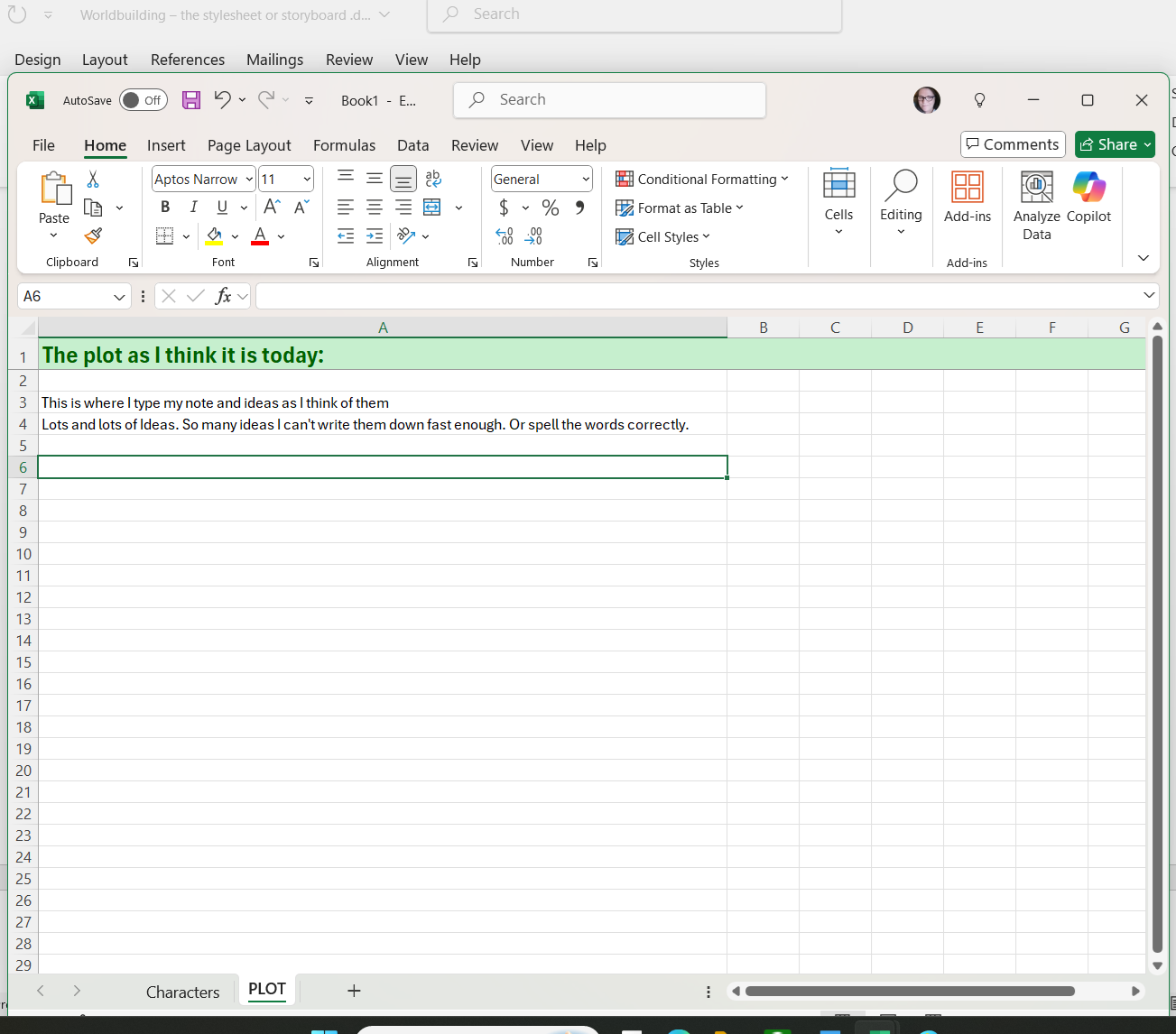
This is when I go back to square one. By seeing the whole picture of the story to this point, I usually find the inspiration to put together the final scenes that I know must happen. I sit down with a notebook (or, in my case, a spreadsheet) and make a list of what events must occur between the place where they escape the dungeon and the end. I save that document with a title, something like:

Valentines_Gambit _Final_Chpts_Worksheet_03-08-2025

At first, the page is only a list. The chapter headings are pulled out of the ether, accompanied by the howling of demons as I force my plot to take shape:

  • Chapter – Val drags Kai to a safe place. Discovery of the deaths of close friends.
  • Chapter – Donovan’s plan revealed.
  • Chapter – Evading Donovan’s bespelled soldiers.
  • Chapter – Discovering where Edward is being held
  • (and so on until the last event) Mage duel – ends when Kai casts a beginner’s spell to trip Donovan, and Val kills him.
  • Final chapter – Val and Kai reinstated as regents. Together they raise Edward to adulthood and he grows up to be a good, beloved king, Will they marry? It’s a romance, so yes, they will live as happily as people ever do.

I begin writing details that pertain to the section beneath each chapter heading as they occur to me. Once that list is complete, those sketchy details get expanded on and grow into complete chapters, which I then copy and paste into the manuscript.

So, let’s talk about the elephant in the room – what to do with scenes that no longer work now that we’re nearing the end. Something we all suffer from is the irrational notion that “if we wrote it, we have to keep it,” even though it no longer fits.

Let’s be honest. No amount of rewriting and adjusting will make a scene or chapter work if it’s no longer needed to advance the story. If the story is stronger without that great episode, cut it.

What you have written but not used in the finished novel is a form of world-building. It contributes to the established canon of that world and makes it more real in your mind. I urge you to save your outtakes with a file name that clearly labels them as background or outtakes. Not having to reinvent those useful sections will significantly speed up other projects.

Use the outtakes as fodder for a short story or novella set in that world. This is how prolific authors end up with so many short stories to make into compilations. It’s useful to know that with a few name changes, every side quest not used in the final manuscript can quickly be made into a short story.

Another good reason to save everything you cut in a separate document is this: I often reuse some of that prose later, at a place where it makes more sense.

That need to cut and rearrange is why I don’t number my chapters in the first draft. You may have noticed in the example above that I head each section with the word “chapter” (and no number) written out. I want to be able to find the word “chapter” with a global search when I do insert the numbers.

This is because (in my world) most first drafts are not written linearly. For me, the story arc changes structurally as I lay down that first draft, so chapter numbers become confusing. Nowadays, I put the numbers in when the manuscript has made it through the final draft and is ready for my editor.

Designing the ending is as challenging (and yet easy) as writing the opening scenes. It is so satisfying to write those final pages—one of the best feelings I have experienced as an author.

The sample plot that we have used for this series has a happy ending. This is because within the first five chapters, when we began writing our characters, it became a Romantasy and romance readers want happy endings.

Sometimes, we all want happy endings.

PREVIOUS IN THIS SERIES:

Idea to story, part 1: novel, poetry, memoir, or short story? #writing | Life in the Realm of Fantasy

Idea to story part 2: thinking out loud #writing | Life in the Realm of Fantasy

Idea to story part 3: plotting out loud #writing | Life in the Realm of Fantasy

Idea to story part 4 – the roles of side characters #writing | Life in the Realm of Fantasy

Idea to story part 5 – plotting treason #writing | Life in the Realm of Fantasy

11 Comments

Filed under writing

#FineArtFriday: a second look at ‘The Louvre, Morning, Spring’ by Camille Pissarro 1902

1902_Camille_Pissarro_Le_Louvre,_matin,_printempsArtist: Camille Pissarro  (1830–1903)

Title: French: Le Louvre, Matin, Printemps (English: the Louvre, morning, spring)

Date:1902

Medium: oil on canvas

Dimensions: height: 54 cm (21.2 in), width: 64.8 cm (25.5 in)

References: https://www.sothebys.com/en/buy/auction/2023/modern-evening-auction-5/le-louvre-matin-printemps

I first featured this painting last year, when I was desperate for a glimpse of spring. I’m feeling the same wish for color in the gray outdoor world, feeling as if spring can’t come too soon.

What I love about this picture:

This is the way spring begins, tentative and holding back as if gauging the audience before leaping to center stage. The style of brushwork lends itself to the misty quality of the pastels of March and early April.

This was one of Pissarro’s final works. It is a pretty picture, a simple scene not unlike one I might see here in the Pacific Northwest this weekend. We are supposed to see a sunny stretch tomorrow through Tuesday, a few days of warmth without rain. The flowering plum trees in my town are poised to burst forth, and we will take a long drive, soaking up the sunlight while we can.

As I said above, this is a pretty picture, not profound or revolutionary, not highbrow in any way. But sometimes, what the soul needs is a pretty picture featuring the beauty and serenity of a sunny day.

About the artist, via Wikipedia:

Jacob Abraham Camille Pissarro (10 July 1830 – 13 November 1903) was a Danish-French Impressionist and Neo-Impressionist painter born on the island of St Thomas (now in the US Virgin Islands, but then in the Danish West Indies). His importance resides in his contributions to both Impressionism and Post-Impressionism. Pissarro studied from great forerunners, including Gustave Courbet and Jean-Baptiste-Camille Corot. He later studied and worked alongside Georges Seurat and Paul Signac when he took on the Neo-Impressionist style at the age of 54.

In 1873 he helped establish a collective society of fifteen aspiring artists, becoming the “pivotal” figure in holding the group together and encouraging the other members. Art historian John Rewald called Pissarro the “dean of the Impressionist painters”, not only because he was the oldest of the group, but also “by virtue of his wisdom and his balanced, kind, and warmhearted personality”. Paul Cézanne said “he was a father for me. A man to consult and a little like the good Lord”, and he was also one of Paul Gauguin‘s masters. Pierre-Auguste Renoir referred to his work as “revolutionary”, through his artistic portrayals of the “common man”, as Pissarro insisted on painting individuals in natural settings without “artifice or grandeur”.

Pissarro is the only artist to have shown his work at all eight Paris Impressionist exhibitions, from 1874 to 1886. He “acted as a father figure not only to the Impressionists” but to all four of the major Post-Impressionists, Cézanne, Seurat, Gauguin, and van Gogh.

Founder of a Dynasty:

Camille’s son Lucien was an Impressionist and Neo-impressionist painter as were his second and third sons Georges Henri Manzana Pissarro and Félix Pissarro. Lucien’s daughter Orovida Pissarro was also a painter. Camille’s great-grandson, Joachim Pissarro, became Head Curator of Drawing and Painting at the Museum of Modern Art in New York City and a professor in Hunter College’s Art Department. Camille’s great-granddaughter, Lélia Pissarro, has had her work exhibited alongside her great-grandfather. Another great-granddaughter, Julia Pissarro, a Barnard College graduate, is also active in the art scene. From the only daughter of Camille, Jeanne Pissarro, other painters include Henri Bonin-Pissarro (1918–2003) and Claude Bonin-Pissarro (born 1921), who is the father of the Abstract artist Frédéric Bonin-Pissarro (born 1964).

The grandson of Camille Pissarro, Hugues Claude Pissarro (dit Pomié), was born in 1935 in the western section of Paris, Neuilly-sur-Seine, and began to draw and paint as a young child under his father’s tutelage. During his adolescence and early twenties he studied the works of the great masters at the Louvre. His work has been featured in exhibitions in Europe and the United States, and he was commissioned by the White House in 1959 to paint a portrait of U.S. President Dwight Eisenhower. He now lives and paints in Donegal, Ireland, with his wife Corinne also an accomplished artist and their children. [1]


Credits and Attributions:

IMAGE: Wikimedia Commons contributors, “File:1902 Camille Pissarro Le Louvre, matin, printemps.jpeg,” Wikimedia Commons, https://commons.wikimedia.org/w/index.php?title=File:1902_Camille_Pissarro_Le_Louvre,_matin,_printemps.jpeg&oldid=948378278 (accessed March 7, 2025).

[1] Wikipedia contributors, “Camille Pissarro,” Wikipedia, The Free Encyclopedia, https://en.wikipedia.org/w/index.php?title=Camille_Pissarro&oldid=1278793537 (accessed March 7, 2025).

3 Comments

Filed under #FineArtFriday

Idea to story part 5 – plotting treason #writing

We have been working on plotting a novel for the last month in our series, Idea to Story. The previous installments are listed below, but at this point we have our two main characters, Val (Valentine), a lady knight, and the enemy, Kai Voss, court sorcerer. Both are regents for the sickly, underage king.

I write fantasy, but every story is the same, no matter the set dressing: Protagonist A needs something desperately, and Antagonist B stands in their way. In this story, Valentine begins as our protagonist, and we are setting Kai up as the visible antagonist.

The plot as it stood last week: Twelve-year-old Edward has been steadily declining in health since the deaths of his parents. His bodyguards, led by Val, believe the court sorcerer has cursed him with a wasting illness. Edward’s other guardian, Kai, and his advisors believe Val is poisoning him.

Kai’s most trusted advisor is his older half-brother, Donovan Dove. Donovan is highly educated and an accomplished mage. However, his mother was a commoner and therefore not allowed to marry his father, so he has been relegated to supporting roles, such as tutoring his younger brother in all aspects of magic and the other gentlemanly arts as befits the heir to their father’s earldom. Their father appointed him as steward of their lands, so he is in charge of running the family estate while Kai is away from home doing his job of tending to the young king’s education.

Donovan is thirty-eight, exceptionally handsome and charming. He gambles well and rarely loses.

  • His nouns are passion, desire, and deceit. His modifiers (adjectives) are suave, worldly, courtly, enigmatic, and devious.
  • Donovan’s verbs are shape, create, mold, conceal, charm.

Donovan’s void is obsession and jealousy.

Our characters have told us what the plot is while we were creating them, by virtue of their personalities: their nouns, verbs, and voids. So, we’re going to allow them to continue telling us what the conflict is, and we will observe and create a framework, a series of guideposts to write to.

We will drop Val and Kai into the soup as soon as the main side characters are in place. We present them with a quest that appears to be the real one but is only a smoke screen concealing the true villain’s motives and allowing him to neatly get rid of them. This first quest gets the story moving and keeps the reader reading.

  • Regardless of genre or plot, this is the place where the characters are set on the path to their destiny.

For this story, we will use a four-act plot arc, dividing the story into quarters. The first act ends with the inciting incident.

The inciting incident is where the protagonists first realize they’re blocked from achieving the desired goal.  In this case, information has come to Val’s attention that someone highly trusted has cursed the young king with a wasting illness. She immediately suspects Kai and moves Edward to a safe place.

Kai has also received information from his most trusted source that Edward is being poisoned. His suspicions immediately fall on Val, whom he believes wishes to take the throne and rule as a warrior queen. When he discovers the king has been taken from the castle (kidnapped, as he believes), he rallies the soldiers loyal to him and mounts a search.

A roadblock arises, as both characters believe the other intends to kill Edward. Val and her soldiers are very good at what they do. Kai attempts to find a way around them, leading to another crisis scene and a stalemate.

The second act ensues with more action leading to more trouble, rising to a pitch when the hidden adversary springs his trap.

  • This is where personal weaknesses are exposed in our two main characters, offering the opportunity for growth.

The way I see this plot now, at the midpoint, both Valentine and Kai Voss are waking up in the dungeon and realizing they have been played by Donovan Dove.

Or, if they aren’t, they should be. After all, the struggle is the story.

Val immediately comprehends what just happened and finds a way to escape. Against her better judgement, she makes a spur of the moment decision to free Kai, who is still in shock. Only now is the mage discovering the magnitude of his brother’s betrayal.

This dungeon scene tells us what the plot needs to be from here onward, and what our true quest is: rescuing Edward before he dies from Donovan’s curse.

We must open each act with a strong scene, an arc of action that illuminates the characters, their wants and emotions. This allows the reader to learn things as the protagonist does. We have the chance to insert subtle clues regarding things the characters are not aware of, knowledge that will affect the plot.

The hints we offer at the beginning and through the first half of the book are important. Foreshadowing piques the reader’s interest and makes them want to know how the book will end. However, we want to keep the real villain and the depth of his villainy secret until the moment Kai and Val stumble into his trap.

Only then will the small clues that all is not as it appears make sense.

I work best when I create a broad outline of the story arc as the characters reveal it to me.  I also like to know how it will end so that I can write to that ending.

  • What moral (or immoral) choice will our protagonists have to make in their attempt to achieve their objective?
  • What happens at the first pinch point? How does the false information come to them?
  • How does Donovan keep his true motives secret until he has Val and Kai where he wants them?
  • How does Donovan dispose of the side characters who deliver the false information he has given them?
  • At the midpoint how is the health and emotional condition of Val and Kai?
  • How will Val and Kai set aside their animosity and learn to trust each other?
  • What is Donovan’s plan now that he has custody of the king?

At the ¾ point, Val and Kai should have gathered some resources and rallied their companions. They should be preparing to rescue Edward and planning how to face Donovan for the final battle.

Subplots should be introduced after the inciting incident has taken place. If you introduce them too soon, they can distract the reader, making for a haphazard story arc. In my opinion, side quests work best if they are presented once the tone of the book and the main crisis has been established, and only if they are necessary to the completion of the final, overarching quest.

How long do you plan the book to be? Take that word count and divide it by 4. Place the culmination of your first major event at the ¼ mark. The following two quarters are the middle. If you have set your first half action up right and have an idea of how the story should end, the middle and the ending should fall into place like dominoes.

PREVIOUS IN THIS SERIES:

Idea to story, part 1: novel, poetry, memoir, or short story? #writing | Life in the Realm of Fantasy

Idea to story part 2: thinking out loud #writing | Life in the Realm of Fantasy

Idea to story part 3: plotting out loud #writing | Life in the Realm of Fantasy

Idea to story part 4 – the roles of side characters #writing | Life in the Realm of Fantasy

6 Comments

Filed under writing

#FineArtFriday: a closer look at ‘History Painting, Titus (with self portrait)’ by Rembrandt Harmenszoon van Rijn 1626

History Painting, Titus (with self portrait of Rembrandt) by Rembrandt Harmenszoon van Rijn 1626

  • Artist: Rembrandt  (1606–1669) Rembrandt Harmenszoon van Rijn
  • Title: Historical Scene.
  • Inscriptions: Monogram and date bottom right: RH 16[2]6
  • Object type: painting
  • Genre: history painting
  • Depicted people: Titus
  • Date: 1626
  • Medium: oil on oak panel
  • Dimensions: Height: 89.8 cm (35.3 in); Width: 121 cm (47.6 in)
  • Collection:   Museum De Lakenhal

What I love about this Painting:

This is one of Rembrandt’s earliest history paintings. The young artist went all out to compose and execute this painting. I love the enthusiasm he had for this subject–he believed this painting would make his name as an artist.

Rembrandt scoured the city for props and found old armor and weapons. Then he dressed the players richly in the finest garments of his own day, so as to befit a beloved and respected emperor.

Wikipedia says: Rembrandt’s portraits of his contemporaries, self-portraits, and illustrations of scenes from the Bible are regarded as his greatest creative triumphs. His self-portraits form a unique and intimate biography, in which the artist surveyed himself without vanity and with the utmost sincerity.

The level of detail in the weaponry and richly worked garments is remarkable, as are the faces and features of each of the players. Emperor Titus is portrayed as slightly larger than life, noble, wise, and kind.

In the background, hidden by the scepter, we find Rembrandt himself, the witness who happened to come upon the scene and is looking on with wonder. Of the witnesses, he alone is shown dressed in the unadorned muted gray woolen clothing of a common man.

We know Rembrandt was well educated in history, and admired the Emperor Titus greatly, as he named his only surviving son after him.

About the Roman Emperor Titus, the Subject of this Painting (via Wikipedia):

Vespasian died of an infection on 23 June 79 AD, and was immediately succeeded by his son Titus. As Pharaoh of Egypt, Titus adopted the titulary Autokrator Titos Kaisaros Hununefer Benermerut (“Emperor Titus Caesar, the perfect and popular youth”). Because of his many (alleged) vices, many Romans feared that he would be another Nero. Against these expectations, however, Titus proved to be an effective Emperor and was well loved by the population, who praised him highly when they found that he possessed the greatest virtues instead of vices.

One of his first acts as Emperor was to order a halt to trials based on treason charges, which had long plagued the principate. The law of treason, or law of majestas, was originally intended to prosecute those who had corruptly “impaired the people and majesty of Rome” by any revolutionary action. Under Augustus, however, this custom had been revived and applied to cover slander and libel as well. This led to numerous trials and executions under TiberiusCaligula, and Nero, and the formation of networks of informers (Delators), which terrorized Rome’s political system for decades.

Titus put an end to this practice, against himself or anyone else, declaring:

“It is impossible for me to be insulted or abused in any way. For I do naught that deserves censure, and I care not for what is reported falsely. As for the emperors who are dead and gone, they will avenge themselves in case anyone does them a wrong, if in very truth they are demigods and possess any power.”

Consequently, no senators were put to death during his reign; he thus kept to his promise that he would assume the office of Pontifex Maximus “for the purpose of keeping his hands unstained.” The informants were publicly punished and banished from the city. Titus further prevented abuses by making it unlawful for a person to be tried under different laws for the same offense.  Finally, when Berenice returned to Rome, he sent her away.

As Emperor he became known for his generosity, and Suetonius states that upon realizing he had brought no benefit to anyone during a whole day, Titus remarked, “Friends, I have lost a day.” [1]


Credits and Attributions:

History Painting, Titus (with self portrait of Rembrandt) by Rembrandt Harmenszoon van Rijn 1626

[1] Wikipedia contributors, “Titus,” Wikipedia, The Free Encyclopedia, https://en.wikipedia.org/w/index.php?title=Titus&oldid=1275447925 (accessed February 28, 2025).

INSET IMAGE: Wikimedia Commons contributors, “File:Rembrandt Historical Painting 1626 (Detail, with self-portrait).jpg,” Wikimedia Commons, https://commons.wikimedia.org/w/index.php?title=File:Rembrandt_Historical_Painting_1626_(Detail,_with_self-portrait).jpg&oldid=694606337 (accessed February 28, 2025).

Comments Off on #FineArtFriday: a closer look at ‘History Painting, Titus (with self portrait)’ by Rembrandt Harmenszoon van Rijn 1626

Filed under #FineArtFriday

Idea to story part 4 – the roles of side characters #writing

We are designing a fantasy story, and we are going to write it for us, writing as freely as we want. We’re writing like no one will ever read it but us, so it will be our story, flowing from our vision.

So far, we have created our protagonist and the initial antagonist and have an idea of what their quest is.

We have discovered that our novel might be a Romantasy, as the enemies-to-lovers trope seems to be developing. Now, let’s look at the allies that help our characters as they each strive to fulfill their quest. These are the friends and supporters who enable them to achieve their goals.

The Writer’s Journey, Mythic Structure for Writers, by Christopher Vogler, details the various traditional archetypes that form the basis of most characters in our modern mythology, or literary canon.

The following is the list of character archetypes as described by Vogler:

  1. Hero: someone who is willing to sacrifice his own needs on behalf of others.
  2. Mentor: all the characters who teach and protect heroes and give them necessary gifts.
  3. Threshold Guardian: a menacing face to the hero, but if understood, they can be overcome.
  4. Herald: a force that brings a new challenge to the hero.
  5. Shapeshifters: characters who constantly change from the hero’s point of view.
  6. Shadow: a character who represents the energy of the dark side.
  7. Ally: someone who travels with the hero through the journey, serving a variety of functions, including that of sacrificial lamb.
  8. Trickster: embodies the energies of mischief and desire for change.

Side characters are essential, especially characters with secrets because they are a mystery. Readers love to work out puzzles. However, the job of the supporting cast is to keep the attention focused on the protagonist and the antagonist and their quest.

For that reason, I recommend keeping the number of allies limited. Too many named characters can lead to confusion in the reader. For the sake of simplicity, I am limiting the number of characters in each party to 3 trusted cohorts.

The quest is simple: Our protagonist and antagonist are co-regents of twelve-year-old King Edward. Both seek to keep him alive, but they have radically different ideas about his upbringing. Both believe the other is the cause of Edward’s wasting illness.’

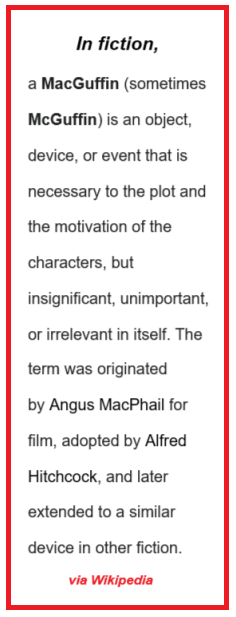
At this point in the planning process, Edward is a MacGuffin, and if he has a personality, it will emerge as time goes on. So, how does Val’s party line up?

  1. First is the ally who is also the trickster. This character is as yet unnamed, but they are the core of Val’s spy network and will be fun to write. This ally will also serve as the sacrificial lamb, bringing pathos into the story.
  2. Val’s second in command fills the role of paladin, a common fantasy character trope. He is a trusted officer in the royal guards. He does not trust the spy, bringing friction and mutual distrust into play and offering opportunities for our spy to vent his humor at the paladin’s expense.
  3. Val’s third ally is a healer, a woman who was young King Edward’s nurse when he was a baby. She also has the role of mentor when wisdom is required.

Our sidekicks are as yet unnamed, BUT we might have our novel made into an audiobook. Thus, we must consider ease of pronunciation when a name is read aloud.

Every core character that the protagonists are surrounded by should project an unmistakable surface persona, characteristics that a reader will recognize as unique from the outset.

Kai Voss will also have three trusted allies.

  1. Kai’s much older (illegitimate) half-brother is also a sorcerer and has long served as Kai’s mentor. He is also the Shadow, the suave, worldly character who subtly brings the energy of the dark side.
  2. Two soldiers have sided with Kai, both firmly believing they are the salvation of the young king. One is the paladin, a man who believes in honor and loyalty to the king and the traditions that he believes in.
  3. One soldier has the role of herald and will be the sacrificial lamb when he uncovers an uncomfortable truth.

From the moment they enter the story, we should see glimpses of weaknesses and fears. We should see hints of the sorrows and guilts that lie beneath their exterior personas. These characters are not the protagonist, so their backstory must emerge as a side note, a justification for their inclusion in the core group.

Old friends have long histories, and the protagonist knows most of their secrets at the outset—but perhaps not all. Unspoken secrets will emerge only at critical points if and when they affect the protagonist or antagonist, and only if they  provide the reader with information they must know.

If these friends are new to the protagonist, their stories should emerge in the form of information needed to complete the quest.

In real life, everyone has emotions and thoughts they conceal from others. Perhaps they are angry and afraid, or jealous, or any number of emotions we are embarrassed to acknowledge. Maybe they hope to gain something on a personal level. If so, what? Small hints revealing those unspoken motives are crucial to raising the tension in the narrative.

As writers, our task is to ensure that each character’s individual story intersects smoothly and doesn’t jar the reader.

To do that, the motivations of the side characters must be clearly defined. You must know how the person thinks and reacts as an individual.

Ask yourself what deep desires push this character onward? Just as you have done with the hero of your story, ask yourself what the side characters’ moral boundaries are and what actions would be out of character for them?

  • Write nothing that seems out of character unless there is a good, justified reason for that behavior or comment.

We want to create empathy in the reader for the group as a whole, but we want to keep the pace of the plot arc moving forward.

Certain plot tricks function well across all genres, from sci-fi to romance, no matter the setting. In most novels, one or more characters are “fish out of water” in that they are immediately thrust into an unfamiliar and possibly dangerous environment.

In our current manuscript, it is our antagonist, Kai Voss, who will be thrust into the unknown by a traitor acting on their secret agenda, and we will talk about that in our next installment.

7 Comments

Filed under writing

#FineArtFriday: Starry Night Over the Rhone by Vincent van Gogh 1888 

Artist: Vincent van Gogh  (1853–1890)

Title:  Starry Night Over the Rhone

Genre: landscape painting

Date:1888

Medium: oil on canvas

Dimensions: height: 720 mm (28.3 in)

Collection: Musée d’Orsay 

Exhibition history: Van Gogh and Britain, Tate Britain


What I love about this painting:

Vincent’s night sky is shown with reverence, the vault of heaven above shining the light of hope over the darkness of the world below. His colors are dark and intense, yet bright where light is needed—a kind of purity in execution that was one of his gifts.

In April of 2022, Fellow writer, Johanna Flynn and Greg and I joined friends to attend an immersive exhibit of Vincent van Gogh’s life through his work. We roamed freely inside an everchanging exhibit that flowed through many of his most famous works and zoomed in on bits one wouldn’t ordinarily notice.

The classical soundtrack was the perfect accompaniment. For several hours, we were immersed in Vincent’s visions of the world he loved but didn’t fit in.

The exhibit was such a moving, emotional experience. I felt as if I had seen into the man and his art.

That day, I became a Vincent van Gogh fangirl.

Vincent’s stars are surreal, yet they show the truth of how he saw the world.

About this painting, via Wikipedia:

Van Gogh announced and described this composition in a letter to his brother Theo:

Included a small sketch of a 30 square canvas – in short the starry sky painted by night, actually under a gas jet. The sky is aquamarine, the water is royal blue, the ground is mauve. The town is blue and purple. The gas is yellow and the reflections are russet gold descending down to green-bronze. On the aquamarine field of the sky the Great Bear is a sparkling green and pink, whose discreet paleness contrasts with the brutal gold of the gas. Two colorful figurines of lovers in the foreground.

In reality, the view depicted in the painting faces away from Ursa Major, which is to the north. The foreground indicates heavy rework, wet-in-wet, as soon as the first state was finished. The letter sketches executed at this time probably are based on the original composition.

Colors of the night

The challenge of painting at night intrigued van Gogh. The vantage point he chose for Starry Night allowed him to capture the reflections of the gas lighting in Arles across the glimmering blue water of the Rhône. In the foreground, two lovers stroll by the banks of the river.

Depicting colour was of great importance to Vincent; in letters to his brother, Theo, he often described objects in his paintings in terms of colour. His night paintings, including Starry Night, emphasize the importance he placed on capturing the sparkling colors of the night sky and of the artificial lighting that was new to the era.

The Great Bear

In September 1888, when Vincent van Gogh painted this picture on the banks of the Rhône, he saw the city of Arles looking south-west. The Great Bear will never be visible in that direction. On the other hand, he only had to turn his head to the north to see the constellation in exactly the position depicted. This painting is therefore an assemblage of a terrestrial plane and a celestial plane.

The Star Flowers

In 1888, when he painted the night sky, the stars resemble flowers. By the time he painted The Starry Night in 1889, his technique has evolved, the brightness of the stars being symbolized by concentric dotted circles. [1]

About the Artist, via Wikipedia:

Vincent Willem van Gogh, 30 March 1853 – 29 July 1890) was a Dutch Post-Impressionist painter who posthumously became one of the most famous and influential figures in Western art history. In a decade, he created about 2,100 artworks, including around 860 oil paintings, most of which date from the last two years of his life. They include landscapes, still lifes, portraits, and self-portraits, and are characterised by bold colours and dramatic, impulsive and expressive brushwork that contributed to the foundations of modern art. He was not commercially successful, struggled with severe depression and poverty, and committed suicide at the age of 37.

Van Gogh was born into an upper-middle-class family, While a child he drew and was serious, quiet and thoughtful. As a young man he worked as an art dealer, often traveling, but became depressed after he was transferred to London. He turned to religion and spent time as a Protestant missionary in southern Belgium. He drifted in ill health and solitude before taking up painting in 1881, having moved back home with his parents. His younger brother Theo supported him financially; the two kept a long correspondence by letter. His early works, mostly still lifes and depictions of peasant labourers, contain few signs of the vivid colour that distinguished his later work. In 1886, he moved to Paris, where he met members of the avant-garde, including Émile Bernard and Paul Gauguin, who were reacting against the Impressionist sensibility. As his work developed he created a new approach to still lifes and local landscapes. His paintings grew brighter as he developed a style that became fully realised during his stay in Arles in the South of France in 1888. During this period he broadened his subject matter to include series of olive trees, wheat fields and sunflowers.

Van Gogh suffered from psychotic episodes and delusions, and though he worried about his mental stability, he often neglected his physical health, did not eat properly and drank heavily. His friendship with Gauguin ended after a confrontation between the two when, in a rage, Van Gogh severed a part of his own left ear with a razor. He spent time in psychiatric hospitals, including a period at Saint-Rémy. After he discharged himself and moved to the Auberge Ravoux in Auvers-sur-Oise near Paris, he came under the care of the homeopathic doctor Paul Gachet. His depression persisted, and on 27 July 1890, Van Gogh is believed to have shot himself in the chest with a revolver, dying from his injuries two days later. [2]


Credits and Attributions:

IMAGE: Wikimedia Commons contributors, “File:Starry Night Over the Rhone by Vincent van Gogh, ‘lightballs’.jpg,” Wikimedia Commons, https://commons.wikimedia.org/w/index.php?title=File:Starry_Night_Over_the_Rhone_by_Vincent_van_Gogh,_%27lightballs%27.jpg&oldid=979586430 (accessed February 21, 2025).

[1] About this Painting via Wikipedia: Wikipedia contributors, “Starry Night Over the Rhône,” Wikipedia, The Free Encyclopedia, https://en.wikipedia.org/w/index.php?title=Starry_Night_Over_the_Rh%C3%B4ne&oldid=1272866843 (accessed February 21, 2025).

[2] About the artist:  Wikipedia contributors, “Vincent van Gogh,” Wikipedia, The Free Encyclopedia, https://en.wikipedia.org/w/index.php?title=Vincent_van_Gogh&oldid=1276412810 (accessed February 21, 2025).


3 Comments

Filed under #FineArtFriday, writing

Idea to story part 3: plotting out loud #writing

Last week’s post, Idea to story, part 2: thinking out loud #writing, discussed how plots evolve as I design the main characters for a story. Our two main characters are Val (Valentine), a lady knight, and the enemy, Kai Voss, court sorcerer. Both are regents for the sickly, underage king.

The plot as it stood last week: Kai Voss has tired of being merely a co-regent. Twelve-year-old Edward has been steadily declining in health since the deaths of his parents. His bodyguards, led by Val, believe the sorcerer is the cause. This idea of the plot will evolve as we get to know our bad boy better.

At this point in our ruminations, we think we’re writing a novel, but we won’t know the final length until we’re much further along in this process.

Today, we’re going to design the plot for Val and Kai Voss’s story.

You’ll note that I say it is also the antagonist’s story. I say this because his story is why Val has a quest. So, today, we’re going to do a little more thinking out loud. Let’s take the notebook and the pencil out to the balcony and let Val’s story ferment a bit.

We had a good look at Val last week, so now we’ll meet and get to know Kai Voss. I know it seems backwards, but this is how I work. Good villains are the fertile soil from which a great plot can grow. Once we know who he is and how he thinks, we can help him make plans to stop Val and her soldiers.

First, I assign nouns that tell us how he sees himself at the story’s outset. I also look at sub-nouns and synonyms, which means I must put my thesaurus to work. The sorcerer’s nouns are bravado (boldness, brashness), daring, and courtliness

Our lad is definitely a charmer.

Kai also has verbs that show us his gut reactions: defend, fight, desire, preserve.

You will note the word defend is the lead verb in Kai’s description. What must he defend, and how does Valentine threaten him? At the age of sixteen, Val ran away from an arranged marriage, abandoning a woman’s traditional role. As such, Kai believes she is a bad influence on all the women she comes into contact with.

As we flesh out his character, we realize that he fears what Val’s very existence represents—a woman who escaped being forced into marriage and who successfully makes her own way in the world. Now thirty-five, she is captain of the royal guard and is a co-regent of the young, sickly king. Most importantly, her advice has a substantial impact on the young king, who sees her as a mother figure.

Kai is also thirty-five and while he has never found the right time for marriage, he feels compelled to defend the traditional roles of male supremacy. He must preserve what he believes is best for the young king and, through him, the country.

As you can see, the plot idea has already changed, veering away from a simple good vs. evil hero’s journey. I am finally realizing what kind of story is really trying to emerge.

  • By golly, I think we have fodder for an enemies-to-lovers romance here.

A character’s preconceptions color their experience of events. We see the story through their eyes, which colors how we see the incidents.

  • Val is a commoner who came up through the ranks of the royal guard and found favor with the young king’s parents. She has a great deal of disdain for the feckless nobility that inhabits the court and Kai can sense it. Her goal is to keep young King Edward alive and raise him to have compassion even for the least of his subjects.
  • Kai is a privileged noble with no idea of how the ordinary people really live. He also has one more noun, one that overrides all the others and informs his subsequent actions: fear. Kai’s goal is the same as Val’s, which is to keep young Edward alive, and failing that, to make sure the traditional ways continue.

However, Kai sees a dark future and must teach Edward the values of his ancestors, to ensure that the nobility retains their rights of absolute power.

He believes that the peasantry must be guided by their betters and will be cared for by the nobility. After all, his family treats their serfs well, so he is under the impression that the other lords also act fairly. Fear of what the future holds for the country means he must also position himself to step into the role of king if Edward dies of his wasting illness.

Our characters are unreliable witnesses. The way they tell us the story will always gloss over their own failings. The story moves ahead each time they are forced to rise above their weaknesses and face what they fear.

What are their voids? What words describe the primary weaknesses of your characters, the thing that could be their ultimate ruin?

Val – Arrogance, pigheadedness, and fear of being tied to a brute.

Kai Voss – Arrogance, obsession, and a misplaced sense of honor.

Now that we know our two characters share some of the same flaws, we can set them both up for some hard lessons in reality. What those lessons are will emerge as we progress.

But now I know that, in the end, they will find common ground, as the true enemy has been hiding in plain sight all along, pulling their strings.

In the next installment of this series, we’ll look at plotting the side characters. We’ll discuss the ways they can be used, not only to deliver needed information and provide moments of humor, but in other, more nefarious ways as well.

I know we haven’t delved into designing how Kai’s sorcerous skills work or explored Val’s ability in the martial arts. Trust me, we will get there before we wind up this series.

6 Comments

Filed under writing