#FineArtFriday: The Lamentation by Michiel Sweerts  

Michiel Sweerts:  The Lamentation

Date:   between 1643 and 1661

Medium:          Etching and engraving on paper

Dimensions:    Height: 28.7 cm (11.2 ″); Width: 34.6 cm (13.6 ″)

About the technique of Etching (From Wikipedia):

Etching is traditionally the process of using strong acid or mordant to cut into the unprotected parts of a metal surface to create a design in intaglio (incised) in the metal. As a method of printmaking, it is, along with engraving, the most important technique for old master prints, and remains in wide use today.

In traditional pure etching, a metal (usually copper, zinc or steel) plate is covered with a waxy ground which is resistant to acid. The artist then scratches off the ground with a pointed etching needle where he or she wants a line to appear in the finished piece, so exposing the bare metal. The échoppe, a tool with a slanted oval section, is also used for “swelling” lines. The plate is then dipped in a bath of acid, technically called the mordant (French for “biting”) or etchant, or has acid washed over it. The acid “bites” into the metal (it dissolves part of the metal) where it is exposed, leaving behind lines sunk into the plate. The remaining ground is then cleaned off the plate. The plate is inked all over, and then the ink wiped off the surface, leaving only the ink in the etched lines.

Etchings were, in the 17th century, the way an artist could ensure his work was seen by the growing middle-class who would otherwise be unable to afford art for their homes. Once an artist mastered the technique, it was the most reliable way to earn money from his work.

About the artist, via Wikipedia:

Michiel Sweerts was born in Brussels where he was baptized on 29 September 1618 in the St. Nicholas Church as the son of David Sweerts, a linen merchant, and Martina Ballu.  Little is known about the artist’s early life and nothing about his training.

The surviving works by Sweerts mostly date to the period of his residence in Rome. Due to the difficulty of attributing works to the artist who rarely signed his works the number of canvases given to the artist vary from 40 to 100. Some of Sweerts’ works were so popular in his time that contemporary copies were made, some by Sweerts himself, others by pupils or followers. It is not always easy to determine the level of Sweerts’ involvement (if any) in the making of these copies. For instance, there exist at least four early copies, of varying quality, of his Artist’s studio with a woman sewing (one copy at the Collection RAU – Fondation Unicef, Cologne). None of his paintings produced after he left Europe is known to survive.

The majority of his output falls into two categories: ‘genre scenes” of low-life subjects of country and street life and portraits or tronies. A third category are allegorical works, which are regarded as enigmatic and are the subject of ongoing interpretation by art historians. Sweerts reportedly painted compositions of Biblical subjects, several of which are mentioned in contemporary inventories. However, none of these are known to have survived. One of his religious paintings, a Lamentation is known from the print, which Sweerts himself made after his own painting. The composition is unusual for the Virgin’s comforting gesture towards the inconsolable Mary Magdalene.

Sweerts is an enigmatic and difficult artist to categorise, since he absorbed a variety of influences to create an eclectic style that adapted Netherlandish genre painting to early tenebrist styles as well as blended Baroque and classicist tendencies.

By December 1661 Sweerts had arrived in Marseilles from where his ship left for Palestine in January 1662.  Sweerts sailed for Alexandretta with bishop François Pallu, 7 priests and another lay brother. In Syria he is said to have produced some paintings. On the overland portion of the trip in Syria he became mentally unstable and was dismissed from the company somewhere between Isfahan and Tabriz in Persia. He then traveled on to the Portuguese Jesuits in Goa where he is reported to have died at the age of 46.


Credits and Attributions:

Wikipedia contributors, “Etching,” Wikipedia, The Free Encyclopedia, https://en.wikipedia.org/w/index.php?title=Etching&oldid=887368691 (accessed March 29, 2019).

Wikipedia contributors, “Michiel Sweerts,” Wikipedia, The Free Encyclopedia, https://en.wikipedia.org/w/index.php?title=Michiel_Sweerts&oldid=850063690  (accessed March 29, 2019).

Wikimedia contributors, “Michiel Sweerts,”  https://en.wikipedia.org/wiki/File:Michiel_Sweerts_-_The_lamentation.jpg (accessed March 29, 2019)


Comments Off on #FineArtFriday: The Lamentation by Michiel Sweerts  

Filed under #FineArtFriday

Formatting your paragraphs #amwriting

When we finish writing a short story, we feel the urge to immediately submit it to an anthology, a magazine, or contest. This urge can be overwhelming, but don’t do that just yet.

Set your manuscript aside for a week or so then come back to it and revise it.

Have the “Read Aloud” function of your word processing program read it to you as you go over it and look for editable flaws.

Check for words that spell check won’t find because they are spelled correctly but are wrong, little things such as “They went their for breakfast.”

Next, we want to format it for submission, which is a process with several steps, all of which are important. It is a bit too long for one post, so I am dividing it into digestible chunks and will finish this series next week.

First, you must look for extra spaces in odd places. They are most frequently found at the end of sentences. Nowadays, publishers and editors want one (1) space after each sentence. When I was learning to type in school, they taught us to hit the space bar twice (two spaces) after each sentence, but this is no longer acceptable as the extra spaces interfere with formatting for eBooks and other electronically uploaded applications. Other than at a few specialty printers, ALL books and magazines are uploaded electronically nowadays, even print books.

Tabs – I feel it’s important to revisit this subject, as I have seen many manuscripts where authors used the tab key to indent their paragraphs.

Using tabs to indent paragraphs screams “amateur.” The indents fail when the ms is uploaded to a mobi or ePub file, so publishers really hate it when this happens. Ninety percent of publications and publishing houses want electronic submissions. For this reason, make sure you have removed the tabs before you go any further with your manuscript. The following instructions only work if you have a ten-key pad on your keyboard.

To remove tabs from a manuscript in Word or most other word-processing programs, open the “Find” box (under “Edit” in Word). In the “Find” field, type in ^t. (press the alt key 94 to make ^ and key the t) This only works if you have a ten-key (number pad) at the right side of your keyboard. ^t.

Then click “Replace.” In this field, type nothing. One click on “Replace all” will remove every tab.

That will leave you with no indents whatsoever.

If you don’t have a ten-key pad on your keyboard, you will have to remove each one by hand which is a daunting task no publisher or editor has time for.

Once the tabs are all removed, the following instructions will help you format paragraphs.

You want your work to look professional, even if you are only submitting it to your writing group for a critique. You can format the paragraphs two ways.

The easiest way is to open the “home” tab, click on “select all,”  and choose “normal” from the “styles” tab on the ribbon.

 If your word processing program doesn’t have that option, you can format the paragraphs by using the simple formatting tool:

Step 1: On the home tab, look in the group labeled ‘Paragraph.’ On the lower right-hand side of that group is a small grey square. Click on it.  A pop-out menu will appear, and this is where you format your paragraphs.

Step 2: On the indents and spacing tab of the menu: Use standard alignment, align LEFT. The reason we use this format is we are not looking at a finished product here. We are looking at a rough draft that will be sliced, diced, and otherwise mutilated many times before we get to the final product.

Step 3: Indentation: leave that alone or reset both numbers to ‘0’ if you have inadvertently altered it.

Step 4: Where it says ‘Special’: on the drop-down menu select ‘first line.’ On the ‘By’ menu, select ‘0.5.’ (Some publishers will specify a different number, 0.3 or 0.2, but 0.5 is standard.)

Step 5: ‘Spacing’: set both before and after to ‘0.’

Step 6: ‘Line Spacing’: set to ‘double.’

To summarize, standard paragraph format has:

  • margins of 1 inch all the way around
  • indented paragraphs with no extra space between
  • double-spaced text
  • Align Left. This is critical.

Do not justify the text. In justified text, the spaces between words, and letters (known as “tracking”) are stretched or compressed. Justified text aligns with both the left and right margins. It gives you straight margins on both sides, but this type of alignment only comes into play when a manuscript is published, and at that point, the publisher will handle the formatting.

On Monday, we will look at the next step of formatting our manuscript—that of making it “submission ready.”

11 Comments

Filed under writing

Gaining strength through rejection #amwriting

We who are authors and artists are notoriously thin-skinned. When we are young in the profession and still consider our works to be the equivalent of our perfect children, we bleed profusely when you admit you didn’t really enjoy what we wrote (or sang, or painted). Some of us handle this kind of conversation with grace and dignity, and others not so well.

But what if the unloved thing was the best thing we ever wrote?

It does happen.

I get ten rejections at least for every one acceptance, but usually many more. I get so many that I hardly even notice them nowadays. I just keep the revolving door revolving. After all, if you don’t submit your work, you won’t get any acceptances.

When I first began shopping my work out, I would feel crushed upon receiving a rejection. However, when I look back at those efforts, I can clearly see why those particular pieces weren’t accepted.

First, I had no idea what a finished manuscript should look like. The internet wasn’t a thing yet, and I hadn’t heard of William Shunn or his instructions for how to properly format a manuscript. I knew my finished story had some problems, but I didn’t understand what those problems were or how to resolve them. I naively assumed an editor would fix them, because that’s what editors do, right?

Wrong.

I wasn’t as well educated as I thought I was. Typos, dropped and missing words, long, convoluted sentences, and hokey dialogue—all found their way into my first efforts.

I began to get past that stage when I found Orson Scott Card’s book, “How to Write Science Fiction and Fantasy.”

I still didn’t understand everything, or even most of anything. But I was on the road to learning more about what I didn’t know. Books on the craft of writing began to fill my shelves, and I took classes and went to seminars.

Nowadays my work is submission ready and as clean as I can make it. Sometimes my work is accepted, and believe me, I celebrate. Most of the time it is rejected, and not because it is bad. Most of the time, rejection means that I submitted something that wasn’t what the editor was looking for.

Editors usually have a certain kind of story in mind when they put out an open call, and only a few of the landslide of submissions will be accepted. Those that are accepted are the few that perfectly fit the editor’s original concept.

What I’m going to say next has been said before, many times. Sometimes we receive a form letter rejection that boils down to “Sorry, but no.” It isn’t personal, so don’t brood over it. Those kinds of rejections are bad only because they don’t tell us why the piece wasn’t acceptable.

Sometimes we receive a little encouragement: “Try us again.” That means exactly what it says, so the next time you have something you think will fit in that anthology or magazine, send them a submission.

I know this makes no sense, but when an editor explains their reasoning in a letter, it is very likely that some phrase will be like a knife to the chest for the author. This is because it’s a rejection and may contain detailed criticism.

I once got a rejection from an anthology along with a note that said the subject of my quest had been done before. I was a little surprised and hurt because I felt that comment was vague and meant they didn’t even bother to read the story.

I could have responded childishly, but that would have been foolish and self-defeating. The truth was the type of quest it involves has been done before. I felt that my story was original in its presentation, but it didn’t ring that editor’s bells.

I hauled myself off to a corner and licked my wounds. Then, I sent that editor a response thanking them for their time. An editor’s bluntness is valuable, so I will someday rework that tale with a different twist.

We live in a world that is always observing us. We are judged by the way we act and react in every professional interaction. If you’re in a writing group and your work isn’t as well received as you thought it would be, don’t respond to a peer’s criticism without thinking it through.

Even worse, if you fly off and send a flame mail to an editor, you risk doing irreparable damage to your career—you will be put on that editor’s “no way in hell” list.

Also, please don’t go bad-mouthing that editor on Twitter or Facebook. All that drama is just plain embarrassing, and unprofessional.

It’s easy to forget that editors are also authors. They are involved with the same forums in all the many social platforms you are, so be careful of what you say online. Editors are just like the rest of us, and they’ve experienced their share of rejection.

When an author has a public tantrum, the innocent bystanders remember it. Snide tweets about other authors, awkward Instagram photos, or Facebook rants don’t show a person in a good light.

I shouldn’t have to remind anyone of this, considering all the noise about Facebook and our personal information, but how we interact online with others is public information and is visible to the world.

We must always consider what an interested reader will find when they  Google our author name. Our online interactions at Goodreads, Twitter, and in every other public forum will be available for eternity.

What should you do if your work is accepted, but the editor would like a few revisions?

If the editor wants changes, they will make clear what they want you to do. This happens most often for submissions to an anthology. Editors know what their intended audience wants.  Trust that the editor knows their business.

Make whatever changes they request.

Never be less than gracious to any of the people at a publication when you communicate with them, whether they are the senior editor or the newest intern. Be a team player and work with them.

Negative feedback is a necessary part of growth. I keep a file of my rejection letters/emails. Most are simple: “We are not interested in this piece at this time.” Some have short notes attached with the words, “Try us again in the future.” Some contain the details of why a piece was rejected, and while those comments are sometimes painful, they are the ones I learn from.

Rejection is the most common kind of response an author will receive, sometimes for years. How we react to it is where each of us has the opportunity to cross the invisible line between amateur and professional. My next post will be on making your short-story manuscript “submission ready.”

5 Comments

Filed under writing

#FineArtFriday: Don Quixote in the Library by Adolf Schrödter, revisited

Today we are revisiting area of art which has often been a primary reason why I buy books, the illustrations. This post was first published here on August 3, 2018. The above image is one I love, a scene from  one of my favorite books. Don Quixote is a character that is near to my heart.

The artwork that went into many books in the 19th and early 20th centuries was sometimes exquisite. Yet, these illustrators remained unknown for the most part and unsung. Today’s image is from Wikimedia Commons and is by a German artist, Adolf Schrödter.

Little is known about Schrödter other than he was born on June 28, 1805, and died Dec. 9, 1875, and was a genre painter of the Düsseldorf school of painting. According to Wikipedia, the Fount of All Knowledge:

The Düsseldorf School had a significant influence on the Hudson River School in the United States, and many prominent Americans trained at the Düsseldorf Academy and show the influence of the Düsseldorf School, including George Caleb BinghamDavid Edward CroninEastman JohnsonWorthington WhittredgeRichard Caton WoodvilleWilliam Stanley HaseltineJames McDougal HartHelen Searle, and William Morris Hunt, as well as German émigré Emanuel LeutzeAlbert Bierstadt applied but was not accepted. His American friend Worthington Whittredge became his teacher while attending Düsseldorf.

However, some of Schrödter’s art survives in the form of illustrations and a few prints have been sold at auctions.

In today’s image what impresses me is the level of detail. Here we see Alonso Quixano reading, lounging in a room that is clearly a book lover’s sanctuary. He is a descendant of the family of “Gutierre Quijada” by direct lineage and is proud to be part of a long and noble tradition of knights. In the first part of the book, Alonso, later Don Quixote de la Mancha, is a dreamer, preferring to imagine himself as a superhero, living out a knightly story.

Books are strewn everywhere, beautiful, heavy leather-bound tomes. Schrödter shows him in a relaxed pose, deep into a book. The light of the room comes from a large window. He is a very human, ordinary middle-aged man, relaxing in the most cherished place in his universe: his library.

Alonso Quixano, the protagonist of the novel (though he is not named until much later in the book), is a retired country gentleman nearing fifty years of age, living in La Mancha with his niece and housekeeper. Although he is mostly a rational man, his excessive reading of books of chivalry has produced a skewed view of reality and what we might consider dementia. In keeping with the theories of the time, not sleeping adequately—because he was reading—has caused his brain to dry.

I love that notion.

As a result, Alonso is easily given to anger and believes every word of these fictional books of chivalry to be true. Don Quixote’s niece commits, what is to me, the most heinous crime–she and the Parrish curate burn his library, and lie to him, telling him it was the work of an evil magician.

He descends completely into his fantasy world and decides to become a knight-errant in search of adventure. Schrödter has captured the essence of the making of Don Quixote in this painting—the man who loves books is in his element, the one place where he fits. When that is taken from him, the story begins.


Credits and Attributions:

Don Quixote in the Library, by Adolf Schrödter, 1834 PD|100, via Wikimedia Commons.

Wikipedia contributors, “Düsseldorf school of painting,” Wikipedia, The Free Encyclopedia, https://en.wikipedia.org/w/index.php?title=D%C3%BCsseldorf_school_of_painting&oldid=822264175 (accessed August 3, 2018).

Comments Off on #FineArtFriday: Don Quixote in the Library by Adolf Schrödter, revisited

Filed under writing

The Short Story: Need, Limits, and Theme #amwritng

When writing a short story, it helps to know how it will end. I suggest you put together a broad outline of your intended story arc. I’m a retired bookkeeper, so I have a mathematical approach to this. Divide your story arc into quarters, so you have the important events in place at the right time.

Assume you have a 4000 word limit for your short story.

You have less than three paragraphs before a prospective editor sets your work aside. If those paragraphs don’t grab her, she won’t buy your story. Pay attention: you absolutely must have a good opening paragraph.

The first 250 words are the setup and hook. The next 750 words takes your character out of their comfortable existence and launches them into “the situation” –will they succeed or not?

The next 2,500 words detail how the protagonist arrives at a resolution.

The final 500 words of your story are the wind-up. You might end on a happy note or not—it’s your story, but no matter what else you do, in a short story, nothing should be left unresolved. For this reason, I feel subplots should not be introduced into the short story unless they directly advance the larger story. You need to use every word you are allowed to make that story the one the publication’s editor can’t put down.

I am a plotter, so I write my short works to an outline. However, I will deviate from my original plot if I have an idea that works. I need that structure when I begin writing, or my plot will stall, and the story will never be completed. When I don’t know how the story will end, the plot wanders all over the place, and I have a story that will garner a pile of rejections.

Theme is an essential tool for writing a coherent short story, and many anthologies are themed. When you assemble your outline, ask yourself these questions:

  • What will be your inciting incident? How does it relate to the theme?
  • What is the goal/objective? How does it relate to the theme?
  • At the beginning of the story, what could the hero possibly want to cause him to risk everything to acquire it?
  • How badly does he want it and why?
  • Who is the antagonist?
  • What moral (or immoral) choice is the protagonist going to have to make in his attempt to gain that objective?
  • What happens at the first pinch point?
  • In what condition do we find the group at the midpoint?
  • Why does the antagonist have the upper hand? What happens at the turning point to change everything for the worse?
  • At the ¾ point, your protagonist should have gathered his resources and companions and should be ready to face the antagonist. How will you choreograph that meeting?
  • How does the underlying theme affect every aspect of the protagonists’ evolution in this story?

What narrative mode will you use? Who is the best person to tell the story? One of my favorite short stories to write, Thorn Girl, is in the forthcoming anthology, Swords, Sorcery, and Self-rescuing Damsels. I could easily have told her story in third omniscient POV, but I had a compelling main character with a real, gut-wrenching story.

Originally, I tried to write her tale in my usual narrative mode of Third Person. As I worked, that mode didn’t feel as close, as intimate as I wanted.

My MC had to tell her own story.

The theme was a good theme, but it was a challenge to write something original and not overdone. It was an excellent opportunity to think wide.

In the first draft, there were several places that I thought were the beginning. As always, I had difficulty deciding where the story actually began. After reading that first draft, my writing group pointed out that the narrative had to begin at the point of no return, as there is no room for backstory.

I tossed out the first half of the original story and begin at what I had originally thought was the middle. That was when things began to fall together.

What did my character actually know? Realistically, she could only know what she witnessed.

I spent some time figuring out what she really could have witnessed or overheard, and then worked only with that information.

What did my protagonist want? At first glance, it seemed obvious, but the purported quest was only an impetus, a prod to move her down the path she needed to travel. Her true quest was to find herself as a human being, as much as it was to honor a promise made and quickly regretted.

What was she willing to do to achieve it? I didn’t know. She didn’t know either, and until I wrote the last line, I didn’t know what she was capable of or if she had the backbone to accomplish it.

Short stories are a real training ground for authors because words must be rationed. Writing short stories forces me to consider how my limited number of words can be used to their best advantage. It requires me to tell a large story using a limited number of words carefully chosen for their impact. Word choice and sentence structure must convey a massive amount of information: mood, atmosphere, setting, hints of backstory – all packed into a finite space that is already occupied by knowable characters, a coherent plot, and an ingenious resolution.

I try to keep conciseness and creative word choice in mind when writing longer works.

To wind this rant up, need drives the short story, theme stitches it together, and word-count limits force concise storytelling.

10 Comments

Filed under writing

The Author’s Superpower #amwriting

The world around you is filled with ordinary people, each going about their ordinary business, working ordinary jobs. When you meet these accountants, homemakers, engineers, programmers, and baristas, you would never know that among them are a few with a dark secret—they are possessed of dual superpowers.

What incredible feats are they capable of? Unfortunately, unless they are Doctors,  First Responders, Firefighters, or Astronauts, their dual powers are not likely to visibly shake the world.

But their powers do bring change, working subtly, opening minds to possibilities hitherto unconsidered.

They are authors. When no one is looking, they create entire worlds, fill them with people, cultures, political systems, religions, and with each paragraph they write, they start these worlds spinning.

The first superpower is the gift of “what if.” What if” is an ability latent in all sentient creatures, but only storytellers seem able to tap into it at will. This is the author’s first superpower, but it is useless without the second gift.

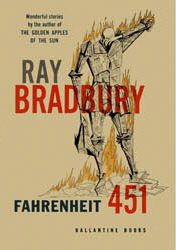
A moment of “what if” was the spark that started the fire in Ray Bradbury’s Fahrenheit 451.

What if” started Bilbo Baggins down the road to the Lonely Mountain in The Hobbit.

Many people have that nagging idea, that moment of “what if,” but few also have the other gift, the “power of perseverance.” While many will imagine, and many will begin to write, few will go to the trouble of finishing their book.

Imagination and perseverance are the author’s superpowers.

They are the gifts of the few who have the determination, the will to learn the craft of writing so that their moment of “what if” can become a reader’s moment of “You have to read this book!”

So, you have the imagination, and you believe you might also have the perseverance. You have a book about to burst from you, and you want to get it right. What do you do? Every superpower must be trained, or who knows what havoc you could wreak?

HOW TO TRAIN YOUR SUPERPOWERS:

  1. Write new words every day. Revise old words as needed.
  2. Read books that inspire you.
  3. Read books you hate.
  4. Dissect books to discover what makes them great or awful.
  5. Write new words every day. Revise old words as needed.
  6. Go to writers’ conferences if you can.
  7. Attend writers’ seminars if you can.
  8. Join a local writers’ group.
  9. Buy and read books on the craft of writing.
  10. Write new words every day. Revise old words as needed.

Superheroes must work at training their powers, or they become flabby and useless.

Suggestion 9 is the most affordable of the suggestions.

Writing is not a one-size-fits-all kind of occupation. No one style guide will fit every purpose. I use Bryan A. Garner’s The Chicago Guide to Grammar and Punctuation to answer my questions about grammar and punctuation.

The following is the list of books that are the pillars of my reference library:

My reference library grows daily. I talk to writers every day about the craft, about their lives, about their approaches to what they do. I want to know what inspires them, what books they got advice from, what books they read as children that lit the fire that burns inside them.

Writing is my superpower, and I am constantly in training.

8 Comments

Filed under writing

#FineArtFriday: Tronie of an Old Man by Rembrandt van Rijn

Tronie of an Old Man by Rembrandt van Rijn is a portrait of Rembrandt’s father, Harmen Gerritszoon van Rijn.  Harmen was a miller in Leiden.

About the word “tronie” from Wikipedia: A tronie (16/17th-century Dutch for “face”) is a common type, or group of types, of works common in Dutch Golden Age painting and Flemish Baroque painting that shows an exaggerated facial expression or a stock character in costume. It is related to the French word “tronche” which is slang for “mug” or head.

Rembrandt’s family was quite well-to-do and as such, young Rembrandt was educated in the best schools, which his father paid for.  Rembrandt’s father encouraged his son’s talent.

To my opinionated eyes, this painting shows Rembrandt’s affection for his father.

Rembrandt resembled  his father, if this portrait was accurate, and I think we can assume it was. As an artist, Rembrandt was unflinchingly honest in the portrayal of his subjects, while always managing to show their humanity.


Credits and Attributions

Tronie of and Old Man by Rembrandt van Rijn

Wikipedia contributors, “Tronie,” Wikipedia, The Free Encyclopedia,https://en.wikipedia.org/w/index.php?title=Tronie&oldid=872242306 (accessed March 15, 2019).

Rembrandt and workshop [Public domain]

Comments Off on #FineArtFriday: Tronie of an Old Man by Rembrandt van Rijn

Filed under #FineArtFriday, writing

Thoughts on Character and Place Names #amwriting

I have addressed the subject of names for both places and people before, in my post of January 14, 2019, Naming Characters. A conversation in an online writers’ group has prompted me to revisit it, but there’s no reason for me to repeat the bulk of that post. However, there are some points that could use a little more expansion.

To begin with, names are more than just handles to carry your characters. How we name our characters, and the names we give places in our worlds offers the reader cultural information that you don’t have to resort to giving through an info dump.

A Viking named “Wayne” wouldn’t be believable. But for most Americans and many Europeans, Viking names are difficult to pronounce when written in Old Frisian, which is the root language that English shares with Danish. A good way to keep a cultural feel but make the tale easier to read is to write the names the way they are pronounced or use simple ones.

Many modern Nordic names are easy for English speakers to read and pronounce and will give your story that Saxon flair. So, consider looking names up on baby naming websites rather than the hokey “Discover-Your-Viking-Name” type websites. While “Wayne” doesn’t really work in an Old Saxon-style society, “Fritjof the Flatulent” doesn’t either, unless you are writing comedy.

I stressed this in my previous post, but I feel it needs to be said again. Do keep the simplicity of spelling and ease of pronunciation in mind when sourcing names for your work.  I didn’t understand that concept when I first began writing seriously. When I named my characters, I did it for how the words looked on the page, never considering that they might be read aloud.

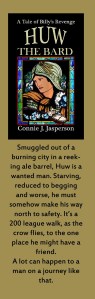
When I wrote Huw the Bard, it never occurred to me that most people wouldn’t know that Huw is Welsh for Hugh and is pronounced the same. I was raised around people of both Welsh and Irish origin, and I wanted Huw to have that cultural flavor.

That spelling choice has been a problem since publication because most people are unaware that a “W” is actually a “Double U” – UU -2 U(s). It is pronounced “Yoo” or “oo” (like goo) in Welsh and in old English words.

I have another character in my Tower of Bones series named Friedr – pronounced Free-der. This name is also a problem for readers.

Audio books are the new “must do” way to get your work into the hands of “readers.” How will that name be pronounced when it is read out loud? Take my advice and write your names so a narrator can easily read it aloud without stumbling. If you are just beginning your career as an author, you probably don’t realize how  important this is.

I learned several things about names the hard way. I only have one book that is an Audio book, but the experience of making that book taught me to spell names simply. I resolved my stupidity by telling the narrator he should pronounce the problem names the way that worked best for him, and that made him happy.

There are many good sites for names on the internet. You can find Norse, French, Hawaiian—they are all out there and they have some wonderful, simple names for you to use. You can get a little fancy—that is good and adds a cultural flavor to your characters. But when readers aren’t sure how to pronounce your main character’s name, they might focus on that rather than on your novel.

Speaking as one author to another, you never want to write something into your narrative that will throw the reader out of the book.

7 Comments

Filed under writing

Mind Wandering #amwriting

I write my blog posts a day or two ahead, usually trying to get them written and scheduled on Sundays. That way, I can concentrate on pretending to be an author.

It’s a pretense today because I just want to slounge around out on my back porch and enjoy that rarest of winter glories—the sunny day.

Some days are perfect for sitting on the porch and just letting my mind wander and this day is too cold, but I don’t care. I’ve had enough of winter and just want to sit in the sunshine, cold though it may be.

I take my blanket out and uncover a chair. I do check for spiders before I sit—they like the porch as much as I do, sadly. Every sunny morning from here on through September will find me out with a broom, chasing spiders off MY territory. My relocation program is inefficient and by August they will far outnumber me, but I don’t kill them. They have a place in this yard, just not on my porch or in my chair.

Fluffy white clouds drift overhead, hummingbirds dart here and there, my eyes close, and I absorb the sounds of my small town all around me.

The trees and shrubs of this small neighborhood harbor mourning doves and they seem to be speed-dating—eager to get on with nest building and rearing chicks.

The drone of large helicopters flying low over my home as they leave the base nearby shakes the house and rattles the dishes. I don’t like helicopters, and really don’t like them so low over my home, but it’s a disturbance I must put up with, as all who live in my area must do.

They pass over the hills and fade into the distance, diminishing altogether. A passing train resounds from the other end of town, sounding its horn to alert vehicles at the crossings. I like hearing the train in the distance.

But back to the finches, hummingbirds, and mourning doves. They share this neighborhood with chickadees, nuthatches, and brown tree-creepers. Crows and stellar-jays, starlings, and wrens also live here.

I need to just let my mind wander. I have a short story jammed in my head, and it will have to find its own way out. I know from experience that forcing them never works for me. Mind wandering is the only way to pry it loose.

Winter has been a long, drawn-out affair this year. We’ve had snow on and off for weeks, and while the piles of dirty snow in the local parking lots are mostly gone, it’s cold, only a few degrees above freezing. I should pull myself together and go inside. I have an editing job I need to finish, but the sun is shining, and the birds are out, and I’m warm enough under this blanket.

The finches and doves go quiet—a lady jay has landed in my still-barren maple tree. She flies down, picking something from the ground, then flies away.

Soon the sounds of the local mourning doves advertising their availability for mating resume, a gentle background to my thoughts.


Credits and Attributions:

Mourning Dove on Easter Day, by Kazvorpal [CC BY-SA 3.0 (https://creativecommons.org/licenses/by-sa/3.0)]

Wikimedia Commons contributors, “File:Mourning Dove on Easter day.jpg,” Wikimedia Commons, the free media repository,

4 Comments

Filed under writing

#FineArtFriday: The Boating Party, by Mary Cassatt

What I love about The Boating Party by American artist, Mary Cassatt, is impression of movement, of the life of the water. It has a feeling of contentment, of peace. There is a serenity about this painting that evokes wonderful memories of boating and water sports, of the time when my family still lived on a lake. It reminds me of the sheer joy and freedom of being on the water with no purpose other than to enjoy one’s self.

About this painting, from Wikipedia:

Art historian and museum administrator Frederick A. Sweet calls it “One of the most ambitious paintings she (Cassatt) ever attempted.” His 1966 analysis focuses on the balance of the “powerful dark silhouette of the boatman”, the angle between the oar and the arm that “thrusts powerfully into the center of the composition towards the mother and child” and “delicate, feminine ones.”

Cassatt placed the horizon at the top of the frame in Japanese fashion.

  • In 1890 Cassatt visited the great Japanese Print exhibition at the ecole de Beaux-arts in Paris.
  • Mary Cassatt owned Japanese prints by Kitagawa Utamaro (1753–1806).
  • The exhibition at Durand-Ruel of Japanese art proved the most important influence on Cassatt.

(Influence of) Manet

Frederick A. Sweet suggests that Cassatt may have been inspired by Édouard Manet‘s Boating from 1874.

I hadn’t considered that position of the horizon as being a traditional Japanese style until I read that paragraph. Then I realized that most Western artists place it lower on the canvas. In Western art, the sky (an allegory for God) traditionally dominates the work.

This painting has made me aware of  how greatly the ability to travel the world via ocean liners and contact with other cultures changed the way we produce art. Impressionism was new and daring in its time. The eye of the artist was freed from traditional confines of the various schools (Hudson Valley, etc.) by exposure to the simplicity and elegance of the previously unknown tradition of Japanese art.

Every new painting I come across leads me to another, which often leads me to another country and another tradition of style and form.

My life as an admirer of art is one of constantly finding something new about history and the world around me.

About the artist, Via Wikipedia:

Mary Stevenson Cassatt (May 22, 1844 – June 14, 1926) was an American painter and print-maker. She was born in Allegheny City, Pennsylvania (now part of Pittsburgh’s North Side), but lived much of her adult life in France, where she first befriended Edgar Degas and later exhibited among the Impressionists. Cassatt often created images of the social and private lives of women, with particular emphasis on the intimate bonds between mothers and children.

She was described by Gustave Geffroy in 1894 as one of “les trois grandes dames” (the three great ladies) of Impressionism alongside Marie Bracquemond and Berthe Morisot.


Credits and Attributions:

The Boating Party by Mary Cassatt, 1893–94

Wikipedia contributors. “The Boating Party.” Wikipedia, The Free Encyclopedia. Wikipedia, The Free Encyclopedia, 9 Dec. 2018. Web. 8 Mar. 2019.

Comments Off on #FineArtFriday: The Boating Party, by Mary Cassatt

Filed under writing