Asking the right questions #amwriting

Sometimes we find ourselves  in the position of having to do research, even when a piece is not intended to be historically accurate. I write many things that are centered around Arthurian legends, and I am fortunate that a lot of tales still exist that were written during the Middle Ages. Nowadays much is being discovered about the real King Arthur through solid archaeology, and he is being discovered as a man of the 6th century.

But I am drawn to the popular legends, giving him a mythological place in our chivalric canon of romantic tales, written during the 11th through the 15th centuries. These accounts make him a man of their times, dressing him in their fashions and giving him their ideals and values.

The High Middle Ages were a golden period for historical writing in England, but the craft of researching history scientifically was not an academic subject taught in school. The gathering of historical tales was a hobby for educated men who had the time, social position, and the talents to pursue it.

As a result, the histories from this period are highly questionable–but are quite entertaining and are great fantasy reads. I’ve said this before: if J.R.R. Tolkien had been writing history in a monastery during the 7th and 8th century, The Lord of the Rings would have the same place in our historical narrative that the Arthurian Cycle has now, and Aragorn would have been the king who united all of Britain.

Nowadays Galahad is a minor knight, but he figures prominently in Sir Thomas Malory’s 1485 work, Le Morte d’Arthura reworking of traditional tales that were hundreds of years old even in his day. Versions of Galahad appear regularly in my work. I studied Medieval Literature in college and found his story both diverse and fascinating. Many tales abound referencing him. But, what is the original story of Galahad that is bandied about most often? We know early Arthurian legend was highly influenced by the authors’ contemporaries, the Knights Templar.

Neither Arthur nor any of his knights could possibly have been Templars, but by modernizing and dressing his court in contemporary ideals, those medieval authors made Galahad into a superhero.

Traditionally, Sir Galahad, a Knight of the Round Table, finds the Holy Grail and immediately goes to heaven, raptured as a virgin – but was he? I mean raptured OR a virgin?  If he was not raptured, what could have happened to make medieval chroniclers think he was?

So, why was this notion of a virgin knight and being taken to heaven before death so important to medieval chroniclers that they would write it as though it was true history?

Well, they were writing some 300 to 400 years after the supposed event, during the final decades of the Crusades. Religion and belief in the Christian truths espoused by the Church were in the very air the people of the time breathed. All things of this world were bound up and explained in ways relating to the Christian traditions of the day.

Literature in those days was filled with religious allegories, the most popular of which were the virginity and holiness of the Saints—especially those Saints deemed holy enough to be raptured. These people did not have to experience death but instead were raised while still alive to heaven where they spent eternity in God’s presence.

A few years ago I was challenged to write an Arthurian tale with a steampunk twist. I accepted the task, but immediately wished I hadn’t, as it just seemed an impossible leap.

The first question I asked myself was: Where do Arthurian legend and steampunk connect well enough to make a story? The answer was—they don’t. I felt that block we all feel when the story will not reveal itself.

But, sitting on my back porch and letting my mind roam, I found myself wondering what Galahad and Gawain would have really been like. The people those characters were based on were men of the 5th or 6th century, ordinary men, and despite the heroic legends, they were made of flesh and blood.

And what if somehow Galahad got separated from Gawain through a door in time? How would Galahad get back to Gawain?  What if he was marooned in Edwardian England, with Merlin – can you say steampunk?

The title of that tale is Galahad HawkeThe main character is Galahad Du Lac, son of Lancelot Du Lac, illegitimate, some have said, but is he really? If he is, it implies the fifth century was a lot less concerned about the proprieties than we give them credit for. His line of work is that of a nobleman and hero. Thus, he goes on quests to find strange and magical objects such as Holy Grail.

The story was told in the first person point of view. I opened the story just after the Grail was found. Knowing that history and fantasy merge in the Early Middle Ages, I approached my story by asking these questions:

  1. What does Galahad have to say about his story?
  2. What if he and Gawain were lovers?
  3. How does he end up separated from Gawain?
  4. How does Galahad end up in Merlin’s company?
  5. Why are they unable to get back to Gawain?
  6. What is the reason the magic no longer works?
  7. What do they do to resolve the situation?
  8. How does the tale end – does Galahad get Gawain back or is he permanently adrift in time?

I wrote it two ways and picked the ending that moved me the most.

Often, I begin the process of creation by sitting down with a pencil and paper. I identify the core conflict, and then ask the five important “W” questions, (who, what, when, where, and why).

Asking questions and listing the answers is the key to unlocking the potential of any story idea. Through the experience of writing Galahad Hawke, I discovered that my characters can tell me a great deal if I let them.

Things got out of hand on the home front this last summer, most of which I spent caring for an injured son. My ability to write creatively was affected.  Somewhere along the line, I forgot how effective this crucial part of the process can be. I felt derailed at times, and what I was writing didn’t feel true. By returning to the basics and asking questions, I have given myself a new framework to hang my current stories on.


Credits and Attributions:

Sir Galahad, the Quest for the Holy Grail, by Sir Arthur Hughes, 1870, PD|100 via Wikimedia Commons

5 Comments

Filed under writing

Works in Progress update #amwriting

Sometimes real life interferes with my writing schedule, but despite back injuries and other little challenges, I’ve managed to keep my writing on track. Chronic pain can sap the creativity from you, but eventually, it eases, and productivity resumes. I’ve become adept at getting things done with the long-handled grabber. I’ve figured out how to do everything from laundry to cleaning my oven with it, to picking lint off the carpet and dusting chandeliers.

Yep—I’m that grandma, the one I swore I’d never become, the old woman with the long-handled grabber. Get off my lawn!

I’ve been working on two particularly tough short stories for several months. Both have great ideas and wonderful premises, and it looks like I am finally on the home stretch with both. Fingers crossed! Some short stories take me as long to finish as writing a novel. These are the stories being written to certain themes. I have planned the basic story arc, so I know what needs to happen at each point, but not exactly how I want to make it happen. I write a little when I have a flash of brilliance and then let it ‘simmer’ in the back of my mind.

One story was finished (I thought), but the editor who requested it for a forthcoming anthology wanted changes amounting to a complete rewrite to make it fit more with what she envisions for her anthology. It wasn’t that she didn’t like it, it was just not right for what she had in mind as the theme for her collection of stories. That one has had to sit on the back burner again for a bit, but now I think I know how to implement her suggestions and accomplish what is needed. Whether Short Story Take 2 will fly or not is anyone’s guess as it is only optioned, but when a publication’s editor asks for revisions on a piece that I’ve submitted, I make them with NO complaint. She knows what her market wants, so if I want her to buy my story, I need to tailor it to her readers.

There are times when I can whack an entire story out in a single sitting, but some stories just require more attention. The best part of writing is that feeling of “Ah hah!” when a particularly tough section comes together, and you know you have written something worth reading.

On the novel side of my writing life, things have taken a turn for the positive. In January I had to completely scratch most of the first draft of my current work in progress because during NaNoWriMo the story-line went in a direction I didn’t intend. That strange direction in the early MS will be morphed into something else later so that work hasn’t been wasted.

I should have stuck to my outline, and then my story flat-line would have been a story arc.

But I just crested the 60,000-word mark (again) and am at the halfway point on the rewrite. This novel is set in the Tower of Bones world, but it takes place five hundred years prior and concerns the founding of Aeoven.

Because I’ve had a certain amount of new world building to do in my old world, it has been a joy to write. In this era, the world is very different, more dangerous, and takes place during their Dark Ages, dark only in the respect that little written history remains of those times. This is the “how it began” novel, so many things have had to be developed from scratch, such as the system they use for magic.

Even the maps are a little different, although the contours of the land are the same. Some towns exist that don’t in later times, and a few villages that are minor in Edwin’s time have a more prominent role. I am also exploring the Barbarians and how the modern Temple of Aeos is deeply rooted in that tribal culture.

I’m finding it refreshing to revisit this world and see it through new eyes. I have been working in the world of Neveyah for ten years, and still, I am discovering things I never knew. I think of it as reverse engineering—I’m taking this world apart and seeing how it works, and why.

On the poetry front, poems happen when they’re of a mind to. It’s like everything else—sometimes what I write is good, and sometimes not so much, but I feel compelled to put some ideas and emotions into the form of a poem. I suppose it’s because I began my professional writing career writing lyrics for a friend’s heavy metal band back in the early 1970s, so the poetic form will always be with me.

Now you’ve heard the update on my works in progress. Hopefully, all will continue to go well, and if the stars are properly aligned, my two nearly finished short stories will leave the nest as they are supposed to. I wish you peace, and may your writing hours be productive!

10 Comments

Filed under writing

#flashfictionfriday: A summer evening spent fishing

A summer evening spent fishing

On black waters beneath a sunset sky.

Forested hills climbed high in the west,

As dark as shadows and just as safe.

Bears and their young came to fish the creek

That runs past the woods next door.

Deer swam across the lake to eat

Grape leaves and my mother’s roses.

Sunsets seen from my father’s boat

While fishing for perch or crappie.

And morning came, bright and young,

Filled with the scents of home.

Of potatoes and onions, crisp and brown,

And fish frying for breakfast,

And cinnamon rolls just out of the oven,

And coffee perking on the stove.

Smells that signified Sunday morning.

And when the washing up was done

I took my book to the alder grove

And drowsed the day away.


Credits and Attributions

A Summer Evening Spent Fishing, by Connie J. Jasperson © 2018 All Rights Reserved

Indian Sunset: Deer by a Lake, painted by Albert Bierstadt [Public domain], via Wikimedia Commons ca. 1880 – 1890

2 Comments

Filed under #FlashFictionFriday, Poetry

Theme, Allegory, and The Matrix #amwriting

One question I hear often when I am giving seminars is “How do I identify the theme of my story?”

Theme is what the story is about on a deeper level than what is seen on the surface. It’s the big meaning, a thread that is woven through the entire story, and often it’s a moral. Love, honor, family, redemption, and revenge are all common, underlying themes. Theme is an idea-thread that winds through the story and supports the plot.

A question was asked in an online group for writers “How do I emphasize my theme without bludgeoning my reader with it?”

Making good use of allegory can subtly underscore your themes to drive home your point without resorting to an info dump.

Using symbolism and allegory allows an author to pack the most information into the least amount of words, but it requires intention when you first begin creating the story arc. Words, phrases, and setting must be chosen, and the narrative’s prose must be purposefully crafted.

Whenever I talk about allegory, I like to use the movie, The Matrix, as my example: In this movie, you see lean dialogue, conversations that are spare and to the point. The symbolism continues in the way the setting is so sparsely portrayed, and even the characters’ names are symbolic. Allegory is built into their androgynous costumes, and in the screenwriters/authors’ choice of words used in every conversation. All these layers offer us an incredible amount of subliminal information about that world and what is really going on.

The themes are represented with heavy symbolism in the lighting used on the movie set:

>Inside The Matrix the world is bathed in a green light, as if through a green-tinted lens.

>In the real world, the lighting is harsher, unfiltered.

In the movie, everything that appears or is said onscreen is symbolic and supports one of the underlying concepts. When Morpheus later asks Neo to choose between a red pill and a blue pill, he essentially offers the choice between fate and free will.

>Neo chooses the red pill—real life—and learns that free will can be unpleasant. Cypher regrets choosing the red pill and ultimately chooses to return to the Matrix.

In one of my favorite scenes, when Neo answers the door and is invited to the party, he at first declines. But then he notices that Du Jour, the woman with Choi, bears a tattoo of a white rabbit. He remembers seeing the words: follow the white rabbit, on his computer. Curious and slightly fearful of what it all means, he changes his mind and goes to the party, setting a sequence of events in motion. The white rabbit tattoo is an allegorical reference to Alice in Wonderland, a subliminal clue that things are not what they seem.

In my stories, I try to picture conversations, clothing, settings, and wider environments as if they were scenes in a movie. This is where I consider how I could use allegory to support and underscore my theme. I’m not as adept at this as I hope to become, but I try to consider the books that really moved me as a reader. All were allegorical in some way.

When we are immersed in reading a story laden with allegory, many times we don’t notice the symbolism on a conscious level. But on closer examination it is all there, making what is imaginary into something real, solid, and concrete.

This is what I hope to achieve in my current work.


Credits and Attributions:

Quote from the Matrix, screenplay written by Larry and Andy Wachowski © 1999 Warner Bros. Pictures

3 Comments

Filed under writing

Using Repetition as a Literary Device #amwriting

Sometimes authors want to emphasize a concept, and deliberate repetition is the way to do it. Some of my favorite authors use the repetition of certain key words and phrases to highlight an idea or to show the scene. This technique is an accepted rhetorical device and is commonly found in mainstream fiction and in poetry. It is used to evoke an emotional response in the reader and can be exceedingly effective when done right.

Literarydevices.net says, “The beauty of using figurative language is that the pattern it arranges the words into is nothing like our ordinary speech. It is not only stylistically appealing, but it also helps convey the message in a much more engaging and notable way. The aura that is created by the usage of repetition cannot be achieved through any other device.”

Repetition as a literary device can take these forms:

  • Repetition of the last word in a line or clause.
  • Repetition of words at the start of clauses or verses.
  • Repetition of words or phrases in opposite sense.
  • Repetition of words broken by some other words.
  • Repetition of same words at the end and start of a sentence.
  • Repetition of a phrase or question to stress a point.
  • Repetition of the same word at the end of each clause.
  • Repetition of an idea, first in negative terms and then in positive terms.
  • Repetition of words of the same root with different endings.
  • Repetition both at the end and at the beginning of a sentence, paragraph, or scene.
  • It can also be a construction in poetry where the last word of one clause becomes the first word of the next clause.

Some famous examples of repetition as a literary device:

“Every book is a quotation, and every house is a quotation out of all forests, and mines, and stone quarries; and every man is a quotation from all his ancestors.”  Ralph Waldo Emerson, Prose and Poetry.

“This is a valley of ashes—a fantastic farm where ashes grow like wheat into ridges and hills and grotesque gardens, where ashes take the forms of houses and chimneys and rising smoke and finally, with a transcendent effort, of men who move dimly and already crumbling through the powdery air.” F. Scott Fitzgerald, The Great Gatsby.

The prose of the The Great Gatsby is powerful. Fitzgerald’s repetition of the word ashes evokes the atmosphere of the valley, a place created through industrial dumping and which was a by-product of greed. The people and the environment suffer. The rich look down upon the poor as being there solely for their use, and don’t have even a thought for the physical suffering caused by the carelessly dumped byproducts of the industries that make them wealthy. Tom, Daisy, and Jordan, with their rich, empty lives, are represented as  metaphorical bodies of ashes in the valley of ashes.

The Great Gatsby, Symbols and Motifs says:

The ashes are symbols of dead, with more self-centered and arrogant people arising from them. Every generation, the ashes pile, distorting the American Dream further.

When an author writes it intentionally to drive home a point, repetition is an effective tool.

It is when words are inadvertently used with a lack of creativity that repetition ruins a narrative.

Unconsciously using the same words too often in our descriptions is one of the pitfalls of writing. It happens to all of us, and for me, it occurs most often when I am laying down the first draft, and my vocabulary can’t keep up.

Many common words (the, and, etc.) don’t really stand out when used more than a few times in a paragraph, and you couldn’t write well if not for those words. However, some words will always stand out more than others, and if you use them more than once in a paragraph, it looks like you’re unimaginative or a lazy writer. This is especially true if the word in question has a lot of common synonyms you could have used instead of repeating the same word.

Some words don’t have a lot of obvious substitutes, so you get hung up on the few you can find.  I have mentioned before that in my own work, the word sword is one of the main culprits. The type of blade my characters wield in the World of Neveyah books is a claymore, and four ensorcelled blades figure prominently in the Tower of Bones series.

The many obvious synonyms for the word sword will not work, as rapier, epee, saber, etc., are distinct blade types that are in no way like a broadsword, which is what a claymore is.

Fortunately, the spell-check function of your word processing program will find many inadvertent double-up repetitions, accidents such as “the the” or “and and.” That particular form of repetition is the devil and is one I struggle with, especially when writing blog posts.

When it comes to making revisions and checking for areas of inadvertent repetition, sometimes I need to see how the chapter looks printed out. I sit at my table with the printout and start on the last page, using a blank sheet of paper to cover all but the last paragraph.

This paragraph is my starting point. With a highlighter, I begin at the last sentence of the chapter and work my way forward, paragraph by paragraph, until I have arrived at the first sentence. The highlighter is a good way to make the places I want to correct stand out at a quick glance.

Once I have marked up my hardcopy, I open my digital files and make the revisions. This speeds things up—looking at my notes and crossing them off as they are completed saves me weeks of work when I am in the revisions stage.

There is another benefit to using this method. Working with hardcopy from the bottom up, blind to what has gone before in that chapter, allows you to see your own work through unbiased eyes. When you do this, you will find places where you have repeated an entire thought almost verbatim and places with hokey phrasing. You may decide to change some things around.

Large thesauruses are excellent resources, and I have one I use regularly. However, it’s important to remember that they are written for academic use and contain many obscure words that a casual reader would have to stop and look up, which can turn them off your work. So, we must be careful not to use words that shout, “Look! I’m educated!”

Yes, we want to have a wide vocabulary, but we don’t want our writing to sound pretentious. Great authors walk a fine line, writing prose that isn’t dumbed down, yet can be understood by most readers without their having to stop and look up the words.

I have a useful paperback book, the Oxford Dictionary of Synonyms and Antonyms. It’s full of good common alternatives to most regularly used words.

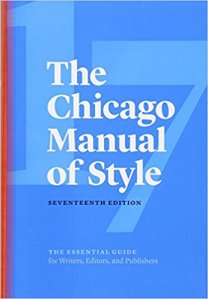
This little book has become just as important to me as my copy of the Chicago Manual of Style. It can be purchased used from Amazon. I do recommend purchasing this as a paper book rather than an eBook.

I know you can right click for the thesaurus in most word-processing programs, and I do that when I am in a hurry. But these thesauruses are limited in scope, and I like having a larger variety of commonly used words available to me in book form. I tend to make better use of what I read on paper than what I read in eBook form.

If you have not read The Great Gatsby, I suggest you do so. There is a reason it is an enduring classic, and you should read it if only to develop your own opinion of it.


Credits & Attributions

LiteraryDevices Editors. “Repetition” LiteraryDevices.net. 2013. https://literarydevices.net/metaphor/ (accessed March 8, 2017).

Ralph Waldo Emerson, The Complete Works. Published 1904. Vol. VIII. Letters and Social Aims, VI. Quotation and Originality, Bartleby.com, accessed (March 8, 2017)

The Great Gatsby; Symbols and Motifs by   http://thegreatgatsbysandm.blogspot.com/2011/05/valley-of-ashes.html (accessed 19 Feb 2018).

F. Scott Fitzgerald, The Great Gatsby, pub. 1925 Charles Scribner & Sons.

15 Comments

Filed under writing

#flashfictionfriday: Going Home

October had arrived in the Pacific Northwest, chill and damp as always. Our friends, Jonna and Jake, lived on Black Lake, on the north end of the lake where my sister and I had spent our childhood. A true Northwesterner, Jonna had planned a day on the lake despite the weather. A women’s day out with my sister, Sherrie, our old school friend, Evonne, and our dear friend from Texas, Irene. We planned to cruise the lake and show Jonna and Irene where we had lived from 1963 through the 1990s.

Jake was worried we would wreck the boat, calling instructions as we pulled away from the dock. “Don’t worry,” we called back to him. “Jonna knows how to drive.” Nevertheless, he stood in the rain, fretting at sending his beloved boat out under his wife’s control, loaded with sparkling cider and a group of women he knew all too well. This despite the fact Jonna would drink no wine until after we returned.

Despite Jake’s misgivings, Jonna neatly negotiated the deeper channel between the half-sunk, rotting posts of the old Black Lake Mill, which had burned in 1918, and was never rebuilt. Like many parts of my childhood, the old posts had simply been left where they were, rotting corpses of a time when Timber was King, and money grew in the forest surrounding Black Lake.

Our boatload of women and laughter slowly passed the new summer homes and palaces of the nouveau riche jammed onto narrow lots, professionally landscaped and manicured. Crammed between the mansions were the familiar, now-ancient mobile homes and the older, rundown shanties. Our childhood friends, “Black-Lakers” all, had lived year-round in these flimsy, drafty homes. Oil was expensive, so feeding the fireplace or woodstove was how we stayed warm back then.

In the 1930s, when my father grew up in the hills above the other side of the lake, the area had been exceedingly rural, a poor place teetering on the edge of poverty. In the 1960s, when I was growing up, it was working-class but still small and insular. Many of the people around the lake had gone to school with my father, and he knew them well.

Jonna slowly followed the shore past those homes, old and new. It was surprising which tattered old cabins stubbornly held on, clinging to their places despite being elbowed aside by the beautiful new homes of the well-heeled few.

Hugging the shoreline, we went south, passing down the eastern side of the lake toward the house that had been my family home for thirty-five years. I was curious, wondering what it looked like. As we idled along, I thought about those years that we had spent there, the good and bad.

How many evenings had I sat beside my grandmother at the picnic table, gazing out across the water to the Black Hills rising above the lake and dominating the view? How many campfires in the fire-pit on the beach, and barbecues? How many summers were spent swimming from morning to evening? I couldn’t wait to see it again.

When we approached the place our home had been, we only recognized it because the contours of the shoreline hadn’t changed. Having fished those waters for so many years, Sherrie and I knew which half-sunken log meant we were nearing the neighbor’s house. Ours had been beyond the woods next door.

The neighbor’s house had seemed large and modern when I was young and had been referred to as “the airplane hangar” by the locals when Ken Nolan built it. I was surprised to see how small it really was. It was greatly changed, but I recognized the mid-century wall of glass facing the lake. The new owners had abandoned the small lawn and gone to simply having a large deck, surrounded by tall salal and Oregon grape. They had sacrificed much of the view from inside in the interests of privacy, I suspect.

Even though the neighboring house was so changed, I was filled with anticipation for the first sight of our childhood home, with me going on and on, telling our friends how beautiful the property was.

We never saw that house, despite my eager searching.

Just beyond the now-ancient grove of alders that had separated our property from the neighbors was a rundown building. It did resemble my parents’ house but was definitely not the home I had grown up in.

It had been made into a duplex and was clearly a rental unit for the large house that now sat behind in what had once been the swamp. The acre of lawn and gardens that had been my parents’ pride and joy was lost to the wilderness, with a dilapidated fence cutting the yard in two. On either side of the fence, narrow paths snaked through the weeds, muddy trails to the beach. Grass and weeds stood waist-high, obscuring the once-beautiful home.

The beach and swimming area were gone. A marina dominated the waterfront, with five dilapidated power boats moored at several docks. Thinking back on that sight, I suspect that summers there see few children playing in the shallows, as the formerly sandy beach is now a swampy morass.

I confess I was devastated to see the old family home in such disrepair.

The last time I had approached the house from the lake had been in 1995 after my grandmother passed away, while my mother still lived there. That day, as we returned to the shore, I had viewed the modest home in its park-like setting, with a broad lawn that took an hour to mow even with the riding mower. Cherry trees, alders, and maples had shaded the yard, with roses, camellias, rhododendrons, and other heirloom shrubs framing the house. Blueberries, cascade blackberries, and loganberries had pride of place in the immense vegetable garden that was to the right of the house when viewed from the lake.

When we were growing up there, the inside of our home was cold and damp and frequently in disrepair. There were no carpets because Mama said they would be ruined, and certainly the linoleum hadn’t stood the test of time. Our furniture had been worn out, and Mama wasn’t really into interior decorating.

Besides, as she was always reminding us, there was no money to fix things up. Dad had a good job, but money was tight. Nevertheless, however shabby it had been compared to the homes of our wealthier classmates who lived in town, it was immaculately clean inside and out. Nothing was ever out of place, because what would people think? Mama had strong opinions about people with poor housekeeping habits and was rather vocal about it.

As I said, the house itself had been nothing special, but the yard… 350 feet of waterfront and five acres going back toward the road. The yard and the view were what my parents had made themselves house-poor for.

When I was a child, the yard had been a magical place of refuge from disapproving adults, with many places to hide and read and to be important to someone, even if it was only the cat.

I didn’t know what to think when we saw the rundown hovel with a flock of boats parked in front. I was glad to be in the company of my friends and my sister, as I fought the sting and burn of tears. I think because I’m four years older than Sherrie, her memories were of happier times than mine, when Mama rebelled against Dad’s wishes and got a job outside the home so she could have some extra money.

Our friends in the boat, Irene, Evonne, and Jonna – they knew. These women could tell what had occurred, how it had set me back. They were united, a wall of strength, silently commiserating and allowing us to just take it all in, yet there for us if we needed to talk about it.

I didn’t. I couldn’t.

At last, Jonna turned the boat, and we idled along the shore, cruising south around the swampy end where the Black River begins its journey to the Chehalis River, and then to the “new” development of Evergreen Shores, built in the 1970s. Then we went north along the west shore, passing the strange dichotomy of shanties mingled between high-end vacation manors. Having circled the lake, we finally negotiated our way back through the rotting pilings at the north end and approached Jonna’s dock.

Jake had been standing there the whole time, likely expecting we would sink his boat. But we hadn’t, and bless him, he was happy to help Jonna park it.

I’m an author now, middle-aged. I’ve lived a long and interesting life, and still I find I have lessons to learn. A place is a place, and a building is only a home when someone lives there. I think that what I really discovered by going back to the lake house is that you don’t go home by returning to the scene of your childhood.

My childhood home still shines in my memories, but nowadays home means comfort and cozy evenings on the back porch with my husband. Home is a wall with photographs of our children and grandchildren.

I carry home within my heart and memories, and wherever I am, that is home.


Credits and Attributions

Going Home, A Memoir by Connie J. Jasperson © 2018, All Rights Reserved, was first published on Myrddin Publishing Blog, on January 17, 2018

Black Lake Sunset, by Florence Lemke, 1973. Painted by the author’s aunt, image reproduced from the private collection of Connie J. Jasperson. © 2018 All Rights Reserved. Printed by permission.

2 Comments

Filed under #FlashFictionFriday

Author motivation #amwriting

What motivates a writer to write? What makes an ordinary person believe they can write a book that others will want to read?

For me, I want to read certain books, and for some reason, my favorite authors refuse to churn out a book a week–go figure.

So, I try to write the kind of stories I want to read. An idea occurs, a wild moment of “what if” and I must write it.

Sometimes it’s just a scene or a drabble. Sometimes it is a poem. Other times it will be a short story or a novel.

No matter where I am, I want to talk about books. Books and the craft of writing absorbs me. The internet offers me the chance to learn new things about writing craft and gives me a hundred places to discuss them and people to “talk shop” with.

Reading books and writing obsesses me, and everything motivates me.

I’m not sure why, but I do my most creative work when I should be doing something else. My best writing gets done when I should be getting ready to leave the house for an appointment.

As writers, we talk and talk and talk about a character’s motivation, but the author’s motivation is critical. WHY are you writing?

When I am fired up, I do my best work. Life can be complicated here on the homefront, so writing is an escape from dealing with the realities of being the family caregiver and living with chronic pain. I can write anytime, anywhere, under any circumstances. Sometimes I don’t feel too creative, but at that point, my blogging skills kick in. For me, blogging is talking about writing, and that’s writing too. It keeps me thinking.

In many ways, I am a social justice warrior. I write about all kinds of people experiencing hard times and injustice, and the fallout that sometimes occurs. Sometimes the good people don’t win, and how they handle defeat is the real story.

When I have an idea for a story, it’s never with the intention of preaching a sermon—I leave that to better qualified people and more adept authors. The stories I want to write are about people who face great challenges and how those events shape their actions.

Life and all its many detours intrigues me, and as a reader, I gravitate to those kinds of novels, in all genres. Memorable characters grow on you over the course of the book–they are not delivered fully formed on the first page. They are intriguing, and we don’t always know what they will do next. There is a hint of mystery about them, and if the author did their job, at the end of the book we don’t want those characters to leave.

We want to instill an air of mystery in all our characters, whether we write sci-fi, romance, fantasy, pot-boilers, or cozy mysteries. People cease to intrigue you once you think you know all there is to know about them.

It is the complexities of your friends that keep them interesting, the little things you never knew that surprise you when they are revealed.

Developing a character, deploying just enough information at the right moments to pique the reader’s curiosity is a balancing act, and not everyone can do it with finesse. Thus, I read and read and read—classic literature, epic fantasy, cozy mysteries, spy novels, vampire romances, and space operas—I read in all genres, hoping to gain an idea of how it’s done right.

I also find many examples of how it’s done wrong.

My advice today? Read widely, read daily, read in all genres, even those you “don’t like”—but read. Reading widens your mind, and an open mind is creative, and a creative mind puts out great work.

Trying to master the balancing act of creating compelling characters and setting them in intriguing circumstances motivates me. I love the feeling of meeting the challenge, picking up the gauntlet tossed down by my favorite authors, the “ah hah” of having written a story I would want to read.

8 Comments

Filed under writing

Hyphens #amwriting

When creating my world of Neveyah for the Tower of Bones series, I discovered that hyphens are the gateway  to writer’s hell. I put together compound words, hyphenated to make them specific to that world.

I did this, not realizing I would be stuck writing these words consistently hyphenated for years… and years….

Take my advice and do not use a hyphen in your invented words unless the universe will dissolve without it.

In the real world, if a compound adjective cannot be misread or its meaning is firmly established, a hyphen is not necessary.

Words that are single words and don’t need a hyphen:

  • backstabbing
  • backstabber
  • (a) breakup as in (a) divorce, break up as in taking apart
  • breathtaking
  • comeback as in succeeding again, come back as in return to me
  • counterintuitive
  • counterproductive
  • downright
  • herself
  • himself
  • hobnob
  • latchkey
  • mainstream
  • midweek
  • myself
  • nevertheles
  • newfound
  • nighttime
  • nonetheless
  • nonstop
  • overdo
  • overexpose
  • overpriced
  • overrated
  • oversized
  • roundup as in a rodeo, round up as in a review or the next highest round number
  • secondhand
  • selfish
  • sidekick
  • sightseeing
  • straightforward
  • woebegone
  • yourself

A few words do require a hyphen to ensure their meaning is what you intended:

Wikipedia says: Compound modifiers are groups of two or more words that jointly modify the meaning of another word. When a compound modifier other than an adverb–adjective combination appears before a term, the compound modifier is often hyphenated to prevent misunderstandings, such as in American-football player or little-celebrated paintings. Without the hyphen, there is potential confusion about whether the writer means a “player of American football” or an “American player of football” and whether the writer means paintings that are “little celebrated” or “celebrated paintings” that are little.

Compound modifiers can extend to three or more words, as in ice-cream-flavored candy, and can be adverbial as well as adjectival (spine-tinglingly frightening). However, if the compound is a familiar one, it is usually unhyphenated. For example, at least one style guide prefers the construction high school students, to high-school students.

Words that DO need a hyphen:

  • An English-speaking country
  • A time-saving device
  • A thirty-floor building

Some compounds are improvised to fulfill a specific need (on-the-spot creations). Permanent compounds start out as improvised compounds but become so widely accepted that they are included in the dictionary as permanent compounds. Examples of temporary compounds that have made the transition to permanent compounds are words like

  • know-it-all
  • heart-stopping
  • free-for-all (as in a rumpus)
  • down-at-the-heels

Context determines whether to hyphenate or not.  Ask yourself, “How will the words be interpreted by the reader if I don’t hyphenate?” If your intended meaning is clear without the hyphen, leave it out.

Wikipedia offers the following examples:

  • Man-eating shark (as opposed to man eating shark, which could be interpreted as a man eating the meat of a shark)
  • Wild-goose chase (a hunt for resulting in nothing) as opposed to wild goose chase, which could be interpreted as a chasing a goose that is wild.
  • Long-term contract (as opposed to long term contract, which in legalese could be interpreted as a long contract about a term)
  • Zero-liability protection (as opposed to zero liability protection, which implies you have no liability protection).

A crucial task for you as an author is to make a stylesheet that pertains to your manuscript. Create a list detailing words that must be capitalized, which ones are hyphenated, and include the proper spellings of names for all people and places.

Some people use Scrivener for this and swear by it. For myself, I don’t need a fancy word-processing program with a difficult learning curve—my life is complicated enough as it is. You can make a simple list or go wild and make a spreadsheet. I use Excel to make storyboards that are my style guides for each novel or tale I write, and for every book I edit.

You can do this in Google Docs too, and that program is free–the perfect price for the starving author.

Regardless of how you create your stylesheet, I suggest you include these elements:

  • List invented Words and all Names spelled the way you intend them to be written forever, noting whether it is two words (De Mal), hyphenated (De-Mal), or two syllables connected with an apostrophe (D’Mal)
  • Note the page number on which the word first appears so you can check back for consistency.
  • If it is not a person’s name, list the meaning and how it is used, for example, if the word denotes a city, or an animal, or plant, etc.

Refer to this style sheet frequently and update it with every change you make to spelling in your manuscript.

I learned this the hard way. Making a stylesheet for a book after it has been written is a daunting task, and most editors will ask you for one when they accept your submission. Some editors refer to this as the ‘bible’ for that manuscript because all editorial decisions regarding consistency will be based on the spellings and style treatments you have established for your work.

I do suggest you go lightly when it comes to hyphens and apostrophes in your invented words. The reader likely won’t notice them too much, but they can become annoyances for you when you’re trying to ensure consistency in your narrative. Whether it is a handwritten list, an Excel spreadsheet, a WORD document, or in a program like Scrivener, a simple directory of compound words and phrases that are unique to the world you have created will be invaluable to you and your editor.


Credits and Attributions:

Wikipedia contributors, “Hyphen,” Wikipedia, The Free Encyclopedia, https://en.wikipedia.org/w/index.php?title=Hyphen&oldid=824118099 (accessed February 11, 2018).


12 Comments

Filed under writing

#FlashFictionFriday: The Garden Choir in February


The crocus suite opens with a lone voice

A tenor, singing a hymn.

Gradually voices join, rising together

Swelling until a symphony of color

Blankets a pocket corner

Of the winter garden

In February.

The first lone soldier

Standing tall and singing

With voice and color proclaiming

This is my time! This is my corner,

My season in the garden

Is February.


Credits and Attributes

The Garden Choir in February, by Connie J. Jasperson, ©2018 All Rights Reserved

Woodland Crocus, By H. Zell (Own work) [GFDL (http://www.gnu.org/copyleft/fdl.html) or CC BY-SA 3.0 (https://creativecommons.org/licenses/by-sa/3.0)%5D, via Wikimedia Commons

2 Comments

Filed under #FlashFictionFriday, Poetry

#Writerlife101 Day 7: Worst writing advice #amwriting

Writing advice is good because beginning authors need to learn the craft, and simple sayings are easy to remember. They encourage us to write lean, descriptive prose and craft engaging conversations. The craft of writing involves learning the rules of grammar, developing a wider vocabulary, learning how to develop characters, build worlds, etc., etc. Authors spend a lifetime learning their craft and never learn all there is to know about the subject.

Writing advice is bad because it is so frequently taken to extremes by novice authors armed with a little dangerous knowledge.

  • Remove all adverbs.
    This advice is complete crap. Use common sense and don’t use unnecessary adverbs.
  • Don’t use speech tags.
    What? Who said that and why are there no speech tags in this drivel?
  • Show, Don’t Tell. Don’t Ever Don’t do it!

Quote from Susan Defreitas for Lit Reactor: Sure, hot tears, a pounding pulse, and clenched fists can stand in for sadness, fear, and anger. But that type of showing can not only become cartoony, it doesn’t actually show what this specific character is specifically feeling. In order to do that, you either have to relay the thought process giving rise to those emotions or you should have already set up some key bits of exposition.

  • Write what you know.

Well, that takes all the adventure out of writing. Did Tolkien actually go to Middle Earth and visit a volcano? No, but he did serve in WWI, and lived and worked in Oxford, which is not notable for abounding in elves, hobbits, or orcs. Your life experiences and interests shape your writing, but your imagination is the fuel and the source of the story.

  • If you’re bored with your story, your reader will be too.

Quote from Helen Scheuerer for Writer’s Edit: Your reader hasn’t spent the last year or more combing through your novel like you have, so that’s just silly. I’ve seen this advice everywhere in the last year, and it bothers me – it just doesn’t take into consideration how hard writing is. Yes, we love it, yes, we don’t want to do anything else, but that doesn’t mean it’s not a challenge at times, it doesn’t mean that it’s not work.

Bad writing advice goes on and on.

Kill your darlings. It’s true we shouldn’t be married to our favorite prose. Sometimes we must cut a paragraph or chapter we love because it no longer fits the story. But just because you like something you wrote doesn’t mean you should cut it. Maybe it does belong there—maybe it was the best part of that paragraph.

Cut all exposition. So, why we are in this handbasket, and where we are going? Some background is essential. How you deploy the exposition is what makes a great story.

Bad advice is good advice taken to an extreme. It has become a part of our writing culture because all writing advice has roots in truth.

  • Overuse of adverbs ruins the taste of an author’s work.
  • Too many speech tags can stop the eye, especially if the characters are snorting, hissing, and ejaculating their dialogue.
  • Too much telling takes the adventure out of the reading experience.
  • Too much showing is boring and can be disgusting. Find that happy medium!
  • Know your subject . Do the research and if necessary, interview people in that profession. Readers often know more than you do about certain things.

New authors rely on handy, commonly debated mantras because they must educate themselves. Unless they are fortunate enough to be able to get a formal education in the subject, beginning authors must rely on the internet and handy self-help guides to learn the many nuances of writing craft. These guides are great, useful books, but they are written by people who assume you will use common sense as you develop your voice and style.

Hack writers bludgeon their work to death, desperately trying to fit their square work into round holes. In the process, every bit of creativity is shaved off the corners, and a great story with immense possibilities becomes boring and difficult to read. As an avid reader and reviewer, I see this all too often.

Great authors learn the craft of writing and apply the advice of the gurus gently, producing work that stays with the reader long after the last line has been read.


Credits and Attributions:

The Ten Worst Pieces of Writing Advice You Will Ever Hear (and Probably Already Have), by Susan Defreitas April 11, 2014, https://litreactor.com/columns/the-ten-worst-pieces-of-writing-advice-you-will-ever-hear-and-probably-already-have,  © 2016 LitReactor, LLC (Accessed 05 February 2018.)

The Worst Writing Advice, by Helen Scheuerer, https://writersedit.com/fiction-writing/worst-writing-advice/, Writer’s Edit Copyright © 2018. (Accessed 05 February 2018.)

46 Comments

Filed under writing