#amwriting: naming people and places

When I was laying down the first draft of my current work in progress, I somehow managed to give every walk-on a name, right down to the dog. That was immediately corrected, although the dog is an important side-kick and still has a name.

Because a reader can only keep so many character names straight in their mind, I was forced to whittle down my cast of thousands. An author should introduce however many characters it takes to tell the story, but should also use common sense.

In a scifi or fantasy tale, naming can get out of hand, sometimes with every single object or utensil, down to the  most common of tools being given a weird name. A hammer should just be be a hammer, please.

I consider that too much detail, and unnecessary. Think of all the names the reader must try to keep straight in a simple tale as if they were people you had just met at a party–that is what the reader faces in the opening chapters of a story.

  1. Character names, pet names, etc.
  2. Town names: Includes shops and restaurants.
  3. Country names, if part of the story .
  4. Myriad other named people, places, and things.

When you introduce a named character, ask yourself if it is someone the reader should remember. Even if he or she offers information the protagonist and reader must know, it doesn’t necessarily mean they need to be named. Some throw-away characters will give us clues to help our protagonist complete his/her quest, or show us something about the protagonist, give us a clue into their personality or past.

The same follows for places—if the village of Maldon has no bearing on the story, don’t mention it.

You must decide how important a character’s role is. If it’s a walk-on, a person who will only have a brief paragraph in the tale, consider not naming them. Ask yourself if the person will return later in the story or are they acting as part of the setting, part of the scenery in a coffee shop, or perhaps a store. If they are just part of the scenery, they don’t need a name.

Only give names to characters who advance the plot.

In an excellent article on screenwriting, Christina Hamlett of the Writer’s Store writes:

In a screenplay, the rhythm you’re attempting to establish–along with the emotional investment you’re asking a reader to make–is disrupted whenever you devote more than two lines of introduction to a character who is simply there to take up space. In order to justify their existence, each player in your script should perform a unique function or deliver a specific line that:

  1. Advances the plot,
  2. Thwarts the hero’s objectives,
  3. Provides crucial background, and/or
  4. Contributes to the mood of the scene.

If you’ve included characters who don’t fulfill one or more of these jobs, they’re probably not critical to the storyline and can be deleted.

While she is speaking of screenplays, this is true of a novel or short story. A name implies a character is an important part of the story. Sometimes a character is an example of “Chekhov’s Gun.” Does this character serve a purpose the reader must know and will they return? If not, don’t give them a name.

One of my works in progress has a passage that takes place in an inn and involves a conversation overheard from a table adjacent to my protagonists. Despite the fact the merchant and his sons give my protagonists information they needed, they are in this scene for only one purpose: to be overheard mentioning the Cardinal and don’t appear again. For this reason, only my protagonist and his party are named, while all you need to know about the merchant and his sons is shown by their conversation and brief descriptions as speech tags: The portly merchant spoke softly. “You never listen to me. Now here you are, on the run from the Cardinal. Getting you out of the country will be costly. If I beggar myself to bail you out of this mess, how will I support myself in my old age?”

Novelists can learn a great deal about how to write a good, concise scene from screenwriters. An excellent book I have gained a lot of knowledge from is Story by Robert McKee. If you can get your hands on a copy, I highly recommend it.

We want the reader to stay focused on the protagonist(s) and their story. The second draft is where we make every effort to find the distractions we may have inadvertently introduced in our rough draft, and extraneous named characters is an easy one to fix. Simply remove their name, and identify them in general terms. The reader will move on and forget about them.

The tendency to make every character a memorable person is one we can’t indulge. The reader will become confused if too many characters are named.

In one of my early books, I learned a difficult lesson the hard way about naming characters. In the Tower of Bones Series, I have a main character named Marya. She is central to the series. Also, in the first book, a side character was important enough to have a name, but my mind must have been in a rut when I thought that one up: for some stupid reason I named her Marta.

You can probably see where this is going—the two names are nearly identical.

What is even worse, halfway through the first draft of the second book in the series, Marta suddenly became a protagonist with a major storyline. She becomes Marya’s mother-in-law in the third book. Fortunately, I was in the final stage of editing book one, Tower of Bones, for publication, and immediately realized I had to make a major correction: Marta was renamed Halee.

My rule now is to NEVER name two characters in such a way that the first and last letters of their names are the same. To avoid that circumstance, I try to never have two that even begin with the same letter.

One last thing to consider: will you want to publish your book as an audiobook? If so, how will that name be pronounced when it is read out loud? You may not want to get too fancy with the spelling so that the narrator can easily read that name aloud. You may not think this is important, but it is. I only have one book that is an audiobook, but during the recording of that book, my narrator had trouble pronouncing the names of two characters, because I had written the names so they would look good on paper, not realizing they were unpronounceable as they were written. We ironed that out, but the experience taught me to spell names simply.

Because of my early “good ideas gone awry” when it comes to names, my rules for names are simple:

  1. Don’t confuse your readers by giving unimportant walk-on characters names.
  2. Never name two characters names that are nearly identical or that begin and end with the same letter.
  3. Consider making the spellings of names and places pronounceable in case you decide to have your book made into an audiobook.

Credits and attributions: 

Minor Characters Don’t Need Major Introductions, Christina Hamlett, Copyright © 1982 – 2017 The Writers Store ® Incorporated, accessed Mar. 11, 2017.

13 Comments

Filed under writing

#FlashFictionFriday: Lord Byron: Manfred, a Theater of the Mind

Bad poetry can be written by anyone, but writing great poetry takes a certain genius. Words are bent and shaped by poets to evoke meanings, bent and formed into precise shapes. We novelists and writers of short fiction have the luxury of creating a long narrative. In poetry, the author intentionally limits space, forcing the poet to write within narrow constraints. Thus, allegory, allusion, and indirection are common motifs in poetry.

Poetry doesn’t always rhyme and it frequently involves complicated aesthetics that are both auditory and visual. This is because the reader may not always be reading the poem aloud, and so the visual art of the piece comes into play.

Sometimes, poetry is long, epic in actuality. Consider Manfred, by George Gordon, Lord Byron (From Wikipedia, the font of all knowledge): Manfred: A dramatic poem is a poem written in 1816–1817 by Lord Byron. It contains supernatural elements, in keeping with the popularity of the ghost story in England at the time. It is a typical example of a Romantic closet drama. (end quoted text)

Byron himself referred to his works as “closet dramas,” since they were intended more for the theater of the mind than the actual theater.

Excerpt from Manfred

When the moon is on the wave,
And the glow-worm in the grass,
And the meteor on the grave,
And the wisp on the morass;
When the falling stars are shooting,
And the answer’d owls are hooting,
And the silent leaves are still
In the shadow of the hill,
Shall my soul be upon thine,
With a power and with a sign.

Though thy slumber may be deep,
Yet thy spirit shall not sleep;
There are shades which will not vanish,
There are thoughts thou canst not banish;
By a power to thee unknown,
Thou canst never be alone;
Thou art wrapt as with a shroud,
Thou art gather’d in a cloud;
And for ever shalt thou dwell
In the spirit of this spell.

Though thou seest me not pass by,
Thou shalt feel me with thine eye
As a thing that, though unseen,
Must be near thee, and hath been;
And when in that secret dread
Thou hast turn’d around thy head,
Thou shalt marvel I am not
As thy shadow on the spot,
And the power which thou dost feel
Shall be what thou must conceal.

And a magic voice and verse
Hath baptiz’d thee with a curse;
And a spirit of the air
Hath begirt thee with a snare;
In the wind there is a voice
Shall forbid thee to rejoice;
And to thee shall night deny
All the quiet of her sky;
And the day shall have a sun,
Which shall make thee wish it done.

From thy false tears I did distil
An essence which hath strength to kill;
From thy own heart I then did wring
The black blood in its blackest spring;
From thy own smile I snatch’d the snake,
For there it coil’d as in a brake;
From thy own lip I drew the charm
Which gave all these their chiefest harm;
In proving every poison known,
I found the strongest was thine own.

By thy cold breast and serpent smile,
By thy unfathom’d gulfs of guile,
By that most seeming virtuous eye,
By thy shut soul’s hypocrisy;
By the perfection of thine art
Which pass’d for human thine own heart;
By thy delight in others’ pain,
And by thy brotherhood of Cain,
I call upon thee! and compel
Thyself to be thy proper Hell!

And on thy head I pour the vial
Which doth devote thee to this trial;
Nor to slumber, nor to die,
Shall be in thy destiny;
Though thy death shall still seem near
To thy wish, but as a fear;
Lo! the spell now works around thee,
And the clankless chain hath bound thee;
O’er thy heart and brain together
Hath the word been pass’d–now wither!


And a “theater of the mind” is what Byron’s work sparks in me.

The Poetry Foundation says this about George Gordon, Lord Byron:

In his dynamism, sexuality, self-revelation, and demands for freedom for oppressed people everywhere, Byron captivated the Western mind and heart as few writers have, stamping upon nineteenth-century letters, arts, politics, even clothing styles, his image and name as the embodiment of Romanticism.


Sources and Attributions:

Quote from: https://www.poetryfoundation.org/poets/lord-byron © 2017 Poetry Foundation, accessed August 25, 2017

Manfred – Lord Byron. Poem originally published 1816, portion republished March 2, 2015 by Hanson, Marilee, accessed August 25, 2017|Hanson, Marilee. “Manfred – Lord Byron Poem” https://englishhistory.net/byron/poems/manfred/, March 2, 2015

Wikipedia contributors, “Lord Byron,” Wikipedia, The Free Encyclopedia, https://en.wikipedia.org/w/index.php?title=Lord_Byron&oldid=796893308(accessed August 25, 2017)

Lord Byron in Albanian dress, painted by Thomas Phillips in 1813. Venizelos Mansion, Athens (the British Ambassador’s residence) via Wikimedia Commons, accessed August 25, 2017.

3 Comments

Filed under #FlashFictionFriday, Poetry

#amwriting: do the reasearch

People always ask what you do for a living, as we are a society of people who define ourselves by our occupations. For many years, I was a bookkeeper, and also, I worked in data entry for several large corporations. Before that, during the 1980s and Reaganomics, I worked as a hotel maid, a field hand, and had several other odd occupations, often holding down three part-time jobs.

When you tell people you write books, they are, generally, interested. When you tell them you write speculative fiction, you get a range of reactions, from pitying condescension to confused, but sincere, respect.

Sometimes people laugh and tell me how easy it must be since I can make any old thing up and it will fly. Despite the old saying that “in wine there is truth,” nothing could be further from the truth.

Readers know when you have gone off the track and into the shrubs of “that can’t possibly happen.”

This means you can’t just make any old thing up because world building must combine enough realism with the created world to make the fantasy plausible. It involves research.

I spend hundreds of hours researching the most trivial details for every book I write. If I get it wrong, it’s because I failed to do the research in the right place.

In the process of writing Huw the Bard and the subsequent stories set in that world, I’ve learned as much as many medieval scholars about how people dressed, what they ate, how they earned a living, how they preserved food and every intimate detail of their lives that is researchable.

I know all of this because I read scientific papers written by experts on the subject, all of which are available to us via the internet. My files are full of the fruits of other people’s efforts, with the sources documented and the authors credited, so I know where to go to find out more if I need to. Lists of links to websites for further research is critical because when one book goes to press, a new book is already falling out of my fevered mind and onto the paper.

Readers are smart. If something is impossible, and you don’t somehow make it probable, you will lose your readers. The best way to make the impossible probable is to mix your fantasy with a good dose of real history. Be historically accurate as often as you can, so that when your blacksmith makes a weapon, readers who know about smithing will not be jarred out of the story by inaccuracy.

Most of the time, these things you spend untold hours researching will only get one line in your narrative, but if that line is inaccurate or impossible, your readers will know you were too lazy to do it right.

The following is my short list of go-to websites for in-depth, accurate information for when I am writing, including grammar questions. They are self-explanatory and are easy to make use of. Submit your questions via their query box and, while figuring out what you really need to know may take several tries, you will soon have answers.

Medieval Histories  http://www.medievalhistories.com

Academia http://www.academia.edu/

NASA https://www.nasa.gov/

Physics http://www.physics.org/

Wikimedia Commons https://commons.wikimedia.org/

Grammarist  http://grammarist.com/

I’ve learned a great deal from reading the literature of medieval times. If you really want to know how people lived, read a modern translation of Chaucer’s Canterbury Tales. They were bawdy, irreverent, and loved nothing more than a good joke.

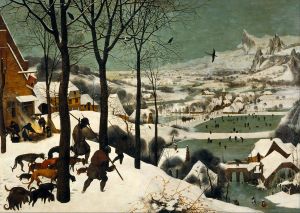
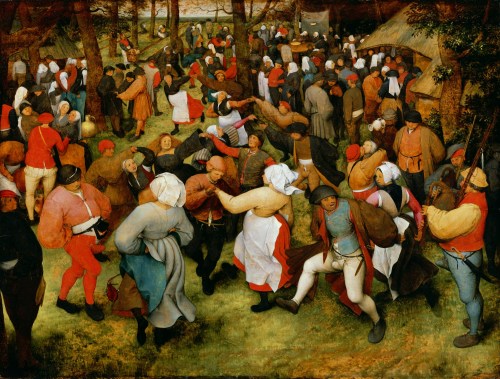
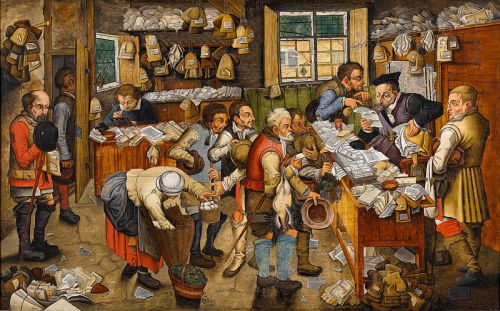
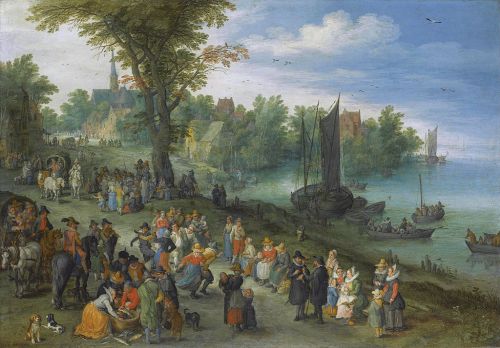
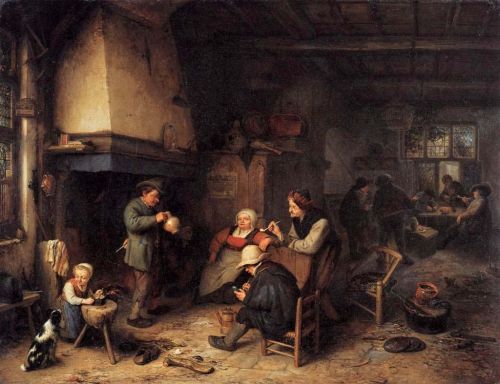
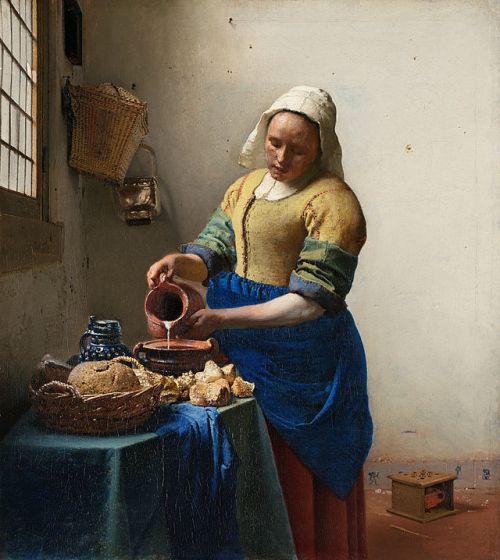
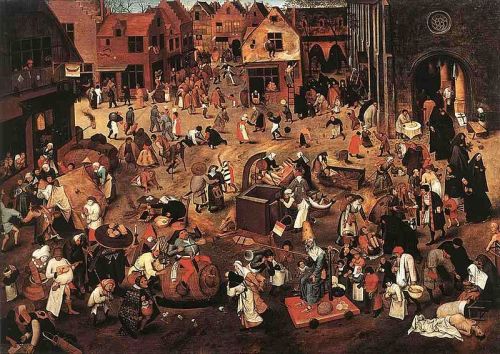
For example, if you are writing a story set in a medieval environment, you may need to know what clothing the common European people wore in medieval times. Or you might want to know what their home looked like, or a village. For that, I suggest you seek out the art of the Flemish Painters. There you’ll see what men and women looked like and how they dressed, both for celebrations, and for working. You will see what their towns looked like, and the public places they gathered in. The interiors of their homes are also found in the great Flemish painter’s works.

Any time you want an idea of average European village life in the Late Middle Ages through the 17th century, you need to look no further than Wikimedia Commons.  There, under the heading  Category: Painters from the Northern Netherlands (before 1830) you will find the brilliant works of the Dutch Masters. These were artists living in what is now The Netherlands, and who were creating accurate records of the everyday life of the common people, along with stylized religious images.

Pieter Bruegel the Elder – Peasant Wedding (1526/1530–1569) via Wikimedia Commons

They painted their subjects with a heavy dose of religious allegory, but that was a part of village life—both the Inquisition and the Reformation were under way, and the politics of religion was in the very air they breathed. If you are going to write medieval fantasy, you must understand how strong the influence of the Church was and how entangled it was in politics. You must inject that religious realism into your work, and show how the Church, even a fantasy religion, and its politics affect the common person’s life.

My regular readers know I love the work of one family of early Dutch painters from Flanders, the Brueghel Family. Five generations of their family were well-known painters and printmakers.

The internet is your friend, and researching your fantasy novel can be incredibly entertaining. Research is what slows me down more than anything. I spend far too many happy hours on Wikimedia Commons, looking at 16th-century Netherlandish paintings.

2 Comments

Filed under writing

#amwriting: the role of the #proofreader

I am nearly at the end of the editing process on my new novel, Billy Ninefingers, a tale set in Huw the Bard’s world. When I am finished with the revisions, I will format my manuscript to be uploaded as both eBook and paper books. At that point, I will be looking for proof readers.

This is where it gets sticky. At some point, I must draw the line and say this book is done. I want no more changes, no more fiddling with it. Thus, when the manuscript is as polished as I can possibly get it, I have one final step—the one that can either ruin a formatted manuscript or make it great: proofreading.

While some people will dispute this, proofreading is not editing.

Proofreading is done after the final revisions have been made, and hopefully it is done by someone who has not seen the manuscript before. That way, they will see it through new eyes, and the small things in your otherwise perfect manuscript will stand out.

Anita Campbell, in her May 28, 2015 guest post for the SBA’s Blog-Industry Word says: “The first step of effective proofreading is understanding that not every typo or issue is alike.  Each needs to be attacked in a different way.” While she is speaking of editing blogposts, and short works, that profoundly true of longer manuscripts.

Even though an editor has combed your manuscript and you have made thousands of corrections, both large and small, there may be places where the reader’s eye will stop. Words have been left out, punctuation is missing–any number of small, hard-to-detect things can occur even after the most thorough of edits.

After the final edit, we go over our work with a fine-toothed comb, trying to proof it ourselves. We read it aloud, and we read it from the bottom up, but our eye sees what it expects to see. We catch many things, but we don’t catch it all.

This is where the final person in the process comes in–the proofreader.

In case you didn’t see it when I mentioned it above, I will say it again: proofreading is not editingEditing is a process that I have discussed at length elsewhere, and is completed long before we get to the proofreading stage.

At the outset, the proofreader must understand that no matter how tempting it may be, they have not been invited to edit the manuscript for content. That has already been done and done again. If they cannot refrain from asking for large revisions regarding your style and content, find another proofreader.

What the Proofreader Should Look For:

Spelling—misspelled words, and homophones (words that sound the same but are spelled differently). These are words that spell-checker may or may not catch, so a human eye is critical for this.

  • Wrong:  Bobby wint out the door, slamming the screen.
  • Right:  Bobby went out the door, slamming the screen.
  • Wrong: There cat escaped and he had to chase it
  • Right: Their cat escaped and he had to chase it.

Repeated words and cut-and-paste errors. These happen when making revisions, even by the most meticulous of authors, and the editor won’t see any errors you introduce after they have completed their work on the ms. These are insidious and difficult to spot, and spell-checker won’t find always them. Sometimes they seem like unusually garbled sentences.

  • Wrong: First of all, First of all, it is accepted practice to italicize thoughts.
  • Wrong: First of all, it is accepted practice to practice thoughts.
  • Wrong: First of all, it is accepted to ot  thoughts.
  • Right: First of all, it is accepted practice to italicize thoughts.

Missing closed quotes:

  • Wrong: “Doctor Mendel, you’re new to the area. What do you know about the dead man? asked Officer Shultz.
  • Right: “Doctor Mendel, you’re new to the area. What do you know about the dead man?” asked Officer Shultz.

Numbers that are digits:

  • Wrong: There will be 3000 guests at the reception.
  • Right: There will be 300 guests at the reception. (For notes and emails, we can use digits.)
  • Right: There will be three hundred guests at the reception. (In literature, we write it out.)

Dropped and missing words:

  • Wrong: Within minutes the place was crawling with cops, and Officer Shultz was sitting at my kitchen table me gently while I made hot water for tea.
  • Right: Within minutes the place was crawling with cops, and Officer Shultz was sitting at my kitchen table grilling me gently, while I made hot water for tea.

Each time you (or a well-meaning editor) tweak the phrasing or create a new passage in your already edited manuscript, you run the risk of creating another undetected error.

Do not ask an editor to proofread your manuscript, as they will be unable to resist tweaking the phrasing and will ask for more changes, because it’s their nature and their job. This can go on forever, and you run the risk of

1. Ironing the life out of your manuscript and losing the feeling of spontaneity, making it feel contrived.

2. Putting up a manuscript that looks unedited because of the flaws that were introduced in the proofing process.

Don’t allow someone else, even an editor, to make the changes for you. Editors are human and can inadvertently make mistakes—after all, the eye sees what the author thinks should be there. Any person who makes changes to the final product has the chance to inadvertently ruin it.

At some point your manuscript is done. You have been through the editing process, and the content and structure is as good as you can get it, but you need one last eye looking for small flaws. Before you upload that masterpiece to Kindle or wherever, do yourself a favor and have it proofread by an intelligent reader, who understands what you are asking them to do and who is willing to do only that.

7 Comments

Filed under Publishing, writing

#FlashFictionFriday: Oregon Sunset (reprise)

We sat on the beach near the fire,

Two old people bundled against the cold Oregon sunset.

Friends we’d never met fished the surf,

Children and dogs ran at waves’ edge.

Red sky, red mist, red sunset. Fire, water, wind, and you.


Wind whipped my hair, gray and uncut,

Tore it from its inept braid,

August wind, chill inside my hood, but I remained,

Pleased to be with you, and pleased to be on that beach.


The sea roared loud, filling my ears,

My blood and

My heart,

And where ever you are that is my beach,

My ocean, my sunset.


Mist rose with the tide, closed in and enfolded us,

Blotting out the falling stars and,

Laughing at our folly,

We dragged our weary selves back to our digs,

Rented, but with everything two old people needed.


The gas fire warmed me

And you warmed me,

And these memories warm me now

When snow blankets our inland valley

And Oregon seems far, far away.

3 Comments

Filed under #FlashFictionFriday, Poetry

#Amwriting: why authors should blog (reprise)

I’m on a much needed vacation, so this week’s posts will be rather random, and somewhat recycled! In fact, this post was originally published June 29, 2016, under the title “Why Authors should blog, take 3, the Vegan.

One of the things I love most about writing is this blog, and it was a lifesaver to me over the last few months. I have made so many friends though this little place on the internet. Blogging offers me the opportunity to riff for several hundred words on any subject I’m interested in, without interruption. Of course, I’m usually only interested in writing-craft, but this is where I come to discuss it.

Nothing improves your writing chops more than writing every day. Deadlines can be daunting but say what you will about not being able to write under pressure—I think that is when I do my best work.

However, today I don’t feel like writing. I want to discuss food! As many know, I am vegan, but my descent into veganism was (sadly) not motivated by any high moral prohibition against animal cruelty. There is a certain amount of that, but it was always there in the way I purchased food for my family. During the 1980s, much of our meat we raised ourselves, cage free, free range chickens, and sheep raised in traditional farming methods.

However, I have developed an auto-immune variety of arthritis that is triggered by meat and dairy–all forms of it. Whenever I go off my diet (and cheese is the big draw) I pay the price. So, I stay on my vegan diet and I feel good.

I have discovered a wonderful resource for amazing, healthy, vegan food: the internet.

I know! It’s not just for Facebook and online gaming.

There is information out there, and it’s all in blogs. One of the best sites for me is called The Minimalist Baker.

Oh my gosh! That website, and the recipes Dana and John have put together are just amazing. I use more of their recipes as the basis of my own cooking than from any other website or book.

Changing your diet is difficult, because you must change your habits. Sometimes you have to change the flavors you love, and learn to like new ones.

And if you are just starting out and can’t afford to buy cookbooks, the internet offers an incredible wealth of free information, and much of it in the form of blogs by people like me.

I love to eat as much as I love to read, and I could easily talk for hours on either subject. But my point is this—if you are passionate about a particular subject, a blog is a great place to talk about it. It brings together people with similar interests, and for a writer, blogging is crucial, as it gets your name out there. Blogging shows people you can write well, and blogging regularly forces you to be creative.

If you want to know more about getting your own blog up and running, see my post of December 14, 2015, Blogging is Writing TooThat post talks about how to use the default system here at WordPress.

  • Keep it down to about 1000 words more or less.
  • Use the spellchecker tool to look for obvious errors.
  • Write in draft form and don’t publish it right away–come back and read it over again, and make corrections.
  • If you use information found elsewhere, quote it and credit the author
  • Use images that are either public domain, or that you have the right to use
  • Put links to other informative sites in the text

Rule number one: be consistent. I began by blogging once a week on a now defunct site—but my actual posts were more often made only once or twice a month. I dreaded it and didn’t want to do it. My blog stats were in the tank because I wasn’t applying myself to it.

It’s a commitment, and authors are procrastinators, but we can write to deadlines when we must, and it’s good for us.  Now I am writing three posts a week on this blog, and at least one post a week for each of several other venues. I spend Sundays putting my blog posts together, which I couldn’t do if I was still raising children, but you only need to blog once a week to keep your content fresh. Writing this post took me about 45 minutes, so that is a small commitment of time.

Writing is a lonely craft, and at times, we deliberately choose to isolate ourselves for several hours a day. But just like a healthy diet and a walk in the fresh air, a change of writing scenery is good for you. This is why I blog–it keeps me connected to other writers.

1 Comment

Filed under writing

#FineArtFriday: Albert Bierstadt, The Rocky Mountains, Landers Peak 1860

When I sit down to write, my work is usually fiction. Even so, I want my work to have authenticity, although I might never have experienced what I am writing about. Whether a piece is set in an alternate world, or in this one, or if it is in the past, present, or future, a source of visual information you can use to fire your imagination exists on the internet–Wikimedia Commons.

For example, today’s image is a landscape painting by Albert Bierstadt, an American painter best known for his lavish, sweeping landscapes of the American West.  This painting shows what tribal life after a successful hunt might be like, and if you are writing about any group of people who hunt or gather food, this particular painting contain a wealth of historically accurate visual information. He painted what he saw. In all of Bierstadt’s work, you will find a world that existed 150 years ago, complete with children playing and dogs barking.

Wikipedia has this to say about the painter:

Born in Germany, Bierstadt was brought to the United States at the age of one by his parents. He later returned to study painting for several years in Düsseldorf. He became part of the Hudson River School in New York, an informal group of like-minded painters who started painting along the Hudson River. Their style was based on carefully detailed paintings with romantic, almost glowing lighting, sometimes called luminism. An important interpreter of the western landscape, Bierstadt, along with Thomas Moran, is also grouped with the Rocky Mountain School.

The life of the American West of the 19th century can be directly translated into a science fiction novel, or a fantasy novel–because the elements of hunting and gathering remain the same no matter what world you set it in. A great many people were involved in taking down a few animals–two antelope, one mountain sheep, and one bear. Hunts of this nature, even with modern weapons, are difficult and fraught with danger. For this reason, the take from this hunt will supply the entire camp of perhaps 100 people for one or two weeks., so foraging for roots, berries, and greens was an important task, as was fishing.

In this painting, you see how the tribe’s homes were constructed, and how the camp was laid out–the butchering party is well away from the rest of the camp, which is on the banks of a river. Everything that was important to the lives of these people is laid out in detail, exactly how it was the day the artist set up his easel in the wilderness and began painting.

Go to history for your world building, and go to art for your history. Don’t be afraid to ‘waste time’ looking at paintings and examining them for minute details, because your imagination will run with it, and your work will have a sense of realism.


Wikipedia contributors, “Albert Bierstadt,” Wikipedia, The Free Encyclopedia, https://en.wikipedia.org/w/index.php?title=Albert_Bierstadt&oldid=793302910 (accessed August 11, 2017).

The Rocky Mountains, Landers Peak; Albert Bierstadt 1863 [Public domain], via Wikimedia Commons, https://commons.wikimedia.org/wiki/File%3AAlbert_Bierstadt_-_The_Rocky_Mountains%2C_Lander’s_Peak.jpg, accessed August-11-2017.

Comments Off on #FineArtFriday: Albert Bierstadt, The Rocky Mountains, Landers Peak 1860

Filed under #FineArtFriday, writing

#amwriting: genitives and possessives: who’s, whose, its, it’s

A casual remark in the comments on Monday’s post on two commonly misused pronouns, ‘that’ and ‘which,’ brought up this subject–the proper use of possessives and genitives. On the surface, it seems simple, but it can be complicated, so we are going to revisit a post from 2016 on this subject.

Most people understand that apostrophes can denote possession (and I’m not talking demonic here), or they can indicate a contraction.

Things to remember:

  1. Who’s is the contraction of “who is” or, less commonly, “who has.”
  2. Whose is the possessive of “who” or, somewhat controversially, “which.”
  3. Their(s) is the possessive of “they.” (They’re proud to own it, it’s theirs, and it’s not there.)
  4. Its is the possessive of “it,” and “it’s” is a contraction of it is. Note that for both they and it, there is no apostrophe in the possessive form. We will get to that later.

Quote from grammar-quizzes.com:

‘Whose’ replaces a genitive personal or inanimate noun in a relative clause. While some people may object to the usage of ‘whose’ with an inanimate noun, grammarians approve of it and cite its usage by highly esteemed writers.” (end quoted text)

What does that slightly complicated explanation really mean?

Let’s look at some definitions:

Genitive: The genitive case is the grammatically correct term predominantly used for showing possession. Nowadays, words falling into that category are more frequently referred to as possessive, which is simpler. With nouns, it is usually created by adding an apostrophe followed by an “s”: ’s to the word or by preceding it with the word: of.

  • John’s blue eyes.
  • The rim of the cup.
  • It is the cat’s possession, a possession of the cat, or a possession owned by the cat. (Universal fact: cats own everything.)

However, the genitive case is not always about possession and, for this reason, the word genitive won’t completely fall out of favor in the English language. Grammar-Monster.com says:

  • Dan’s bike (No one would argue this is the genitive case and the possessive case. It is the bike of Dan. It is about possession.)
  • Children’s songs (This is not about possession. It’s about songs for children. For this reason, some argue this is the genitive case and not the possessive case.)
  • Constable’s paintings (This is not about possession. It’s about paintings by Constable. Some would argue this is the genitive case and not the possessive case.) (end quoted text)

Grammar-Monster also says:

“Possessive adjectives and possessive personal pronouns are also forms of the genitive case.” Examples:

  • our carpet (our – a genitive form of we)
  • Can I use yours? (yours – a genitive form of you) (end quoted text)

Remember:

When referring to living beings, whose denotes possession and who’s is a contraction that refers to existencewho is.

So now we have some idea of “whose” versus “who’s.” But what about “It?”

Dealing with possession by the inanimate—we don’t need an exorcist, although a good maid service could probably help my office. But in this case, we are referencing something owned by the inanimate:

  • The texture of the wall —it’s (It is rough.)
  • I scratched myself on its (The wall’s surface.)

Its… it’s… which is what and when to use it?

The trouble here can be found in the apostrophe. In probably 99% of English words an apostrophe indicates possession, but it also indicates a contraction. Because both it and they are frequently part of contracted words, the choice was made by linguists to eliminate the apostrophe in the possessive form, in the (vain) hope of ending confusion.

  1. It’s is the contraction of “it is” and sometimes “it has.”
  2. Its denotes possession: It owns it.

Contractions (e.g., let’s, don’t, couldn’t, it’s, she’s) have a bad reputation in educational and formal writing. Many argue that they have no place at all in formal writing. If you are writing a thesis, you should observe your publisher’s or instructor’s requirements.

However, in writing fiction, avoiding contractions makes your writing appear stilted and hyper-formal. If you are serious about the craft, you will learn the exceptions to the rules when it comes to apostrophes, and not accidentally mingle possessives in with your contractions.


credits and attributions:

The majority of this article first appeared on Life in the Realm of Fantasy under the title, genitives and possessives: when good apostrophes go bad, © April 04, 2016 by Connie J. Jasperson.

Grammar Quizzes by Julie Sevastopoulos is licensed for use under CC BY-NC-SA 4.0 International. GrammarQuizzes.Com, Genitive Noun Forms, http://www.grammar-quizzes.com/agr_possessives.html,  accessed August-08-2017

GrammarMonster.com, What Is the Genitive Case? http://www.grammar-monster.com/glossary/genitive_case.htm, accessed August-08-2017

14 Comments

Filed under writing

#amwriting: that and which: two commonly misused words

That and which are two commonly misused words. When it comes to eliminating the word “that,” it’s crucial you look at each instance of how it is used.  Sometimes, “that” is the only word for a given situation.

Don’t gut your prose just because some online guru tells you ‘that’ is an unnecessary pronoun. If you remove every instance of the word “that” you’ll end up with a mess on your hands.

Something you need to know: “that” and “which” are not interchangeable so you can’t just use a global search to change every instance of “that” to “which.”

“That” is a pronoun used to identify a specific person or thing observed by the speaker, a determiner, an adverb, and a conjunction.

  1. “That’s his dog on the curb.” (Identifier)
  2. “Look at that red car.” (Determiner)
  3. “I wouldn’t go that far.” (Adverb)
  4. “She claimed that she was married.” (Conjunction)

In the case of number 4, the sentence would be stronger without it. Most of the time, the prose is made stronger when the word “that” is simply cut and not replaced with anything. I say most, but not all of the time. Use common sense and if a beta reader runs amok in your manuscript telling you ax “this and that,” examine each instance of what has their undies in a twist and try to see why they are pointing it out.

There are cases where only “that” will suffice. When do we use the word “that?” We use it when we have something called a ‘Restrictive Clause’:

Quote from Grammar Girl, “A restrictive clause is just part of a sentence that you can’t get rid of because it specifically restricts some other part of the sentence.”  She goes on to give a specific example of a restrictive clause: “Gems that sparkle often elicit forgiveness.”  See?  Not just any gems elicit forgiveness in this sentence. Only gems that sparkle bring about clemency. In this sentence, forgiveness is restricted to one kind of gem.

“Which” is a pronoun asking for information. It specifies one or more people (or things) from a particular set, and it is also a determiner:

  1. “Which are the best diapers for newborns?” (Pronoun)
  2. “I’m looking at a house which is for sale on Black Lake.” (Determiner)

Go lightly with “which” and “that” but use them when they are required.

The same common-sense approach goes for “very.” I seldom need to use it, but I do when it’s required. However, some people employ it too frequently, and it’s rarely needed, fluffing up the word count. As with every word, there are times when it’s the only one that will convey an idea crucial to your story.

Mark Twain had a perfect comment regarding overusing “very.”

“Substitute ‘damn’ every time you’re inclined to write ‘very;’ your editor will delete it, and the writing will be just as it should be.”

I’d love to be that editor.

Many writers have beta readers look at their work before it is submitted. I would also suggest hiring a freelance editor. Besides having a person pointing out where you need to insert or delete a comma, hiring a freelance editor is a good way to discover many other things you don’t want to include in your manuscript, things you are unaware are in there:

  • They will point out when you use too many quantifiers “It was really big.” “It was incredibly awesome.”
  • Places where you “tell” the story instead of showing it: “Bert was mad.”
  • They will mention it when you swamp the reader with minute details: “Mary’s eyebrows drew together, her lips turned down, and her cheeks popped a dimple.”
  • They will comment when you ruin the taste of your work with prettily written descriptors: “-ly” words
  • They will make a comment when your characters natter on about nothing just to kill time.

Freelance editors will point out these all things. We all feel a flash of anger when certain flaws in our work are pointed out. However, when an editor corrects your lazy writing habits, they aren’t trying to change your voice. They’ve seen something good in your work, and they’re pointing out places where you can tighten it up and grow as a writer.

Remember, voice is how you use syntax, diction, punctuation, character development, and dialogue. When you receive an editor’s comments, it might sting, but in the process, you will develop better, more consistent writing habits.


Quoted Sources

Quick and Dirty Tips,  The Grammar Girl, Which vs. That, http://www.quickanddirtytips.com/education/grammar/which-versus-that-0 © Mignon Fogarty, 2008-2017

14 Comments

Filed under writing

#FlashFictionFriday: Winter in the Northern Garden (reprise)


In winter, my Northern garden

Languishes, ragged and shabby,

Unlovely, decaying, and

Uncomfortably aware she’s grown old.


The remains of Summer’s glory beckons,

Begging to be told she is still beautiful,

Still young and fascinating,

Still the object of desire.


Ever the gallant gentleman,

Winter obliges, and with a kiss

Ice crystals decorate each twig and branch

Gracing her with radiant beauty.


Ruby-red barberries set against crystalline diamonds,

Ice catching the light, scattering it.

Jewels decorating decrepit limbs,

Dazzled, we bow to her wondrous splendor.


Beneath the litter of leaves dead and brown,

A new Spring waits,

Lurking in the wings, biding her time,

Politely allowing the old dame one last encore.


Credits and Attrributions

Winter in the Northern Garden © Connie J. Jasperson 2017, first appeared here on February 17, 2017

Suburban Garden, the Geograph project collection © by Ron Shirt and is licensed for reuse under the Creative Commons Attribution-ShareAlike 2.0 license.

Comments Off on #FlashFictionFriday: Winter in the Northern Garden (reprise)

Filed under #FlashFictionFriday, Poetry