November is over, and I did achieve my goal of writing a chapter a day for all 30 days. However, the story is not finished, and a great deal of work still remains to be done. In between working on other projects, I will spend several months doing three things:
- Delving deeper into character arcs.
- Firming up the plot
- Identifying and cutting the chapters that don’t advance the main character’s story and turn them into short stories.
I always start with the characters.
 As stories unfold on paper, new characters enter. They bring their dramas and the story goes in a different direction than was planned. When I meet these imaginary people, I assign their personalities a verb and a noun.
As an example of how I work, let’s look at four characters from my novel, Julian Lackland, which was published in 2020. Each side character impacts Julian’s life for good or ill.
This novel had a rough beginning, and an even harder path to final product. I nearly shelved it forever, but I had the good fortune to attend a seminar given by romance author, Damon Suede. THAT high-energy seminar changed how I approached the story.
I took the story back to its foundations and in the final rewrite, I made a point of looking for the two words that best describe how each point-of-view character sees themselves. It changed everything, allowing the story to be shown the way I saw it in my mind.
 Julian’s noun is chivalry (Gallantry, Bravery, Daring, Courtliness, Valor, Love). He sees himself as a good knight and puts all his effort into being that person. He is in love with both Mags and Beau.
Beau’s noun is bravery (Courage, Loyalty, Daring, Gallantry, Passion). Golden Beau is also a good knight, but his view of himself is more pragmatic. He is Julian’s protector and is in love with both Mags and Julian.
Lady Mags’s noun is audacity (Daring, Courage). Mags defied her noble father and ran away from an arranged marriage to a duke in order to swing her sword as a mercenary. She will win at any cost and is not above lying or cheating to do so. She is in love with both Beau and Julian.
Bold Lora’s noun is bravado (Boldness, Brashness). Lora is in it for the fame. She doesn’t care about the people she is hired to protect, and makes enemies among every crew she is hired to serve in. As one unimpressed side character puts it, “If Lora rescues a cat from a tree, she wants songs of the amazing deed sung in every tavern.”
The way we see ourselves is the face we present to the world. These self-conceptions color how my characters react at the outset. By the end of the story, how they see themselves has changed because their experiences will both break and remake them.
 Next, we assign a verb that describes their gut reactions, which will guide how they react to every situation. They might think one thing about themselves, but this verb is the truth. Again, we also look at sub-verbs and synonyms:
Julian has 2 Verbs. They are: Defend, Fight, (Preserve, Uphold, Protect)
Beau’s 2 Verbs are: Protect, Fight (Defend, Shield, Combat, Dare)
Lady Mags’s 2 Verbs are: Fight, Defy (Compete, Combat, Resist)
Bold Lora’s 2 Verbs are: Desire, Acquire (Want, Gain, Own)
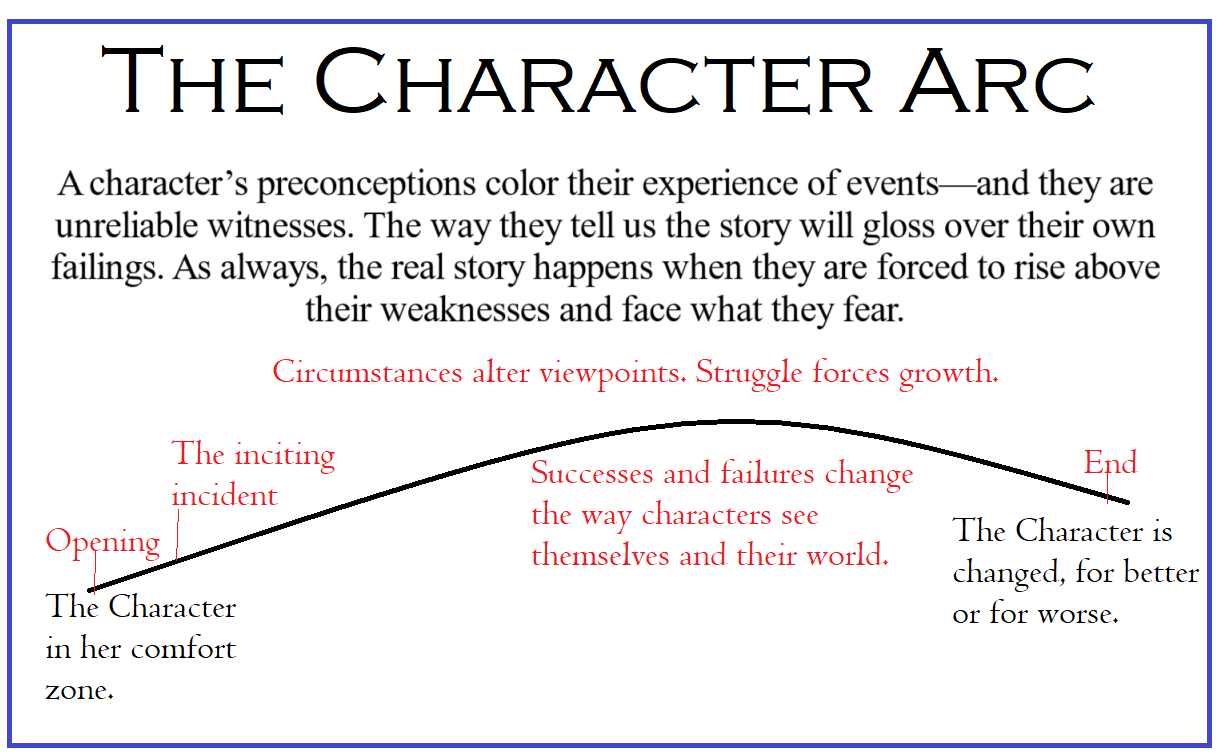
A character’s preconceptions color their experience of events—and they are unreliable witnesses. The way they tell us the story will gloss over their own failings. As always, the real story happens when they are forced to rise above their weaknesses and face what they fear.
As readers we see the story through the protagonist’s eyes, which shades how we perceive the incidents.
When I write my characters, I know how they believe they will react in a given situation. Why? Because I have drawn their portraits using words:
Julian must Fight for and Defend Chivalry. Julian’s commitment to defending innocents against inhumanity is his void, and ultimately it breaks his mind.
Golden Beau must Fight for and Protect Bravery. Beau’s deep love and commitment to protecting and concealing Julian’s madness is his void. Ultimately, it breaks Beau’s health.
Lady Mags must Fight for and Defy Audacity. She’s at war with herself in regard to her desire for a life with Julian and Beau. Despite the two knights’ often-expressed wish to have her with them, a triangular marriage goes against society’s conventions more than even a rebel like Mags is willing to do. That war destroys her chance at happiness and is her void.
Bold Lora must Fight for and Acquire Fame. She believes that to be famous is to be loved. Orphaned at a young age and raised by various indifferent guardians, she just wants to be loved by everyone. Julian’s fame has made him the object of her obsession. If she can own him, she will be famous, adored by all. This desperate striving for fame is Lora’s void.
The verb (action word) that drives them and the noun (object of the action) are the character traits that hold them back. It is their void, the emptiness they must fill.
 Have you thought about the two words that describe the primary weaknesses of your characters, the thing that could be their ultimate ruin? In the case of Julian’s story, it was:
Julian Lackland: Obsession and Honor
Golden Beau Baker: Love and Loyalty
Lady Mags De Leon: Stubbornness and Fear (of Entrapment)
Bold Lora: Fear (of Being) Forgotten
So, in the novel, Julian Lackland, a girl who was ignored by everyone, a child who’d lived on the outside looking in and who was fostered by indifferent relatives, decides that the one person who had ever shown her kindness should become her lover. If she could have Julian, fame would follow.
The way she goes about it changes everything and is the core of Julian’s character arc.
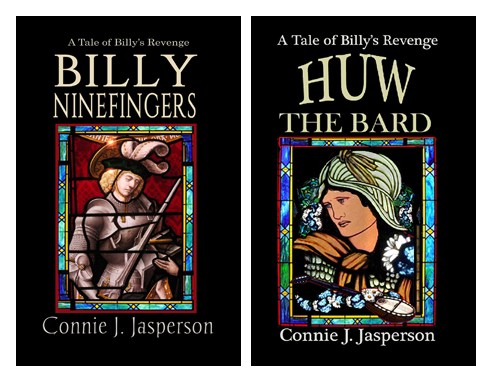 Julian Lackland took ten years to get from the 2010 NaNoWriMo novel to the finished product. He spawned the books Huw the Bard and Billy Ninefingers, both of which were written and published before the final version of Julian’s story was completed. Billy and Huw play a huge role in shaping Julian’s life.
Placing a verb phrase (Fight for and Acquire) before a noun (Fame) in a personality description illuminates their core conflict. It lays bare their flaws and opens the way to building new strengths as they progress through the events.
Or it will be their destruction.
By the end of the book, the characters must have changed. Some have been made stronger and others weaker – but all must have an arc to their development.
Sometimes, as in the case of Julian Lackland, the path to publication is fraught with misery. Other times, the book writes itself and flies out the door. Who knows how my current unfinished novel will end? It’s in the final stretch, but nothing is certain.
I am a step ahead in this process, though. I already know my characters’ weaknesses, their verbs and nouns. As I learned from my experience writing Julian’s novel, I just need to know who they think they are, and then I must write the situations they believe they can’t handle.

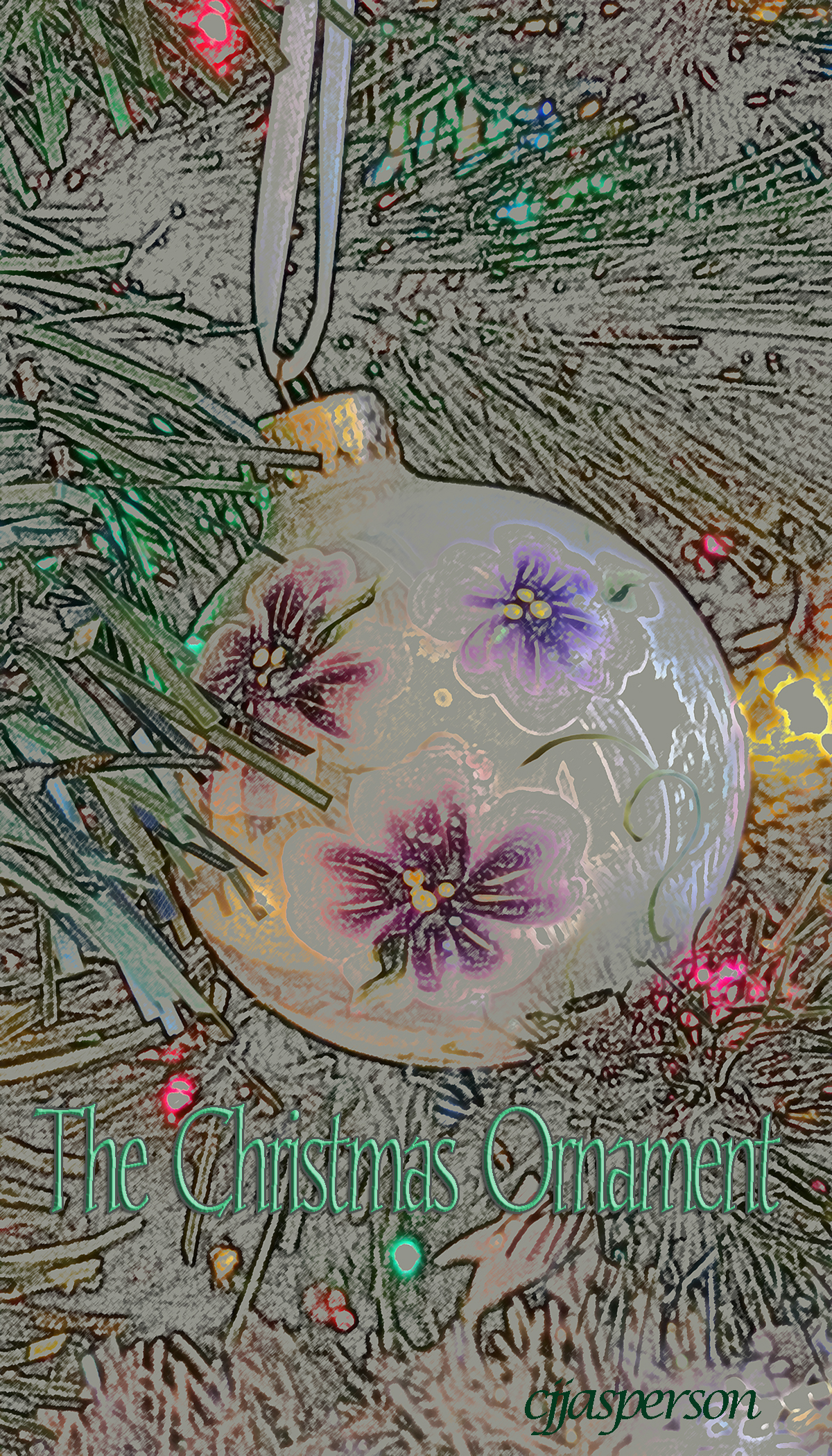 Aaron’s interpretation of this classic is spot on. He has gotten all the voices just right, from kindly Fred down to Tiny Tim.
 “Marley was dead, to begin with. There is no doubt whatever about that. The register of his burial was signed by the clergyman, the clerk, the undertaker, and the chief mourner. Scrooge signed it. And Scrooge’s name was good upon ‘Change for anything he chose to put his hand to. Old Marley was as dead as a doornail.”
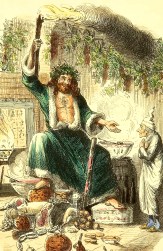 As I mentioned before, this book is only a novella. It was comprised of 66 handwritten pages. Some people think they aren’t “a real author” if they don’t write a 900-page doorstop, but Dickens proves them wrong.
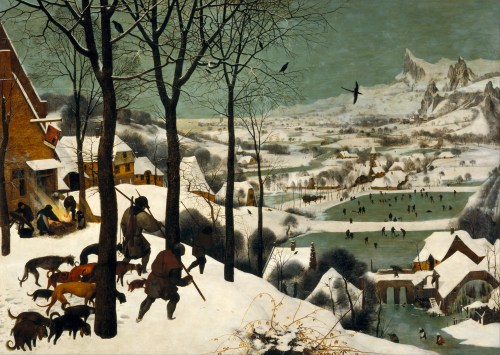 Artist: Pieter Brueghel the Elder (1526/1530–1569)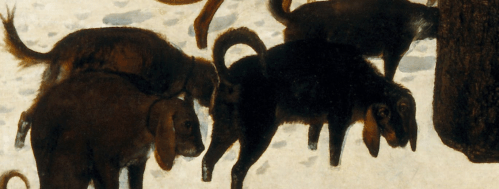
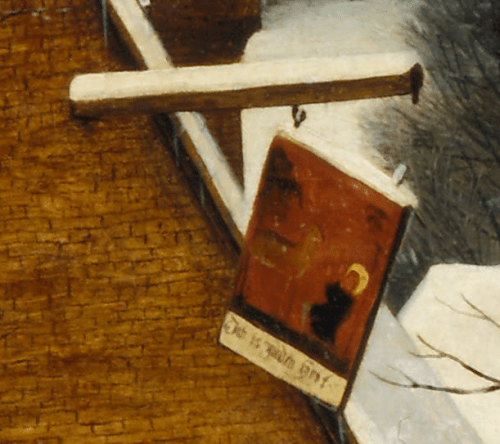

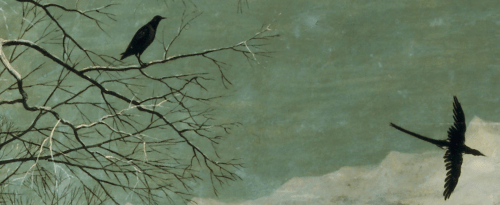
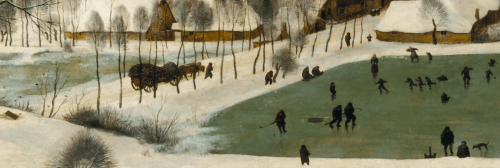 But they are indistinct and far away, shown in a fantastic, mountainous landscape rather than the flat terrain of the Netherlands. It is almost as if they are visions of what winter could be if only the harvest had been good rather than the truth of the lone fox, hounds with empty bellies, a bankrupt tavern, and the rabbit that got away.
 Directors will tell you they focus the scenery (set dressing) so it frames the action. The composition of props in that scene is finely focused world-building, and it draws the viewer’s attention to the subtext the director wants to convey.
 As I work my way through revisions, I struggle to find the right set dressing to underscore the drama. Each item mentioned in the scene must emphasize the characters’ moods and the overall atmosphere of that part of the story.
 We can bookend the event with “doorway” scenes. These scenes determine the narrative’s pacing, which is created by the rise and fall of action.
 The opening paragraph of a chapter and the ending paragraph are miniature scenes that bookend the central action scene. They are doors that lead us into the event and guide us on to the next hurdle the character must overcome.
 When the next chapter opens, he steps into an opening paragraph that leads into the next action sequence. We find out who and what new misery is waiting for him on the other side of that door.
 When you begin making revisions, take a look at the opening paragraph of each chapter. Ask yourself how it could be rewritten to convey information and lead the reader into the action. Then, look at the final paragraph and ask yourself the same question.
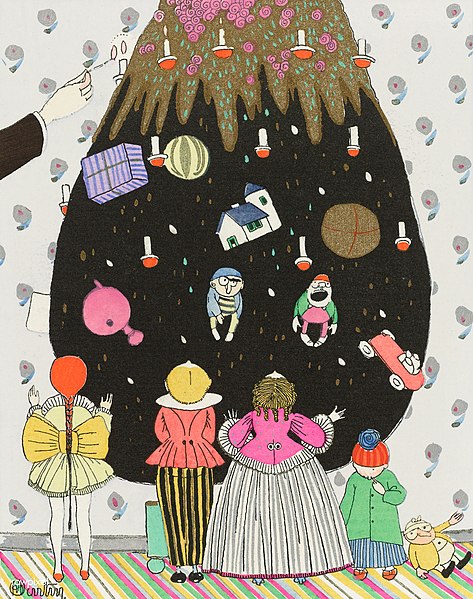
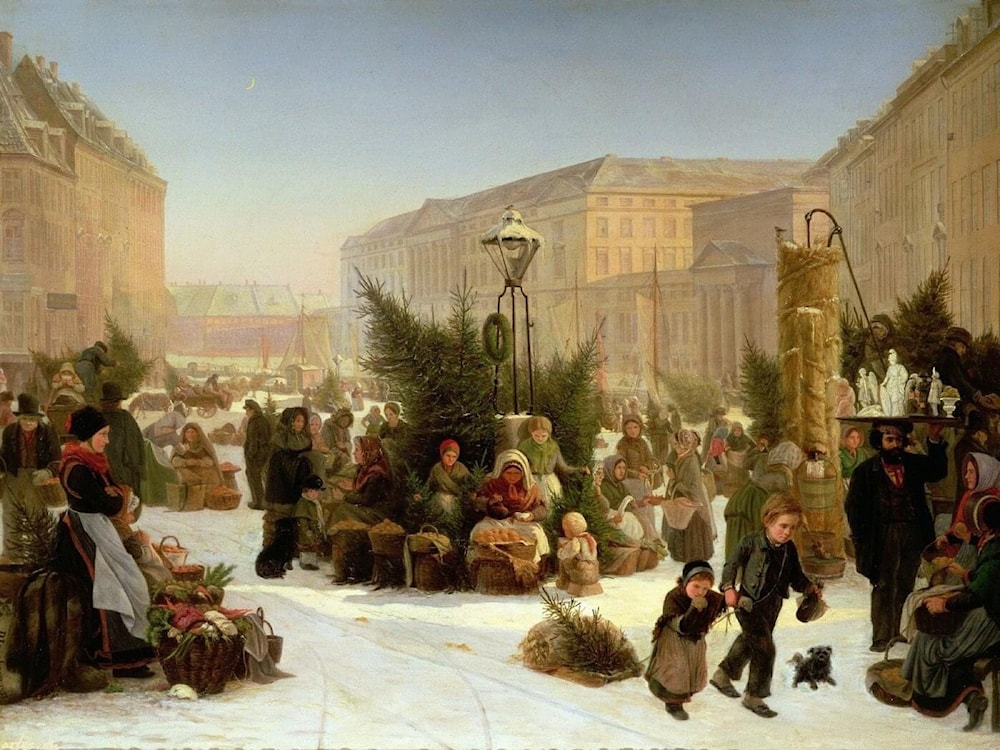 Title: Selling Christmas Trees
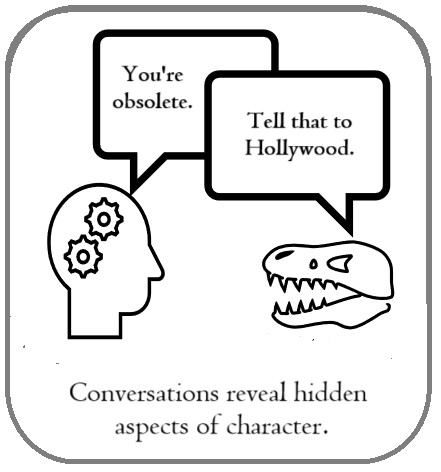
 These transitions are often small moments of conversation, italicized thoughts (internal dialogues), or contemplations written as free indirect speech. These moments are a form of action that can work well when a hard break, such as a new chapter, doesn’t feel right. The reader and the characters receive information simultaneously, but only when they need it.
 A character’s personal mood can be shown in many ways. A moment of
  Trim that back to
 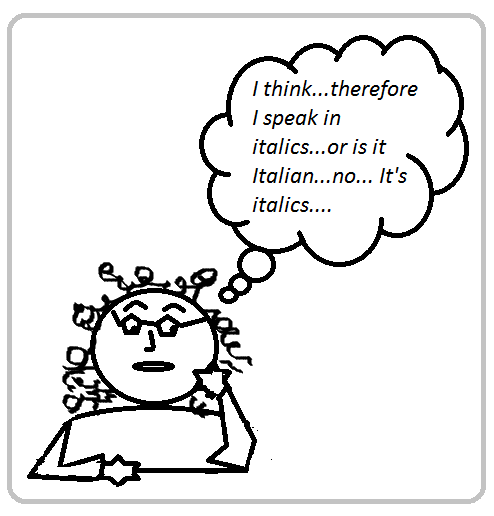 The main thing to watch for when employing indirect speech in a scene is to stay only in one person’s head. You can show different characters’ internal workings, provided you have a hard scene or chapter break between each character’s dialogue.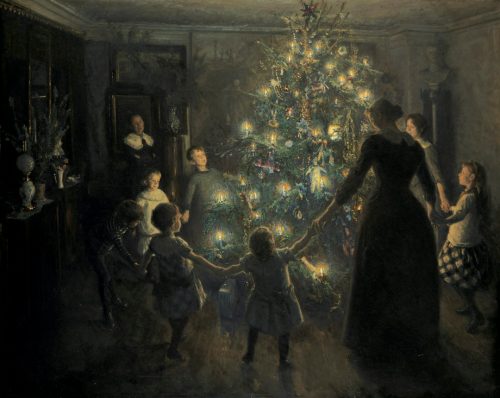
 I hate it when I find myself at the point where I am fighting the story, forcing it onto paper. It feels like admitting defeat to confess that my story has taken a wrong turn so early on, and I hate that feeling. Fortunately, I knew by the 40,000-word point that last year’s story arc had gone so far off the rails that there was no rescuing it.
 The sections I cut weren’t a waste, they were a detour. In so many ways, that sort of thing is why it takes me so long to write a book—each story contains the seeds of more stories.
 Sometimes, something different happens. In 2019, I realized the novel I was writing is actually two books worth of story. The first half is the protagonist’s personal quest and is finished. The second half resolves the unfinished thread of what happened to the antagonist and is what I am currently working on. Both halves of the story have finite endings, so for the paperback version, I will break it into two novels. That will keep my costs down.
 For those of you who are curious—I have the attention span of a sack full of squirrels. Proof of that can be found in the 4 novels currently in progress that are set in that world, each at different eras of the 3000-year timeline, each in various stages of completion.
 think of


 Life in the Realm of Fantasy
