
Hello from beautiful Olympia, Washington. We usually have the same climate as you in Wales or England. We prefer cool summers, with overcast mornings and sunny afternoons that never exceed 74 degrees Fahrenheit or 23 degrees Celsius. For most of my life, that is how summers here were. But as of the new millennium, we no longer count on typical summers.
 Weather is not just a component of world-building. Sometimes, the weather is the villain in real life. In June and early July of 2021, we here in the Pacific Northwest had strange weather climate-wise.
On June 27th, within days, we went from temperatures well below average (low to mid-60s and pouring rain) to suffering from temperatures well above 100 degrees. It reached 108 at my house, 111 at my sister’s house 10 miles away. We use Fahrenheit in the US, but for you in the UK and Europe, we topped out at around 44 degrees Celsius.
This is where weather became the villain. People were hospitalized, and some died. Many apartments on the upper stories had windows that only opened four inches (to prevent people and children from falling out) and most had no A/C. No one knew how to keep cool and prevent heat stroke.
By mid-July, we returned to temperatures slightly above average, mid to upper 80’s and sometimes 90’s. That is how it has remained here since. 2022 wasn’t too bad, and 2023 has been warm but mostly bearable. May was abnormally hot, then it cooled down, and we had a typical overcast June. It’s mid-August now, and yesterday it hit 97, which is dangerous for people with no fans or A/C. Today it is expected to top out at 94.
Air conditioning has become commonly built into homes here since the heat dome of 2021. Most people have acquired window A/C units if their central heating system has no cooling option.
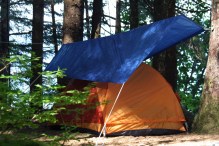 Traditionally in the past, summers in the Puget Sound area of Washington state didn’t really begin until July 5th. We celebrated the 4th of July with low clouds and drizzle, and “blue tarp camping” was a staple of family vacations. June never became unbearably warm.
When the sun did arrive, temperatures, for most of the time we have kept records, ran into the high 70s or, rarely, low to mid-80s. We are said to have a generally mild climate, and while that is changing, we hope it will remain mostly temperate.
So, let’s look at the weather as the villain. Tornados, hurricanes, bizarre heatwaves—these weather events can be the threat our heroes must overcome.
Once you have decided on your overall climate, do some research on how the weather affects agriculture and animal husbandry. In 2021, we here in the northwest lost many crops as they had cooked in the fields during the heat wave. This caused shortages at a time when the pandemic had already bollixed the supply chain.
In any era, the weather affects the speed with which your characters can travel great distances and how they dress. Bad weather always has a detrimental effect on transportation of people and goods, a serious point to consider.
We don’t get many hurricanes here, but they are common elsewhere.
Hurricane Maria was a deadly Category 5 hurricane that devastated the northeastern Caribbean in September 2017, particularly Dominica, Saint Croix, and Puerto Rico. It is regarded as the worst natural disaster in recorded history to affect those islands.
The total death toll is 3,059: an estimated 2,975 in Puerto Rico, 65 in Dominica, 5 in the Dominican Republic, 4 in Guadeloupe, 4 in the contiguous United States, 3 in the United States Virgin Islands, and 3 in Haiti. Maria was the deadliest hurricane in Dominica since the 1834 Padre Ruíz hurricane and the deadliest in Puerto Rico since the 1899 San Ciriaco hurricane. This makes it the deadliest named Atlantic hurricane of the 21st century to date. [1]
Many true stories of survival against the odds and heroism emerge from natural disasters. The kindness of strangers is a worthy plot point, as is the terrible way people behave when resources are cut off, and people lack water and access to food. Hunger, lack of water resources, and unsafe sanitary conditions are powerful drivers of civil unrest.
Wildfires are among the most common forms of natural disaster in some regions of our blue planet, including Siberia, California, and Australia.
And now, a place where we never thought it would happen is burning—Hawaii.
Via Wikipedia:
In early August 2023, a series of wildfires broke out in the US state of Hawaii, predominantly on the island of Maui. The wind-driven fires prompted evacuations, caused widespread damage, and killed at least 99 people in the town of Lahaina; at least 1,000 people remain missing and the death toll from the fires could double or triple in the upcoming days. The proliferation of the wildfires was attributed to dry, gusty conditions created by a strong high-pressure area north of Hawaii and Hurricane Dora to the south.
As of August 14, 2023, there were 99 confirmed deaths, and at least 1,000 other individuals were unaccounted for due to the Lahaina fire on Maui. Only a small number of victims have been identified. The death toll in West Maui made it the deadliest wildfire and natural disaster ever recorded in Hawai’i since statehood even though it could still double or triple in the upcoming days: the governor of the archipelago warned that he expected to find “10 to 20” bodies a day, while the search was expected to last another ten days or so. [2]
 Tragedies on this scale destroy communities but can also unite the survivors. Maui has a long road ahead. Recovery will not be easy as they are an island, and everything must be shipped to them across the ocean. However, people all over the world are stepping up, and the rebuilding is beginning.
How the people who have survived this horrible event go forward will be a testament to their resilience.
Tornadoes, hurricanes, earthquakes, wildfires, severe droughts, prolonged monsoons—weather offers many opportunities for stories of survival against the odds. Thus, large weather events make worthy threats for your characters to overcome.
One of the best movies I’ve ever seen is The Perfect Storm, an adaptation of Sebastian Junger’s creative non-fiction novel of the same name. From Wikipedia:
The Perfect Storm is a creative nonfiction book written by Sebastian Junger and published by W. W. Norton & Company in 1997. The paperback edition (ISBN 0-06-097747-7) followed in 1999 from HarperCollins‘ Perennial imprint. The book is about the 1991 Perfect Storm that hit North America between October 28 and November 4, 1991, and features the crew of the fishing boat Andrea Gail, from Gloucester, Massachusetts, who were lost at sea during severe conditions while longline fishing for swordfish 575 miles (925 km) out. Also in the book is the story about the rescue of the three-person crew of the sailboat Satori in the Atlantic Ocean during the storm by the U.S. Coast Guard Cutter Tamaroa (WMEC-166). [3]
And so, if you are looking for a plot for your NaNoWriMo novel, consider the weather. It’s not just a part of world-building. It can be the perfect adversary.
Credits and Attributions:
Image: Don’t Forget a Tarp, National Park Service, Wikimedia Commons contributors, “File:Don’t Forget a Tarp! (1a132339-9f55-439b-ac0f-244e244cb12f).jpg,” Wikimedia Commons, https://commons.wikimedia.org/w/index.php?title=File:Don%27t_Forget_a_Tarp!_(1a132339-9f55-439b-ac0f-244e244cb12f).jpg&oldid=784682623 (accessed August 15, 2023).
[1] Wikipedia contributors, “Hurricane Maria,” Wikipedia, The Free Encyclopedia, https://en.wikipedia.org/w/index.php?title=Hurricane_Maria&oldid=1170469768 (accessed August 15, 2023).
[2] Wikipedia contributors, “2023 Hawaii wildfires,” Wikipedia, The Free Encyclopedia, https://en.wikipedia.org/w/index.php?title=2023_Hawaii_wildfires&oldid=1170557024 (accessed August 15, 2023).
[3] Wikipedia contributors, “The Perfect Storm (book),” Wikipedia, The Free Encyclopedia, https://en.wikipedia.org/w/index.php?title=The_Perfect_Storm_(book)&oldid=1162518110 (accessed August 16, 2023).
 Symbolism is one aspect of a story that helps create mood and atmosphere. It supports and strengthens the theme and is subtle, subliminal. When a little thought is applied to how it is used, symbolism conveys meaning to the reader without beating them over the head.
 The way
 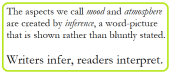 How a setting is shown contributes to atmosphere. But the setting is only a place—it is not atmosphere. Atmosphere is created as much by odors, scents, ambient sounds, and visuals as by the characters’ moods and emotions.
 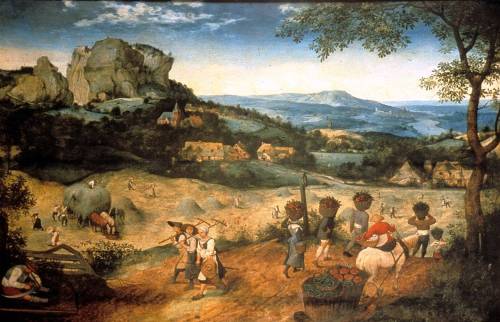 Artist: Pieter Bruegel the Elder (1526/1530–1569)
 But we all know infodumps are an insidious poison, so how do we apply this backstory without losing the reader?
 Character A is a shaman, a fire-mage smith and warrior, and is slated to be the next War Leader of the tribes. His shamanic purpose is to unite the people, both the tribes and those citadels who have turned tribeless. He is the chosen champion of the Goddess his sect of mages serves, and his success or failure will determine her fate.
 This void is vital because characters must overcome fear to face it. As a reader, one characteristic I’ve noticed in my favorite characters is they each have a hint of self-deception. All the characters – the antagonists and the protagonists – deceive themselves in some way about their own motives.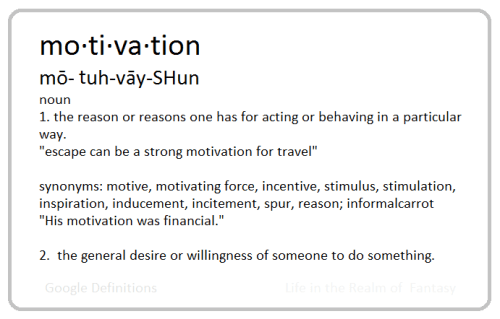
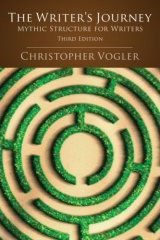 In his book,
 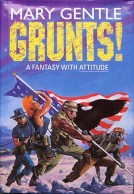 The story follows a group of
  However, when the antagonist is a person, I ask myself, why this person opposes the protagonist? What drives them to create the roadblocks they do? Why do they feel justified in doing so?
 We must remember that the characters in our stories don’t go through their events and trials alone. We drag the reader along for the ride the moment we begin writing the story. They need to know why they’re in that handbasket and where the enemy thinks they’re going, or the narrative will make no sense.
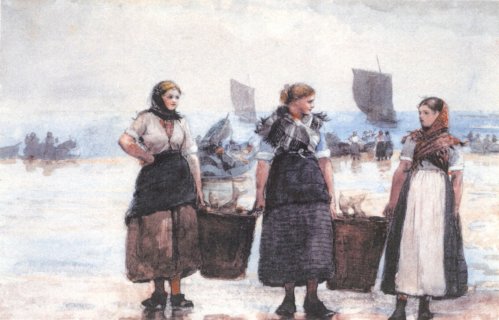 Artist:
  Indies occasionally have to write a synopsis if they submit their longer work to contests, agents, or publishers. When a literary contest or publisher asks for a synopsis, they don’t want a book blurb, which is a “this is why you should buy my book” teaser.
 Don’t label your synopsis file with a generic name like “synopsis.docx.” Be specific and include the book title in the label: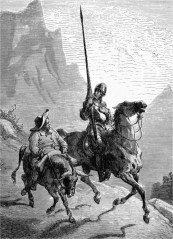
 I recommend you go to the Jericho Writers site and follow their guidelines if asked for a synopsis. The article there is one of the most comprehensive and useful ones I’ve read anywhere. Again, that article can be found at
  I quickly regretted that decision.
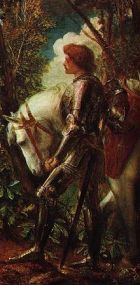 Arthur and his court originated as ordinary 5th or 6th-century warlords. But the tales featuring them were written centuries later. Their 11th-century chroniclers presented them in contemporary armor as worn by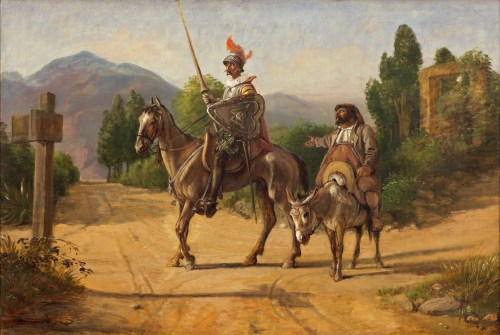
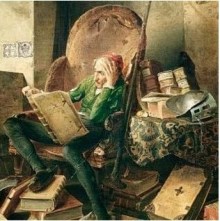
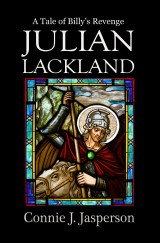 I am an abject fangirl for Don Quixote, so different versions of both Galahad and Quixote appear regularly in my work.
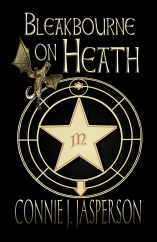 And sometimes a theme refuses to let go of me. I took Arthurian myth and the chivalric code and turned them inside out with the characters of Lancelyn and Galahad in
 Some authors despise that process so much that they go indie, thinking they won’t have to leap that hurdle. But there is no escaping it.
 Writing these kinds of personal introductions is a pain—but only because we don’t know what is expected or what we should include.
 Please do NOT give it the hard sell. The
  Large Publishing Houses: Large traditional publishers want agented submissions only. On the rare occasions they open the doors to unagented authors, their editors expect a 1-page, 300-word description of your novel. This is the query letter, as described above. Your manuscript is not attached to this—if they like what they see in the query, they will look at the synopsis and possibly ask for the first chapter.
 Sometimes my queries get good results, and sometimes not. I’ve said this before, but query letters are like ice cream. Everyone likes certain flavors and must be pushed to try new ones.


