
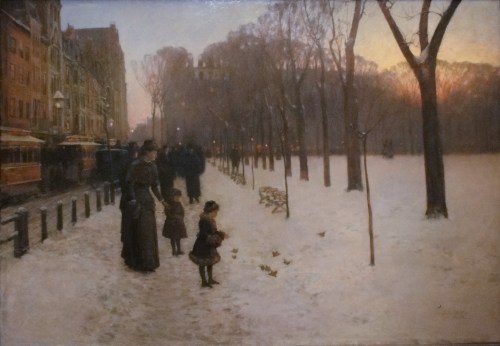
Title: At Dusk (Boston Common at Twilight) by Childe Hassam
Date: between 1885 and 1886
Medium: oil on canvas
Dimensions: height: 42 in (106.6 cm); width: 60 in (152.4 cm)
Collection: Museum of Fine Arts, Boston Massachusetts
What I love about this painting:
Childe Hassam was known for his bold landscapes but by the mid-1880s, Hassam began painting cityscapes. This painting, Boston Common at Twilight was of his first cityscapes.
I particularly like the way he used a dark palette of blacks and browns, colors rarely used with such abandon by strict Impressionists (such as his contemporary, Claude Monet). The dark of the buildings and the clothes of the people are contrasted with many shades of white. The dirty snow trodden on the sidewalk shows us the truth of winter in an urban setting.
The contrasting of darkness against lightness on the land below forces the viewer’s eye upward to the dusky-blue sky and the rosy glow of sunset peeking from behind the trees, to the twilight mist forming in the chill evening air.
Two small girls use these last moments of light to play, perhaps to make snowballs under the eye of their mother or governess.
About the Artist, via Wikipedia:
Frederick Childe Hassam was known to all as “Childe” (pronounced like child), a name taken from an uncle. Hassam was born in the family home on Olney Street on Meeting House Hill in the Dorchester neighborhood of Boston, on October 17, 1859. His father, Frederick Fitch Hassam (1825–1880), was a moderately successful cutlery businessman with a large collection of art and antiques. He descended from a long line of New Englanders. His mother, Rosa Delia Hawthorne (1832–1880), a native of Maine, shared an ancestor with American novelist Nathaniel Hawthorne.
His father claimed descent from a seventeenth-century English immigrant whose name, Horsham, had been corrupted over time to Hassam. With his dark complexion and heavily lidded eyes, many took Childe Hassam to be of Middle Eastern descent—speculation which he enjoyed stoking. In the mid-1880s, he took to painting an Islamic-appearing crescent moon (which eventually degenerated into only a slash) next to his signature, and he adopted the nickname “Muley” (from the Arabic “Mawla”, Lord or Master), invoking Muley Abul Hassan, a fifteenth-century ruler of Granada whose life was fictionalized in Washington Irving‘s novel Tales of the Alhambra.
In 1882, Hassam became a free-lance illustrator (known as a “black-and-white man” in the trade) and established his first studio. He specialized in illustrating children’s stories for magazines such as Harper’s Weekly, Scribner’s Monthly, and The Century. He continued to develop his technique while attending drawing classes at the Lowell Institute and at the Boston Art Club, where he took life painting classes.
Having had relatively little formal art training, Hassam was advised by his friend and fellow Boston Art Club member Edmund H. Garrett to join him on a two-month “study trip” to Europe during the summer of 1883. They traveled throughout the United Kingdom, the Netherlands, France, Italy, Switzerland, and Spain, studying the Old Masters together and creating watercolors of the European countryside. Hassam was particularly impressed with the watercolors of J. M. W. Turner. Sixty-seven of the watercolors that Hassam painted on this trip formed the basis of his second exhibition in 1884. During this period, Hassam taught at the Cowles Art School. He also joined the “Paint and Clay Club”, expanding his contacts in the art community, which included prominent critics and “the readiest and smartest of our younger generation of artists, illustrators, sculptors, and decorators—the nearest thing to Bohemia that Boston can boast.” Friends found him to be energetic, robust, outgoing, and unassuming, capable of self-mockery and considerate acts, but he could be argumentative and wickedly witty against those in the art community who opposed him. Hassam was particularly influenced by the circle of William Morris Hunt, who like the great French landscape painter Jean-Baptiste-Camille Corot, emphasized the Barbizon tradition of working directly from nature. He absorbed their credo that “atmosphere and light are the great things to work for in landscape painting.” [1]
Credits and Attributions:
[Image] Wikimedia Commons contributors, “File:Childe Hassam, ‘Boston Common at Twilight’, 1885–86.jpg,” Wikimedia Commons, the free media repository, https://commons.wikimedia.org/w/index.php?title=File:Childe_Hassam,_%27Boston_Common_at_Twilight%27,_1885%E2%80%9386.jpg&oldid=618750219 (accessed May 26, 2022).
[1] Wikipedia contributors, “Childe Hassam,” Wikipedia, The Free Encyclopedia, https://en.wikipedia.org/w/index.php?title=Childe_Hassam&oldid=1087821182 (accessed May 26, 2022).
 But not every author has that option.
 In most standard book contracts, royalty terms for authors are terrible, and this is especially true for eBook sales. Most eBooks are sold through online retailers like Amazon. If you’re a traditionally published author and your publisher priced your eBook at $9.99, this is how the Amazon numbers break out. No matter what you think of Amazon, it is still the Big Fish in the Publishing and Bookselling Pond:
 However, to be considered for a traditional contract, you should hire an editor, beta reader, and proofreader to ensure the manuscript you submit to an agent or editor demonstrates your ability to turn out a good, professional product.
 Regardless of your publishing path, you must budget for certain things. You can’t expect your royalties to pay for them early in your career – and many award-winning authors must still work at their day jobs to pay their bills.
 Conferences are an extension of the self-education process. I have discovered so much about the craft of writing, the genres I write in, and the publishing industry as a whole—things I could only learn from other authors. I gained an extended professional network by joining
 Sometimes I am invited to participate in panels or offer a workshop, and I can share my experiences with others. Either way, I learn things. In September, I will be on a panel with
 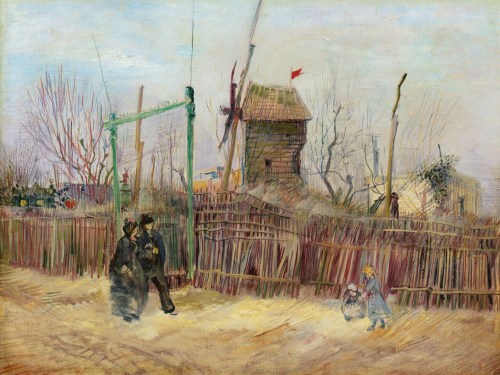 Artist: Vincent van Gogh (1853–1890)
 The plan or design is submitted to the client, who likes it. A mockup of the first iteration is submitted to the client, who still likes it, but … their needs have changed a little, and a new adjustment must be incorporated.
 Books are one area where project creep is not only appreciated but encouraged. Stories are particularly prone to this continual expansion of the original ideas. Short stories grow into novellas and then into novels, becoming a series of books.
 The first aspect of this is to Identify your Project Goals – create a rudimentary outline with names, who they are in relation to the protagonist, and decide who is telling the story. Remember, your story is your invention. Some inventions are in development for years before they get to market. Others are complete and ready to market in a relatively short time. Regardless of your production timeline, this is where project management skills really come into play.
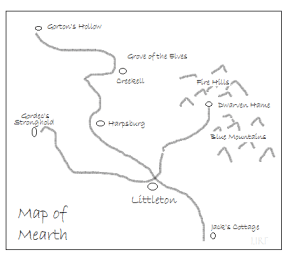 Your map doesn’t have to be fancy – all you need are some lines and scribbles telling you all the essential things, like which direction is north and what certain towns are named. Use a pencil, to easily update your map if something changes during revisions.
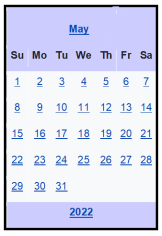 Time can get a little mushy when we are winging it through a manuscript. A calendar gives us a realistic view of how long it takes to travel from point A to point B, or how much time it will take to complete a task.
 Time interests me because I mostly write fantasy, although I write contemporary short fiction and poetry. Fantasy, and all speculative fiction, relies heavily on worldbuilding, and managing time is a facet of that skill.
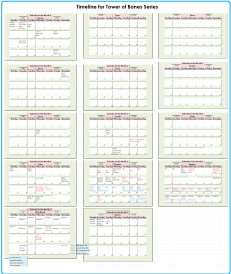 HERE is where I confess my great regret: in 2008, a lunar calendar seemed like a good thing while creating my first world.
 In an even worse bout of predictability, I went with the names we currently use when I named the days, only I twisted them a bit and gave them the actual Norse god’s name. (The gods and goddesses of Neveyah are not Norse.)
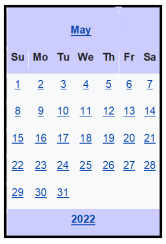 I LEARNED from my mistakes – the timeline for the Billy’s Revenge 3-book series, Huw the Bard, Billy Ninefingers, and Julian Lackland, uses the familiar calendar we use today.
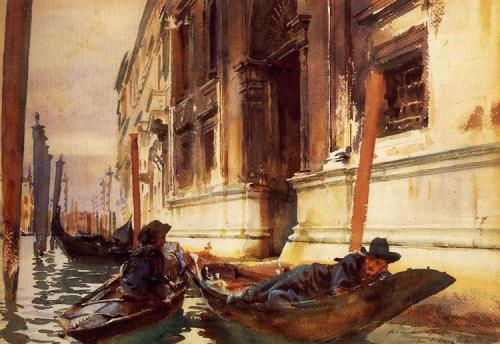
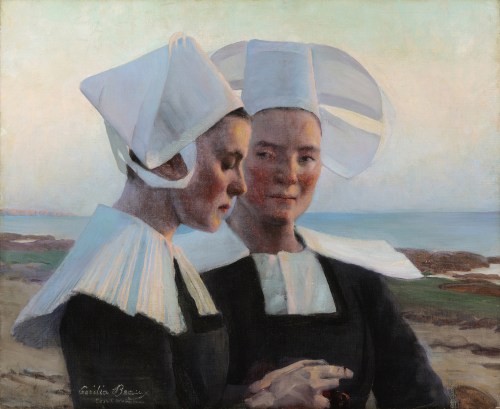 Twilight Confidences by Cecilia Beaux (1855–1942)
 Thus, it makes sense to consider whether your story is complex enough to hold up well across a series.
 If you are done with your first draft and are just now realizing your novel could be the beginning of a saga, you should consider making notes as to what the future holds for your crew beyond the end. Otherwise, you may find yourself writing a continuation of book one, but with no goal, no purpose.
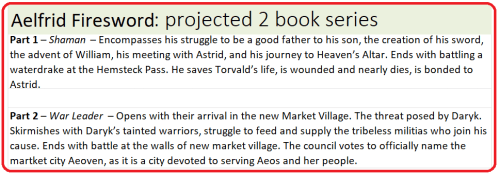 So, for a saga you might want to draw up an overall story arc for the entire series. For a standalone book featuring a recurring character, you likely won’t need to have an all-encompassing projected arc.
 Think about it – the universe contains all we can measure and know, all of space and time and their contents, including planets, stars, galaxies, and all forms of matter and energy. It likes balls and spirals and has a structure that repeats itself. This is reflected in the shape and behavior of the smallest particles to the largest quasars.
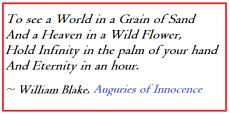 First off, no matter our conscious thoughts regarding the universe and God, writers don’t exist in reality. We exist in what we think reality is, and collectively, we create it as we go along, for good or ill.
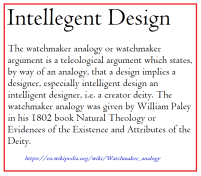 But if you make a map of what you can see, your own
 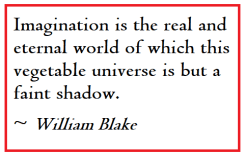 As I wrote, the outline for that first book took its shape. The written universe is in constant flux, and the storyboard records the changes and keeps the fabric of time from warping.
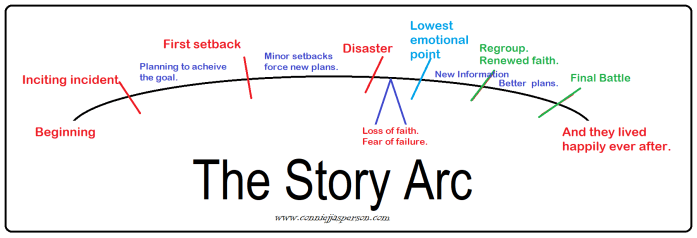 Once I have decided the proposed length, I know where the turning points are and what should happen at each. The outline ensures an arc to both the overall story and the characters’ personal growth.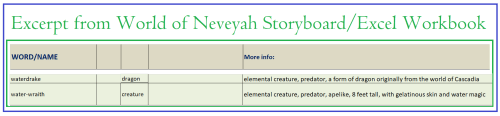


 Life in the Realm of Fantasy

